<?xml version="1.0" encoding="UTF-8"?>
<rss version="2.0"
	xmlns:content="http://purl.org/rss/1.0/modules/content/"
	xmlns:wfw="http://wellformedweb.org/CommentAPI/"
	xmlns:dc="http://purl.org/dc/elements/1.1/"
	xmlns:atom="http://www.w3.org/2005/Atom"
	xmlns:sy="http://purl.org/rss/1.0/modules/syndication/"
	xmlns:slash="http://purl.org/rss/1.0/modules/slash/"
	xmlns:media="http://search.yahoo.com/mrss/"
	>

<channel>
	<title>The Express Tribune &#187; Nabeel Anwar Dhakku</title>
	<atom:link href="http://tribune.com.pk/author/3131/nabeel-anwar-dhakku/feed/" rel="self" type="application/rss+xml" />
	<link>http://tribune.com.pk</link>
	<description>Latest Breaking Pakistan News, Business, Life, Style, Cricket, Videos, Comments</description>
	<lastBuildDate>Wed, 22 May 2013 21:01:12 +0000</lastBuildDate>
	<language></language>
	<sy:updatePeriod>hourly</sy:updatePeriod>
	<sy:updateFrequency>1</sy:updateFrequency>
	<generator>http://wordpress.org/?v=3.5.1</generator>

		<item>
		<title>Shehnai: Tunes of tradition</title>
		<link>http://tribune.com.pk/story/439964/shehnai-tunes-of-tradition/</link>
		<pubDate>Thu, 20 Sep 2012 17:11:10 +0000</pubDate>

		<guid isPermaLink="false">http://tribune.com.pk/?p=439964</guid>

		<description>
		<![CDATA[
			<a href="http://tribune.com.pk/story/439964/shehnai-tunes-of-tradition/">
				<img src="http://i1.tribune.com.pk/wp-content/uploads/2012/09/439964-Music-1348157075-344-160x120.jpg" width="160" height="120" alt="" />
			</a>
			<p><div><strong class='location'>CHAKWAL:&nbsp;</strong>
<p><strong>As modernism continues to engulf the cultural essence of the subcontinent, there are some dedicated souls who act like a shield against the mindlessness which is taking us away from our cultural traditions. </strong></p>
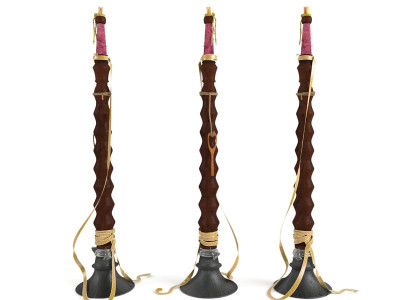
<p>Ustad Bismillah Khan was one of those maestros who immortalised an art that is intertwined with our traditions; the art of <em>shehnai</em> playing, a traditional and historical instrument of the region. He believed that, “Even if the world ends, music will still survive” — wise words which have become a proverb in the world of music.</p>
</div>
<p>Sadly, despite his contribution to the world of traditional music, his sixth death anniversary passed quietly on August 21 without any tributes or obituaries. However, a few of his disciples have decided to not let his name wane away that easily. Liaquat Ali, 44, a passionate lover of <em>shehnai</em>, is not only trying his best to keep the art alive, but is also turning out to be an emblem of hope for <em>shehnai</em> masters in Punjab.</p>
<p>Born in a small hamlet called Dhoke Hassu to Late Mohammad Nawaz alias Baaj Khan, who was not only a great <em>shehnai</em> master but was quite adroit on <em>dhol</em>, Liaquat Ali fell in love with his father’s skill at a very early age. He started playing the <em>shehnai</em> and the <em>dhol</em> in his teen years.</p>
<p>Till a couple of decades ago, stage actors called <em>kubhaar</em> were invited for entertainment to the weddings that took place in the villages of Punjab. These troupes not only made audiences laugh by cracking jokes but also sang songs to the music of <em>dhol</em> and <em>shehnai</em>. It was during one of these festivities, Gujrat’s famous <em>shehnai</em> master Late Ustad Rehmat Ali came to Chakwal and Liaquat’s father asked for his assistance in training his son. As a result, Liaquat Ali became a student of the legendry <em>shehnai</em> master from Gang Channar village of Gujrat, who helped him polish his skills further.</p>
<p>Presently Liaquat Ali is an integral member of Five Star Musical group which also features Chakwal’s famous folk singer Munir Hussain, who mesmerised the viewers by performing on “Coke Studio” recently. Liaquat along with his team stays busy in rehearsals throughout the day in his office near Tehsil Chowk. Although he is capable of playing the tunes of almost all famous songs by various legendary singers on his <em>shehnai</em>, he still prefers to stick to local songs. “I love my mother tongue and my culture, that’s why I feel happy when I play Punjabi songs on <em>shehnai</em>,” he says. Songs by Noor Jehan and Ghulam Ali are also among his favourites, he adds.</p>
<p>Being a <em>shehnai</em> maestro, however, is not an easy task. He is bound to play any song on <em>shehnai</em> requested by the organisers or the audiences present. If one is to analogise, Liaquat Ali is like a music folder saved on your computer — click on any song that you would like to hear and the computer obeys almost instantly. “If a <em>shehnai</em> master can’t play the songs requested by the organisers or audiences, he doesn’t have the right to call himself a <em>shehnai</em> master,” he maintains. Liaquat’s aim is to “stay alive and promote the culture of my beloved Punjab through <em>shehnai</em>,” he explains. “We are Punjabi and we owe a great debt to Punjab and we need to repay it somehow,” he adds.</p>
<p>The lovers of Chakwal’s <em>dhol</em> <em>geet</em> can get a unique taste of Chakwal’s famous Himri songs like “Jhulara”, “Sahio Main Gawaiya Laal Ni” and “Kandayari” through Liaquat’s <em>shehnai</em>. The addicts of Waris Shah’s timeless epic love tale Heer Ranjah are taken into the realms of tranquillity as Liaquat Ali is adept at playing Waris Shah’s poem Heer. Those who take refuge in the songs of Melody Queen Noor Jehan, can also relish them in the rhythms of <em>shehnai</em> played by Liaquat Ali.</p>
<p>Like many other dedicated artists, Liaquat is highly distressed about the state of Punjab’s culture and its artists. “Our rulers are doing nothing for the promotion and preservation of our rich culture and the artists here spend a highly miserable life,” he says with remorse.</p>
<p><em>Published in The Express Tribune, September </em><em>21<sup>st</sup>, 2012.</em></p>
<p>Like Life &amp; Style on <a href="https://www.facebook.com/ETLifeandStyle">Facebook</a> and follow at <a href="https://twitter.com/ETLifeandStyle">@ETLifeandStyle</a> for the latest in fashion, gossip, entertainment</p>
</p>
			<br clear="all"/>
		]]>
		</description>

		<media:content width="424" height="318"
							isDefault="true" medium="image" url="http://i1.tribune.com.pk/wp-content/uploads/2012/09/439964-Music-1348157075-344-640x480.jpg">
			<media:title>Music</media:title>
			<media:description>Chakwal’s shehnai maestro Liaquat Ali is committed to
keeping the art alive. PHOTO: FILE

</media:description>
			<media:thumbnail url="http://i1.tribune.com.pk/wp-content/uploads/2012/09/439964-Music-1348157075-344-160x120.jpg" width="160" height="120" />
      </media:content>

		<wfw:commentRss></wfw:commentRss>
		<slash:comments>0</slash:comments>
	</item>
		<item>
		<title>Through his couplets, Afzal Saahir writes about life</title>
		<link>http://tribune.com.pk/story/419772/through-his-couplets-afzal-saahir-writes-about-life/</link>
		<pubDate>Thu, 09 Aug 2012 16:40:13 +0000</pubDate>

		<guid isPermaLink="false">http://tribune.com.pk/?p=419772</guid>

		<description>
		<![CDATA[
			<a href="http://tribune.com.pk/story/419772/through-his-couplets-afzal-saahir-writes-about-life/">
				<img src="http://i1.tribune.com.pk/wp-content/uploads/2012/08/419772-NaalSajjanDeRahiyedesignMahahaidercopy-1344530116-577-160x120.jpg" width="160" height="120" alt="" />
			</a>
			<p><div><strong class='location'>CHAKWAL:&nbsp;</strong>
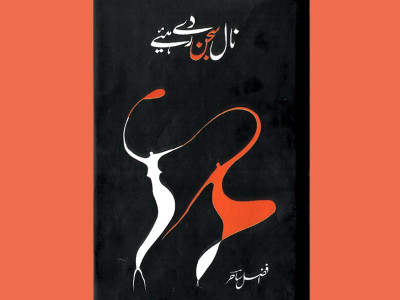
<p><strong>The long wait for Punjabi poetry enthusiasts has finally come to an end. Renowned radio show host and poet Afzal Saahir – also known as Pakistan’s Shiv Kumar Batalvi – has published 63 pieces of eloquent poetry in “<em>Naal Sajjan De Rahiye</em>” (Live With Your Loved One).</strong></p>
<p>The collection is a must read, for it coherently highlights the highs and lows of human life, with each verse emanating the powerful essence of Punjab. Published by Saanjh Publications in Lahore, the book has also been translated in Punjabi dialects Gurmukhi and Shahmukhi for the poet’s fans.</p>
</div>
<p>The title of his book has been extracted from the work of revered Sufi poet Shah Hussain, which should give readers a hint of the extent to which Saahir’s work is influenced by Sufi literature. Late Punjabi poet and short story writer Amrita Pritum once blessed the young poet with her words of encouragement and optimism, declaring him “a sapling” planted by great Sufi poet Hazrat Sultan Bahu. Pritum’s words are printed on the back of Saahir’s book as a memory to be cherished by him and Punjabi poetry fanatics for years: “<em>Hun taan Bahu dee booti phulaan tay aa gai aey</em>” (The sapling of Bahu is now blossoming).</p>
<p><strong>The verses</strong></p>
<p>For poetry to be honest and pure, it needs to be well-expressed. And in order for it to be well-expressed, the poet needs to voice it using his mother tongue, so that its integrity remains preserved. Fortunately, Saahir chose his mother tongue Punjabi as his medium of expression, which conveys sincerity that his readers greatly admire.</p>
<p>Essentially, his poetry speaks about malevolence and pain inflicted on mankind but it also teaches a lesson to demoralised and pessimistic victims at the same time. From his collection, “<em>Waarta</em>” (Distribution) can be termed his magnum opus – a poem on the bloody partition of the subcontinent. Unlike the great Shiv Kumar Batalvi, Saahir did not witness the hardships of the partition, yet he managed to create a masterpiece on the subject by making mere observations – sufferings of his parents who migrated to Pakistan and agonies of the old men of his village in Samundri Tehsil  of Faisalabad.</p>
<p>The lengthy poem tells a harrowing and highly appealing account of partition. Some couplets from the poem go as following:</p>
<p><em>Our forefather licked the lines, how could we learn a lesson,</em></p>
<p><em>Our limbs hang on the naked wire, how could blood come in them,</em></p>
<p><em>We carved a “truth” out of the game of lies,</em></p>
<p><em>Then we painted this truth with religion,</em></p>
<p><em>Truth on the spear could not survive here,</em></p>
<p><em>Even Jesus could not be saved if he returns here,</em></p>
<p><em>Our breaths started getting broken as we wept out of hunger,</em></p>
<p><em>But we started again massaging the Chaudhry as he turned furious towards us,</em></p>
<p><em>We could not sense how losses and profits occurred,</em></p>
<p><em>We were beaten badly as we played the game of monkeys.</em></p>
<p>Saahir portrays partition as a truth carved out from a game of lies. He believes that man on the street had nothing to do with the severance of Hindustan, but still, his life was devastated by the partition.</p>
<p>In his poetry, we see the pain and agony faced by a common woman of the land. He beautifully describes the circumstance in which most girls married men who are not fit for them. His poem captioned “<em>Sufney Reh Gaey Koray</em>” (The Dreams Left Immaterialised) narrates the plight of those unfortunate women.</p>
<p>The heroin of the poem complains:</p>
<p><em>We damsels blessed with killer eyes,</em></p>
<p><em>Were yoked by the blind farmers,</em></p>
<p><em>Our desires were rotten in the mire of the heart,</em></p>
<p><em>Our life confined to four walls,</em></p>
<p><em>We only remained at the beck and call of husbands,</em></p>
<p><em>We kneaded our hearts in the pots</em></p>
<p><em>This issueless time has frozen our breaths like snow,</em></p>
<p><em>Our dreams left immaterialised.</em></p>
<p>One of his most moving poems is printed on page 20, titled “<em>Peeraan Vikney Aaiyaan</em>” (The Pain Is Up For Sale).</p>
<p>Through his commendable poetry, Afzal Saahir has proven that Punjabi is a rich, powerful and influential language. Let’s hope he continues to astound the world with his magical pen.<em></em></p>
<p><em>Published in The Express Tribune, August 10<sup>th</sup>, 2012.</em></p>
</p>
			<br clear="all"/>
		]]>
		</description>

		<media:content width="424" height="318"
							isDefault="true" medium="image" url="http://i1.tribune.com.pk/wp-content/uploads/2012/08/419772-NaalSajjanDeRahiyedesignMahahaidercopy-1344530116-577-640x480.jpg">
			<media:title>419772-NaalSajjanDeRahiyedesignMahahaider-1344528162 copy</media:title>
			<media:description>Naal Sajjan De Rahiye is sure to enchant
Punjabi poetry enthusiasts. DESIGN: MAHA HAIDER</media:description>
			<media:thumbnail url="http://i1.tribune.com.pk/wp-content/uploads/2012/08/419772-NaalSajjanDeRahiyedesignMahahaidercopy-1344530116-577-160x120.jpg" width="160" height="120" />
      </media:content>

		<wfw:commentRss></wfw:commentRss>
		<slash:comments>0</slash:comments>
	</item>
		<item>
		<title>Hassan Liaquat: A gem hidden in Chakwal</title>
		<link>http://tribune.com.pk/story/415454/hassan-liaquat-a-gem-hidden-in-chakwal/</link>
		<pubDate>Tue, 31 Jul 2012 15:44:25 +0000</pubDate>

		<guid isPermaLink="false">http://tribune.com.pk/?p=415454</guid>

		<description>
		<![CDATA[
			<a href="http://tribune.com.pk/story/415454/hassan-liaquat-a-gem-hidden-in-chakwal/">
				<img src="http://i1.tribune.com.pk/wp-content/uploads/2012/07/415454-hiddeninChakwal-1343748274-656-160x120.JPG" width="160" height="120" alt="" />
			</a>
			<p><div><strong class='location'>CHAKWAL:&nbsp;</strong>
<p>“<em>Jins-e-hunnar ka kaun kharidaar hai</em> Faraz,</p>
</div>
<p><em>Heera, keh pathro’n sey bhee sasta dikhai day</em>.”</p>
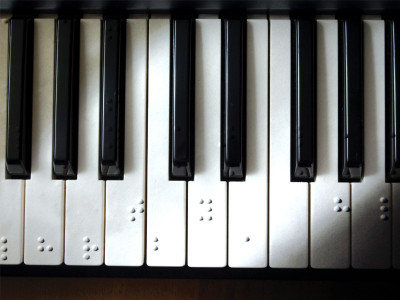
<p>This couplet, penned by the legendary romantic rebel of Urdu poetry, the immortal Ahmad Faraz, aptly describes Hassan Liaquat, a man who remains in the shadows despite being exceptionally talented.  Thirty-five-year-old Liaquat, who was born in Chakwal, is blind since birth. While he has never seen the inside of a school, not only is Liaquat a great singer but also has a strong grasp over the works of noted poets, writers and philosophers.</p>
<p>Liaquat fell in love with music very early in his childhood. When he was five years old, he would sing famous songs of his era by reputed singers like K L Sehgal, Mohammad Rafi,  Talat Mehmood and Lata Mangeshkar.  Due to his disability, Liaquat could not be admitted to any school. But his father took it upon himself to educate him, while also teaching him how to play the flute.</p>
<p>His formal music education, however, was received from the famous Ustad Ejaz Khabu of Lahore and for this, Liaquat has been visiting his teacher’s house for the last 10 years.  His passion for music, the hard work of his teacher and the active support of his father and other family members have moulded him into a great singer who has yet to perform at a big theatre.</p>
<p>Despite having few opportunities to draw attention to his talent, Liaquat has some big prizes under his belt. In 2005, he performed in a ceremony organised by the Pakistan Army at the Mangla Cantonment where he won the prestigious “Sword of Honour” presented to him by the then Core Commander of Mangla Cantonment Lieutenant General Javed Alim. In 2009’s All Pakistan Blind Singers Competition in Multan, Liaquat clinched the first prize.</p>
<p>Among his favourite poets, Waris Shah and Ahmad Faraz are the most prominent, while he also has great admiration for Punjabi poets Shiv Kumar Batalvi, Faiz Ahmad Faiz and Majeed Amjad, whose works he has recited and recorded.</p>
<p>Whenever he receives a new book on poetry, his wife reads the <em>ghazal</em>s before him and he learns it after which he records it in his own voice.</p>
<p>Liaquat currently teaches music at The Educators, a private educational institution, where he has trained five disciples to move the audience by playing the flute.</p>
<p>He aspires to sing the entire “Heer Ranjha” by Waris Shah. “Although many great souls like Iqbal Banu and Abida Parveen have sung ‘Heer’ by Waris Shah, no singer has done the whole epic poem. I want to do it and am working on it,” he says.</p>
<p>The state of art and literary heritage in Pakistan pains Liaquat greatly. “Talent is being wasted in Pakistan and it seems that classical music, art and heritage are being slaughtered through a well-thought out plan,” he says, adding that talented artists are not encouraged while pseudo artists are being promoted just because of their physical appearances. “Talent does not matter here,” he sighs.</p>
<p>Commenting on the plight of blind singers, Liaquat laments that it is unfortunate that Pakistan neglects his kind while India celebrates blind artists like Ravinder Jane, K C Day and Pandat Omi.<em></em></p>
<p><em>Published in The Express Tribune, August 1<sup>st</sup>, 2012. </em></p>
</p>
			<br clear="all"/>
		]]>
		</description>

		<media:content width="424" height="318"
							isDefault="true" medium="image" url="http://i1.tribune.com.pk/wp-content/uploads/2012/07/415454-hiddeninChakwal-1343748274-656-640x480.JPG">
			<media:title>hidden in Chakwal</media:title>
			<media:description> Not only is Liaquat a great singer but also has a strong grasp over the works of noted poets, writers and philosophers.</media:description>
			<media:thumbnail url="http://i1.tribune.com.pk/wp-content/uploads/2012/07/415454-hiddeninChakwal-1343748274-656-160x120.JPG" width="160" height="120" />
      </media:content>

		<wfw:commentRss></wfw:commentRss>
		<slash:comments>7</slash:comments>
	</item>
		<item>
		<title>Melodies of Chakwal rule the heart</title>
		<link>http://tribune.com.pk/story/412046/melodies-of-chakwal-rule-the-heart/</link>
		<pubDate>Mon, 23 Jul 2012 14:01:32 +0000</pubDate>

		<guid isPermaLink="false">http://tribune.com.pk/?p=412046</guid>

		<description>
		<![CDATA[
			<a href="http://tribune.com.pk/story/412046/melodies-of-chakwal-rule-the-heart/">
				<img src="http://i1.tribune.com.pk/wp-content/uploads/2012/07/412046-ChakwalimusicphotoPublicity-1343051250-455-160x120.JPG" width="160" height="120" alt="" />
			</a>
			<p><div><strong class='location'>CHAKWAL:&nbsp;</strong>
<p><strong>The history of Chakwali music, locally called <em>dhol geet</em>, is as old as Chakwal itself. All songs in <em>dhol geet</em> are created by local poets and their singers do not use mics or modern musical instruments except the <em>dhol</em>. A team of singers usually consists of about 10 men divided into two groups along with a <em>dholi</em> (drum beater). The first group leads the song while the other group repeats it; this way, members of the main group are ready to sing the next couplet.</strong></p>
</div>
<p>Initially, there was only one genre of <em>dhol geet</em> — <em>himri</em> — which is the real identity of Chakwal. The other kind of <em>dhol geet</em> which penetrated Chakwal’s culture a few decades ago is called <em>chabola</em>, a technique used by folk singers in Punjab.  Unlike <em>chabola</em>, <em>himri </em>is classical music which requires talented singers and a highly skilled <em>dholi</em>. These songs are sung at a high pitch by melodious voices and are appreciated by avid listeners. The late Baba Daraz of Khairpur village, Ghulam Ali and Nawab Ali of Chak Khushi village, Ustad Aziz Lohar of Dalailpur village and Raisham Batt of Pinwal village are the most famous singers of <em>himri</em> songs.</p>
<p>“Kandyaari”, “Jhulara”, “Shamaan” and “Akhian da Diwana” are old <em>himri</em> songs which are still popular. Among these, “kandyaari” and “Jhulara” continue to rule the hearts of Chakwal as the couplets of both these songs are simple, yet rich in meaning. The similes and metaphors found in these songs are inspired by the rural life of Chakwal. The creator of these two songs remains a mystery, as even noted old singers fail to trace the creator(s). “I first listened to ‘Kandyaari’ and other popular old songs thanks to famous late singers Deen Mohammad of Pahar Khan Village and his friend Noor Deen of Dharukna village,” says Ustad Aziz Lohar, who was erroneously declared the creator of “Kandyaari” by  “Coke Studio”.</p>
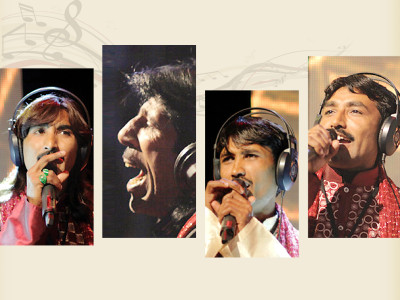
<p>Chakwali music recently soared in popularity when a group of Chakwali singers were picked up by “Coke Studio”. While there remains no doubt that producer Rohail Hyatt’s efforts to introduce unsung heroes is commendable, the inclusion of the Chakwal Group on their sets has invited wrath from Chakwal. The Muneer Hussain team, which is popular for <em>chabola</em> songs, struggled with two famous <em>himri</em> songs which they have never sung before. “Both ‘Kandyaari’  and ‘Jhulara’ have been badly spoiled at the set of ‘Coke Studio’,” moans Ustad Aziz. The third song, “Ishq Aap Bhe Awala”, falls in the strata of <em>chabola</em> songs and the people of Chakwal believe that it too was not performed as beautifully as it was by Bhapu Lohar, who first introduced the song.</p>
<p>Despite the criticism, Chakwal owes a great debt to “Coke Studio”, which paved new avenues for its singers. “We tried our best to introduce the culture of Chakwal with famous songs,” says Muneer Hussain, the lead singer of the Chakwal Group. When asked why they went for <em>himri</em> songs, he replied: “<em>Chabola </em>songs are short-lived but <em>himri</em> songs are immortal and are the real identity of Chakwal,” adding that the group is grateful to “Coke Studio” for giving hope to the singers of Chakwal, who receive no other encouragement.</p>
<p>Singers from Chakwal may have powerful voices, but they live in poverty and die quietly. “The government should at least provide free treatment if a singer is fatally ill,” appeals Bhapu Lohar, a singer that pulsates in the hearts of the people of Chakwal. Lamenting the death of famous <em>chabola</em> singer Jhangir Shah of the Pail village, Bhapu says that Jhangir Shah could not get himself treated properly and left this world too soon, leaving a vacuum which could never be fulfilled.<em></em></p>
<p><em>Published in The Express Tribune, July 24<sup>th</sup>, 2012.</em></p>
</p>
			<br clear="all"/>
		]]>
		</description>

		<media:content width="424" height="318"
							isDefault="true" medium="image" url="http://i1.tribune.com.pk/wp-content/uploads/2012/07/412046-ChakwalimusicphotoPublicity-1343051250-455-640x480.JPG">
			<media:title>Chakwali music -photo-Publicity</media:title>
			<media:description>Chakwali music recently soared in popularity when a group of local singers were picked up by ‘Coke Studio’. PHOTO: PUBLICITY</media:description>
			<media:thumbnail url="http://i1.tribune.com.pk/wp-content/uploads/2012/07/412046-ChakwalimusicphotoPublicity-1343051250-455-160x120.JPG" width="160" height="120" />
      </media:content>

		<wfw:commentRss></wfw:commentRss>
		<slash:comments>3</slash:comments>
	</item>
	
</channel>
</rss>
<!-- Performance optimized by W3 Total Cache. Learn more: http://www.w3-edge.com/wordpress-plugins/

Page Caching using apc
Database Caching 12/30 queries in 1.509 seconds using memcached
Object Caching 766/841 objects using apc

 Served from: tribune.com.pk @ 2013-05-23 02:04:38 by W3 Total Cache -->