<?xml version="1.0" encoding="UTF-8"?>
<rss version="2.0"
	xmlns:content="http://purl.org/rss/1.0/modules/content/"
	xmlns:wfw="http://wellformedweb.org/CommentAPI/"
	xmlns:dc="http://purl.org/dc/elements/1.1/"
	xmlns:atom="http://www.w3.org/2005/Atom"
	xmlns:sy="http://purl.org/rss/1.0/modules/syndication/"
	xmlns:slash="http://purl.org/rss/1.0/modules/slash/"
	xmlns:media="http://search.yahoo.com/mrss/"
	>

<channel>
	<title>The Express Tribune &#187; Kulsum Ebrahim</title>
	<atom:link href="http://tribune.com.pk/author/3101/kulsum-ebrahim/feed/" rel="self" type="application/rss+xml" />
	<link>http://tribune.com.pk</link>
	<description>Latest Breaking Pakistan News, Business, Life, Style, Cricket, Videos, Comments</description>
	<lastBuildDate>Wed, 22 May 2013 10:45:42 +0000</lastBuildDate>
	<language></language>
	<sy:updatePeriod>hourly</sy:updatePeriod>
	<sy:updateFrequency>1</sy:updateFrequency>
	<generator>http://wordpress.org/?v=3.5.1</generator>

		<item>
		<title>Modern-day Persian warriors battle it out over traditional Ramazan matches</title>
		<link>http://tribune.com.pk/story/414001/modern-day-persian-warriors-battle-it-out-over-traditional-ramazan-matches/</link>
		<pubDate>Sat, 28 Jul 2012 01:49:39 +0000</pubDate>

		<guid isPermaLink="false">http://tribune.com.pk/?p=414001</guid>

		<description>
		<![CDATA[
			<a href="http://tribune.com.pk/story/414001/modern-day-persian-warriors-battle-it-out-over-traditional-ramazan-matches/">
				<img src="http://i1.tribune.com.pk/wp-content/uploads/2012/07/414001-ParsiVolleyballTournamentPHOTOEXPRESS-1343415035-631-160x120.JPG" width="160" height="120" alt="" />
			</a>
			<p><div><strong class='location'>KARACHI:&nbsp;</strong>
<p><strong>Come Ramazan and Parsis in Karachi gear up for a volleyball face-off which is not just a 46-year-old sports tradition, but a highly competitive one.</strong></p>
</div>
<p>“Saying that the teams get competitive would be an understatement!” says Yashaan Mavalvala, who participated every year in the inter-colony volleyball tournament from 1998 till 2009, before leaving for his studies. “Every Ramazan, all the Parsis come together and almost kill each other out in the court during the tournament.”</p>
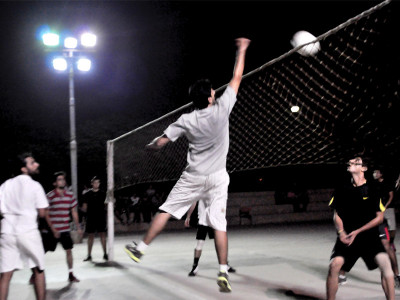
<p>Good humoured teasing, sometimes acidic, sometimes expletive-riddled, volleys forth over the court as the jibes are exchanged over who will win. “It’s awesome!” This Ramazan, six Parsi teams will participate in an inter-colony volleyball tournament. The tournament has been taking place every Ramazan, due to suitable work timings, at the Cyrus Minwala Colony Hall since 1966. This year, around 45 matches will be played which will begin at 6:30pm every day.</p>
<p>The matches are held on a floodlit court, surrounded by energetic fans in the stands. Participating colonies include the Anjumanbagh Colony and archrivals Cyrus Colony and Avari Colony. Due to the declining Parsi population in Karachi, three inter-colony teams that consist of a mix of players from different colonies, have also been created: Badboyz, Thrill Seekers, and the Persian Fighters.</p>
<p><strong>Trend through the ages</strong></p>
<p>Volleyball has been a prominent sport in the Parsi community, mostly due to its popularity at the Bai Virbaijee Sopariwala Parsi High School (BVS). “It is easy to play, doesn’t require much equipment, and there is no formal dress code. Just a small court and a ball,” explains a BVS alumnus with reference to the sport’s popularity in the school.</p>
<p>In 1993, the mud-court at the Cyrus Minwala Colony Hall was replaced with a concrete court for safety purposes. Before this, only two players played on each side according to standard beach volleyball rules. Today, between six to nine players represent each team on the court. There is also a junior volleyball tournament for the younger representatives of the community and a throw ball tournament for women. The winners of the tournaments are awarded trophies.</p>
<p>The love for volleyball has been passed down from generation to generation in the community with Parsi boys playing the sport from a young age. “I’ve always said volleyball is in our blood! We grew up with it and watched everybody fight for the cup. It is intense and amazing,” says Mavalvala who started going to the courts when just six-years-old. He would help Varun Mody practice his volleys in turn for lessons in serving.</p>
<p>Another enthusiast, 18-year-old Afshad Wania, started playing volleyball at the age of five and has been representing the Avari Colony in the tournament for the last seven years. He says his father plays the sport and always encouraged his sons to play as well. The tournament holds a lot of significance for Afshad, who says “most of us wait for it every year”.</p>
<p>Afshad’s elder brother, Kaezad, also started playing in the tournament when he was nine-years-old but can no longer participate as he is abroad for his studies. “I hate missing the tournament,” admits Kaezad.</p>
<p><strong>Low turnout, high spirits </strong></p>
<p>The teams are reducing in number each year, as is the crowd. “Back in 2009, we used to have 12 or 13 senior teams but these days we are lucky to get around six or seven,” says Mavalvala.</p>
<p>Veera Rustomji describes the tournament as “a bizarre Parsi ritual”. “It used to be a really big thing where everyone would go with snacks and posters. But now, everyone has left the country so it has fizzled out.” Despite the fizzling out, the tournament still draws in a large crowd of about 60 people, who add to the entertainment factor of the tournament with their colorful cheers. Food is sold at the hall, which is always a selling point. About 150 people attend the final matches and according to Mavalvala, the crowd goes wild.</p>
<p><em>Published in The Express Tribune, July 28<sup>th</sup>, 2012.</em></p>
</p>
			<br clear="all"/>
		]]>
		</description>

		<media:content width="424" height="318"
							isDefault="true" medium="image" url="http://i1.tribune.com.pk/wp-content/uploads/2012/07/414001-ParsiVolleyballTournamentPHOTOEXPRESS-1343415035-631-640x480.JPG">
			<media:title>Parsi Volleyball Tournament-PHOTO-EXPRESS</media:title>
			<media:description>The love of volleyball passes from generation to generation in the Parsi community. Some call it a ‘bizarre Parsi ritual’. PHOTO: EXPRESS</media:description>
			<media:thumbnail url="http://i1.tribune.com.pk/wp-content/uploads/2012/07/414001-ParsiVolleyballTournamentPHOTOEXPRESS-1343415035-631-160x120.JPG" width="160" height="120" />
      </media:content>

		<wfw:commentRss></wfw:commentRss>
		<slash:comments>7</slash:comments>
	</item>
		<item>
		<title>At AKU board, students excel without rote learning   </title>
		<link>http://tribune.com.pk/story/410270/at-aku-board-students-excel-without-rote-learning/</link>
		<pubDate>Wed, 18 Jul 2012 20:56:22 +0000</pubDate>

		<guid isPermaLink="false">http://tribune.com.pk/?p=410270</guid>

		<description>
		<![CDATA[
			<a href="http://tribune.com.pk/story/410270/at-aku-board-students-excel-without-rote-learning/">
				<img src="http://i1.tribune.com.pk/wp-content/uploads/2012/07/410270-StudentPHOTOEXPRESS-1342639962-161-160x120.jpg" width="160" height="120" alt="" />
			</a>
			<p><div><strong class='location'>KARACHI:&nbsp;</strong>
<p><strong>Zubaida Farooq, the mother of Sheharyar Farooq who placed third in the SCC examinations, was beaming with pride at her son’s achievement being celebrated at the Passing of the Torch student awards ceremony held at the Aga Khan University Examination Board (AKU-EB) on July 18. “He is our youngest, and the first to hold a position.”</strong></p>
</div>
<p>The second annual Passing the Torch ceremony celebrated students who attained distinctions in the Secondary School Certificate (SSC) and Higher Secondary School Certificate (HSSC). It was a literal ‘passing the torch’ ceremony as position holders from the previous year handed out certificates to this year’s top performers to highlight the transfer of knowledge and responsibility. The AKU-EB is a Federal Board of Intermediate and Secondary Education that was founded in 2003, offering examination services for SSC and HSSC across Pakistan and abroad.</p>
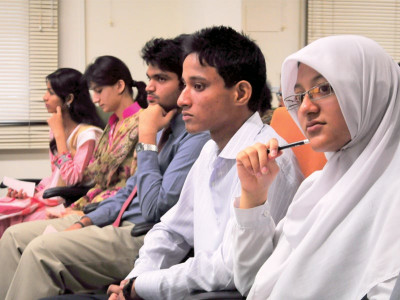
<p>AKU-EB Director Dr Thomas Christie congratulated the achievers, lauding their “sparkling performances.”</p>
<p>He said that it was commendable to see people from the Northern Areas also perform so well in the examinations. “This is the case of young people who have the grit and determination to succeed!”</p>
<p>Christie said he was “eager to see a trend towards a more thoughtful approach in which students were not simply absorbing the subject matter, but challenging it.”</p>
<p>In the SSC examinations, Syed Wahaj Ahmed of Shahwilayat Public School, Karachi took the first position, Sadaf Batool Rizvi of Al Murtaza School, Karachi came in second, and the third place was shared by Zehra Hussaini of Habib Girls School, and Sheharyar Farooq of Sultan Muhammad Shah Aga Khan School.</p>
<p>In the HSSC exams, Anum Zehra Raza of Aga Khan Higher Secondary School, Karachi was awarded the first position, Hafsa Jawed of Habib Public High School (Girls), Karachi snagged second place, and Adil Shah of the Aga Khan Higher Secondary School in Gahkuch, Gilgit Baltistan came in third.</p>
<p>Zehra Nizar, an AKU-EB alum who is currently studying at the Aga Khan University Medical College, spoke at the event. Nizar said it was a heart-warming experience to give away the awards, recalling her own joy when she was awarded third position for the HSSC in 2011. She said that the AKU-EB is unique in the sense that “the pattern of learning facilitates understanding, promotes conceptualisation, and negates rote-learning.” She explained the ceremony as a “symbol for passing on enlightenment.”</p>
<p>Hafsa Jawed, who clinched the second position in HSSC also emphasised the lack of rote-learning in these examinations. “A-Levels students say that their exams are difficult, but 50% of their questions are from past papers. In the AKU-EB, a question is never repeated.”</p>
<p>Sadaf Batool, who got the second position in the SCC exams, said that the syllabus was extremely lengthy and heavy on reading. “These exams are very difficult compared to the Sindh Board examinations because you have to read, understand and absorb knowledge.” Batool began studying for the exams last August, saying that her parents pushed her to strive to achieve a position. “The most important thing that helped me study was daily recitation of the Quran.”</p>
<p>Anum Zehra, who held the first position in HSSC, said she did her studying at night when her family was asleep. “I never took any tuition. My parents always helped me study.” She said that the AKU-EB is a transparent system and one can be sure about the results.</p>
<p>Since she wants to become a doctor, Anum Zehra believes the AKU-EB fully prepared her to sit for medical school entrance examinations. “The aptitude test for entrance to medical schools matches the conceptual pattern of AKU-EB exams,” she said.</p>
<p><em>Published in The Express Tribune, July 19<sup>th</sup>, 2012.</em></p>
</p>
			<br clear="all"/>
		]]>
		</description>

		<media:content width="424" height="318"
							isDefault="true" medium="image" url="http://i1.tribune.com.pk/wp-content/uploads/2012/07/410270-StudentPHOTOEXPRESS-1342639962-161-640x480.jpg">
			<media:title>Student-PHOTO-EXPRESS</media:title>
			<media:description>AKU-EB Director Dr Thomas Christie said he was eager to see a trend towards a more thoughtful approach towards education where students were not only absorbing the matter but challenging it. PHOTO: EXPRESS
</media:description>
			<media:thumbnail url="http://i1.tribune.com.pk/wp-content/uploads/2012/07/410270-StudentPHOTOEXPRESS-1342639962-161-160x120.jpg" width="160" height="120" />
      </media:content>

		<wfw:commentRss></wfw:commentRss>
		<slash:comments>5</slash:comments>
	</item>
		<item>
		<title>In 130 pages, Ikram Seghal captures the tale of his escape from India  </title>
		<link>http://tribune.com.pk/story/406987/in-130-pages-ikram-seghal-captures-the-tale-of-his-escape-from-india/</link>
		<pubDate>Wed, 11 Jul 2012 20:33:55 +0000</pubDate>

		<guid isPermaLink="false">http://tribune.com.pk/?p=406987</guid>

		<description>
		<![CDATA[
			<a href="http://tribune.com.pk/story/406987/in-130-pages-ikram-seghal-captures-the-tale-of-his-escape-from-india/">
				<img src="http://i1.tribune.com.pk/wp-content/uploads/2012/07/406987-office-1342032380-335-160x120.jpg" width="160" height="120" alt="" />
			</a>
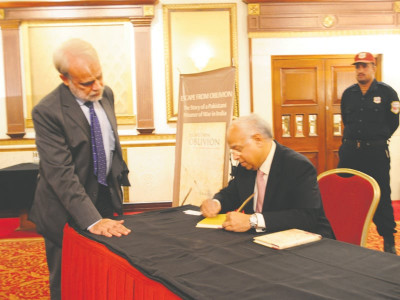
			<p><p><strong><strong class='location'>KARACHI:&nbsp;</strong>“My father was a prisoner of war in 1971, and those were the three most difficult years for my family,” said Mehnaz Nawab, who had come to the launch of Ikram Sehgal’s book, Escape from Oblivion: The story of a Pakistani prisoner of war in India, at the Pearl Continental Hotel on July 11. Nawab remembers that her father, Safdar Nawab, appeared “shaken and weak” when the whole family went to greet him excitedly at train station at Wagah Border.</strong></p>
<p>The book recounts Sehgal’s escape from Dhaka. He was tortured at the prisoner of war camp that had been established in 1971, until he escaped on the 100th day of his captivity. The chairman of JJ Media, Javed Jabbar, described the book as “candid, persuasive and extremely thrilling – an adventure unfolding.”</p>
<p>The 130-page book takes the reader through Sehgal’s journey back to Pakistan – from his encounters with the Hindus who led him to Calcutta, the American Consulate in Calcutta that provided him refuge and his final de-briefing after his return to his native land. Sehgal’s father was a Punjabi and his mother was a Bengali. Jabbar, who has been one of Sehgal’s close comrades for the last 35 years, said that “it is remarkable how the author himself personifies the dilemma of the 1971 war.”</p>
<p>Sehgal is a regular columnist as well as a defence and political analyst. He is currently the Chairman of Pathfinder G4S. He graduated from the Pakistan Military Academy in 1965 and was appointed as a Major in the Pakistan Army before retiring in 1974. He was the first Pakistani POW to escape from India in 1971.</p>
<p>Speakers at the event included Ameena Saiyid, the managing director of Oxford University Press, Lt. Gen. Ali Kuli Khan, Brig. Muhammad Taj, Brig. AR Siddiqi, the chief guest Imran Khan, and the highly esteemed author himself. All of them spoke highly of the book and the author.</p>
<p>Imran, who was just 18 during the war that led to the creation of Bangladesh, applauded Sehgal’s courage, saying that he can’t fathom the way Sehgal was interrogated by his own countrymen. “If you had been interrogated by the Pakistani intelligence agencies right now, you would be a missing person!” he added emphatically, as the crowd tittered.</p>
<p>Imran was playing an under-19 cricket match against the East Pakistan team just a few days before Sehgal was captured. He said that he was very apolitical at the time as he had been “shielded by the West Pakistan media.” Imran went on to describe his next few years in England in which he actively defended the Pakistan Army. It wasn’t until later in 1974, when he met Ashraf-ul-Haq, the captain of the East Pakistan team, that he fully realised the atrocities of the Pakistani army. Imran said that he didn’t blame the army, but the leadership. “I decided then, I would never back the military against our own people!”</p>
<p>Imran was a true crowd-pleaser as he put the record straight in front of the army heroes who still look at the East Pakistan debacle with colored eyes.</p>
<p>Brig. AR Siddiqi, a fellow columnist of Sehgal, marveled at the way Sehgal put his harrowing tale together in words. He described the book as a “unique privilege of seeing the war from both sides.” Lt. Gen. Ali Kuli Khan described the book as a “complete story of the web of circumstance that was the 1971 war.”</p>
<p>Brig. Muhammad Taj, who had commanded Sehgal, pulled at the heartstrings of the crowd as he described his experience with Sehgal. “You rarely find such soldiers,” he said proudly.</p>
<p><em>Published in The Express Tribune, July 12<sup>th</sup>, 2012.</em></p>
</p>
			<br clear="all"/>
		]]>
		</description>

		<media:content width="424" height="318"
							isDefault="true" medium="image" url="http://i1.tribune.com.pk/wp-content/uploads/2012/07/406987-office-1342032380-335-640x480.jpg">
			<media:title>ikram sehgal express</media:title>
			<media:description>Sehgal is a regular columnist as well as a defense and political analyst. PHOTO: EXPRESS 
</media:description>
			<media:thumbnail url="http://i1.tribune.com.pk/wp-content/uploads/2012/07/406987-office-1342032380-335-160x120.jpg" width="160" height="120" />
      </media:content>

		<wfw:commentRss></wfw:commentRss>
		<slash:comments>3</slash:comments>
	</item>
		<item>
		<title>People Walking in Space: ‘What is weird is contemporary’</title>
		<link>http://tribune.com.pk/story/406448/people-walking-in-space-what-is-weird-is-contemporary/</link>
		<pubDate>Wed, 11 Jul 2012 02:13:54 +0000</pubDate>

		<guid isPermaLink="false">http://tribune.com.pk/?p=406448</guid>

		<description>
		<![CDATA[
			<a href="http://tribune.com.pk/story/406448/people-walking-in-space-what-is-weird-is-contemporary/">
				<img src="http://i1.tribune.com.pk/wp-content/uploads/2012/07/406448-artPhotoscourtesyChawkandi-1341946033-684-160x120.jpg" width="160" height="120" alt="" />
			</a>
			<p><p><strong><strong class='location'>KARACHI:&nbsp;</strong> “Young, aspiring, and inspiring!” is what Shamim Akhter has to say about the three upcoming contemporary artists who are currently displaying their work at Chawkandi Art. Hussain Chandio, Zeeshan Memon, and Ali Karimi, opened their exhibition on July 10. Akhter, who is the editor of the Pakistan Art Review and an art critic, is enthused by the work, saying that these artists address things that are ignored in everyday life.</strong></p>
<p>Stepping into the gallery, the viewer’s eyes are drawn into the plethora of artwork that is on display. The gallery is packed with artists, art students, critics, and collectors who carefully take in the work and converse with the artists as they sip on coffee.</p>
<p>Zohra Hussain, who is the curator at Chawkandi Art is all smiles when she talks about these rising artists. “I wanted to bring together this enthusiastic group and give them a chance. They all hail from interior Sindh and are all full of fresh ideas,” said Hussain who started Chawkandi Art 27 years ago.</p>
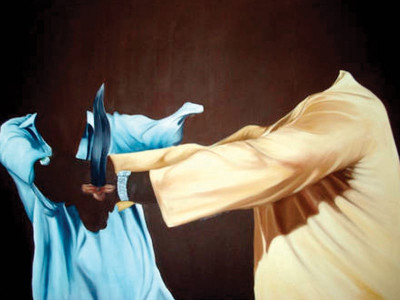
<p>Chandio’s series of work, titled ‘People Walking in Space’ is a refreshing rendition of a bird’s eye view. The unique perspective employed by Chandio has a gaggle of art students from the National City School of Art in Karachi. Chandio is interested in movement as well as unusual angles, and his work shows people dancing, walking, and playing games.</p>
<p>He captures the flurry of movement expertly. Chandio, 34, completed his studies from Sindh University, and is a lecturer of fine arts at Mehran University. Chandio mentions Warren Keating, an American artist, whose work is also based on aerial view as an inspiration.</p>
<p>Zeeshan Memon, 29, teaches at the Fakhta School of Arts in Karachi. His work comments on Pakistani films from the late 1980s. In the series of paintings displayed at the exhibit, he depicts typical scenes and gestures from Punjabi movies. A painting of a woman in a lime green kurta, sitting in typical Punjabi fashion is one that stands out in particular. He cites Maula Jutt as a personal favorite and one painting even features Sultan Rahi pulling a Kalashnikov away from a turbaned man. “I feel like things that happened in the films are happening everyday now. Seeing a man with a gun belted to his waist is commonplace,” Memon says pointing towards his painting. Maria Javed, who is applying to the Indus Valley School of Art and Architecture this August, is studying under Memon. “Zeeshan is promoting traditional Punjabi films through his paintings,” she said.</p>
<p>Ali Karimi, 30, is a rising senior majoring in miniature painting at the National College of Arts. He is displaying works in graphite, which has been his choice of medium for the last 10 years. Karimi plays with the idea of shadow, self, and the shadow-self, an idea inspired by the eminent psychologist Carl Jung. The concept of duality is vehemently present in all his work, in his choice of color, his experimentation with negative space, and in the subject matter itself.</p>
<p>“I haven’t seen anything like this, this is very innovative!” admits Kinza Nafis who is also a prospective student at Indus.</p>
<p>“This is weird,” says 12-year-old Hana. “That girl looks like Kirsten Stewart,” she adds, pointing at one of Karimi’s miniature looking a bit disconcerted.  Akhter pats her granddaughter’s head, “what is weird is contemporary,” she states simply.</p>
<p>The exhibition will continue till July 17.</p>
<p><em>Published in The Express Tribune, July 11<sup>th</sup>, 2012.</em></p>
</p>
			<br clear="all"/>
		]]>
		</description>

		<media:content width="424" height="318"
							isDefault="true" medium="image" url="http://i1.tribune.com.pk/wp-content/uploads/2012/07/406448-artPhotoscourtesyChawkandi-1341946033-684-640x480.jpg">
			<media:title>art-Photos courtesy-Chawkandi 01</media:title>
			<media:description>Painting 4 (Oil on canvas)
BY HUSSAIN CHANDIO. PHOTO COURTESY: CHAWKANDI
</media:description>
			<media:thumbnail url="http://i1.tribune.com.pk/wp-content/uploads/2012/07/406448-artPhotoscourtesyChawkandi-1341946033-684-160x120.jpg" width="160" height="120" />
      </media:content>

		<wfw:commentRss></wfw:commentRss>
		<slash:comments>1</slash:comments>
	</item>
		<item>
		<title>What are you doing next Sunday? Come buy books from Frere Hall</title>
		<link>http://tribune.com.pk/story/405933/what-are-you-doing-next-sunday-come-buy-books-from-frere-hall/</link>
		<pubDate>Mon, 09 Jul 2012 19:37:51 +0000</pubDate>

		<guid isPermaLink="false">http://tribune.com.pk/?p=405933</guid>

		<description>
		<![CDATA[
			<a href="http://tribune.com.pk/story/405933/what-are-you-doing-next-sunday-come-buy-books-from-frere-hall/">
				<img src="http://i1.tribune.com.pk/wp-content/uploads/2012/07/405933-BooksPHOTOEXPRESS-1341858668-172-160x120.JPG" width="160" height="120" alt="" />
			</a>
			<p><div><strong class='location'>KARACHI:&nbsp;</strong>
<p><strong>“Look! This book was gifted to Anwar Maqsood sahib,” says 53-year-old Khubaib Hayat excitedly, showing off the inscription in a book. Hayat, along with two of his best friends, Professor Rafiq Ahmed and Akhtar Baloch, are regulars at the Frere Hall book fair held every Sunday. </strong></p>
<p>They begin their day at 10 am, hitting book fairs around the city until they get to Frere Hall where they spend a good six hours rummaging through books and stocking up for their private collections. Rafiq Ahmed, an Urdu professor at Bahria City College is a connoisseur of Urdu literature. He expertly sifts through books, handing them out to friends. “Every book-seller here knows Rafiq sahib,” Hayat says proudly. “He has over 13,000 books in his collection.”</p>
</div>
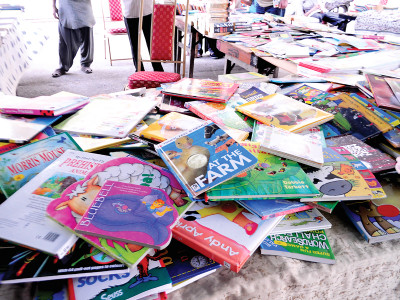
<p>Every week the Frere Hall transforms into a hub for the literati. The book fair resumed just a little over a year ago. It stopped in 2003 because of security reasons. With the relocation of the US Consulate to Mai Kolachi, Frere Hall has reopened its gates to Karachi’ites. There are eight bookstalls under a marquee, and those rummaging include women hunting for the perfect recipe book or teenagers trying to get the latest bestsellers.</p>
<p>Muneeza Rehman, a 21-year-old student from Dubai, was overwhelmed at the selection. “I’ve bought nine books already,” she says, holding up her bag. “They have all sorts of books here and they are cheap!”</p>
<p>Vakil Ahmed has worked as a bookseller for the last 18 years, and operates out of Urdu Bazaar during the week. “When the book fair shut down, my books gathered dust in my house. When I heard it was reopening I was very glad.”</p>
<p>Madhu Vastvani, a student from Mirpurkhas, carefully ran her fingers along a book titled ‘The Little Book of Great Ideas.’</p>
<p>“This is the first book I’m buying that is not in my school syllabus,” the smiling 15-year-old said.</p>
<p>Muhammad Ali has had a stall at the book fair since 1997. He used to run the Boat Basin branch of Mr Old Books, which recently closed down. He now brings books from his store in Khadda Market to Frere Hall. According to Ali, sales are higher at the fair.</p>
<p>Hamida Abbas, a regular visitor to the event, sifted through books with her daughter. “We are all readers,” she explains. “This is a clean environment, the prices are reasonable and you are free to look at the books with ease.”</p>
<p>With Frere Hall reopening, it has turned into a public space, the likes of which are becoming increasingly rare in Karachi. Children play football and cricket and families sit together enjoying ice-lollies.</p>
<p>Among those at the garden are a group of painters, who sit under the shade. The 72-year-old Dr Sayeed Manzur Hussain is part of the group, which has been coming to paint the Frere Hall every Sunday for the last six months. Dr Hussain practices at a clinic in Ancholi and always looks forward to his Sunday evening painting session. “It has become difficult for us outdoor painters to find good spots to paint. This is a secure environment,” he said.</p>
<p>Afshan Hasnain’s daughters tug at her kameez to drag her towards the books. “This is a great public space, open to all. It doesn’t matter how old you are, what you do, or where you come from.”<em></em></p>
<p><em>Published in The Express Tribune, July 10<sup>th</sup>, 2012.</em></p>
</p>
			<br clear="all"/>
		]]>
		</description>

		<media:content width="424" height="318"
							isDefault="true" medium="image" url="http://i1.tribune.com.pk/wp-content/uploads/2012/07/405933-BooksPHOTOEXPRESS-1341858668-172-640x480.JPG">
			<media:title>Books-PHOTO-EXPRESS</media:title>
			<media:description>There are eight bookstalls under a marquee and those rummaging include women hunting for the perfect recipe book or teenagers trying to get the latest bestsellers. PHOTO: EXPRESS</media:description>
			<media:thumbnail url="http://i1.tribune.com.pk/wp-content/uploads/2012/07/405933-BooksPHOTOEXPRESS-1341858668-172-160x120.JPG" width="160" height="120" />
      </media:content>

		<wfw:commentRss></wfw:commentRss>
		<slash:comments>0</slash:comments>
	</item>
	
</channel>
</rss>
<!-- Performance optimized by W3 Total Cache. Learn more: http://www.w3-edge.com/wordpress-plugins/

Page Caching using apc
Database Caching 12/32 queries in 1.596 seconds using memcached
Object Caching 876/963 objects using apc

 Served from: tribune.com.pk @ 2013-05-22 16:19:36 by W3 Total Cache -->