<?xml version="1.0" encoding="UTF-8"?>
<rss version="2.0"
	xmlns:content="http://purl.org/rss/1.0/modules/content/"
	xmlns:wfw="http://wellformedweb.org/CommentAPI/"
	xmlns:dc="http://purl.org/dc/elements/1.1/"
	xmlns:atom="http://www.w3.org/2005/Atom"
	xmlns:sy="http://purl.org/rss/1.0/modules/syndication/"
	xmlns:slash="http://purl.org/rss/1.0/modules/slash/"
	xmlns:media="http://search.yahoo.com/mrss/"
	>

<channel>
	<title>The Express Tribune &#187; Sana Jafrani</title>
	<atom:link href="http://tribune.com.pk/author/3000/sana-jafrani/feed/" rel="self" type="application/rss+xml" />
	<link>http://tribune.com.pk</link>
	<description>Latest Breaking Pakistan News, Business, Life, Style, Cricket, Videos, Comments</description>
	<lastBuildDate>Sat, 18 May 2013 22:32:04 +0000</lastBuildDate>
	<language></language>
	<sy:updatePeriod>hourly</sy:updatePeriod>
	<sy:updateFrequency>1</sy:updateFrequency>
	<generator>http://wordpress.org/?v=3.5.1</generator>

		<item>
		<title>KLF: Three out of six, pairs of foreign eyes look at Pakistan</title>
		<link>http://tribune.com.pk/story/508802/klf-three-out-of-six-pairs-of-foreign-eyes-look-at-pakistan/</link>
		<pubDate>Sun, 17 Feb 2013 19:16:43 +0000</pubDate>

		<guid isPermaLink="false">http://tribune.com.pk/?p=508802</guid>

		<description>
		<![CDATA[
			<a href="http://tribune.com.pk/story/508802/klf-three-out-of-six-pairs-of-foreign-eyes-look-at-pakistan/">
				<img src="http://i1.tribune.com.pk/wp-content/uploads/2013/02/508802-hasan-1361128401-219-160x120.jpg" width="160" height="120" alt="" />
			</a>
			<p><div><strong class='location'>KARACHI:&nbsp;</strong>
<p><strong>Pakistan was supposed to be seen through six pairs of foreign eyes on day three of the fourth Karachi Literature Festival, but only three made it to the stage.</strong></p>
</div>
<p>Hasnain Kazim, the South Asian correspondent for <i>Der Spiegel</i>, journalist and author Yassin Musharbash, and journalist Declan Walsh of <i>The New York Times</i> were on the panel of ‘Pakistan Through Foreign Eyes’ moderated by columnist Cyril Almeida.</p>
<p>Reporting on the region was easier for Kazim due to his Pakistani roots and the fact that he spoke a decent amount of Urdu. Most Pakistanis have not read his articles given they are published in German, but he mentioned that the authorities do keep an eye on what he writes.</p>
<p>“They tell me, ‘Mr Kazim, you have to be patriotic also.’ To that I say no, it is not my job to portray a positive or negative picture, just a true picture,” he said. Kazim was disturbed that people have moved on from Saturday’s blast in Balochistan that claimed over 80 lives so quickly. “For me it seems very odd that … somehow life goes on. People call it ‘Pakistani resilience’, but I think you could call it complacence also, because you’re not really doing anything about it.”</p>
<p>Yassin Musharbash, another German journalist and author, was on his first trip to Pakistan, and clarified that he was not an expert on Pakistan. “Pakistan is one big riddle to me,” he said, explaining that his expertise is on al Qaeda and terrorism.</p>
<p>“I couldn’t have done that job [discuss al Qaeda] without writing about Pakistan, which is a weird situation because I don’t like writing about stuff I don’t understand,” he admitted.</p>
<p><img alt="" src="http://pullquotesandexcerpts.files.wordpress.com/2013/02/hasnain-kazim1.jpg?w=625" /></p>
<p>Musharbash recalled the time he had to put together an info-graphic on terror attacks across the world. When he and his producer decided to include Pakistan, the producer told him there were too many. “This may sound bad but I told her ‘How about we only count the ones with at least 20 people dead?’. She called back and said, that’s still too many.” For him, that was the moment it occurred to him “what a terrible tragedy you are living through in this country”.</p>
<p>Declan Walsh, who is <i>The New York Times</i>’ Pakistan bureau chief, has had a relationship with Pakistan for the past nine years. His move from the British newspaper <i>The Guardian</i> came under scrutiny, but he deflected the objections by saying that, “The people I work with, despite what some people think, are quite professional. It [<i>The New York Times</i>] is not run by a cabal of Jews,” he said, to a chuckling audience. “It does view the world through an American lens,” he added, explaining that it is mainly because of its American readership.</p>
<p>Walsh felt that the US interest in Pakistan will probably wane in the coming years, and that will lead to a reduction in media coverage. “The American withdrawal from Afghanistan…will, I believe, have quite a profound effect on Pakistan.”</p>
<p>The discussion was followed by a long question-answer session, in which a woman, who lost her son to target killing last year, took the mic only to address Muttahida Qaumi Movement’s Farooq Sattar, who happened to be seated in the front row.</p>
<p>Walsh did face criticism on the ‘soft topics’, such as the fashion week, which he has written on. “There is no one Pakistan. There are many Pakistans that exist side by side. Our responsibility is not to reflect one or the other, but to try and present all of them at various times.”</p>
<p><i>Published in The Express Tribune, February </i><i>18<sup>th</sup>, 2013.</i></p>
</p>
			<br clear="all"/>
		]]>
		</description>

		<media:content width="424" height="318"
							isDefault="true" medium="image" url="http://i1.tribune.com.pk/wp-content/uploads/2013/02/508802-hasan-1361128401-219-640x480.jpg">
			<media:title>hasan</media:title>
			<media:description>Hasnain Kazim. PHOTO: EXPRESS</media:description>
			<media:thumbnail url="http://i1.tribune.com.pk/wp-content/uploads/2013/02/508802-hasan-1361128401-219-160x120.jpg" width="160" height="120" />
      </media:content>

		<wfw:commentRss></wfw:commentRss>
		<slash:comments>4</slash:comments>
	</item>
		<item>
		<title>Karachi Literature Festival: Trying to ‘burrow under barbed wire fences’</title>
		<link>http://tribune.com.pk/story/508542/karachi-literature-festival-trying-to-burrow-under-barbed-wire-fences/</link>
		<pubDate>Sun, 17 Feb 2013 06:21:30 +0000</pubDate>

		<guid isPermaLink="false">http://tribune.com.pk/?p=508542</guid>

		<description>
		<![CDATA[
			<a href="http://tribune.com.pk/story/508542/karachi-literature-festival-trying-to-burrow-under-barbed-wire-fences/">
				<img src="http://i1.tribune.com.pk/wp-content/uploads/2013/02/508542-KanakManiDixitexpress-1361082006-680-160x120.JPG" width="160" height="120" alt="" />
			</a>
			<p><div><strong class='location'>KARACHI:&nbsp;</strong>
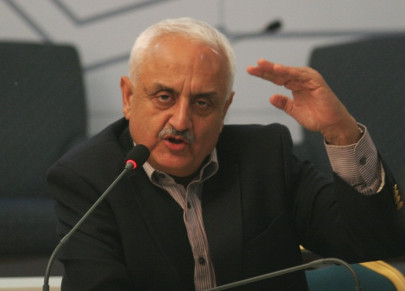
<p><strong>Kanak Mani Dixit hails from Nepal, but he would like us to know and understand that he is South Asian, and we are too. For the past 15 years he has published the journal, Himal Southasian, from Kathmandu, which produces what he calls ‘cross border’ journalism.</strong></p>
</div>
<p>Setting the tone for Dixit’s talk was veteran journalist Ghazi Salahuddin. “All of us write South Asia as two words, Mani says no, South Asia is one word. It’s his innermost desire to make it one word”.</p>
<p>Dixit himself stressed the importance of a South Asian identity. “I feel that we are not fulfilled, individually in South Asia if we make our primary identity our citizenship or nationality. There’s one identity above it all which also needs to be considered…that is that of our South Asian identity.”</p>
<p>Addressing the work Himal does, he said, “It is more about doing journalism that looks at issues of economics, identity, geopolitics.”  He added that Himal’s goal is not to cater to Western readers, but to bring change within his “own people”.</p>
<p>“The Himalaya is like a clothesline, from the Karakoram to the Hind Kush, on it hangs the subcontinent… so why not make a magazine for all of South Asia?”</p>
<p>Dixit argued that so much national journalism is “coloured by a nation-state perspective”.</p>
<p>The crux of the problem, he says, is that we develop our nationalism based on our capital elites. “So Pakistan is defined by Islamabad, India by New Delhi…there is a coagulation of interests at the center level. When that happens, we lose something. And that is what we’re trying to undo.”</p>
<p>Dixit said that he accepts all existing boundaries within South Asia, but says the publication’s efforts are to “burrow under these barbed wire fences that separate us”.</p>
<p>Pervez Hoodbhoy, who was in the audience, commented that on a recent trip to Nepal, he was struck by the similarity to every part of Pakistan. He noted that there was a “cultural continuity” that he felt in the country.</p>
<p>The biggest challenge for a South Asian, says Dixit, is the quality of empathy. “This implies that you are able to critique yourself and that you are able to understand the other person’s joys and pains—and do something about it.”</p>
<p>He said the great liberal spirit of Pakistani society which has been clouded over by layers of the India-Pakistan rivalry.</p>
<p>“When I read Pakistani press in English I do realize there is more challenge to the Pakistani state by Pakistani intellectuals and civil society than their Indian counterparts,” said Dixit.</p>
<p>“My personal, non-historian take, in terms of challenges for the Pakistani state is that I feel that history was taken away from Pakistan…history that it should consider its own,”said Dixit. “With the stroke of a pen of Nehru, the history of India was hijacked by one country, which is India the nation-state.”</p>
<p><em>Published in The Express Tribune, February 17<sup>th</sup>, 2013.</em></p>
</p>
			<br clear="all"/>
		]]>
		</description>

		<media:content width="424" height="318"
							isDefault="true" medium="image" url="http://i1.tribune.com.pk/wp-content/uploads/2013/02/508542-KanakManiDixitexpress-1361082006-680-640x480.JPG">
			<media:title>Kanak Mani Dixit- express</media:title>
			<media:description>Kanak Mani Dixit. PHOTO: EXPRESS</media:description>
			<media:thumbnail url="http://i1.tribune.com.pk/wp-content/uploads/2013/02/508542-KanakManiDixitexpress-1361082006-680-160x120.JPG" width="160" height="120" />
      </media:content>

		<wfw:commentRss></wfw:commentRss>
		<slash:comments>2</slash:comments>
	</item>
		<item>
		<title>Sharing strategies: Strengthen institutions, US policy aide tells Pakistanis</title>
		<link>http://tribune.com.pk/story/433288/sharing-strategies-strengthen-institutions-us-policy-aide-tells-pakistanis/</link>
		<pubDate>Sat, 08 Sep 2012 04:40:37 +0000</pubDate>

		<guid isPermaLink="false">http://tribune.com.pk/?p=433288</guid>

		<description>
		<![CDATA[
			<a href="http://tribune.com.pk/story/433288/sharing-strategies-strengthen-institutions-us-policy-aide-tells-pakistanis/">
				<img src="http://i1.tribune.com.pk/wp-content/uploads/2012/09/433288-EhsanZaffar-1347047834-833-160x120.JPG" width="160" height="120" alt="" />
			</a>
			<p><div><strong class='location'>KARACHI:&nbsp;</strong>
<p><strong>A policy adviser to the US Department of Homeland Security (DHS), Ehsan Zaffar, has said that Pakistanis need to seriously consider the state of civil society in their country.</strong></p>
</div>
<p>“All of the internal mechanisms are only going to work so long in the face of deteriorating social and economic conditions,” Zaffar told <em>The Express Tribune</em>.</p>
<p>He is in Pakistan on a trip to share strategies for engaging government leaders on civil rights issues as well as learning from Pakistani people.</p>
<p>Zaffar works at the office for Civil Rights and Civil Liberties at the Department of Homeland Security in Washington DC, where he advises the Secretary of Homeland Security on the civil rights and civil liberties implications of national security policies, programmes and procedures.</p>
<p>He also heads the department’s civil rights engagement initiatives with the Pakistani-American community.</p>
<p>Zaffar said what he gathered from people he had met so far was that Pakistanis deal with a lot of inadequate institutions and a lack of a “spirit of volunteerism”.</p>
<p>He said Pakistanis need to work on strengthening their institutions, adding that a key to resolving these issues is spreading the word and developing allies both in and outside the country.</p>
<p>He added that he found Pakistani people to be “incredibly resilient,” despite turmoil in the country, citing load-shedding in Punjab as an example.</p>
<p>“If I was dealing with 12 hours of load-shedding in Punjab, I’d lose my mind. The cultural fabric of the country is doing a lot to keep people going.”</p>
<p>His visit included meetings with law students, human and civil rights activists, musicians, lawyers and others.</p>
<p>“This is the work I do; how does the homeland connect with the people, how does government connect with minorities and take into account the needs and wants of people who probably have the least amount of resources to deal with these issues,” said Zaffar.</p>
<p><strong>Securing the homeland: India and Pakistan</strong></p>
<p>When asked about the efficiency of the DHS in reducing a possible terror threat, he responded, “I believe DHS has been very effective in minimising the terror threat, but there is always more work to be done.  For me, it’s important to continue working to secure the country while ensuring that civil rights and civil liberties are protected.”</p>
<p>He also provided insight on ways Pakistan and India could implement a similar programme.</p>
<p>“As victims of violent extremism and terrorism, both Pakistan and India could benefit from a holistic approach to securing the homeland – particularly because it allows for a consolidation of information and breaks down the “silos” within which government security apparatus operate.”</p>
<p>Zaffar did not answer questions about the legality of the US drone policy around the world, saying he was not an expert on the subject, and therefore, unqualified to offer a legal opinion.</p>
<p><strong>Engaging with Pakistani-Americans</strong></p>
<p>Providing details of his engagement with the Pakistani American community, Zaffar said his work has aided the creation of security exceptions for pilgrims entering the US with Abe-ZamZam after Hajj as well as creating new policies for screening hijabis, and creating a limited English proficiency programme to include Urdu.</p>
<p>“Our consultation with Pakistani-American NGOs results in more accurate and culturally sensitive policy,” he said.</p>
<p><strong>Racial profiling</strong></p>
<p>A major issue among Pakistanis post 9/11 has been reports of racial profiling at US airports.  Zaffar said that all Transportation Security Administration (TSA) officers receive stringent civil rights training.</p>
<p>“Both the TSA administrator and the homeland security secretary have repeatedly emphasised that there is no room for profiling and moreover, that racial profiling hampers and does not help keep the country’s airports safe.”</p>
<p><em>Published in The Express Tribune, September 8<sup>th</sup>, 2012.</em></p>
</p>
			<br clear="all"/>
		]]>
		</description>

		<media:content width="424" height="318"
							isDefault="true" medium="image" url="http://i1.tribune.com.pk/wp-content/uploads/2012/09/433288-EhsanZaffar-1347047834-833-640x480.JPG">
			<media:title>Ehsan Zaffar</media:title>
			<media:description>Homeland security adviser backs engagement on civil rights.</media:description>
			<media:thumbnail url="http://i1.tribune.com.pk/wp-content/uploads/2012/09/433288-EhsanZaffar-1347047834-833-160x120.JPG" width="160" height="120" />
      </media:content>

		<wfw:commentRss></wfw:commentRss>
		<slash:comments>0</slash:comments>
	</item>
		<item>
		<title>Fafen report: Assertive parliament vital to democracy</title>
		<link>http://tribune.com.pk/story/422247/fafen-report-assertive-parliament-vital-to-democracy/</link>
		<pubDate>Wed, 15 Aug 2012 04:46:28 +0000</pubDate>

		<guid isPermaLink="false">http://tribune.com.pk/?p=422247</guid>

		<description>
		<![CDATA[
			<a href="http://tribune.com.pk/story/422247/fafen-report-assertive-parliament-vital-to-democracy/">
				<img src="http://i1.tribune.com.pk/wp-content/uploads/2012/08/422247-Graph-1344973599-686-160x120.JPG" width="160" height="120" alt="" />
			</a>
			<p><div><strong class='location'>KARACHI:&nbsp;</strong>
<p><strong>A strong and assertive parliament is essential for democratic development in Pakistan, says a Free and Fair Election Network (FAFEN) report on the performance of the National Assembly in its fourth parliamentary year.</strong></p>
</div>
<p>The report says wide-ranging reforms need to be implemented in order for the parliament to function properly and enforce its decisions.</p>
<p>The report suggests that the reforms focus on enhancing the role of the standing committees, improving transparency, participation and attendance of legislators, the role of the chair, misuse of points of order and ensuring government promises to the House. In order to achieve success, reforms would have to be implemented in the Rules of Procedures and Conduct of Business that govern the National Assembly.</p>
<p>The targeted reforms suggested by FAFEN are considered essential to improving parliamentary efficiency and the effectiveness of its core functions which consist of legislation, executive oversight and representation.</p>
<p>Additionally, the network has urged all political parties to initiate a public debate on the issue of parliamentary supremacy at a time when it is being questioned.</p>
<p>The report recommends that political parties include their vision and plans for parliamentary reforms in their manifestoes, and to make them available before the upcoming elections.</p>
<p>FAFEN’s broader recommendations for improvement in parliamentary effectiveness have been made following four years of observation of the National Assembly proceedings.</p>
<p>In moving towards parliamentary transparency, improved access to parliamentary proceedings for citizens would be a step forward. There is also a need for parliamentary parties to ensure that their members are participating in the sessions and contributing quality input.</p>
<p>A crucial point made in the report was that the attendance of members is vital to assembly sittings. It was also recommended that the National Assembly Secretariat keep a record of the actual time spent by members in the assembly, highlighting lack of quorum.</p>
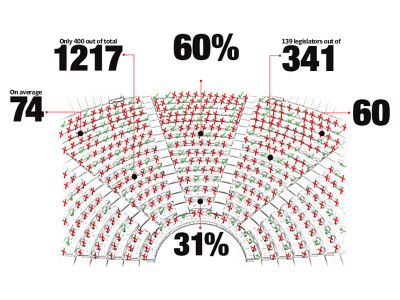
<p>The report alleges that the government and the opposition have reached an unwritten understanding on not pointing out a lack of quorum in the National Assembly. Fafen reports that the point was not made even once during the entire year. On average, 74 members were present at the beginning and 80 at the adjournment of each sitting during the year.</p>
<p>Additionally, it was noted that when legislators do appear, they do not participate.  The report pointed out that 60 legislators did not participate in any form of parliamentary intervention throughout the fourth parliamentary year.</p>
<p>The report also suggests additional orientation and training for the parliamentarians on fundamental responsibilities, adding that they should also be trained on basic parliamentary procedures, particularly those that are commonly misused, such as points of order.</p>
<p>A total of 1,275 points of order were raised in the fourth year, which consumed 31% of the total time. The report indicates that the excessive use of points of order cuts into the time allocated for the regular agenda, 60% of which remained unaddressed.</p>
<p>Fafen points out that in preparing the national budget, parliamentarians are given less than two weeks for debate. It has recommended giving legislators more time and information on the budgetary proposals and encouraged the scrutiny of ministries’ budgets by the relevant standing committee.  In the fourth parliamentary year, 139 legislators out of 341 took part in the budget debate for only 34 hours.</p>
<p>In keeping with the idea of increased transparency, it was suggested that the National Assembly maintain a ‘public record’ of parliamentary business, thus enabling constituents to stay informed on the performance of their representatives.</p>
<p>Fafen also suggests that the question hour is being underutilized due to a lack of attendance. During the fourth parliamentary year only 400 out of total 1,271 oral questions were answered by the ministers.</p>
<p>It was also suggested that all questions be made available to legislators and the public and responded to within the stipulated timeframe.</p>
<p>Additionally, it was recommended that a comprehensive mechanism be in place to track government assurances given to the House on various parliamentary interventions. A total of 101 brief statements were made in response to calling attention notices in the fourth year.</p>
<p><em>Published in The Express Tribune, August 15<sup>th</sup>, 2012.</em></p>
</p>
			<br clear="all"/>
		]]>
		</description>

		<media:content width="424" height="318"
							isDefault="true" medium="image" url="http://i1.tribune.com.pk/wp-content/uploads/2012/08/422247-Graph-1344973599-686-640x480.JPG">
			<media:title>Graph01</media:title>
			<media:description>The performance of NA in its fourth parliamentary year comes under focus. DESIGN: SAMRA AAMIR</media:description>
			<media:thumbnail url="http://i1.tribune.com.pk/wp-content/uploads/2012/08/422247-Graph-1344973599-686-160x120.JPG" width="160" height="120" />
      </media:content>

		<wfw:commentRss></wfw:commentRss>
		<slash:comments>2</slash:comments>
	</item>
		<item>
		<title>Twitter is the new newsroom: The changing face of journalism   </title>
		<link>http://tribune.com.pk/story/408709/twitter-is-the-new-newsroom-the-changing-face-of-journalism/</link>
		<pubDate>Sun, 15 Jul 2012 21:44:17 +0000</pubDate>

		<guid isPermaLink="false">http://tribune.com.pk/?p=408709</guid>

		<description>
		<![CDATA[
			<a href="http://tribune.com.pk/story/408709/twitter-is-the-new-newsroom-the-changing-face-of-journalism/">
				<img src="http://i1.tribune.com.pk/wp-content/uploads/2012/07/408709-MohammadHanifPHOTOARIFSOOMROEXPRESS-1342388615-185-160x120.jpg" width="160" height="120" alt="" />
			</a>
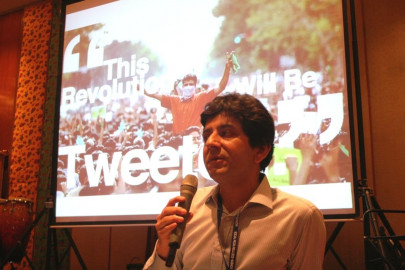
			<p><p><strong><strong class='location'>KARACHI:&nbsp;</strong>At Saturday’s session on Twitter in the newsroom, a consensus seemed to emerge that social media cannot replace mainstream media, rather, they have to work in tandem to be effective.</strong></p>
<p>The session was moderated by popular tweeter who goes by the handle <a href="https://twitter.com/mightyobvious">@mightyobvious</a>, Hassan Belal. The panel included Indian journalist Karuna John, journalist Mehmal Sarfraz, author and journalist Mohammed Hanif, security analyst and citizen journalist Norbert Almeida and Bilal Lakhani, publisher of <em>The Express Tribune</em>.</p>
<p>“Twitter is just a tool. The ethos of being a journalist cannot change on Twitter,” said John, adding that “not everybody is online.”</p>
<p>Author Mohammed Hanif was adamant in his opinion that nothing can replace journalists and real news. “If you want news, pick up a newspaper. If you want history, pick up a history book,” he said.  “Twitter is scary, I woke up two days ago and #Jinnah was trending. I was like, is he back?!”</p>
<p>So, can social media replace mainstream media?</p>
<p>“No, it can’t,” said Almeida, “I wouldn’t want it to, there’s an issue of credibility.” He said that Twitter supplements what you see on television or read in the news adding that he uses Twitter as a tool. The example he used was his tweets on violence around the city allowing people to find an alternative route home, or alerting his followers on other events. He said social media is about helping people and touching their lives.</p>
<p>“I had a need for information that was not there,” he said, adding that on Twitter, he is able to connect with people and get information “from Khyber down to Karachi.”</p>
<p>It was noted in the session that those who are active on social media like to think everyone who matters is on Twitter, but that is simply not the case. Karuna John said that there is a level of responsibility journalists have to uphold on Twitter. “Keep your trap a little moderated for yourself,” she said.</p>
<p>Mehmal Sarfraz said that social media has helped shed some light on issues that cannot be discussed openly in the mainstream media. She gave examples of minority or sectarian issues and Balochistan.</p>
<p>Belal concluded the session by pointing out that there is a definite disconnect between content in both mediums, with John adding that it would be helpful if the two were able to feed off each other instead.</p>
<p><em>Published in The Express Tribune, July 16<sup>th</sup>, 2012.</em></p>
</p>
			<br clear="all"/>
		]]>
		</description>

		<media:content width="424" height="318"
							isDefault="true" medium="image" url="http://i1.tribune.com.pk/wp-content/uploads/2012/07/408709-MohammadHanifPHOTOARIFSOOMROEXPRESS-1342388615-185-640x480.jpg">
			<media:title>Mohammad Hanif-PHOTO-ARIF SOOMRO-EXPRESS</media:title>
			<media:description>Author Mohammed Hanif was adamant in his opinion that nothing can replace journalists and real news. PHOTO: ARIF SOOMRO/EXPRESS </media:description>
			<media:thumbnail url="http://i1.tribune.com.pk/wp-content/uploads/2012/07/408709-MohammadHanifPHOTOARIFSOOMROEXPRESS-1342388615-185-160x120.jpg" width="160" height="120" />
      </media:content>

		<wfw:commentRss></wfw:commentRss>
		<slash:comments>2</slash:comments>
	</item>
		<item>
		<title>How social media paved the way for discussing Saleem Shahzad  </title>
		<link>http://tribune.com.pk/story/408459/how-social-media-paved-the-way-for-discussing-saleem-shahzad/</link>
		<pubDate>Sat, 14 Jul 2012 21:19:40 +0000</pubDate>

		<guid isPermaLink="false">http://tribune.com.pk/?p=408459</guid>

		<description>
		<![CDATA[
			<a href="http://tribune.com.pk/story/408459/how-social-media-paved-the-way-for-discussing-saleem-shahzad/">
				<img src="http://i1.tribune.com.pk/wp-content/uploads/2012/07/408459-alidayyan-1342300633-648-160x120.JPG" width="160" height="120" alt="" />
			</a>
			<p><div>
<p><strong>Speaking at a session focused on the effect of social media on human rights, Ali Dayan Hasan, Pakistan Director of Human Rights Watch (HRW) lauded the ability of the social media to quickly disseminate information and record the atrocities world over. But he also highlighted the limitations of the medium.</strong></p>
</div>
<p>“With the internet anybody can be a publisher. The press is no longer the sole medium for exposing government abuse,” he said.  “However, the press is still very important. There can be a lot of noise in social media but if the policy makers don’t listen it doesn’t matter.”</p>
<p>However, added Hasan, Twitter and Facebook were great tools for mobilising the public opinion but not so good to have an effect at policy change by governments.  When HRW tweets some information, he said, it is echoed in the social media, this making its way to the mainstream media. “In a sense, it makes our jobs easier.”</p>
<p>Using a sobering example of how far-reaching the social media can be, Hasan discussed the disappearance of the late journalist Saleem Shahzad.  “Because Shahzad had left me with information whereby I could make a credible claim that he had received threats from intelligence agencies, I felt that I could put that information in the public domain,” he said.</p>
<p>He continued to explain that the tweets about Shehzad enabled the Pakistani media to discuss the issue. “Because they could cite Human Rights Watch, it made it easier for them bring it into the public domain,” he said.  “The purpose was for the man to emerge alive and tragically he didn’t.  As a result, the story became even bigger.”</p>
<p>The local channels began running the story with Shahzad’s picture after the attention it got on Twitter. Hasan said that this information is what made it easier to identify his body when it was found and consequently resulted in a post-mortem which eventually revealed that he was tortured to death. Often, Hasan pointed out, bodies are found and never identified.</p>
<p>“It is no longer possible for governments to hide the atrocities that they commit because the information is now available in real time.”  Hasan gave the examples of the Holocaust, Khmer Rouge and crimes committed by Saddam Hussain in Iraq.</p>
<p>“The human rights movement is built on the simple premise that information has power,” Hasan said. “If you can reveal what a government is doing to abuse its people you can change that behaviour.  Every government hates to have its human rights abuses spotlighted.”</p>
<p><em>Published in The Express Tribune, July 15<sup>th</sup>, 2012.</em></p>
</p>
			<br clear="all"/>
		]]>
		</description>

		<media:content width="424" height="318"
							isDefault="true" medium="image" url="http://i1.tribune.com.pk/wp-content/uploads/2012/07/408459-alidayyan-1342300633-648-640x480.JPG">
			<media:title>ali dayyan</media:title>
			<media:description>Ali Dayan Hasan, Pakistan Director of Human Rights Watch (HRW) lauded the ability of the social media to quickly disseminate information and record the atrocities world over. PHOTO: ATHAR KHAN</media:description>
			<media:thumbnail url="http://i1.tribune.com.pk/wp-content/uploads/2012/07/408459-alidayyan-1342300633-648-160x120.JPG" width="160" height="120" />
      </media:content>

		<wfw:commentRss></wfw:commentRss>
		<slash:comments>1</slash:comments>
	</item>
		<item>
		<title>Pakistani teens bag prize at international science fair</title>
		<link>http://tribune.com.pk/story/381538/pakistani-teens-bag-prize-at-international-science-fair/</link>
		<pubDate>Sun, 20 May 2012 04:26:24 +0000</pubDate>

		<guid isPermaLink="false">http://tribune.com.pk/?p=381538</guid>

		<description>
		<![CDATA[
			<a href="http://tribune.com.pk/story/381538/pakistani-teens-bag-prize-at-international-science-fair/">
				<img src="http://i1.tribune.com.pk/wp-content/uploads/2012/05/381538-ISEFPakistaniwinners-1337487965-925-160x120.JPG" width="160" height="120" alt="" />
			</a>
			<p><div><strong class='location'>PITTSBURGH:&nbsp;</strong>
<p><strong>Three Pakistani teenagers managed to snag fourth place at the international science fair in the US on Friday.</strong></p>
</div>
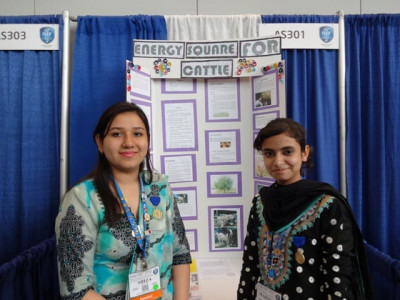
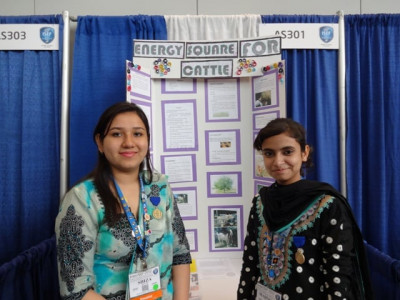
<p>The project entitled “Energy Square for Cattle,” created by Mahnoor Hassan, Shiza Gulab and Bushra Shahed of the Institute of Computer and Management Sciences in Peshawar, took fourth prize, and a $500 award, in the Animal Sciences Category at the Grand Awards Ceremony of the Intel International Science and Engineering Fair in Pittsburgh.</p>
<p>The event is the world’s largest pre-college science fair.</p>
<p>Hassan and Gulab, who were present to collect their prize, explained that their project is good for livestock in times of a natural disaster.</p>
<p>“People think of themselves in times of disaster before animals,” said Gulab, while referring to the recent floods in Pakistan. “This square makes it easier to look out for the well-being of livestock also,” she added.</p>
<p>The girls said that just a few licks of their energy square controlled diseases, increased milk production and increased weight in cattle after just 28 days.</p>
<p>The squares are a dry mix of a variety of ingredients, such as mulberry, urea and calcium, which provide vitamins and protein to the animal.</p>
<p>“Because people who have animals are usually poor, we have created an affordable option for them,” said Gulab.</p>
<p>The fair, held between May 13-18, concluded on Friday afternoon in a confetti haze as the top prizewinner was announced. The winner was 15-year-old Jack Andraka from the US state of Maryland, who created a Non-Invasive Pancreatic Cancer Detection Tool.</p>
<p>“This competition encourages millions of students to engage their skills for innovation and develop promising solutions for global challenges,” said Executive Director of the Intel Foundation Wendy Hawkins.</p>
<p><strong>Meet the finalists</strong></p>
<p>If you’re looking for inspiration, look no further than Pakistan’s finalists at the Isef.</p>
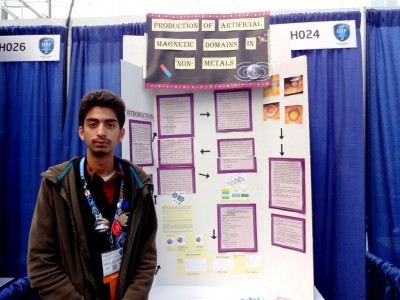
<p>“I want to be the greatest scientist in the world,” proclaimed finalist Syed Shahzeb Zarrar. Zarrar, along with two other finalists, arrived in Pittsburgh last week. While five finalists were named in Pakistan, only three managed to obtain a visa.</p>
<p>“Every Pakistani should know about Isef. Everyone has a hidden talent. Because of Isef, I was able to discover mine,” said Zarrar.</p>
<p>It took him approximately eight months to complete his project entitled ‘Production of Artificial Magnetic Domains in Non-Metals’. He explained that electricity could be produced cheaply if non metals were employed and added that his project could easily be used in Pakistan.</p>
<p>“I’ve made friends from India, Japan, and even New Mexico thanks to this conference. It’s amazing,” said Zarrar, who attends Iqra Army Public School and College in Quetta.</p>
<p>Another finalist who missed the event was Musa Rahim Khan of Aga Khan Higher Secondary School in Chitral, whose project was titled, ‘Water and Heat Detector’.<em></em></p>
<p><em>Published in The Express Tribune, May 20<sup>th</sup>, 2012.</em></p>
</p>
			<br clear="all"/>
		]]>
		</description>

		<media:content width="424" height="318"
							isDefault="true" medium="image" url="http://i1.tribune.com.pk/wp-content/uploads/2012/05/381538-ISEFPakistaniwinners-1337487965-925-640x480.JPG">
			<media:title>ISEF Pakistani winners</media:title>
			<media:description>Three students make it to Intel Isef conference in the US. PHOTO: THE EXPRESS TRIBUNE</media:description>
			<media:thumbnail url="http://i1.tribune.com.pk/wp-content/uploads/2012/05/381538-ISEFPakistaniwinners-1337487965-925-160x120.JPG" width="160" height="120" />
      </media:content>

		<wfw:commentRss></wfw:commentRss>
		<slash:comments>14</slash:comments>
	</item>
		<item>
		<title>INTEL-ISEF 2012: Pakistanis take home prize at world&#039;s largest science fair </title>
		<link>http://tribune.com.pk/story/381236/intel-isef-2012-pakistanis-take-home-prize-at-worlds-largest-science-fair/</link>
		<pubDate>Sat, 19 May 2012 07:35:12 +0000</pubDate>

		<guid isPermaLink="false">http://tribune.com.pk/?p=381236</guid>

		<description>
		<![CDATA[
			<a href="http://tribune.com.pk/story/381236/intel-isef-2012-pakistanis-take-home-prize-at-worlds-largest-science-fair/">
				<img src="http://i1.tribune.com.pk/wp-content/uploads/2012/05/381236-ISEFPakistaniwinners-1337412855-146-160x120.JPG" width="160" height="120" alt="" />
			</a>
			<p><p><strong><strong class='location'>PITTSBURGH:&nbsp;</strong>With just three finalists present among 1,549 students, two Pakistani teenagers managed to snag a fourth place, $500 award at the Grand Awards Ceremony of the Intel International Science and Engineering Fair on Friday in Pittsburgh.</strong></p>
<p>The project titled: Energy Square for Cattle, created by Mahnoor Hassan, Shiza Gulab and Bushra Shahed of the Institute of Computer and Management Sciences in Peshawar took fourth prize in the Animal Sciences Category.</p>
<p>Hassan and Gulab were there to collect the prize for their project. They explained that their project is good for all livestock in times of natural disaster.</p>
<p>The fair concluded on Friday afternoon, in a confetti haze as the top prizewinner was announced. The winner was fifteen-year-old Jack Andraka from the US state of Maryland who created a Non-Invasive Pancreatic Cancer Detection Tool.</p>
<p>The Intel International Science and Engineering Fair, the largest of its kind, is a program of the non-profit Society for Science and the Public (SSP) and encourages young innovators to engage in math and science.</p>
</p>
			<br clear="all"/>
		]]>
		</description>

		<media:content width="424" height="318"
							isDefault="true" medium="image" url="http://i1.tribune.com.pk/wp-content/uploads/2012/05/381236-ISEFPakistaniwinners-1337412855-146-640x480.JPG">
			<media:title>ISEF Pakistani winners</media:title>
			<media:description>Mahnoor Hassan, Shiza Gulab and Bushra Shahed of Institute of Computer and Management Sciences take 4th prize. PHOTO: THE EXPRESS TRIBUNE</media:description>
			<media:thumbnail url="http://i1.tribune.com.pk/wp-content/uploads/2012/05/381236-ISEFPakistaniwinners-1337412855-146-160x120.JPG" width="160" height="120" />
      </media:content>

		<wfw:commentRss></wfw:commentRss>
		<slash:comments>25</slash:comments>
	</item>
		<item>
		<title>Intel Isef: 3 Pakistani students make it to finals</title>
		<link>http://tribune.com.pk/story/381235/intel-isef-3-pakistani-students-make-it-to-finals/</link>
		<pubDate>Sat, 19 May 2012 07:27:48 +0000</pubDate>

		<guid isPermaLink="false">http://tribune.com.pk/?p=381235</guid>

		<description>
		<![CDATA[
			<a href="http://tribune.com.pk/story/381235/intel-isef-3-pakistani-students-make-it-to-finals/">
				<img src="http://i1.tribune.com.pk/wp-content/uploads/2012/05/381235-DSC-1337412607-734-160x120.JPG" width="160" height="120" alt="" />
			</a>
			<p><p><strong><strong class='location'>PITTSBURGH, PA, US:&nbsp;</strong>If you are looking for inspiration, look no further than Pakistan&#8217;s finalists at the Intel International Science and Engineering Fair (Isef) held in Pittsburgh from May 13 to May 18.</strong></p>
<p>&#8220;I want to be the greatest scientist in the world,&#8221; proclaimed finalist Syed Shahzeb Zarrar.</p>
<p>&#8220;When you&#8217;re surrounded by so much talent, and thousands of innovations, it’s hard not to believe it could happen for any one of the students at Isef.&#8221;</p>
<p>Zarrar, along with two other finalists, arrived in Pittsburgh last week. Five finalists were named in Pakistan, but only three obtained a visa.</p>
<p>Finalists received an all expenses paid trip to the Intel Isef conference.  It was Zarrar’s first trip to the US, and he said he enjoyed the city of Pittsburgh because it was peaceful and not very large or crowded.</p>
<p>“Every Pakistani should know about Isef. Everyone has a hidden talent. Because of Isef, I was able to discover mine,” said the finalist.</p>
<p>It took him approximately eight months to complete his project. It is titled ‘Production of Artificial Magnetic Domains in Non-Metals’. He explained that electricity could be produced cheaply if non metals were employed. He added that his project was cost efficient and could easily be used in Pakistan. Zarrar attends Iqra Army Public School and College in Quetta.</p>
<p>“I’ve made friends from India, Japan, and even New Mexico thanks to this conference. It is amazing.”</p>
<p>Asked about entertainment provided for students prior to the judging and ceremonies, he smiled and said, “At one of the events, they were giving us free fast food! When does that ever happen back home?”</p>
<p><strong>Energy square idea</strong></p>
<p>A team of three girls were also named finalists in the competition, but only two made it stateside.  Mahnoor Hassan, Shiza Ghulab and Bushra Shahed from the Institute of Computer and Management Sciences in Peshawar had a project titled &#8216;Energy Square for Cattle&#8217;. Hassan and Ghulab were present to describe their experiences.  Their goal, Hassan put it, was to provide something for animals when faced with unfavourable conditions or natural disasters.</p>
<p>“People think of themselves in times of disaster before animals,” said Ghulab. She provided the example of recent floods in Pakistan. “This square makes it easier to look out for the well-being of livestock also,” she added.</p>
<p>The girls said that just a few licks of their energy square controlled diseases, increased milk production and increased weight in the cattle they conducted tests on after just 28 days.</p>
<p>They provided signed documents, pictorial evidence, and test results to anyone who wanted more information.</p>
<p>The squares are a dry mix of a variety of ingredients, such as mulberry, urea and calcium, that provide vitamins and protein to your animal.  Hassan said the squares were ideal because they had no expiration date.</p>
<p>“Since people who have animals are usually poor, we have created an affordable option for them,” said Ghulab.</p>
<p>Both girls were on their first trip to the US and said they enjoyed the conference because of the people around them. “People here are nice, they all have smiling faces,” said Ghulab.</p>
<p>Another finalist who missed the event was Musa Rahim Khan of Agha Khan Higher Secondary School in Chitral, whose project was titled ‘Water and Heat Detector’. At the convention centre, an empty place next to Zarrar signified the missing project.</p>
<p>“We support the Intel International Science and Engineering Fair because we know that math and science are imperative to future global growth,” said Wendy Hawkins, executive director of the Intel Foundation.</p>
<p>“This competition encourages millions of students to engage their skills for innovation and develop promising solutions for global challenges.”</p>
</p>
			<br clear="all"/>
		]]>
		</description>

		<media:content width="424" height="318"
							isDefault="true" medium="image" url="http://i1.tribune.com.pk/wp-content/uploads/2012/05/381235-DSC-1337412607-734-640x480.JPG">
			<media:title>DSC00122</media:title>
			<media:description>Five finalists were named in Pakistan, but only three obtained a visa. PHOTO: EXPRESS</media:description>
			<media:thumbnail url="http://i1.tribune.com.pk/wp-content/uploads/2012/05/381235-DSC-1337412607-734-160x120.JPG" width="160" height="120" />
      </media:content>

		<wfw:commentRss></wfw:commentRss>
		<slash:comments>2</slash:comments>
	</item>
	
</channel>
</rss>
<!-- Performance optimized by W3 Total Cache. Learn more: http://www.w3-edge.com/wordpress-plugins/

Page Caching using apc
Database Caching 12/40 queries in 6.017 seconds using memcached
Object Caching 1321/1468 objects using apc

 Served from: tribune.com.pk @ 2013-05-19 03:36:45 by W3 Total Cache -->