<?xml version="1.0" encoding="UTF-8"?>
<rss version="2.0"
	xmlns:content="http://purl.org/rss/1.0/modules/content/"
	xmlns:wfw="http://wellformedweb.org/CommentAPI/"
	xmlns:dc="http://purl.org/dc/elements/1.1/"
	xmlns:atom="http://www.w3.org/2005/Atom"
	xmlns:sy="http://purl.org/rss/1.0/modules/syndication/"
	xmlns:slash="http://purl.org/rss/1.0/modules/slash/"
	xmlns:media="http://search.yahoo.com/mrss/"
	>

<channel>
	<title>The Express Tribune &#187; Dr Farzana Bari</title>
	<atom:link href="http://tribune.com.pk/author/2586/dr-farzana-bari/feed/" rel="self" type="application/rss+xml" />
	<link>http://tribune.com.pk</link>
	<description>Latest Breaking Pakistan News, Business, Life, Style, Cricket, Videos, Comments</description>
	<lastBuildDate>Sat, 18 May 2013 21:27:31 +0000</lastBuildDate>
	<language></language>
	<sy:updatePeriod>hourly</sy:updatePeriod>
	<sy:updateFrequency>1</sy:updateFrequency>
	<generator>http://wordpress.org/?v=3.5.1</generator>

		<item>
		<title>Gender deficit in politics</title>
		<link>http://tribune.com.pk/story/543176/gender-deficit-in-politics/</link>
		<pubDate>Wed, 01 May 2013 19:04:47 +0000</pubDate>

		<guid isPermaLink="false">http://tribune.com.pk/?p=543176</guid>

		<description>
		<![CDATA[
			<a href="http://tribune.com.pk/story/543176/gender-deficit-in-politics/">
				<img src="http://i1.tribune.com.pk/wp-content/uploads/2013/05/543176-DrFarzanaBarinew-1367431047-656-160x120.JPG" width="160" height="120" alt="" />
			</a>
			<p><p>Women’s exclusion in Pakistani politics is a historical phenomenon. From the time of independence in 1947 till 1977, only 32 women were able to enter as public representatives in seven parliaments of the country. Two parliaments (1955-1956 and 1956-58) had no women’s representation at all.</p>
<p>The disconnect in women’s participation and representation in formal politics is the result of multiple sociocultural, economic and political factors. The <a href="http://blogs.tribune.com.pk/story/12474/the-feminism-behind-gender-bias/">gender role</a> ideology that defines women’s role as being in the private arena of home and the men’s role as being in the public sphere makes politics a male prerogative. Cultural restriction on women’s mobility, purdah, segregation, male domination, masculine mindset of political parties; and women’s weak economic and social capital base are some of the key structural barriers that militate <a href="http://tribune.com.pk/story/421551/women-and-their-space-in-national-narrative/">against women’s political participation and representation</a>. Consequently, the overall representation of women in the national legislatures of the country has never reached more than 3.5 per cent.</p>
<p>The effort to bridge the gender gap in politics was made through electoral reforms during the Musharraf regime. The Local Government Ordinance 2001 reserved 33 per cent of the seats for women in the local government and the Legal Framework Order 2002 reserved 17 per cent seats for women in the national and provincial assemblies as well as in the Senate. The motive behind the initiative was more of a political concern rather than a genuine commitment to gender equality in politics. That is why an indirect modality of election was adopted to fill reserved seats for women, which not only disempowered women, it <a href="http://blogs.tribune.com.pk/story/16808/women-are-just-as-capable-as-men-they-dont-need-reserved-seats/">reinforced women’s dependence on the male leadership</a> of political parties.</p>
<p>However, despite the limitations and shortcomings in the way the gender quota was instituted, it did help to bring a substantial number of women into mainstream politics at both the local and national level. The visibility of women in politics and the performance of women representatives who actively participated in the business of legislation and in local governance brought a significant change in the cultural and political mindset of political parties as well as in the country.</p>
<p>In this background, it was expected that women would be playing a greater role in the forthcoming election as voters and as candidates. However, the electoral process so far does not uphold this popular assumption. The gender gap in the electoral process appears to be continuing.</p>
<p>There is a significant gender gap in voters’ lists with a deficit of 11 million women voters in the electoral rolls.</p>
<p>Moreover, the decision of the Election Commission of Pakistan to <a href="http://tribune.com.pk/story/534390/internally-displaced-persons-court-moved-against-ecp-for-insufficient-polling-stations/">set polling stations for 750,000 internally displaced persons</a> (IDP) in refugee camps will disenfranchise many, as most IDPs do not live in refugee camps and this will certainly have the worst impact on women IDPs.</p>
<p>Similarly, the gender breakdown of candidates on general seats shows that only 3.5 per cent of women out of 23,079 candidates will be contesting for the national and provincial assemblies, despite assurances from political parties to civil society organisations that they will grant at least 10 per cent tickets to women candidates in the 2013 election. All parties seem to have faltered on this. There are only 36 women all over Pakistan who are able to <a href="http://tribune.com.pk/story/482106/in-defence-of-reserved-seats-for-women/">secure a party ticket on general seats</a> for the National Assembly (NA). The conduct of the so-called liberal political parties in this regard has been disappointing as the PPP gave only 11 tickets, the MQM seven and the ANP two tickets to women candidates to contest on general seats for the NA. From the right-wing, centrist parties, the PML-N gave seven tickets, the PML-Q four and the PTI five tickets to women on NA general seats. Religious parties like the Jamaat-e-Islami and the JUI typically reflect their hypocritical stance by not giving any tickets to women on general seats.</p>
<p>The current status of women candidates on general seats shows that there is hardly any shift in the patriarchal mindset of political party leadership towards women despite their tall claims to gender equality and the empowerment of women.</p>
<p>Women party workers are primarily accommodated on reserved seats and that completely negates the spirit of affirmative action. Gender quotas are instituted to ensure a minimum threshold of women’s representation in political structures. It does not mean that women should not be given tickets to contest on general seats.</p>
<p>Moreover, political parties expose themselves by excluding other marginalised groups of workers, peasants, religious minorities and transgender people in the distribution of party tickets. The class background of those who secured party tickets shows that there is no future for the poor and marginalised with these elitist political parties.</p>
<p>Political aspirants from oppressed classes have to contest as independent candidates. This shows that there is no space for the poor to represent their interests in mainstream political parties</p>
<p>The focus of the election campaigns of mainstream political parties continues to be on local influential males in order to secure a block vote as before. This reflects not only the gender, class and religious biases but also highlights the short-sightedness of political parties.</p>
<p>For instance, 2.78 million minorities votes are registered in Pakistan. Out of 272 constituencies of the NA, 98 had minority votes of more than 10,000, <a href="https://www.google.com/url?q=http://tribune.com.pk/story/532597/minorities-hold-the-key-in-eight-of-sindhs-districts/&amp;sa=U&amp;ei=yWaBUZHuG9K7hAfF9YDACQ&amp;ved=0CB8QFjAI&amp;client=internal-uds-cse&amp;usg=AFQjCNHEbwN9NvX3cq9Bm0_wJzoNO1zyLw">which can easily swing the election results</a>. However, political parties continue to ignore women and religious minorities in their election campaigns because of the rigidity of thoughts towards the marginalised and dispossessed.</p>
<p>The social trends in the election process of political parties show that to avoid disappointment, the poor masses must not pin any hope that the future government will be able to deliver for them. Political parties who will form the government after the 2013 elections have already betrayed the visions and promises that they had made to the poor and women in their party manifestos.</p>
<p>People must know that in order to make a bourgeoisie democracy work for them, they have to be united and build stronger social movements and alliances outside the parliament. This is the only way that they will be able to hold the future government accountable and ensure that it will work in the interest of people of this country.</p>
<p><i>Published in The Express Tribune, May </i><i>2<sup>nd</sup>, 2013.</i></p>
</p>
			<br clear="all"/>
		]]>
		</description>

		<media:content width="424" height="318"
							isDefault="true" medium="image" url="http://i1.tribune.com.pk/wp-content/uploads/2013/05/543176-DrFarzanaBarinew-1367431047-656-640x480.JPG">
			<media:title>Dr Farzana Bari  new</media:title>
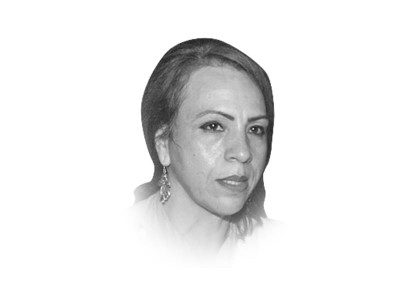
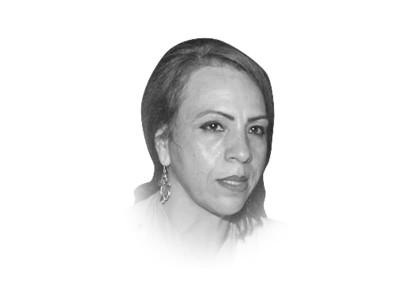
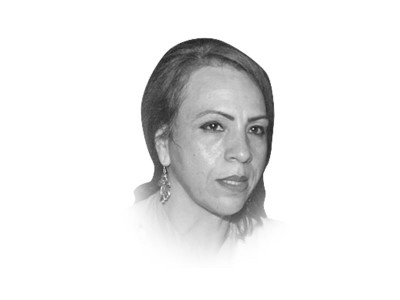
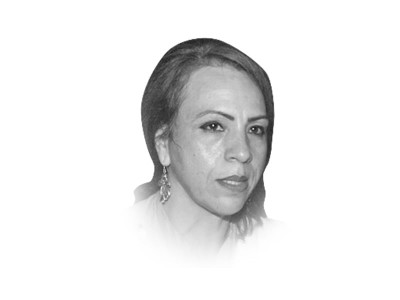
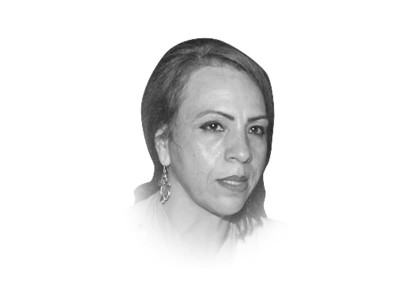
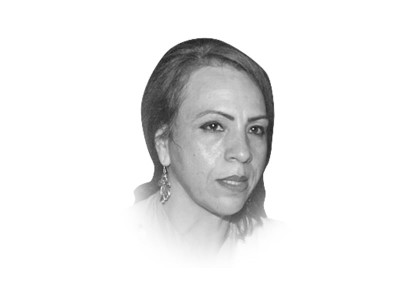
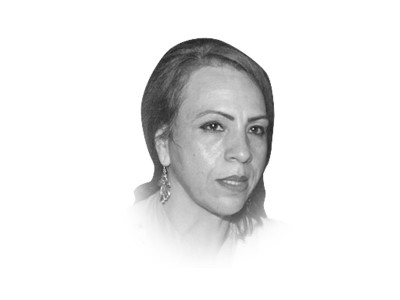
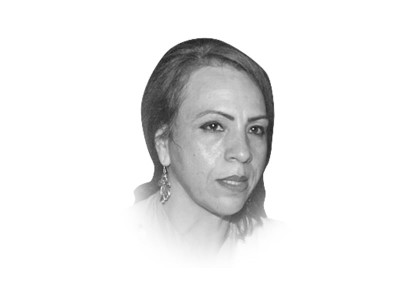
			<media:description>The writer is director of the Department of Gender Studies at Quaid-i-Azam University in Islamabad</media:description>
			<media:thumbnail url="http://i1.tribune.com.pk/wp-content/uploads/2013/05/543176-DrFarzanaBarinew-1367431047-656-160x120.JPG" width="160" height="120" />
      </media:content>

		<wfw:commentRss></wfw:commentRss>
		<slash:comments>10</slash:comments>
	</item>
		<item>
		<title>Are men and women really equal in the West?</title>
		<link>http://tribune.com.pk/story/522701/are-men-and-women-really-equal-in-the-west/</link>
		<pubDate>Mon, 18 Mar 2013 16:48:02 +0000</pubDate>

		<guid isPermaLink="false">http://tribune.com.pk/?p=522701</guid>

		<description>
		<![CDATA[
			<a href="http://tribune.com.pk/story/522701/are-men-and-women-really-equal-in-the-west/">
				<img src="http://i1.tribune.com.pk/wp-content/uploads/2013/03/522701-DrFarzanaBarinew-1363623887-806-160x120.JPG" width="160" height="120" alt="" />
			</a>
			<p><p>On the 3<sup>rd</sup> of March, Air France flight 1139 from Vienna landed at Charles De Gaulle Airport in Paris. As the plane stopped and passengers got up to retrieve their luggage, there was a little commotion in the plane. To my horror, I saw a man pulling a woman by her hair and punching her face. I looked around; people were visibly shocked but most of them looked the other way, some even with smiles on their faces. I was furious at the sight and shouted, “Get the man arrested”. No one moved, no action taken, no outrage seen. Meanwhile the door opened and the man along with another woman and a child walked away with complete impunity. Everyone picked their luggage and left the plane in silence.</p>
<p>I was stunned by the incident, stood there in disgust with a shared sense of humiliation and hurt besides the woman who was crying and explaining something to the crew in French. What shocked me the most was not only the incident but that I would never have imagined to see such a thing in a European airline.</p>
<p>The apathy and indifference of the passengers in general was deplorable and extremely upsetting. To be frank, it was worse than what I would expect in Pakistan. I am sure if a woman is beaten up in a public space like this, many will come forward to protect her. I realised how deeply entrenched patriarchal and individualistic values have shaped the western psyche. Everyone on that plane, passengers, the crew and even the woman herself behaved in such a typical and gender insensitive manner, which was terrible.</p>
<p>The indifference of the passengers was appalling. Perhaps the assumption was that if a man hits a woman in public, she must be related to him. Thus, it’s a private matter and no one should interfere.  Even though hitting and beating is a crime in law in western countries, no one felt the moral obligation to do something to make sure that the man who committed a crime in public did not get away with it. I wondered had he beaten up another man, whether the passengers would have reacted the same way?</p>
<p>The Air France crew seemed incapable of handling the situation. They acted like dumb spectators and did not act at all. They let all the passengers leave including the man who committed the crime and then started inquiring from a woman about the incident. When I asked members of the crew why the man wasn’t detained, they became defensive. One of them quite simply lied, saying that they did not see what happened. Another said that the passengers should have done something about it. It was quite obvious that the situation had taken them by surprise and they didn’t seem to know how to respond. Either they were not trained, or they did not have the gender capacity to deal with such a situation in a professional manner.  In a letter that I wrote later to the airline explaining what had happened, I strongly recommended that all crew be given gender training.</p>
<p>The woman who was violated also behaved in a typical manner. She started crying instead of crying out for help and demanding the arrest of the man who had hit her. The sense of humiliation perhaps was so deep for her that she could not think beyond the incident itself, as often is the case with battered women.</p>
<p>Subsequently, I could not but help think about the woman and the child who were travelling with the man. Both quietly followed him out of the plane. I was thinking what kind of life that woman must have had with such a man. A person who could behave in such an aggressive and violent manner with a woman who is a stranger to him, how would he behave with a woman with whom he has a relationship and a sense of ownership? And the poor child — what a role model he has to follow in his life.</p>
<p>The gory incident symbolises the collective psyche of the West and this is one of a singular lack of gender and political consciousness. The incident is a sorry reminder to those who claim that Western societies have entered in a post-feminism phase. Women in the West may have a certain amount of autonomy to make choices in their lives because of their ability to earn. However, as they are concentrated mainly in the secondary sector of the market doing lowly and low-paid jobs, their economic dependence on men continues. The inferior economic status of women continues to shape their gender consciousness and reinforce their dependence on men in a material and ideological sense in the industrialised world. The feminist movement in the West has lost its momentum and many women in the developed world seem to live under the illusion that they have fought and won the battle against patriarchy. This is clearly contrary to the reality that a western woman faces in her daily life.</p>
<p>This incident reminded me of gender issues in Pakistan. While away from the country, I managed to follow the way <a href="http://tribune.com.pk/story/518063/international-womens-day-tribute-to-the-resilient-spirit/" target="_blank">International Women’s Day was celebrated in Pakistan</a> at the official as well as unofficial levels. This was contrary to the West where the day came and went by without anyone really taking note of it. There was no notice of it, either at the societal or the government level. Perhaps the lack of interest in commemorating International Women’s Day in the West shows that there is a false sense of security vis-à-vis gender equality, with citizens falsely believing that men and women in the West are equal. By and large, I felt that gender inequality was considered an issue that plagues only developing countries and that the so-called developed world had overcome it.</p>
<p>&nbsp;</p>
<p>What I experienced on that Air France flight is a reminder to all of us that patriarchy is a global phenomenon and a continuing challenge to human societies and the women of the world. The material and social basis of women’s oppression and exploitation lies in the dual system of patriarchy and capitalism, which thrives on the free domestic labour of women. Therefore, the women of the world should realise that the battle for gender equality cannot be fought and won at the national level alone.</p>
<p><i>Published in The Express Tribune, March </i><i>19<sup>th</sup>, 2013.</i></p>
</p>
			<br clear="all"/>
		]]>
		</description>

		<media:content width="424" height="318"
							isDefault="true" medium="image" url="http://i1.tribune.com.pk/wp-content/uploads/2013/03/522701-DrFarzanaBarinew-1363623887-806-640x480.JPG">
			<media:title>Dr Farzana Bari  new</media:title>
			<media:description>The writer is director of the Department of Gender Studies at Quaid-i-Azam University in Islamabad</media:description>
			<media:thumbnail url="http://i1.tribune.com.pk/wp-content/uploads/2013/03/522701-DrFarzanaBarinew-1363623887-806-160x120.JPG" width="160" height="120" />
      </media:content>

		<wfw:commentRss></wfw:commentRss>
		<slash:comments>61</slash:comments>
	</item>
		<item>
		<title>Saving lives in Kohistan</title>
		<link>http://tribune.com.pk/story/499877/saving-lives-in-kohistan/</link>
		<pubDate>Mon, 28 Jan 2013 21:39:09 +0000</pubDate>

		<guid isPermaLink="false">http://tribune.com.pk/?p=499877</guid>

		<description>
		<![CDATA[
			<a href="http://tribune.com.pk/story/499877/saving-lives-in-kohistan/">
				<img src="http://i1.tribune.com.pk/wp-content/uploads/2013/01/499877-DrFarzanaBarinew-1359397657-458-160x120.JPG" width="160" height="120" alt="" />
			</a>
			<p><p>The Pakistani state is frequently and rightly criticised for its failure to fulfil its obligations towards its citizens. However, what is missing in this discourse is reflection on the role of society itself as it has the responsibility to hold the state accountable for its action/inaction. The failure of the state is the failure of society and vice versa.</p>
<p>The Kohistan video case, reported in 2012 in the national media, in which four women and two men were condemned to death by a local jirga for clapping and dancing, is a case in point. The media report on the killing of the four women shook the country. The chief justice took suo motu notice of the case. The administration of Khyber-Pakhtunkhwa (K-P) rushed to the area. Two ill-prepared fact-finding missions were sent to the area in a hurry to verify whether the women were alive. The first mission had four representatives of civil society, who met one woman shown in the video, while the second met two more women. I was part of both fact-finding missions.</p>
<p>After meeting the three women, I personally insisted on two points to the Supreme Court, both verbally and in writing. Firstly, I insisted the Court to solicit an expert opinion on the identity of the women by comparing fresh photographs and videos that we submitted to the Court with those shown in the video. I was sure about the identity of Amna, a woman whom we met during the first mission. However, I had some doubts over the identity of Begum and Shirin Jan, whom we met during the second fact-finding mission. Therefore, I requested the Court to get an expert opinion from NADRA to establish the identity of these women. Secondly, I expressed my fear over the safety of the girls and the boys. In view of the local tradition, there was clearly a risk that the girls and boys may be killed later. I made a plea to the Court that the women must be removed from the area and protection should be given to them, as well as the boys and their families.</p>
<p>However, upon hearing that the women were alive, all stakeholders seemed to lose interest in the matter. On January 3, the media reported the killing of three brothers of the boys who were shown dancing in the video, by the Azad Khel tribe. The killing happened despite the guarantee given by the tribal elders of Azad Khel in front of the K-P administration and Information Minister Mian Mohammed Iftikhar that no harm would come to those shown in the video or their families.</p>
<p>It is extremely disturbing that the killing of innocent men has not invoked the kind of public outrage that was displayed when the news about the killing of the women in the video had surfaced. Questions are not being asked about the safety of the women and the boys now. Concerns are not expressed on the symbolic victory of decadent tradition over the law. No one is pointing fingers at the failure and incompetence of the K-P administration to provide protection to the boys’ families. The lack of capacity and will of the civil society to follow up cases of human rights violations is also not being highlighted.</p>
<p>In my view, it is important that we all ensure that justice is done in the Kohistan video case as it has assumed strategic importance. Failure in this case will strengthen local tradition and will give an official licence to local communities to kill men and women in the name of tradition without any fear.</p>
<p>The Supreme Court must take notice of this issue as this is not just a case of murder. It has a cultural context where people are being killed in the name of tradition and criminals are enjoying impunity while violating the law of the land. The Court should order the K-P administration to produce all four women and their protection and safety must be ensured. An immediate arrest of the person who is accused of giving the <em>fatwa</em>, as well as MPA Ismatuallah and the elders of Azad Khel, who had guaranteed that no harm would come to the girls and boys and their families. The murderers must be brought to justice to restore the people’s confidence in the justice system and send a signal to the area that the state is there to protect the lives of its citizens.</p>
<p><em>Published in The Express Tribune, January </em><em>29<sup>th</sup>, 2013.</em></p>
</p>
			<br clear="all"/>
		]]>
		</description>

		<media:content width="424" height="318"
							isDefault="true" medium="image" url="http://i1.tribune.com.pk/wp-content/uploads/2013/01/499877-DrFarzanaBarinew-1359397657-458-640x480.JPG">
			<media:title>Dr Farzana Bari  new</media:title>
			<media:description>The writer is director of the Department of Gender Studies at Quaid-i-Azam University in Islamabad</media:description>
			<media:thumbnail url="http://i1.tribune.com.pk/wp-content/uploads/2013/01/499877-DrFarzanaBarinew-1359397657-458-160x120.JPG" width="160" height="120" />
      </media:content>

		<wfw:commentRss></wfw:commentRss>
		<slash:comments>0</slash:comments>
	</item>
		<item>
		<title>In defence of reserved seats for women</title>
		<link>http://tribune.com.pk/story/482106/in-defence-of-reserved-seats-for-women/</link>
		<pubDate>Thu, 20 Dec 2012 17:03:49 +0000</pubDate>

		<guid isPermaLink="false">http://tribune.com.pk/?p=482106</guid>

		<description>
		<![CDATA[
			<a href="http://tribune.com.pk/story/482106/in-defence-of-reserved-seats-for-women/">
				<img src="http://i1.tribune.com.pk/wp-content/uploads/2012/12/482106-DrFarzanaBarinew-1356021456-342-160x120.JPG" width="160" height="120" alt="" />
			</a>
			<p><p>The debate on the question of a gender quota in parliament seems to be highly misunderstood in Pakistan. The recent statement by Imran Khan at a seminar on “Justice for Women of Pakistan”in Lahore where he <a href="http://tribune.com.pk/story/480595/justice-for-women-of-pakistan-imran-khan-opposes-reserved-seats-for-women/" target="_blank">opposed reserved seats for women</a> has created a stir, especially among the women’s rights community.</p>
<p>The PTI chief has managed to create quite a lot of confusion by making a highly conflated statement. His team is now trying to do damage control — as it always does — by explaining what he really meant. While his concern on whether those female MNAs on reserved seats were true representatives of the electorate is legitimate, his opposition to gender quota in the same breath showed his lack of understanding of the issue. Instead of suggesting corrective measures to the indirect way in which reserved seats work, he threw out the baby with the bath water by opposing the gender quota altogether. It seems that the PTI chief is not aware of the history of <a href="http://tribune.com.pk/story/459907/violence-against-women-2713-cases-reported-in-2012-so-far/http://tribune.com.pk/story/459907/violence-against-women-2713-cases-reported-in-2012-so-far/" target="_blank">discrimination against women</a> in Pakistan, or perhaps he thinks that this is an issue that is of interest only to women — and hence, why bother.</p>
<p>What we need to understand is that women’s exclusion from the formal arena of politics is a centuries-old global phenomenon. Despite several human rights bills that obligate the international community to ensure gender equality in all spheres of life, the <a href="http://www.quotaproject.org/" target="_blank">representation of women in parliaments worldwide</a> is only 19.6 per cent. This means that patriarchal sociocultural, economic and political structures hinder women’s equal participation in mainstream politics not just in Pakistan but in the developed world as well. It is because of this and the long history of keeping women out of politics that countries like Pakistan have a quota for women in parliament — as part of a strategy to bridge the yawning gender gap in public representation. The fact is that around half of the countries of the world use some type of quota (constitutional, electoral or voluntary) for their parliaments.</p>
<p>We know that women cannot be lumped together in a unitary category. Class, ethnicity, religion and other social divisions divide them. They do not necessarily have common interests. Women’s concerns can be represented by anyone who has a gender perspective irrespective of his/her own gender (although research shows that women are more likely to legislate on social issues). There is a powerful utility argument in favour of gender quota; however, I will take a simpler route — that of justice in defence of a gender quota.</p>
<p>Women constitute nearly half the population. They contribute more than men to the development of the country through their triple roles in the productive, reproductive and community management roles in society.</p>
<p>Imran Khan must understand that women’s formal involvement in politics does not automatically lead to their substantive representation. Rather, their ability to effectively perform and represent women’s interests depends on the larger context of democracy; how they enter the political arena and to whom they are accountable. The PTI is absolutely correct in suggesting that political parties should hold elections within their ranks and promote women into higher leadership positions. However, he should not forget that political parties in this patriarchal socio-economic set-up and as gatekeepers have deprived women in general, and female party workers in particular, for the last 65 years from attaining decision-making positions.</p>
<p>There is hardly any women’s representation in the central committees or the decision-making structures of Pakistan’s mainstream political parties — and the PTI is not very different in this regard. It has been a long-standing demand of women’s rights organisations that the Political Parties Act be amended to require all political parties to set aside a 33 per cent quota for women in party offices, leadership positions as well as in election tickets. What we need to do is increase the gender quota for women in the National and provincial assemblies from its current 17 per cent to 33 per cent. Furthermore, elections to these seats should be held directly. In addition, political parties should be required to give at least 20 per cent of all party posts and tickets to women.</p>
<p><em>Published in The Express Tribune, December </em><em>21<sup>st</sup>, 2012.</em></p>
</p>
			<br clear="all"/>
		]]>
		</description>

		<media:content width="424" height="318"
							isDefault="true" medium="image" url="http://i1.tribune.com.pk/wp-content/uploads/2012/12/482106-DrFarzanaBarinew-1356021456-342-640x480.JPG">
			<media:title>Dr Farzana Bari  new</media:title>
			<media:description>The writer is director of the Department of Gender Studies at Quaid-i-Azam University in Islamabad </media:description>
			<media:thumbnail url="http://i1.tribune.com.pk/wp-content/uploads/2012/12/482106-DrFarzanaBarinew-1356021456-342-160x120.JPG" width="160" height="120" />
      </media:content>

		<wfw:commentRss></wfw:commentRss>
		<slash:comments>20</slash:comments>
	</item>
		<item>
		<title>Lessons from the Kohistan episode   </title>
		<link>http://tribune.com.pk/story/399006/lessons-from-the-kohistan-episode/</link>
		<pubDate>Mon, 25 Jun 2012 16:25:24 +0000</pubDate>

		<guid isPermaLink="false">http://tribune.com.pk/?p=399006</guid>

		<description>
		<![CDATA[
			<a href="http://tribune.com.pk/story/399006/lessons-from-the-kohistan-episode/">
				<img src="http://i1.tribune.com.pk/wp-content/uploads/2012/06/399006-DrFarzanaBarinew-1340638330-849-160x120.JPG" width="160" height="120" alt="" />
			</a>
			<p><p>Recent <a href="http://tribune.com.pk/kohistanvideo/">media reports on the alleged killing of five women for clapping at a wedding ceremony in Kohistan</a> invoked a strong reaction from the state, civil society and human rights activists. The shock, rage and anger expressed by people over the incident reveal two things about our society.</p>
<p>One, that despite frequent violations of human rights on a routine basis, the collective conscience of our society is still not dead. The media brought the incident to public notice. Civil society swiftly reacted by protesting and demanding an inquiry into the incident. Political representatives (<a href="http://tribune.com.pk/story/396823/case-disposed-of-kohistan-girls-are-alive-and-well-declares-sc/">Bushra Gohar from the ANP in particular</a>) took personal interest in the matter and demanded that the local administration provide information on the incident. The federal government agreed in no time to provide all the logistical support in the shape of helicopters for investigating the matter. The Chief Justice of Pakistan promptly took suo motu notice and sent a fact-finding mission, which included human rights activists and civil society representatives, to the area. We have proven through this collective response that the Pakistani nation qualifies to be in the comity of civilised nations.</p>
<p>However, when it came to translating our emotional response into practically addressing the issue, we all faltered. The inadequacies in the performance of various sections of the state and the society in this case were highly pronounced. For example, the media reported the incident without having any substantive evidence about it. No effort was made to blur the images of the women and men shown in the video, and this may have put their lives at greater risk now. Civil society organisations and human rights activists reacted immediately to the news by staging demonstrations and protests. NGOs and CSOs (civil society organisations) have no institutional mechanism or capacity to verify such news on their own. Hence, their response on even alleged human rights violations is often knee-jerk and also without any systematic follow-up.</p>
<p>As for the Khyber-Pakhtunkhwa (K-P) administration, it <a href="http://tribune.com.pk/story/395268/k-p-minister-calls-kohistan-women-issue-a-fabrication/">appeared highly incompetent and ill-equipped, intellectually as well as practically, to handle the issue</a>. On the order of the Chief Justice, its officials first went to the area to verify the initial report that the women had been killed without taking any female officer along. Although they did not meet even one of the five women, they still reported to the Chief Justice that all of them were alive. Their excuse was that they couldn’t meet the women in person since local tradition and custom did not permit them to meet local women. However, it seems as if this was being used as a pretext to not produce the women before the apex Court.</p>
<p>The first fact-finding mission left in a hurry as the Chief Justice ordered that he wanted the women to be brought before the Court by the evening of the same day. However, <a href="http://tribune.com.pk/story/394673/kohistan-killings-second-fact-finding-mission-returns-with-more-questions-than-answers/">for the second one, there was enough time to prepare but no effort was made to include any expert on the area</a>. Civil society representatives and human rights activists, in particular myself, had no prior experience of investigation of such cases (I was asked by the Chief Justice of Pakistan to join the mission). Ideally speaking, the K-P government should have provided assistance to the fact-finding missions and this should have been in the form of experts, interpreters and volunteers who were willing to spend a number of days in the area to find out what exactly had happened. Instead, what we saw was an ostentatious display of ministers and senior officials going in the helicopters though they served no real purpose.</p>
<p>The higher judiciary expressed its own mindset when it accepted the tribal tradition as a legitimate reason for not insisting on producing the women before the Court. One of the judges not only accepted but also justified the tradition of the area where men in the name of respecting local tradition strictly control women’s mobility.</p>
<p>However, despite all the inadequacies at all levels, the best thing is that the strong reaction by the judiciary, politicians, administration, media, human rights activists and CSOs has sent a clear signal to the rest of the country and to Kohistan in particular, that these <a href="http://tribune.com.pk/story/356123/tribal-decisions-sc-declares-jirgas-unconstitutional/">jirgas are unconstitutional</a> and that decrees of killing people will not be tolerated by the state and society.</p>
<p><em>Published In The Express Tribune, June 26<sup>th</sup>, 2012.</em></p>
</p>
			<br clear="all"/>
		]]>
		</description>

		<media:content width="424" height="318"
							isDefault="true" medium="image" url="http://i1.tribune.com.pk/wp-content/uploads/2012/06/399006-DrFarzanaBarinew-1340638330-849-640x480.JPG">
			<media:title>Dr Farzana Bari  new</media:title>
			<media:description>The writer is director of the Department of Gender Studies at Quaid-i-Azam University in Islamabad and a rights activist </media:description>
			<media:thumbnail url="http://i1.tribune.com.pk/wp-content/uploads/2012/06/399006-DrFarzanaBarinew-1340638330-849-160x120.JPG" width="160" height="120" />
      </media:content>

		<wfw:commentRss></wfw:commentRss>
		<slash:comments>17</slash:comments>
	</item>
		<item>
		<title>I am not sure if all the Kohistani jirga women are alive</title>
		<link>http://tribune.com.pk/story/392145/i-am-not-sure-if-all-the-kohistani-jirga-women-are-alive/</link>
		<pubDate>Mon, 11 Jun 2012 18:26:46 +0000</pubDate>

		<guid isPermaLink="false">http://tribune.com.pk/?p=392145</guid>

		<description>
		<![CDATA[
			<a href="http://tribune.com.pk/story/392145/i-am-not-sure-if-all-the-kohistani-jirga-women-are-alive/">
				<img src="http://i1.tribune.com.pk/wp-content/uploads/2012/06/392145-DrFarzanaBarinew-1339435989-957-160x120.JPG" width="160" height="120" alt="" />
			</a>
			<p><p>I was a member of the fact-finding team that was sent by the Supreme Court last week to <a href="http://tribune.com.pk/story/390203/kohistan-video-human-rights-activists-meet-two-out-of-five-girls/">check whether the five women who had been deemed liable for death by a local jirga in Kohistan were alive</a> or not. Their lives had come under threat after a video showing a boy dancing and another in a baseball cap filming and the girls sitting on the floor, heads covered, and merely clapping, was put up on YouTube. Reports began to appear in the national media that their lives were under threat and then it emerged, after two relatives of the men who uploaded the video <a href="http://tribune.com.pk/story/388164/kohistan-video-local-claims-five-women-killed-officials-deny/">claimed that the women had been killed</a>.</p>
<p>The Supreme Court took suo motu notice of this and asked the local administration, principally the commissioner of Hazara division and the DPO to bring the girls to Court. They went to the Court expressing their inability to bring the girls citing tribal custom and tradition but said — without any proof — that the girls were alive and well. It was then that the Court decided to send the fact-finding team, comprising four activists (including myself) to the remote area in the Kohistan district via a government helicopter.</p>
<p>The chief secretary of Khyber-Pakhtunkhwa asked me to accompany the fact-finding team that was chosen for this purpose. It included Riffat Butt, who is legal adviser of the National Commission on the Status of Women, Shabina Ayaz, member of Khyber-Pakhtunkhwa’s Commission on the Status of Women and Dr Fouzia Saeed. We were told that we had to leave right away with no time even to take essentials with us. We all left within an hour after the court hearing on June 6.</p>
<p><a href="http://tribune.com.pk/story/390203/kohistan-video-human-rights-activists-meet-two-out-of-five-girls/">As for the women whose status we were sent to check, I can speak of only one, named Amna</a> (out of four shown in the cell phone video) and confirm that she is certainly alive. We met her and verified her identity. We also met another of the women named Shaheen but we didn’t have her photograph to independently verify her identity and hence had to go by what the local people told us and after she herself confirmed her identity. Maulana Javed, who was the head of the jirga that allegedly gave the verdict, was in fact accompanying the team and to us he denied giving such a fatwa. People in the area also denied that any such incident had ever taken place.</p>
<p>That said, it should be remembered that in the presence of the jirga elders, chances that the local residents we met would give us reliable information were bleak. In my view, a far more detailed investigation is required to establish the fact whether such a fatwa was given or not. Also, as of yet, we do not know what could be the motive behind the leaking of the said video on the internet. This is something that the police should investigate.</p>
<p>What was foremost in my mind was that I wanted to see with my own eyes that the women were alive. This is important because this would have been the clearest evidence of their safety. I did not believe the <a href="http://tribune.com.pk/story/389437/kohistan-killings-minister-insists-women-are-alive-sounds-sceptical/">version being given by the government officials</a> because they usually try and cover up such things, either to hide their own inefficiency, or because of political and other vested interests, such as doing favours for the influential people in the area of their jurisdiction.</p>
<p>We landed in Pattan, one of the four <em>tehsils </em>of the Kohistan district. We were not able to fly to the village where the women were because of bad weather. So we decided to explore whether the local people knew about the video and/or the alleged killing of the women shown in it. What we found was that many local men had the video on their cell phones and the majority of the people thought that these women had in fact been killed. Their perception was clearly based on their prior knowledge of the customs of the area where in such cases families invariably kill both the men and women. The next day at six in the morning we left Dassu (which is a small town on the Karakoram Highway) for the village where the women were supposed to reside. When we landed and asked the villagers about the houses of these women, they pointed towards dwellings that were empty and abandoned.  We were told that these families had move up in the mountains, which is a common practice in summer.</p>
<p>After four hours of walking, we reached the place where we met a few men; one of them was the father of Shireen Gul (one of the women) and the other said he was Amna’s uncle. We were told that they would bring the women down because their home was further up the mountain. After a few hours, two women Amna and Shaheen appeared. We showed them still photographs, presumably screen shots of the video on YouTube, which we managed to take with us.</p>
<p>We asked Amna to point out who was who in the photographs. She gave us the names of the other women and also pointed out herself in the photographs. She told us that that the video was made more than a year ago and that it was not at a wedding ceremony. She did not understand Urdu and her uncle translated for us. We asked her about the safety of the other women and she pointed towards the mountains and said that they were alive and living up there. Then we requested her uncle to allow us to make a video of her on the cell phone. Initially, he was reluctant but when we told him that it will be shared only with the Chief Justice of Pakistan and not with the media, we were allowed to film both Amna and Shaheen. After that we took them to a room where we checked whether there was any sign of torture on their bodies but we found none.</p>
<p>We were not able to contact the other three women, since that would have required that we stay there for another two days. In any case, the officials accompanying us said that we must return immediately because of the Supreme Court’s order to return and report back the same day.</p>
<p>As for the two women that we did meet, <a href="http://tribune.com.pk/story/390061/kohistan-jirga-death-decree-condemned-women-remain-a-no-show-at-sc/">they could have been brought back with us to Islamabad and before the Supreme Court</a> but for some reason the provincial administration was not willing to do that. Perhaps, the reason is that there is hardly any government writ in that area and local officials operate through tribal elders.</p>
<p>Also, I feel that there is now a very real and serious threat to the lives of these women since the video has been widely circulated in the area. Unfortunately, the killing of men and women in such cases is a routine matter. Before we left, we told the jirga elders that the village will be monitored on a regular basis and if anything happens to these women, they will be held responsible. However, my fear is that once the public attention will be off the case, these women could be harmed, that is if they are not already dead.</p>
<p><em>Published In The Express Tribune, June 12<sup>th</sup>, 2012.</em></p>
</p>
			<br clear="all"/>
		]]>
		</description>

		<media:content width="424" height="318"
							isDefault="true" medium="image" url="http://i1.tribune.com.pk/wp-content/uploads/2012/06/392145-DrFarzanaBarinew-1339435989-957-640x480.JPG">
			<media:title>Dr Farzana Bari  new</media:title>
			<media:description>The writer is director of the Department of Gender Studies at Quaid-i-Azam University in Islamabad and a rights activist </media:description>
			<media:thumbnail url="http://i1.tribune.com.pk/wp-content/uploads/2012/06/392145-DrFarzanaBarinew-1339435989-957-160x120.JPG" width="160" height="120" />
      </media:content>

		<wfw:commentRss></wfw:commentRss>
		<slash:comments>16</slash:comments>
	</item>
		<item>
		<title>What human rights?</title>
		<link>http://tribune.com.pk/story/304702/what-human-rights/</link>
		<pubDate>Sat, 10 Dec 2011 17:44:44 +0000</pubDate>

		<guid isPermaLink="false">http://tribune.com.pk/?p=304702</guid>

		<description>
		<![CDATA[
			<a href="http://tribune.com.pk/story/304702/what-human-rights/">
				<img src="http://i1.tribune.com.pk/wp-content/uploads/2011/12/304702-DrFarzanaBarinew-1323532719-436-160x120.JPG" width="160" height="120" alt="" />
			</a>
			<p><p>Pakistan, like the rest of the world, observes International Human Rights Day on December 10 every year. This is done to commemorate the <a href="http://www.un.org/en/documents/udhr/">Universal Declaration of Human Rights</a> (UDHR) of 1948, which recognised that “human beings are born free and equal in dignity and rights”.</p>
<p>However, as this day is celebrated, one finds that the UDHR is being violated all over the world, so much so that a mockery is made of the Declaration. While we saw the Arab Spring and the Wall Street protests, the issue is that those who are protesting are unable to claim their rights.</p>
<p>The tragedy of our times is that three billion people out of the total world population of seven billion, are living in absolute poverty. And more than a billion people in the developing world have no adequate access to water while a whopping 2.5 billion lack access to basic sanitation.</p>
<p>In this highly technologically advanced era of development, interstate and intra-state disparities are constantly on the rise. One heartbreaking fact is that if we decide to spend less than one per cent of what the world is spending every year on weapons, we can put every child in school.</p>
<p>The current state of human rights in Pakistan is such that one may ask, “What human rights?” There is a general failure of governance and a breakdown of law and order in the country, and both these impinge greatly on the fundamental rights of citizens.</p>
<p>In Pakistan, the biggest issue is that the one institution which is supposed to safeguard the rights of citizens, i.e. the state, is itself the biggest violator of human rights. All state institutions especially the police, the Rangers and the security agencies are all involved in this. <a href="http://tribune.com.pk/story/295831/anarchy-in-balochistan/">People are frequently picked up by security agencies in Balochistan</a> and from other parts of the country without being given a chance to take judicial recourse. The <a href="http://tribune.com.pk/story/304336/human-rights-violations-criminalisation-of-torture-demanded/">police routinely tortures prisoners</a> and is involved in corruption and abetting criminals. Moreover, the state sanctions or, at the very least, looks the other way when non-state actors such as feudal or tribal chiefs, militant groups and political mafias use violence. The absence of the state as a benevolent influence in people’s lives has made them extremely vulnerable by leaving them at the mercy of local power brokers. While all citizens suffer from this state of affairs, those who suffer the most are women, religious minorities, the transgendered, bonded labourers and those displaced by natural and human-made disasters.</p>
<p>Growing intolerance and extremism in the country, along with the repressive nature of the state puts those who dare to speak up and demand change at much higher risk. Pakistan has already been declared as being <a href="http://www.google.com/url?q=http://tribune.com.pk/story/189294/pakistan-ranks-3rd-on-list-of-most-dangerous-countries-for-women/&amp;sa=U&amp;ei=C5rjTsXQNubKmQW_ue39BA&amp;ved=0CAQQFjAA&amp;client=internal-uds-cse&amp;usg=AFQjCNGDzL17VSqHI0jUVELtWgDcjNnGsA">among the most dangerous places in the world for a woman</a> or a <a href="http://www.google.com/url?q=http://tribune.com.pk/story/119575/pakistan-tops-the-list-with-8-journalists-killed/&amp;sa=U&amp;ei=M5rjTqXWK6rgmAWypuGFBQ&amp;ved=0CBYQFjAJ&amp;client=internal-uds-cse&amp;usg=AFQjCNEzxk5SGZvhCfOp4BqQqlnAIRQieQ">journalist</a>.</p>
<p>The biggest challenge faced by the citizenry today is how to make the state adhere to its national and international commitments to human rights. In the given context, the only way forward seems to be for the downtrodden majority to establish people’s rule. It is pointless to expect anything from the bourgeoisie state which is there essentially to defend and protect the interests of the capitalist class, which, in turn, grows by feeding on the social and economic exploitation of ordinary Pakistanis.</p>
<p><em>Published in The Express Tribune, December 11<sup>th</sup>, 2011.</em></p>
<p>&nbsp;</p>
</p>
			<br clear="all"/>
		]]>
		</description>

		<media:content width="424" height="318"
							isDefault="true" medium="image" url="http://i1.tribune.com.pk/wp-content/uploads/2011/12/304702-DrFarzanaBarinew-1323532719-436-640x480.JPG">
			<media:title>Dr Farzana Bari  new</media:title>
			<media:description>The writer is director, gender studies, at Quaid-i-Azam University</media:description>
			<media:thumbnail url="http://i1.tribune.com.pk/wp-content/uploads/2011/12/304702-DrFarzanaBarinew-1323532719-436-160x120.JPG" width="160" height="120" />
      </media:content>

		<wfw:commentRss></wfw:commentRss>
		<slash:comments>8</slash:comments>
	</item>
		<item>
		<title>Beyond reforms</title>
		<link>http://tribune.com.pk/story/295871/beyond-reforms/</link>
		<pubDate>Tue, 22 Nov 2011 18:27:01 +0000</pubDate>

		<guid isPermaLink="false">http://tribune.com.pk/?p=295871</guid>

		<description>
		<![CDATA[
			<a href="http://tribune.com.pk/story/295871/beyond-reforms/">
				<img src="http://i1.tribune.com.pk/wp-content/uploads/2011/11/295871-DrFarzanaBarinew-1321974734-670-160x120.JPG" width="160" height="120" alt="" />
			</a>
			<p><p>The great majority of Pakistanis today are fighting a desperate battle for their survival and to pressure their humanity due to the failure of the state and civil society. The irony is that all the solutions to this tsunami of people’s suffering are currently being offered within the framework of reformism by various shades of political forces. Without getting into the polemic of revolution versus reformism, the point that needs to be underscored here is that <a href="http://tribune.com.pk/story/288134/not-another-tsunami/">the way reformism is conceived and perceived by reformist politicians like Imran Khan</a> and others in our country has no potential whatsoever to alleviate, let alone ameliorate, the sufferings of the toiling masses.</p>
<p>The euphoria created by the massive size of the enthralled <a href="http://tribune.com.pk/story/285410/statement-of-intent-imran-khan-summons-pti-tsunami/">crowd that Imran Khan finally succeeded in pulling</a> onto the grounds of Minar-e-Pakistan, is the talk of the day. Political pundits consider it a turning point in the two-party politics of the country. The <a href="http://tribune.com.pk/story/295281/real-politics/">shifting trend is already visible in the electable political entrepreneurs</a> who have started to jump onto Imran’s bandwagon.</p>
<p>Beyond the speculations regarding who supported Imran’s show in Lahore (agencies, establishment, etc.), the fact that merits recognition is that the mass mobilisation Khan’s rally engendered is clearly an indication of one thing if nothing else; that the people of Pakistan want change. However, what Imran Khan was able to offer people was just a myopic vision of reforms that are unable to offer solutions to the multiple crises that the country is facing today.</p>
<p>While living in the age of globalisation making no reference in his reform proposal to global politics and the neo-liberal macroeconomic frameworks that are primarily responsible for creating abject poverty around the world, Imran simply shows the level of his political immaturity. While the crisis of capitalism world over is making it increasingly difficult even for well-established liberal and social democracies in the West to effectively respond to growing unemployment and discontentment of their citizens, one wonders how Imran Khan could steer the country out of its economic crisis without taking some radical/revolutionary steps.</p>
<p>While Khan touched on all the issues that concern citizens, he failed to give a road map. His speech was devoid of substance.</p>
<p>He talked about establishing an Islamic welfare state in Pakistan without explaining how this would be achieved. The concept of a social welfare state that guarantees the fundamental rights of education, health and employment to its citizens requires financial resources. His recipe for resource mobilisation narrowly focuses on tax collection and declaration of assets of politicians only, while conveniently ignoring the top brass of civil bureaucrats, the business community and the military elite who are equally guilty of looting the national resources and also need to be held accountable. He avoided mentioning a cut in our defence budget, which consumes the largest chunk of national resources and reducing which poses the easiest way of mobilising resources for the social sector. Khan must understand that without reorienting our spending priorities, his promise of establishing a social welfare state is nothing more than a mere empty promise.</p>
<p>He talked about raising the living conditions of the rural and urban working classes, but maintained a silence on the issue of land reforms, which is critically important for the landless rural majority. Similarly, when discussing the lives of the urban working class, he failed to utter a word on the state policy of privatisation that threatens their livelihoods.</p>
<p>Moreover, Imran’s understanding of women’s rights and empowerment appears to be shaped by the Jamaat-e-Islami’s fundamentalist version of Islam. He reduces women’s empowerment only to the rights of inheritance, while knowing that the vast majority of people in Pakistan don’t have property and have nothing to pass on to their children. He should know that the core issue in the problem of the subordination of women is the gender role ideology that confines them to the reproductive arena of the home as private citizens and men to the productive public arena as breadwinners.</p>
<p>Moreover, Imran Khan’s public stand on terrorism is well-known. He is an ardent supporter and sympathiser of the Taliban. He justifies their terrorism as revenge and response to US drones attacks. He never condemned their brutal suicide attacks on innocent citizens, educational institutions and religious places. His lack of understanding of Islam, misplaced romance with tribal culture, love for jirga systems and association with western modernity makes him the most confused and, in some ways, the most dangerous politician in Pakistan.</p>
<p>We should know that Imarn’s popularity is amongst the urban upper-middle-class and petty bourgeois youth who are certainly interested in good governance and wish to see meritocracy prevail and corruption curbed in the country. However, this class of people is reluctant to play a political role in social movements. These people are always looking for a messiah who could take control of things on their behalf and solve problems with a magic wand.</p>
<p>The phenomenon of charismatic personality-driven politics in South Asia is primarily responsible for the lack of development of a democratic culture and political institutions. In the absence of party structures, there is a tendency for leaders to become all-powerful and autocratic. Therefore, it is the responsibility of the middle-class youth to curb this trend and ask the right questions to apply pressure for the Pakistan Tehreek-e-Insaf (PTI) to develop a democratic party structure and culture. Otherwise, the new party with it heavy dependence on Imran’s charisma will be no different than those political parties who have been capitulating to the establishment and have managed to destroy the country in pursuit of their own self-interests.</p>
<p>It is our shared responsibility to be vigilant, raise questions and make sure that the emerging political alternative that has come in the shape of the PTI does not become the new horse of an old establishment.</p>
<p><em>Published in The Express Tribune, November 23<sup>rd</sup>, 2011.</em></p>
</p>
			<br clear="all"/>
		]]>
		</description>

		<media:content width="424" height="318"
							isDefault="true" medium="image" url="http://i1.tribune.com.pk/wp-content/uploads/2011/11/295871-DrFarzanaBarinew-1321974734-670-640x480.JPG">
			<media:title>Dr Farzana Bari  new</media:title>
			<media:description>The writer is director, gender studies, at Quaid-i-Azam University</media:description>
			<media:thumbnail url="http://i1.tribune.com.pk/wp-content/uploads/2011/11/295871-DrFarzanaBarinew-1321974734-670-160x120.JPG" width="160" height="120" />
      </media:content>

		<wfw:commentRss></wfw:commentRss>
		<slash:comments>32</slash:comments>
	</item>
	
</channel>
</rss>
<!-- Performance optimized by W3 Total Cache. Learn more: http://www.w3-edge.com/wordpress-plugins/

Page Caching using apc
Database Caching 13/36 queries in 0.027 seconds using memcached
Object Caching 1200/1340 objects using apc

 Served from: tribune.com.pk @ 2013-05-19 02:31:04 by W3 Total Cache -->