<?xml version="1.0" encoding="UTF-8"?>
<rss version="2.0"
	xmlns:content="http://purl.org/rss/1.0/modules/content/"
	xmlns:wfw="http://wellformedweb.org/CommentAPI/"
	xmlns:dc="http://purl.org/dc/elements/1.1/"
	xmlns:atom="http://www.w3.org/2005/Atom"
	xmlns:sy="http://purl.org/rss/1.0/modules/syndication/"
	xmlns:slash="http://purl.org/rss/1.0/modules/slash/"
	xmlns:media="http://search.yahoo.com/mrss/"
	>

<channel>
	<title>The Express Tribune &#187; Kazim Alam</title>
	<atom:link href="http://tribune.com.pk/author/2367/kazim-alam/feed/" rel="self" type="application/rss+xml" />
	<link>http://tribune.com.pk</link>
	<description>Latest Breaking Pakistan News, Business, Life, Style, Cricket, Videos, Comments</description>
	<lastBuildDate>Wed, 19 Jun 2013 09:37:34 +0000</lastBuildDate>
	<language></language>
	<sy:updatePeriod>hourly</sy:updatePeriod>
	<sy:updateFrequency>1</sy:updateFrequency>
	<generator>http://wordpress.org/?v=3.5.1</generator>

		<item>
		<title>Sindh budget: Populism from PPP </title>
		<link>http://tribune.com.pk/story/564712/sindh-budget-populism-from-ppp/</link>
		<pubDate>Mon, 17 Jun 2013 23:32:20 +0000</pubDate>

		<guid isPermaLink="false">http://tribune.com.pk/?p=564712</guid>

		<description>
		<![CDATA[
			<a href="http://tribune.com.pk/story/564712/sindh-budget-populism-from-ppp/">
				<img src="http://i1.tribune.com.pk/wp-content/uploads/2013/06/564712-QaimAliOnline-1371511384-230-160x120.jpg" width="160" height="120" alt="" />
			</a>
			<p><div><strong class='location'>KARACHI:&nbsp;</strong>
<p><strong>Sindh Chief Minister Syed Qaim Ali Shah presented a populist provincial budget for fiscal year 2014 with a total outlay of Rs617 billion on Monday in a session that can well be described as slow, dull and unremarkable, courtesy of the absent opposition members.</strong></p>
</div>
<p>While the federal government chose to adopt austerity by increasing the budgetary outlay by a meagre 0.6% for fiscal 2014, the Pakistan Peoples Party-led Sindh government stuck to its populist roots and increased the provincial outlay by a massive 22.3%.</p>
<p>But the lack of frugality of the PPP government was not just limited to a ballooning outlay. The budget deficit in the next fiscal year is estimated to be Rs21.6 billion, or 3.5% of the total outlay. To put this figure in context, it should be noted that the estimated deficit presented before the assembly last June was only 1.2% of the total budgetary outlay. However, the figure is expected to be 3.3% by the end of the current fiscal year, according to the revised estimates.</p>
<p><img alt="" src="http://pullquotesandexcerpts.files.wordpress.com/2013/06/4189.jpg" /></p>
<p>“By re-electing our government, people have preferred continuity&#8230; but above all, our victory is due to the great sacrifices of our leader Shaheed Mohtarma Benazir Bhutto,” Shah said to a visibly bored audience, which thumped desks only when he uttered the names of his party leadership. Their lack of interest became all too evident when Shah’s microphone stopped functioning. Nobody, including the chief minister himself, seemed to notice for quite some time.</p>
<p>Federal transfers under the head of current revenue receipts are expected to increase to Rs409 billion, which is almost 21% higher than the comparable figure for the ongoing fiscal year. Sindh’s own tax and non-tax receipts are expected to be 120.1 billion, up by 19.3% compared to the revised estimates for fiscal 2013.</p>
<p>After taking into account other receipts that include foreign assistance and federal grants, the provincial government expects its total receipts to be Rs596 billion, up 22% from the current fiscal year’s revised estimates. It should be noted that Syed Murad Ali Shah, who served as finance minister in the last provincial government, had initially estimated total provincial receipts to be Rs571 billion. Later on, the estimate was revised downwards by 14.5% to Rs488 billion.<img alt="" src="http://pullquotesandexcerpts.files.wordpress.com/2013/06/5179.jpg" /></p>
<p>Shah announced that the salaries of government employees from grade 1 to 15 will be increased 15% while the salaries of employees belonging to BPS-16 and above will be up 10%. Besides announcing a hike of 10% in pensions, he said the minimum pension will now be Rs5,000 instead of the current level of Rs3,000.</p>
<p>Repeating his words several times to make house members aware of its importance, Shah emphasised in no uncertain terms that his government intends to spend as much as Rs185 billion in the provincial development budget for 2014, up 89.7% from current year’s estimate of development spending.</p>
<p>However, one fact should not be ignored here: development spending in 2013 is expected to be Rs97.5 billion against the initial budget estimate of Rs181 billion. In other words, the last government spent 46.1% less than the initial budgeted figure it put forth last June.</p>
<p>Perhaps the only fiscal target that the Sindh government achieved last year is the collection of provincial sales tax on services. It promised to collect Rs32 billion, and the revised estimates say it will be achieved by the end of the current fiscal year. For fiscal 2014, the target for provincial sales tax on services is Rs42 billion, up 31.2% on a year-on-year basis.</p>
<p>In a show of dissent to the federal government that increased sales tax by 1% to 17%, Shah announced that the provincial government, which has a mandate to collect sales tax on services, will not increase the existing standard sales tax rate of 16%.</p>
<p>On a positive note, Shah said concrete measures will be taken to expand the tax net in the province. Services of advertising agents, security guards, commodity brokers, marriage halls and lawns, event management and public bonded warehouses will be brought under the tax net. The services of security agencies will be taxed at 10%, perhaps in view of the bad law and order situation, instead of the standard rate of 16%.</p>
<p>“Exemption on the internet and broadband services are also proposed to be withdrawn,” Shah said. “Race clubs and beauty parlours (with an annual turnover of Rs3.6 million or more) will also be taxed “at the reduced rate of 10%.” Shah also announced that his government is willing to accept the offer of the Sindh chapter of the Constructors Association of Pakistan to pay Sindh sales tax at a reduced rate of 4% without any input tax adjustment.</p>
<p><em>Published in The Express Tribune, June 18<sup>th</sup>, 2013.</em></p>
</p>
			<br clear="all"/>
		]]>
		</description>

		<media:content width="424" height="318"
							isDefault="true" medium="image" url="http://i1.tribune.com.pk/wp-content/uploads/2013/06/564712-QaimAliOnline-1371511384-230-640x480.jpg">
			<media:title>Qaim Ali Online</media:title>
			<media:description>Sindh Chief Minister Syed Qaim Ali Shah presented a populist provincial budget for fiscal year 2014 with a total outlay of Rs617 billion. PHOTO: Onine</media:description>
			<media:thumbnail url="http://i1.tribune.com.pk/wp-content/uploads/2013/06/564712-QaimAliOnline-1371511384-230-160x120.jpg" width="160" height="120" />
      </media:content>

		<wfw:commentRss></wfw:commentRss>
		<slash:comments>10</slash:comments>
	</item>
		<item>
		<title>Cage-free bulls: Federal budget bodes well for Pakistani equity markets</title>
		<link>http://tribune.com.pk/story/564060/cage-free-bulls-federal-budget-bodes-well-for-pakistani-equity-markets/</link>
		<pubDate>Sun, 16 Jun 2013 18:22:56 +0000</pubDate>

		<guid isPermaLink="false">http://tribune.com.pk/?p=564060</guid>

		<description>
		<![CDATA[
			<a href="http://tribune.com.pk/story/564060/cage-free-bulls-federal-budget-bodes-well-for-pakistani-equity-markets/">
				<img src="http://i1.tribune.com.pk/wp-content/uploads/2013/06/564060-StockExchangeReuters-1371406801-343-160x120.JPG" width="160" height="120" alt="" />
			</a>
			<p><div><strong class='location'>KARACHI:&nbsp;</strong>
<p><strong>There must be something unmistakably good for the equity market in the federal budget for 2013-14 announced on June 12 that the Karachi Stock Exchange’s (KSE) 100 Index soared 433 points, or 1.9%, during the first post-budget trading session on Thursday.</strong></p>
</div>
<p>Although the KSE-100 Index dipped 0.9% on the next trading session mainly on the back of foreign institutional selling in index heavyweights, most analysts seem to agree that the federal budget bodes well for the stock market.</p>
<p>“We expect that the KSE-100 Index will be over 30,000 points in the next 12 months,” said Muhammad Imran, head of equity sales at Arif Habib Limited, one of the largest brokerage firms of Pakistan, while speaking to <i>The Express Tribune</i> on Saturday.</p>
<p><img alt="" src="http://pullquotesandexcerpts.files.wordpress.com/2013/06/30000.jpg?w=625" /></p>
<p>On the last trading session on Friday, the KSE-100 Index closed at 22,541.6 points, which means that Arif Habib Limited estimates a gain of over 33% in the benchmark index during fiscal 2014.</p>
<p>Speaking to <i>The Express Tribune</i>, the head of another big brokerage house said his company expects the KSE-100 Index to be over 28,000 points in June next year. He requested anonymity because his company has not yet released its estimate to its clients.</p>
<p>Perhaps the most important, though largely ignored, feature of the federal budget was the government’s apparent attempt to restore its credibility within the private sector by setting achievable growth and deficit targets, said Elixir Securities Head of Research Muhammad Azfer Naseem, while talking to <i>The Express Tribune</i>. “People will now trust the budget document and consider it authentic. That’s unlike the past, when the government would miss its budgetary targets by huge margins every year,” Naseem said.</p>
<p>Talking to <i>The Express Tribune</i>, Global Securities research analyst Umair Naseer said the budget is going to have an overall positive impact on the capital market in the long run because of a 1% decrease in the corporate income tax rate to 34% for fiscal 2014 coupled with an unchanged capital gains tax rate.</p>
<p>In a research note issued to its customers, Naseer’s brokerage house said that at least four of the eight major sectors of the economy are expected to have a positive outlook in the aftermath of the federal budget.</p>
<p>The oil and gas (exploration and production) sector will be better off, believes Global Securities, because circular debt resolution is likely to improve the sector’s cash-flow situation. Other sectors to benefit from the budget include power generation, telecom sector (planned 3G auction), and the cement sector due to a 50% hike in the Public Sector Development Programme to Rs540 billion.</p>
<p>According to Elixir Securities, the budget contains a mix of boon and bane for the banking sector. “Banks would be relieved as dividend income from mutual funds would be taxed at 25%,” it said in a research note. However, no change in the corporate tax rate has been announced for banks, as they will continue depositing 35% of their income into the exchequer.</p>
<p><i>Published in The Express Tribune, June 17<sup>th</sup>, 2013.</i></p>
<p><i>Like </i><a href="https://www.facebook.com/ETribuneBusiness"><i>Business on Facebook</i></a><i> to stay informed and join in the conversation.</i><i></i></p>
</p>
			<br clear="all"/>
		]]>
		</description>

		<media:content width="424" height="318"
							isDefault="true" medium="image" url="http://i1.tribune.com.pk/wp-content/uploads/2013/06/564060-StockExchangeReuters-1371406801-343-640x480.JPG">
			<media:title>Stock Exchange Reuters</media:title>
			<media:description>&quot;We expect that the KSE-100 Index will be over 30,000 points in the next 12 months,” says head of equity sales at Arif Habib Limited. PHOTO: REUTERS</media:description>
			<media:thumbnail url="http://i1.tribune.com.pk/wp-content/uploads/2013/06/564060-StockExchangeReuters-1371406801-343-160x120.JPG" width="160" height="120" />
      </media:content>

		<wfw:commentRss></wfw:commentRss>
		<slash:comments>0</slash:comments>
	</item>
		<item>
		<title>KSE fails to enter MSCI’s Emerging Market Index</title>
		<link>http://tribune.com.pk/story/562960/kse-fails-to-enter-mscis-emerging-market-index/</link>
		<pubDate>Thu, 13 Jun 2013 21:36:29 +0000</pubDate>

		<guid isPermaLink="false">http://tribune.com.pk/?p=562960</guid>

		<description>
		<![CDATA[
			<a href="http://tribune.com.pk/story/562960/kse-fails-to-enter-mscis-emerging-market-index/">
				<img src="http://i1.tribune.com.pk/wp-content/uploads/2013/06/562960-StockexchangeAFP-1371159313-799-160x120.jpg" width="160" height="120" alt="" />
			</a>
			<p><div><strong class='location'>KARACHI:&nbsp;</strong>
<p><strong>While Pakistan has been out of the MSCI Emerging Markets Index since December 2008, its exclusion has been particularly painful for Pakistani stock analysts for the last year and a half.</strong></p>
</div>
<p>Despite a rise of over 100% in the benchmark index of the Karachi Stock Exchange since the start of 2012, Pakistan failed yet again in getting a mention in the latest annual re-classification review of the MSCI that the provider of global benchmark indices for equity investments announced on June 11.</p>
<p><img alt="" src="http://pullquotesandexcerpts.files.wordpress.com/2013/06/shagufta-irshad-khurram.jpg?w=625" /></p>
<p>The MSCI’s decision not to elevate Pakistan from the Frontier Markets Index to the Emerging Markets Index surprised many stock analysts, who were anticipating an upgrade based on the country’s improved liquidity and strong net foreign inflows amounting to $399 million year-to-date.</p>
<p><strong>Good news ahead? </strong></p>
<p>The MSCI has decided that Qatar and the United Arab Emirates (UAE), whose current weights in the MSCI Frontier Markets Index are 15.3% and 11.9% respectively, will be part of the MSCI Emerging Markets Index effective May 2014. Pakistan’s weight in the MSCI Frontier Markets Index is 4.4%.</p>
<p>According to Raza Jafri of AKD Securities, the remaining constituents in the MSCI Frontier Markets Index will likely witness an increase in their weights considering the combined weight for Qatar and the UAE. He estimates that Pakistan’s weight in the MSCI Frontier Market Index may increase up to 7%.</p>
<p><img alt="" src="http://pullquotesandexcerpts.files.wordpress.com/2013/06/1721.jpg?w=625" /></p>
<p>However the MSCI relegated Morocco from its Emerging Markets Index to the Frontier Markets Index as well. Morocco’s reclassification will take effect in November, approximately six months prior to Qatar and the UAE leaving the Frontier Markets Index.</p>
<p>“Since Morocco will be added earlier than the UAE’s and Qatar’s upgrade, Pakistan’s weight will first experience some dilution and then increase after six months,” wrote Shagufta Irshad Khurram, analyst and KASB Securities, a brokerage house, in a research note to clients.</p>
<p><strong>Qualitative and quantitative</strong></p>
<p>There are at least 17 criterions against which the MSCI measures market accessibility in a given country before categorising it in the Frontier, Emerging or Developed Market segments. Some of these criteria include foreign exchange liberalisation, capital flow restriction level, clearing and settlement, and foreign ownership limit level.</p>
<p>According to the MSCI’s Accessibility Review 2013, Pakistan meets 10 of these criteria. The MSCI sees no major issues in these with some room for improvement on four counts. But there are three criteria, namely stock lending, short selling, and stability of institutional framework, where the MSCI says improvements are needed.</p>
<p>According to Jafri, a case may be made for elevating Pakistan to the Emerging Markets Index going forward, as Pakistani companies meet the ‘quantitative criteria’ for an upgrade. The quantitative criteria include, but are not limited to, an equity market with at least four companies with market capitalisation of $1.01 billion and a free-float market capitalisation of $505 million.</p>
<p>“While Pakistan has not yet been considered for review for a potential upgrade to the Emerging Markets status, we believe the case for an upgrade will only become stronger going forward,” he said.</p>
<p><i>Published in The Express Tribune, June 14<sup>th</sup>, 2013.</i></p>
<p><i>Like </i><a href="https://www.facebook.com/ETribuneBusiness"><i>Business on Facebook</i></a><i> to stay informed and join in the conversation.</i><i></i></p>
</p>
			<br clear="all"/>
		]]>
		</description>

		<media:content width="424" height="318"
							isDefault="true" medium="image" url="http://i1.tribune.com.pk/wp-content/uploads/2013/06/562960-StockexchangeAFP-1371159313-799-640x480.jpg">
			<media:title>Stock exchange AFP</media:title>
			<media:description>Pakistan’s weight will first experience some dilution and then increase after six months Shagufta Irshad Khurram, analyst at KASB Securities. PHOTO AFP</media:description>
			<media:thumbnail url="http://i1.tribune.com.pk/wp-content/uploads/2013/06/562960-StockexchangeAFP-1371159313-799-160x120.jpg" width="160" height="120" />
      </media:content>

		<wfw:commentRss></wfw:commentRss>
		<slash:comments>2</slash:comments>
	</item>
		<item>
		<title>Sunny side up: Country has changed, future looks really bright, says Mansha </title>
		<link>http://tribune.com.pk/story/560915/sunny-side-up-country-has-changed-future-looks-really-bright-says-mansha/</link>
		<pubDate>Sun, 09 Jun 2013 05:45:59 +0000</pubDate>

		<guid isPermaLink="false">http://tribune.com.pk/?p=560915</guid>

		<description>
		<![CDATA[
			<a href="http://tribune.com.pk/story/560915/sunny-side-up-country-has-changed-future-looks-really-bright-says-mansha/">
				<img src="http://i1.tribune.com.pk/wp-content/uploads/2013/06/560915-MianMuhammadManshaTMN-1370756628-889-160x120.jpg" width="160" height="120" alt="" />
			</a>
			<p><div><strong class='location'>KARACHI:&nbsp;</strong>
<p><strong>It is no secret that a group within the Memon community of Karachi harbours a grudge against the Manshas of Lahore.</strong></p>
</div>
<p>After all, many of the businesses that the former built — and then lost to the disastrous policy of nationalisation in the 1970s — were eventually acquired and turned around by Mian Muhammad Mansha, Chairman of the Nishat group, one of Pakistan’s largest business houses, with interests in textiles, cement, banking, energy, insurance, aviation and agriculture.</p>
<p><img alt="" src="http://pullquotesandexcerpts.files.wordpress.com/2013/06/5411.jpg?w=625" /></p>
<p>Attribute it to his relentless hard work spanning over half a century or call it a result of the privatisation policy that ultimately proved favourable to his group of companies, the fact remains that Mian Mansha is undoubtedly the face of corporate Pakistan today — an icon of the rising private sector of the country whose counsel government officials feel obliged, and perhaps even privileged, to seek.</p>
<p><img alt="" src="http://pullquotesandexcerpts.files.wordpress.com/2013/06/5510.jpg?w=625" /></p>
<p>Thus, it was least surprising to see nearly all big shots of the country’s financial services industry stand in awe as Mian Mansha walked into the ballroom of a Karachi hotel on Friday evening to speak about the offer for sale of shares in a Nishat group subsidiary, Lalpir Power Limited.</p>
<p>However, commensurate with the stature that he has attained in the last two decades, Mian Mansha chose to speak about larger issues confronting the economy of Pakistan.</p>
<p>“This country has changed forever. We’re going to have reverse immigration. The future looks really bright,” said Mian Mansha, who is known to have a close working relationship with Prime Minister Nawaz Sharif, another Mian from Lahore.</p>
<p><img alt="" src="http://pullquotesandexcerpts.files.wordpress.com/2013/06/5610.jpg?w=625" /></p>
<p>He is currently part of a high-profile, albeit informal, team that the prime minister has tasked with the resolution of the energy crisis.</p>
<p>“The government is going to pay off the circular debt, hopefully once and for all, maybe during this financial year. We want to get rid of the circular debt before June 30, so we can start anew from July,” he said. “We’ll have to increase the tariff, and then decrease it later on. We’ll have to increase it because of the inefficient system we have, the wrong energy mix that we have.”</p>
<p>When one member of the audience, apparently a stock analyst covering the energy sector, stood up and asked him whether anybody in the government actually knew what the exact amount of the circular debt was, Mansha responded with clarity. “As of last evening, the exact amount of the circular debt was Rs503 billion.”</p>
<p>Responding to a question, he confirmed that the government is indeed planning on issuing treasury bills to the tune of Rs500 billion to raise money needed to free the energy sector from circular debt.</p>
<p>“Issuing T-bills to settle the circular debt makes sense. The government is paying power companies’ dues at Kibor plus 4%, or whatever their contract says. But if you borrow through T-bills, your interest rate on this Rs500 billion goes down immediately by 4%,” he said.</p>
<p><strong>Trade with India</strong></p>
<p>He spoke passionately about opening trade with India. Noting that the Indian economy is currently seven times bigger than Pakistan’s and is set to become 40 times bigger by 2030, Mansha said now is the best time to sort out issues with the neighbouring country. “I’m willing to give you in writing that if we open the borders today, the price of every property in Lahore will double within one year.”</p>
<p>Saying that 65% of Pakistan’s trade was with India before 1965, he said smaller countries invariably benefit from opening trade with neighbours. “Pakistan should not be afraid of competition,” he said, repeatedly.</p>
<p><strong>Foreign investment</strong></p>
<p>For a number of stock analysts sitting in the audience, listening to one of the most successful business tycoons of Pakistan, Mian Mansha had some interesting news to share. He said he would have breakfast on coming Tuesday with Mark Mobius – the emerging markets fund manager at Franklin Templeton Investments, a global investment firm – who he referred to as the ‘guru’ of the emerging markets. Look out for a surge in foreign portfolio investment!</p>
<p>&nbsp;</p>
<p><em>Published in The Express Tribune, June 9<sup>th</sup>, 2013.</em></p>
</p>
			<br clear="all"/>
		]]>
		</description>

		<media:content width="424" height="318"
							isDefault="true" medium="image" url="http://i1.tribune.com.pk/wp-content/uploads/2013/06/560915-MianMuhammadManshaTMN-1370756628-889-640x480.jpg">
			<media:title>Mian Muhammad Mansha-TMN</media:title>
			<media:description>Says govt wants to get rid of Rs500b circular debt before the end of June. PHOTO: TMN</media:description>
			<media:thumbnail url="http://i1.tribune.com.pk/wp-content/uploads/2013/06/560915-MianMuhammadManshaTMN-1370756628-889-160x120.jpg" width="160" height="120" />
      </media:content>

		<wfw:commentRss></wfw:commentRss>
		<slash:comments>46</slash:comments>
	</item>
		<item>
		<title>Stakes in Mansha’s profitable power plant up for grabs </title>
		<link>http://tribune.com.pk/story/560335/stakes-in-manshas-profitable-power-plant-up-for-grabs/</link>
		<pubDate>Fri, 07 Jun 2013 19:25:48 +0000</pubDate>

		<guid isPermaLink="false">http://tribune.com.pk/?p=560335</guid>

		<description>
		<![CDATA[
			<a href="http://tribune.com.pk/story/560335/stakes-in-manshas-profitable-power-plant-up-for-grabs/">
				<img src="http://i1.tribune.com.pk/wp-content/uploads/2013/06/560335-STOCKS-1370632913-301-160x120.jpg" width="160" height="120" alt="" />
			</a>
			<p><div><strong class='location'>KARACHI:&nbsp;</strong>
<p><strong>Few names inspire more investor confidence in Pakistan than that of Mian Muhammad Mansha, a man known for his ability to turn everything he touches into gold.</strong></p>
</div>
<p>Known for turning around loss-making, state-owned entities, the man at the helm of the Nishat group presented the ‘offer for sale of shares’ in Lalpir Power Limited on Friday. Lalpir is an independent power-producing company owned by his conglomerate, which runs an oil-fired power station of a gross capacity of 362 megawatts in Muzaffargarh, Punjab.</p>
<p>The offer for sale of shares consists of 37.9 million ordinary shares – 10% of the total paid-up share capital of Lalpir Power – at an offer price of Rs15 per share (inclusive of a premium of Rs5 per share).</p>
<p><img alt="" src="http://pullquotesandexcerpts.files.wordpress.com/2013/06/lalpir.jpg?w=625" /></p>
<p>It comes with a ‘green shoe option’, which means that up to an additional 18.9 million ordinary shares – another 5% of the total paid-up capital – will be offered to the general public in case they oversubscribe to their ‘portion’ of the offer.</p>
<p>Explaining the offer’s mechanism, AKD Securities CEO Farid Alam said it consists of two portions: the general public portion and the book building portion. The book building portion of the offer consists of 28.4 million ordinary shares – which account for as much as 75% of the total offer – at a floor price of Rs15 per share.</p>
<p>Book building is a process whereby only institutional investors and high net worth individuals bid for a specific number of shares at various prices. AKD Securities and Next Capital, which are serving as arrangers and book runners for this offer, will maintain a record of all bids received from such investors.</p>
<p><img alt="" src="http://pullquotesandexcerpts.files.wordpress.com/2013/06/farid-alam.jpg?w=625" /></p>
<p>They will then determine the cut-off/strike price through the Dutch Auction Method, an auction structure in which the price of the offering is set after taking all bids and determining the highest price at which the total offering can be sold.</p>
<p>The general public portion – which will be 25% of the total offer – will follow the book building process. It will be equal to, or at a discount to, the final determined price through the book building process.</p>
<p>According to Alam, the purpose of the offer is to list the company on Karachi and Lahore stock exchanges, expand the ownership base, improve the governance structure of the company and get access to an alternate capital resource.</p>
<p>Lalpir Power was earlier called AES Lalpir Private Limited, when it was incorporated in Pakistan in 1994 by AES Corporation of the US. However, the company was acquired in 2010 by a consortium comprising Nishat Mills (32% stake), Adamjee Insurance (8% stake), Security (2% stake), Security General Insurance (2% stake), Mian Hassan Mansha (8% stake), Engen Limited (20% stake) and Stanhope Investments (30% stake).</p>
<p>Each shareholder is going to sell 10% from its total stake in the company through this offer, Alam noted.</p>
<p>In fiscal 2012, the company’s revenues were Rs32.9 billion, up 10.9% annually. However, net profit in fiscal 2012 was Rs1.4 billion, slightly more than the preceding year’s corresponding figure.</p>
<p>The average dividend pay-out of the company has been 105% between fiscal 2008 and fiscal 2012. The floor price of Rs15 per share offers a calendar year 2012 (CY12) dividend yield of 20% (post bonus) as opposed to a CY12 dividend yield of 6.4% of the KSE-100 Index.</p>
<p><i>Published in The Express Tribune, June 8<sup>th</sup>, 2013.</i></p>
<p><i>Like </i><a href="https://www.facebook.com/ETribuneBusiness"><i>Business on Facebook</i></a><i> to stay informed and join in the conversation.</i></p>
</p>
			<br clear="all"/>
		]]>
		</description>

		<media:content width="424" height="318"
							isDefault="true" medium="image" url="http://i1.tribune.com.pk/wp-content/uploads/2013/06/560335-STOCKS-1370632913-301-640x480.jpg">
			<media:title>STOCKS333 (11155)</media:title>
			<media:description>The offer for sale of shares consists of 37.9 million ordinary shares – 10% of the total paid-up share capital of Lalpir Power – at an offer price of Rs15 per share (inclusive of a premium of Rs5 per share). PHOTO: FILE</media:description>
			<media:thumbnail url="http://i1.tribune.com.pk/wp-content/uploads/2013/06/560335-STOCKS-1370632913-301-160x120.jpg" width="160" height="120" />
      </media:content>

		<wfw:commentRss></wfw:commentRss>
		<slash:comments>0</slash:comments>
	</item>
		<item>
		<title>Market analysts dismiss scepticism, say KSE to rise further </title>
		<link>http://tribune.com.pk/story/559379/market-analysts-dismiss-scepticism-say-kse-to-rise-further/</link>
		<pubDate>Wed, 05 Jun 2013 20:48:20 +0000</pubDate>

		<guid isPermaLink="false">http://tribune.com.pk/?p=559379</guid>

		<description>
		<![CDATA[
			<a href="http://tribune.com.pk/story/559379/market-analysts-dismiss-scepticism-say-kse-to-rise-further/">
				<img src="http://i1.tribune.com.pk/wp-content/uploads/2013/06/559379-StockExchange-1370465181-987-160x120.jpg" width="160" height="120" alt="" />
			</a>
			<p><p><strong><strong class='location'>KARACHI:&nbsp;</strong>Many observers view the remarkable performance of the Karachi Stock Exchange (KSE) 100-Index since the beginning of 2013 (up 31%) – and the date of the general election (up 13%) – with a certain degree of scepticism. The market’s usual ups and downs aside, is the extraordinary surge in the benchmark index actually a prelude to a stock market crash like the one in 2008?</strong></p>
<p>“I don’t think so. Chances of a crash are minimal because of the absence of leveraged positions from the market. Secondly, our valuation is not too high. The price to earnings (P/E) multiple is still between 7.5 and eight. While the trailing P/E multiple is 8.5, the leading forward P/E multiple is roughly 7.6, which makes our market quite cheap,” says Muhammad Shahid Ali, CEO of Arif Habib Limited, a brokerage associated with the Arif Habib Corporation Limited.</p>
<p>While speaking to <i>The Express Tribune</i> in a recent interview, Ali pointed out that the P/E multiple was as high as 13 just before the last stock market crash. The term ratio reflects how much investors are willing to pay per rupee of a company’s earnings. A multiple of 7.6 means that investors are willing to pay 7.6 times the earnings per share for all KSE 100-Index stocks.</p>
<p>According to Global Securities Limited, a financial services firm, the KSE100-Index is the cheapest on the basis of its P/E multiple, its price-to-book (PBV) ratio – which compares a company’s current market price to its book value – and its dividend yield in the entire region.</p>
<p>“The KSE100-Index is trading at a leading P/E and PBV multiple of 8.7 times and 1.8 times, respectively. The KSE100-Index does not appear to be overvalued by any means yet,” it said in a research note issued to clients on Wednesday.</p>
<p>Explaining that the earnings of KSE 100-Index companies increased at a phenomenal rate of 38% in 2012, Ali pointed out that the benchmark index shot up 49% during the same period, which resulted in a slightly improved multiple in 2013.</p>
<p><img alt="" src="http://pullquotesandexcerpts.files.wordpress.com/2013/06/muhammad-shahid-ali.jpg?w=625" /></p>
<p>“The index of 15,800 points in 2008 was an expensive index compared to today’s 22,290-point index. There is a flush of liquidity in the market, which includes foreign portfolio investment. Elections have certainly improved the perception of our country amongst foreign investors,” Ali observed.</p>
<p>According to KASB Securities, another brokerage firm, foreign portfolio investment in the last month stood at $271 million, a staggering 867.8% higher than the foreign portfolio investment recorded in the preceding month. Since the beginning of 2013, foreign portfolio investment has reached $370 million, which is 4.7 times higher on a year-on-year basis.</p>
<p>Ali says many of his foreign clients have repeatedly asked him about the likelihood of the government’s disinvestment from state-owned enterprises (SOEs), especially in the energy sector.</p>
<p>“Disinvestment of the government’s share in these SOEs will have a very positive impact on the stock market,” Ali said. He was referring to recent reports that suggest that the government may decrease its shareholding in companies like Oil and Gas Development Company (OGDC) and Pakistan Petroleum (PPL) to 51% in order to raise capital and get rid of circular debt.</p>
<p>He said most international fund managers who use MSCI indices to make investments in frontier markets have already increased the weight of Pakistan from the MSCI-prescribed 4.48% due to impressive earnings in the country’s corporate sector. “Many of them have increased the weight of Pakistan up to 7.5% already. In fact, I expect we’ll graduate to the MSCI Emerging Markets Index soon,” he added.</p>
<p><i>Published in The Express Tribune, June 6<sup>th</sup>, 2013.</i></p>
<p><i>Like </i><a href="https://www.facebook.com/ETribuneBusiness"><i>Business on Facebook</i></a><i> to stay informed and join in the conversation.</i></p>
</p>
			<br clear="all"/>
		]]>
		</description>

		<media:content width="424" height="318"
							isDefault="true" medium="image" url="http://i1.tribune.com.pk/wp-content/uploads/2013/06/559379-StockExchange-1370465181-987-640x480.jpg">
			<media:title>Stock Exchange 04</media:title>
			<media:description>Since the beginning of 2013, foreign portfolio investment has reached $370 million, which is 4.7 times higher on a year-on-year basis.</media:description>
			<media:thumbnail url="http://i1.tribune.com.pk/wp-content/uploads/2013/06/559379-StockExchange-1370465181-987-160x120.jpg" width="160" height="120" />
      </media:content>

		<wfw:commentRss></wfw:commentRss>
		<slash:comments>0</slash:comments>
	</item>
		<item>
		<title>KSE’s stellar performance may put it back on MSCI radar </title>
		<link>http://tribune.com.pk/story/558306/kses-stellar-performance-may-put-it-back-on-msci-radar/</link>
		<pubDate>Mon, 03 Jun 2013 19:49:21 +0000</pubDate>

		<guid isPermaLink="false">http://tribune.com.pk/?p=558306</guid>

		<description>
		<![CDATA[
			<a href="http://tribune.com.pk/story/558306/kses-stellar-performance-may-put-it-back-on-msci-radar/">
				<img src="http://i1.tribune.com.pk/wp-content/uploads/2013/06/558306-stock-1370282514-597-160x120.jpg" width="160" height="120" alt="" />
			</a>
			<p><div><strong class='location'>KARACHI:&nbsp;</strong>
<p><strong>Last month was unusual for the Karachi Stock Exchange (KSE) in more than one way. Not only did its benchmark index outperform all regional markets by posting a month-on-month gain of 15%, its year-to-date gain at the end of May was a staggering 29%.</strong></p>
</div>
<p>In contrast, the year-to-date gains of all key emerging and frontier market indices have been far less – China (5%), India (0.9%), Russia (-15.5%), Brazil (-12.2%), Indonesia (14.9%), Malaysia (4.6%) and South Africa (7%), according to Yardeni Research Inc, a US-based research firm.</p>
<p>This is the highest monthly gain in the benchmark KSE 100-Share Index since March 2009. That is not where it ends. May marks the highest monthly volume traded, as well as the strongest monthly foreign portfolio investment (FPI) flows in last five years.</p>
<p>“The victory of the PML-N in the May 11 polls added the right ingredient to carry [the] market’s momentum forward, where a single party-led government versus a coalition government was seen as a better lead for swifter reforms and policy implementation going forward,” said a research note issued by KASB Securities on Monday.</p>
<p><strong>Going forward</strong></p>
<p>Speaking to <i>The Express Tribune</i>, AKD Securities Head of Research Raza Jafri said the robust performance of the Karachi bourse since the beginning of 2013 in general, and during May in particular, has rekindled hopes of Pakistan re-entering the MSCI Emerging Markets Index.</p>
<p>MSCI provides global benchmark indices for equity investments for more than 70 countries. Currently, Pakistan is placed in the MSCI Frontier Markets Index. Its possible elevation to the Emerging Markets Index is likely to result in heavy FPI, as a majority of global funds uses MSCI indices to make investments.</p>
<p>FPI net inflows into the KSE in May were $271 million, as opposed to $28 million in April. This means that, year-to-date, net FPI inflows remained $370 million, which is 4.7 times higher on a year-on-year basis.</p>
<p>“My estimate is that even if we disregard the Unilever-related inflows, we have received more FPI in the last five months than we did in the entire 2012,” Jafri said. “A strong performance has put us on the radar of MSCI, which will definitely not want its clients to miss out on solid investment opportunities in the Pakistani stock market.”</p>
<p>Although the market has re-rated to a multiple of 8.3 times (based on 2013-estimated earnings) as opposed to 6.6 as on December 2012, Jafri believes it is still cheap and offers an investment opportunity that is not available elsewhere.</p>
<p>In terms of the share price-to-earnings ratio, the term ‘multiple’ reflects how much investors are willing to pay per rupee of earnings. A multiple of 8.3 means that investors are willing to pay 8.3 times the current earnings per share for all KSE-100 Index stocks.</p>
<p>“The multiple of 8.3 is based on the estimated earnings of 2013, which is about to end. We should be looking forward to a multiple of less than eight in 2014 in view of expected growth in earnings,” Jafri said.</p>
<p><i>Published in The Express Tribune, June 4<sup>th</sup>, 2013.</i></p>
<p><i>Like </i><a href="https://www.facebook.com/ETribuneBusiness"><i>Business on Facebook</i></a><i> to stay informed and join in the conversation.</i></p>
</p>
			<br clear="all"/>
		]]>
		</description>

		<media:content width="424" height="318"
							isDefault="true" medium="image" url="http://i1.tribune.com.pk/wp-content/uploads/2013/06/558306-stock-1370282514-597-640x480.jpg">
			<media:title>stock</media:title>
			<media:description>Last month, the KSE outperformed all regional markets by posting a month-on-month gain of 15%; its year-to-date gain at the end of May was a staggering 29%. PHOTO: FILE 
</media:description>
			<media:thumbnail url="http://i1.tribune.com.pk/wp-content/uploads/2013/06/558306-stock-1370282514-597-160x120.jpg" width="160" height="120" />
      </media:content>

		<wfw:commentRss></wfw:commentRss>
		<slash:comments>3</slash:comments>
	</item>
		<item>
		<title>First Capital Equities to organise road show in New York</title>
		<link>http://tribune.com.pk/story/557557/first-capital-equities-to-organise-road-show-in-new-york/</link>
		<pubDate>Sat, 01 Jun 2013 19:52:51 +0000</pubDate>

		<guid isPermaLink="false">http://tribune.com.pk/?p=557557</guid>

		<description>
		<![CDATA[
			<a href="http://tribune.com.pk/story/557557/first-capital-equities-to-organise-road-show-in-new-york/">
				<img src="http://i1.tribune.com.pk/wp-content/uploads/2013/06/557557-investment-1370116295-900-160x120.jpg" width="160" height="120" alt="" />
			</a>
			<p><div><strong class='location'>KARACHI:&nbsp;</strong>
<p><strong>First Capital Equities will hold the ‘largest-ever’ investment road show organised by a Pakistan-based brokerage house in New York City on June 3-4, company Head of Research Faraz Farooq told <em>The Express Tribune</em> on Saturday.</strong></p>
</div>
<p>First Capital Equities is part of the First Capital Group, which was founded by slain Punjab governor Salmaan Taseer. It company hold the road show in collaboration with US-based Auerbach Grayson, a global investment house that claims to cover approximately 80% of major American mutual and pension funds.</p>
<p>Already in its fifth year, the conference aims to provide North American fund managers a platform to network with the top management of Pakistan’s blue-chip companies, according to Farooq. CEOs, CFOs and senior managers of eight blue-chip companies listed on the Karachi Stock Exchange (KSE) will accompany First Capital Equities to the two-day investment conference. These companies are DG Khan Cement, Engro Corporation, Engro Foods, Fatima Fertilizers, MCB Bank, Nishat Mills, Oil and Gas Development Company (OGDC) and Pakistan Petroleum (PPL).</p>
<p><img alt="" src="http://pullquotesandexcerpts.files.wordpress.com/2013/06/55.jpg?w=625" /></p>
<p>As many as 50 investors have signed up for meetings. “It is going to be the largest investment road show held by a Pakistani brokerage house because of two reasons: one, the number of meetings planned for the two-day event is 200, which is unprecedented. Secondly, the participation of two state-owned energy companies with significant market capitalisation will make the investment conference unique,” Farooq said, adding that the requirement of acquiring a no-objection certificate from the relevant ministry makes the participation of SOEs in foreign conferences difficult. All companies will pay for their expenses out of their own pockets.</p>
<p>In addition to the eight companies mentioned above, Kot Addu Power Company (Kapco), Pakistan State Oil (PSO) and Lucky Cement had also confirmed their participation in the conference. But PSO officials could not secure a NOC and the CFO of Lucky Cement was refused a US visa. The CEO of Kapco decided not to go at the last minute because of personal reasons, Farooq said.</p>
<p>The investment conference is all the more important after recent reports suggested that the government plans to reduce its share in state-owned energy companies to around 51%, in a bid to raise cash needed for clearing the circular debt. The government owns 71% of PPL, while it has a 74.9% stake in OGDC.</p>
<p>“The conference is of particular importance for SOEs because they won’t have to introduce themselves to global investors in case they decide to issue global depository receipts (GDR). Foreign shareholding creates liquidity in their stocks, increases their credibility and leads to better corporate governance,” Farooq said.</p>
<p>“With their 27% share in KSE’s float-adjusted market capitalisation, offshore investors have become the key driving force in the Pakistan market. This conference will help US investors recognise the strong potential for growth and high returns on investment, which Pakistani equities offer,” Farooq Habib, chief operating officer at First Capital Equities, told <em>The Express Tribune</em>. “Previous conferences triggered a buying spree across Pakistani equities, as strong inflows were witnessed after the event,” he added. “Despite year-to-date outperformance, Pakistan still trades at 30% discount to both MSCI (Emerging Market) and MSCI (Frontier Market) funds, leaving room for upside.”</p>
<p><em>Published in The Express Tribune, June 2<sup>nd</sup>, 2013. </em></p>
<p><i>Like </i><a href="https://www.facebook.com/ETribuneBusiness"><i>Business on Facebook</i></a><i> to stay informed and join in the conversation.</i></p>
</p>
			<br clear="all"/>
		]]>
		</description>

		<media:content width="424" height="318"
							isDefault="true" medium="image" url="http://i1.tribune.com.pk/wp-content/uploads/2013/06/557557-investment-1370116295-900-640x480.jpg">
			<media:title>investment</media:title>
			<media:description>PHOTO: FILE</media:description>
			<media:thumbnail url="http://i1.tribune.com.pk/wp-content/uploads/2013/06/557557-investment-1370116295-900-160x120.jpg" width="160" height="120" />
      </media:content>

		<wfw:commentRss></wfw:commentRss>
		<slash:comments>0</slash:comments>
	</item>
		<item>
		<title>10 months on, SHC restriction on implementation of Takaful rules remains</title>
		<link>http://tribune.com.pk/story/556639/10-months-on-shc-restriction-on-implementation-of-takaful-rules-remains/</link>
		<pubDate>Thu, 30 May 2013 19:42:00 +0000</pubDate>

		<guid isPermaLink="false">http://tribune.com.pk/?p=556639</guid>

		<description>
		<![CDATA[
			<a href="http://tribune.com.pk/story/556639/10-months-on-shc-restriction-on-implementation-of-takaful-rules-remains/">
				<img src="http://i1.tribune.com.pk/wp-content/uploads/2013/05/556639-Islamicinsuranceillustrationjamalkhurshid-1369942735-365-160x120.JPG" width="160" height="120" alt="" />
			</a>
			<p><p><strong><strong class='location'>KARACHI:&nbsp;</strong>It’s been almost 10 months since the Sindh High Court restrained the Securities and Exchange Commission of Pakistan (SECP) from implementing Takaful Rules 2012 that allowed conventional insurance companies to sell Islamic – or Takaful – insurance products through separate windows.</strong></p>
<p>The court has yet to give its final verdict on a petition of five Takaful operators in which they contended that the provision allowing conventional insurance companies to start selling Takaful products is against Shariah law.</p>
<p>But was there any contentious feature in the revised Takaful rules other than the provision for Islamic insurance windows?</p>
<p>“Revised rules did not simply address the window issue, but also corrected many anomalies in the Takaful 2005 Rules by restricting many non-Shariah-compliant practices by existing Takaful players,” said Sidat Hyder Morshed Associates CEO Omer Morshed, while speaking to <i>The Express Tribune</i> from London on Thursday.</p>
<p>A professional actuary with 39 years of experience, Morshed served as chairman of the committee that reviewed Takaful rules and incorporated the provision for Islamic insurance windows in 2009 at the request of the SECP – the apex regulator of the country’s insurance sector.</p>
<p><img alt="" src="http://pullquotesandexcerpts.files.wordpress.com/2013/05/rs500m.jpg?w=625" /></p>
<p>“One specific provision relating to equity between participants in a Takaful fund was taken out by the SECP at the request of Takaful companies, which is something I believe to be of utmost importance,” he added.</p>
<p>Contrary to the general perception, the decision to incorporate windows in order to increase Takaful penetration in the country was actually taken by the Ministry of Commerce and the committee’s mandate was simply to provide for the decision in the rules, he says.</p>
<p><strong>What went behind the scenes?</strong></p>
<p>The committee issued a report that was signed by all seven members, including the chairman, in 2009. After that, Morshed says, he drafted the rules with the support of committee member Dr Mumtaz Hashmi, who served as adviser to the SECP.</p>
<p>These were then discussed with all Takaful companies and all stakeholders agreed on a final version of Takaful rules.</p>
<p>“My work style is to arrive at a consensus, which I managed to do with all Takaful companies. But later on, when the SECP made significant changes to the version I had agreed with the Takaful companies, I objected in writing many times, which is a matter of record,” he says.</p>
<p>He adds that he disassociated himself from the Takaful Rules 2012 as a result of the disagreement with the SECP.</p>
<p>“The original draft that I wrote in 2009 had higher capital requirements for companies seeking to write both conventional business and Takaful business through windows. The SECP took this provision out despite my written objections,” Morshed says, adding he shares the view of Takaful players as far as their demand for higher capital requirements for companies doing both kinds of business is concerned.</p>
<p><strong>Future outlook</strong></p>
<p>Big players in the conventional insurance segment, including State Life Insurance Corporation and Jubilee Life Insurance, have already shown their eagerness to launch Takaful windows if the court turns down the Takaful operators’ petition.</p>
<p>If the court clears Takaful Rules 2012, Morshed says, up to 20 conventional insurance companies (life and non-life) are likely to introduce Takaful windows.</p>
<p>But only serious players will set up Islamic insurance operations, he adds, if the provisions that the review committee had originally put in place are restored, particularly the one concerning increased capital requirements for entities with both Takaful and conventional business. “Even then, I believe seven to eight companies will come in.”</p>
<p>The paid-up capital requirement for a conventional life insurance company under existing rules is Rs500 million. It is Rs300 million for a conventional non-life insurance company. The paid-up capital requirements for general and family Takaful companies are not different from their conventional insurance counterparts.</p>
<p>He says Takaful companies have made Shariah an issue, which is unjustifiable. The main company leading the case sells Takaful policies through branches of conventional banks, which speaks volumes about its argument, he states.</p>
<p>“The purpose of Takaful is to offer an Islamic alternative to as wide a population as possible, and not simply allow it to be used as a prerogative for a limited number of entrepreneurs to make money in the name of Islam,” Morshed says.</p>
<p><i>Published in The Express Tribune, May 31<sup>st</sup>, 2013.</i></p>
<p><i>Like </i><a href="https://www.facebook.com/ETribuneBusiness"><i>Business on Facebook</i></a><i> to stay informed and join in the conversation.</i></p>
</p>
			<br clear="all"/>
		]]>
		</description>

		<media:content width="424" height="318"
							isDefault="true" medium="image" url="http://i1.tribune.com.pk/wp-content/uploads/2013/05/556639-Islamicinsuranceillustrationjamalkhurshid-1369942735-365-640x480.JPG">
			<media:title>Islamic insurance takaful</media:title>
			<media:description>If the court clears Takaful Rules 2012, up to 20 conventional insurance companies (life and non-life) are likely to introduce Takaful windows, says Morshed. ILLUSTRATION: JAMAL KHURSHID</media:description>
			<media:thumbnail url="http://i1.tribune.com.pk/wp-content/uploads/2013/05/556639-Islamicinsuranceillustrationjamalkhurshid-1369942735-365-160x120.JPG" width="160" height="120" />
      </media:content>

		<wfw:commentRss></wfw:commentRss>
		<slash:comments>1</slash:comments>
	</item>
		<item>
		<title>Central bank likely to leave interest rate unchanged</title>
		<link>http://tribune.com.pk/story/555149/central-bank-likely-to-leave-interest-rate-unchanged/</link>
		<pubDate>Mon, 27 May 2013 19:00:09 +0000</pubDate>

		<guid isPermaLink="false">http://tribune.com.pk/?p=555149</guid>

		<description>
		<![CDATA[
			<a href="http://tribune.com.pk/story/555149/central-bank-likely-to-leave-interest-rate-unchanged/">
				<img src="http://i1.tribune.com.pk/wp-content/uploads/2013/05/555149-statebank-1369680227-960-160x120.jpg" width="160" height="120" alt="" />
			</a>
			<p><div><strong class='location'>KARACHI:&nbsp;</strong>
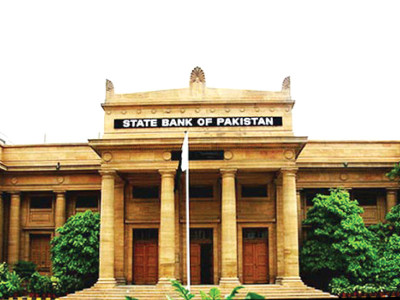
<p><strong>The State Bank of Pakistan is expected to maintain the status quo in its upcoming monetary policy announcement by keeping the interest rate unchanged at 9.5%, banking sector analysts say.</strong></p>
</div>
<p>Speaking to <i>The Express Tribune</i>, Foundation Securities analyst Syed Asad Ahmed said while he expects the SBP to maintain the policy rate in its next review due in June, the central bank will likely take it back to double digits during the next fiscal year.</p>
<p>The policy rate is the interest rate at which the central bank lends money to commercial banks from its discount window. While the central bank uses it to control money supply in the economy, a change in the interest rate can have a significant impact on banks’ profitability.</p>
<p>“Inflation is expected to rise in the next fiscal year. I believe the monetary policy rate will gradually be increased in 2013-14, as inflation goes up,” Ahmed said.</p>
<p>The SBP has reduced the interest rate by 450 basis points in the past about two years mainly due to a declining inflation rate reflected in the Consumer Price Index. This has led to a considerable decrease in spreads of commercial banks – which is the difference between interest earned on advances and interest paid on deposits – eventually hurting their bottom lines.</p>
<p>Bank spreads dropped by five basis points month-on-month in April to 6.2% after showing a slight rise in the previous month, according to a research note of Foundation Securities.</p>
<p>Lending rates declined 156bps year-on-year to 11.4%. On the other hand, deposit costs decreased 53 basis points year-on-year to 5.23%, the magnitude of the decline is less severe.</p>
<p><img alt="" src="http://pullquotesandexcerpts.files.wordpress.com/2013/05/4501.jpg?w=625" /></p>
<p>“Core margins of the banking sector are likely to face further headwinds via re-pricing risk on loan and minimum deposit rate on average balance of the savings account,” the research note said.</p>
<p>Umair Naseer of Global Securities also believes that the SBP is going to stick with the current policy rate. However, he said the possibility of a rate cut cannot be ruled out entirely.</p>
<p>“Theoretically speaking, the SBP is most likely to keep the rate unchanged. But the incoming government of PML-N, which has the reputation of being pro-business, may be inclined towards monetary easing to encourage credit off-take in the economy,” Naseer told <i>The Express Tribune</i>.</p>
<p>He foresees an uptick in the interest rate should Pakistan approach the International Monetary Fund (IMF). “International financial institutions do not favour monetary easing. Moreover, a reduction in power subsidies will lead to a hike in tariff, which will cause inflation, thus paving the way for a tighter monetary policy,” Naseer said.</p>
<p>Speaking to <i>The Express Tribune</i>, Raza Jafri of AKD Securities said he expects the SBP to keep the policy rate unchanged in its June announcement, although inflation is likely to remain below 5%. “The central bank maintained the interest rate in the last two policy decisions despite a declining rate of inflation,” he said.</p>
<p>Jafri believes the SBP will wait for some ‘tangible signs’ before changing the interest rate. An increase in general sales tax, weakening of the rupee, receipt of coalition support fund, Pakistan’s entry into an IMF programme and a Saudi oil facility for Pakistan are some of the factors that, he says, will determine the SBP’s future course of action in relation to the monetary policy.</p>
<p>As for the June announcement, however, he says the central bank is likely to keep the interest rate at 9.5%.</p>
<p><i>Published in The Express Tribune, May 28<sup>th</sup>, 2013.</i></p>
<p><i>Like </i><a href="https://www.facebook.com/ETribuneBusiness"><i>Business on Facebook</i></a><i> to stay informed and join in the conversation.</i></p>
</p>
			<br clear="all"/>
		]]>
		</description>

		<media:content width="424" height="318"
							isDefault="true" medium="image" url="http://i1.tribune.com.pk/wp-content/uploads/2013/05/555149-statebank-1369680227-960-640x480.jpg">
			<media:title>state bank</media:title>
			<media:description>An increase in general sales tax, weakening of the rupee, receipt of coalition support fund, Pakistan’s entry into an IMF programme and a Saudi oil facility for Pakistan are some factors that will determine the SBP’s future course of action. PHOTO: FILE
</media:description>
			<media:thumbnail url="http://i1.tribune.com.pk/wp-content/uploads/2013/05/555149-statebank-1369680227-960-160x120.jpg" width="160" height="120" />
      </media:content>

		<wfw:commentRss></wfw:commentRss>
		<slash:comments>0</slash:comments>
	</item>
	
</channel>
</rss>
<!-- Performance optimized by W3 Total Cache. Learn more: http://www.w3-edge.com/wordpress-plugins/

Page Caching using apc
Database Caching 22/40 queries in 0.019 seconds using memcached
Object Caching 1431/1584 objects using apc

 Served from: tribune.com.pk @ 2013-06-19 14:58:24 by W3 Total Cache -->