<?xml version="1.0" encoding="UTF-8"?>
<rss version="2.0"
	xmlns:content="http://purl.org/rss/1.0/modules/content/"
	xmlns:wfw="http://wellformedweb.org/CommentAPI/"
	xmlns:dc="http://purl.org/dc/elements/1.1/"
	xmlns:atom="http://www.w3.org/2005/Atom"
	xmlns:sy="http://purl.org/rss/1.0/modules/syndication/"
	xmlns:slash="http://purl.org/rss/1.0/modules/slash/"
	xmlns:media="http://search.yahoo.com/mrss/"
	>

<channel>
	<title>The Express Tribune &#187; Tehmina Qureshi</title>
	<atom:link href="http://tribune.com.pk/author/2347/tehmina-qureshi/feed/" rel="self" type="application/rss+xml" />
	<link>http://tribune.com.pk</link>
	<description>Latest Breaking Pakistan News, Business, Life, Style, Cricket, Videos, Comments</description>
	<lastBuildDate>Mon, 20 May 2013 18:19:27 +0000</lastBuildDate>
	<language></language>
	<sy:updatePeriod>hourly</sy:updatePeriod>
	<sy:updateFrequency>1</sy:updateFrequency>
	<generator>http://wordpress.org/?v=3.5.1</generator>

		<item>
		<title>Social Media Mela: Justice Javed Iqbal told me to ‘tweet on’</title>
		<link>http://tribune.com.pk/story/407878/justice-javed-iqbal-told-me-to-tweet-on/</link>
		<pubDate>Sat, 14 Jul 2012 06:56:47 +0000</pubDate>

		<guid isPermaLink="false">http://tribune.com.pk/?p=407878</guid>

		<description>
		<![CDATA[
			<a href="http://tribune.com.pk/story/407878/justice-javed-iqbal-told-me-to-tweet-on/">
				<img src="http://i1.tribune.com.pk/wp-content/uploads/2012/07/407878-OBLcompound-1342250540-938-160x120.jpg" width="160" height="120" alt="" />
			</a>
			<p><div><strong class='location'>KARACHI:&nbsp;</strong>
<p><strong>Sohaib Athar – who turned into a celebrity overnight after he inadvertently live tweeted the entire May 2 raid that killed Osama bin Laden in Abbottabad – had an air of nonchalance about the impact of his tweets.</strong></p>
</div>
<p>But perhaps the audience at the Social Media Mela had been expecting some insight, a little snippet of the myriad conspiracies they had heard or at least something a little juicier than usual to tweet about. What they found, on the contrary, was that Athar was just a regular Joe who just happened to be awake when US Seal Team Six came thundering down into Abbottabad to pick up Bin Laden.</p>
<p>He was asked whether he was harassed by the ‘agencies’ or the army. “No,” said Athar. “It was actually the media which kept harassing me for an exclusive story. One channel even brought the local police with them and waited around the area of my coffee shop to try and catch me.” He said that all the journalists were after him for an exclusive story. “After a while I compiled all the FAQs (frequently asked questions) and put them online for everyone to see,” he said with a wide grin.</p>
<p>Athar, the audience realised, is just a person who works at night, sleeps after his son goes to school in the morning and likes to drink coffee. The reason why he opened a coffee shop was that he couldn’t find good coffee anywhere in Abbottabad. A software consultant by profession, he moved to Abbottabad around three years ago from Lahore. I just happened to be there when it happened, he said, as just another matter-of-fact thing.</p>
<p>Has the raid affected his coffee business was a matter of great fascination for the audience and the moderator, Ayesha Tammy Haq. “Why don’t you name it Coffee bin Laden?” said Haq. “Yes I have had that suggestion before,” Athar replied. “Name it Caffe bin Latte!” quipped someone from the audience.</p>
<p>Athar was absolutely unfazed by people’s fascination with him and seemed bored that he was being asked to repeat what everyone already knew. Haq asked him about the spike in his Twitter followers since the raid and he replied that it went from 700 to 800 followers to around 105,000 within only a week. “But I didn’t pay that much attention to it,” he said. “After the raid was over I went and read a book or something.”</p>
<p>Speaking about how life in Abbottabad had changed since the raid, Athar stated as a matter of fact that it was still the same. “Life returned to normal there in two days,” he said. “There aren’t even any check posts in the city like there are now in Lahore.” Athar also denied that he is keeping a low profile because he is wanted by the ‘agencies’. He said that he had expected to be hunted down by the Inter-Services Intelligence or the police. “But no such thing happened,” he said with a smile. “I was only questioned by the Abbottabad Commission and they were ‘interesting fellows’. Justice Javed Iqbal told me to ‘tweet on’ after we were done.”</p>
<p><em>Published in The Express Tribune, July 14<sup>th</sup>, 2012.</em></p>
<p><em>Note: A shorter version of the story appeared in print. Some points have been added in the web version for clarity.</em></p>
</p>
			<br clear="all"/>
		]]>
		</description>

		<media:content width="424" height="318"
							isDefault="true" medium="image" url="http://i1.tribune.com.pk/wp-content/uploads/2012/07/407878-OBLcompound-1342250540-938-640x480.jpg">
			<media:title>PAKISTAN-US-ATTACKS-BINLADEN</media:title>
			<media:description>I just happened to be there when it happened, says the man who live tweeted the bin Laden raid. PHOTO: AFP/FILE</media:description>

			<media:thumbnail url="http://i1.tribune.com.pk/wp-content/uploads/2012/07/407878-OBLcompound-1342250540-938-160x120.jpg" width="160" height="120" />
      </media:content>

		<wfw:commentRss></wfw:commentRss>
		<slash:comments>6</slash:comments>
	</item>
		<item>
		<title>Karachi – through the eyes of some American journalists</title>
		<link>http://tribune.com.pk/story/402049/foreign-perspective-karachi--through-the-eyes-of-some-american-journalists/</link>
		<pubDate>Mon, 02 Jul 2012 01:19:17 +0000</pubDate>

		<guid isPermaLink="false">http://tribune.com.pk/?p=402049</guid>

		<description>
		<![CDATA[
			<a href="http://tribune.com.pk/story/402049/foreign-perspective-karachi--through-the-eyes-of-some-american-journalists/">
				<img src="http://i1.tribune.com.pk/wp-content/uploads/2012/07/402049-terryanzurPHOTOCOURTESYTERRYANZUR-1341167045-116-160x120.jpg" width="160" height="120" alt="" />
			</a>
			<p><div><strong class='location'>KARACHI:&nbsp;</strong>
<p><strong>A couple of months ago, I had a chance to meet a group of American journalists on a visit to Karachi. Before coming to the city, they had spent almost a week in Islamabad, meeting politicians and visiting different places.</strong></p>
</div>
<p>The timing of their visit to Karachi was a little unfortunate. They had arrived on May 2, when the whole city was at a standstill after the murder of a Muttahida Qaumi Movement (MQM) activist in PIB Colony.</p>
<p>When I met them two days later, I could still sense their uneasiness. Understandably, they were a bit rattled by the aftereffects of the violence that they had heard about so much, but actually witnessed for the first time.</p>
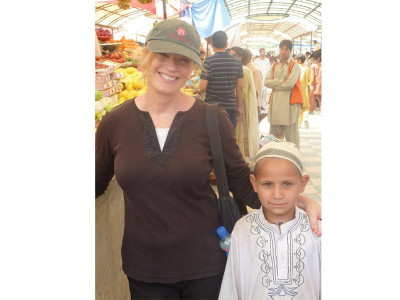
<p>As the day progressed, we went to Sunday Bazaar and the beach, the nervousness wore off and they were finally able to get a real taste of the city – sometimes with a bit of concern, and sometimes a bit of awe.</p>
<p>As I am also not a Karachi’ite as they say – wasn’t born or raised here and took a long time to adjust to the city, I wondered what effect has Karachi on the people who visit it for the first time, especially foreigners.</p>
<p>With this in mind, I asked the journalists to write back to me about what they thought of Karachi. Some of them got back to me and to say the least, their replies were heart-warming.</p>
<p>Terry Anzur, news anchor at KFI-AM 640 Los Angeles and journalism educator: “I&#8217;ll never forget the young faces of Karachi. A little girl sang and smiled for us during her first week of kindergarten at a non-profit school operating on the edge of a slum. Bright-eyed older students radiated enthusiasm for learning and illustrated why so many people find hope in Pakistan&#8217;s educated youth.  A less certain future may await the young boys from Tajikistan who carried my purchases at the Sunday Market; like kids anywhere, they joyfully jumped in front of my video camera. The students in the madrassa we visited were more restrained, but we saw the intensity in their faces as they recited from the Holy Quran. Young parliamentarians and college students debated the issues facing their country with energy and passion. I came away convinced that any investment in Pakistan’s youth will have a huge payoff.”</p>
<p>John Diaz, the editorial page editor of the San Francisco Chronicle: “Within hours of getting off the plane, I was introduced to the challenges and complications of modern-day Karachi. The strike called by MQM had all but brought the city to a screeching halt. Our meetings were cancelled, and opportunities to shop, eat, see the city &#8212; or to talk with citizens &#8212; became very limited. Fortunately, the pause was soon lifted and I saw a very vibrant, very international city come to life. It struck me as a city of vast potential and resiliency.”</p>
<p>According to Dan Boyce, the capitol bureau chief of the Montana Public Radio, walking into the Jinnah International Airport, he was immediately struck with how much it seemed like any other nice big-city airport. “My only reference point was the airport in Islamabad, which felt more like an airport of the developing world. As my group and I were driven to the Marriott Hotel, we were met with similar contrasts to the Pakistani capital,” he said. “Karachi seemed more open — fewer walls and less barbed wire. Karachi’s status as the thriving economic hub of Pakistan was clearly evident as well. The city definitely has a heartbeat. But Karachi is a city still far removed from the culture I am accustomed to in the United States. The streets have a certain &#8216;lawless&#8217; feel to them. People hang from the side and pile onto the top of buses by the dozens. Motorcycles with three or four passengers share poorly defined lanes with donkey carts and darting pedestrians. This is of course when the streets are open. An MQM transportation strike left us largely confined to our hotel for much of one day.”</p>
<p><em>Published in The Express Tribune, July 2<sup>nd</sup>, 2012.</em></p>
</p>
			<br clear="all"/>
		]]>
		</description>

		<media:content width="424" height="318"
							isDefault="true" medium="image" url="http://i1.tribune.com.pk/wp-content/uploads/2012/07/402049-terryanzurPHOTOCOURTESYTERRYANZUR-1341167045-116-640x480.jpg">
			<media:title>terry anzur-PHOTO COURTESY-TERRY ANZUR</media:title>
			<media:description>Terry Anzur in Sunday Bazaar with the Tajik boy who carried her purchases around. PHOTO COURTESY: TERRY ANZUR
</media:description>
			<media:thumbnail url="http://i1.tribune.com.pk/wp-content/uploads/2012/07/402049-terryanzurPHOTOCOURTESYTERRYANZUR-1341167045-116-160x120.jpg" width="160" height="120" />
      </media:content>

		<wfw:commentRss></wfw:commentRss>
		<slash:comments>4</slash:comments>
	</item>
		<item>
		<title>Free speech: ‘benchmark for press, writers poles apart’  </title>
		<link>http://tribune.com.pk/story/401694/free-speech-benchmark-for-press-writers-poles-apart/</link>
		<pubDate>Sat, 30 Jun 2012 22:28:42 +0000</pubDate>

		<guid isPermaLink="false">http://tribune.com.pk/?p=401694</guid>

		<description>
		<![CDATA[
			<a href="http://tribune.com.pk/story/401694/free-speech-benchmark-for-press-writers-poles-apart/">
				<img src="http://i1.tribune.com.pk/wp-content/uploads/2012/06/401694-sehar-1341095247-641-160x120.JPG" width="160" height="120" alt="" />
			</a>
			<p><div><strong class='location'>KARACHI:&nbsp;</strong>
<p><strong>Freedom of speech in our society is only associated with the press and the embargos on writers and poets are seldom part of the discussions on human rights. This was the generic opinion of the speakers at Sindh Writers/Artists Convention, organised by the Human Rights Commission of Pakistan to discuss the right to freedom of expression for writers, artists and other civil society members.</strong></p>
</div>
<p>“[But] journalists and writers are not isolated in their struggle,” said prominent journalist Ghazi Salahuddin, who writes for <em>The News</em>. “When writers talk about freedom of speech, they talk about the society as a whole,” he said. “It is true that creative language is not present anymore in our literature.”</p>
<p>Discourse in the first session revolved around the writers of the 21st century. Noted poet Prof. Dr Sehar Ansari, reading a paper on the subject, summed up the literary scenario from western renaissance classics to the writings of Karl Marx in 10 minutes. The gist of his paper was that this century’s writers had not kept pace with the times. “This century has seen a lot of ups and downs, but the literature produced did not justify the consequences,” he said.</p>
<p>Zafar Iqbal, the dean of University of Karachi (KU) arts faculty, believed that the sub-continental literature between 1914 and 1945 could not justify the destruction caused by the two world wars.</p>
<p>Nazir Leghari, the <em>Daily Awaam </em>editor, was the most vocal speaker on the subject. “The literature of the subcontinent, especially Urdu, has not even reached the stage where the western literature was between the 13th and 14th century,” he said. “Fiction was doing well until Manto. After his death, the genre began to crumble but kept on being dragged to its utter decline today.”</p>
<p>Leghari pointed out an interesting fact that even though urban literature was struggling, literature in rural areas continued to thrive. “[But] it did not reach the urban readers, putting a stop to social and literary evolution,” he said.</p>
<p>Prof. Dr Pirzada Qasim Raza Siddiqui, the vice chancellor of Federal Urdu University of Arts Science and Technology, opined that literature cannot be isolated to time periods. “Effects of a certain event will still be able to influence those coming in the future,” he said.</p>
<p>Summing up the role of writers in a society, he said: “The police register FIRs for crimes [against people], and the writers register the crimes against the society.”</p>
<p><em>Published in The Express Tribune, July 1<sup>st</sup>, 2012.</em><em> </em></p>
</p>
			<br clear="all"/>
		]]>
		</description>

		<media:content width="424" height="318"
							isDefault="true" medium="image" url="http://i1.tribune.com.pk/wp-content/uploads/2012/06/401694-sehar-1341095247-641-640x480.JPG">
			<media:title>sehar</media:title>
			<media:description>Noted poet Prof. Dr Sehar Ansari, reading a paper on the subject, summed up the literary scenario from western renaissance classics to the writings of Karl Marx in 10 minutes. PHOTO: EXPRESS/ ATHAR KHAN</media:description>
			<media:thumbnail url="http://i1.tribune.com.pk/wp-content/uploads/2012/06/401694-sehar-1341095247-641-160x120.JPG" width="160" height="120" />
      </media:content>

		<wfw:commentRss></wfw:commentRss>
		<slash:comments>1</slash:comments>
	</item>
		<item>
		<title>‘Sports quota’:  For a seat at KU, paisa phaink tamasha dekh  </title>
		<link>http://tribune.com.pk/story/399171/sports-quota-for-a-seat-at-ku-paisa-phaink-tamasha-dekh/</link>
		<pubDate>Mon, 25 Jun 2012 19:55:27 +0000</pubDate>

		<guid isPermaLink="false">http://tribune.com.pk/?p=399171</guid>

		<description>
		<![CDATA[
			<a href="http://tribune.com.pk/story/399171/sports-quota-for-a-seat-at-ku-paisa-phaink-tamasha-dekh/">
				<img src="http://i1.tribune.com.pk/wp-content/uploads/2012/06/399171-KarachiUniveristy-1340654015-227-160x120.jpg" width="160" height="120" alt="" />
			</a>
			<p><div><strong class='location'>KARACHI:&nbsp;</strong>
<p><strong>Don’t worry if you couldn’t make the merit cut at your desired department in the University of Karachi (KU). There’s still a way. If you have cash and access to the ‘right people’, your wish may just be granted. The ‘sports quota’ – varsity seats reserved for sportsmen – can let you in.</strong></p>
</div>
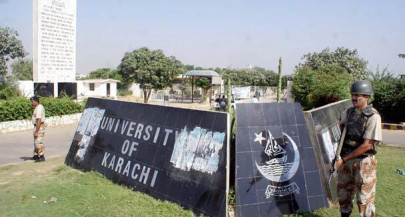
<p>There are more than 5,000 seats in the university and most out-of-merit admissions, in fact, exploit the sportsmen’s quota. The KU Admission Committee director, Khalid Iraqi, says that university rules allow two per cent seats at all varsity departments to be allotted to sportsmen, who have played at national or international levels.</p>
<p>A sports committee sifts through the potential candidates’ applications and then sends recommendations to the admission committee, which almost always, accepts the suggestions. However, the process until it reaches the table of the admission committee members is a complex one. The forms make many pit stops – at the enrolment office, the relevant department and the administration office. This year, the quota became especially handy as it was hard to get admission to the KU otherwise.</p>
<p>According to Iraqi, the number of sports seats available is usually more than the prospective students. Until last year, before Iraqi took over, these seats were assigned arbitrarily by the admission committee members. “This allowed the student wings of political parties to intervene and the committee members, who had points to score, were influenced,” said Iraqi.</p>
<p>This year, such admissions were checked to an extent because only one merit list was issued, instead of the usual three, and the vacant sports seats were advertised.</p>
<p><strong>Money ‘speaks’</strong></p>
<p>It is during all this that the political clout, money and a little persuasion come in handy.</p>
<p><em>The Express Tribune</em> met an agent, S, who makes good money by helping candidates get admission at their desired departments. He explained in detail how people like him take advantage of the loopholes in the system. S has links in the university administration and also with a certain political party. “No matter how transparent the admission committee is, it will scrutinise only whatever is in front of it,” he said. “They don’t know what has happened with the form before it reached them.”</p>
<p>The charges for the sports seats, however, differ according to demands. For example, mass communication and pharmacy seats are the most sought after and thus the most expensive. A place in pharmacy department ranges between Rs100,000 and Rs200,000; whereas, a mass communication seat would cost around Rs200,000. Admissions to other, somewhat less popular departments, cost around Rs8,000.</p>
<p>“We have connections in the administration and enrolment sections,” said S. “A share of the fee goes to them also.” But S says that the rates also vary for people with ‘links’, and a call from someone above the agents in the party hierarchy often results in a discount. But what actually happens during the time the form is in-process is another story altogether.</p>
<p>A student of KU, requesting anonymity, told <em>The Express Tribune</em> that getting a participation certificate made for a national or international sports event takes between Rs2,000 and Rs3,000.</p>
<p>Just to complete the paperwork, a student may even attach a fake mark sheet with the admission form, and by the time the form reaches the admission committee, it is doctored and the other documents needed are also attached.</p>
<p><strong>Viola!</strong></p>
<p>The university prefers to admit candidates with sports background and first division in their intermediate and matriculation examinations, said Iraqi. But S says: “As long as a student has [sports] certificates, his low percentage – even below the cut off percentage – may be overlooked by the admission committee.”</p>
<p><em>Published in The Express Tribune, June 26<sup>th</sup>, 2012.</em></p>
</p>
			<br clear="all"/>
		]]>
		</description>

		<media:content width="424" height="318"
							isDefault="true" medium="image" url="http://i1.tribune.com.pk/wp-content/uploads/2012/06/399171-KarachiUniveristy-1340654015-227-640x480.jpg">
			<media:title>Karachi University</media:title>
			<media:description>According to Iraqi, the number of sports seats available is usually more than the prospective students. </media:description>
			<media:thumbnail url="http://i1.tribune.com.pk/wp-content/uploads/2012/06/399171-KarachiUniveristy-1340654015-227-160x120.jpg" width="160" height="120" />
      </media:content>

		<wfw:commentRss></wfw:commentRss>
		<slash:comments>7</slash:comments>
	</item>
		<item>
		<title>Meteors in comet-filled skies: Fatima Surayya Bajia’s biography launched     </title>
		<link>http://tribune.com.pk/story/382226/meteors-in-comet-filled-skies-fatima-surayya-bajias-autobiography-launched/</link>
		<pubDate>Mon, 21 May 2012 22:54:26 +0000</pubDate>

		<guid isPermaLink="false">http://tribune.com.pk/?p=382226</guid>

		<description>
		<![CDATA[
			<a href="http://tribune.com.pk/story/382226/meteors-in-comet-filled-skies-fatima-surayya-bajias-autobiography-launched/">
				<img src="http://i1.tribune.com.pk/wp-content/uploads/2012/05/382226-FatimaSurayyaBajiaPHOTOAYESHAMIREXPRESS-1337625807-938-160x120.jpg" width="160" height="120" alt="" />
			</a>
			<p><div><strong class='location'>KARACHI:&nbsp;</strong>
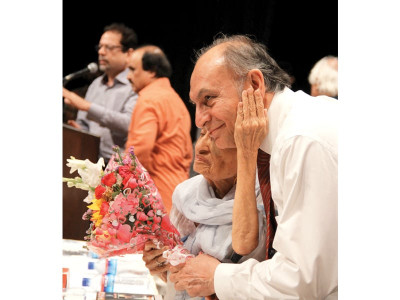
<p><strong>The launch of Bajia’s biography could not have been better suited to her personality. Just like Fatima Surayya Bajia, it was the perfect mix of austerity, generosity of person and the unabated love that she has showed every single person she has met in her long life.</strong></p>
<p>Anwar Maqsood, Bajia’s younger brother and the host of the ceremony, kept the audience in stitches the whole time with his razor-sharp wit and family anecdotes. At the end of the event when the guests were presenting flowers to Bajia, he announced to the audience that a colonel from Islamabad had also sent her a bouquet. “Perhaps he doesn’t know how old Bajia is,” he quipped.</p>
<p>When calling actor Qazi Wajid to the stage, Maqsood joked that he was the only actor who has been doing theatre before Bajia began writing plays.</p>
<p>The biography has been written by Syeda Iffat Hasan Rizvi after six years of research. She stayed with Bajia and talked at length to her siblings. “At times I even asked extremely personal questions but Bajia never once raised an eyebrow,” she said.</p>
<p>A mischievous Maqsood requested the speakers to keep their speeches short, “just like Bajia.”</p>
<p>Maqsood admitted that the love shared by all of his 10 siblings, who include, eminent Urdu poet Zehra Nigah, Sughra Kazmi and Zubaida Tariq, is seldom seen anywhere. “That’s because our parents never left anything for us,” he immediately quipped. “All they left were around 10,000 books. Maybe if they had left some property then we wouldn’t love each other so much.”</p>
<p>His best introduction was for Zubaida Aapa – “Aap chay chamchay tehzeeb kay lijiay, aath tamaddun kay aur naun maazi kay. Phir sab ko mila kar mun kay aik konay mayn rakh lijiay. Ainda kabhi budtamizi nahi karengay!” (Add six spoons of manners, eight of heritage and nine of history. Mix them well and put some in your mouth. You will never misbehave again).</p>
<p>Prof. Sehar Ansari, who was one of the speakers, also praised Bajia’s character and her work. Talking about her habit of calling everyone a beta (son), he said that Bajia even called an 80-year-old beta when she was herself only 40 years old.</p>
<p>Director Agha Nasir told the audience how Bajia first got involved with Pakistan Television. Her flight to Karachi had been delayed and she came to PTV Islamabad station for a visit. Nasir hired her and Bajia made her debut in 1966 by acting in one of his plays. She began writing afterwards. “During Ziaul Haq’s time when the ‘dupatta policy’ was implemented and women were forced to behave a certain way, Bajia wrote about characters from Baghdad and Granada,” he said. “This was brilliant because these places were supposedly Islamic societies and no one could say anything about them.”</p>
<p>Nasir said that when writing a play, Bajia would literally move with her belongings to the TV station and then become an authority by default. “Anyone who had a problem would go to Bajia, not to the chief of the organisation.”</p>
<p>Although Bajia has been presented with many awards, including the highest civil award of Japan and Pride of Performance by the Pakistani government, none of them did justice to her services. “There should be more. Something grander,” said Nasir as he finally finished his speech.</p>
<p>Replying to this, Maqsood said that Bajia was better off without these awards because they were given to the likes of Babar Awan, Rehman Malik and Salman Farooqi.</p>
<p><em>Correction: An earlier version of this story inadvertently mentioned that Bunto Kazmi was Fatima Suriya Bajia’s sibling. She is in fact her niece. Sughra Kazmi is her sibling. The error is regretted.</em></p>
</div>
<p><em>Published in The Express Tribune, May 22<sup>nd</sup>, 2012.</em></p>
</p>
			<br clear="all"/>
		]]>
		</description>

		<media:content width="424" height="318"
							isDefault="true" medium="image" url="http://i1.tribune.com.pk/wp-content/uploads/2012/05/382226-FatimaSurayyaBajiaPHOTOAYESHAMIREXPRESS-1337625807-938-640x480.jpg">
			<media:title>Fatima Surayya Bajia-PHOTO-AYESHA MIR-0EXPRESS</media:title>
			<media:description>Fatima Surayya Bajia on stage at the lauch of her biography. PHOTO: AYESHA MIR/EXPRESS</media:description>
			<media:thumbnail url="http://i1.tribune.com.pk/wp-content/uploads/2012/05/382226-FatimaSurayyaBajiaPHOTOAYESHAMIREXPRESS-1337625807-938-160x120.jpg" width="160" height="120" />
      </media:content>

		<wfw:commentRss></wfw:commentRss>
		<slash:comments>9</slash:comments>
	</item>
		<item>
		<title>Between Clay and Dust: Amid today’s turmoil, one novelist finds stability in dying cultures</title>
		<link>http://tribune.com.pk/story/381726/between-clay-and-dust-amid-todays-turmoil-one-novelist-finds-stability-in-dying-cultures/</link>
		<pubDate>Mon, 21 May 2012 05:17:07 +0000</pubDate>

		<guid isPermaLink="false">http://tribune.com.pk/?p=381726</guid>

		<description>
		<![CDATA[
			<a href="http://tribune.com.pk/story/381726/between-clay-and-dust-amid-todays-turmoil-one-novelist-finds-stability-in-dying-cultures/">
				<img src="http://i1.tribune.com.pk/wp-content/uploads/2012/05/381726-bookday-1337537792-426-160x120.JPG" width="160" height="120" alt="" />
			</a>
			<p><p><strong><strong class='location'>KARACHI:&nbsp;</strong>If Musharraf Ali Farooqi’s latest literary effort has to be squeezed into these three newspaper columns <em>‘Between Clay and Dust</em>’ can for starters be described as the story of a man’s ignorance of the world around him.</strong></p>
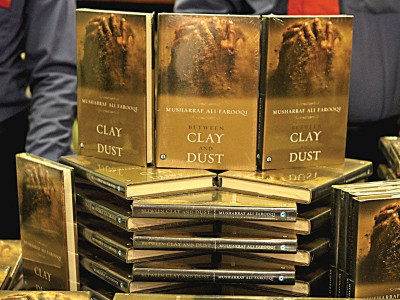
<p>He is stoic &#8211; to the extent of being selfish in his principles. He wants to take everything but doesn’t want to give anything, said the author while talking to an intimate audience at the launch of his fifth novel at T2F on Sunday. “It is about a culture that is no longer there and two people who are dealing with its aftermath.”</p>
<p>The lead characters, Ustad Ramzi and Gohar Jan, are both remnants of a bygone era of the subcontinent. Ramzi is the leader of a pehelwan clan and the custodian of a wrestler’s <em>akhara</em> (the training centre for desi wrestlers) and Gohar Jan is a courtesan.</p>
<p>While responding to a question, Farooqi admitted that he liked to reflect on the old days because those times were more ‘stable’ and maybe this was why many of his works were about dying cultures.</p>
<p>At the launch, soon-to-be published Shazaf Fatima Haider, and editor of online magazine Paper Cut, Afia Aslam, kept the dialogue with Farooqi lively and interesting. The conversation flowed from his childhood to his experience of working with Indian publishers and the differences between Indian and Pakistani society.</p>
<p>Farooqi said that the novel began as an “abstract concept” but he had the story in his mind before he actually wrote it. Talking about why he chose a Pehlwan to tell a story, he cryptically answered that it couldn’t have been anything else.</p>
<p>The novel is mostly based on narrative because Farooqi is not particularly fond of too much dialogue. The idea is to keep the story flowing.</p>
<p>When he was asked why he chose to write in English on such a traditional topic, Farooqi admitted that he wrote for a western audience. “That’s how a writer earns these days,” he said simply and honestly. Even though Farooqi researched in great   detail about <em>akharas </em>he admitted that he had never actually visited one.</p>
<p>Afia steered the conversation to his experience as a translator as asked if it helped Farooqi portray the traditional setting of an <em>akhara</em> and a <em>kotha</em>. To the audience’s surprise, Farooqi, who has translated works like <em>The Adventures of Amir Hamza</em>, said that it was no help. “My wife also asks me often what language I think in,” he said with a chuckle. “But as soon as I begin to be conscious of it I &#8230;” he trailed off. “But these days I often catch myself thinking in Urdu.”</p>
<p>He was also asked if the choice of language can alter the perception of ‘authenticity’ of a novel, Farooqi said that what mattered was  the uninterrupted flow of narrative.</p>
<p>The book is dedicated to eminent writer Afzal Ahmed Syed, who is also translating <em>Between Dust and Clay</em>. He and Sheema Kirmani read two chapters from the book &#8211; Syed read the translation of Gohar Jan while Kirmani read Ustad Ramzi in English.</p>
<p><em>Published in The Express Tribune, May 21<sup>st</sup>, 2012.</em></p>
</p>
			<br clear="all"/>
		]]>
		</description>

		<media:content width="424" height="318"
							isDefault="true" medium="image" url="http://i1.tribune.com.pk/wp-content/uploads/2012/05/381726-bookday-1337537792-426-640x480.JPG">
			<media:title>book day1</media:title>
			<media:description>Between Clay and Dust is about a wrestler and a courtesan. Musharraf Ali Farooqi signing copies at T2F where the launch was held. PHOTO: AYESHA MIR/EXPRESS
</media:description>
			<media:thumbnail url="http://i1.tribune.com.pk/wp-content/uploads/2012/05/381726-bookday-1337537792-426-160x120.JPG" width="160" height="120" />
      </media:content>

		<wfw:commentRss></wfw:commentRss>
		<slash:comments>1</slash:comments>
	</item>
		<item>
		<title>A sign of the times: Deaf Reach schools say it all with dedication and sheer grit </title>
		<link>http://tribune.com.pk/story/381390/a-sign-of-the-times-deaf-reach-schools-say-it-all-with-dedication-and-sheer-grit/</link>
		<pubDate>Sun, 20 May 2012 05:11:15 +0000</pubDate>

		<guid isPermaLink="false">http://tribune.com.pk/?p=381390</guid>

		<description>
		<![CDATA[
			<a href="http://tribune.com.pk/story/381390/a-sign-of-the-times-deaf-reach-schools-say-it-all-with-dedication-and-sheer-grit/">
				<img src="http://i1.tribune.com.pk/wp-content/uploads/2012/05/381390-signlanguage-1337490589-998-160x120.jpg" width="160" height="120" alt="" />
			</a>
			<p><div><strong class='location'>KARACHI:&nbsp;</strong>
<p><strong>Richard Geary has been in Karachi for 24 years, helping children born with a hearing disabilities become self sufficient and active members of society with the help of his family and friends.</strong></p>
</div>
<p>Since 1984, the Family Education Services Foundation (FESF) network he founded has spread to Lahore, Hyderabad and Sukkur while two more schools are being built in Benazirabad and Rashidabad.</p>
<p>FESF was the first organisation in the country to be set up especially for children with hearing disabilities. Primary campus of Deaf Reach is nestled among commercial offices, houses and other schools and institutes in PECHS. Its dull grey building and neatly mowed lawn stands out in stark contrast to the bright and cheerful ambiance of the classrooms.</p>
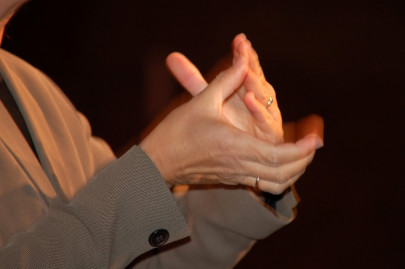
<p>Riffat Ashfaq looks over the shoulder of one of the children as he writes his lesson. She comes here every day with her two children to receive training to teach in sign language.</p>
<p>Riffat says that she was the only one in her family with a hearing disability. She got married around 10 years ago and it was only after she had her first child that she began to learn to read and write. Riffat’s husband, like her, cannot hear. He works as a tailor and draper and runs his own shop in Saddar. “My husband encouraged me to study and I did my BA from Ida Rieu School.” Besides educating children with hearing disabilities, FESF also conducts sign-language training sessions for their parents. “The foundation focuses on a holistic approach to education. We want to empower these people,” explains Maria Paola, the co-founder. “We not only want the children to learn to read and write, we also want them to become an active part of society.”</p>
<p>Paola says that since the school environment is very different from that of a home, the new students first join a special induction class to acclimatise them to school and its environment. Once they have become used to the routine and the teachers gauge the student’s potential, they are moved to a group with children of their age or the learning standard. “For a child who cannot hear, when he walks into a room where everyone is talking in full sentences and communicating, it’s a Eureka moment,” says Geary with a smile on his face.</p>
<p>The teacher for the induction class, Faiz Rasool, has come from Gilgit. “I have a daughter who could not hear by birth,” he said with a touch of sadness in his voice. “I tried to find a school for her there but there weren’t any that would take her. Then I bought her here.” His voice gradually fills with hope and determination as he goes on to explain that once he has finished his training, he will go back and open a school for children like his daughter.</p>
<p>The primary branch has around 120 students. The cost of education for each child comes around Rs5,000 per month, including transport, snacks and learning aides. But since most of them cannot afford to pay the fee it is usually waived or slashed drastically. “Some of the parents pay us only Rs150 a month because that is only what they can spare.”</p>
<p>The secondary campus of Deaf Reach offers a variety of courses. Students are taught home economics, computers, stitching and embroidery and art. It also works with the Benazir Income Support Programme and inducts a batch of students every year in Sukkur, Hyderabad and Karachi for these courses.</p>
<p>FESF not only works to educate students but also aims to help them find jobs. This is why it encourages its students to work for its schools and also arranged different projects with multi-national organisations for job placements. In all of the FESF schools across Sindh and Lahore, there are around 72 teachers in total and out of them 45 are its own graduates.</p>
<p>Another example is of a project with KFC that opened a franchise at University Road, near Nipa, where all the staff are former students of Deaf Reach schools. FESF is working with Shell Pakistan and currently around 35 boys are working at petrol stations across Karachi.</p>
<p>“If you step back and see the people who cannot hear as a cultural minority group who share a common language rather than as people with a disability,” says Geary, “you get a whole different view. They simply need empowerment to reach their full potential.”</p>
<p><em>Published in The Express Tribune, May 20<sup>th</sup>, 2012.</em></p>
</p>
			<br clear="all"/>
		]]>
		</description>

		<media:content width="424" height="318"
							isDefault="true" medium="image" url="http://i1.tribune.com.pk/wp-content/uploads/2012/05/381390-signlanguage-1337490589-998-640x480.jpg">
			<media:title>Sign Language Interpreter</media:title>
			<media:description>Students and families learn sign language and get help finding jobs. PHOTO: FILE</media:description>
			<media:thumbnail url="http://i1.tribune.com.pk/wp-content/uploads/2012/05/381390-signlanguage-1337490589-998-160x120.jpg" width="160" height="120" />
      </media:content>

		<wfw:commentRss></wfw:commentRss>
		<slash:comments>0</slash:comments>
	</item>
		<item>
		<title>Germany and France teach Pakistan how to work through issues with India  </title>
		<link>http://tribune.com.pk/story/376357/germany-and-france-teach-pakistan-how-to-work-through-issues-with-india/</link>
		<pubDate>Wed, 09 May 2012 21:16:03 +0000</pubDate>

		<guid isPermaLink="false">http://tribune.com.pk/?p=376357</guid>

		<description>
		<![CDATA[
			<a href="http://tribune.com.pk/story/376357/germany-and-france-teach-pakistan-how-to-work-through-issues-with-india/">
				<img src="http://i1.tribune.com.pk/wp-content/uploads/2012/05/376357-ChristianRamage-1336586393-841-160x120.jpg" width="160" height="120" alt="" />
			</a>
			<p><div><strong class='location'>KARACHI:&nbsp;</strong>
<p><strong>Perhaps India and Pakistan could learn a lesson from France and Germany, after all they were once bitter rivals too.</strong></p>
</div>
<p>In the Second World War, they were on opposing sides &#8211; Germany led the Axis while France was part of the Allies.</p>
<p>“In Germany alone, eight million out of the 65 million died in the war,” said Germany’s Consul General Dr Tilo Klinner. “It was this realisation that made the German people never want history to repeat itself. It proved to be the driving engine for reconciliation between two countries.”</p>
<p>Klinner had been invited by the University of Karachi’s Area Study Centre of Europe (ASCE) to speak on ‘The Vision for a Common European Home’ with his French counterpart, Christian Ramage.</p>
<p>In his presentation, Klinner recapped the long-term conflicts between the two countries and the numerous wars in their history. He compared Alsace-Lorraine, two industrial territories which caused a great deal of bloodshed, to Kashmir – the bone of contention between India and Pakistan.</p>
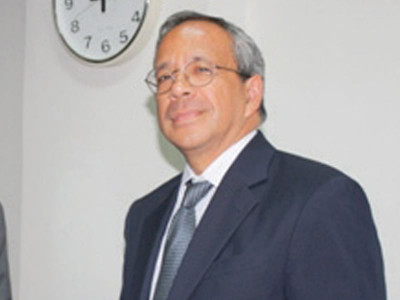
<p>Ramage’s explained how the Franco-German couple, as he referred to the countries in his presentation, overcame their conflicts. “Our founding fathers had been a part of the world wars,” he said. “They were conservative and even nationalistic but they accepted the fact that reconciliation was the key to long-lasting peace in the region.”</p>
<p>Ramage divided the process into three steps – the first step was the formation of European Coal and Steel Community. Its main aim was to regulate the steel and coal resources so that none of the countries in Europe, especially Germany, could develop arms secretly. The second milestone was the Treaties of Rome which symbolised the Franco-German reconciliation. The third milestone was the signing of Elysee Treaty in 1963 which was based on reconciliation, building friendship and working for the unification of Europe.</p>
<p>Both countries had agreed to involve the youth in the peacemaking process. Every year around 200,000 young men and women would cross borders to learn about the country and its people. Klinner added that he had also participated in the youth programme. “This is how I first got to see Paris and began learning French,” he said. “I was only 18-years-old.”</p>
<p>The countries encouraged what Ramage called “twinnings”, pairing up of cities, towns, districts and institutions. Teaching German and French was encouraged as second languages with English. “I belong to an older generation of diplomats and it embarrasses me that I cannot speak German,” lamented Ramage. “Every German diplomat I meet speaks French as fluently as me.” He added that it was compulsory for the diplomats of both the countries to learn their neighbouring country’s language when they assume office.</p>
<p>The cooperation, however, does not stop here. Ramage went on to tell the audience that whenever French diplomats took charge, their first visit was to their German counterparts, and it was the same in Germany. The relations between the two countries were quite ‘intense’ as he put it. They also have a common channel, called Arte, which runs cultural programmes. But the most remarkable feat which the countries have achieved is writing a common history book. “History is always tilted to one side, most of the time towards the victor,” said Klinner. “But once you have a common history all the underlying issues disappear. Imagine what would happen if India and Pakistan agreed upon their history?”</p>
<p>Towards the end of the session, the chairman of ASCE, Dr Moonis Ahmar was optimistic about the future of South Asia. “Till a few years ago Indian and Pakistani leaders could not even think about shaking hands,” he said. “But now they do.”</p>
<p>While talking about Klinner comment about common history, Dr Ahmar said that the issue was the past. “We must understand the cost of the conflict,” he said. “Europe paid the price by 50 million deaths in the Second World War.”</p>
<p><em>Published in The Express Tribune, May 10<sup>th</sup>, 2012.</em></p>
</p>
			<br clear="all"/>
		]]>
		</description>

		<media:content width="424" height="318"
							isDefault="true" medium="image" url="http://i1.tribune.com.pk/wp-content/uploads/2012/05/376357-ChristianRamage-1336586393-841-640x480.jpg">
			<media:title>Christian Ramage</media:title>
			<media:description>The French Consul General explains how the relationship can improve in three easy steps.</media:description>
			<media:thumbnail url="http://i1.tribune.com.pk/wp-content/uploads/2012/05/376357-ChristianRamage-1336586393-841-160x120.jpg" width="160" height="120" />
      </media:content>

		<wfw:commentRss></wfw:commentRss>
		<slash:comments>3</slash:comments>
	</item>
		<item>
		<title>The workforce: ‘Between budgets and bias, projects have replaced planning’</title>
		<link>http://tribune.com.pk/story/373103/the-workforce-between-budgets-and-bias-projects-have-replaced-planning/</link>
		<pubDate>Wed, 02 May 2012 23:20:47 +0000</pubDate>

		<guid isPermaLink="false">http://tribune.com.pk/?p=373103</guid>

		<description>
		<![CDATA[
			<a href="http://tribune.com.pk/story/373103/the-workforce-between-budgets-and-bias-projects-have-replaced-planning/">
				<img src="http://i1.tribune.com.pk/wp-content/uploads/2012/05/373103-DrJanBremanCOURTESYPILER-1335980931-977-160x120.jpg" width="160" height="120" alt="" />
			</a>
			<p><div><strong class='location'>KARACHI:&nbsp;</strong>
<p><strong>It is a myth that Pakistan does not have resources or money for development, said architect and urban planner <a href="http://tribune.com.pk/author/2306/arif-hasan/">Arif Hasan</a>. “The budgets allotted for projects lapse every year.”</strong></p>
</div>
<p>Hasan was talking at an international conference organised to celebrate 30 years of Pakistan Institute for Labour Education and Research (Piler). According to him, there was an anti-poor bias among policymakers which was why they made excuses for creating further divides in the society. He said that the policymakers perceived the poor people of the country as incapable of critical thinking.</p>
<p>“The road near my house was rebuilt but there was no footpath,” he said. “I went to the area nazim and asked him why did he not build one? He told me that even if he built one no one would walk on it.”</p>
<p>While giving the example of Sea View, he said that Defence Housing Authority (DHA) had banned hawkers and monkey handlers from the place in order to improve the sort of people who came there – more families. “That happened. But the poor people stopped coming to Sea View,” he said. “Projects have replaced planning.”</p>
<p>He said that the policymakers were not professionally trained, and those who were, lived in a bubble. To add to the problem, there was no room for the above problems in the current development plan.</p>
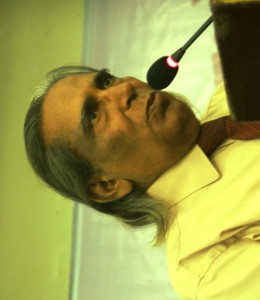
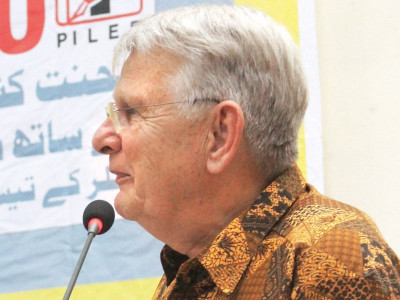
<p>Dr Jan Breman, Prof. Emeritus at University of Amsterdam in the Netherlands, spoke on the plight of the non-labouring poor. These are the people who don’t even have their labour to sell to earn money. This was also the theme of his latest research and Breman recounted the tales of people from  Surat, in Gujrat  state, which he had recently visited. He called these people ‘paupers’.</p>
<p>“The poor people can still do something about their situation but the paupers can’t,” he said. “They are the ones who have given up completely.”</p>
<p>Gesturing with his hands, Prof. Breman explained that people who worked continuously in difficult conditions for a long time grew old earlier. Pretty soon they exhaust themselves and have no more labour to sell and enter the category of non-labouring poor.</p>
<p>“The growth rate of Gujrat state is 8% to 10% but it also has the most paupers,” he said. “This is the cost of development.”</p>
<p>Earlier in the seminar which was titled ‘Labour in the age of globalisation’, Breman talked more specifically about South Asia, he said that the labour were footloose – disembodied from the society. He was the first speaker to point out that labour had become informal in the global age putting them at a disadvantage. The people migrated to cities from rural areas but more often than not they didn’t do so by choice and could not go back because of natural disasters or other problems.</p>
<p>He referred to an incident in Badin where a labourer burnt himself on Tuesday. The issue was not only decent working conditions but also giving the people respect and decency. “Roti, kapraa aur makaan are what a person needs to maintain his dignity,” said Prof. Breman.</p>
<p><a href="http://tribune.com.pk/author/420/rubina-saigol/">Dr Rubina Saigol</a>, an independent researcher, said that with time democracy had become limited and equality had been replaced by consumerist attitude to people’s needs. The world was a ‘global pillage’, she said, as the people become more and more unequal. “This is an intensification of capitalism which itself is based on inequality.” While talking about state benefits, she said that the concept of a welfare state was itself a compromise by the state. The capitalist system still used the people but it also provided them with facilities. “Cost has been socialised, while the profit was privatised,” she said.</p>
<p><em>Published in The Express Tribune, May 3<sup>rd</sup>, 2012.</em></p>
</p>
			<br clear="all"/>
		]]>
		</description>

		<media:content width="424" height="318"
							isDefault="true" medium="image" url="http://i1.tribune.com.pk/wp-content/uploads/2012/05/373103-DrJanBremanCOURTESYPILER-1335980931-977-640x480.jpg">
			<media:title>Dr Jan Breman. COURTESY-PILER</media:title>
			<media:description>“The poor people can still do something about their situation but the paupers can’t,” Dr Jan Breman said. “They are the ones who have given up completely.” PHOTO: COURTESY PILER
</media:description>
			<media:thumbnail url="http://i1.tribune.com.pk/wp-content/uploads/2012/05/373103-DrJanBremanCOURTESYPILER-1335980931-977-160x120.jpg" width="160" height="120" />
      </media:content>

		<wfw:commentRss></wfw:commentRss>
		<slash:comments>0</slash:comments>
	</item>
		<item>
		<title>As students get classes cancelled, KU launches History Media Policy project</title>
		<link>http://tribune.com.pk/story/370572/as-students-get-classes-cancelled-ku-launches-history-media-policy-project/</link>
		<pubDate>Fri, 27 Apr 2012 03:58:06 +0000</pubDate>

		<guid isPermaLink="false">http://tribune.com.pk/?p=370572</guid>

		<description>
		<![CDATA[
			<a href="http://tribune.com.pk/story/370572/as-students-get-classes-cancelled-ku-launches-history-media-policy-project/">
				<img src="http://i1.tribune.com.pk/wp-content/uploads/2012/04/370572-universityofkarachisafdarabbasrizvi-1335499007-434-160x120.jpg" width="160" height="120" alt="" />
			</a>
			<p><p><strong><strong class='location'>KARACHI:&nbsp;</strong>The timing of the launch of the ‘History Media Policy’ project by the University of Karachi’s history department was impeccable. Just before it happened, Prime Minister Yousaf Raza Gilani was convicted of contempt by the Supreme Court.</strong></p>
<p>In the university itself, classes were cancelled by activists of political parties. The university’s administration employees protested outside the administration block as the seminar proceeded in the Arts Auditorium against the hegemony of student activists at the campus.</p>
<p>The project — was inspired by the London project of History and Policy by King’s College London. History Media Policy (HMP) — aims to bring the academia, media and policy makers together in light of accurate historical data. It will try and channelise various academic researches to the knowledge of the policy makers. The history department also took advantage if this opportunity to launch their biannual research journal, called Journal of History and Social Sciences.</p>
<p>In their presentation, Arwa Juzar and Adeel Ahmed Khan referred to the Haldane Report of 1918, according to which the research spending of the government should be decided by researchers themselves instead of the politicians and should be supervised by independent research councils.</p>
<p>One of the speakers was the additional deputy commissioner Karachi South, Afzal Zaidi. He is also a former student and teacher at the history department. He deplored that election turn out was very low in Pakistan. “With only 18 per cent of the people deciding who comes to power how can you expect the government to form a tangible policy?” said Zaidi. He graduated in 2001 and then taught in the department for more than four years. “At home we are told to stay away from politics. The university also makes you promise to do the same before the admission,” he said, referring to an affidavit all the students have to sign at the time of their admission to pledge that they will not take part in any political activity. “But then how can you bring a change if you are supposed to do nothing? A citizen only becomes equal by the power of his vote. All of us have only one vote to give.”</p>
<p>Referring to the earlier presentation, Zaidi said it was the feudal mindset that had to be abolished instead of the feudal land practice itself. “Even in capitalist countries like America you are free to own as much land as you like,” he said. “But you have to treat a human being as a human being which lacks in our industrialists and feudal.”</p>
<p>Prof. Nisar Zuberi from the mass communication department said that the policy makers had the tendency to decide matters without actually understanding the root of the problem. While replying to Zaidi’s comments about being more politically active, Prof Zuberi, who has remained the editor of <em>Akhbar-e-Jahan</em> for about two decades, pointed out that even if the urban population were politically active, the deciding vote comes from the large chuck of rural population of the country. “So while you create political awareness among the students it is also imperative to convince the haaris not to vote for their feudal lord.”</p>
<p>Shamimur Rahman, a senior correspondent at <em>Dawn, </em>justified the criticism on media ethics by almost all the speakers. He said that media was a reflection of the society, not a hub for producing information or theories. “If people are uneducated then it will reflect in the media,” he replied to those who talked about the crass behaviour of television anchors and politicians in talks shows. “This is the outcome of not nurturing our nurseries of producing thoughtful individuals which are primary and secondary education.” But he also admitted that sometimes the media people did not confirm their facts before reporting it. “This is why we need the academia, to provide us with information and verify it for us,” he said. “A policy maker will never reveal that information.”</p>
<p><em>Published in The Express Tribune, April 27<sup>th</sup>, 2012.</em></p>
</p>
			<br clear="all"/>
		]]>
		</description>

		<media:content width="424" height="318"
							isDefault="true" medium="image" url="http://i1.tribune.com.pk/wp-content/uploads/2012/04/370572-universityofkarachisafdarabbasrizvi-1335499007-434-640x480.jpg">
			<media:title>university of karachi safdar abbas rizvi</media:title>
			<media:description>The Biannual Journal of History and Social Sciences was also launched. PHOTO: SAFDAR ABBAS RIZVI</media:description>
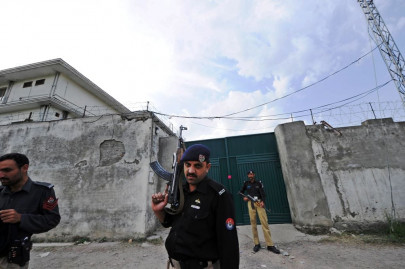
			<media:thumbnail url="http://i1.tribune.com.pk/wp-content/uploads/2012/04/370572-universityofkarachisafdarabbasrizvi-1335499007-434-160x120.jpg" width="160" height="120" />
      </media:content>

		<wfw:commentRss></wfw:commentRss>
		<slash:comments>1</slash:comments>
	</item>
	
</channel>
</rss>
<!-- Performance optimized by W3 Total Cache. Learn more: http://www.w3-edge.com/wordpress-plugins/

Page Caching using apc
Database Caching 12/42 queries in 1.506 seconds using memcached
Object Caching 1433/1588 objects using apc

 Served from: tribune.com.pk @ 2013-05-20 23:22:20 by W3 Total Cache -->