<?xml version="1.0" encoding="UTF-8"?>
<rss version="2.0"
	xmlns:content="http://purl.org/rss/1.0/modules/content/"
	xmlns:wfw="http://wellformedweb.org/CommentAPI/"
	xmlns:dc="http://purl.org/dc/elements/1.1/"
	xmlns:atom="http://www.w3.org/2005/Atom"
	xmlns:sy="http://purl.org/rss/1.0/modules/syndication/"
	xmlns:slash="http://purl.org/rss/1.0/modules/slash/"
	xmlns:media="http://search.yahoo.com/mrss/"
	>

<channel>
	<title>The Express Tribune &#187; Zafar Bhutta</title>
	<atom:link href="http://tribune.com.pk/author/2141/zafar-bhutta/feed/" rel="self" type="application/rss+xml" />
	<link>http://tribune.com.pk</link>
	<description>Latest Breaking Pakistan News, Business, Life, Style, Cricket, Videos, Comments</description>
	<lastBuildDate>Tue, 18 Jun 2013 05:31:49 +0000</lastBuildDate>
	<language></language>
	<sy:updatePeriod>hourly</sy:updatePeriod>
	<sy:updateFrequency>1</sy:updateFrequency>
	<generator>http://wordpress.org/?v=3.5.1</generator>

		<item>
		<title>Price hike: Oil prices raised in June for the third time</title>
		<link>http://tribune.com.pk/story/564630/price-hike-oil-prices-raised-in-june-for-the-third-time/</link>
		<pubDate>Mon, 17 Jun 2013 22:02:25 +0000</pubDate>

		<guid isPermaLink="false">http://tribune.com.pk/?p=564630</guid>

		<description>
		<![CDATA[
			<a href="http://tribune.com.pk/story/564630/price-hike-oil-prices-raised-in-june-for-the-third-time/">
				<img src="http://i1.tribune.com.pk/wp-content/uploads/2013/06/564630-Energycrisisphotofile-1371504441-566-160x120.jpg" width="160" height="120" alt="" />
			</a>
			<p><div><strong class='location'>ISLAMABAD:&nbsp;</strong>
<p><strong>Due to a tricky move of the government, the consumers are going to face a third time increase in oil prices during the ongoing month of June.</strong></p>
</div>
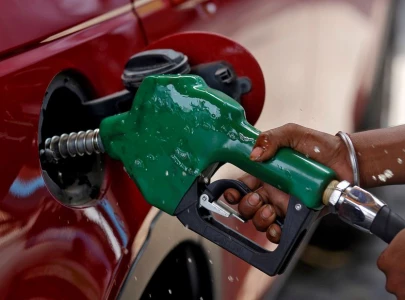
<p>A senior government official said the government had imposed 19% General Sales Tax (GST) on non-registered petrol pumps causing a third time increase in oil prices up to Rs2.70 per litre.</p>
<p>The official said Oil and Gas Regulatory Authority (Ogra) had not notified increase in oil prices. However, Oil Marketing Companies (OMCs) and petroleum dealers have increased prices following directive of Federal Board of Revenue (FBR).</p>
<p>He said 95% petrol pumps in the country were unregistered and, therefore, the GST rate had increased to 19% for these dealers, causing hike in oil prices for a majority of the consumers across the country.</p>
<p>The government had raised oil prices on June 13 following hike in rate of GST from 16 to 17% before the budget was approved. The Supreme Court had also taken suo motu notice of this increase up to Rs1.07 per litre.</p>
<p>For the consumers, getting oil supplies from unregistered petrol pumps, the price of petrol is increased by Rs1.72 per litre, High Speed Diesel (HSD) by Rs1.80 per litre, High Octane Blending Component (HOBC) by Rs2.70 per litre, kerosene oil by Rs1.70 per litre and Light Diesel Oil (LDO) by Rs1.54 per litre.</p>
<p>After the third time increase in oil prices, the new price of petrol stands at Rs102.35, HSD &#8211; Rs107.30, HOBC &#8211; Rs139.10, kerosene oil &#8211; Rs96.19 and LDO &#8211; Rs91.44 per litre.</p>
<p>According to Petroleum Dealers Association, petrol pumps have started charging consumers according to 19% GST. They have sought two months time from the government to register their pumps.<em></em></p>
<p><em>Published in The Express Tribune, June 18<sup>th</sup>, 2013.</em></p>
</p>
			<br clear="all"/>
		]]>
		</description>

		<media:content width="424" height="318"
							isDefault="true" medium="image" url="http://i1.tribune.com.pk/wp-content/uploads/2013/06/564630-Energycrisisphotofile-1371504441-566-640x480.jpg">
			<media:title>oil-petrol-diesel-prices-price-Energy crisis-photo-file</media:title>
			<media:description>A senior government official said the government had imposed 19% General Sales Tax (GST) on non-registered petrol pumps. PHOTO: FILE</media:description>
			<media:thumbnail url="http://i1.tribune.com.pk/wp-content/uploads/2013/06/564630-Energycrisisphotofile-1371504441-566-160x120.jpg" width="160" height="120" />
      </media:content>

		<wfw:commentRss></wfw:commentRss>
		<slash:comments>0</slash:comments>
	</item>
		<item>
		<title>Pakistan asks India to remove duties on LNG export </title>
		<link>http://tribune.com.pk/story/564458/pakistan-asks-india-to-remove-duties-on-lng-export/</link>
		<pubDate>Mon, 17 Jun 2013 19:01:10 +0000</pubDate>

		<guid isPermaLink="false">http://tribune.com.pk/?p=564458</guid>

		<description>
		<![CDATA[
			<a href="http://tribune.com.pk/story/564458/pakistan-asks-india-to-remove-duties-on-lng-export/">
				<img src="http://i1.tribune.com.pk/wp-content/uploads/2013/06/564458-LNGPHOTOFILE-1371495640-836-160x120.jpg" width="160" height="120" alt="" />
			</a>
			<p><div><strong class='location'>ISLAMABAD:&nbsp;</strong>
<p><strong>As Delhi refuses to budge on the issue of prices, Pakistan is now asking India to permit the duty-free export of liquefied natural gas (LNG) to make the fuel price competitive.</strong></p>
</div>
<p>“We have asked India to exempt LNG export from taxes, which may bring its price down to $16 per mmbtu, but India has not yet given any assurance,” a source quoted officials as saying.</p>
<p>During recent talks held in Pakistan, India had sought $21 per million British thermal units (mmbtu) for LNG export, including taxes applicable on the fuel in India, sources say.</p>
<p>Pakistan has been attempting to import LNG from different sources, including the Sui Southern Gas Company’s integrated LNG import project and imports from gas-rich Qatar.</p>
<p><img alt="" src="http://pullquotesandexcerpts.files.wordpress.com/2013/06/200.jpg?w=625" /></p>
<p>The Iran-Pakistan pipeline project, however, looks to be most viable and price competitive, as it will bring the price of natural gas to $11 per mmbtu, if crude oil price stands at $100 per barrel in the international market.</p>
<p>The price demanded by India is higher than that quoted by Qatar ($17.4) and private suppliers ($17.7-$18.1) for the SSGC project. Earlier, in January 2011, a Dutch firm had offered to supply LNG at $11, but the project did not go ahead and landed in the Supreme Court, forcing the then Pakistan Peoples Party-led coalition government to scrap the plan.</p>
<p>The project, called the Mashal LNG Import Project, was the most viable for bringing cheap gas to the country; however, it fell victim to controversy, with the Economic Coordination Committee later calling for reissuing the tender for the project.</p>
<p>If India and Pakistan go ahead with the gas supply programme, Delhi will have to lay a 60 kilometre (km) pipeline from Bhatinda to the Wagah border, whereas Pakistan will build a 30km pipeline to inject the gas into the pipeline network of Sui Northern Gas Pipelines Limited.</p>
<p>A senior government official said Pakistan would import 200 million cubic feet per day (mmcfd) of LNG initially, with the possibility of raising its demand in the long run. However, he said that LNG import from India may not be feasible in the face of the higher prices sought by Delhi.</p>
<p><img alt="" src="http://pullquotesandexcerpts.files.wordpress.com/2013/06/1826.jpg?w=625" /></p>
<p>Though India had inked a supply agreement with Qatar back in 2004, Pakistan had tried and failed to secure a similar deal way back in 1991, the official said.</p>
<p>During its five-year term, the PPP government tried to revive the Qatar LNG project, but failed to convince Doha, which told Islamabad to negotiate and strike a deal with US firm Conocophilips, which operates its northern fields. Qatar even made a revised price offer as the PPP government approached the end of its tenure.</p>
<p>The cabinet, however, did not take a decision and left the matter to be decided by the next government.</p>
<p>According to the proposal placed before the cabinet, Qatar quoted a price of $17.437 per mmbtu, a 0.5% discount over its previous offer of $18.002 per mmbtu, which would lead to $1 billion in savings over the 20-year life of the project.</p>
<p>The price, however, does not include the capital cost of building an LNG terminal and other charges, import expenses and re-gasification, wastage and shipping costs. These additional costs will add about $2.084 to the quoted price.</p>
<p>In the tender for SSGC’s gas import project, Pakistan Gas Port had quoted a price of $17.7074 per mmbtu, while Global Energy International had offered a rate of $18.16 per mmbtu. Engro’s wholly-owned subsidiary Elengy Terminal Pakistan submitted a formula instead of a base price. The price also covered the cost of setting up a terminal to handle imports.</p>
<p>“If the government reaches a deal with Qatar at the revised price, Pakistan will be paying annually an extra $3.5 billion than it will pay to private suppliers that participated in SSGC’s LNG tender,” the government official said.</p>
<p><i>Published in The Express Tribune, June 18<sup>th</sup>, 2013.</i></p>
<p><i>Like </i><a href="https://www.facebook.com/ETribuneBusiness"><i>Business on Facebook</i></a><i> to stay informed and join in the conversation.</i><i></i></p>
</p>
			<br clear="all"/>
		]]>
		</description>

		<media:content width="424" height="318"
							isDefault="true" medium="image" url="http://i1.tribune.com.pk/wp-content/uploads/2013/06/564458-LNGPHOTOFILE-1371495640-836-640x480.jpg">
			<media:title>LNG-PHOTO-FILE</media:title>
			<media:description>Pakistan has been attempting to import LNG from different sources. PHOTO: FILE</media:description>
			<media:thumbnail url="http://i1.tribune.com.pk/wp-content/uploads/2013/06/564458-LNGPHOTOFILE-1371495640-836-160x120.jpg" width="160" height="120" />
      </media:content>

		<wfw:commentRss></wfw:commentRss>
		<slash:comments>1</slash:comments>
	</item>
		<item>
		<title>Data anomaly puts question mark over economy’s size</title>
		<link>http://tribune.com.pk/story/563264/data-anomaly-puts-question-mark-over-economys-size/</link>
		<pubDate>Fri, 14 Jun 2013 19:01:44 +0000</pubDate>

		<guid isPermaLink="false">http://tribune.com.pk/?p=563264</guid>

		<description>
		<![CDATA[
			<a href="http://tribune.com.pk/story/563264/data-anomaly-puts-question-mark-over-economys-size/">
				<img src="http://i1.tribune.com.pk/wp-content/uploads/2013/06/563264-budgetstockimage-1371238241-420-160x120.jpg" width="160" height="120" alt="" />
			</a>
			<p><p><strong><strong class='location'>ISLAMABAD:&nbsp;</strong>With numbers indicating economic performance out in the <a href="http://www.finance.gov.pk/survey_1213.html" target="_blank">Economic Survey for 2012-13</a>, the gross domestic product (GDP) growth has come under spotlight following observations that crop figures show less-than-actual production.</strong></p>
<p>According to the survey released on June 11, the economy grew 3.6%, based on nine-month data, in 2012-13 and fell short of the full-year target of 4.1% set in the budget. In the overall economy, the agriculture sector grew 3.3% compared to the target of 4.1%.</p>
<p>The Annual Plan 2013-14 says crop reporting services of provincial governments compile crop data and send it to the Pakistan Bureau of Statistics (PBS) that prepare national accounts with the help of these figures.</p>
<p><img alt="" src="http://pullquotesandexcerpts.files.wordpress.com/2013/06/annual-plan-2013-14.jpg?w=625" /></p>
<p>The entire planning including assessment of the agriculture sector is based on the statistics provided through this mechanism that has remained a sole source of crop data in the country since long.</p>
<p>However, with the start of monitoring of crops by the Pakistan Space and Upper Atmosphere Research Commission (Suparco) through satellite technology, a different set of information has come to light, raising questions over the reporting system in vogue.</p>
<p>According to estimates of key crops for 2012-13, the Pakistan Bureau of Statistics projected production of 24.2 million tons of wheat compared to 26.3 million tons estimated by Suparco.</p>
<p>In the same way, PBS expected an output of 5.51 million tons of rice, 62.4 million tons of sugarcane and 13.1 million bales of cotton. In comparison, Suparco saw production of 7.2 million tons of rice, 68.5 million tons of sugarcane and 13.9 million bales of cotton, showing a higher output for the three crops.</p>
<p>The Annual Plan points to the clear difference between data from the two sources. “Such glaring dissimilarity can never be ignored and need attention at the appropriate level. It is time to address this anomaly,” the plan stresses.</p>
<p>The Suparco system is based on state-of-the-art technologies authenticated by the Food and Agricultural Organization of the United Nations.</p>
<p>“If we could resolve to account for the actual information, it may actualise the real size of overall GDP of Pakistan,” says the Annual Plan.</p>
<p>A senior government official, however, said Suparco data on the area of cultivated crops was credible, but PBS figures showing production of different crops were more authentic.</p>
<p>He said the government was using production figures compiled by the PBS because it had a network spread across the country that assessed crop yields.</p>
<p><i>Published in The Express Tribune, June 15<sup>th</sup>, 2013.</i></p>
<p><i>Like </i><a href="https://www.facebook.com/ETribuneBusiness"><i>Business on Facebook</i></a><i> to stay informed and join in the conversation.</i><i></i></p>
</p>
			<br clear="all"/>
		]]>
		</description>

		<media:content width="424" height="318"
							isDefault="true" medium="image" url="http://i1.tribune.com.pk/wp-content/uploads/2013/06/563264-budgetstockimage-1371238241-420-640x480.jpg">
			<media:title>budget-2013-2014-stock-image</media:title>
			<media:description>According to estimates of key crops for 2012-13, the Pakistan Bureau of Statistics projected production of 24.2 million tons of wheat compared to 26.3 million tons estimated by Suparco. PHOTO: FILE</media:description>
			<media:thumbnail url="http://i1.tribune.com.pk/wp-content/uploads/2013/06/563264-budgetstockimage-1371238241-420-160x120.jpg" width="160" height="120" />
      </media:content>

		<wfw:commentRss></wfw:commentRss>
		<slash:comments>2</slash:comments>
	</item>
		<item>
		<title>Sales Tax Impact: Oil prices hiked by up to Rs1.07 </title>
		<link>http://tribune.com.pk/story/563052/sales-tax-impact-oil-prices-hiked-by-up-to-rs1-07/</link>
		<pubDate>Fri, 14 Jun 2013 04:42:28 +0000</pubDate>

		<guid isPermaLink="false">http://tribune.com.pk/?p=563052</guid>

		<description>
		<![CDATA[
			<a href="http://tribune.com.pk/story/563052/sales-tax-impact-oil-prices-hiked-by-up-to-rs1-07/">
				<img src="http://i1.tribune.com.pk/wp-content/uploads/2013/06/563052-petroleum-1371184924-973-160x120.jpg" width="160" height="120" alt="" />
			</a>
			<p><div><strong class='location'>ISLAMABAD:&nbsp;</strong>
<p><strong>The federal government on Thursday passed the impact of the increase in general sales tax (GST) onto petroleum product consumers by raising oil prices by up to Rs1.07 per litre, effective today (Friday) onwards.</strong></p>
</div>
<p>A notification in this regard was issued by the Oil and Gas Regulatory Authority (Ogra), following the advice of the federal government.</p>
<p>According to the notification, the price of petrol has been increased by Rs0.86 per litre and now stands at Rs100.63 per litre. The price of high speed diesel (HSD) has gone up by Rs0.90 to Rs105.50, while light diesel oil (LDO) has been hiked by Rs0.65 to Rs89.90. Similarly, high octane blended component now costs Rs125.48 per litre, witnessing a hike of Rs1.07.</p>
<p><em>Published in The Express Tribune, June 14<sup>th</sup>, 2013.</em></p>
</p>
			<br clear="all"/>
		]]>
		</description>

		<media:content width="424" height="318"
							isDefault="true" medium="image" url="http://i1.tribune.com.pk/wp-content/uploads/2013/06/563052-petroleum-1371184924-973-640x480.jpg">
			<media:title>petroleum</media:title>
			<media:description>A notification in this regard was issued by the Oil and Gas Regulatory Authority (Ogra), following the advice of the federal government. PHOTO: FILE</media:description>
			<media:thumbnail url="http://i1.tribune.com.pk/wp-content/uploads/2013/06/563052-petroleum-1371184924-973-160x120.jpg" width="160" height="120" />
      </media:content>

		<wfw:commentRss></wfw:commentRss>
		<slash:comments>0</slash:comments>
	</item>
		<item>
		<title>Tackling challenges: PM tells cabinet members to demonstrate governance</title>
		<link>http://tribune.com.pk/story/562964/tackling-challenges-pm-tells-cabinet-members-to-demonstrate-governance/</link>
		<pubDate>Thu, 13 Jun 2013 22:24:25 +0000</pubDate>

		<guid isPermaLink="false">http://tribune.com.pk/?p=562964</guid>

		<description>
		<![CDATA[
			<a href="http://tribune.com.pk/story/562964/tackling-challenges-pm-tells-cabinet-members-to-demonstrate-governance/">
				<img src="http://i1.tribune.com.pk/wp-content/uploads/2013/06/562964-Nawaz-1371161854-225-160x120.JPG" width="160" height="120" alt="" />
			</a>
			<p><div><strong class='location'>ISLAMABAD:&nbsp;</strong>
<p><strong>Prime Minister Nawaz Sharif warned ministers that they will be sacked if they fail to deliver the benchmark set after every three months.</strong></p>
</div>
<p>According to the documents available with <i>The Express Tribune</i>, while addressing the cabinet meeting held on June 10, the premier directed all ministers to set achievable goals and targets within 15 days. He said targets should be realistic and achievable in the shortest possible time.</p>
<p>“After every quarter, the targets shall be reviewed. If any member of the cabinet fails to achieve the set benchmark, he may not be given the right to remain in the cabinet,” Sharif warned.</p>
<p><img alt="" src="http://pullquotesandexcerpts.files.wordpress.com/2013/06/nawaz-sharif.jpg" /></p>
<p>Electricity shortage had touched a very critical level without which economic stability was a far cry.</p>
<p>“Neither the martial law government nor the previous government took any positive step towards formulating a comprehensive strategy to deal with the energy crisis which has made the lives of 180 million people of Pakistan miserable,” the premier observed. The prime minister highlighted that the Rs500 billion circular debt was mind blogging.</p>
<p>“We are at a loss as to which option should be exercised. It is ironic that there is no guarantee that once the circular debt issue is resolved, the monster will not rise again,” Sharif said, adding that the other critical issues were power subsidies, transmission and distribution losses and power theft. He said that all corrupts will be held accountable, and maintained that strict action should be taken against them.</p>
<p><img alt="" src="http://pullquotesandexcerpts.files.wordpress.com/2013/06/elecity.jpg?w=625" /></p>
<p>“Electricity generated through coal was the least expensive option, whereas furnace oil was the most expensive option,” he said.</p>
<p>The prime minister observed that state-owned public entities were incurring losses to the tune of billions of rupees, but no notice or action was taken to revive them. “A number of options are before us. We will take decisions to prevent further losses on a priority basis,” he said adding that “we are advertising a transparent, merit-based recruitment drive for hiring chief executives and other members to run the state-owned companies.”</p>
<p>He highlighted other major challenges faced by the economy, where the premier said that corruption was rampant, deep rooted and institutionalised.</p>
<p>“We have to get rid of corruption, unemployment, poverty, sectarianism and extremism. We also have to control inflation which is increasing exponentially,” Sharif added.</p>
<p>The prime minister also said that drone attacks were causing death and “collateral damage” on a regular basis inside Pakistani borders. “We will formulate comprehensive policy in this regard,” the premier said.</p>
<p><i>Published in The Express Tribune, June 14<sup>th</sup>, 2013.</i></p>
<p><i>Like </i><a href="https://www.facebook.com/ETribuneBusiness"><i>Business on Facebook</i></a><i> to stay informed and join in the conversation.</i><i></i></p>
</p>
			<br clear="all"/>
		]]>
		</description>

		<media:content width="424" height="318"
							isDefault="true" medium="image" url="http://i1.tribune.com.pk/wp-content/uploads/2013/06/562964-Nawaz-1371161854-225-640x480.JPG">
			<media:title>Nawaz</media:title>
			<media:description>Prime Nawaz Sharif signs the budget document as Finance Minister Ishaq Dar looks on. PHOTO: APP/FILE</media:description>
			<media:thumbnail url="http://i1.tribune.com.pk/wp-content/uploads/2013/06/562964-Nawaz-1371161854-225-160x120.JPG" width="160" height="120" />
      </media:content>

		<wfw:commentRss></wfw:commentRss>
		<slash:comments>3</slash:comments>
	</item>
		<item>
		<title>Annual plan 2013-14: Govt will not scrap Iran gas pipeline project</title>
		<link>http://tribune.com.pk/story/562558/annual-plan-2013-14-govt-will-not-scrap-iran-gas-pipeline-project/</link>
		<pubDate>Thu, 13 Jun 2013 04:33:47 +0000</pubDate>

		<guid isPermaLink="false">http://tribune.com.pk/?p=562558</guid>

		<description>
		<![CDATA[
			<a href="http://tribune.com.pk/story/562558/annual-plan-2013-14-govt-will-not-scrap-iran-gas-pipeline-project/">
				<img src="http://i1.tribune.com.pk/wp-content/uploads/2013/06/562558-IRANPAKISTANTIES-1371097983-439-160x120.jpg" width="160" height="120" alt="" />
			</a>
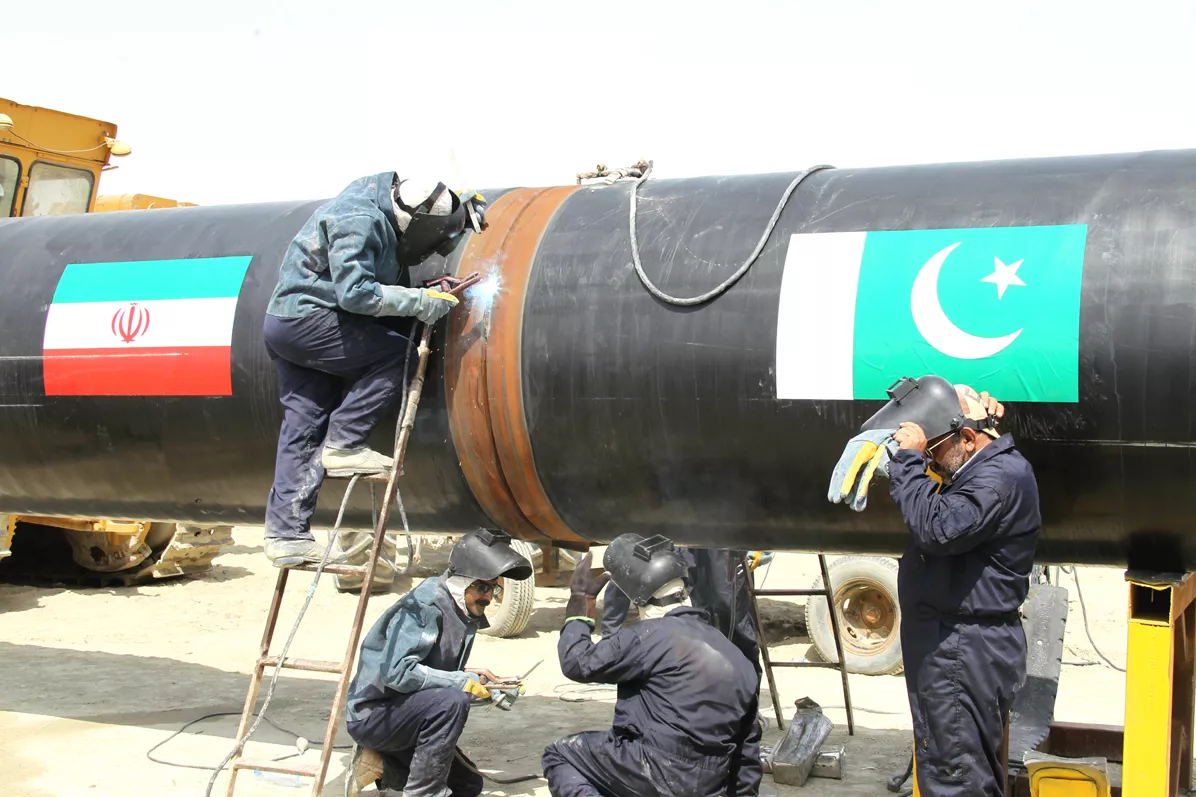
			<p><p><strong><strong class='location'>ISLAMABAD:&nbsp;</strong>Despite pressure from the United States, the government has officially announced in its Annual Plan 2013-14 that it will implement the Iran-Pakistan gas pipeline project, targeting the first flow of gas in December 2014.</strong></p>
<p>According to the energy strategy unveiled by the Pakistan Muslim League-Nawaz government in the Annual Plan 2013-14 released on Wednesday, the project’s cost has been reduced to $1.25 billion against earlier estimates of $1.5 billion.</p>
<p>Under the IP gas pipeline project, Pakistan will import 750 mmcfd of gas to generate 4,000 Megawatts of power to overcome the crippling power crisis.</p>
<p>According to the plan, the government plans to appoint a third party inspection agency for the IP project in June-July 2013. It has also planned to procure equipment and material to begin construction in the financial year 2013-14. The government has also targeted to complete the construction of Pakistan’s portion of the pipeline in the new fiscal year, at which time the first gas flows are expected to begin.</p>
<p><img alt="" src="http://pullquotesandexcerpts.files.wordpress.com/2013/06/74000.jpg?w=625" /></p>
<p>At the same time, Prime Minister Nawaz Sharif’s government is also planning on committing to the Turkmenistan-Afghanistan-Pakistan-India (TAPI) gas pipeline project. Under this project, about 3.2 billion cubic feet per day of gas will flow through the 1,680 kilometre-long pipeline. The estimated cost of the pipeline is about $7.6 billion.</p>
<p>During the fiscal year 2012-13, which will end by the end of this month, the expected local production of oil was 74,000 barrels per day against a target of 69,000 barrels per day, exceeding the target by 5,000 barrels per day.</p>
<p>However, gas production fell short of the target, as the domestic gas production was expected to be 4,200 mmcfd against the 4,791 mmcfd target.</p>
<p>A total of only 83 wells (30 exploratory and 53 appraisal/development wells) were expected to be drilled against a target of 100 wells.</p>
<p><i>Published in The Express Tribune, June </i><i>13<sup>th</sup>, 2013.</i></p>
</p>
			<br clear="all"/>
		]]>
		</description>

		<media:content width="424" height="318"
							isDefault="true" medium="image" url="http://i1.tribune.com.pk/wp-content/uploads/2013/06/562558-IRANPAKISTANTIES-1371097983-439-640x480.jpg">
			<media:title>IRAN-PAKISTAN TIES</media:title>
			<media:description>Officially announces commitment to project; expects first flow of gas by end of 2014. PHOTO: FILE</media:description>
			<media:thumbnail url="http://i1.tribune.com.pk/wp-content/uploads/2013/06/562558-IRANPAKISTANTIES-1371097983-439-160x120.jpg" width="160" height="120" />
      </media:content>

		<wfw:commentRss></wfw:commentRss>
		<slash:comments>14</slash:comments>
	</item>
		<item>
		<title>Focus shifts to coal-fired plants to arrest rising power cost</title>
		<link>http://tribune.com.pk/story/562600/focus-shifts-to-coal-fired-plants-to-arrest-rising-power-cost/</link>
		<pubDate>Wed, 12 Jun 2013 22:24:21 +0000</pubDate>

		<guid isPermaLink="false">http://tribune.com.pk/?p=562600</guid>

		<description>
		<![CDATA[
			<a href="http://tribune.com.pk/story/562600/focus-shifts-to-coal-fired-plants-to-arrest-rising-power-cost/">
				<img src="http://i1.tribune.com.pk/wp-content/uploads/2013/06/562600-Powerplant-1371075675-384-160x120.jpg" width="160" height="120" alt="" />
			</a>
			<p><div><strong class='location'>ISLAMABAD:&nbsp;</strong>
<p><strong>Upset about the rising power generation cost and an uncontrollable subsidy, the Pakistan Muslim League-Nawaz government has decided to launch four new schemes in its power generation policy that will see two furnace oil or gas-based plants shifting to coal and setting up of two new coal-fired plants.</strong></p>
</div>
<p>The schemes, costing Rs252.23 billion, will receive the support and financial assistance from the Asian Development Bank (ADB), say budget documents for fiscal year 2013-14 unveiled on Wednesday.</p>
<p>The ADB will provide Rs77.6 billion, out of the total cost of Rs97 billion, for shifting furnace oil/gas-fired plants to coal. These include units 1-6 of Muzaffargarh thermal power station, which have power generation capacity of 1,350 megawatts (MW), and units 1-2 of Jamshoro thermal power station with 450MW capacity.</p>
<p>In the new budget, the government has allocated Rs2.7 billion for these two schemes.</p>
<p>Apart from these, the government is planning to set up two new coal-fired power plants each of 660MW capacity at a cost of Rs155.23 billion. For these plants, the ADB will give Rs124.1 billion.</p>
<p><img alt="" src="http://pullquotesandexcerpts.files.wordpress.com/2013/06/rs201b.jpg?w=625" /></p>
<p>Officials of the Ministry of Water and Power believe that if the coal-based plants come on stream the government will be able to save Rs100 billion in inter-corporate debt.</p>
<p>Earlier, the government of Pakistan Peoples Party, which completed its five-year tenure in mid-March, got engaged in a financing row with the ADB, which insisted on running some power plants on imported coal. However, the two sides ended the impasse later and agreed that 20% local and 80% imported coal would be consumed to run the power plants.</p>
<p>In the budget, the government has earmarked Rs169.16 billion for the power sector. Of this, the federal government will provide Rs51.44 billion, the National Transmission and Dispatch Company and Pakistan Electric Power Company will generate Rs86.24 billion from their own resources and Rs33.7 billion will be borrowed from foreign lenders.</p>
<p>An amount of Rs17 billion has been set aside for acquisition of land for 4,500MW Diamer Bhasha hydropower project and for construction of the dam’s Lot 1-5 Rs8.15 billion has been allocated.</p>
<p>For 4,320MW Dasu hydropower project, the government has allocated Rs1.74 billion. Donors including the World Bank are pressing Pakistan to shelve Bhasha Dam project and are offering funds for Dasu project.</p>
<p>Nandipur power project, with capacity of 425MW, will get Rs10 billion next year. The project cost has gone up to Rs57.38 billion against earlier estimates of Rs23 billion.</p>
<p>While presenting the budget, Finance Minister Ishaq Dar said the project cost went higher as machinery, which had been lying at the Karachi port for the last three years, could not be put to use.</p>
<p>Saying that the project would be completed in the next 18 months, he warned that action would be taken against the people involved in negligence.</p>
<p>The country is also working on Chashma 3 and 4 nuclear power plants with Chinese assistance. For next year, the government has earmarked Rs315 million for interconnection of these plants whereas total cost of the project is Rs3.15 billion.</p>
<p>Also, Rs50 million has been earmarked for conducting feasibility study on distribution of 100MW of electricity imported from Iran.</p>
<p><i>Published in The Express Tribune, June 13<sup>th</sup>, 2013.</i></p>
<p><i>Like </i><a href="https://www.facebook.com/ETribuneBusiness"><i>Business on Facebook</i></a><i> to stay informed and join in the conversation.</i></p>
</p>
			<br clear="all"/>
		]]>
		</description>

		<media:content width="423" height="318"
							isDefault="true" medium="image" url="http://i1.tribune.com.pk/wp-content/uploads/2013/06/562600-Powerplant-1371075675-384-640x480.jpg">
			<media:title>Power plant</media:title>
			<media:description>Assistance: Rs201b is the amount ADB will provide for four coal-based plants. PHOTO: FILE</media:description>
			<media:thumbnail url="http://i1.tribune.com.pk/wp-content/uploads/2013/06/562600-Powerplant-1371075675-384-160x120.jpg" width="160" height="120" />
      </media:content>

		<wfw:commentRss></wfw:commentRss>
		<slash:comments>17</slash:comments>
	</item>
		<item>
		<title>Pakistan Economic Survey: Power crisis to persist, affect economic growth</title>
		<link>http://tribune.com.pk/story/562116/pakistan-economic-survey-power-crisis-to-persist-affect-economic-growth/</link>
		<pubDate>Wed, 12 Jun 2013 04:27:28 +0000</pubDate>

		<guid isPermaLink="false">http://tribune.com.pk/?p=562116</guid>

		<description>
		<![CDATA[
			<a href="http://tribune.com.pk/story/562116/pakistan-economic-survey-power-crisis-to-persist-affect-economic-growth/">
				<img src="http://i1.tribune.com.pk/wp-content/uploads/2013/06/562116-ECONOMYSuRVEY-1371011214-814-160x120.JPG" width="160" height="120" alt="" />
			</a>
			<p><div><strong class='location'>ISLAMABAD:&nbsp;</strong>
<p><strong>Not only does there seem to be no early end in sight to the power crisis, but Pakistan’s energy woes will also be a huge drag on economic growth, reveals the Pakistan Economic Survey 2012-13 launched here on Tuesday.</strong></p>
</div>
<p>“The critical issue is that, according to National Transmission and Despatch Company (NTDC), the annual electricity demand growth rate is forecasted to hover around 5 to 6 per cent over the next ten years. With the current position of [power generation] expansion, it seems that the crisis will not [soon] be over, which in turn will affect economic growth,” the survey revealed.</p>
<p>As of March 2013, the number of consumers has increased to 21.704 million, although the consumption pattern has remained more or less the same in 2012-13, with domestic consumers standing at 43 per cent, industrial consumers at 26 per cent and agricultural consumers at about 11 per cent.</p>
<p>The survey also pointed out that circular debt, the weak financial position of energy companies, falling gas production, high dependence on oil/gas (over 80%), low exploitation of indigenous coal and hydel resources and unutilised power generation capacity are some of the factors leading to severe energy shortages.</p>
<p><img alt="" src="http://pullquotesandexcerpts.files.wordpress.com/2013/06/1329.jpg?w=625" /></p>
<p><strong>Gas consumption: a snapshot</strong></p>
<p>The survey stated that Pakistan’s power sector is heavily dependent on gas supplies, and the reduction of this supply, due to misallocation and low growth, has crippled its performance.</p>
<p>There was negative growth in the consumption of gas during Jul-March 2012-13. The analysis of the sectoral consumption indicates that during July-March 2012-13, the highest share in gas consumption remained in the power sector (27.5 %) followed by industry (22.6 %).</p>
<p>As the government accorded a priority to providing gas to households, the share of households in gas consumption remained 23.2 per cent. However, the trend of providing gas to the power sector is declining since 2005-06 except in 2012, where there was a growth of 6 per cent. Transport is the other significant sector that posted a positive growth in gas consumption of 5.3 per cent during 2011-12, however, during July-March 2012-13 a negative growth of 16 per cent has been witnessed in this sector.</p>
<p>At 16 per cent, the share of the fertilizer industry still remains significant but there was negative growth of 7 per cent in 2012, as compared to the previous year.</p>
<p><strong>Increased gas demand and investment on the cards</strong></p>
<p>It is expected that gas will be supplied to approximately 39,000 new consumers and about 350 new towns/villages will be connected to the gas network during the fiscal year 2013-14. Gas utility companies have planned to invest Rs17437 million on transmission projects, Rs27,265 million on distribution projects and Rs11,165 million on other projects, bringing the total investment of Rs. 55,867 million during the fiscal year 2013-14.</p>
<p><strong>Cheaper fuel mix for power generation needed</strong></p>
<p>Pakistan’s electricity generation is highly dependent on imported oil, the bill for which adds up to around $ 14.5 billion each year. The bulk of this oil is used for electricity generation.</p>
<p>“This pronounced shift from hydro to thermal generation, and more recently from natural gas to fuel oil as the primary fuel for electricity generation has caused a fuel crisis in Pakistan’s power sector. Further these trends have contributed to an increase in power supply costs,” the Pakistan Economic Survey revealed, while urging an immediate shift to a cheaper fuel mix. According to the survey, constraints in fuel availability and inability to make timely payments are other factor preventing generation units from operating at full capacity.</p>
<p>During FY 12 the import bill for the petroleum group was US $ 15.2 billion. In terms of quantity this means that 19.2 million metric tons, including 13.2 million metric tons of petroleum products and 6.0 million metric tons of petroleum crude, were imported.</p>
<p><strong>Looking beyond the traditional</strong></p>
<p>It is expected that 1000-1200 MW from wind power projects could be added to the national grid by 2015 if land is allocated to the new projects.</p>
<p>There are two new nuclear plants currently under construction as well. These are Chashma 3 and 4 which are planned to be completed by December 2016 and October 2017 respectively. Once functional, they will each add 340 MW to the national grid.</p>
<p><em>Published in The Express Tribune, June 12<sup>th</sup>, 2013.</em></p>
</p>
			<br clear="all"/>
		]]>
		</description>

		<media:content width="424" height="318"
							isDefault="true" medium="image" url="http://i1.tribune.com.pk/wp-content/uploads/2013/06/562116-ECONOMYSuRVEY-1371011214-814-640x480.JPG">
			<media:title>ECONOMY SuRVEY 2013</media:title>
			<media:description>It is expected that 1000-1200 MW from wind power projects could be added to the national grid by 2015 if land is allocated to the new projects.</media:description>
			<media:thumbnail url="http://i1.tribune.com.pk/wp-content/uploads/2013/06/562116-ECONOMYSuRVEY-1371011214-814-160x120.JPG" width="160" height="120" />
      </media:content>

		<wfw:commentRss></wfw:commentRss>
		<slash:comments>2</slash:comments>
	</item>
		<item>
		<title>PPP govt misses crucial agriculture target</title>
		<link>http://tribune.com.pk/story/562025/ppp-govt-misses-crucial-agriculture-target/</link>
		<pubDate>Tue, 11 Jun 2013 21:46:30 +0000</pubDate>

		<guid isPermaLink="false">http://tribune.com.pk/?p=562025</guid>

		<description>
		<![CDATA[
			<a href="http://tribune.com.pk/story/562025/ppp-govt-misses-crucial-agriculture-target/">
				<img src="http://i1.tribune.com.pk/wp-content/uploads/2013/06/562025-target-1370987146-239-160x120.jpg" width="160" height="120" alt="" />
			</a>
			<p><div><strong class='location'>ISLAMABAD:&nbsp;</strong>
<p><strong>Pakistan has missed the growth target for the agriculture sector, which grew only 3.3% against the target of 4.1% set for the ongoing fiscal year 2012-13. The growth rate is even less than last fiscal year, during which it touched 3.5%.</strong></p>
</div>
<p>According to the Economic Survey of Pakistan 2012-13, the agriculture sector exhibited growth of 3.3% during 2012-13 on the back of growth in agriculture related sub-sectors. Crop production grew 3.2%, livestock 3.7%, forestry 0.1% and fishing 0.7%.</p>
<p>During the period, weather conditions and a creeping water crisis had an adverse impact on Kharif crops, which decreased the output of rice and cotton crops.</p>
<p>Cotton ginning showed negative growth of 2.9% in 2012-13, against positive growth of 13.8% during the same period last year.</p>
<p>The livestock sector, which has a 55.4% share in the agriculture sector, grew 3.7% in 2012-13. The fisheries sector grew only 0.7%, as against last year’s growth of 3.8%. The forestry sector also posted nominal growth of 0.1% this year, as compared to growth of 1.7% last year.</p>
<p>The production of lentils, onions, moong and maash decreased by 11.8%, 9.2%, 4.0% and 2.8% respectively, requiring more area to be sown in order to increase production and meet local demand. These items are used by a large segment of population as staple diet.</p>
<p><img alt="" src="http://pullquotesandexcerpts.files.wordpress.com/2013/06/3-3.jpg?w=625" /></p>
<p>During 2012-13, the availability of water – an essential input for Kharif crops – was 14% less than normal supply. Similarly, water availability during the Rabi season was 12.4% lower than normal availability, but 8.5% higher than last year.</p>
<p>Sector-wise classification revealed that the share of non-farm sector in overall agricultural credit disbursement increased by 7% during July-March 2012-13. During the period under review, Rs131.3 billion was disbursed to the farm sector, while Rs99.7 billion was disbursed to the non-farm sector.</p>
<p>An amount of Rs125.6 billion or 64% was extended to the farming sector and Rs71.7 billion was disbursed to the non-farming sector during the corresponding period last year.</p>
<p>Livestock contributed approximately 55.4% to agricultural value addition and 11.9% to national GDP during 2012-13, against 55.3% and 11.9% during the same period last year.</p>
<p>Gross value addition of the livestock sector at constant cost factor has increased from Rs735 billion in 2011-12, to Rs756 billion in 2012-13, an increase of 2.9%. Meanwhile, milk production increased 3.2% and meat production rose 4.5% during 2012-13.</p>
<p>During the period under review, a total of 103,822 tons of fish and fishery products were exported, which earned $232.4 million, against 90,087 tons of fish and fishery products exported last year, which earned $222.6 million.</p>
<p><i>Published in The Express Tribune, June 12<sup>th</sup>, 2013.</i></p>
<p><i>Like </i><a href="https://www.facebook.com/ETribuneBusiness"><i>Business on Facebook</i></a><i> to stay informed and join in the conversation.</i></p>
</p>
			<br clear="all"/>
		]]>
		</description>

		<media:content width="424" height="318"
							isDefault="true" medium="image" url="http://i1.tribune.com.pk/wp-content/uploads/2013/06/562025-target-1370987146-239-640x480.jpg">
			<media:title>target</media:title>
			<media:description>Crop production grew 3.2%, livestock
3.7%, forestry 0.1% and fishing 0.7%. ILLUSTRATION: JAMAL KHURSHID
</media:description>
			<media:thumbnail url="http://i1.tribune.com.pk/wp-content/uploads/2013/06/562025-target-1370987146-239-160x120.jpg" width="160" height="120" />
      </media:content>

		<wfw:commentRss></wfw:commentRss>
		<slash:comments>0</slash:comments>
	</item>
		<item>
		<title>Power crisis: No immunity from power cuts for ruling elite </title>
		<link>http://tribune.com.pk/story/561676/power-crisis-no-immunity-from-power-cuts-for-ruling-elite/</link>
		<pubDate>Tue, 11 Jun 2013 04:51:34 +0000</pubDate>

		<guid isPermaLink="false">http://tribune.com.pk/?p=561676</guid>

		<description>
		<![CDATA[
			<a href="http://tribune.com.pk/story/561676/power-crisis-no-immunity-from-power-cuts-for-ruling-elite/">
				<img src="http://i1.tribune.com.pk/wp-content/uploads/2013/06/561676-Electricitycrisisdesignfaizansethi-1370926199-201-160x120.JPG" width="160" height="120" alt="" />
			</a>
			<p><div><strong class='location'>ISLAMABAD:&nbsp;</strong>
<p><strong>As the power crisis lingers on, the country’s most powerful &#8212; the presidency and the premier &#8212; receive an uninterrupted supply of electricity, despite recommendations of a parliamentary panel to end load-shedding exemptions, a Senate body was told on Monday.</strong></p>
</div>
<p>The Senate Standing Committee on Water and Power, chaired by Zahid Khan, expressed its dissatisfaction with Islamabad Electric Supply Company (IESCO) for failing to implement its recommendation to exempt the ruling elite of load-shedding.</p>
<p>A deeply aggrieved Zahid Khan even threatened to resign if those at the helm of affairs were not treated as the common man’s equal.</p>
<p>“I will resign from the chairmanship of the Senate committee if our recommendations are not implemented,” Khan said.</p>
<p>In May, the Senate panel had recommended ending load-shedding exemption to the country’s ruling elite and suggested that only hospitals and sensitive military installations should receive constant electric supply.</p>
<p><img alt="" src="http://pullquotesandexcerpts.files.wordpress.com/2013/06/2315.jpg?w=625" /></p>
<p>It also recommended that preferential load-shedding should come to a complete halt at the President House, Prime Minister’s House, Parliament House, the Supreme Court, judges’ colony, ministers’ enclave and the diplomatic enclave.</p>
<p>These recommendations, however, are yet to be implemented.</p>
<p>“This is a serious matter and I am disgusted that a common man is facing up to 21 hours of load-shedding while the president, prime minister, generals and judges were exempted from load shedding and were enjoying uninterrupted power supply even though they can afford to keep generators,” Khan said, adding that hospitals and centres managing healthcare should be exempted from load-shedding.</p>
<p>IESCO chief Yousuf Awan told the Senate body that there was no load-shedding at the President and PM House, Supreme Court, GHQ, ISI headquarters, National Accountability Bureau and National Database and Registration Authority and the Judges Colony.</p>
<p>This information comes at a time when the country is facing load-shedding that lasts up to 12-20 hours a day.</p>
<p>The committee chairman directed officials to bring an end to the discriminatory practice within 24 hours and report back to the committee on the progress.</p>
<p>The committee also summoned the minister and water and power secretary to explain why government offices and residences of government functionaries were not facing power outages as that of the rest of the country.</p>
<p>The committee chairman also said that 650 megawatts (MW) being supplied to Karachi Electric Supply Company (KESC) would be withdrawn and the government would cancel KESC’s privatisation agreement by giving it to the Water and Power Development Authority’s control.</p>
<p><em>Published in The Express Tribune, June 11<sup>th</sup>, 2013.</em></p>
</p>
			<br clear="all"/>
		]]>
		</description>

		<media:content width="424" height="318"
							isDefault="true" medium="image" url="http://i1.tribune.com.pk/wp-content/uploads/2013/06/561676-Electricitycrisisdesignfaizansethi-1370926199-201-640x480.JPG">
			<media:title>Electricity crisis -design-faizan sethi</media:title>
			<media:description>In May, the Senate panel had recommended ending load-shedding exemption to the country’s ruling elite and suggested that only hospitals and sensitive military installations should receive constant electric supply. DESIGN: FAIZAN SETHI/FILE</media:description>
			<media:thumbnail url="http://i1.tribune.com.pk/wp-content/uploads/2013/06/561676-Electricitycrisisdesignfaizansethi-1370926199-201-160x120.JPG" width="160" height="120" />
      </media:content>

		<wfw:commentRss></wfw:commentRss>
		<slash:comments>3</slash:comments>
	</item>
	
</channel>
</rss>
<!-- Performance optimized by W3 Total Cache. Learn more: http://www.w3-edge.com/wordpress-plugins/

Page Caching using apc
Database Caching 5/29 queries in 1.765 seconds using memcached
Object Caching 1434/1549 objects using apc

 Served from: tribune.com.pk @ 2013-06-18 10:33:05 by W3 Total Cache -->