<?xml version="1.0" encoding="UTF-8"?>
<rss version="2.0"
	xmlns:content="http://purl.org/rss/1.0/modules/content/"
	xmlns:wfw="http://wellformedweb.org/CommentAPI/"
	xmlns:dc="http://purl.org/dc/elements/1.1/"
	xmlns:atom="http://www.w3.org/2005/Atom"
	xmlns:sy="http://purl.org/rss/1.0/modules/syndication/"
	xmlns:slash="http://purl.org/rss/1.0/modules/slash/"
	xmlns:media="http://search.yahoo.com/mrss/"
	>

<channel>
	<title>The Express Tribune &#187; Jyoti Malhotra</title>
	<atom:link href="http://tribune.com.pk/author/1725/jyoti-malhotra/feed/" rel="self" type="application/rss+xml" />
	<link>http://tribune.com.pk</link>
	<description>Latest Breaking Pakistan News, Business, Life, Style, Cricket, Videos, Comments</description>
	<lastBuildDate>Sat, 18 May 2013 07:19:49 +0000</lastBuildDate>
	<language></language>
	<sy:updatePeriod>hourly</sy:updatePeriod>
	<sy:updateFrequency>1</sy:updateFrequency>
	<generator>http://wordpress.org/?v=3.5.1</generator>

		<item>
		<title>The India-China stand-off</title>
		<link>http://tribune.com.pk/story/544456/the-india-china-stand-off/</link>
		<pubDate>Sat, 04 May 2013 19:32:33 +0000</pubDate>

		<guid isPermaLink="false">http://tribune.com.pk/?p=544456</guid>

		<description>
		<![CDATA[
			<a href="http://tribune.com.pk/story/544456/the-india-china-stand-off/">
				<img src="http://i1.tribune.com.pk/wp-content/uploads/2013/05/544456-JyotiMalhotraNewNew-1367683865-490-160x120.JPG" width="160" height="120" alt="" />
			</a>
			<p><p>The recent hysteria, especially in New Delhi, over <a href="http://tribune.com.pk/story/538279/chinese-soldiers-camp-inside-india-border-indian-sources/">Chinese troops crossing into Indian territory</a> in eastern Ladakh in Jammu and Kashmir has been replaced now by calm caution. The story has slid off the front pages. Even television has other things to report. Prime Minister Manmohan Singh has called it a “localised” problem, while Foreign Minister Salman Khurshid has likened the stand-off to a developing pimple in an otherwise beautiful face.</p>
<p>According to Khurshid, just because the face has been temporarily scarred by this eruption, doesn’t mean it will remain so permanently. Khurshid has decided to go ahead with his visit to Beijing on May 9, signalling that Delhi wants to give Beijing another chance to turn back its troops from their 19-odd kilometre transgression across the <a href="http://www.google.com.pk/url?sa=t&amp;rct=j&amp;q=&amp;esrc=s&amp;source=web&amp;cd=1&amp;cad=rja&amp;ved=0CDAQFjAA&amp;url=http%3A%2F%2Fen.wikipedia.org%2Fwiki%2FLine_of_Actual_Control&amp;ei=UWCFUeyqF8uIhQeni4C4Bw&amp;usg=AFQjCNFGncgs3U7XG-l6vZAyJjn-T-9-9Q&amp;sig2=PCD3A9tgSPOddQvrvEluMw&amp;bvm=bv.45960087,d.ZG4">Line of Actual Control</a> (LAC) into India. This is a mature thing to do. Both countries have to realise that 2013 is hardly 1962, when Indian troops lost to the Chinese on the icy fields of eastern Ladakh and fought pitched battles some 4,000km away in the eastern sector, now known as Arunachal Pradesh.</p>
<p>Today, both India and China are new countries, bound together by the umbilical cord of $72 billion in annual trade. Indian minerals are shipped to China to make steel — although some controls have been recently imposed — and Chinese goods, from idols of Hindu gods like Ganesh and Lakshmi to heavy engineering equipment for the power sector, as well as trade and investment in the telecom sector, are also growing by leaps and bounds.</p>
<p>There is a second reason why Delhi is hoping reason will displace the current tense, eyeball-to-eyeball situation in the Depsang area in Ladakh: Chinese premier Li Keqiang announced that he will pay his first visit abroad as prime minister to India on May 20. This was meant to signal China’s interest in revamping relations with a fellow Asian power and put it on a par with relations with Europe and the US. Can Comrade Li come to India when Chinese troops have camped 19km inside Indian territory, notwithstanding the different interpretations of the LAC? Certainly not, which is why Khurshid’s visit to Beijing on May 9 will allow both sides to look at several face-saving ideas that accompany a return to status quo.</p>
<p>Clearly, this is as good a time as any for both sides to seriously look at settling the border issue, just over 4,000km from Jammu and Kashmir in the west to Arunachal Pradesh in the east, but it is common sense that the status quo ante must be maintained before that can happen. Still, it is in this light of China’s growing importance not only in India but across South Asia that the recent imbroglio between must be seen.</p>
<p>In Pakistan, the “all-weather relationship” with China has been strengthened by the latter <a href="http://tribune.com.pk/story/539562/bilateral-relations-gwadar-port-to-strengthen-sino-pak-ties/">taking control of the Gwadar port</a>. In Maldives, the eviction late last year of the Indian company, GMR, was followed by the Chinese offer to strengthen a security relationship with Male. In Sri Lanka, the Chinese are building roads and other infrastructure. In Nepal, former prime minister Pushpa Kumar Dahal recently called upon China to develop roads and hydropower facilities and develop the birthplace of the Buddha at Lumbini (this has raised Indian eyebrows). In Bangladesh, the Chinese have offered to develop the Chittagong port. And in Myanmar, the presence of President Thein Sein at the Boao Forum earlier in April and his meeting with Chinese President Xi Jinping signals that Beijing is still Myanmar’s most important partner. Interestingly, India is doing to China’s neighbourhood what China has been doing to South Asia. In recent years, India has ramped up engagement with Japan, South Korea, Vietnam and Australia, which hope to balance their separate strategic partnerships with India with its deep-rooted economic engagement with China.</p>
<p>The recent crossing of Chinese troops inside Indian territory has an older context: in 1962, Chinese troops took large parts of Arunachal Pradesh in a short time but equally soon returned to its positions on its own side of the McMahon Line, unable to maintain supply lines. In Aksai Chin, on the other hand, Chinese PLA troops fought hard to take the region because it was integral to its strategy to keep control over neighbouring Tibet. Today, as India begins to build and modernise infrastructure near the Line of Actual Control for the first time since 1962, the Chinese feel that the Indian presence is too close for comfort. The Chinese must withdraw and return to the status quo. Too much is at stake in the relationship to throw it away over a region in which hardly a blade of grass grows.</p>
<p><em>Published in The Express Tribune, May 5<sup>th</sup>, 2013.</em></p>
</p>
			<br clear="all"/>
		]]>
		</description>

		<media:content width="424" height="318"
							isDefault="true" medium="image" url="http://i1.tribune.com.pk/wp-content/uploads/2013/05/544456-JyotiMalhotraNewNew-1367683865-490-640x480.JPG">
			<media:title>Jyoti Malhotra  - New New</media:title>
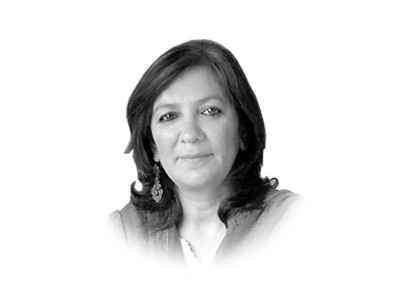
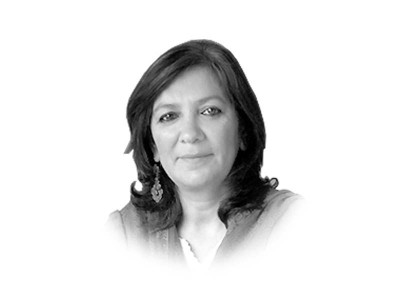
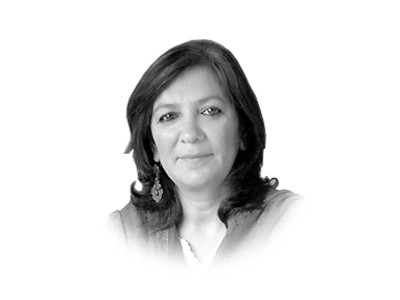
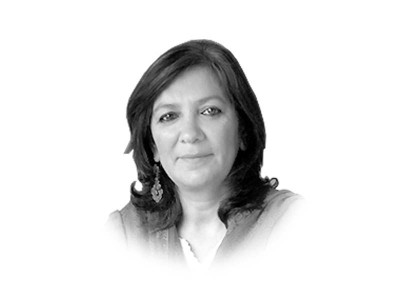
			<media:description>The writer is a consultant based in New Delhi, where she writes for Business Standard and blogs for The Times of India</media:description>
			<media:thumbnail url="http://i1.tribune.com.pk/wp-content/uploads/2013/05/544456-JyotiMalhotraNewNew-1367683865-490-160x120.JPG" width="160" height="120" />
      </media:content>

		<wfw:commentRss></wfw:commentRss>
		<slash:comments>44</slash:comments>
	</item>
		<item>
		<title>The intricacies of Pak-Afghan relations</title>
		<link>http://tribune.com.pk/story/533739/the-intricacies-of-pak-afghan-relations/</link>
		<pubDate>Wed, 10 Apr 2013 17:24:13 +0000</pubDate>

		<guid isPermaLink="false">http://tribune.com.pk/?p=533739</guid>

		<description>
		<![CDATA[
			<a href="http://tribune.com.pk/story/533739/the-intricacies-of-pak-afghan-relations/">
				<img src="http://i1.tribune.com.pk/wp-content/uploads/2013/04/533739-JyotiMalhotraNewNew-1365609485-868-160x120.JPG" width="160" height="120" alt="" />
			</a>
			<p><p>Election fever in Pakistan is in full flow, but what is fascinating is that the excitement and anticipation that accompanies the triumph of the ballot box is being regularly matched by an angry war of words between the <a title="Pakistan and the Afghan peace process" href="http://tribune.com.pk/story/533190/pakistan-and-the-afghan-peace-process/" target="_blank">establishments of Pakistan and Afghanistan</a>.</p>
<p>As an Indian observer of the politics of the subcontinent, I am beginning to think that the bad blood between India and Pakistan is absolutely no match for the ongoing vituperative combat between Islamabad/Rawalpindi and Kabul.</p>
<p>History, they say, has that incredible way of coming home to roost. The great Khan Abdul Ghaffar Khan or Badshah Khan pleaded with Mahatma Gandhi not to allow the partition of the subcontinent to take place in 1947, not least because, he argued, the Pashtuns would become the first victims to the religious radicalisation that was already taking place in his part of the world.</p>
<p>It is said that Gandhi, who had incredible respect for Badshah Khan and believed that he was the first foot soldier in the non-violent movement, or <i>satyagraha</i>, that had been launched to evict the British from India, even considered the idea. But Gandhi was dissuaded from pushing it through by his fellowmen in the Congress party who pointed out that it would be virtually impossible to sustain a lifeline to the Pashtuns so many thousands of miles away. India would, unfortunately, have to let them go.</p>
<p>More than 65 years later, so many new questions are in the offing, not least the relationship between the Pashtuns of Pakistan and Afghanistan and the ongoing struggle over the <a title="Splintering relations?: Durand Line is a ‘settled issue’, says FO" href="http://tribune.com.pk/story/456881/splintering-relations-durand-line-is-a-settled-issue-says-fo/" target="_blank">transformation of the Durand Line</a> into an international border.</p>
<p>And as the Americans begin to leave Afghanistan, in preparation for withdrawal in 2014, it is fascinating to watch the rising tension between Kabul and Islamabad/Rawalpindi. None other than President Hamid Karzai, as well as his senior officials, have directly accused the Pakistani government of instigating terrorism inside Afghanistan through their proxies — read: the Haqqani network in North Waziristan and sundry Taliban outfits. Naturally, the Pakistanis have junked that claim.</p>
<p>Pakistani analysts have often said that India cannot begin to take Pakistan’s place in Afghanistan’s affections — a strange statement that implies the Afghans have no minds of their own. The Pakistani argument is that India doesn’t even share a border with Afghanistan and that it is Pakistan, not India, that has suffered the blowback from the Afghan problem these many decades.</p>
<p>Both Delhi and Kabul concede both these points. In fact, the Afghans always seem grateful to the people of Pakistan for hosting them in their country for decades. It is the Pakistani establishment, the Afghans believe, that has not been able to reconcile to the fact that Afghanistan is an independent country and will take decisions in its own national interest. If that includes the improvement of relations with India, well, so be it.</p>
<p>Several Pakistanis concede Afghanistan’s sovereign right to pursue relations with the countries of its choosing. But as Pakistan moves to complete the first five years, ever, of democratic rule in its history, one question remains unanswered: why is Karzai and his government continuing to point an accusing finger at the Pakistani agencies?</p>
<p>According to Musa Hotak, a former Taliban leader of some repute, a senior Pakistani diplomat in Afghanistan told him that Kabul cannot allow New Delhi to become a favoured partner. This conversation is supposed to have taken place during Ramazan last year.</p>
<p>Even at the trilateral forum in London in February, when Pakistan pressed the Afghans to sign a strategic partnership agreement, one key demand was that India needed to be sidelined. It seems that the Pakistani side kept asking the Afghans why they didn’t want to sign such an agreement with them, when they had signed a similar document with India in 2011.</p>
<p>Nothing infuriates the Afghans more than this; that they need to be “told” by a foreign country — in this case, Pakistan — how to conduct their foreign affairs. Several Afghans have told me that Pakistan still hasn’t come to terms with the fact that 2014 will not be 1989, when the Soviets left Afghanistan, or 1992, when Mohammad Najibullah was killed.</p>
<p>As Pakistan goes to the polls again, the question remains: will the new government in Islamabad move to transform its relationship with Kabul?</p>
<p><i>Published in The Express Tribune, April </i><i>11<sup>th</sup>, 2013.</i></p>
</p>
			<br clear="all"/>
		]]>
		</description>

		<media:content width="424" height="318"
							isDefault="true" medium="image" url="http://i1.tribune.com.pk/wp-content/uploads/2013/04/533739-JyotiMalhotraNewNew-1365609485-868-640x480.JPG">
			<media:title>Jyoti Malhotra  - New New</media:title>
			<media:description>The writer is a consultant based in New Delhi, where she writes for Business Standard and blogs for The Times of India</media:description>
			<media:thumbnail url="http://i1.tribune.com.pk/wp-content/uploads/2013/04/533739-JyotiMalhotraNewNew-1365609485-868-160x120.JPG" width="160" height="120" />
      </media:content>

		<wfw:commentRss></wfw:commentRss>
		<slash:comments>41</slash:comments>
	</item>
		<item>
		<title>On Holi and the return of Musharraf</title>
		<link>http://tribune.com.pk/story/529180/on-holi-and-the-return-of-musharraf/</link>
		<pubDate>Sun, 31 Mar 2013 18:33:50 +0000</pubDate>

		<guid isPermaLink="false">http://tribune.com.pk/?p=529180</guid>

		<description>
		<![CDATA[
			<a href="http://tribune.com.pk/story/529180/on-holi-and-the-return-of-musharraf/">
				<img src="http://i1.tribune.com.pk/wp-content/uploads/2013/03/529180-JyotiMalhotraNewNew-1364746936-220-160x120.JPG" width="160" height="120" alt="" />
			</a>
			<p><p>Between Holi and Good Friday this week, the India-Pakistan universe changed in such subtle and fundamental ways that both countries won’t likely be the same again. On Holi in India, the celebration of the colours of life coincided with former Pakistan army chief and president General (retd) Pervez Musharraf’s first press conference in Karachi after his return home. And on the eve of Good Friday, with the air pregnant with emotions of atonement and forgiveness, celebrated Bollywood actor Sanjay Dutt broke down in public over his role in the terror acts of 1993, allegedly masterminded by Pakistan.</p>
<p>In India, at least in the metros, all the elements of a traditional Holi were in full flow: the application of ‘<i>gulal</i>’, dry colour that easily washes off with water, ‘<i>pakka rang</i>’ or permanent colour that doesn’t, the eating of ‘<i>gajiya</i>’, really a flaky pastry dipped in ‘<i>gur</i>’ and concentrated sugar syrup, ‘<i>bhang</i>’ or marijuana-laced ‘<i>thandai</i>’, and much else.</p>
<p>Music was guaranteed by the professional ‘<i>dholki wallah</i>’, the do-it-yourself CD player or even off-key human singing, each of them spawning appreciative audiences. Amitabh Bacchhan’s eponymous ode to Cezanne’s “Bacchanalia — the Battle of Love”, “Rang barse” must have won, hands down, the vote for the most popular song in the Indian subcontinent on Holi.</p>
<p>Considering the movie in which it features, <i>Silsila</i>, is more than three decades old, clearly, there’s more to its popularity than Amitabh’s amazingly liquid voice. Fact is “Rang barse” is really a song that is embedded in the Braj, a language that is synonymous with the Hindi heartland around Mathura, Barsana and Vrindavan, barely 150 kilometres from Delhi. This is the cow belt that Krishna made famous with his mythological gambolling with Radha and countless other women, none of them his wives.</p>
<p>It is interesting, given the immensely patriarchal norms prevalent across north India, how people across ‘Brajbhoomi’ still greet each other with a ‘<i>Radhey-Radhey</i>’ instead of the ‘<i>Ram-Ram</i>’ that is much more common across the remaining Hindi heartland. This, of course, is a reference to Radha, amongst the first feminists in Hindu mythology, whose love for Krishna could not be confined to the love for her husband.</p>
<p>Several sociologists have, in fact, pointed out that the greeting of ‘<i>Ram-Ram</i>’ in north India, a reference to the god Rama is a reflection of the inequality between the sexes that prevails in that part of the country today.</p>
<p>Which is why Holi becomes the ultimate subversive festival, allowing women to come out of their homes in villages and <i>mohallas</i> and towns, and play Holi with men, both intimate and stranger. Everyone eats and drinks and dances and listens to music in the same space. For one blessed, anarchic day, Holi collapses the conventions and allows women to push back their ‘<i>ghunghats</i>’ and just have fun.</p>
<p>And so on Holi, Pervez Musharraf held his first press conference in four years in Karachi, and what a strange press conference it was. He was his own minder, picking who asked the question and choosing to answer it in his own way, ultimately a one-man show. Certainly not a grand recipe for political success.</p>
<p>The press conference was a measure of how much Pakistan had changed. There was no longer the apparent deference often on public view when Musharraf used to be president. Instead, a woman reporter asked the Kargil question and Musharraf went on to give the strangest answer: how he had seen his men cry when the Indian Army and the Indian government worked hand-in-glove with Bangladesh’s Mukti Bahini to break up Pakistan in 1971 and how a few years later, in 1984, he saw, with so much anger, how the Indians raced up the heights and took position on top of the Siachen glacier.</p>
<p>I am proud of the Kargil operation, Musharraf said, his jaw set obstinately. It left many of us in India half-stumped and half-amused at the incredible bravado we had almost forgotten was such an integral part of his psyche. Perhaps, Musharraf hasn’t heard of the ‘safe passage’ option being offered by the Indian government to former Kashmiri militants who now want to return home. Several are said to be tired of living in Pakistan, just across the Line of Control (LoC) and yearn for the apple orchards of home, as well as the innocence of their youth. According to the Omar Abdullah government in Jammu and Kashmir, about 370 former militants have already exercised this right and are back from Pakistan-held Kashmir.</p>
<p>The bitter truth is that Musharraf’s return to Pakistan opens old wounds and reiterates old prejudices. India cannot wish away Kargil in 1999 or the Mumbai attacks in 2006. For all the self-congratulatory euphoria over completing five years in power for the first time since it became independent, Pakistan’s political leaders must think deeply about the kind of country they want and how they want to locate it in a larger South Asia.</p>
<p>As for Dutt, the wheel of life seems to have taken an incredible turn, sending him to jail for five years for a crime that he admits to have committed and whose punishment he will now fulfil. Pakistan, said the Indian Supreme Court, masterminded the 1993 attacks, unusually naming a foreign country, as it handed down the judgement to Dutt and a host of other people.</p>
<p>Crying, with his sister Priya by his side, Dutt said he would not seek pardon just for himself, as that would be a moral travesty of the law. On the eve of Good Friday, Sanjay Dutt promised to atone for his sins. It now remains for India to forgive its once-errant son.</p>
<p><i>Published in The Express Tribune, April </i><i>1<sup>st</sup>, 2013.</i></p>
</p>
			<br clear="all"/>
		]]>
		</description>

		<media:content width="424" height="318"
							isDefault="true" medium="image" url="http://i1.tribune.com.pk/wp-content/uploads/2013/03/529180-JyotiMalhotraNewNew-1364746936-220-640x480.JPG">
			<media:title>Jyoti Malhotra  - New New</media:title>
			<media:description>The writer is a consultant based in New
Delhi, where she writes for Business
Standard and blogs for The Times of India</media:description>
			<media:thumbnail url="http://i1.tribune.com.pk/wp-content/uploads/2013/03/529180-JyotiMalhotraNewNew-1364746936-220-160x120.JPG" width="160" height="120" />
      </media:content>

		<wfw:commentRss></wfw:commentRss>
		<slash:comments>28</slash:comments>
	</item>
		<item>
		<title>Welcoming Pakistanis</title>
		<link>http://tribune.com.pk/story/522235/welcoming-pakistanis/</link>
		<pubDate>Sun, 17 Mar 2013 20:50:08 +0000</pubDate>

		<guid isPermaLink="false">http://tribune.com.pk/?p=522235</guid>

		<description>
		<![CDATA[
			<a href="http://tribune.com.pk/story/522235/welcoming-pakistanis/">
				<img src="http://i1.tribune.com.pk/wp-content/uploads/2013/03/522235-JyotiMalhotraNewNew-1363534530-164-160x120.JPG" width="160" height="120" alt="" />
			</a>
			<p><p>Yaqoob Khan Bangash, the chair of the history department at Forman Christian College in Lahore, is a brave man, his anguish written in every word of <a href="http://tribune.com.pk/story/519125/all-minorities-please-leave-pakistan/" target="_blank">his piece just published in this newspaper</a>, telling all minorities to leave Pakistan. So, here is something that I have contemplated for some time: if Pakistan’s minorities — whether Hindu, Sikh, Christian, Ahmadi, Shia, Deobandi, Dalit, gay, straight or female — want to leave Pakistan and don’t know where to go, well, they must be welcome in India.</p>
<p>Does that comment make me an intelligence agent, in the pay of India’s RAW or some other outfit? Does it constitute a breach of faith, an anticipated violation of a visitor’s visa to one of the most beautiful places on earth and some of the best friends I will ever have? Is this interference in the internal affairs of another country?</p>
<p>I suppose in a relationship that is always so tense as that between India and Pakistan, all you readers would be entitled to invoke any of the above. And I would reject each one of your arguments because I believe that millions of Pakistanis need to be supported for believing that Pakistan must become a moderate, secular nation. Mr Bangash has been brave about going public with regard to the creation of Pakistan, especially because as a historian, he is familiar with the whys and wherefores of the past.</p>
<p>There are those in India, who say even now that if Jawaharlal Nehru had abdicated the throne in favour of Mohammed Ali Jinnah, Partition might have been avoided. Frankly, in the light of all that we know now, I doubt that very much. If Partition had been delayed by another few years, it may have been messier than it actually was.</p>
<p>But it is the present with which both our sides are concerned. The Shia massacres in Quetta and the <a href="http://tribune.com.pk/story/518244/alleged-blasphemy-mob-burns-100-christian-homes-in-lahore/" target="_blank">mob rampage of the Christian colony in Lahore</a> are a wake-up call to us in India, not because anti-Dalit fury, in the case of the Lahore Christians is surprising, but because caste has clearly much deeper roots than religion. Of course, sociologists know this well, but to the rest of us mortals, the experiment that is Pakistan is also so interesting because it seeks to throw people of various denominations under one flag, that of an Islamic republic. It is said that one of the reasons that Shia Hazaras in Balochistan are being massacred is because it will be the Shia Hazaras of Afghanistan who will stand in the way of a triumphal Taliban — supported by the Pakistani Army — that will march towards Kabul post-US withdrawal in 2014.</p>
<p>Perhaps, this is all poppycock. So, we look towards Pakistanis for enlightenment, not only to understand why Shias are being especially chosen as targets, but also because their killings have a huge impact on India’s Muslims. The truth is that when Shias are plucked off, it has an impact in Srinagar and Lucknow and Sitapur and countless other Indian towns and villages.</p>
<p>To return to my earlier argument: the Indian government should offer a homecoming-of-sorts to all Pakistanis of all shades of opinion, religion and denomination, especially if they are persecuted in their own country. We offer it to Sri Lankan Tamils, to Myanmarese, to the Bangladeshis, to Maldivians, to Afghans, so why not Pakistanis?</p>
<p>My claim to being critical about what’s going in Pakistan today is because of my claim to several identities, including a minority one. (After all, many more women are killed in India at all stages of their lives because they are female, than in Pakistan.) It is only when all of us South Asians — Indians, Pakistanis, Bangladeshis, Bhutanese, Maldivians, et al — feel they must reorder the region in the name of both God and justice and speak up, just like Mr Bangash, that the change will begin. We must be the change we want to see.</p>
<p><i>Published in The Express Tribune, March </i><i>18<sup>th</sup>, 2013.</i></p>
</p>
			<br clear="all"/>
		]]>
		</description>

		<media:content width="424" height="318"
							isDefault="true" medium="image" url="http://i1.tribune.com.pk/wp-content/uploads/2013/03/522235-JyotiMalhotraNewNew-1363534530-164-640x480.JPG">
			<media:title>Jyoti Malhotra  - New New</media:title>
			<media:description>The writer is a consultant based in New Delhi, where she writes for Business Standard and blogs for The Times of India</media:description>
			<media:thumbnail url="http://i1.tribune.com.pk/wp-content/uploads/2013/03/522235-JyotiMalhotraNewNew-1363534530-164-160x120.JPG" width="160" height="120" />
      </media:content>

		<wfw:commentRss></wfw:commentRss>
		<slash:comments>64</slash:comments>
	</item>
		<item>
		<title>The siege within — and without</title>
		<link>http://tribune.com.pk/story/498071/the-siege-within--and-without/</link>
		<pubDate>Wed, 23 Jan 2013 18:33:46 +0000</pubDate>

		<guid isPermaLink="false">http://tribune.com.pk/?p=498071</guid>

		<description>
		<![CDATA[
			<a href="http://tribune.com.pk/story/498071/the-siege-within--and-without/">
				<img src="http://i1.tribune.com.pk/wp-content/uploads/2013/01/498071-JyotiMalhotraNewNew-1358957194-446-160x120.JPG" width="160" height="120" alt="" />
			</a>
			<p><p>There is so much noise and fury inside Pakistan over the real and imagined motivations of <a href="http://tribune.com.pk/tahirulqadri/">Dr Tahirul Qadri’s Long March</a> and the impact this will have on the country’s future that many Pakistanis have simply missed the sound and fury between India and Pakistan that was mounted after the beheading of an Indian soldier on the Line of Control (LoC).</p>
<p>This is what happened: there was an exchange of fire on January 6 and the Pakistani side alleged that Indian soldiers had crossed the LoC and killed two Pakistani soldiers. The Indians rejected the charge. The Pakistanis retaliated two days later, killing two Indian soldiers. One of the soldiers, Lance Naik Hemraj, was found beheaded — a grotesque, abhorrent act that no self-respecting army should condone.</p>
<p>The beheading has so inflamed Indian public opinion, leading to a sudden ratcheting of tension that Pakistan has halted the cross-LoC passenger bus, as well as trade on the Chakan-da-Bagh crossing point in the Poonch-Rawlakot sector in Kashmir. New Delhi retaliated by asking <a href="http://tribune.com.pk/story/496476/friendly-neighbours-protests-pave-way-for-ajoka-performance-in-india/">Pakistani theatre activists and hockey players to leave India and return to Pakistan</a>, one of its most regressive gestures in recent times. Meanwhile, the visa-on-arrival facility for Pakistani citizens of 65 years and above entering India has been put on hold, as if the arrival of old men and women was threatening the unity and integrity of India.</p>
<p>So, let’s ask the basic question that has sparked off the latest nasty furore: who carried out the beheading? And whose interests does it best serve?</p>
<p>Pakistan has denied all knowledge of the incident, something that truly aggravates Indians. The denial has brought the right-wing forces to the foreground in India, leading to familiar tit-for-tat accusations that have succeeded in considerably vitiating the atmosphere. The gains of peace of the last two years that largely came from India, delinking progress by the Pakistani state on the Mumbai attacks to progress in other areas, e.g., in <a href="http://tribune.com.pk/story/496267/time-for-de-escalation/">trade and people-to-people interaction, are in real jeopardy</a>.</p>
<p>Pakistan’s Foreign Minister, Hina Rabbani Khar, has denied that the Pakistan Army carried out the obnoxious beheading and has offered talks on the matter. India should immediately accept her offer, not only because dialogue is the only alternative to diminishing the poison that periodically seeps into India-Pakistan relations but because India should not allow regressive elements to compromise the essence of a secular republic that was forged in similar fires of hate and prejudice. Ms Khar can set the stage by at least acknowledging the reprehensible mutilations of the Indian soldiers. Perhaps, Pakistan, besieged by the fire within, is unable to comprehend the seriousness of the matter and how incidents like these immediately bring up the recurring nightmare of the Mumbai attacks in the Indian mind.</p>
<p>This, then, is the nub of the matter: if Pakistan were to be seen seriously making progress on investigations into the Mumbai attacks, it would strengthen the hands of peacemakers within India and enable them to deflect their own hate-mongers. Pakistan’s inability to make progress on the Mumbai trials is a failure of the government in taking on its own terrorists, as well as a remarkable compromise with terrorist elements.</p>
<p>Lashkar-e-Taiba (LeT) terrorists have worn army uniforms to attack military headquarters in Rawalpindi, as well as the Pakistan Navy’s main base. Did the LeT regulars also target and behead the Indian soldier on the LoC last week?</p>
<p>So, what happens now? It would be best for both governments to see sense and immediately call off the hostilities. Once tempers are cooled and the situation is normalised, both sides must seriously think in terms of how greater engagement between Kashmiris from both sides can keep this sanctity alive.</p>
<p>As for India, if it is to continue to think of itself as a unique country and a distinct civilisation, it must look for unique and creative ways in which to transform the behaviour and accommodate the fears and needs of the other country — in this case Pakistan — alongside those of its own citizens. In any case, an eye for an eye is an Israeli speciality, not an Indian one. And as Mahatma Gandhi once said, that will do nothing except end up blinding both sides.</p>
<p><em>Published in The Express Tribune, January </em><em>24<sup>th</sup>, 2013.</em></p>
</p>
			<br clear="all"/>
		]]>
		</description>

		<media:content width="424" height="318"
							isDefault="true" medium="image" url="http://i1.tribune.com.pk/wp-content/uploads/2013/01/498071-JyotiMalhotraNewNew-1358957194-446-640x480.JPG">
			<media:title>Jyoti Malhotra  - New New</media:title>
			<media:description>The writer is a consultant based in New Delhi, where she writes for Business Standard and blogs for The Times of India</media:description>
			<media:thumbnail url="http://i1.tribune.com.pk/wp-content/uploads/2013/01/498071-JyotiMalhotraNewNew-1358957194-446-160x120.JPG" width="160" height="120" />
      </media:content>

		<wfw:commentRss></wfw:commentRss>
		<slash:comments>40</slash:comments>
	</item>
		<item>
		<title>“Throw open the LoC”</title>
		<link>http://tribune.com.pk/story/495324/throw-open-the-loc/</link>
		<pubDate>Thu, 17 Jan 2013 18:20:25 +0000</pubDate>

		<guid isPermaLink="false">http://tribune.com.pk/?p=495324</guid>

		<description>
		<![CDATA[
			<a href="http://tribune.com.pk/story/495324/throw-open-the-loc/">
				<img src="http://i1.tribune.com.pk/wp-content/uploads/2013/01/495324-JyotiMalhotraNewNew-1358440065-930-160x120.JPG" width="160" height="120" alt="" />
			</a>
			<p><p>There is only one moral to the story of the runaway grandmother who brought the armies of India and Pakistan to blows on the Line of Control (LoC) last week, so eloquently brought out by India’s <em><a href="http://www.thehindu.com/news/national/runaway-grandmother-sparked-savage-skirmish-on-loc/article4291426.ece" target="_blank">The Hindu</a></em> newspaper: the LoC must be made much more porous between the two Kashmirs in deference to the needs and emotions of both peoples who live on both sides of a ridiculous, electrified fence.</p>
<p>When she decided to abandon home on the Indian side of the LoC and decided to make a dash for the other side, because her son lived there and she wanted to be with him — and he, by the way, had moved to Pakistan-controlled Kashmir many years ago — the old Kashmiri woman was really thumbing her nose and all her fingers at the abysmal state of affairs in which the call of a mother’s heart is subordinated to the diktat of the state.</p>
<p>Let’s look at the situation. After putting Kashmir in deep freeze for decades, during which India and Pakistan fought over this piece of territory as if it were prime real estate devoid of the presence of mothers and fathers and daughters and sons, both countries finally agreed in April 2005 to open the LoC in a limited way. A bus from Srinagar to Muzaffarabad was flagged off by Congress party president Sonia Gandhi at the Bakshi stadium in Srinagar, after which Prime Minister Manmohan Singh made a speech from behind a bulletproof glass.</p>
<p>What a day that was! It had rained all night and I remember TV broadcasting vans getting stuck in the slush. Once the bus had been flagged off, all the national and international press clambered into other buses and were driven through the heart of militant-infested areas of western Kashmir to Salamabad, just short of the LoC, and finally to Aman Setu, the bridge that joins the truncated halves of what was once known as the most beautiful place on earth.</p>
<p>The return journey to Srinagar was memorable. The day before the flag-off ceremony, militants had tried to put the tourism centre in the heart of Srinagar on fire, in an effort to postpone the event. Driving back to Srinagar that fateful April evening, as the sun set behind the ‘chinar’ trees and an unknown wind whipped through its branches, people began to come out of their houses to welcome and cheer the first bus from Muzaffarabad. It was an amazingly spontaneous gesture and it defied the diktat of the militants. It spoke of the incredible warmth that Kashmiris of both sides still retained for each other despite the intervening decades of hostility.</p>
<p>Many months later on a visit to Islamabad, a former Kashmiri ‘militant’ came to see me in my hotel. All he wanted to do was talk about the apple orchards and the smell of the earth in the valley the world acknowledged was akin to paradise. Once the LoC is properly thrown open, he told me, and people start meeting each other, nobody is going to give these state actors in Delhi or Rawalpindi any importance. Everything is going to change.</p>
<p>The story of the runaway grandmother who wanted to meet her son on the other side and who threw to the winds the stifling rules that states bring to bear on their citizens, is testimony to the total lack of imagination that both our leaderships have shown in dealing with the complex issue of Kashmir.</p>
<p>Both India and Pakistan want to own Kashmir for reasons that have nothing to do with winning the hearts and minds of its people — Pakistan wants Kashmir because it completes and vindicates the two-nation theory from which the Indian subcontinent was carved in 1947; India will do everything in its arsenal of options to keep Kashmir because it underlines the idea of the Indian secular state.</p>
<p>But what of the Kashmiris themselves? They are deeply upset that Pakistan has shut the Chakan-da Bagh crossing in the Rawalakot-Poonch sector to prevent border trade from taking place in light of last week’s tension. They are anguished that India will not create ‘safe passages’ that will allow their errant sons to return — sons who had fled the Indian army and paramilitary crackdown in the early 90s, but who now want to return to the bosoms of their mothers in Kashmir.</p>
<p>The world has moved on. India and Pakistan, both of whom are besieged by wars within, must realise that there is no alternative to autonomy for both parts of Kashmir. Throw open the LoC, or if you don’t want to throw it open completely, get rid of the ridiculously bureaucratic rules and regulations that keep Kashmiris apart. They have been at the receiving end of games that both countries have played for too long.</p>
<p>The Kashmiris want to be together — in this life, not in the next one. They want to visit each other’s homes and families this year, not after another decade. Let the leaderships of India and Pakistan sit down and transform the LoC into a much more porous line on the map so that people are able to travel back and forth, even as they remain citizens of their respective countries.</p>
<p>This is the only way to <a href="http://tribune.com.pk/story/494896/agreement-to-de-escalate-border-tensions-with-pakistan-indian-army/" target="_blank">cool down the LoC</a> on a permanent basis. It is the only way to truly respect Kashmiris from both sides.</p>
<p><em>Published in The Express Tribune, January </em><em>18<sup>th</sup>, 2013.</em></p>
</p>
			<br clear="all"/>
		]]>
		</description>

		<media:content width="424" height="318"
							isDefault="true" medium="image" url="http://i1.tribune.com.pk/wp-content/uploads/2013/01/495324-JyotiMalhotraNewNew-1358440065-930-640x480.JPG">
			<media:title>Jyoti Malhotra  - New New</media:title>
			<media:description>The writer is a consultant and a freelance writer based in New Delhi, where she writes for Business Standard and blogs for The Times of India</media:description>
			<media:thumbnail url="http://i1.tribune.com.pk/wp-content/uploads/2013/01/495324-JyotiMalhotraNewNew-1358440065-930-160x120.JPG" width="160" height="120" />
      </media:content>

		<wfw:commentRss></wfw:commentRss>
		<slash:comments>52</slash:comments>
	</item>
		<item>
		<title>Between Rehman Malik and Narendra Modi ... </title>
		<link>http://tribune.com.pk/story/483395/between-rehman-malik-and-narendra-modi/</link>
		<pubDate>Sun, 23 Dec 2012 19:10:57 +0000</pubDate>

		<guid isPermaLink="false">http://tribune.com.pk/?p=483395</guid>

		<description>
		<![CDATA[
			<a href="http://tribune.com.pk/story/483395/between-rehman-malik-and-narendra-modi/">
				<img src="http://i1.tribune.com.pk/wp-content/uploads/2012/12/483395-JyotiMalhotraNewNew-1356275346-502-160x120.JPG" width="160" height="120" alt="" />
			</a>
			<p><p>This past week in India, we’ve had to bite our tongue hard, hoping it, too, shall pass. First, Rehman Malik’s visit to Delhi to operationalise the visa agreement signed between himself and India’s former foreign minister SM Krishna left us wondering: what was the need for Malik to come and sign the document, yet again? But it seems he made it clear that unless he came to Delhi, Pakistan would hold up the visa regime. For over a year, former home minister P Chidambaram refused to give Malik a visa, insisting that he first take action against the Mumbai attackers. In retaliation, Malik cancelled a visit by the Indian home secretary to Islamabad in December 2011, who was coming to sign this very visa agreement. The agreement then went into cold storage and Malik moved on to other things.</p>
<p>Delhi couldn’t allow itself to forget an initiative that had taken so long to simmer. That is, use the constituency of the people of India and Pakistan who, despite the intervening decades, still have an abiding affection for each other to prise open the hard-edged attitudes of their establishments. Krishna was sent in September with the full knowledge that he was so gaffe-prone that it may just detract attention from the superb wig carefully crafted to suit his head.</p>
<p>So, Krishna signed the visa agreement that promised to overhaul a 1974 regime and instead open the iron curtain somewhat, allowing group tours and visa-on-arrival at Wagah/Attari for those 65 years of age and above. But Malik insisted he come to Delhi, a minor satrap visiting the capital of the old empire. He got his chance — and he blew it. Everywhere Malik went in Delhi, he embarrassed his hosts, first <a href="http://indiatoday.intoday.in/story/rehman-malik-equates-babri-mosque-issue-with-mumbai-terror-attack/1/237836.html">comparing the Mumbai attacks with the demolition of the Babri Masjid</a> (implying that this, too, shall pass), dismissing the torture and mutilation injuries on the body of Kargil war hero Saurabh Kalia as those having been caused by inclement weather (they weren’t), and much more. To his credit, he admitted that al Qaeda leader Ilyas Kashmiri, who later became a star of the Lashkar-e-Taiba, was a retired general of the Pakistan Army (this even surprised the Pakistani press). Moreover, in what was one of his more forward-looking moments, he suggested that India and Pakistan share intelligence to prevent terrorist attacks. Almost as an aside, he re-signed the visa agreement and Delhi heaved a sigh of relief.</p>
<p>And now for Gujarat. What does one do to a wildly popular chief minister who refuses to apologise for the killings and torture of a thousand of his own state subjects? <a href="http://www.washingtonpost.com/world/state-election-victory-boosts-narendra-modis-national-ambitions/2012/12/20/55ad2108-4aa5-11e2-8758-b64a2997a921_story.html">Narendra Modi has become the chief minister of Gujarat</a> for the third time but refused to field even one Muslim candidate in the elections. Asking Gujarat’s Muslims if they remember the 2002 pogrom or if they’ve moved on from that memory and hope to rebuild their lives anew can only be adding insult to injury.</p>
<p>Gujarat’s mercantilism has always used religion as a metaphor, both to unite and to divide. Modi may want to move on from Gujarat to the centre and want his party, the Bharatiya Janata Party (BJP), to put him up as its prime ministerial candidate in the 2014 elections. But for the time being, the BJP is not biting as its leaders realise that India is too diverse to fall into the Modi trap and that Modi is not Atal Behari Vajpayee in 2002. The week has, thankfully, passed. The future, despite the supposed joy of the festive season ahead, looks quite grim.</p>
<p><em>Published in The Express Tribune, December </em><em>24<sup>th</sup>, 2012.</em></p>
</p>
			<br clear="all"/>
		]]>
		</description>

		<media:content width="424" height="318"
							isDefault="true" medium="image" url="http://i1.tribune.com.pk/wp-content/uploads/2012/12/483395-JyotiMalhotraNewNew-1356275346-502-640x480.JPG">
			<media:title>Jyoti Malhotra  - New New</media:title>
			<media:description>The writer is a consultant and a freelance writer based in New Delhi, where she writes for Business Standard and blogs for The Times of India</media:description>
			<media:thumbnail url="http://i1.tribune.com.pk/wp-content/uploads/2012/12/483395-JyotiMalhotraNewNew-1356275346-502-160x120.JPG" width="160" height="120" />
      </media:content>

		<wfw:commentRss></wfw:commentRss>
		<slash:comments>29</slash:comments>
	</item>
		<item>
		<title>Kasab and after</title>
		<link>http://tribune.com.pk/story/476568/kasab-and-after/</link>
		<pubDate>Fri, 07 Dec 2012 18:23:45 +0000</pubDate>

		<guid isPermaLink="false">http://tribune.com.pk/?p=476568</guid>

		<description>
		<![CDATA[
			<a href="http://tribune.com.pk/story/476568/kasab-and-after/">
				<img src="http://i1.tribune.com.pk/wp-content/uploads/2012/12/476568-JyotiMalhotraNewNew-1354897046-719-160x120.JPG" width="160" height="120" alt="" />
			</a>
			<p><p>The <a href="http://tribune.com.pk/story/469579/closure-mumbai-gunman-ajmal-kasab-hanged/">hanging of Ajmal Kasab</a>, the lone surviving gunman from the Mumbai attacks four years ago, brings the curtains down on another agonised chapter in the turbulent history of the India-Pakistan relationship. However, it also shows how far both countries have come considering the tensions that have been a constant feature of our times.</p>
<p>Pakistani politicians and their people have soberly reacted to Ajmal Kasab’s hanging, refusing to rise to the <a href="http://tribune.com.pk/story/470238/i-love-india-i-dont-like-indians/">bait of triumphalism that was on ridiculous display in parts of India</a>. The overwhelming reaction has been of inevitability accompanied by a certain inward searching as if to ask, where did we go wrong? When and how did we put guns in the hands of our boys? How long is this fragmentation of Pakistan going to continue? Certainly, it’s much too soon to say that the wind is turning in Pakistan, especially when the <a href="http://tribune.com.pk/shiakilling/">sectarian violence</a> in the country seems to take new, ‘creative’ turns every day. But if the spirit of inquiry and questioning that marks the Pakistani media on issues within were to be extended to Indian concerns, we could be turning a new page in the bilateral relationship.</p>
<p>Certainly, there are straws in the wind: <a href="http://tribune.com.pk/story/469551/mumbai-trial-in-pakistan-with-confessor-gone-fate-of-accused-uncertain/">Zakiur Rehman Lakhvi</a>, a Mumbai attack mastermind, has been arrested and after pushing his Cabinet to activate the travel agreement with India, President Asif Ali Zardari has recently been calling for intensifying the fight against terrorism and religious fundamentalism. With kilogrammes of explosive material meant for targeting Muharram processions being found all over the country, the question that remains is if anybody’s listening.</p>
<p>From some accounts, Pakistani Army Chief General Ashfaq Kayani is paying heed. Foreign diplomatic sources say that Kayani has begun to realise the impact of this “creeping ideology” and is concerned that it will infect his beloved army and divide up the nation. The question is if he, as well as the people of Pakistan, can come to terms with the fact that those who are challenging the Pakistani state — for example, the Tehreek-i-Taliban Pakistan — have the same roots as those who are challenging the Indian state, for example, the Lashkar-e-Taiba and Hafiz Saeed’s Jamaatud Dawa.</p>
<p>With Kasab out of the way, the Pakistani establishment must move in the direction of investigating Lakhvi and his comrades for their role in the Mumbai attacks. If serious and credible action is taken against them, it makes it much easier for Delhi to return the compliment. From Siachen to trade, India would be ready to break bread on all the issues confronting the relationship.</p>
<p>Kasab’s death was a foregone conclusion but it nevertheless coats the Manmohan Singh government with a veneer of strength, especially if you remember that the three men charged with killing former prime minister Rajiv Gandhi are still alive on death row, even after 21 years. It defangs the right-wing Bharatiya Janata Party, at least, momentarily, and allows the Congress party to display a couple of muscles.</p>
<p>But if the ongoing parliament session is as stormy as the last one and little or no business is transacted once again, both parties will lose face. In the ensuing political chaos, strongmen politicians like Gujarat Chief Minister Narendra Modi will gather steam, as will anarchists like Arvind Kejriwal. Certainly, Modi will use his success in the forthcoming election in Gujarat next month to position himself to move to the centre as a prime ministerial candidate for the 2014 general elections.</p>
<p>In Pakistan, the forthcoming election season won’t be without its moments of anti-India bashing if Imran Khan’s comments that Sarabjit Singh should be hanged are any indication. That kind of demagoguery does no one any good, least of all an educated man like Mr Khan.</p>
<p>Kasab’s hanging is already yesterday’s news but it provides an opportunity for both nations to take a deep breath and ask themselves what they can do next — next year, as well as in the next decade — for both of their peoples.</p>
<p><em>Published in The Express Tribune, December </em><em>8<sup>th</sup>, 2012.</em></p>
</p>
			<br clear="all"/>
		]]>
		</description>

		<media:content width="424" height="318"
							isDefault="true" medium="image" url="http://i1.tribune.com.pk/wp-content/uploads/2012/12/476568-JyotiMalhotraNewNew-1354897046-719-640x480.JPG">
			<media:title>Jyoti Malhotra  - New New</media:title>
			<media:description>The writer is a consultant and a freelance writer based in New Delhi, where she writes for Business Standard and blogs for The Times of India</media:description>
			<media:thumbnail url="http://i1.tribune.com.pk/wp-content/uploads/2012/12/476568-JyotiMalhotraNewNew-1354897046-719-160x120.JPG" width="160" height="120" />
      </media:content>

		<wfw:commentRss></wfw:commentRss>
		<slash:comments>50</slash:comments>
	</item>
		<item>
		<title>A new foreign minister   </title>
		<link>http://tribune.com.pk/story/463262/a-new-foreign-minister-3/</link>
		<pubDate>Fri, 09 Nov 2012 16:11:02 +0000</pubDate>

		<guid isPermaLink="false">http://tribune.com.pk/?p=463262</guid>

		<description>
		<![CDATA[
			<a href="http://tribune.com.pk/story/463262/a-new-foreign-minister-3/">
				<img src="http://i1.tribune.com.pk/wp-content/uploads/2012/11/463262-JyotiMalhotraNewNew-1352473841-167-160x120.JPG" width="160" height="120" alt="" />
			</a>
			<p><p>India’s Muslim foreign minister? It was only a matter of hours before foreign news outlets began to describe Salman Khurshid, who was named to the job recently, in this manner. Even The Express Tribune could not help remarking that <a href="http://tribune.com.pk/story/458111/indias-first-muslim-fm-in-16-years/">Khurshid was India’s first “Muslim” foreign minister in 16 years</a>.</p>
<p>I suppose the temptation to identify someone — especially someone who occupies a top political position — by his religious identity, is too high. After all, some years ago, hordes of foreigners used to marvel at the fact that India had a Sikh prime minister, a Roman Catholic head of the country’s largest party and a Muslim president — at the time, APJ Abdul Kalam. Oh, what a panoply of identities, they said!</p>
<p>But just look at the facts. Sonia Gandhi became the Congress party chief only because she married into the Nehru-Gandhi family and more or less inherited the job, although it is another matter that she has grown into it with considerable elan. Her religion was irrelevant. Similarly, Prime Minister Manmohan Singh has never won an election in his life and was named to the position by Sonia in 2004, primarily because he was nobody’s man and could rise above party factionalism, and also because he was a man of integrity. The fact that Singh wears a turban did not influence her decision.</p>
<p>Admittedly, both Kalam and Pratibha Patil were chosen to become president for other reasons than plain politics — Patil, because she was a woman and the Congress party would be seen to be gender-friendly, and Kalam because it would look good on India’s CV if the right-wing Bharatiya Janata Party government had a ‘Muslim missile scientist’ at the top.</p>
<p>The story goes that <a href="http://en.wikipedia.org/wiki/Mulayam_Singh_Yadav">Mulayam Singh Yadav</a>, an old-world politician from the north Indian cow belt who only speaks Hindi — also known by his sobriquet ‘Maulana Mulayam’ because of his staunch defence of the Muslim argument — once called Kalam to his office, when the latter was scientific adviser and he was the defence minister and began to talk to him in Hindi. Kalam was suitably mystified and had to tell his boss that while he was a Muslim, he was really the son of a poor fisherman and boat-owner from Rameshwaram in Tamil Nadu and he spoke no Hindi at all, just Tamil and English. Mulayam is said to have beaten a hasty retreat!</p>
<p>As for Khurshid, who comes from an old Congress family, the fact is that he is firmly grounded in the liberal school of Nehruvian politics, where egalitarianism is the touchstone of public life. He will restore to the Foreign Office a political sense that India wants to reach out, especially with its neighbourhood. In recent months, <a href="http://tribune.com.pk/story/458400/change-but-no-change/">Khurshid has often said that he wants all South Asian countries to be a lot more integrated</a>, that travelling to each other’s countries should not be as problematic as it is today, that the subcontinent must restore to itself the right to be far more cohesive, and that political differences cannot be allowed to come in the way of enhanced civilian discourse.</p>
<p>Is this a pipe dream? Will the Indian bureaucracy allow the loosening of frontiers to take place? Can India’s neighbouring states reassure it that they will not allow any India-directed terrorism from their soil thereby, taking away the Indian bureaucracy’s single largest excuse for disallowing greater contact?</p>
<p>The stain of <a href="http://www.ndtv.com/article/india/salman-khurshid-and-louise-denies-charges-of-corruption-full-statement-277940">Khurshid’s alleged corruption</a> — as claimed by an Indian TV channel recently, whom Khurshid is promising to sue for crores of rupees for tarnishing his reputation — aside, he offers an alternative discourse that is courteous and puts people at the centre of the argument.</p>
<p>The Congress party has 18 months before elections are held in mid-2014. The latest cabinet reshuffle is an exercise in seeking to convince India that the party is still wedded to the idea of justice and public service. From now on, only the most creative ideas and their implementation will matter. Otherwise, as the Congress party well knows, it will fall by the wayside. And Khurshid, Prime Minister Singh and Sonia Gandhi with it, irrespective of what their religious affinities are.</p>
<p><em>Published in The Express Tribune, November </em><em>10<sup>th</sup>, 2012.</em></p>
</p>
			<br clear="all"/>
		]]>
		</description>

		<media:content width="424" height="318"
							isDefault="true" medium="image" url="http://i1.tribune.com.pk/wp-content/uploads/2012/11/463262-JyotiMalhotraNewNew-1352473841-167-640x480.JPG">
			<media:title>Jyoti Malhotra  - New New</media:title>
			<media:description>The writer is a consultant and a freelance writer based in New Delhi, where she writes for Business Standard and blogs for The Times of India</media:description>
			<media:thumbnail url="http://i1.tribune.com.pk/wp-content/uploads/2012/11/463262-JyotiMalhotraNewNew-1352473841-167-160x120.JPG" width="160" height="120" />
      </media:content>

		<wfw:commentRss></wfw:commentRss>
		<slash:comments>11</slash:comments>
	</item>
		<item>
		<title>The rediscovery of India-Pakistan  </title>
		<link>http://tribune.com.pk/story/440456/the-rediscovery-of-india-pakistan/</link>
		<pubDate>Fri, 21 Sep 2012 20:33:51 +0000</pubDate>

		<guid isPermaLink="false">http://tribune.com.pk/?p=440456</guid>

		<description>
		<![CDATA[
			<a href="http://tribune.com.pk/story/440456/the-rediscovery-of-india-pakistan/">
				<img src="http://i1.tribune.com.pk/wp-content/uploads/2012/09/440456-JyotiMalhotraNewNew-1348245974-283-160x120.JPG" width="160" height="120" alt="" />
			</a>
			<p><p>Recently, a survey by the US-based “fact tank”, the Pew Research Centre, released soon after the signature on a more open visa regime between India and Pakistan in early September, has found that Indians and Pakistanis actually view each other unfavourably, but that the Pakistani sentiment is “more intense”.</p>
<p>It seems that 72 per cent of Pakistanis view India unfavourably — of which 57 per cent viewed India as a very serious threat — while 59 per cent Indians believe Pakistan is a very serious threat to India. According to Pew, for the Indians surveyed, Pakistan is a greater threat than even the <a href="http://blogs.tribune.com.pk/tag/lashkar-e-taiba/">Lashkar-e-Taiba</a>. Wow. The Pew findings are more or less borne out of a poll carried out by <em>The Economic Times</em>, one of India’s largest newspapers, a couple of days after the Islamabad signature on the visa regime, also in early September. This poll found that about <a href="http://economictimes.indiatimes.com/news/news-by-industry/et-cetera/only-13-per-cent-indians-hold-favourable-opinion-on-pakistan/articleshow/16340465.cms">72 per cent of Indians feel that the visa regime is going to have little or no impact on the bilateral relationship</a>; Pakistan continued to be perceived in unfavourable terms.</p>
<p>Is anybody surprised by these findings? Distraught? Amazed? I would personally doubt it very much, especially as several visits to Pakistan have confirmed that, actually, both our nations — peoples — actually don’t know each other very much. Because we speak similar languages (Hindu/Urdu), listen to some of the same music and watch some of the same movies, a vocal sections of Indians and Pakistanis often make the mistake of saying, “Oh, we are mirror images of each other!”</p>
<p>Not at all. India and Pakistan may have been carved from the same mother country, but the sooner we get used to the idea that we have had completely different histories, cannot compare our presents and are likely to have totally varied destinies, the sooner we will come to understand the need for a ‘normal’ relationship.</p>
<p>The trick is to look at each other not as enemies or as friends, but as neighbours with whom we must keep a semblance of good cheer, so that we come to the other’s aid and protection when the other needs it. Moreover, let us stop reacting too much — if some want to light candles at Wagah every August 15, that should be their prerogative. The ability to be critical of each other — or have special relationships, as the case may be — cannot depend on our national identities, or the colour of the flag that we fly. Indians and Pakistanis seek each other — or don’t — in third countries for a variety of reasons, so let’s extend that privilege and courtesy to each other, too.</p>
<p>That is why the rising ensemble of voices in Pakistan asking whether <a href="http://tribune.com.pk/story/413841/zardari-formally-invites-manmohan-singh-to-pakistan-report/">Indian Prime Minister Manmohan Singh is going to visit</a> before the end of this year interests me so much. If the Pew Research/<em>The Economic Times</em> poll is correct, then why would Pakistan be so keen on the Indian PM? The answer, in my opinion, lies in a sort of self-vindication mechanism: if the Indian PM doesn’t come to Pakistan, goes the argument in the mind of the ‘average Pakistani’ (be warned: there is no such thing), then he’s no friend of Pakistan and we are “right” in disliking the country he represents. If he does come, well, he will be treated like everybody else &#8230; the special relationship still rests with China.</p>
<p>That’s why the need for us to get to know each other better, to get the edges off our likes and dislikes, to ask if we can be better neighbours and only then be friends. Pakistanis seem surprised when Indians cheer their cricket team against Australia. In fact, I find it surprising that they’re surprised. And here’s why: first of all, Pakistan is part of the subcontinent, which automatically ranks it above any other country in the world. Secondly, the choice is clear if the opponent is Australia &#8230; I remember the time Arjuna Ranatunga ticked off Shane Warne because Warne shouted at Ranatunga for not being able to run because he was so fat. Ranatunga pointed out to Warne that his wife or his coach had never complained, so what was his problem? It helped that the Sri Lankans won that particular match against the Aussies.</p>
<p>Hopefully, the new visa regime will allow ordinary Indians and Pakistanis to travel to each other’s countries, which will further hasten the understanding of each other’s sensitivities and compulsions, as well as the discovery of the shades of grey in the black-and-white picture that dominates the bilateral picture today.</p>
<p><em>Published in The Express Tribune, September </em><em>22<sup>nd</sup>, 2012.</em></p>
</p>
			<br clear="all"/>
		]]>
		</description>

		<media:content width="424" height="318"
							isDefault="true" medium="image" url="http://i1.tribune.com.pk/wp-content/uploads/2012/09/440456-JyotiMalhotraNewNew-1348245974-283-640x480.JPG">
			<media:title>Jyoti Malhotra  - New New</media:title>
			<media:description>The writer is a consultant and a freelance writer based in New Delhi, where she writes for Business Standard and blogs for The Times of India</media:description>
			<media:thumbnail url="http://i1.tribune.com.pk/wp-content/uploads/2012/09/440456-JyotiMalhotraNewNew-1348245974-283-160x120.JPG" width="160" height="120" />
      </media:content>

		<wfw:commentRss></wfw:commentRss>
		<slash:comments>26</slash:comments>
	</item>
	
</channel>
</rss>
<!-- Performance optimized by W3 Total Cache. Learn more: http://www.w3-edge.com/wordpress-plugins/

Page Caching using apc
Database Caching 12/42 queries in 1.647 seconds using memcached
Object Caching 1430/1586 objects using apc

 Served from: tribune.com.pk @ 2013-05-18 12:50:47 by W3 Total Cache -->