<?xml version="1.0" encoding="UTF-8"?>
<rss version="2.0"
	xmlns:content="http://purl.org/rss/1.0/modules/content/"
	xmlns:wfw="http://wellformedweb.org/CommentAPI/"
	xmlns:dc="http://purl.org/dc/elements/1.1/"
	xmlns:atom="http://www.w3.org/2005/Atom"
	xmlns:sy="http://purl.org/rss/1.0/modules/syndication/"
	xmlns:slash="http://purl.org/rss/1.0/modules/slash/"
	xmlns:media="http://search.yahoo.com/mrss/"
	>

<channel>
	<title>The Express Tribune &#187; Hani Taha</title>
	<atom:link href="http://tribune.com.pk/author/1603/hani-taha/feed/" rel="self" type="application/rss+xml" />
	<link>http://tribune.com.pk</link>
	<description>Latest Breaking Pakistan News, Business, Life, Style, Cricket, Videos, Comments</description>
	<lastBuildDate>Wed, 19 Jun 2013 01:12:18 +0000</lastBuildDate>
	<language></language>
	<sy:updatePeriod>hourly</sy:updatePeriod>
	<sy:updateFrequency>1</sy:updateFrequency>
	<generator>http://wordpress.org/?v=3.5.1</generator>

		<item>
		<title>Why Father’s Day gets less love </title>
		<link>http://tribune.com.pk/story/394696/why-fathers-day-gets-less-love/</link>
		<pubDate>Sat, 16 Jun 2012 17:22:42 +0000</pubDate>

		<guid isPermaLink="false">http://tribune.com.pk/?p=394696</guid>

		<description>
		<![CDATA[
			<a href="http://tribune.com.pk/story/394696/why-fathers-day-gets-less-love/">
				<img src="http://i1.tribune.com.pk/wp-content/uploads/2012/06/394696-FatherdayDesignSamraAamir-1339859466-141-160x120.JPG" width="160" height="120" alt="" />
			</a>
			<p><div><strong class='location'>KARACHI:&nbsp;</strong>
<p><strong>We may be an annoyingly patriarchal society, but it seems that we have gone all out lately to celebrate women and mothers in particular. Although it’s just a niche of society that is busy celebrating these events, any effort in a good direction must be lauded.</strong></p>
</div>
<p>Lately, one witnessed malls bedecked with promotional campaigns and television screens flooded with special anthems and songs to honour mothers. Corporations like Procter and Gamble (P&amp;G) went all out to create a series of ads globally crowning itself as a ‘Proud Sponsor of Moms’. Yet, with Father’s Day approaching, the media and malls seem strangely quiet and empty. When it comes to celebrating the other half responsible for human existence, why is there such an obvious disparity?</p>
<p>Regarding this discrimination, the manager at Butler’s Chocolate Cafe at Dolmen City Mall Furqanullah Khan says, “People generally have a greater attachment to their mothers and even our religion (Islam) places mothers in a higher league than fathers.” When asked if there were special Father’s Day treats to be sold at the cafe similar to what they had on Mother’s Day, he said that there “wasn’t anything special planned” for Father’s Day this weekend. Khan himself planned on giving his father a box of chocolates and roses as he did for his mom last month.</p>
<p>Even Scentsation, the glamorous perfume store at Dolmen City Mall that held a special promotion on Mother’s Day, is devoid of any ornamentation or offers for dads at the moment. The management claims that the marketing team has something in mind that will be revealed closer to the actual day.</p>
<p>Kashif Minhas, a young salesman at Scentsation, who is a father to a five-year-old, feels that it is the media’s role to highlight the importance of Father’s Day. “For kids, both parents are equally important and one would feel incomplete without either one of them,” asserts Minhas. “Although these celebrations have no basis in our culture, if they bring us an air of festivity, there’s no harm in adopting them,” he said.</p>
<p>The fact that a father’s role is fundamentally different from a mother’s in our society could also be a reason. “A father has a disciplinary role while mothers take up the nurturing role,” stated Minhas.</p>
<p>Sunil Munj, another young father with a three-year-old, has a similar point of view. “Men are emotionally stronger and don’t reveal their feelings openly,” he states. “Women, on the other hand, be it girlfriends, wives, sisters or mothers, need that reinforcement of the fact that you love them, which is why they enjoy and crave for such events more. I love my father but I don’t think I can openly tell him that.”</p>
<p>Clearly, for some men, this traditional upbringing of being tough always comes in the way of celebrating an event with an effusive connotation like Father’s Day. Also more likely, there is that distancing in traditional households where the father is regarded as an omnipotent patriarch.</p>
<p>An interesting paradigm that emerges from this is how media pushes for these events. Take for instance, Basharat Saeed, a young single man who works for Lums, who says, “It’s easier to elicit an emotional response when you talk about mothers. It is as true for marketing goods as it is for picking fights at school. When was the last time someone got punched for saying, ‘your father’s got a hot body?’”</p>
<p><em>Published In The Express Tribune, June 17<sup>th</sup>, 2012.</em></p>
</p>
			<br clear="all"/>
		]]>
		</description>

		<media:content width="424" height="318"
							isDefault="true" medium="image" url="http://i1.tribune.com.pk/wp-content/uploads/2012/06/394696-FatherdayDesignSamraAamir-1339859466-141-640x480.JPG">
			<media:title>Father day-Design-Samra Aamir</media:title>
			<media:description>Why are we strangely quiet when it comes to celebrating daddy dearest?</media:description>
			<media:thumbnail url="http://i1.tribune.com.pk/wp-content/uploads/2012/06/394696-FatherdayDesignSamraAamir-1339859466-141-160x120.JPG" width="160" height="120" />
      </media:content>

		<wfw:commentRss></wfw:commentRss>
		<slash:comments>5</slash:comments>
	</item>
		<item>
		<title>Jafferjees: It’s all about the experience</title>
		<link>http://tribune.com.pk/story/391645/jafferjees-its-all-about-the-experience/</link>
		<pubDate>Sun, 10 Jun 2012 14:51:09 +0000</pubDate>

		<guid isPermaLink="false">http://tribune.com.pk/?p=391645</guid>

		<description>
		<![CDATA[
			<a href="http://tribune.com.pk/story/391645/jafferjees-its-all-about-the-experience/">
				<img src="http://i1.tribune.com.pk/wp-content/uploads/2012/06/391645-bag-1339338862-460-160x120.JPG" width="160" height="120" alt="" />
			</a>
			<p><div><strong class='location'>KARACHI:&nbsp;</strong>
<p><strong>Hardly any brands in Pakistan can boast of a lineage and heritage as the centuries old <a href="http://www.jafferjees.com/">leather brand Jafferjees</a>. For decades, the store stood quietly as a hallmark of quality leather goods and even today in an age of hyper consumerism and mad advertising, it is retaining its old school glamour by maintaining a healthy distance from all the fashion and luxury brouhaha.</strong></p>
</div>
<p>But that doesn’t mean that the brand isn’t conscious of how the market is maturing. Au contraire, with a new elegant yet hip rectangular solid logo dangling from its fancy handbags in cherry red and feisty orange, there seems to be a clear but gradual shift in Jafferjees design ethos. The ever dependable label has suddenly woken up from its static slumber and finally begun experimenting with textured fabrics and bold colours.</p>
<p>So what’s changed in this family dynasty? “It’s the new blood,” beams the Chairman of the company Arshad Ali with pride as he gestures towards his 28-year-old son, Murtaza Hassan Ali who took on the company four years ago as the director. It’s hard to imagine that this young lad could turn the centuries old leather empire around, but from the product range and colour, to the stores and offices ambience and interiors, it seems like this was precisely what this heritage brand needed.</p>
<p>“Our family had been attending these trade fairs in Hong Kong for years, but when I went there for the first time, a few years ago I realised that we were generations behind technologically,” says Murtaza. “We needed communication tools like Skype and iPads, inculcate limited use of paper and a warehouse overhaul. By introducing some of these changes, the whole thinking process of the staff evolved and so we were able to then expand to new markets like Faisalabad and Lahore,” explains Murtaza. The first step in the whole process though, adds his father, was when they opened their store in Dubai in 1994. “Just to survive in Dubai with these global brands we had to change our complete outlook and enforce quality control like never before,” admits Ali.</p>
<p>Yet even before this infusion of new blood into the business, Jafferjees had understood what it means to be a ‘brand’ long before the concept hit Pakistani shores. From customised packaging in their signature wrapping paper, to self-embossed products, and formal interiors of their stores, the company had all the key elements to make it stand apart from the crowd. And then with their customised fabric with their logo imprints, it was clear that the brand is following the footsteps of global luxury giants like Louis Vuitton. “We had the same designer as Coach, Fendi, Bally, Gucci and Burberry design our fabric,” reveals Murtaza. As is evident in all these brands the trademark is the inverted alphabet. But since the J in Jafferjees is as slim as the F in Fendi, the resemblance is rather strong.</p>
<p>Additionally, the brand’s roots are identical to that of the global leather luxury giants such as Louis Vuitton and Hermes — all three started off making trunks and luggage. “We don’t do luggage anymore because the airlines requirements these days keep changing and one cut in the bag from the security checks, and the product will be ruined beyond repair,” states Murtaza frankly. Hence, luggage took a back seat while wallets and belts began to drive Jafferjees. In fact, like Hermes, Jafferjees also shares an equestrian heritage of making saddles and boots for the colonial masters in the subcontinent. But unlike Louis Vuitton for instance, Jafferjees is still very much a family-owned and operated enterprise like Hermes (which is largely still family-owned), Missonni and Ralph Lauren. “The running of the business depends on family values,” asserts Murtaza, technically the sixth generation in the business.</p>
<p>But can a purely family-run enterprise survive in this day and age? “None of our product designers are local,” he says. Ali also narrates how much protest the brand faced initially when it began to imprint its logo on its products. “While our foreign buyers want us to place the ‘Made in Pakistan’ tag, our local consumers create a huge hue and cry about that so our products don’t carry any details at this point,” said Ali.</p>
<p>So far, they’ve ensured that counterfeits do not filter the market; their logo is patented as is their mould. However, the father-son duo admit that their plans do include getting a known designer on board, “it could be a local or an international name,” they offer tantalisingly. “We’ll lift the curtain very slowly,” says Ali who seems content to pass on the reins to his son and let him steer the ship now. Unlike the international luxury brands though Jafferjees will never go the fashion and home accessories route, but intends to remain focused on leather. The grand ambition though professes Ali is “to stand right in front of Louis Vuitton and we will get there,” he promises.</p>
<p><em>Published in The Express Tribune, June 11<sup>th</sup>, 2012.</em></p>
</p>
			<br clear="all"/>
		]]>
		</description>

		<media:content width="424" height="318"
							isDefault="true" medium="image" url="http://i1.tribune.com.pk/wp-content/uploads/2012/06/391645-bag-1339338862-460-640x480.JPG">
			<media:title>bag</media:title>
			<media:description>Pakistan’s oldest leather brand Jafferjees gradually shifts towards a new design ethos. PHOTOS: AYESHA MIR/ EXPRESS
</media:description>
			<media:thumbnail url="http://i1.tribune.com.pk/wp-content/uploads/2012/06/391645-bag-1339338862-460-160x120.JPG" width="160" height="120" />
      </media:content>

		<wfw:commentRss></wfw:commentRss>
		<slash:comments>9</slash:comments>
	</item>
		<item>
		<title>The art of the matter</title>
		<link>http://tribune.com.pk/story/391258/the-art-of-the-matter/</link>
		<pubDate>Sat, 09 Jun 2012 15:18:18 +0000</pubDate>

		<guid isPermaLink="false">http://tribune.com.pk/?p=391258</guid>

		<description>
		<![CDATA[
			<a href="http://tribune.com.pk/story/391258/the-art-of-the-matter/">
				<img src="http://i1.tribune.com.pk/wp-content/uploads/2012/06/391258-SaeedAkhtar-1339253744-226-160x120.jpg" width="160" height="120" alt="" />
			</a>
			<p><div><strong class='location'>KARACHI:&nbsp;</strong>
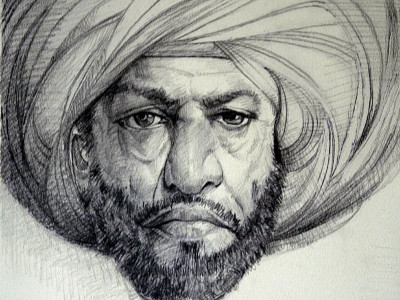
<p><strong>Gone are the days when artists were a pitied lot, and art as a profession was reserved for a certain class. Pakistani artists — both maestros and young saplings — are now making inroads into international galleries and some of the world’s most glamorous homes.</strong></p>
</div>
<p>“Back in our days, it would take us at least a decade before we got an international show,” speaks Adeela Suleman, Coordinator of the Fine Arts Department at the Indus Valley School of Art and Architecture (IVSAA), Karachi. “Now, fresh graduates benefit from their teachers’ connections and get picked up from their thesis showings at schools for international exhibitions,” adds Suleman.</p>
<p>This certainly seems true for a young artist, Scherezade Junejo, who got a show in Australia after only two years since graduation. “Things have changed and there is more scope and openness for every kind of art to flourish. From graphics to fine arts to installations and visuals, we are given the ability to speak in whatever language we wish since art is less taboo now.” As an example of openness and freedom, Junejo cites how blatantly comfortable a homosexual teacher feels at a local art school.</p>
<p>Other artists who were able to cross borders and carve a niche for themselves include Sonia Chundrigar whose abstracts sell well in New York and Waseem Ahmed, whose popular miniature paintings are housed in Sotheby’s today.</p>
<p><strong>Beauty is in the eye of the beholder</strong></p>
<p>So what has made contemporary Pakistani art so interesting to the foreign eye? “Pakistan artists don’t have an eye on the market; they are true to their work,” asserts Salima Hashmi, currently the principal at the Beaconhouse National University (BNU), Lahore. “What makes Pakistan’s contemporary art unique is that finest studio artists are also teachers,” Hashmi points out. Indeed, many artists have also relied on teaching to sustain themselves; examples of such artists include; Rashid Rana who teaches at the BNU and Imran Kureishi who teaches at the National College of Arts (NCA). “In most other countries, established artists don’t nurture the new talent; they just teach a semester at most and not dedicate their lives to academia the way Pakistanis do.”</p>
<p>However, Suleman has a different opinion on the sudden surge in interest for works by Pakistani artists. Suleman, who is also a coordinator at Vasl Artists’ Collective, believes it was 9/11 that did the trick. “The world became interested in Pakistan and its artists; so for us, the event came as a blessing in disguise,” she remarks.</p>
<p>Meanwhile, art critic and Associate Professor of Fine Art at NCA, Quddus Mirza holds a far more nuanced approach towards this interest in Pakistani art. “For one, there is greater affluence in the country and people have begun to see art as a symbol of status and taste. There’s a professional class now that has foreign education and greater awareness to appreciate art. Secondly, the gallery business is more active and exhibitions are held more frequently so people can buy a variety of art pieces according to their own tastes and pockets. Thirdly, artists are also taking their work seriously and there is this sophistication in their approach in terms of execution. Fourthly, when Pakistanis get international acclaim they begin to get noticed at home as well,” expounds Mirza.</p>
<p><strong>More fine artists</strong></p>
<p>What is also noteworthy is how the numbers of fine artists at famed art schools is shooting up: there are on average 40 fine art graduates from the NCA each year and about 20 per annum from IVSAA. The BNU, which is just a decade old, saw an increase from 12 to 20 fine art students in the last one year. “There was a time when we didn’t have a single student in fine arts back in the day at NCA,” recalls Hashmi, looking visibly content with the progress and change in attitudes towards art as a career.</p>
<p><strong>Pakistanis at Bonhams sale</strong></p>
<p>A strong selection of works by major South Asian artists, seen for the first time on the market, heads Bonhams annual summer sale of Modern and Contemporary South Asian art. The auction will also present a large group of works by Pakistani artists. Gulgee’s 1965 work titled ‘Buzkashi’ (sold for £61,250), which depicts Afghanistan’s national sport, is one of the highlights of this section. Other than that, works by Faiza Butt, Khadim Ali and Anwar Saeed will also be presented.</p>
<p><em>Published in The Express Tribune, June 10<sup>th</sup>, 2012.</em></p>
</p>
			<br clear="all"/>
		]]>
		</description>

		<media:content width="424" height="318"
							isDefault="true" medium="image" url="http://i1.tribune.com.pk/wp-content/uploads/2012/06/391258-SaeedAkhtar-1339253744-226-640x480.jpg">
			<media:title>Saeed Akhtar</media:title>
			<media:description>Saeed Akhtar</media:description>
			<media:thumbnail url="http://i1.tribune.com.pk/wp-content/uploads/2012/06/391258-SaeedAkhtar-1339253744-226-160x120.jpg" width="160" height="120" />
      </media:content>

		<wfw:commentRss></wfw:commentRss>
		<slash:comments>4</slash:comments>
	</item>
		<item>
		<title>Truck art: A slow ride</title>
		<link>http://tribune.com.pk/story/390229/truck-art-a-slow-ride/</link>
		<pubDate>Thu, 07 Jun 2012 15:19:36 +0000</pubDate>

		<guid isPermaLink="false">http://tribune.com.pk/?p=390229</guid>

		<description>
		<![CDATA[
			<a href="http://tribune.com.pk/story/390229/truck-art-a-slow-ride/">
				<img src="http://i1.tribune.com.pk/wp-content/uploads/2012/06/390229-lifenstyletruckartmashup-1339082326-609-160x120.jpg" width="160" height="120" alt="" />
			</a>
			<p><div><strong class='location'>KARACHI:&nbsp;</strong>
<p><strong>While truck art has become a hot design commodity gracing fashion runways and receiving international acclaim, there are only five shops stocking most of the truck art wares in the handicraft <em>bazaar</em> inside Zainab Market’s eclectic lanes.</strong></p>
</div>
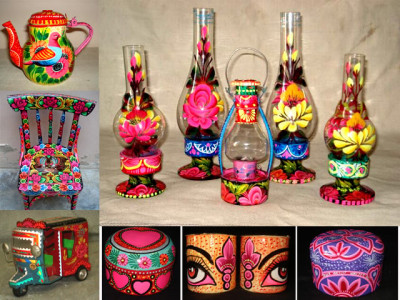
<p>These stores mostly sell painted trucks and rickshaws while the more interesting products like kettles, lanterns, plates, bowls and furniture items are displayed at The Second Floor, select stores in malls or at exhibitions.</p>
<p><strong>Truck art in popular culture</strong></p>
<p>Although truck art became a regular feature on catwalks ever since designer Maheen Khan began propagating it as a design element with her brand Gulabo, the recent proliferation of truck art products can be attributed to the Haider Ali,an artist who has been travelling abroad and delivering lectures at foreign universities to promote this niche art. It comes off as no surprise then that the principal supplier of truck art products are SS Arts, run by Ali’s student and distant relative, Fayyaz Ahmed.</p>
<p>Situated just off Zainab Market, Ahmed’s modest but vivaciously painted office in Saddar is where he takes orders to supply not only to the mass market but also to large companies like AlKaram<em>, Ary, Indus </em>that order pieces for special events.</p>
<p>Ahmed Ali, who has been running his store Meraj Handicrafts at Zainab Market for the last 15 years, says, “While truck art was always on display with other handicrafts, now there’s greater awareness of the art and it’s become more popular since the trucks and rickshaws have become more colourfully painted.” Abdul Hameed of Super Handicraft, which is located right next to Ali’s store, seconds this opinion. “Initially these rickshaws were made with wood but now those have been replaced by the ones with mirror work that costs around Rs150 per piece,” says Hameed.</p>
<p>Since mirror work is less labour-intensive than constructing rickshaws from tin, which requires significant effort of welding, joining and then intricately painting onto their small tin bodies, tin rickshaws are more costly and are typically sold around Rs400 per piece.</p>
<p><strong>It’s a hard knock life</strong></p>
<p>However, despite the surge in popularity of the art, Fayyaz admits that business isn’t bustling all that much. “The response in the local market isn’t great,” he points out. “But during Christmas and Eid times, business is very good as expatriates take products as souvenirs for friends abroad.”</p>
<p>The shopkeepers at the stores in Zainab Market also admit that most of the sales of truck art are from the foreigners who visit the country and want to take these little pieces of art as presents.</p>
<p>So if foreigners have developed a liking and appreciation for the art, why is it that it’s struggling to survive in Pakistan? Mohammad Hussain, who has been in the business for 10 years, makes an interesting point. “Items like these (truck art) don’t sell every day.” Perhaps, that is why truck art doesn’t have its own dedicated market as do other crafts like marble and wooden wares do in Saddar.</p>
<p>Fayyaz, however, cites labour shortage rather than market demand as a fundamental reason for this. “Haider tried to create a union to start a market. But he couldn’t find the labour equipped with the right skill set to do so since most truck artists prefer painting trucks instead of making these smaller gift items.”</p>
<p>He explains that an entire truck can be painted the same day generating around Rs1 million of revenue per truck compared to the measly amount that painting a small kettle, for instance, would generate. For many workers, it is frustrating to work on smaller items like kettles, jewellery boxes and rickshaws when they could work on the wide canvas of a truck that more people will see and appreciate.</p>
<p>However, despite the reluctance of the labour involved, there seems to be a glimmer of hope in the market demand as Ali, of Meraj Handicrafts, says, “There are no unsellable items in handicrafts; 50 to 70 colourful rickshaws are sold easily per month.”</p>
<p><em>Published in The Express Tribune, June 8<sup>th</sup>, 2012.</em></p>
</p>
			<br clear="all"/>
		]]>
		</description>

		<media:content width="424" height="318"
							isDefault="true" medium="image" url="http://i1.tribune.com.pk/wp-content/uploads/2012/06/390229-lifenstyletruckartmashup-1339082326-609-640x480.jpg">
			<media:title>lifenstyle truck art mashup</media:title>
			<media:description>Despite a recent surge in popularity through fashion shows, truck art still struggles to carve a niche for itself. PHOTOS: PUBLICITY</media:description>
			<media:thumbnail url="http://i1.tribune.com.pk/wp-content/uploads/2012/06/390229-lifenstyletruckartmashup-1339082326-609-160x120.jpg" width="160" height="120" />
      </media:content>

		<wfw:commentRss></wfw:commentRss>
		<slash:comments>3</slash:comments>
	</item>
		<item>
		<title>Pakistani designers in Dubai: Fashion forward</title>
		<link>http://tribune.com.pk/story/387373/fashion-forward/</link>
		<pubDate>Fri, 01 Jun 2012 15:54:21 +0000</pubDate>

		<guid isPermaLink="false">http://tribune.com.pk/?p=387373</guid>

		<description>
		<![CDATA[
			<a href="http://tribune.com.pk/story/387373/fashion-forward/">
				<img src="http://i1.tribune.com.pk/wp-content/uploads/2012/06/387373-BrandsGraphicSamraAamir-1338565076-868-160x120.JPG" width="160" height="120" alt="" />
			</a>
			<p><div><strong class='location'>KARACHI:&nbsp;</strong>
<p><strong>For Pakistani fashion, the most predictable step forward is the expansion of the retail business in Dubai. While one must give credit to Zahir Rahimtoola’s Labels for taking this giant leap three years ago by initiating a store within a store concept Studio 8 in Dubai, this year one shall see the other three fashion retail stores: The Designers, Ensemble and Brands Just Pret (BJP) foray into the Emirate hub.</strong></p>
</div>
<p>While The Designers is slated for a mid June launch, BJP shall open its doors sometime in the end of July and Ensemble in August.</p>
<p>But while Labels in Dubai and Ensemble as a brand on the whole has a very definitive Indian presence, Asad Tareen of The Designers promises to be different by being Pakistani and delivering Pakistani aesthetics. “I feel that Pakistani designers are being belittled in Dubai with just a handful of them being placed next to 15 Indian designers and that too with just three to four pieces from their collection on the racks,” says Tareen. “Hence for me, Dubai isn’t just about making a business move it’s also a chance to provide a proper platform for our designers.”</p>
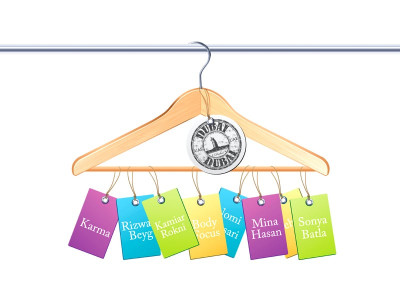
<p>To rectify this disparity, Tareen has gotten a prime location off Sheikh Zayed Road where he will get a good mix of <em>desis</em> as well as foreigners. So far he intends to stock about 24 to 26 designers with names like Karma, Nomi Ansari, Rizwan Beyg, Kamiar Rokni, Iman Ahmed of Body Focus, Mina Hasan, Mehdi, Zainab Sajid and Sonya Batla amongst the lot. However, for Shehernaz Hussain of Ensemble, it’s the availability of Indian designers like Ritu Kumar that make her brand what it is. “We promote good fashion irrespective of a nationality,” defends Hussain. “It’s almost like an extended Pakistani city,” she says of Dubai. “Fifty per cent of our clientele comprise <em>desis</em> and so we will keep our prices the same as our other Ensemble stores around Pakistan.”</p>
<p>While one may argue that Dubai is a tough and saturated market to enter, Tareen confidently states that, “Every business needs a formula to be successful and I have mine.” For starters, he’s banking on talent like nobody else by getting young designers like Mohsin Ali, who have risen to critical acclaim but don’t have the resources to produce. Tareen is offering Ali and other young designers like him to use his production facilities and create collections that he will then house not only at The Designers but also distribute them to other stores. Ali for one is thrilled with this arrangement; “This gives us designers the opportunity to do what we are good at without compromising on our aesthetic and vanishing into the market demands.” The designer adds that, “What’s great is that now I can create what I love and fortunately Tareen also approves of it so it is a win-win situation since I know how to design and he knows how to sell.” Ali is one name that shines bright amongst international fashion week attendees and his new line will soon debut at The Designer’s store in Dubai.</p>
<p><strong>Feel at home</strong></p>
<p>Apart from such unique design initiatives, Tareen also feels that his edge will come from offering the same prices that are tagged on clothes in Pakistan. “Pakistanis abroad typically call family members back home to do their purchases for them since they feel they get ripped off in Dubai. So the purpose is to prevent this from happening,” states Tareen. Typically expats go to desi stores when they want a trousseau, which is why Tareen has decided to dedicate a space for designers to meet clients and take orders, as well as hold exhibitions to not only showcase those designers that stock their clothes at The Designers, but also those who don’t.</p>
<p><em>Published in The Express Tribune, June 2<sup>nd</sup>, 2012.</em></p>
</p>
			<br clear="all"/>
		]]>
		</description>

		<media:content width="424" height="318"
							isDefault="true" medium="image" url="http://i1.tribune.com.pk/wp-content/uploads/2012/06/387373-BrandsGraphicSamraAamir-1338565076-868-640x480.JPG">
			<media:title>Brands-Graphic-Samra Aamir</media:title>
			<media:description>Pakistani multi-brand stores ready to explore Dubai markets. GRAPHIC: SAMRA AAMIR</media:description>
			<media:thumbnail url="http://i1.tribune.com.pk/wp-content/uploads/2012/06/387373-BrandsGraphicSamraAamir-1338565076-868-160x120.JPG" width="160" height="120" />
      </media:content>

		<wfw:commentRss></wfw:commentRss>
		<slash:comments>5</slash:comments>
	</item>
		<item>
		<title>‘Bloggers meet up’: Food for thought</title>
		<link>http://tribune.com.pk/story/386371/bloggers-meet-up-food-for-thought/</link>
		<pubDate>Wed, 30 May 2012 16:19:49 +0000</pubDate>

		<guid isPermaLink="false">http://tribune.com.pk/?p=386371</guid>

		<description>
		<![CDATA[
			<a href="http://tribune.com.pk/story/386371/bloggers-meet-up-food-for-thought/">
				<img src="http://i1.tribune.com.pk/wp-content/uploads/2012/05/386371-FoodthoughtillustrationJamalKhurshid-1338392791-325-160x120.JPG" width="160" height="120" alt="" />
			</a>
			<p><div><strong class='location'>KARACHI:&nbsp;</strong>
<p><strong>At nearly every food launch these days there are more bloggers than reporters. In fact, invites to restaurant and cafe launches are titled as ‘Bloggers meet up’. From all the international chain launches recently, such as Snog, Tutti Frutti, Cinnabon or Gloria Jean’s Coffees to even local food initiatives like Bella Vita Gelateria, Cafe Ciao and Crepe Factory, blogging has taken precedence to create awareness either of the advent of a new food brand or its new menu on offer.</strong></p>
</div>
<p>And because of this, the proliferation of food outlets and easy access to them via the web, blogging has become the ‘it’ thing to promote the industry. “Food bloggers are developing because of the growth in the food industry and not the other way around,” asserts Farah Kamal, a photographer and food blogger. “Customers would always be at the receiving end initially in every field not just food,” points out Kamal. “Blogging gives everyone a chance to voice their opinions, and most importantly, social media can help many women to come out and become entrepreneurs even from the confines of their homes.”</p>
<p>Kamal also provides unique insight, claiming that it is actually the public relations (PR) companies that have pushed for this ‘bloggers revolution’ (if you will) by encouraging companies to allow a new cadre of talent to write about their initiatives. Ayesha Nasir of Voila PR, for instance, relies heavily on bloggers for pre-event hype. “The reviews are instantly available and a lot of restaurants do not always have large budgets for marketing and social media is the most effective and cheapest way to publicise a restaurant,” she says. Lending credence to this trend, Aman Virji of the restaurant 44 says, “Since word of mouth is the best way of marketing in the food industry, social media gives the hospitality industry direct access to our consumers.”</p>
<p><strong>It’s a blogger’s world</strong></p>
<p>What is interesting is how food is the only industry in Pakistan to pick up on this quantum shift in global media where gradually the print medium has been rendered near obsolete as publishing rages online, resulting in a corresponding shift in the status of reporters versus bloggers. Finance professional turned food blogger Saira Malik regularly posts on food groups on Facebook and gets feedback through comments posted to her blog’s link on those groups which is her way of gauging that her thoughts carry weight.</p>
<p>While she agrees whole-heartedly with fellow blogger Kamal’s assessment, she argues that, “Initially bloggers used to provide perspective from the consumers’ point of view and now they’ve just become marketers for these restaurants.” Malik therefore insists on a code of ethics for bloggers.</p>
<p>While the reporter’s status may still be unchallenged in other arms of the entertainment industry, the food business is certainly shaking things up. “People have different tastes and palates and blogging allows for people to demonstrate varied comments and critique,” offers Nausheed Shehzad, Brand Manager at Food Connection Pakistan, as an explanation.</p>
<p>A courier delivery service, Blue Ex, is in essence a logistics and digital media company that is tapping into the growing food delivery market. Its young Director Strategy, Imran Baxamoosa, claims that, “Social media has dramatically changed the food landscape in Pakistan especially in the listings department. Before, all the restaurant details etc were distributed through traditional mediums such as flyers and newspaper ads, now there are targeted websites that cater particularly to restaurant listings.”</p>
<p><em>Published in The Express Tribune, May 31<sup>st</sup>, 2012.</em></p>
</p>
			<br clear="all"/>
		]]>
		</description>

		<media:content width="424" height="318"
							isDefault="true" medium="image" url="http://i1.tribune.com.pk/wp-content/uploads/2012/05/386371-FoodthoughtillustrationJamalKhurshid-1338392791-325-640x480.JPG">
			<media:title>Food thought-illustration-Jamal Khurshid</media:title>
			<media:description>A look into the rising trend of food bloggers in Pakistan. ILLUSTRATION: JAMAL KHURSHID</media:description>
			<media:thumbnail url="http://i1.tribune.com.pk/wp-content/uploads/2012/05/386371-FoodthoughtillustrationJamalKhurshid-1338392791-325-160x120.JPG" width="160" height="120" />
      </media:content>

		<wfw:commentRss></wfw:commentRss>
		<slash:comments>7</slash:comments>
	</item>
		<item>
		<title>Fashion (able) police</title>
		<link>http://tribune.com.pk/story/383048/fashion-able-police/</link>
		<pubDate>Wed, 23 May 2012 17:16:36 +0000</pubDate>

		<guid isPermaLink="false">http://tribune.com.pk/?p=383048</guid>

		<description>
		<![CDATA[
			<a href="http://tribune.com.pk/story/383048/fashion-able-police/">
				<img src="http://i1.tribune.com.pk/wp-content/uploads/2012/05/383048-image-1337792650-113-160x120.JPG" width="160" height="120" alt="" />
			</a>
			<p><div><strong class='location'>KARACHI:&nbsp;</strong>
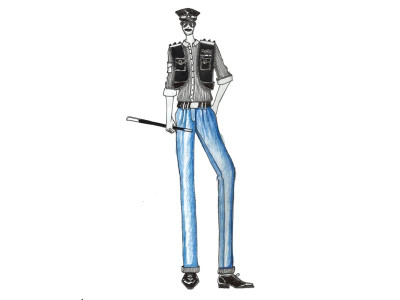
<p><strong>Exactly two months ago, when spring began descending into odious summer, the local police candidly declared that their <a href="http://tribune.com.pk/story/356379/punjab-police-blame-uniform-for-their-grumpiness/" target="_blank">characteristic grumpiness</a> was not a personality trait intrinsic to their job but was in fact brought on by the dark colours of their uniform. Thus given that fashion has become pervasive in Pakistan in the last few years, <em>The Express Tribune</em> picked on some of fashion’s exciting new talents to redesign the police uniform. While we were hoping the designers would show their funky and bohemian flare, often spotted in their collections on the ramp, the sketches show a different and rather mature approach.</strong></p>
</div>
<p><strong>Akif Mahmood</strong></p>
<p>“I wanted to make it very simple since it is a uniform and requires practicality. Instead of the typical black though, I have a white and lime printed shirt. White works best for men because the weather is mostly sunny and warm in Pakistan. I have added a waistcoat with pockets which is not only fashionable, but will also prove useful to hold all their arms,” explains Mahmood. However, he adds that one can’t be completely fashion-centric because most policemen are older and experimental designs appeal to youngsters more. The designer, who is a fan of denim, has suggested nontreated denim for the pants. “Denim would give a cool feel to the overall look. The whole point is to make the typical uniform interesting and presentable. Also given the popularity of films like <em>Dabanng</em>, policemen are also viewed as icons.”</p>
<p><strong>Wardha Saleem</strong></p>
<p>“This is my vision of how I want to see a policeman. I have used white for the pants not just because it repels heat but because the colour symbolises purity and power. We all expect the police to be this agent of fairness and justice and also expect them to have authority,” states Saleem. The designer has used turquoise, which is supposed to balance out the look since it is a neutral and fresh colour. “I wanted them to feel good about themselves yet not lose their strong image,” says Saleem.</p>
<p><strong>Adnan Pardesy</strong></p>
<p>“I have given the cops cargo pants in poplin cotton instead of twill fabric that is typically used. The cotton is lighter and makes for ease of movement in the summer. Overall, I have retained the blue details of the current uniform but used white as the base,” states Pardesy. For the top, the designer has suggested a polo t-shirt in 60/2 mercerised cotton fabric, which is basically a mix fabric that is easy to wash and wear and doesn’t dull out even after multiple washes. “The polo also gives a formal feel to the uniform and will keep the men cooler yet give them the air of authority. And the best part is that it is extremely cheap to make,” he adds.</p>
<p><strong>Irfan Ali</strong></p>
<p>“Whenever I think of the Pakistani police, the associated emotion that the term ignites is fear. Yet, as a fashion designer when I visualise the police I think of a sleek and smart look. I wanted to therefore go for a modern, minimalistic look that every police man can carry off,” says Ali. The designer states that since Pakistani police comes from all classes, he chose not to be too experimental with design. “The look is very simple. The cotton under-shirt is in an off-white colour and the upper jacket is dull green with 3D pockets, along with the necessary police monograms. The trousers are grey instead of black and are paired with long boots,” concludes the designer.</p>
<p><strong>Mohsin Ali</strong></p>
<p>“I was thinking of the ancient subcontinental silhouettes of an <em>angharkha</em>, but wanted to make something modern with a twist of history in it. Since it’s so hot in Pakistan, the pants are airy from the hip but tight from below to give a slightly fashionable look,” says Ali. A cool wool is used for the gloves to repel heat and the scarf is added to absorb perspiration. The designer adds, “I also wanted to give the police men solar hats in two layers that create a vacuum in between for air supply.” The colours used in Ali’s creation are very light and the designer has used grey instead of white, “since white gets soiled easily in this dusty weather”.</p>
<p><em>Published in The Express Tribune, May 24<sup>th</sup>, 2012.</em></p>
</p>
			<br clear="all"/>
		]]>
		</description>

		<media:content width="424" height="318"
							isDefault="true" medium="image" url="http://i1.tribune.com.pk/wp-content/uploads/2012/05/383048-image-1337792650-113-640x480.JPG">
			<media:title>05</media:title>
			<media:description>Akif Mahmood. PHOTO: FILE</media:description>
			<media:thumbnail url="http://i1.tribune.com.pk/wp-content/uploads/2012/05/383048-image-1337792650-113-160x120.JPG" width="160" height="120" />
      </media:content>

		<wfw:commentRss></wfw:commentRss>
		<slash:comments>11</slash:comments>
	</item>
		<item>
		<title>Tete-a-tete with Faraz Waqar   </title>
		<link>http://tribune.com.pk/story/381653/tete-a-tete-with-faraz-waqar/</link>
		<pubDate>Sun, 20 May 2012 15:24:25 +0000</pubDate>

		<guid isPermaLink="false">http://tribune.com.pk/?p=381653</guid>

		<description>
		<![CDATA[
			<a href="http://tribune.com.pk/story/381653/tete-a-tete-with-faraz-waqar/">
				<img src="http://i1.tribune.com.pk/wp-content/uploads/2012/05/381653-Faraz-1337526559-840-160x120.jpg" width="160" height="120" alt="" />
			</a>
			<p><div><strong class='location'>KARACHI:&nbsp;</strong>
<p><strong>From having no Pakistani films of international repute, we now have a number of releases that we want to own up to. From commercial and independent productions, Pakistani film-makers seem to be getting a new lease on life. And add to the list a new talent — Faraz Waqar — who’s on his way to the Cannes Film Festival, with his film <em><a href="http://tribune.com.pk/story/373488/911-am-takes-budding-film-maker-to-cannes/">9:11am</a></em>. <em>The Express Tribune</em> speaks to this fresh off the block film-maker as he sets his eyes towards the acclaimed French accolade.</strong></p>
</div>
<p><strong>You have said that your passion for film-making has come from the desire to rebuild Pakistan’s film industry. How do you think we can achieve that in a more tangible way?</strong></p>
<p>Films like <em>Bol</em> and <em>Khuda Ke Liye </em>by Shoaib Mansoor and <em>Ramchand Pakistani</em> by Mehreen Jabbar are proof that Pakistan can produce some amazing films that can compare with the best cinema from around the world. Mansoor has already shown us the way and his work is an inspiration for me personally. When we speak of upcoming Pakistani films, we no longer get smirks from the local and international audience.</p>
<p>However, for tangible growth in the industry in Pakistan, we need big festivals, we need companies or arms of existing entertainment and news channels that are willing to take a risk on and invest in the work of new film-makers. We need private individuals and organisations to assist us.</p>
<p><strong>How do you feel about the indie productions emerging from Pakistan?</strong></p>
<p>Indie films are the future of Pakistani cinema. I have a lot of expectations from <em>Waar</em>. Even my friends in India have been waiting for that film for a while and have asked me a number of times about the expected release date. From the trailer, it looks like a fantastic production. My personal preference, however, is for films that address political and social issues in a bold way.</p>
<p><strong>What subjects interest you and why?</strong></p>
<p>My main attempt is always to wrap an important religious, social or political message in a real story while also entertaining the audience. I admire films from not just Shoaib Mansoor but also Rajkumar Hirani, Ashutosh Gowariker and Aamir Khan. However, I also enjoy romantic comedy as a genre and made one short film inspired by the work of Karan Johar which was widely appreciated by my colleagues and the audience.</p>
<p><strong>What subjects, in your opinion, need to be highlighted from Pakistan?</strong></p>
<p>There is a diverse range of topics — there is no end to our stories. I have one feature length script that is almost complete, which finishing that is built around the media explosion in Pakistan and how it has impacted society. It is a sort of a dark comedic drama. Playing on stereotypes is another interesting subject. Imagine a comedy involving foreigners who land in Pakistan fearing for their lives because of the image painted of the country in the news media and what a different reality they find on-ground. I would also love to make a historical epic like <em>Troy</em> on Mohenjodaro and its mysterious civilisation. This could help promote our country’s image even as a tourist destination worldwide.</p>
<p><strong>How was your experience of New York Film Academy (NYFA) Abu Dhabi? What are its strengths and weaknesses which arise from being based in Abu Dhabi instead of its birthplace in New York?</strong></p>
<p>NYFA in Abu Dhabi was the ideal choice as it was in the Middle East, which has a culture and is in a region that I was familiar with and where I had worked and lived for such a long period of time. The best part, however, was learning from and working with professors who were highly inspiring in terms of the rich experience they had working as directors and cinematographers on world-renowned film projects, both in Hollywood and in the Middle East.</p>
<p>The student body at NYFA Abu Dhabi was extremely diverse. We had classmates from Australia, India, Africa, Iran, Saudi Arabia, South Africa, Eastern Europe, Pakistan, Lebanon, Switzerland, Iraq, UAE, Nigeria and Denmark. It was superb as I was able to make some wonderful friends with people from all these different countries and cultures and benefit from their vastly different ideas.</p>
<p>NYFA’s programme is intensive and comprehensive, so you work on all your film projects from ‘idea conception’ stage to script finalisation, casting, pre-production, shooting, post-production and editing. I wrote, directed and edited eight complete films during this one-year at NYFA. I was also involved in the production of 39 films in various capacities as part of the crew (short films, documentaries and music videos) for other directors in association with the New York Film Academy, Abu Dhabi. Since we had access as NYFA students to some of the best film cameras in the world, we all availed the opportunity to shoot our different projects on various cameras ranging from digital to 16mm, 35mm and even on the Red Epic.</p>
<p><em>Published in The Express Tribune, May 21<sup>st</sup>, 2012.</em></p>
</p>
			<br clear="all"/>
		]]>
		</description>

		<media:content width="424" height="318"
							isDefault="true" medium="image" url="http://i1.tribune.com.pk/wp-content/uploads/2012/05/381653-Faraz-1337526559-840-640x480.jpg">
			<media:title>Faraz 02</media:title>
			<media:description>The young Pakistani film-maker will be showing his thesis film 9:11 am at the Festival de Cannes 2012 this year. PHOTO: PUBLICITY
</media:description>
			<media:thumbnail url="http://i1.tribune.com.pk/wp-content/uploads/2012/05/381653-Faraz-1337526559-840-160x120.jpg" width="160" height="120" />
      </media:content>

		<wfw:commentRss></wfw:commentRss>
		<slash:comments>5</slash:comments>
	</item>
		<item>
		<title>Cruise Collection: Forty and fabulous</title>
		<link>http://tribune.com.pk/story/378652/cruise-collection-forty-and-fabulous/</link>
		<pubDate>Mon, 14 May 2012 16:17:16 +0000</pubDate>

		<guid isPermaLink="false">http://tribune.com.pk/?p=378652</guid>

		<description>
		<![CDATA[
			<a href="http://tribune.com.pk/story/378652/cruise-collection-forty-and-fabulous/">
				<img src="http://i1.tribune.com.pk/wp-content/uploads/2012/05/378652-modelPHOTOSPUBLICITY-1337011046-419-160x120.JPG" width="160" height="120" alt="" />
			</a>
			<p><p><strong><strong class='location'>KARACHI:&nbsp;</strong>In an age where women are trying to ward off age like the plague, it was refreshing to see fashion entrepreneurs Ayesha and Somaya of <a href="http://www.brandsjustpret.com/store/">Brands Just Pret</a> take on a whole new concept of a fashion show by luring in successful 40-year-old women to be their models.</strong></p>
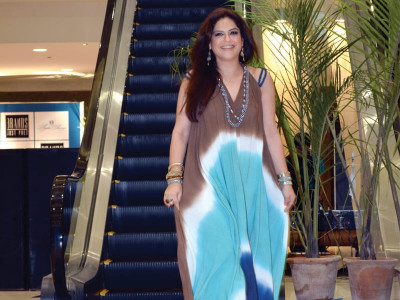
<p>The timing couldn’t have been better: smack on the eve of Mother’s Day. The escalators next to the Brands Just Pret store were utilised as a ramp (as is customary at many shows held inside malls) while the area outside the store created an ambience of a tropical island replete with palm tree shades and cane furniture to complement the ‘Cruise Collection’ that was being launched by Ayesha-Somaya.</p>
<p>While one lady from the audience, Nazneen Tariq, wasn’t as taken aback with the concept of using ‘real’ models instead of professional ones, citing Nomi Ansari’s recent show at Fashion Pakistan Week as an example, she was delighted that successful mature women were given a chance to shine on the ramp. Another lady in the audience, Bilquis Ashraf added, “It’s a great idea; especially from a sales point of view. When women like us look at all these fashion shows with young girls on the ramp, it makes us wonder if we can even wear those clothes. To get women closer to our age to model, I feel, is the best way to target our kind of market.”</p>
<p>To be fair, none of these women were your average 40-year-olds. All of them were very well-maintained for their age and could easily give some 20-year-olds a run for their money with their lean body frames. One example is political activist Irum Jalal, who managed a few theatrics while her ‘walk’ down the escalator. While many women at that age would be appalled by such a bold show, Jalal remained unfazed. “Why should I feel hesitant? I am a funky person; this is how I am naturally,” she stated candidly.</p>
<p>Make-up artists, Angie Marshall and Annie of Alle’nora, fashion coordinator Tehmina Khalid, fitness expert Rukhsana Khan and food entrepreneur Shehla Khan of Cafe 9 participated as models for the show. None of these choices, however, were random. “We literally handpicked each one of them,” revealed Somaya. “We need to present Pakistani women in different ways. These women not only look great, they also manage their families and their careers. They’re an inspiration for us all.” One could sense quite a few young women look at this dazzling entourage with envy, wondering if they’d ever look this good at that age.</p>
<p>For the popular Bollywood dance instructor Fehmida Maskatiya, the whole experience was a dream. “Oh my gosh!” she exclaimed as she stepped down. “I can’t tell you how I am feeling. I must be dreaming. In this age when someone approaches you for something like this, it’s a morale boost.”</p>
<p>Interestingly many of these women are not only mothers but some are also grandmothers  and to be encouraged to walk the ramp when even a slight wrinkle is shunned upon and quickly covered up with expensive age-defying creams, the show was a good effort in sending out the message for women to embrace themselves as they are.</p>
<p><em>Published in The Express Tribune, May 15<sup>th</sup>, 2012.</em></p>
</p>
			<br clear="all"/>
		]]>
		</description>

		<media:content width="424" height="318"
							isDefault="true" medium="image" url="http://i1.tribune.com.pk/wp-content/uploads/2012/05/378652-modelPHOTOSPUBLICITY-1337011046-419-640x480.JPG">
			<media:title>model-PHOTOS-PUBLICITY01</media:title>
			<media:description>Contrary to the norm, Ayesha and Somaya gave older women a chance to shine on the ramp. PHOTO: PUBLICITY
</media:description>
			<media:thumbnail url="http://i1.tribune.com.pk/wp-content/uploads/2012/05/378652-modelPHOTOSPUBLICITY-1337011046-419-160x120.JPG" width="160" height="120" />
      </media:content>

		<wfw:commentRss></wfw:commentRss>
		<slash:comments>0</slash:comments>
	</item>
		<item>
		<title>Sheep: Following the herd?</title>
		<link>http://tribune.com.pk/story/378236/sheep-following-the-herd/</link>
		<pubDate>Sun, 13 May 2012 16:43:07 +0000</pubDate>

		<guid isPermaLink="false">http://tribune.com.pk/?p=378236</guid>

		<description>
		<![CDATA[
			<a href="http://tribune.com.pk/story/378236/sheep-following-the-herd/">
				<img src="http://i1.tribune.com.pk/wp-content/uploads/2012/05/378236-model-1336920500-304-160x120.JPG" width="160" height="120" alt="" />
			</a>
			<p><div><strong class='location'>KARACHI:&nbsp;</strong>
<p><strong>To say that the concept of ready-to-wear revolutionised and propelled the fashion scene in Pakistan would be an understatement. What it did was render the traditional <em>shalwar kameez</em> extinct and create a whole new business model for convenience clothing for women. Sure, Teejays needs to be credited for heralding the concept, but it is brands like Khaadi, Ego, Daaman and <a href="http://www.houseofsheep.com/">Sheep</a> that took the risk of introducing separates — an essential prerequisite to fashion retail world over and created a huge market for off-the-rack clothing.</strong></p>
</div>
<p>The pressure from pret was such that even fashion designers had to succumb to lowering their prices, streamlining their production and cost and selling off-the-rack rather than selling only through appointments. The two brands that posed serious competition were Daaman and Sheep, which catered to the chic, working professional, offering style savvy options with reasonable pricing. Yet, while Daaman grew, building upon its simple structured design ethos, Sheep, the brand that claimed to distinguish one from the herd, succumbed to following market dictates diluting their design sense quite visibly.</p>
<p>However, Aalia Jafar, Business Director at Sheep, is unfazed by the criticism: “We’re a young and growing brand. We experiment and learn; this means that there will be days when we will be loved and days when our things will not be liked,” she says candidly.</p>
<p>Despite the fact that many Sheep loyalists now feel that it’s losing its edge with its myriad new lines, Aalia astutely asserts, “What would not be good is if we remained the same. With that said, what we never compromise on is our finished product quality and that is how we are building trust within our target segments.”</p>
<p><strong>Change in design philosophy?</strong></p>
<p>The change in direction can be attributed to the faster movement of the slightly heavily worked pieces, suggests Ayesha Jafar, Brand Communication Specialist. She admits that while there have also been changes in the design team, the brand has certainly succumbed to consumer pressure. “You sometimes end up steering to satisfy customer demand,” says Ayesha highlighting the increase in demand of more embellished and embroidered work. Another instance that she quotes of catering to consumer demand is how shirts with full sleeves became a must after garnering impressive revenues off of these, especially at their store at Dolmen Mall Tariq Road.</p>
<p>Apart from that, many opine that Sheep is losing its edge and its cuts — something it was initially known for — are not evolving with the trends that other retail stores are picking up on, such as round hemlines, the peplum, knots and tribal prints. Many also claim that the brand that was once termed as “affordable” is slowly changing its pricing strategy, making the final product too expensive to purchase.</p>
<p>Meanwhile, Sheep has also gone through some structural changes. Prior to opening their expansive outlet at the new Dolmen City, Sheep made a brief sojourn to Labels in Karachi and the PFDC store in Lahore, however both have now closed. “Logistically it wasn’t making sense, especially since we are opening our own stores,” explains Aalia. “That’s the only way we can live up to our brand promise of giving our customers a comfortable, indulgent and fantastic shopping experience. For us, the brand sells because of the customer experience tied in with products people can relate to and enjoy. And the experience can only be maintained at our own stores.”</p>
<p>Yet, with more and more entrants in the pret game, how does Sheep view this heightened competition? “We’re loving it,” adds Aalia. “It’s challenging and has brought life to the business. What’s even better is that the whole industry will be upgraded and will move towards gaining some structure.” Although she acknowledges that fashion weeks have also become integral to the game, she confesses, “We’re not yet ready for it and we don’t want to do it half-heartedly”.</p>
<p><em>Published in The Express Tribune, May 14<sup>th</sup>, 2012.</em></p>
</p>
			<br clear="all"/>
		]]>
		</description>

		<media:content width="424" height="318"
							isDefault="true" medium="image" url="http://i1.tribune.com.pk/wp-content/uploads/2012/05/378236-model-1336920500-304-640x480.JPG">
			<media:title>model01</media:title>
			<media:description>Sheep’s Aalia Jafar explains the noticeable change in the brand’s design philosophy. PHOTO: PUBLICITY

Sheep’s Aalia Jafar explains the noticeable change in the brand’s design philosophy. PHOTO: PUBLICITY</media:description>
			<media:thumbnail url="http://i1.tribune.com.pk/wp-content/uploads/2012/05/378236-model-1336920500-304-160x120.JPG" width="160" height="120" />
      </media:content>

		<wfw:commentRss></wfw:commentRss>
		<slash:comments>2</slash:comments>
	</item>
	
</channel>
</rss>
<!-- Performance optimized by W3 Total Cache. Learn more: http://www.w3-edge.com/wordpress-plugins/

Page Caching using apc
Database Caching 13/42 queries in 1.612 seconds using memcached
Object Caching 1435/1588 objects using apc

 Served from: tribune.com.pk @ 2013-06-19 09:15:45 by W3 Total Cache -->