<?xml version="1.0" encoding="UTF-8"?>
<rss version="2.0"
	xmlns:content="http://purl.org/rss/1.0/modules/content/"
	xmlns:wfw="http://wellformedweb.org/CommentAPI/"
	xmlns:dc="http://purl.org/dc/elements/1.1/"
	xmlns:atom="http://www.w3.org/2005/Atom"
	xmlns:sy="http://purl.org/rss/1.0/modules/syndication/"
	xmlns:slash="http://purl.org/rss/1.0/modules/slash/"
	xmlns:media="http://search.yahoo.com/mrss/"
	>

<channel>
	<title>The Express Tribune &#187; Avirook Sen</title>
	<atom:link href="http://tribune.com.pk/author/1474/avirook-sen/feed/" rel="self" type="application/rss+xml" />
	<link>http://tribune.com.pk</link>
	<description>Latest Breaking Pakistan News, Business, Life, Style, Cricket, Videos, Comments</description>
	<lastBuildDate>Tue, 21 May 2013 20:45:53 +0000</lastBuildDate>
	<language></language>
	<sy:updatePeriod>hourly</sy:updatePeriod>
	<sy:updateFrequency>1</sy:updateFrequency>
	<generator>http://wordpress.org/?v=3.5.1</generator>

		<item>
		<title>I love India, I don’t like Indians</title>
		<link>http://tribune.com.pk/story/470238/i-love-india-i-dont-like-indians/</link>
		<pubDate>Fri, 23 Nov 2012 18:38:23 +0000</pubDate>

		<guid isPermaLink="false">http://tribune.com.pk/?p=470238</guid>

		<description>
		<![CDATA[
			<a href="http://tribune.com.pk/story/470238/i-love-india-i-dont-like-indians/">
				<img src="http://i1.tribune.com.pk/wp-content/uploads/2012/11/470238-AvirookSenNew-1353687963-902-160x120.jpg" width="160" height="120" alt="" />
			</a>
			<p><p>I love India. I hate many things about it. I cannot stand its poverty, illiteracy, corruption, and often, impotence. But I think what makes me bristle is its celebration of death, when cloaked in the gaberdine of retribution. Ajmal Kasab, a labourer from Faridkot, was <a href="http://tribune.com.pk/story/469579/closure-mumbai-gunman-ajmal-kasab-hanged/">hanged on the morning of November 21 and India celebrated</a>.</p>
<p>He was ‘<em>jhatka’</em> meat. ‘Operation X’ (the evocative codename for the macabre process of getting him to the gallows with the least fuss) was clean, efficient and secretive. There were no sly YouTube videos, even the prime minister didn’t know. The judicial proceedings — I read them with interest — were almost flawlessly fair. Then, it came down to the mercy of the highest authority in the land on such matters — the president. And the heavy, invisible will of that strange entity called “the people”.</p>
<p>I do not like “the people”. There are many of them. They <a href="http://tribune.com.pk/multimedia/slideshows/469280">rejoiced, gloated</a>, when news of the hanging came in. I report on a murder trial in India on a regular basis — one that has the possibility of a similar result. On my way to court, I heard the radio — a jockey cracked a joke about the hanging; a young reporter with a mock under-teen delivery asked the hangman “how he felt”. Television took the story forward: why not use the “momentum” (!) to also hang Afzal Guru for the parliament attack case?</p>
<p>The media is part of “the people” and the people are everywhere. In Pune, where Kasab was shifted for the specific purpose of his execution, diabetics gorged on distributed sweets. In south Mumbai, an effigy with a noose attached was installed with the kind of love and loathing only necrophiliacs can feel — a few realistic details might have been missing, like the fact that a man who is hanged usually shits his pants (Kasab’s post-mortem said he had defecated). But that’s a matter of detail.</p>
<p>Relatives of the 166 victims who this mindless villager helped kill, have the right to visceral emotions — nobody who isn’t their kin would understand their loss. The celebrations made it emphatically clear that “the people” didn’t.</p>
<p>A few days before Kasab met his maker, a Mumbai icon died a natural death. The mourning around <a href="http://tribune.com.pk/story/467498/shiv-sena-supremo-firebrand-hindu-nationalist-leader-bal-thackeray-dies/">Bal Thackeray’s passing</a> had state ceremony written all over it, but the people reacted too. Close to two million turned up. Thackeray had overseen and fuelled the division of Bombay like no one before him. Along the way, as in the riots after the bomb blasts of 1993, several times more people died than on 26/11. But a few words protesting the shutdown of Bombay after a matter as certain as death at a ripe old age, incurred the wrath of “the people”, and, sadly, the state. <a href="http://tribune.com.pk/story/468802/thou-shalt-not-post/">A ‘Facebooker’ was arrested, her relatives terrorised</a>. “The people” did this.</p>
<p>I love India. I do not like “the people”.</p>
<p>Why is it that I do not like them? I dislike them not as much for their penchant for “collective punishment” as my friend and fellow columnist Aakar Patel puts it; I dislike them for their collective ignorance and their lack of reason. Common people, for me, must first of all have common sense.</p>
<p>The notion that the death penalty deters fidayeen is absurd. These individuals are dreaming of Heaven. It is the place they want to be transported to. Before they hang, they say thank you — or laugh, as Kasab did. The suicide mission man takes the death penalty out of the equation — you may feel good about executing him, but he feels better.</p>
<p>Is it justice we are talking about when we discuss Kasab? Or is it retribution? I’d say neither. In the end, the process is a fairly cynical one. I didn’t use the word ‘<em>jhatka’</em> loosely early on in this piece. Kasab — and hundreds of people like him — are no more than cattle for the jihad factories that operate out of our dangerous little neighbourhood. He is expendable, and as a bonus, actually sold for a good price for his masters. For those who executed him, he is a chip on the negotiating table. It could be that a possibly innocent, but completely disposable life like that of Sarabjeet Singh, the Indian against whom the accusations, if not the evidence, are similar to Kasab’s, has just been lost.</p>
<p>“The people” don’t think about these things. I do not like them.</p>
<p><em>Published in The Express Tribune, November </em><em>24<sup>th</sup>, 2012.</em></p>
</p>
			<br clear="all"/>
		]]>
		</description>

		<media:content width="424" height="318"
							isDefault="true" medium="image" url="http://i1.tribune.com.pk/wp-content/uploads/2012/11/470238-AvirookSenNew-1353687963-902-640x480.jpg">
			<media:title>Avirook Sen New</media:title>
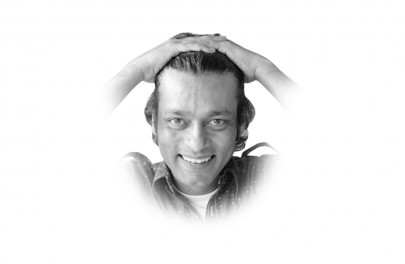
			<media:description>The writer is currently a visiting fellow at INSEAD</media:description>
			<media:thumbnail url="http://i1.tribune.com.pk/wp-content/uploads/2012/11/470238-AvirookSenNew-1353687963-902-160x120.jpg" width="160" height="120" />
      </media:content>

		<wfw:commentRss></wfw:commentRss>
		<slash:comments>84</slash:comments>
	</item>
		<item>
		<title>What the Olympics are about  </title>
		<link>http://tribune.com.pk/story/415452/what-the-olympics-are-about/</link>
		<pubDate>Tue, 31 Jul 2012 17:45:03 +0000</pubDate>

		<guid isPermaLink="false">http://tribune.com.pk/?p=415452</guid>

		<description>
		<![CDATA[
			<a href="http://tribune.com.pk/story/415452/what-the-olympics-are-about/">
				<img src="http://i1.tribune.com.pk/wp-content/uploads/2012/07/415452-AvirookSenNew-1343751767-607-160x120.jpg" width="160" height="120" alt="" />
			</a>
			<p><p>Here is a little exercise you could try at home. Balance a ping-pong in the fold of your elbow and try and toss it up a few inches. Now, with your free hand, try and hit the ball with a racket so that it lands roughly in the area you’re aiming at. For those of us fortunate enough to have tuned into the coverage of the Olympics at around 11 pm (India time) on July 29, an exceptional athlete called Natalia Partyka demonstrated how this is done to near perfection.</p>
<p>Partyka is a 23-year-old Pole, who was born without her right hand and forearm. Her elbow ends in a stump. She is one of a handful of athletes to compete in both the Paralympics and the celebrated ‘open’ event now taking place in London. <a href="http://www.youtube.com/watch?v=bKW3NGgLYA0">She competed in Beijing as well</a>.</p>
<p>It is of little consequence that she lost her third-round table tennis match. What is more important is that you could not take your eyes off her. In table tennis, the serve is possibly the most important stroke and has the most stringent rules. You must, for instance, ‘show’ the ball clearly (it rests, usually, on an open palm) to the opponent and umpire as you prepare to serve. You cannot impart spin with your hands and must toss it a little over six inches near vertically.</p>
<p>Under table tennis’s modern rules, the serve changes every two points. Every two points, through six hard-fought games, Partyka went about her routine. She placed the ball on the stump on her right arm, let it roll off, bounce a few times on the table, replaced it in one motion. Then, she tossed and served. Her racket ready to answer any weak returns with vicious top-spin drives.</p>
<p>It was awe-inspiring. It was what the Olympics are about. Moments such as these are rare. Yet, sometimes, they can get overshadowed. If you ask people what they know about the gymnastic events in Montreal, 1976, the standard reply would be Nadia Comaneci; perfect 10. Comaneci’s feat was historic — a first no one thought was possible.</p>
<p>But how about a 9.7 with a broken knee? That happened in Montreal too. The Japanese gymnast Shun Fujimoto had injured himself badly during the floor exercises. He should have played no further part in the Games. But were he to withdraw, Japan would lose gold in the team event. How he convinced his coaches we will never know, but Fujimoto competed in the two disciplines remaining. In the last — the rings, an apparatus that demands superhuman fitness and strength in the first place — he was helped up to get a grip like every other gymnast; on his way down, he was on his own. With a broken knee-cap, Fujimoto completed his twisting double-back dismount — he would have heard the sickening sound of grating broken bones as he landed. You could tell that from his expression, as he hobbled to stay upright.</p>
<p><a href="http://www.youtube.com/watch?v=Gq-C5-vIim8">There are few images I have seen that are as moving as the video of that routine</a>. You know what the gymnast knows as the dismount approaches. It will be the end of the routine, but the beginning of unbearable pain. And yet, Fujimoto decides to go through with it.</p>
<p>It is easy to place people like Partyka and Fujimoto in the silos labelled with their ‘national character’. The Poles have a history of rising against occupying powers, fighting odds. Their national anthem begins with the words “Poland is not perished yet/So long as we still live …” A missing limb is no reason to give up the fight.</p>
<p>The Japanese values of honour and sacrifice are well known. Fujimoto’s performance could be seen through the lens of Japanese culture, and indeed, he is an iconic figure in his own country for embodying Japan’s loftiest values. But these categorisations are a little too convenient and sometimes plain invalid. For instance, Partyka’s opponent on Sunday was a Dutch athlete of Chinese descent. How would one label her?</p>
<p>Those in the habit of memorising medal tallies (or marketing the event to a specific audience — ‘I am an Olympian, but first, I am an Indian’ and so on) might look at it that way, but the Olympics are not about showcasing ‘national character’. They provide a grand stage where the strength of the human will is tested. Every once in a while, through the performances of people like Partyka and Fujimoto, we get a glimpse of that strength. And it is awesome. That is what the Olympics are about.</p>
<p><em>Published in The Express Tribune, August 1<sup>st</sup>, 2012.</em></p>
</p>
			<br clear="all"/>
		]]>
		</description>

		<media:content width="424" height="318"
							isDefault="true" medium="image" url="http://i1.tribune.com.pk/wp-content/uploads/2012/07/415452-AvirookSenNew-1343751767-607-640x480.jpg">
			<media:title>Avirook Sen New</media:title>
			<media:description>The writer lives in New Delhi and is currently a visiting fellow at INSEAD</media:description>
			<media:thumbnail url="http://i1.tribune.com.pk/wp-content/uploads/2012/07/415452-AvirookSenNew-1343751767-607-160x120.jpg" width="160" height="120" />
      </media:content>

		<wfw:commentRss></wfw:commentRss>
		<slash:comments>4</slash:comments>
	</item>
		<item>
		<title>Political seasons  </title>
		<link>http://tribune.com.pk/story/407395/political-seasons/</link>
		<pubDate>Thu, 12 Jul 2012 17:59:15 +0000</pubDate>

		<guid isPermaLink="false">http://tribune.com.pk/?p=407395</guid>

		<description>
		<![CDATA[
			<a href="http://tribune.com.pk/story/407395/political-seasons/">
				<img src="http://i1.tribune.com.pk/wp-content/uploads/2012/07/407395-AvirookSenNew-1342112880-440-160x120.jpg" width="160" height="120" alt="" />
			</a>
			<p><p>The metaphor of  ‘spring’ works well in the context of revolutions and mass uprisings. Winter is a time of suffering and need for some and a period of hibernation for others. Spring marks an awakening. And so it was a year-and-half ago, with a number of nations in the Arab world.</p>
<p>Across the sands of North Africa and Asia, dictators well past their ‘use-by’ dates were deserted by those who had once used them. In most places, the West cheered the newly awakened masses, lending voice and money. In Libya, they flew in the warplanes.</p>
<p>Regimes are like the weather: they can change in a day. But the concept of nationalism has the lasting, cyclical nature of ‘climate’ — and it doesn’t take very kindly to tinkering. The Arab Spring is behind us, as is most of the violent ‘summer’ that followed it. What we can reasonably expect now is the arrival of an Arab autumn — a time when all the ornaments of Arab nationalism will fall away like leaves, laying bare the branches that held it together. Not everybody will like what they see.</p>
<p>The constitutional crisis in Egypt isn’t what the urban revolutionaries of Tahrir Square expected from their uprising. <a href="http://www.google.com.pk/url?sa=t&amp;rct=j&amp;q=egypt%20president%20tribune&amp;source=web&amp;cd=3&amp;ved=0CFoQFjAC&amp;url=http%3A%2F%2Ftribune.com.pk%2Fstory%2F401629%2Fegypts-morsi-sworn-in-as-president%2F&amp;ei=xg7_T5H8GMXZrQfspPD9Dw&amp;usg=AFQjCNEB8rOFyAc_47t5qkDCgl9ygvPBNw">It has come about because a majority of Egyptians voted for a party created by the Muslim Brotherhood</a> — an organisation Hosni Mubarak did everything to crush — which the protesters didn’t think Egypt would actually elect.</p>
<p>President Mohamed Morsi’s public positions are moderate, but his leadership is built on a radical base. His campaign was launched by a prominent cleric, who held out the hope that President Morsi’s election would “liberate Gaza tomorrow” and that it would restore the “United States of the Arabs” with its capital not in Cairo, Mecca or Medina, but in Jerusalem.</p>
<p>President Morsi and his party won Egypt’s first democratic election fair and square. And the Arab Spring was also an awakening of the Muslim Brotherhood, banned for 84 years in Egypt. It is a little late to express discomfort over the Brotherhood’s motto — ‘Islam is the solution’ — or have apprehensions about the kind of constitution Egypt may get under the new president.</p>
<p>In Libya, the intervention was direct. Military action was short and sharp but has had consequences in a much larger swathe of land than intended. Muammar Gaddafi’s brutal murder by his own people, a democratic election and the fact that Libya hasn’t been splintered by the civil war might be seen as victories. But what about neighbouring Mali?</p>
<p><a href="http://www.google.com.pk/url?sa=t&amp;rct=j&amp;q=the%20tuaregs%20libya&amp;source=web&amp;cd=1&amp;ved=0CE4QFjAA&amp;url=http%3A%2F%2Fen.wikipedia.org%2Fwiki%2FTuareg_people&amp;ei=iA__T62oNITqrAfV-q0N&amp;usg=AFQjCNGP_REQLys9gMCrz3cUFt5oyRGBaQ">The Tuaregs</a>, scattered across North Africa and in perpetual rebellion in Libya’s south have sympathy for al Qaeda and ambitions of nationhood. The weapons from the Libyan War provided them an opportunity to carve a country out of northern Mali.</p>
<p>Mali’s small army — disgruntled by the weakness shown by the democratically elected government in the capital Bamako — headed south and mounted a coup. Now, Mali is split between a junta and an Islamist regime. The West wouldn’t have wanted either outcome in Libya. They have got both in Mali.</p>
<p>Mali doesn’t matter. It doesn’t have oil. Though once, its rulers are said to have had so much gold that they would exchange gold dust for equal quantities of salt. Today, its wealth lies in things like the wonderful Saharan blues music that comes out of Bamako. But Mali also has a special place in Islamic history. Its other great city, Timbuktu, was, by some distance, the greatest seat of Islamic scholarship in Africa many springs ago.</p>
<p>One of the most repeated lines from Percy Shelley’s “<a href="http://en.wikipedia.org/wiki/Ode_to_the_West_Wind">Ode to The West Wind</a>” is its final optimistic assertion: ‘if winter comes, can spring be far behind?’ But the first lines of the poem describe the West wind as the “breath of autumn’s being” that carries “pestilence-stricken multitudes” to their graves. Once Spring and summer are over, the less salubrious seasons kick in. The length of that period of strife is fixed in nature — not in the politics of nations. Hence, the Arab autumn promises to be a season of self-discovery among the Arabs.</p>
<p><em>Published in The Express Tribune, July 13<sup>th</sup>, 2012.</em></p>
</p>
			<br clear="all"/>
		]]>
		</description>

		<media:content width="424" height="318"
							isDefault="true" medium="image" url="http://i1.tribune.com.pk/wp-content/uploads/2012/07/407395-AvirookSenNew-1342112880-440-640x480.jpg">
			<media:title>Avirook Sen New</media:title>
			<media:description>The writer is currently a visiting fellow at INSEAD</media:description>
			<media:thumbnail url="http://i1.tribune.com.pk/wp-content/uploads/2012/07/407395-AvirookSenNew-1342112880-440-160x120.jpg" width="160" height="120" />
      </media:content>

		<wfw:commentRss></wfw:commentRss>
		<slash:comments>2</slash:comments>
	</item>
		<item>
		<title>The habit of being afraid  </title>
		<link>http://tribune.com.pk/story/405395/the-habit-of-being-afraid/</link>
		<pubDate>Sun, 08 Jul 2012 16:17:49 +0000</pubDate>

		<guid isPermaLink="false">http://tribune.com.pk/?p=405395</guid>

		<description>
		<![CDATA[
			<a href="http://tribune.com.pk/story/405395/the-habit-of-being-afraid/">
				<img src="http://i1.tribune.com.pk/wp-content/uploads/2012/07/405395-AvirookSenNew-1341762601-184-160x120.jpg" width="160" height="120" alt="" />
			</a>
			<p><p>Last week, <a href="http://www.mid-day.com/news/2012/jul/050712-Kashmiri-group-issues-dress-code-for-tourists.htm">Kashmir’s Jamaat-e-Islami issued a statement that was widely perceived as an imposition of a ‘dress code’ for tourists</a> in the Valley. Tourists must respect the traditions of Kashmir, the Jamaat warned, mini-skirts and the like were a mark of disrespect.</p>
<p>Three things jumped out of the statement. First, that the dress code was applicable to only one half of all tourists coming to the Valley — women; few men go on holidays or honeymoons in mini-skirts. (And good for those who do.) Second, that it came at a time when a genuine revival is taking place in the tourism sector in Kashmir. The third is the part that’s left unsaid: that any significant contrary noises will have consequences.</p>
<p>This is why houseboat-owners scampered, obediently, to paste notices on their properties. This is also why, even as Kashmiri youth furiously typed out their outrage on social networks, there hasn’t, to the best of my knowledge, been a single voice from the Kashmiri intelligentsia that has opposed a suggestion, which lies somewhere between medieval and absurd.</p>
<p>Why haven’t the leaders of the community spoken up? There are apparently two reasons for this. One, that the Jamaat, although it hasn’t fought elections in recent times, is a very significant political body. Its importance is due to its tradition of supplying well-disciplined cadres to various political formations that actually fight elections. The Rashtriya Swayamsevak Sangh (RSS) renders the same service to parties like the Bharatiya Janata Party — but the Jamaat ‘graduates’ are dispersed over a wider political spectrum in Kashmir. People in politics are wary of alienating them because it may cause a break in the supply line of cadres.</p>
<p>Then there are those who argue that there is a genuine feeling of irritation among ordinary Kashmiris about the conduct of tourists. They do not like the environmental damage the callous visitor causes. Neither do they approve of the allegedly increasing incidence of drinking or indecent behaviour in public. Yes, there are laws in place to prevent this. But since the government views tourism as a ‘political project’, the tourist has unbridled freedom and unquestioned immunity. The ‘dress code’ may not specifically reflect the opinion of the decent Kashmiri, this group argues, but its message — to keep Kashmir free of pollutants of every type — is a good one. It should, therefore, be supported even if it is by silence.</p>
<p>(As an aside, let me say that drinking in public or ‘indecent behaviour’ isn’t looked upon kindly anywhere in the world though definitions differ. Last month, not far from where I live in Gurgaon — the Delhi suburb so often associated with ‘shining India’ — two women and a man were sent to judicial custody for ‘kissing’ outside a mall.)</p>
<p>I find the silence of the intelligentsia and the political class short-sighted, rooted in the hard-to-break habit of being afraid.</p>
<p>The traffic on social media on the issue is a fair indicator that there is a large constituency — votes for the future—that wants, at the very least, a debate on issues such as this. It is baffling that no one in Kashmir seems to want to tap into this constituency.</p>
<p>A diktat such as the Jamaat’s, aims, perversely, at creating a constituency. If tourists come, as they have over the past few years, there will be more jobs. The Jamaat doesn’t want to lose its cadres to productive employment.</p>
<p>The idea of a dress code came from the top down in Kashmir, but <a href="https://twitter.com/UAEDressCode">in the UAE, citizens, using social media, gave the code legitimacy</a>. Websites like Tripadvisor now tell tourists to wear “respectful clothing” at places like malls and caution them that the code is very strict during Ramzan. There is one other difference, the locals are very much a minority in the UAE — most of its population is made up of migrant workers and expats. You could argue the case of cultural swamping a little better there. Not in Kashmir.</p>
<p>There is an irony here. The Jamaat was the first to react to all the fuss in Facebook and Twitter. Its chief told reporters that he didn’t know who made the statement. And Jamaat ‘sources’ said it was “needless”. They have, effectively, admitted it was a bad idea. So where does that leave the Kashmiri intelligentsia?</p>
<p><em>Published in The Express Tribune, July 9<sup>th</sup>, 2012.</em></p>
</p>
			<br clear="all"/>
		]]>
		</description>

		<media:content width="424" height="318"
							isDefault="true" medium="image" url="http://i1.tribune.com.pk/wp-content/uploads/2012/07/405395-AvirookSenNew-1341762601-184-640x480.jpg">
			<media:title>Avirook Sen New</media:title>
			<media:description>The writer is currently a visiting fellow at INSEAD</media:description>
			<media:thumbnail url="http://i1.tribune.com.pk/wp-content/uploads/2012/07/405395-AvirookSenNew-1341762601-184-160x120.jpg" width="160" height="120" />
      </media:content>

		<wfw:commentRss></wfw:commentRss>
		<slash:comments>21</slash:comments>
	</item>
		<item>
		<title>Sirji, Sarabjeet or Surjeet?  </title>
		<link>http://tribune.com.pk/story/399989/sirji-sarabjeet-or-surjeet/</link>
		<pubDate>Wed, 27 Jun 2012 17:56:51 +0000</pubDate>

		<guid isPermaLink="false">http://tribune.com.pk/?p=399989</guid>

		<description>
		<![CDATA[
			<a href="http://tribune.com.pk/story/399989/sirji-sarabjeet-or-surjeet/">
				<img src="http://i1.tribune.com.pk/wp-content/uploads/2012/06/399989-AvirookSenNew-1340817954-164-160x120.jpg" width="160" height="120" alt="" />
			</a>
			<p><p>Sometimes, the news makes you shake your head in despair. It’s not because of its grim nature — we are, by now, sufficiently trained to understand that tidings of comfort and joy steer newswheel only occassionally. No, sometimes you shake your head in despair at the stupidity of the news source.</p>
<p>On June 26, via a gargantuan clerical error, the office of the president of <a href="http://tribune.com.pk/story/399768/mistaken-identity-sarjeet-not-sarabjeet-to-be-sent-back-to-india/">Pakistan brought upon itself what this newspaper described as “international embarrassment”</a>. It began with the news that death row prisoner Sarabjeet Singh — convicted terrorist and spy to Pakistan but innocent drunk farmer to India — had been pardoned by President Asif Ali Zardari. His death sentence now commuted to life imprisonment, he was also eligible for release since he had served 22 years in prison.</p>
<p>In Pakistan, the <a href="http://tribune.com.pk/story/399491/ji-condemns-sarabjeet-singhs-release/">Jamaat-e-Islami was outraged</a>. It called the government weak and invoked Islamic law to say that Sarabjeet could only be pardoned by the families of his 14 victims.</p>
<p>In India, the news networks were euphoric about this story. There were scenes of Sarabjeet’s family distributing sweets, commendations to the Zardari government, reports of the Indian foreign minister thanking President Zardari and so on. But they were ecstatic about another development. This was the interrogation of Abu Jandal, deported from Saudi Arabia last week, allegedly a key player in the November 26 terror attacks in Mumbai. Jandal, an Indian from Maharashtra, apparently taught the Mumbai gunmen Hindi and had first-hand knowledge of how the ISI directed the operation from a control room in Karachi. He was in Saudi Arabia on a Pakistani passport — plans for the next attack were being finalised in Riyadh and would have been directed from there, it was reported.</p>
<p>These two stories played out side by side through most of the day. To my bemusement, I must admit, the Pakistani state was being threatened with exposure (for the thousandth time) and instead of the standard ‘show us the proof’, it chose to give its accuser a pleasant surprise. It didn’t add up.</p>
<p>At night, we were told that it wasn’t the math that had led to the problem, it was the spelling. It wasn’t Sarabjeet who had been pardoned, it was Surjeet (or Sarjeet, as some papers have it). His death sentence had been commuted in 1989 and he, too, had already served more than a life term. The president’s spokesman, Farhatullah Babar, clarified that President Zardari had not pardoned anybody. Sarabjeet’s death sentence, therefore, stands.</p>
<p>The belief that the Pakistani state is malign and unreliable has been cemented in the average Indian’s mind over the last two decades. It will be difficult to convince Indians that a turnaround such as this is just a matter of poor spelling. <a href="http://www.google.com.pk/url?sa=t&amp;rct=j&amp;q=sarabjeet%20singh%20tribune&amp;source=web&amp;cd=7&amp;ved=0CGEQFjAG&amp;url=http%3A%2F%2Ftribune.com.pk%2Fstory%2F385647%2Fdeath-row-prisoner-sarabjeet-singh-files-fifth-mercy-petition%2F&amp;ei=pUjrT5aUCsXJrAfY-53SBQ&amp;usg=AFQjCNE_lKJnDs9dpHGzYlrBTEtqPQf0IQ">Sarabjeet’s case has received too much attention since he was sentenced to death</a>. A hundred thousand Indians put their signatures on his plea for mercy. It comes up frequently in bilateral talks. One cannot afford a clerical mistake here and trying to hide behind one only makes Pakistan look even less trustworthy. This is what the pardon that wasn’t end up doing.</p>
<p>But let’s set aside what’s happening in the news-consuming Indian’s head and look at what was happening in the higher reaches of the Indian government through June 26. The foreign ministers of the two countries were supposed to meet in mid-July but the Indian foreign ministry announced a postponement (with no new dates proposed). The official reason is a clash of dates with the Indian presidential elections on July 19. In the background, there are two other factors: a different prime minister in Pakistan and the recent ‘prize catch’, Abu Jandal.</p>
<p>In Pakistan, a fragile government, struggling as it is against the judiciary, had to deal with the reaction of the extremists and the army — both of which oppose any show of clemency towards Sarabjeet.</p>
<p>The postponement of the foreign minister talks came during the course of the working day. The confusion over Sarabjeet was cleared up only around midnight. It was at that time, once the spelling was corrected, that the math added up.</p>
<p><em>Published in The Express Tribune, June 28<sup>th</sup>, 2012.</em></p>
</p>
			<br clear="all"/>
		]]>
		</description>

		<media:content width="424" height="318"
							isDefault="true" medium="image" url="http://i1.tribune.com.pk/wp-content/uploads/2012/06/399989-AvirookSenNew-1340817954-164-640x480.jpg">
			<media:title>Avirook Sen New</media:title>
			<media:description>The writer is currently a visiting fellow at INSEAD</media:description>
			<media:thumbnail url="http://i1.tribune.com.pk/wp-content/uploads/2012/06/399989-AvirookSenNew-1340817954-164-160x120.jpg" width="160" height="120" />
      </media:content>

		<wfw:commentRss></wfw:commentRss>
		<slash:comments>11</slash:comments>
	</item>
		<item>
		<title>Judicial coup: flashback India, 1975   </title>
		<link>http://tribune.com.pk/story/396488/judicial-coup-flashback-india-1975/</link>
		<pubDate>Wed, 20 Jun 2012 17:33:30 +0000</pubDate>

		<guid isPermaLink="false">http://tribune.com.pk/?p=396488</guid>

		<description>
		<![CDATA[
			<a href="http://tribune.com.pk/story/396488/judicial-coup-flashback-india-1975/">
				<img src="http://i1.tribune.com.pk/wp-content/uploads/2012/06/396488-AvirookSenNew-1340209104-764-160x120.jpg" width="160" height="120" alt="" />
			</a>
			<p><p>On June 12, 1975, the Allahabad High Court convicted former prime minister Indira Gandhi in a case of election malpractices. The conviction disqualified her as a member of parliament, but left room for appeal. However, Mrs Gandhi chose not to take that route. In a matter of weeks, the Constitution was suspended and India was in the midst of the Emergency. Opposition leaders were jailed; press freedoms vanished; and, as everyone remembers fondly, the trains ran on time. Mrs Gandhi and her son Sanjay, now ruled unfettered.</p>
<p>The judgment given by the Pakistan Supreme Court on June 19, might have had a similar effect on life in Pakistan, but for a key difference. It did not directly remove the actual centre of executive power, but rather a dispensable and replaceable, functionary. The real target of Justice Iftikhar Chaudhry’s crusade against corruption is President Asif Ali Zardari, whom he would like to embarrass out of office. But this is a difficult task.</p>
<p><a href="http://tribune.com.pk/story/396001/a-judicial-coup/">Some headlines called the judgment a ‘judicial coup’</a>. Others saw it as proof that the Pakistani judiciary was genuinely independent. I am uncomfortable with both descriptions. I cannot miss the irony that the band of campaigners against corruption includes Nawaz Sharif. Or <a href="http://tribune.com.pk/arsalaniftikhar/">the fact that the judge’s son stands accused of taking bribes</a>.</p>
<p>The complexity of life in Pakistan makes the idea of ‘independent’ institutions a romantic one. Looking in from the outside, there seems to be a bizarre <em>Mad</em> magazine ‘Spy vs Spy’ aspect to relationships between people representing different pillars of the state. Take Justice Chaudhry’s career. He was appointed advocate general of Balochistan in 1989, by then chief minister Akbar Bugti, and rose meteorically through the system in that province till he was nominated to the Supreme Court.</p>
<p>He was on a bench that validated Pervez Musharraf’s coup and became Pakistan’s youngest chief justice in June 2005. In August the same year, Akbar Bugti was killed in a military operation. An event President Musharraf called a victory for Pakistan.</p>
<p>When it was time for Musharraf to bully the system into perpetuating his grip on Pakistan, Chaudhry Iftikhar stood in the way and became a hero for the masses upon his suspension and arrest. The prime minster he removed from office on June 19 was also the man who released him in 2008. The president who delayed his reinstatement remains in office, but must deal with losing a key aide.</p>
<p>Yousaf Raza Gilani’s ouster tries to send the message that no one is above the law in Pakistan, but it would be naive to think that this is actually the case. And let us not forget that Gilani has been convicted for contempt, not corruption. However, the judgement does come at a time when there is increasing frustration with a government that is seen as weak and avaricious.</p>
<p>In India, circa 1975, there was a similar mood of disenchantment, not the least because of the centralisation of power in the hands of Mrs Gandhi and her son. There was a prevailing sense that India was effectively a monarchy, which wasn’t helped by Mrs Gandhi’s grim views on democracy (it threw up ‘mediocre’ people).</p>
<p>Justice Jagmohanlal Sinha, who pronounced the conviction that unwittingly sentenced India to the Emergency, did not achieve a fraction of the cult status Justice Chaudhry has. But he, too, was keen on sending the message that no one was above the law. Mrs Gandhi was found guilty on fairly minor charges, one of them being that at rallies she spoke from a dais that was built too high.</p>
<p>Sinha passed away in 2008. A fellow judge told an obituary writer: “Justice Sinha asked the registrar to take all steps to maintain the sanctity and dignity of the court in spite of the presence of the prime minister. So, while it was ensured that Indira Gandhi had an appropriate seat, it was lower than the judge’s dais. However, her chair was a little higher than the seats of the lawyers.</p>
<p>“It was also strictly ensured that no lawyer or official inside the court would stand up when she arrived; that honour was rightfully reserved only for the judge who would arrive a little later…”.</p>
<p><em>Published in The Express Tribune, June 21<sup>st</sup>, 2012.</em></p>
</p>
			<br clear="all"/>
		]]>
		</description>

		<media:content width="424" height="318"
							isDefault="true" medium="image" url="http://i1.tribune.com.pk/wp-content/uploads/2012/06/396488-AvirookSenNew-1340209104-764-640x480.jpg">
			<media:title>Avirook Sen New</media:title>
			<media:description>The writer is currently a visiting fellow at INSEAD</media:description>
			<media:thumbnail url="http://i1.tribune.com.pk/wp-content/uploads/2012/06/396488-AvirookSenNew-1340209104-764-160x120.jpg" width="160" height="120" />
      </media:content>

		<wfw:commentRss></wfw:commentRss>
		<slash:comments>17</slash:comments>
	</item>
		<item>
		<title>How Indians like their martyrs</title>
		<link>http://tribune.com.pk/story/393837/how-indians-like-their-martyrs/</link>
		<pubDate>Thu, 14 Jun 2012 18:28:46 +0000</pubDate>

		<guid isPermaLink="false">http://tribune.com.pk/?p=393837</guid>

		<description>
		<![CDATA[
			<a href="http://tribune.com.pk/story/393837/how-indians-like-their-martyrs/">
				<img src="http://i1.tribune.com.pk/wp-content/uploads/2012/06/393837-AvirookSenNew-1339691764-441-160x120.jpg" width="160" height="120" alt="" />
			</a>
			<p><p>Last week a widely shared post on Facebook popped up on my screen. It was a picture of the Indian freedom fighter Khudiram Bose — a boy-revolutionary from Bengal, credited with hurling the first bomb at the British. He was caught and hung in a matter of months. This was 1908 and Bose was not yet 19.</p>
<p>The <a href="https://www.facebook.com/photo.php?fbid=305364066215375&amp;set=a.297067507045031.70013.297064723711976&amp;type=1&amp;theater">picture shows a short, slight, <em>dhoti</em>-clad youth flanked by policemen</a>. A British cop has the air of a successful hunter. Two Indian policemen in the frame look stiff, as if the photographer had barked ‘<em>saavdhan</em>’ instead of  ‘say cheese’. On the face of the young bomber though, there seems to be an enigmatic smile.</p>
<p>In my native Bengal, <a href="http://www.google.com.pk/url?sa=t&amp;rct=j&amp;q=&amp;esrc=s&amp;source=web&amp;cd=8&amp;ved=0CG8QFjAH&amp;url=http%3A%2F%2Fen.wikipedia.org%2Fwiki%2FKhudiram_Bose&amp;ei=YCraT_CcF4btrAfFs-GAAQ&amp;usg=AFQjCNHY_FoEw04YOJ765CiKZuIOP4iM4Q&amp;sig2=Ng7hvTd_nmomC1Vf-WRMjw">Khudiram Bose’s</a> smile is an integral part of his legend. This man smiled in the face of death as the judge read out his sentence. We tend to see his smile everywhere.</p>
<p>To the Bengali, this other Bose is what <a href="https://www.google.com/url?q=http://blogs.tribune.com.pk/story/10833/bhagat-singh-the-intellectual/&amp;sa=U&amp;ei=iyraT5jtIcXfmAXzpbzzAg&amp;ved=0CAkQFjAC&amp;client=internal-uds-cse&amp;usg=AFQjCNGMAqiLfM6gXE44nLPPKpHpWQJCFA">Shaheed Bhagat Singh</a> is to north India. This is not to say that the rest of the country does not care. The Facebook post of the picture was shared by thousands of people from all over the country. The comments had a common ‘<em>Jai Hind</em>’ refrain, and common national complaints: where was the spirit of Khudiram now? Is this the kind of India he gave his life for?</p>
<p>The source of the original post is a community page titled ‘<a href="https://www.facebook.com/aboutindia">Let’s speak India</a>’. For anyone who wants daily updates on the levels of the Indian middle class’s naivety, its simple-minded patriotism and its appetite for drivel, this is a really good place to start. (This community <a href="http://tribune.com.pk/story/374573/pranab-for-president/">supports, for whatever it is worth, the candidacy of former president APJ Abdul Kalaam for another term as president</a>. It is inspired by such Kalaam gems as: … “let difficulties know that you too are DIFFICULT” (sic).)</p>
<p>At the risk of being branded unpatriotic, possibly traitorous, I would like to revisit the legend of Khudiram Bose. It goes something like this. In April 1908, Khudiram and a revolutionary comrade Prafulla Chaki set off on a mission to assassinate a pathologically cruel judge called Kingsford. On the evening of April 30, they threw a bomb at his carriage when it was returning from his club in Muzaffarpur. Only, it wasn’t Kingsford in the carriage. The occupants were two British guests of the judge — a mother and daughter who both died in the attack.</p>
<p>Bose and Chaki were apprehended separately in the days following the attack. Chaki preferred committing suicide to being captured. Bose was not able to draw his weapon in time and was arrested. He confessed to the bombing, entered a guilty plea and was sentenced to death by a district judge.</p>
<p>Khudiram’s story spread across Bengal at a speed social media might envy, his youth playing no small part in charging up thousands of young Indians. When the case went into appeal at the Calcutta High Court in July, thousands would turn up outside singing the stirring <em><a href="http://www.google.com.pk/url?sa=t&amp;rct=j&amp;q=&amp;esrc=s&amp;source=web&amp;cd=2&amp;ved=0CF4QtwIwAQ&amp;url=http%3A%2F%2Fwww.youtube.com%2Fwatch%3Fv%3D3g8nQuX8dUg&amp;ei=eCzaT_qyK4iyrAfM85mUAQ&amp;usg=AFQjCNHdhecK95SRubavjC5Fp_DHIUJVnw&amp;sig2=T_YDuEJvgU-CFuVm4qfzpg">Vande Mataram</a></em> anthem.</p>
<p>But the appeal in <em><a href="http://www.google.com.pk/url?sa=t&amp;rct=j&amp;q=&amp;esrc=s&amp;source=web&amp;cd=2&amp;ved=0CFUQFjAB&amp;url=http%3A%2F%2Findiankanoon.org%2Fdoc%2F1765978%2F&amp;ei=lizaT8iAOZCHrAet18B3&amp;usg=AFQjCNGzhNP8DpN0yiYXg4qGYFlK7Tc1MA&amp;sig2=LIOj3MH3rJxJYo6k3VNLmQ">Khudiram Bose vs. Emperor</a></em> was a curious one. His counsel suggested, obliquely, that it was Chaki (now dead) who actually threw the bomb, Bose being hampered by the heavy revolvers on him. He then argued that the sentence be mitigated keeping in mind Khudiram’s youth; that his confession showed “his feelings were not fully developed and that the crime was an insane act of criminal folly”; that his attitude during the trial (the brave smiling face) suggested he was not of strong mind — “a mere tool in the hands of others”.</p>
<p>These are recorded denials of the very elements that fill out the legend of Khudiram Bose. But the image of a young man trying to save his life does not sit well with us. We will our martyrs to go smiling to the gallows. And then we ‘like’ and ‘share’ and comment.</p>
<p><em>Published In The Express Tribune, June 15<sup>th</sup>, 2012.</em></p>
</p>
			<br clear="all"/>
		]]>
		</description>

		<media:content width="424" height="318"
							isDefault="true" medium="image" url="http://i1.tribune.com.pk/wp-content/uploads/2012/06/393837-AvirookSenNew-1339691764-441-640x480.jpg">
			<media:title>Avirook Sen New</media:title>
			<media:description>The writer is currently a visiting fellow at INSEAD</media:description>
			<media:thumbnail url="http://i1.tribune.com.pk/wp-content/uploads/2012/06/393837-AvirookSenNew-1339691764-441-160x120.jpg" width="160" height="120" />
      </media:content>

		<wfw:commentRss></wfw:commentRss>
		<slash:comments>24</slash:comments>
	</item>
		<item>
		<title>An honour killing in India</title>
		<link>http://tribune.com.pk/story/390278/an-honour-killing-in-india/</link>
		<pubDate>Thu, 07 Jun 2012 16:18:56 +0000</pubDate>

		<guid isPermaLink="false">http://tribune.com.pk/?p=390278</guid>

		<description>
		<![CDATA[
			<a href="http://tribune.com.pk/story/390278/an-honour-killing-in-india/">
				<img src="http://i1.tribune.com.pk/wp-content/uploads/2012/06/390278-AvirookSenNew-1339082936-521-160x120.jpg" width="160" height="120" alt="" />
			</a>
			<p><p>In a courtroom in the town of Ghaziabad, near Delhi, a fascinating murder case has entered its final stages. A successful dentist couple, <a href="http://www.google.com.pk/url?sa=t&amp;rct=j&amp;q=&amp;esrc=s&amp;source=newssearch&amp;cd=1&amp;ved=0CCoQqQIwAA&amp;url=http%3A%2F%2Fwww.hindustantimes.com%2FIndia-news%2FNewDelhi%2FAarushi-Hemraj-case-SC-dismisses-Talwar-s-review-petition%2FArticle1-867192.aspx&amp;ei=49DQT4iWHse4rAemzsSYDA&amp;usg=AFQjCNEZjcRo0yG9wOGnG03k3mP--o0FEg&amp;sig2=cwjJwATaUtqTPcWpGvWIZA">Rajesh and Nupur Talwar, stands trial for the murder</a> of their daughter Aarushi and their Nepalese manservant, Hemraj.</p>
<p>The Talwars have pleaded not guilty and the case against them is largely circumstantial. And even that, admits the Central Bureau of Investigation, has serious gaps. However, what has propelled the case forward is the belief among the investigators and lower court judges that this is a straightforward case of “<a href="http://tribune.com.pk/story/377587/honour-killing-man-kills-daughter-and-her-boyfriend/">honour killing</a>”. It just happens to be hidden under a heavy cloak of urban denial: such things are supposed to happen in the badlands of Haryana, Punjab and Uttar Pradesh, not in the middle and upper class neighbourhoods connected to the capital by toll-charging expressways.</p>
<p>The facts are as follows: 13-year-old Aarushi Talwar was murdered in her room in the Talwars’ flat in the Delhi suburb of Noida one night in May 2008. She had been clubbed and cut to death while her parents, according to their testimony, slept in an adjoining bedroom. Whirring air-conditioners prevented them from hearing anything and they only discovered the body early the following morning.</p>
<p>Hemraj, who lived in the same flat, was missing and became the prime suspect on the first day. On the second day, however, his battered, rotting body was found on the terrace of the Talwars’ flat. The wounds on his body indicated the use of the same weapons that killed Aarushi.</p>
<p>There were no signs of forced entry into the flat and nothing was missing. To the policemen, it looked like this: four people were in a flat, two had been murdered, so the other two must be responsible. A curiously worded motive was soon proposed: Dr Rajesh Talwar had walked in on his daughter and his servant, finding them in an “objectionable” though “not compromising” position. Enraged, he killed both of them with a golf club and a knife.</p>
<p>Hemraj was a 45-year-old from Nepal. Aarushi would have turned 14 in less than two weeks. Her post-mortem did not find any evidence of rape or the presence of semen.</p>
<p>But to the successive batches of investigators — most of them drawn from a milieu where it often takes less than rape or sexual relations for an honour killing to take place — there just could not be any other explanation. The Talwars must have done it. Under the circumstances, any father would have done the same: <a href="http://tribune.com.pk/story/388937/kohistan-killings-govt-draws-blanks-witnesses-say-women-slaughtered/">in a court of village elders, the killing might even have been justifiable</a>.</p>
<p>‘Honour’ is a strange thing. The rural poor and rich often see the protection of family honour as a solemn duty even if it costs the lives of a few loved ones. Their allegiance is to the larger clan.</p>
<p>The middle classes of the city are driven by an urban pursuit: the <a href="http://blogs.tribune.com.pk/story/1061/%e2%80%98honour%e2%80%99-among-murderers/">pursuit of ‘respectability’</a>. Its markers are decent earnings, children in good schools, clean homes and servants. Their allegiance is to the small family unit.</p>
<p>Here, the preferred way of dealing with a scandal is not a killing, but a cover-up with the general lack of connect in a large cosmopolitan colony working in its favour. In the village, everyone would know and the marriage of distant cousins would be compromised.</p>
<p>But the memory of ‘honour’ is hard to erase: mere relocation from farm to township doesn’t do it. It is a meme that refuses to die out from the cities of our subcontinent and that’s why honour killings still occur. The city-dweller’s default position on these murders is that of denial — a sense of ‘it cannot happen here’.</p>
<p>In her circle, Aarushi’s mother said in court last month, sex was not a big deal. You do not commit murder over it; you “sort it out”. Sack the servant, ground the daughter and keep it quiet. No, says the prosecution. You may be middle class but beneath that coat of respectability are the stains of memes you cannot run away from. You may live in the city but the village is in you.</p>
<p>Like the Talwars, the urban middle class now waits to hear from the court.</p>
<p><em>Published In The Express Tribune, June 8<sup>th</sup>, 2012.</em></p>
</p>
			<br clear="all"/>
		]]>
		</description>

		<media:content width="424" height="318"
							isDefault="true" medium="image" url="http://i1.tribune.com.pk/wp-content/uploads/2012/06/390278-AvirookSenNew-1339082936-521-640x480.jpg">
			<media:title>Avirook Sen New</media:title>
			<media:description>The writer is currently a visiting fellow at INSEAD </media:description>
			<media:thumbnail url="http://i1.tribune.com.pk/wp-content/uploads/2012/06/390278-AvirookSenNew-1339082936-521-160x120.jpg" width="160" height="120" />
      </media:content>

		<wfw:commentRss></wfw:commentRss>
		<slash:comments>32</slash:comments>
	</item>
		<item>
		<title>SRK: the case of the imploding star  </title>
		<link>http://tribune.com.pk/story/386448/srk-the-case-of-the-imploding-star/</link>
		<pubDate>Wed, 30 May 2012 17:55:17 +0000</pubDate>

		<guid isPermaLink="false">http://tribune.com.pk/?p=386448</guid>

		<description>
		<![CDATA[
			<a href="http://tribune.com.pk/story/386448/srk-the-case-of-the-imploding-star/">
				<img src="http://i1.tribune.com.pk/wp-content/uploads/2012/05/386448-AvirookSenNew-1338395712-334-160x120.jpg" width="160" height="120" alt="" />
			</a>
			<p><p>Out there in the cosmos, stars that shine much brighter than the sun die spectacular deaths that are caused by their heavy hearts. Their core possesses such great mass that gravity fuses gases into increasingly weightier elements: sulphur, magnesium, silicon … and finally iron.</p>
<p>Iron at the core means death for a star. The energy consumed in fusing elements into iron is greater than the energy released during the fusion process. With no energy radiating outwards, the gravity of the iron at its centre, results in the rest of the star collapsing onto itself at tremendous velocity. As one science website puts it: “the star starts consuming itself from inside out”.</p>
<p><a href="http://tribune.com.pk/story/380234/shah-rukh-khan-faces-police-probe-over-cricket-row/">Are these the kind of cosmic forces that are causing the implosion of Bollywood superstar Shahrukh Khan</a>? You could say so. Just replace iron with a fusion of ego and (a) sense of entitlement.</p>
<p>Like the healthiest stars in space, the younger Shahrukh Khan had a luminosity, whose source could be traced back to the levity that was present in his core. He never seemed to take himself too seriously, had a sense of mischief and an effervescent, unscripted wit. Once, early in his career, when he was told that he had only five expressions in his repertoire, he laughed and said: “the others have four”.</p>
<p>Once. That time has well and truly passed. The year gone by has seen the hardening of the core (and perhaps, a heaviness of the heart) that seems to move the superstar inexorably towards the fate that the greatest bodies in cosmos must face some day.</p>
<p>His behaviour in public is a symptom. Where once he ducked and weaved expertly, smiling at his adversary in the face of provocation, he now thrusts a jab (or a slap). <a href="http://tribune.com.pk/story/329336/shah-rukh-khan-slaps-farah-khans-husband-over-ra-one-remarks/">In January, his one-time friend and industry colleague, (the irritating) Shirish Kunder received one</a>. Kunder had not been kind in a tweet about Khan’s big project, <em>RaOne</em>.</p>
<p>Recently, at Mumbai’s Wankhede stadium, Khan got involved in an ugly scene with the police. He claimed — and there may be some truth in this — that his wards were manhandled, and that is why he lost his cool. But how appropriate is it to let fly all manner of verbal abuse and threaten to kill people in the presence of children who are under your charge?</p>
<p>His work in recent times should be a source of further disappointment to him. But the sense of entitlement that tells him that anything he does will work well, is capable of turning the argument around in his head when it doesn’t: ‘if they do not like it, then they are the fools’.</p>
<p>His recent films have hardly matched the hype that surrounded them. As for his television appearances, there have been some lamentable lows recently, with the worst of them being a poorly scripted, juvenile ‘comic action’ show called “<a href="http://en.wikipedia.org/wiki/Zor_Ka_Jhatka:_Total_Wipeout">Zor ka Jhatka</a>”. As the failures fused into one another, the core seemed to become denser.</p>
<p>And what of the heavy heart? After nearly two decades in the business, the first serious rumours of an affair started making ripples and they simply would not die down. The lady in question is Priyanka Chopra. The tabloids feasted on the story: <a href="http://www.google.com.pk/url?sa=t&amp;rct=j&amp;q=&amp;esrc=s&amp;source=web&amp;cd=2&amp;ved=0CFIQFjAB&amp;url=http%3A%2F%2Fwww.emirates247.com%2Fentertainment%2Fcelebrity-gossip%2Fpriyanka-caught-leaving-srk-s-office-at-3am-2012-01-22-1.438800&amp;ei=iF3GT9XLD4WnrAfmxty_BQ&amp;usg=AFQjCNEnff1gdCYRb2E-kuN3fNE0LjI8Kg&amp;sig2=D76x18lj9vfGigvDCCV3kw">it did not help that the two were photographed together at 3am</a> and their security details tried and failed to apprehend the brave photographer.</p>
<p>In Bollywood, such scandals can affect the career of the lesser star and the home life of the superstar. From invites to parties, to getting work, Ms Chopra was having a bit of a hard time. She fed the tabloids a juicy morsel. Speaking in the deniable third person she spoke derisively of insecure star wives.</p>
<p>India got its clearest view of the aggrieved party i.e., Khan’s wife Gauri, on the night of the Indian Premier League final. His franchise had won, but SRK made a pathetic spectacle of himself. He clarified that he wasn’t drunk (if not, then what?) and offered belated apologies. Surrounded by the shield of his children, he tried to get Gauri to dance the dance of the happy family for TV— and failed. <a href="http://www.hindustantimes.com/Entertainment/Tabloid/SRK-Gauri-share-a-cold-vibe-at-IPL-finale/Article1-862499.aspx">Her body language spoke clearly and scathingly that night</a>.</p>
<p>What remained was the sight of a star consuming itself from inside out.</p>
<p><em>Published in The Express Tribune, May 31<sup>st</sup>, 2012.</em></p>
</p>
			<br clear="all"/>
		]]>
		</description>

		<media:content width="424" height="318"
							isDefault="true" medium="image" url="http://i1.tribune.com.pk/wp-content/uploads/2012/05/386448-AvirookSenNew-1338395712-334-640x480.jpg">
			<media:title>Avirook Sen New</media:title>
			<media:description>The writer is currently a visiting fellow 
at INSEAD </media:description>
			<media:thumbnail url="http://i1.tribune.com.pk/wp-content/uploads/2012/05/386448-AvirookSenNew-1338395712-334-160x120.jpg" width="160" height="120" />
      </media:content>

		<wfw:commentRss></wfw:commentRss>
		<slash:comments>22</slash:comments>
	</item>
		<item>
		<title>The good, the bad and the IPL   </title>
		<link>http://tribune.com.pk/story/383203/the-good-the-bad-and-the-ipl/</link>
		<pubDate>Wed, 23 May 2012 18:37:17 +0000</pubDate>

		<guid isPermaLink="false">http://tribune.com.pk/?p=383203</guid>

		<description>
		<![CDATA[
			<a href="http://tribune.com.pk/story/383203/the-good-the-bad-and-the-ipl/">
				<img src="http://i1.tribune.com.pk/wp-content/uploads/2012/05/383203-AvirookSenNew-1337795742-584-160x120.jpg" width="160" height="120" alt="" />
			</a>
			<p><p>Act 5 of the IPL is in its closing stages and it would be fair to say that it has been the most eventful chapter in the tournament’s brief history. Even taking into account <a href="http://tribune.com.pk/story/263902/some-foreign-ipl-stars-unpaid-says-union/">serious financial irregularities that had surfaced earlier</a>, a dramatic shift of venue (successfully, to South Africa one year, because of security concerns) and an absconding but hardly quiet former commissioner, what’s happened this year is hard to top — but, somehow, easy to understand.</p>
<p>Briefly, in Act 5, there have been allegations of spot-fixing; revelations that black money is one of the tournament’s drivers. <a href="http://www.google.com.pk/url?sa=t&amp;rct=j&amp;q=ipl%20irregularities%20tribune&amp;source=web&amp;cd=2&amp;ved=0CFAQFjAB&amp;url=http%3A%2F%2Ftribune.com.pk%2Fstory%2F380754%2Fshahrukh-khan-banned-from-wankhede-stadium-for-5-years%2F&amp;ei=9Cq9T5n_OYzorQfQ_fm_DQ&amp;usg=AFQjCNHFqZFsWK43L6c_-ffyWfHDnX_dLg">Superstar franchise owners have brawled in public</a>. Other owners, through Twitter, have let the world know that their mental age is about the same as the vintage of the grandest venture in cricket (five years). Add a <a href="http://www.google.com.pk/url?sa=t&amp;rct=j&amp;q=ipl%20assault%20tribune&amp;source=web&amp;cd=4&amp;ved=0CFMQFjAD&amp;url=http%3A%2F%2Ftribune.com.pk%2Fstory%2F380767%2Faussie-cricketer-held-in-india-accused-of-groping%2F&amp;ei=diy9T8iuA87trQfC5qTLDQ&amp;usg=AFQjCNHrvE_15_tHlR4d70ajeBVLjWjPvw">sexual assault charge</a> — and a few last ball finishes, lest we forget there are cricket matches going on — and you really have an unbeatable passage of play.</p>
<p>The question isn’t so much why all of this happened this year, as much as why it didn’t happen earlier. Perhaps, it is difficult to clear the stubborn crust of glitter and make-up to get down to the first layers of skin. The thing is, though, nobody has to make the effort to do this — it peels off on its own. It reveals itself in its own (short) time because what is underneath has been dying to come out all along.</p>
<p>Let’s look at the ingredients that made the IPL in the first place: some of India’s best known industrialists; some of its most famous filmstars; and a few of its highest-ranking fixers — people who personify the very Indian meme of  ‘<em>jugaad</em>’. Millions of dollars required in a few hours? No problem. A rule to be bent? Never been a problem. A delicate matter to be covered up? Of course.</p>
<p>Let’s start playing cricket — forget the pitch we’ve prepared — consequences ‘<em>baad mein dekh lenge</em>’.</p>
<p>There’s a laudable ‘can do’ quality about this attitude, of which the IPL is the most in-your-face symbol. But it will poke at the conscience of an emerging India as long as we have the service of one. It will tell us that this India isn’t really that different from the one we’re supposed to have left behind. The differences are on the surface and apparently well managed by super fixers.</p>
<p>The ‘old’ India is full of disparity. The most obvious one being of wealth: of the poorest versus the richest. The IPL has crafted a new niche in this area. It has made the middle class look and feel poor. Within its own system are players from such families who have a salary cap of Rs30 lakh. This is a substantial sum of money and could support a very comfortable lifestyle. Most people accept that they will never be covered in the riches that come with playing for India and they might have been satisfied with this except for the couple of million another guy in the same dressing room is getting. Is there, therefore, a way to dip a slightly larger ladle into the gravy train — just to close the gap? That’s how middle-class Indians think.</p>
<p>The rich — like the owners of the franchises — know this and feed the need. A salary cap works very well for them. It offers room in negotiations and puts undeclared money to good use. Above all, it <a href="http://www.google.com.pk/url?sa=t&amp;rct=j&amp;q=ipl%20fixing%20tribune&amp;source=web&amp;cd=1&amp;ved=0CFAQFjAA&amp;url=http%3A%2F%2Ftribune.com.pk%2Fstory%2F379204%2Ffive-suspended-after-fixing-visits-ipl%2F&amp;ei=0iy9T5n5DZDzrQf50KCnDQ&amp;usg=AFQjCNHRUi9vrMcev4Y8UtoUfMFNBPNRKA">makes the minion a willing accomplice in the crime</a>. It keeps him in his place.</p>
<p>The IPL offers the fortunate middle-class Indian entry into a world he covets. A couple of seasons ago, the tournament organisers put out quiet advertisements telling fans they could “meet the cheerleaders”. (To seek an autograph — or get a ball signed?) These ads disappeared but the controversial after-parties continue, as they should — there cannot be a ban on people enjoying themselves. But they do have cost, occasionally: like an embarrassing sexual assault charge. For most local cricketers, the <a href="http://tribune.com.pk/story/382506/rave-party-cricketers-celebs-claim-innocence-organiser-arrested/">after parties are mind-altering experiences</a>. They are also reminders of disparity. Some of them can handle this. Some of them can’t. For those that can, their cricket might well improve — mental strength training cannot be overemphasised.</p>
<p><em>Published in The Express Tribune, May 24<sup>th</sup>, 2012.</em></p>
</p>
			<br clear="all"/>
		]]>
		</description>

		<media:content width="424" height="318"
							isDefault="true" medium="image" url="http://i1.tribune.com.pk/wp-content/uploads/2012/05/383203-AvirookSenNew-1337795742-584-640x480.jpg">
			<media:title>Avirook Sen New</media:title>
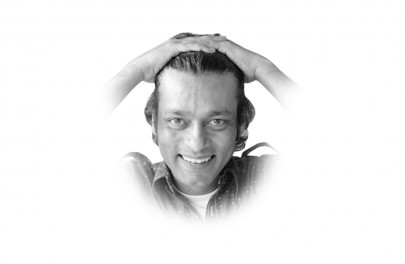
			<media:description>The writer is currently a visiting fellow at INSEAD</media:description>
			<media:thumbnail url="http://i1.tribune.com.pk/wp-content/uploads/2012/05/383203-AvirookSenNew-1337795742-584-160x120.jpg" width="160" height="120" />
      </media:content>

		<wfw:commentRss></wfw:commentRss>
		<slash:comments>10</slash:comments>
	</item>
	
</channel>
</rss>
<!-- Performance optimized by W3 Total Cache. Learn more: http://www.w3-edge.com/wordpress-plugins/

Page Caching using apc
Database Caching 19/47 queries in 0.043 seconds using memcached
Object Caching 1421/1597 objects using apc

 Served from: tribune.com.pk @ 2013-05-22 01:52:22 by W3 Total Cache -->