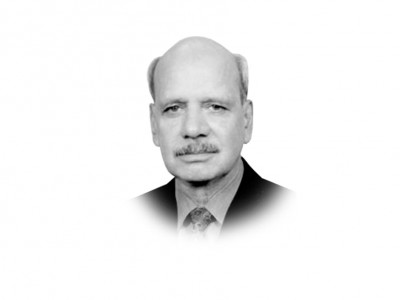
<?xml version="1.0" encoding="UTF-8"?>
<rss version="2.0"
	xmlns:content="http://purl.org/rss/1.0/modules/content/"
	xmlns:wfw="http://wellformedweb.org/CommentAPI/"
	xmlns:dc="http://purl.org/dc/elements/1.1/"
	xmlns:atom="http://www.w3.org/2005/Atom"
	xmlns:sy="http://purl.org/rss/1.0/modules/syndication/"
	xmlns:slash="http://purl.org/rss/1.0/modules/slash/"
	xmlns:media="http://search.yahoo.com/mrss/"
	>

<channel>
	<title>The Express Tribune &#187; Lt-Gen (r) Asad Durrani</title>
	<atom:link href="http://tribune.com.pk/author/1252/lt-gen-r-asad-durrani/feed/" rel="self" type="application/rss+xml" />
	<link>http://tribune.com.pk</link>
	<description>Latest Breaking Pakistan News, Business, Life, Style, Cricket, Videos, Comments</description>
	<lastBuildDate>Sun, 19 May 2013 15:46:14 +0000</lastBuildDate>
	<language></language>
	<sy:updatePeriod>hourly</sy:updatePeriod>
	<sy:updateFrequency>1</sy:updateFrequency>
	<generator>http://wordpress.org/?v=3.5.1</generator>

		<item>
		<title>It wasn’t about an apology</title>
		<link>http://tribune.com.pk/story/406321/it-wasnt-about-an-apology/</link>
		<pubDate>Tue, 10 Jul 2012 18:29:15 +0000</pubDate>

		<guid isPermaLink="false">http://tribune.com.pk/?p=406321</guid>

		<description>
		<![CDATA[
			<a href="http://tribune.com.pk/story/406321/it-wasnt-about-an-apology/">
				<img src="http://i1.tribune.com.pk/wp-content/uploads/2012/07/406321-AsadDurraniNew-1341940676-581-160x120.jpg" width="160" height="120" alt="" />
			</a>
			<p><p>Let us try to evolve a reasonably sound negotiating strategy, post-Salala incident. When the Nato forces killed over a dozen Pakistani soldiers on November 26 last year, we got a chance to <a href="https://www.google.com/url?q=http://tribune.com.pk/story/306560/finally-the-review/&amp;sa=U&amp;ei=gnH8T5CKC8qVmQXxrKWDBQ&amp;ved=0CAUQFjAA&amp;client=internal-uds-cse&amp;usg=AFQjCNFUzXjUDzk0iZlf_haO5m4ePVOXdw">review our terms of engagement with Washington</a>. Freezing logistic routes through our territory seemed the first obvious step. It had been done before.</p>
<p>Only a few weeks earlier, on November 7 in Istanbul, Pakistan along with others from the ‘gang of four’— Iran, China and Russia — had <a href="https://www.google.com/url?q=http://blogs.tribune.com.pk/tag/istanbul-conference-for-afghanistan/&amp;sa=U&amp;ei=N3L8T8XSGIiCmQW2jvWDBQ&amp;ved=0CA0QFjAE&amp;client=internal-uds-cse&amp;usg=AFQjCNHGFvL7Q2mBo9XI3kqqr1yycGT42w">foiled an American design to keep a long-term military presence in the region</a>. It is possible, therefore, that Salala was a warning — don’t repeat the mischief in the Bonn Conference. Boycotting the Conference that was scheduled for December conveyed the right message: <a href="https://www.google.com/url?q=http://tribune.com.pk/story/299848/bonn-conference-how-significant-is-pakistans-absence/&amp;sa=U&amp;ei=sHL8T6CZEOrKmQWBk8WuBQ&amp;ved=0CAsQFjAD&amp;client=internal-uds-cse&amp;usg=AFQjCNGaeywqeCDQQiIqM1afEocnzADYOQ">no more business as usual</a>.</p>
<p>Next, one had to think of a few tough benchmarks that could be ‘relaxed’ when the right deal was struck (opening positions are always compromised in a negotiated settlement). If President Barack Obama was unlikely to apologise in an election year, or if the US could not be ‘gouged’ for money, an apology and a multiple increase in the transit fees seemed to serve the purpose perfectly.</p>
<p>Talks could now start, indeed away from the public glare. But to help the process proceed without undue constraints and to ensure broad domestic support, one needed to become creative. One advantage of a democratic setup is that even though it is the executive’s domain, difficult decisions can always be fired from the shoulders of parliament. In this case, the parliamentary route would have additional benefits. If the negotiators needed more time, the committee constituted could be asked to go slow. And just in case the other side saw through the game and decided to call the bluff, say by <a href="https://www.google.com/url?q=http://tribune.com.pk/story/403045/isaf-commander-had-offered-a-personal-apology-over-salala-incident/&amp;sa=U&amp;ei=BHP8T8qyK7GCmQWX-fSpBQ&amp;ved=0CAUQFjAA&amp;client=internal-uds-cse&amp;usg=AFQjCNExuVUgVZ26xwimFtXHUIr2VO7VqQ">offering an apology </a>(not really the crux of the matter), it could be told to wait till the country’s supreme body completed its deliberations.</p>
<p>If an entity like the Difa-e-Pakistan Council (DPC) could rally the masses against reopening of the routes that could also help our position on the table. There was indeed the risk that in case of an unsatisfactory settlement, the streets would continue to remain alive. Someone, therefore, needed to establish the right leverage with the DPC.</p>
<p>Some deft exterior manoeuvre would obviously be useful. Mercifully, relations with regional countries were on the mend. Post Jandullah, Iran had shown understanding. With Russia, the turnaround was remarkable. The Indian front had lately remained quiet but needed constant care. Of course, the US would exercise relentless pressure, twist our economic arm, unleash its powerful media and might even throw an odd spanner in our delicate relations with India and Iran. But then pressure management is the hallmark of this game. Two countries could help prevent the prickly relationship with the US going over the edge: Saudi Arabia and the UK.</p>
<p>The most crucial part of the process was the assessment of the best possible or the best available deal, and when it could be clinched. Some of us had started getting nervous pretty early in the game; others favoured hanging tough till the other side grovelled on its knees. The golden rule is that neither side leaves the room red-faced; nor declare victory once outside.</p>
<p><a href="https://www.google.com/url?q=http://tribune.com.pk/story/403629/why-it-took-so-long-for-nato-supplies-to-reopen/&amp;sa=U&amp;ei=SHT8T6mjAaSLmQX4j9SRBQ&amp;ved=0CAcQFjAB&amp;client=internal-uds-cse&amp;usg=AFQjCNFgePDtMngQBY9OFd10KvjfzL6qLA">I have no idea if during the protracted stand-off Pakistan followed a chartered course or kept innovating.</a> But most of what happened, by design or by default, made eminent sense (the Chicago yatra did not, but then no one is perfect). All that was agreed upon behind the scenes was not likely to become public knowledge. Since the saga has not yet ended, that too, is the sensible thing to do.</p>
<p>What augurs well for the future rounds is that despite serious internal weaknesses, Pakistan held out longer than was expected.</p>
<p>And then there is always the DPC.</p>
<p><em>Published in The Express Tribune, July 11<sup>th</sup>, 2012. </em><em> </em></p>
</p>
			<br clear="all"/>
		]]>
		</description>

		<media:content width="424" height="318"
							isDefault="true" medium="image" url="http://i1.tribune.com.pk/wp-content/uploads/2012/07/406321-AsadDurraniNew-1341940676-581-640x480.jpg">
			<media:title>Asad Durrani New</media:title>
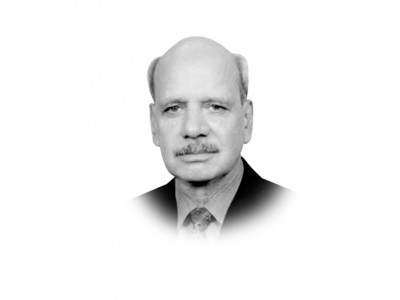
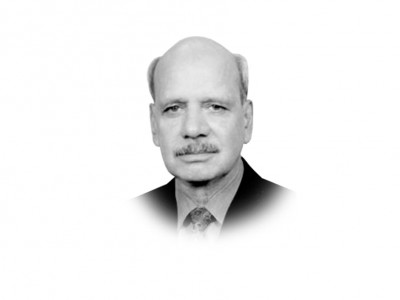
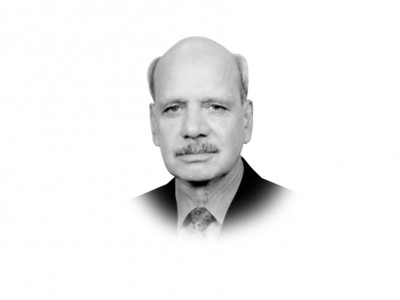
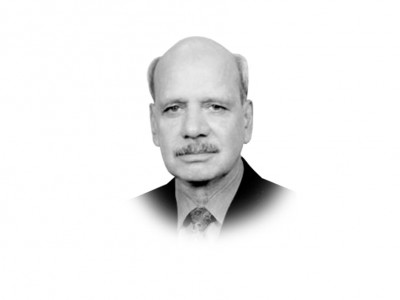
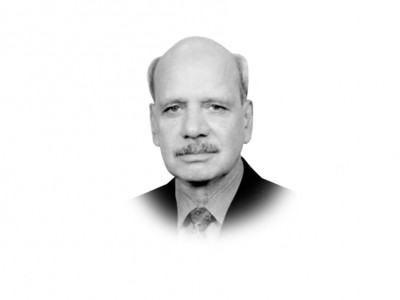
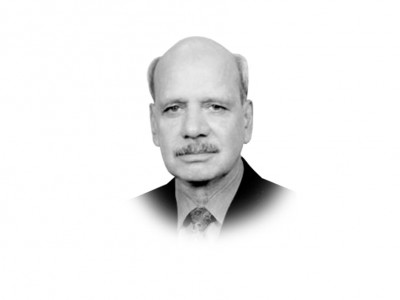
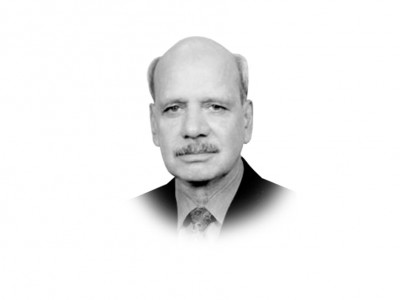
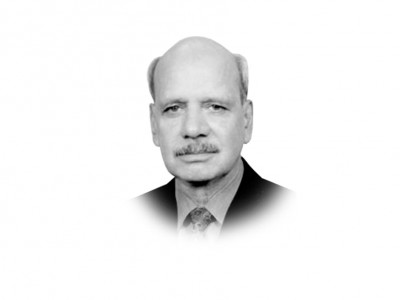
			<media:description>The writer served as director-general of the ISI from 1990-92
asad.durrani@tribune.com.pk</media:description>
			<media:thumbnail url="http://i1.tribune.com.pk/wp-content/uploads/2012/07/406321-AsadDurraniNew-1341940676-581-160x120.jpg" width="160" height="120" />
      </media:content>

		<wfw:commentRss></wfw:commentRss>
		<slash:comments>40</slash:comments>
	</item>
		<item>
		<title>The second oldest profession  </title>
		<link>http://tribune.com.pk/story/385780/the-second-oldest-profession/</link>
		<pubDate>Tue, 29 May 2012 16:55:14 +0000</pubDate>

		<guid isPermaLink="false">http://tribune.com.pk/?p=385780</guid>

		<description>
		<![CDATA[
			<a href="http://tribune.com.pk/story/385780/the-second-oldest-profession/">
				<img src="http://i1.tribune.com.pk/wp-content/uploads/2012/05/385780-AsadDurraniNew-1338305866-830-160x120.jpg" width="160" height="120" alt="" />
			</a>
			<p><p>And half as honourable, as someone rather unkindly added. After all, spying for one’s country, which has not infrequently washed the sins of many from the still older profession, cannot be all bad. Just look at the stakes. If nailed in hostile territory, one faced an uncertain fate. Even your own country might disown you, as well as the fact that in most lands the act carries the death penalty. All the same, there was some solace: one did it for the motherland. No salvation, however, if one was nabbed spooking for a foreign power; even it was the friendliest of all.</p>
<p>Israel is not just another US-friendly country. It can influence the foreign policy of the mightiest power in history, especially in the Middle East. What it cannot do is get its agents released from American prisons. <a href="http://en.wikipedia.org/wiki/Jonathan_Pollard">Jonathan Pollard</a>, a US citizen imprisoned in 1987 on charges of spying for Israel, still remains in the jug. The government in Jerusalem and their powerful allies in the US have tried all tricks, including ex post facto grant of Israeli citizenship, but to no avail. Another US national, <a href="http://tribune.com.pk/story/357692/receiving-funds-from-pakistan-us-court-sentences-dr-fai-to-2-years-in-jail/">Ghulam Nabi Fai</a>, was asked to cool his heals for failing to declare funds, allegedly received from the ISI to carry out one of the most legitimate con jobs in the US: lobbying for assorted causes. (Hope our compatriots on foreign payrolls regularly submit their returns!)</p>
<p>So, why so much fuss over <a href="http://tribune.com.pk/shakilafridi">Dr Shakil Afridi</a>! If he was involved in clandestine work on behalf of a foreign power, there was no way he could escape prosecution. If he did it for a common cause or for common good, that might have been relevant during the trial, or may make a difference in times to come. (Yes, there is always life after a trial, unlike in cases like Osama’s, where one is executed without even a formal charge.) I do not know if Afridi should have been tried by a jirga or in a court of law, under tribal decree or under the country’s penal code, but I do know that for him, it is not yet all over.</p>
<p>Espionage — like prostitution and war, and unlike politics — has been long enough in business to have evolved a working code of conduct (even a code of ethics). With hundreds of thousands of secret agents snooping all around the globe, a good number of them are very likely to land themselves in trouble. They are not only of great value back home, but are also a prize catch for the hosts. No doubt they would be made to cough out important information about their mission and more, but their real worth lies in their potential for a future exchange. Lest one forgets, the other side too was not solely relying on Peace Corps volunteers. I think Dr Afridi will get another chance to administer a polio vaccine; the next time in the Promised Land.</p>
<p>In the meantime, <a href="http://tribune.com.pk/story/383895/clinton-condemns-afridi-conviction/">those who complain that his sentence, 33 years in jail, was too harsh</a> for the crime committed — treason — may like to think again. It is of course possible that some of them also protested when a frail Dr Afia Siddiqui was charged with attempting to disarm a platoon of crack GIs, and sentenced to 86 years behind the bars. If she did in fact commit the act, she was either out of her mind and, therefore, unfit for a court trial, or a woman of great courage. In the UK, assuming that the British still retain some of the traits that helped them create the largest empire in history, a sporting judge would have bestowed upon her a Victoria Cross.</p>
<p>Now that we have owned the WOT as our war, we may also start owning up our heroes and swap them with theirs. It would be nice to award a Nishan-e-Haider to someone still alive, and a female at that!</p>
<p><em>Published in The Express Tribune, May 30<sup>th</sup>, 2012.</em></p>
</p>
			<br clear="all"/>
		]]>
		</description>

		<media:content width="424" height="318"
							isDefault="true" medium="image" url="http://i1.tribune.com.pk/wp-content/uploads/2012/05/385780-AsadDurraniNew-1338305866-830-640x480.jpg">
			<media:title>Asad Durrani New</media:title>
			<media:description>The writer served as director-general of the ISI from 1990-92
asad.durrani@tribune.com.pk</media:description>
			<media:thumbnail url="http://i1.tribune.com.pk/wp-content/uploads/2012/05/385780-AsadDurraniNew-1338305866-830-160x120.jpg" width="160" height="120" />
      </media:content>

		<wfw:commentRss></wfw:commentRss>
		<slash:comments>46</slash:comments>
	</item>
		<item>
		<title>The chance we did not miss</title>
		<link>http://tribune.com.pk/story/383733/the-chance-we-did-not-miss/</link>
		<pubDate>Thu, 24 May 2012 19:48:52 +0000</pubDate>

		<guid isPermaLink="false">http://tribune.com.pk/?p=383733</guid>

		<description>
		<![CDATA[
			<a href="http://tribune.com.pk/story/383733/the-chance-we-did-not-miss/">
				<img src="http://i1.tribune.com.pk/wp-content/uploads/2012/05/383733-AsadDurraniNew-1337880818-658-160x120.jpg" width="160" height="120" alt="" />
			</a>
			<p><p>How things have changed between the US and Pakistan? Only a year ago, if someone like David Ignatius, a reputed opinion-maker on the American strategic circuit, had admonished us, we would all have scrambled to the nearest bomb shelter. When he did so on the <a href="http://www.washingtonpost.com/opinions/pakistan-blew-its-chance-for-security/2012/05/16/gIQAdnRfUU_story.html">17<sup>th</sup> of May, through the good offices of <em>The Washington Post</em></a>, no one here seems to have noticed. He argues, rather ingeniously, that Pakistan failed to exploit Nato’s presence in the region to clobber its tribal areas into the mainstream; and thus missed the chance of a lifetime. Since the thesis has failed to cause any rumpus in our country, prudence demands that it should be ignored. Some of us have the impudence not to let go.</p>
<p>Let’s assume that we could have tamed these wild tribesmen with help from our allies (we are still on the ‘<a href="http://en.wikipedia.org/wiki/Major_non-NATO_ally">Major Non-Nato</a>’ list). With Pakistan’s writ in the frontier regions then becoming as good as it is in Karachi and Balochistan, an opportunity indeed seems to have been lost. But there still is room for a consolation prize, perhaps even more gratifying because of its sheer enormity. The presence of the world’s mightiest alliance in Afghanistan gave us another chance as well: to gang-up with the tribesmen, once again, and defeat yet another superpower. <a href="http://www.google.com/url?q=http://tribune.com.pk/story/381349/two-victors-under-pressure/&amp;sa=U&amp;ei=OIy-T_CoCYWhmQW_ydFC&amp;ved=0CAkQFjAC&amp;client=internal-uds-cse&amp;usg=AFQjCNESM_xt8a4s11rnmZMTEz8caXGMkg">That is the chance we did not miss</a>. It may not be all for the good, but it feels good to think about it.</p>
<p>But before being carried away by some amorphous notions of victory, let’s take another look at Mr Ignatius’s thesis. He has obviously read all about the British failures to pacify these ‘badlands’ and, therefore, seems to understand that a soft approach is not going to work. With their kith and kin fighting an occupation across the borders, our tribesmen were not likely to respond kindly to our pleas not to join the battle, or abandon their obligations just because at that very time we thought of taking up the unfinished agenda of their special status.</p>
<p>Mr Ignatius, therefore, suggests a more kinetic, or ballistic, approach to bring them around.</p>
<p>He believes “modern communications and transportation” would have accomplished what the British could not. He knows, of course, that all this fancy stuff did not help “the most potent army in history” to alter the ways of the Afghans, but still believes that Pakistan could do it better; because it is such a “wonderful nation”. Right now I am only wondering, why he and the West are so obsessed with the status of our tribal areas!</p>
<p>If it is to establish the writ of the government, then let me remind them that even if it existed anywhere else in the country, like in Karachi, Rawalpindi or Abbottabad, it has only helped those seeking safe havens. The ‘lawlessness’ of these areas, considering that their laws are implemented more strictly and equitably than ours, I suspect, is more like giving the dog a bad name before it is hanged.</p>
<p>Failure in Afghanistan may be due to flawed American strategies, or because the Afghans resist till the bitter end, or possibly a consequence of Pakistani support for the Taliban; the <a href="http://www.google.com/url?q=http://tribune.com.pk/story/264858/us-using-pakistan-as-a-scapegoat-for-failure-in-afghanistan-musharraf/&amp;sa=U&amp;ei=p4--T8-ONZCZmQXF8pA8&amp;ved=0CA0QFjAE&amp;client=internal-uds-cse&amp;usg=AFQjCNE_3-UYiA-BdOs6I34m57SDjpx_Eg">desire to embroil Pakistan</a> in a war with its tribesmen, and in due course also with the Afghans, is understandable. This deadly nexus that has made a habit of taking on superpowers, at times even getting away with pretensions of victory, must be busted.</p>
<p>Let me cast the first prick, though only to deflate the pretension part. Resistance by the Mujahideen may have precipitated the Soviet downfall; the implosion of the empire had long been underway. The Taliban might have received help from the Pakistani side of the Durand Line, but that was not decisive. America was defeated in Afghanistan by the American Army. More about that some other time.</p>
<p><em>Published in The Express Tribune, May 25<sup>th</sup>, 2012.</em></p>
</p>
			<br clear="all"/>
		]]>
		</description>

		<media:content width="424" height="318"
							isDefault="true" medium="image" url="http://i1.tribune.com.pk/wp-content/uploads/2012/05/383733-AsadDurraniNew-1337880818-658-640x480.jpg">
			<media:title>Asad Durrani New</media:title>
			<media:description>The writer served as director-general of the ISI from 1990-92 
asad.durrani@tribune.com.pk</media:description>
			<media:thumbnail url="http://i1.tribune.com.pk/wp-content/uploads/2012/05/383733-AsadDurraniNew-1337880818-658-160x120.jpg" width="160" height="120" />
      </media:content>

		<wfw:commentRss></wfw:commentRss>
		<slash:comments>59</slash:comments>
	</item>
		<item>
		<title>Strategic depth — revisited</title>
		<link>http://tribune.com.pk/story/277418/strategic-depth--revisited/</link>
		<pubDate>Wed, 19 Oct 2011 17:58:48 +0000</pubDate>

		<guid isPermaLink="false">http://tribune.com.pk/?p=277418</guid>

		<description>
		<![CDATA[
			<a href="http://tribune.com.pk/story/277418/strategic-depth--revisited/">
				<img src="http://i1.tribune.com.pk/wp-content/uploads/2011/10/277418-AsadDurraniNew-1319034669-901-160x120.jpg" width="160" height="120" alt="" />
			</a>
			<p><p>Old friend and once a comrade-in-arms, <a href="http://tribune.com.pk/author/1344/ejaz-haider/">Ejaz Haider</a> could obviously take it no more. Fed up with the unrelenting war on strategic depth, unleashed even before the one on terror, he told off the hecklers to go first understand what the concept was all about in his article “<a href="http://tribune.com.pk/story/268921/pakistan-needs-strategic-depth/">Pakistan needs strategic depth</a>”, published on these pages on October 7. He need not have bothered, because it is not the notion that they are gunning for, but our Afghan policy.</p>
<p>Indeed, a <a href="http://tribune.com.pk/story/273270/aiders-and-abettors/">great deal has been stated about its fallout</a>: proliferation of drugs and weapons; more violence in the region; millions of refugees constantly on the move; three decades of war (still counting); and much else. So, in case one was wondering why an innocent sounding concept had to be given a bad name to kill a dog already under fire, there just might have been a reason: to ascribe motives that otherwise could not be.</p>
<p>That we wanted to occupy Afghanistan and make it our fifth province, for example! After what happened to some of the mightiest who tried, no one in his right mind and certainly not the collective decision-making apparatus gave it another thought. But then we must have <a href="http://tribune.com.pk/story/265928/which-road-to-take/"><em>at</em> <em>least</em> wanted to install a ‘friendly government’ in Kabul</a> (to secure this depth of course)! Yes; if only one knew how, and then keep all others who followed in line. After the Saur Revolution, the Soviets executed an <em>installed</em> president every three months in pursuit of that objective, till in frustration they moved in — and became history.</p>
<p>Frankly, it is futile to argue when the hammer has already fallen. Thereafter, any distortion of a concept or of history, as long as it adds to the gravity of the charge and severity of the punishment, is kosher. We are supposed to have fought ‘America’s proxy war’ in Afghanistan. That we took the plunge when the Yanks were still counting peanuts did not impress our nemesis; or for that matter the plea that, <em>even if we did</em>, we too might have had an interest in the Soviet withdrawal. And just in case any of us dared to suggest that some price had to be paid to achieve this sublime objective, the retort is ingenious: ‘but that was not a very smart idea; it destroyed the global balance of power and now the sole surviving superpower is running amok’.</p>
<p>Not to worry; the imbalance is being redressed, the US has already started suffering from Imperial Overstretch, and we are doing all that we can with help from the usual suspects. Our friends would still not relent: ‘revisit your Afghan policy’ is their constant refrain; without ever suggesting a coherent alternative. In the meantime, I have to pick up the thread from where Ejaz Haider had left.</p>
<p>Strategic depth, within and without, is of course the need of every country. ‘Friendly neighbourhood’, ‘near abroad’, and buffers are some of the more familiar variants — serving more or less the same purpose. And of course it is not merely a spatial concept (Israel has it in the US), it is also economic, political (alliance building), and is best provided by unity within. Now that Poland’s overtures towards Ukraine have been described by Stratfor as pursuit of strategic depth, maybe this doctrine can be placed in its right perspective.</p>
<p>If not, we might be tempted to use it for the ulterior motives we are being suspected of: nurturing the Haqqanis et al as our strategic assets against the archrival. The idea is attractive, but for a problem: the Afghans do not fight outside their country. We will therefore have to persuade India to give us a battle in Afghanistan. Next time the Indians come charging, we will simply get out of the way, and before one can say ‘too little depth’ they will be in Afghanistan. Well, isn’t that where all elephants go when their time comes?</p>
<p><em>Published in The Express Tribune, October 20<sup>th</sup>, 2011.</em></p>
</p>
			<br clear="all"/>
		]]>
		</description>

		<media:content width="424" height="318"
							isDefault="true" medium="image" url="http://i1.tribune.com.pk/wp-content/uploads/2011/10/277418-AsadDurraniNew-1319034669-901-640x480.jpg">
			<media:title>Asad Durrani New</media:title>
			<media:description>The writer served as director-general of the ISI from 1990-92
asad.durrani@tribune.com.pk </media:description>
			<media:thumbnail url="http://i1.tribune.com.pk/wp-content/uploads/2011/10/277418-AsadDurraniNew-1319034669-901-160x120.jpg" width="160" height="120" />
      </media:content>

		<wfw:commentRss></wfw:commentRss>
		<slash:comments>49</slash:comments>
	</item>
		<item>
		<title> Afghanistan after Rabbani</title>
		<link>http://tribune.com.pk/story/260825/afghanistan-after-rabbani/</link>
		<pubDate>Mon, 26 Sep 2011 17:01:38 +0000</pubDate>

		<guid isPermaLink="false">http://tribune.com.pk/?p=260825</guid>

		<description>
		<![CDATA[
			<a href="http://tribune.com.pk/story/260825/afghanistan-after-rabbani/">
				<img src="http://i1.tribune.com.pk/wp-content/uploads/2011/09/260825-AsadDurraniNew-1317048436-404-160x120.jpg" width="160" height="120" alt="" />
			</a>
			<p><p>I do not know <a href="http://tribune.com.pk/story/258574/rabbani-murder-afghan-intelligence-pins-assassination-on-quetta-shura/">who killed Professor Rabbani</a>, the former president of Afghanistan. If someone had taken responsibility it would have helped — even though at times credit is claimed on ulterior grounds. A few reasonably known factors may, however, help make a tentative assessment about who might have <a href="http://tribune.com.pk/story/256483/afghan-peace-council-head-burhanuddin-rabbani-killed-in-kabul-bombing/">done it</a>; more importantly, what follows next.</p>
<p>Asking <a href="http://tribune.com.pk/story/256896/profile-man-of-peace/"><em>Ustad</em> (the teacher) Rabbabni</a>, a Tajik, to head the High Peace Council to start a peace process with the Afghan resistance was wise. It was a signal to the predominantly Pashtun militias that the non-Pashtun North was also on board. Indeed, not everyone in the north, or in the south, was. Some, like Dr Abdullah Abdullah, a former Foreign Minister, believed that talking to the Taliban was futile. Some others stood to benefit from the status quo. Though possible, it is unlikely that anyone of them was behind the assassination.</p>
<p>The Taliban appear to be the main suspect and may have had some motive as well. Besides being old adversaries — they removed the Rabbani led government in 1995 — some of them feared that <em>Ustad’s</em> efforts to reach out to them were aimed to split the movement. If it was, therefore, a Taliban sponsored act, it was extremely foolish. Since only a broad-based agreement ensures peace and stability in Afghanistan, eliminating Rabbani who once led the largest multi-ethnic party in the country, makes reconciliation amongst diverse Afghan groups even more difficult than it normally would be.</p>
<p>Long before the US conceded that the Taliban had to be engaged in a dialogue, the late president had publicly opposed the use of force against them. Yet another factor that made him an ideal interlocutor for the Taliban was his insistence that there could be no peace in Afghanistan till the occupation was vacated. His opposition to the ‘strategic agreement’, reportedly being negotiated between Washington and Kabul to grant the former, the right to maintain operational basis beyond 2014, was well known.</p>
<p>That places America on the ‘whodunit’ list too. Admittedly, there is no circumstantial evidence that there was a hidden Yankee hand. Their desire to <a href="http://tribune.com.pk/story/258060/taliban-tactics-show-weakness-panetta/">pin the crime on the latest emerging superpower, the Haqqani network</a>, however, was all too evident. Almost all Western analysts and commentators, after conceding that the evidence was lacking, could not help blurting out that “it looked like” a Haqqani handiwork. (Reminds me of a pre-Mumbai terrorist act in India, when many experts from the other side warned against jumping to conclusion, but then suggested that it was the “Lashkar” as in the LeT.)</p>
<p>For most of us, this nitpicking is superfluous. We already know the perpetrators: the ones we hate the most. What must, however, concern us deeply are the likely developments post Rabbani. That it would take <a href="http://tribune.com.pk/story/257683/situationer-rabbani-murder-ruptures-reconciliation-process/">quite a while before the intra-Afghan dialogue could resume</a>, assuming of course, that it had started in the first place, is no big deal. Afghans take their time. It is the argument that Afghanistan was best served by another Durand Line — this time along the Hindukush — which we now must take more seriously.</p>
<p>Our main argument against a possible North-South divide in Afghanistan — besides none of its neighbours relish the prospect — has always been that all Afghan factions were passionately nationalist. One is not sure if such noble sentiments survive all odds. The late colonel Yahyah Effendi, an accomplished historian in his own right and whose views I value more than the current cartographic strategists, had started smelling a rat more than a decade ago.</p>
<p>The Soviets toyed with the idea when their withdrawal was imminent. Mujahideen dissuaded them. If the Americans, in view of their bases located north of a convenient divide, were also thinking about it, I wonder if we in the region are giving some thought on how to best scuttle this design.<em></em></p>
<p><em>Published in The Express Tribune, September 27<sup>th</sup>,  2011.</em></p>
</p>
			<br clear="all"/>
		]]>
		</description>

		<media:content width="424" height="318"
							isDefault="true" medium="image" url="http://i1.tribune.com.pk/wp-content/uploads/2011/09/260825-AsadDurraniNew-1317048436-404-640x480.jpg">
			<media:title>Asad Durrani New</media:title>
			<media:description>The writer served as director-general of the ISI from 1990-92
asad.durrani@tribune.com.pk </media:description>
			<media:thumbnail url="http://i1.tribune.com.pk/wp-content/uploads/2011/09/260825-AsadDurraniNew-1317048436-404-160x120.jpg" width="160" height="120" />
      </media:content>

		<wfw:commentRss></wfw:commentRss>
		<slash:comments>15</slash:comments>
	</item>
		<item>
		<title>Hindsight is 10/10  </title>
		<link>http://tribune.com.pk/story/249463/hindsight-is-1010/</link>
		<pubDate>Sat, 10 Sep 2011 18:35:53 +0000</pubDate>

		<guid isPermaLink="false">http://tribune.com.pk/?p=249463</guid>

		<description>
		<![CDATA[
			<a href="http://tribune.com.pk/story/249463/hindsight-is-1010/">
				<img src="http://i1.tribune.com.pk/wp-content/uploads/2011/09/249463-AsadDurraniNew-1315666055-667-160x120.jpg" width="160" height="120" alt="" />
			</a>
			<p><p>There is something eerie about these 10-year cycles. The mythology of dry and wet decades goes back to biblical times. Closer in time and space, civilian and military rulers have changed rounds every 10 or so years in Pakistan. When the Soviet Union fell apart in the autumn of 1991, the United States rightly claimed that the world was now unipolar and declared an ‘American Century’. Precisely in 10 years, a nearly unknown entity called al Qaeda had the nerve to take on the ‘sole surviving superpower’. A decade later, with many of us trying to figure out how this upstart has fared, I suspect that it did not do too badly. No wonder that the Arabs, enamoured by astrology, invented the figure of 10.</p>
<p>When Saddam invaded Kuwait in August 1990, the US seized the opportunity to test the emerging new order. The UN Security Council (UNSC) was asked to sanction the use of force to evict the Iraqi forces. It readily obliged — with the Soviet Union (in death throes) and China, both of whom might have demurred in the bygone bipolar era, meekly falling in line. Having vacated the occupation and proven who was now the big boss, the US ignored the world body when imposing sanctions or no-fly-zones over Iraq.</p>
<p>Europe, too, remained pathetically dependent on American leadership, even when putting out fires in its backyard. It needed the Big Brother, who indeed did not need the UNSC, to come bomb the Serbs in Bosnia and Kosovo. But then, no worldly power is omnipotent. Defiant powers like Cuba and Iran also survived, India and Pakistan got away with their nuclear impertinence and China continued its long march towards one day posing a serious challenge to American hegemony.</p>
<p>Post-9/11, the Security Council was once again needed to permit (an open-ended!) use of force to bring the perpetrators of this monstrosity to book, and was once again ignored thereafter. It did grant ex post facto sanction when the US ordered its Nato underlings to the Afghan front, but when it showed reluctance to rubber-stamp the invasion of Iraq, the US and its poodles went charging regardless. The difference this time around is that this unrelenting approach has cost the wounded superpower dearly.</p>
<p>According to conventional wisdom, an insurgency or a resistance wins merely by not losing. The US has thus lost both in Afghanistan and in Iraq. (Those not impressed by military bywords may consult former CIA and MI5 big guns.) And there is little chance that it can come out, especially from Afghanistan, in good shape. It may not care much for finer things like ‘world opinion’; however, the deficit is fast becoming critical. The two misadventures alone may not have gotten the US in its current financial woes; but they still cost a few trillion dollars. The only consolation it can savour is that there was precious little it could do to avert the great fall.</p>
<p>If the aim was to round up the al Qaeda top leadership, a little more persuasion with the Taliban or use of covert means with the war option held in reserve could have paid more dividends. But the thought never crossed an American mind. A people raging mad at the violation of their safe sanctuary could only find solace in a swift and spectacular response: why else did we create this expensive war machine? The problem is that once created, this infernal machine acquires a life of its own.</p>
<p>Capturing Kabul or securing big cities in Afghanistan was never a big deal for the invading armies (what happens later is another matter). That the Taliban regime could be toppled in short order was therefore no surprise. What must have surprised or dismayed many of us was the extension of war to Iraq. Considering, however, that all empires, when intoxicated by power, overextend and meet the fate of their predecessors, this too had to happen. If it came too soon in the present case, the acceleration of the process may have been a joint venture.</p>
<p>Osama bin Laden’s claim that he would exhaust America by making it run in circles, if true, could not have been accomplished without some inside help from those who benefit from wars. Their greed may be one reason that the US, despite facing default, is sinking billions of dollars to train the Afghan Army for a role that it never has and never can fulfil, or is fortifying military bases that are the main obstacle for a political settlement! The predilection of power to exhaust all options before doing the right thing (it was Churchill who said that) has — inevitably again — led the US to dig deeper in the Afghan hole, and to a state of war (low-intensity, but still a war) with what was once fatuously called its frontline ally — Pakistan.</p>
<p>But then, that too was on the cards with both sides pursuing divergent objectives and different strategies. It doesn’t really matter what America’s initial, subsequent, or evolving interests were, they could not be reconciled with those of Pakistan. Wars in Afghanistan inevitability spill over the Durand Line: for demographic, topographic, perhaps also historic reasons. Pakistan, therefore, pleaded non-use of force, but then succumbed to using some of its own by starting a military operation in South Waziristan, again when better choices were available. It is now desperately resisting any further use and, along with Kabul, is thus the perfect scapegoat for Washington’s inability to finish the job.</p>
<p>And what about al Qaeda that started it all? It is possible that it no longer exists as a coherent entity but it is still useful. The US can rationalise its military presence in the region since its nemesis was still alive and kicking in Pakistan. Any militant group can claim to be its affiliate and strike terror in the hearts of its enemies. Regimes like Qaddafi’s can staple this brand on their adversaries to justify repression. Its remnants can be moved to Yemen or Somalia to send us all chasing shadows. That makes it another superpower, even if of a different kind: nebulous or perceived; but a superpower all the same. That also serves a purpose. On the 10<sup>th</sup> anniversary of the attacks, the US can declare victory: its rivals could not do another 9/11.</p>
<p><em> </em></p>
<p><em>Published in The Express Tribune, September 11<sup>th</sup>, 2011.</em></p>
</p>
			<br clear="all"/>
		]]>
		</description>

		<media:content width="424" height="318"
							isDefault="true" medium="image" url="http://i1.tribune.com.pk/wp-content/uploads/2011/09/249463-AsadDurraniNew-1315666055-667-640x480.jpg">
			<media:title>Asad Durrani New</media:title>
			<media:description>The writer served as director-general of the ISI from 1990-92
asad.durrani@tribune.com.pk</media:description>
			<media:thumbnail url="http://i1.tribune.com.pk/wp-content/uploads/2011/09/249463-AsadDurraniNew-1315666055-667-160x120.jpg" width="160" height="120" />
      </media:content>

		<wfw:commentRss></wfw:commentRss>
		<slash:comments>37</slash:comments>
	</item>
		<item>
		<title> The battle of Karachi  </title>
		<link>http://tribune.com.pk/story/243568/the-battle-of-karachi/</link>
		<pubDate>Fri, 02 Sep 2011 16:46:25 +0000</pubDate>

		<guid isPermaLink="false">http://tribune.com.pk/?p=243568</guid>

		<description>
		<![CDATA[
			<a href="http://tribune.com.pk/story/243568/the-battle-of-karachi/">
				<img src="http://i1.tribune.com.pk/wp-content/uploads/2011/09/243568-AsadDurraniNew-1314974300-756-160x120.jpg" width="160" height="120" alt="" />
			</a>
			<p><p>The unipolar world was out of plumb. Mercifully, it is regaining balance. Now, when America sneezes the rest of the world was is not likely to catch a cold. Barely averting default, the only consolation that the <a href="http://tribune.com.pk/story/241425/economic-leaders-fear-policy-paralysis/">US can hope for is that it takes the euro down with it.</a> Too bad, the Brits, the chronic balancers of power, will once again be gleefully watching from the bank. Too bad, that the metaphor remains relevant to Pakistan: “when Karachi convulses, the upcountry gasps for breath”.</p>
<p>The megacity has many attributes: a microcosm of Pakistan; foreigner-friendly, the largest Pashtun city in the meantime; once the most favourite staging post for all airlines; and much else. But it has a big chink in its armour: it <a href="http://tribune.com.pk/story/238948/karachi-killings-mqm-protests-target-killings/">can be paralysed by a single call</a>; by the MQM. Even Edhi, the ultimate humanitarian, with that clout would cause discomfort to his detractors. A political party can use this ability to dictate terms, also to its allies.</p>
<p>No wonder there were so many attempts to dilute MQM’s predominance in Karachi. <a href="http://en.wikipedia.org/wiki/Muttahida_Qaumi_Movement#1990.E2.80.931999">Two of them were serious</a>. In 1992, when the party was part of the ruling alliance both at the centre and in the province, an army-backed drive was mounted against its command and control echelons. It was aborted on the orders of the president (and the Commander-in-Chief), Ghulam Ishaq Khan. A great balancer of power in his own right, he didn’t like the scales tilting too heavily in the Pakistan Peoples Party’s (PPP) favour. In 1996, the latter now in power, launched an ‘intelligence’ operation to cut its nemesis to size. This also fizzled out when the government was dismissed by its own president (and the C-in-C) later in the year.</p>
<p>This time around it is more complex. For one thing, the large influxes of Pashtuns in the city have helped the Awami National Party (ANP) — tottering on its home ground — field itself as the third political pole. With assorted groups of various sectarian and ideological hues who have emerged all over the country and criminal gangs always game to fish in troubled waters, the battlefield of Karachi is pretty overcrowded. Consequently, and possibly because the PPP now has some street-smart leaders, the MQM seems under sufficient pressure to plead for military intervention. The ANP, too, is desperately seeking the army’s help; for reasons more obvious. In pursuit of livelihood the Pashtuns spread out in the city which makes them vulnerable and, indeed, most of them being daily wage-earners are hit harder by the turmoil.</p>
<p>The<a href="http://tribune.com.pk/story/236776/curbing-dangerous-talk-gilani-rules-out-army-deployment-despite-searing-violence-in-karachi/"> PPP’s reluctance to call in the army</a>, too, is understandable. For one thing, it believes that the developments on ground were weakening the MQM and there may just be a chance to break the latter’s monopoly on power; a twice eluded prize. More importantly, it fears that a military operation — even handed as it must be — would also target the ruling party’s goons and restore the status quo ante. The MQM thus salvaging it’s stranglehold over the country’s lifeline. The stakes in the battle for Karachi are high. In 1990, the PPP’s insistence on a selective crackdown cost the party its power in Islamabad.</p>
<p>But the present party leadership with all its ailments is anything but suicidal. The instinct to survive and brinkmanship are probably its only assets. Before going over the brink, it may recall its dogs of war or call in the ‘marines’ (our own, of course; the others have had enough elsewhere). Neither can do more than end the violence. Finding a balanced dispensation, without which this mother-in-law of all cities will remain on the edge, must remain a political call. What model would suit its genius? An agreed power sharing formula like in Lebanon! Governor rule for a few years! A page from the frontier treaties to ensure security of passage and routes! There may be other and better choices.<em></em></p>
<p><em>Published in The Express Tribune, September 3<sup>rd</sup>, 2011.</em></p>
</p>
			<br clear="all"/>
		]]>
		</description>

		<media:content width="424" height="318"
							isDefault="true" medium="image" url="http://i1.tribune.com.pk/wp-content/uploads/2011/09/243568-AsadDurraniNew-1314974300-756-640x480.jpg">
			<media:title>Asad Durrani New</media:title>
			<media:description>The writer served as director-general of the ISI from 1990-92
asad.durrani@tribune.com.pk</media:description>
			<media:thumbnail url="http://i1.tribune.com.pk/wp-content/uploads/2011/09/243568-AsadDurraniNew-1314974300-756-160x120.jpg" width="160" height="120" />
      </media:content>

		<wfw:commentRss></wfw:commentRss>
		<slash:comments>26</slash:comments>
	</item>
		<item>
		<title>Preparing for a revolution? </title>
		<link>http://tribune.com.pk/story/236978/preparing-for-a-revolution/</link>
		<pubDate>Mon, 22 Aug 2011 17:11:25 +0000</pubDate>

		<guid isPermaLink="false">http://tribune.com.pk/?p=236978</guid>

		<description>
		<![CDATA[
			<a href="http://tribune.com.pk/story/236978/preparing-for-a-revolution/">
				<img src="http://i1.tribune.com.pk/wp-content/uploads/2011/08/236978-AsadDurraniNew-1314020818-286-160x120.jpg" width="160" height="120" alt="" />
			</a>
			<p><p>The urge to do something is an old one. Some people got going with whatever they could. In due course, a free clinic became a charitable chain and a class under a tree, a university of repute. Others, eager to make history, are still waiting for greatness to be thrust on them. All the same, when a couple of youth groups sought advice on what they could do to save the country, one did not have the heart to tell them that they had only taken the first step of a journey that was of a thousand miles. Their vernal exuberance did not seem amenable to such Chinese pearls from me. Moreover, these days they can cite precedence for changes made in quick time.</p>
<p>A mass movement right in our midst, which had the higher judiciary restored and toppled a military ruler, did not take a lifetime and a barely-breathing <a href="http://tribune.com.pk/story/227596/syrias-hapless-arab-spring/">Arab world sprang back to life</a> with as little as a pint of oil. So how about reviving the Pakistani streets while we still have some life and, indeed, some oil? Now, if anyone knows how to kick-start movements and revolutions, this is the time to tell. I only know that if they did come about, the best prepared groups have the best chance to steer them. The problem is how to get ready for the role.</p>
<p>Militaries spend a lifetime preparing for wars that take a random course, but seldom get them right, not even in golfcourse-size Grenada, according to award-wining US investigative journalist Seymour Hersh. So what chance do these primed-for-action recruits have when faced with revolutions that are more chaotic than wars? Quite a good one actually. For one thing, they only have to do “what they can” as suggested by Ibrahim Khan on these pages, in his August 20 article, “<a href="http://tribune.com.pk/story/235146/looking-for-a-leader/">Looking for a leader</a>”.</p>
<p>Those who have faith in the power of the pen, can write; others may learn the use of sound bites and create a niche in the electronic media that has pretensions of power. Since the <a href="http://tribune.com.pk/story/187080/citizen-journalism-international-bloggers-network-in-karachi-at-first-ever-social-media-summit/">youth is already into tweeting</a>, which can mobilise masses in times of need, we have that base covered. And, of course, there was always something more exciting for the young to do in a community. Since the deadwood no longer seemed to care, the still-alive vigilantes were best suited to knock some sense in the rascals, scions of the rich and the powerful, who would wreck misery in the neighbourhood.</p>
<p>The list can be open-ended, but the real question is how these acts would help the youth turn the corner? Well, if they networked, the potential would synergise. The real benefit, however, lies elsewhere.</p>
<p>If one has spent some time in the armed forces and passed through staff and defence colleges, one can fairly assume that one was now a strategist. Such airs were quickly deflated when a Bedouin from the Desert refused to be impressed: “No need for any strategy; we all know what we have to do”. In strategic terms, it is called the ‘rider’; something that has to be done in any case.</p>
<p>Having done the rider, if a straw still broke the camel’s back, the youth brigade would be well positioned to cope with the aftermath. If it did not — and the Pakistani camels are pretty strong — our young Turks could rightfully claim credit for having played their part. More importantly, when the country needed them, they would not be passively standing by.</p>
<p>There is, however, a caveat. If our malaise cannot be redressed short of a revolution, this activism may ward off the tipping point. If that is good or bad, I do not know. But then strategy is about making choices and that choice is best left to our youth — over 50 per cent of our population, and with the most to lose if the rot continues.</p>
<p><em> </em></p>
<p><em> </em></p>
<p><em> </em></p>
<p><em>Published in The Express Tribune, August 23<sup>rd</sup>, 2011.</em></p>
</p>
			<br clear="all"/>
		]]>
		</description>

		<media:content width="424" height="318"
							isDefault="true" medium="image" url="http://i1.tribune.com.pk/wp-content/uploads/2011/08/236978-AsadDurraniNew-1314020818-286-640x480.jpg">
			<media:title>Asad Durrani New</media:title>
			<media:description>The writer served as director-general of the ISI from 1990-92
asad.durrani@tribune.com.pk</media:description>
			<media:thumbnail url="http://i1.tribune.com.pk/wp-content/uploads/2011/08/236978-AsadDurraniNew-1314020818-286-160x120.jpg" width="160" height="120" />
      </media:content>

		<wfw:commentRss></wfw:commentRss>
		<slash:comments>18</slash:comments>
	</item>
		<item>
		<title> When the army calls</title>
		<link>http://tribune.com.pk/story/190950/when-the-army-calls/</link>
		<pubDate>Fri, 17 Jun 2011 19:33:57 +0000</pubDate>

		<guid isPermaLink="false">http://tribune.com.pk/?p=190950</guid>

		<description>
		<![CDATA[
			<a href="http://tribune.com.pk/story/190950/when-the-army-calls/">
				<img src="http://i1.tribune.com.pk/wp-content/uploads/2011/06/Asad-Durrani-New1111111-134616-160x120.jpg" width="160" height="120" alt="" />
			</a>
			<p><p>Was glasnost (openness and transparency) the mainstay of the Soviet Reformation in the 1980s, or the main cause of its downfall? All I know is that its military edition was first launched by General Aslam Beg, who became our army chief after Zia. He was acclaimed as the godfather of democratic revival and known for his many proclamations on strategic matters. But none of that would have been possible without some perestroika (restructuring); a refurbished ISPR being an important part of it. With its brilliant new head, the late General Riazullah, the chief went around educating the people on an institution that occasionally rules over them. The new mouthpiece was well equipped to spread his words, and the army, well-versed in communications, made good use of it — often to the discomfiture of its civilian counterparts.</p>
<p>In January 1991, when America was raring to attack the Iraqis occupying Kuwait, General Beg delivered his famous treatise on ‘strategic defiance’. It stole the then prime minister Nawaz Sharif’s thunder, <a href="http://tribune.com.pk/story/188527/upholding-democratic-values-pml-n-lambasts-armys-meddling-in-politics/">who found no press to brief on his peace efforts</a> to defuse the crisis. Beg, however, rationalised that he was merely assuaging the public rage against the impending war. Empathising with people’s sentiments, since no one else cared, became the common thread of many a subsequent decree from the military’s pulpit. Even the most restrained of the chiefs, Jehangir Karamat, found this instrument useful. His address in the Naval Staff College — where he propounded the national security council concept to evolve consensus on national security — was, contrary to practice, released to the press. He lost his job but conveyed the message — that he went public with this proposal only after exhausting all other means.</p>
<p>Asif Nawaz, the quintessential soldier, did not believe in subtle messaging. When reminded of the fate of an earlier chief sacked for Bonapartist penchant, he threw the gauntlet to the military brass to face the consequences. He did not live long enough for either side to exercise its option. Pervez Musharraf, too, decided against the ISPR option. Post-Kargil, he protested that the government sponsored campaign was <a href="http://tribune.com.pk/story/178023/nuke-talk-pakistan-is-being-discriminated-against/">maligning the armed forces</a>, but giving media diplomacy a chance needed more patience than he had. Luckily for him, some unsubtle attempts to defang him provided the chance his team expected and awaited.</p>
<p>The present chief does not lack patience or subtlety, and is getting all the chances to put these qualities to good use. On the Kerry-Lugar bill, the ISPR release reminded one of JK’s desperation. When the in-house sessions failed to raise the necessary alarm, in the belief that involving the civil society in the debate might serve the purpose, the army deployed its PR brigade. Post-Bin Laden, the environment seems ripe for a long drawn public discourse. To kick it off, after the <a href="http://tribune.com.pk/story/185552/government-utilising-major-share-of-csf-funds-gen-kayani/">139th meeting of the military council</a>, we have received a working paper with over a thousand words, some of them highlighted at the source. A bit unusual of course, but then these are not usual times.</p>
<p>Much of what it contains may seem clichéd or platitude: “Need for national unity or army’s continued support for the democratic system”, for example. It still may have been necessary; not only to balance the act but also to soften the ground before bombing it with the harder stuff. When someone starts with a eulogy, buckle up your belts for the real thing.</p>
<p>After Abbottabad and Mehran, the military and the ISI were understandably in the dock. Swift riposte would have been imprudent. Conceding shortcomings and flaws, followed by confessions <a href="http://tribune.com.pk/story/167947/bin-laden-operation-military-civilian-leadership-meet-behind-closed-doors/">(in parliament</a>) were expected to provide relief and atonement. In face of the unending onslaught though, an institution that builds its edifice on honour and morale, even though it has at times got them all mixed up, was bound to feel uneasy. It therefore decided to expand the scope of the debate; starting with “voicing concerns over the blowback of the Abbottabad incident that has resulted in the upsurge in terrorism”.</p>
<p>That brings in the American factor, which indeed goes “beyond the military to military ties” and therefore “must be viewed within the larger ambit of bilateral relations”. Reminding the government of Pakistan about the dictates of the Joint Parliamentary Resolution passed on May 14, the communiqué suggests that the “relations with the US must be assessed afresh in the backdrop of the May 2 incident, taking into account the aspirations of the people of Pakistan”. So there we are: don’t blame the army for this jinxed relationship and that the course correction is in the domain of the federal government. It also clarifies its own role: “[T]he army has drastically cut down the number of US troops in Pakistan and has never accepted any training assistance except on the newly inducted weapons and some assistance for the Frontier Corps that has now ceased”.</p>
<p>The portions relating to North Waziristan are merely to reassure people — the real recipients of the message — that the military at least was resisting all that it could. The bluster on the drones was not likely to impress anyone, but that “the Government is making necessary efforts in this direction” might again imply that the ball was in Islamabad’s court. On sharing intelligence “strictly on the basis of reciprocity and complete transparency”, the less said the better (transparent it never is).</p>
<p>Economic aid being more crucial than military aid, may sound rhetorical, but when Kayani recalls the Pakistan-US strategic dialogue of March 2010, in which he recommended that the US funds meant for military assistance be diverted towards economic aid, he is once again reluctantly telling the people that it wasn’t the army alone that was responsible for their economic woes.</p>
<p>By addressing multiple issues, the impact of the message may have dampened, rightly perhaps in keeping with the zeitgeist or the character of the sender; thoughtful, philosophic and with feet on ground. But it essentially remains: The issues are multiple; the solutions all embracing; and we in the khakis have both our flaws and our limits. The good thing about this message service is that whenever the army has sent such signals, it has never followed up with anything more drastic.</p>
<p><em>Published in The Express Tribune, June 18<sup>th</sup>, 2011.</em></p>
</p>
			<br clear="all"/>
		]]>
		</description>

		<media:content width="424" height="318"
							isDefault="true" medium="image" url="http://i1.tribune.com.pk/wp-content/uploads/2011/06/Asad-Durrani-New1111111-134616-640x480.jpg">
			<media:title>Asad Durrani New</media:title>
			<media:description>The writer served as director-general of the ISI from 1990-92
asad.durrani@tribune.com.pk </media:description>
			<media:thumbnail url="http://i1.tribune.com.pk/wp-content/uploads/2011/06/Asad-Durrani-New1111111-134616-160x120.jpg" width="160" height="120" />
      </media:content>

		<wfw:commentRss></wfw:commentRss>
		<slash:comments>28</slash:comments>
	</item>
		<item>
		<title> Eating the humble pie — and having it too</title>
		<link>http://tribune.com.pk/story/166576/eating-the-humble-pie--and-having-it-too/</link>
		<pubDate>Wed, 11 May 2011 19:21:31 +0000</pubDate>

		<guid isPermaLink="false">http://tribune.com.pk/?p=166576</guid>

		<description>
		<![CDATA[
			<a href="http://tribune.com.pk/story/166576/eating-the-humble-pie--and-having-it-too/">
				<img src="http://i1.tribune.com.pk/wp-content/uploads/2011/05/Asad-Durrani-New1111111-134616-160x120.jpg" width="160" height="120" alt="" />
			</a>
			<p><p>Some of us must debate the <a href="http://tribune.com.pk/story/165624/questions-raised-over-legality-of-osamas-killing/">legitimacy of the operation</a> that reportedly <a href="http://tribune.com.pk/story/160514/osama-bin-laden-killed-live-updates/">killed Osama bin Laden</a> (OBL) and some others have to explore the veracity of the US’ claim. While helpful in a court of law, or to frame perceptions, things are but of little value in assessing <a href="http://tribune.com.pk/story/164942/bin-laden-death-great-for-muslims-salman-ahmad/">what lies ahead</a>. For that, we will accept the American narrative and kick-off with al Qaeda and its worldwide wars post-Osama.</p>
<p>OBL’s claim, as reported by <em>Al Jazeera </em>a few weeks ago, that he would exhaust America by making it run from Afghanistan to Iraq, from Yemen to Libya and, in due course, all over the place — even if bluster, makes strategic sense. Faced with a hyper-power obsessed with unilateralism, nothing else was likely to work. This one might work even if by default. Fighting fires, at times creating them, around the globe inevitably leads to imperial overstretch. And if Osama was, in fact, running circles around the US — sending decoys to Libya to lure the West in yet another quagmire, for example — he was merely expediting the process. The concept is so effective that its American version, the infamous “Star Wars”, broke up the Soviet Union. (Is revenge the reason that Russia withholds its veto on any United Nations Security Council resolution that could sink America in yet another unwinnable war?) No chance that Osama’s successors or any of al Qaeda’s affiliates will abandon this path.</p>
<p>The argument that after dispensing with its nemesis, America could declare victory or mission accomplished and pull out from Afghanistan is a good one. The premise indeed is that even if the US had agendas transcending OBL, by hanging in there, it risks the fate that befell other empires, who were sucked in and did not come out looking good. The problem is that the sole surviving — but just — superpower has dug itself too deep in the hole. More importantly, the vested interest of the ‘war economy’ would try to keep it there for as long as it can and would be amply supported by those who do not want Obama to get away with <a href="http://tribune.com.pk/story/160761/obama-gets-osama-and-perhaps-a-re-election/">so much of political dividend</a>; Osama’s scalp and now a home run from Afghanistan.</p>
<p>I have no idea how far the incumbent president can milk the Abbottabad cow in the two-year run-up to the hustings, but my concern is naturally more about its fallout on Pakistan — what with all this talk of incompetence, duplicity and what have you. It is possible, of course, that despite the history of this ‘safe house’, once <a href="http://tribune.com.pk/story/161626/pakistan-says-it-told-us-about-compound-in-2009/">even shared with the CIA</a>, we were clueless about its famous inmate. Intelligence failures happen all the time and are an all-time favourite scapegoat. It is therefore one charge we can live with. What seems unlikely, however, is that the operation was launched without our help. Well, it could have been, but the chances of its detection and interdiction, and consequently the cost of its failure, would have made <a href="http://tribune.com.pk/story/163723/abbottabad-operation-us-shouldnt-have-bypassed-pakistan-says-pm/">taking some of our military brass in confidence</a>, even if at the latest possible hour, a worthwhile risk. That explains the presence of our security cordons and surveillance helicopters at the time of the raid. But to understand our subsequent denial of any complicity, one must speculate a bit.</p>
<p>Of all the sins, being a ‘trustworthy ally’ of the ‘Great Satan’, in Pakistan’s domestic politics, is the gravest. And therefore any charge of cooperating with America, especially in the hunt for the one person, who symbolised defiance of the mightiest of the worldly powers, had to be denied at all cost; even that of admitting incompetence in preventing the fateful raid. If in the bargain the US was left with all the credit, which it was not too reluctant to take, and we were left with all the humiliation, for those who have gotten used to eating the humble pie, it was merely one of those days.<em></em></p>
<p><em>Published in The Express Tribune, May 12<sup>th</sup>, 2011.</em></p>
</p>
			<br clear="all"/>
		]]>
		</description>

		<media:content width="424" height="318"
							isDefault="true" medium="image" url="http://i1.tribune.com.pk/wp-content/uploads/2011/05/Asad-Durrani-New1111111-134616-640x480.jpg">
			<media:title>Asad Durrani New</media:title>
			<media:description>The writer served as director-general of the ISI from 1990-92
asad.durrani@tribune.com.pk</media:description>
			<media:thumbnail url="http://i1.tribune.com.pk/wp-content/uploads/2011/05/Asad-Durrani-New1111111-134616-160x120.jpg" width="160" height="120" />
      </media:content>

		<wfw:commentRss></wfw:commentRss>
		<slash:comments>15</slash:comments>
	</item>
	
</channel>
</rss>
<!-- Performance optimized by W3 Total Cache. Learn more: http://www.w3-edge.com/wordpress-plugins/

Page Caching using apc
Database Caching 15/43 queries in 1.604 seconds using memcached
Object Caching 1427/1593 objects using apc

 Served from: tribune.com.pk @ 2013-05-19 20:48:18 by W3 Total Cache -->