
For 25 days, Karachi became a meeting point for artists, performers and audiences from different parts of the world. The World Culture Festival 2026 brought together theatre productions, musical performances, dance, films and visual arts, turning the city into a platform for cultural exchange.
Yet the significance of a festival of this scale cannot be measured only by the number of countries represented or performances staged. The more important question is what remains after the stages are dismantled: whether international artists stay connected with their Pakistani counterparts, whether local performers gain opportunities beyond the event and whether audiences develop a lasting interest in art forms they may have encountered for the first time.
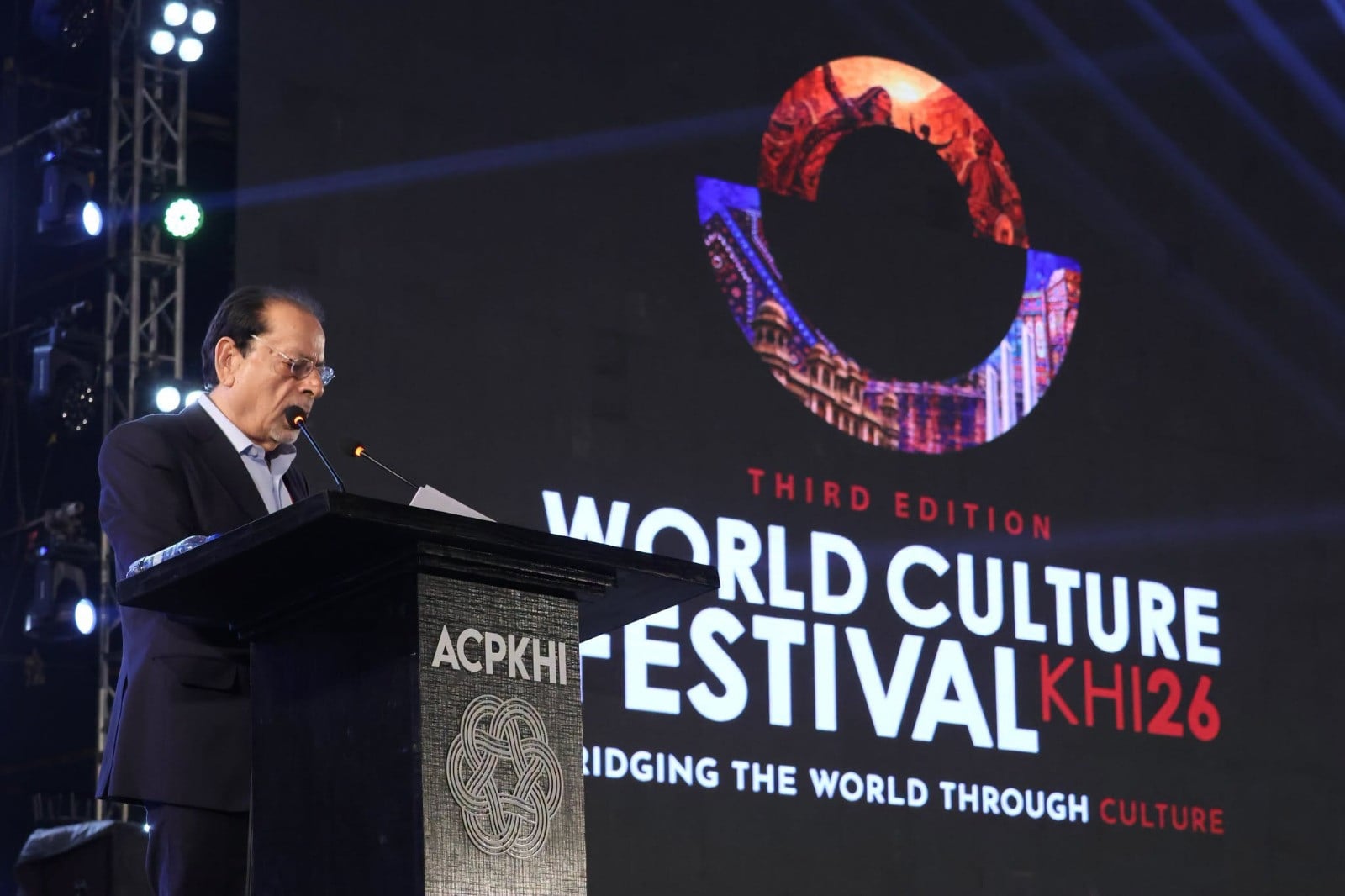
For Muhammad Ahmed Shah, president of the Arts Council of Pakistan Karachi, the festival was designed to serve two broader purposes: placing Pakistan on the international cultural map and presenting a different image of the country to the world.
According to Shah, the previous edition had participants from 43 countries, prompting organisers to set a target of bringing representatives from 100 countries. He said this year's festival reached 143 countries.
The expansion, however, also brought a change in strategy. Rather than focusing only on the number of participating countries, the organisers wanted to make the programme more accessible to local audiences and attract people who might not ordinarily attend international performances.
Some productions, despite their artistic quality, struggled to draw audiences. These included a theatre production involving Iranian, Moroccan and Iraqi artists which explored the destruction of Iraq, as well as the Kosovar silent play Waiting for A Train. Their themes and performance styles were not necessarily familiar to local audiences although the Arts Council creative team had prepared short descriptions for posters and produced videos explaining storylines. The aim was to help audiences understand what they were about to watch rather than expect them to engage with unfamiliar work without context.
The festival also revised its promotional strategy. A younger digital team worked on social media content aimed at different audiences, while advertisements and hoardings appeared at locations across Karachi. Pakistani performers, including Sajjad Ali and Ustad Noor Bakhsh, were also highlighted in the campaign.
These changes reflected an important challenge for international cultural events: bringing artists from around the world is only one part of the task. Building an audience at home requires communication, context and an understanding of local tastes.
Theatre
The theatre programme offered a space to revisit literature and examine how stories from the past continue to speak to the present.
A notable production by Tehrik-e-Niswan, Manto Mera Dost featured Sheema Kermani as writer Ismat Chughtai. The play explored Saadat Hasan Manto through Chughtai's perspective, drawing on the friendship, conversations and intellectual exchanges between the two writers.
“We presented Manto through Ismat Chughtai’s perspective because the two shared a very close friendship. Their conversations, debates and the subjects they discussed remain just as relevant today as they were back then,” Kermani said.
The relevance of such literature lies in its ability to confront social problems that have not disappeared, she added.
The festival's theatre programme also included opportunities for learning and professional exchange. Australian theatre artist Alex Broun conducted a workshop on stage acting and directing, sharing his experience with participants.
“As a director, your job is to create the most interesting production for the audience,” Broun said.
Such workshops offered local artists an opportunity to engage with international practitioners and learn about different approaches to performance, direction and working with actors.
Music
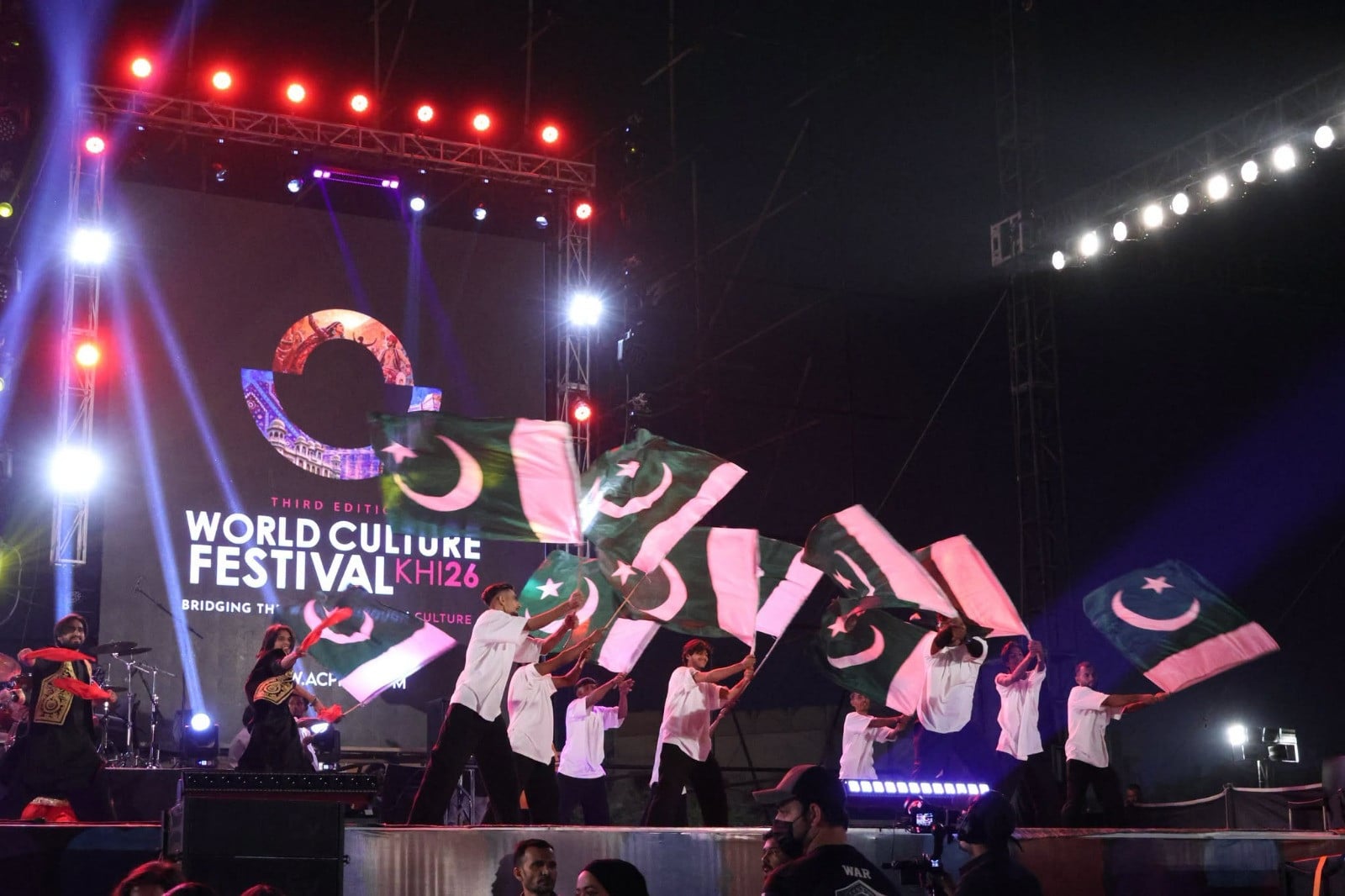
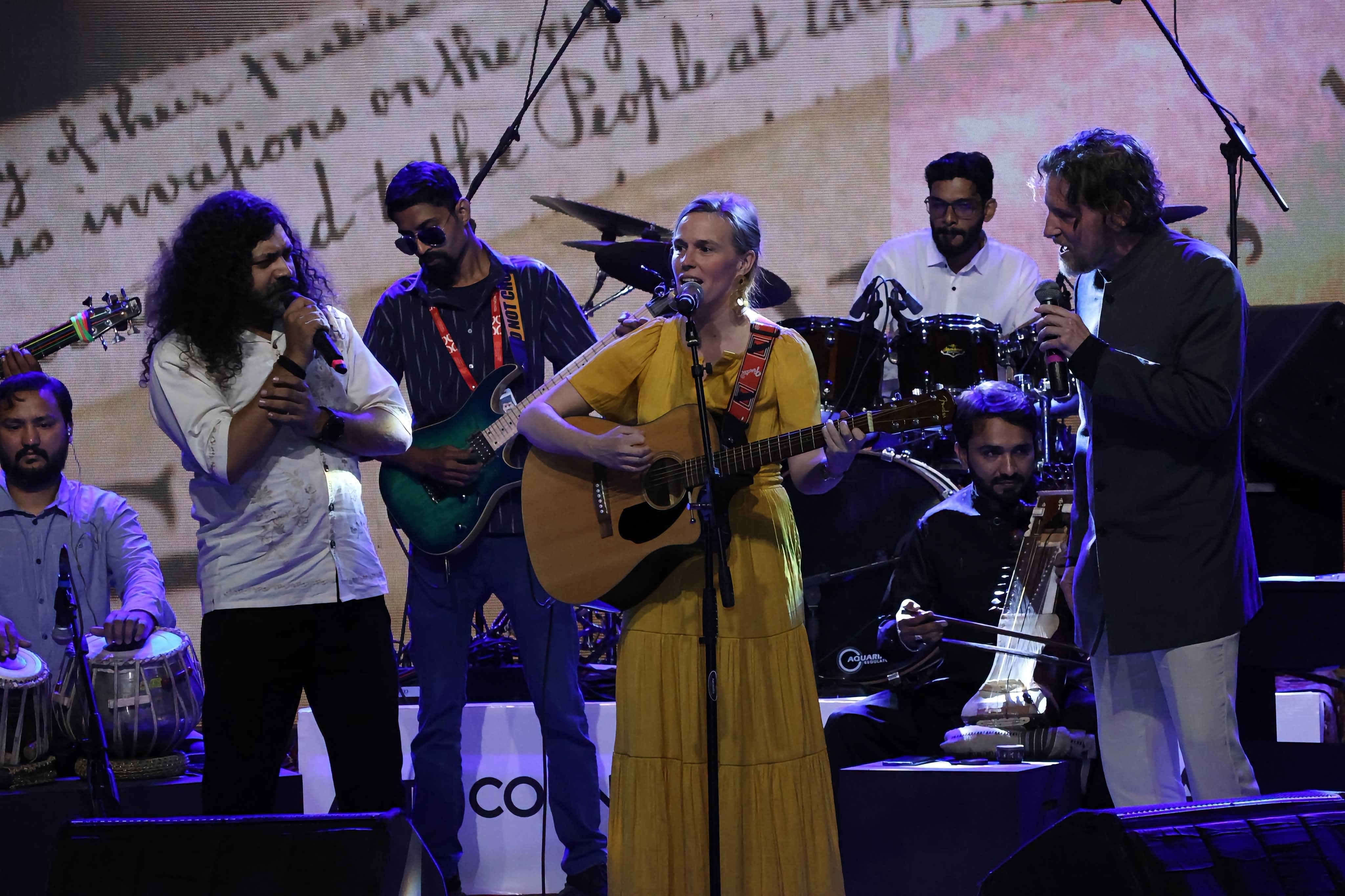
Over the 25-day event, the programme brought together Pakistani and international musicians, representing different genres and musical traditions.
Local performers included Sajjad Ali, Ustad Noor Bakhsh, Sahir Ali Bagga, Khumariyaan and Noori, as well as international artists. One day was dedicated to celebrating the rich heritage of Sindhi music featuring renowned performers, including Mai Dhai. The programme also included a performance by Rizwan and Muazzam, nephews of legendary qawwal Nusrat Fateh Ali Khan. The festival eventually concluded with a performance by Sajjad Ali.
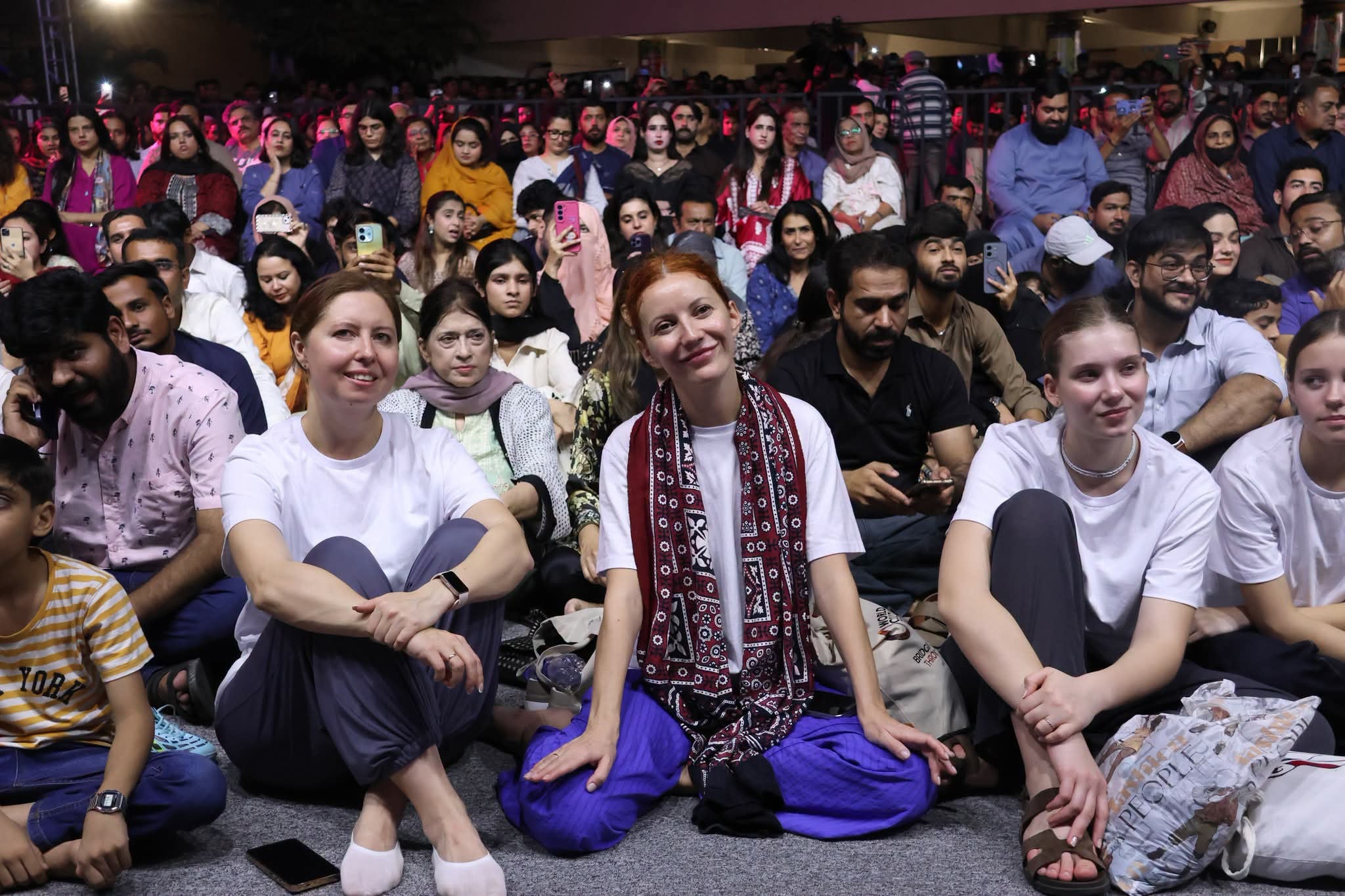
The qawwali programme drew a crowd in unexpected numbers. The open-air auditorium was filled to capacity. The audience extended beyond the performance venue, with the John Elia Lawn and parking area also crowded with people hoping to attend. Even outside the Arts Council, many could not enter as the available space had already filled up. Karachiite’s response that evening offered a glimpse of the enduring public appeal of qawwali and traditional music, while demonstrating the audience's enthusiasm for live performances.
The international participants were infected by the same enthusiasm. Guatemalan soprano Maria Jose Morales, who was visiting Pakistan for the first time, said, “This is my first time coming to Pakistan and I loved the experience. I love the people and everything this festival represents for arts and culture.” Morales described the event as an example of how artistic expression can connect people across national and cultural boundaries.
“It is totally inspiring and an example for the world that the arts can bring cultures together. I have met so many talented artists. Everybody is at a very high level, and most importantly, they are amazing human beings,” she said.
Her visit also provided her an opportunity for collaboration work. Morales is working with a local producer on a song combining her musical background with Pakistani music. “I hope it works out and we can hear it soon,” she said.
The collaboration was still in progress during the festival, but it illustrated the kind of connection organisers hope will continue after international participants return home.
The music programme also included contemporary and rock influences. Adriel Genet, a member of the American rock band Burn The Ballroom, said the group wanted to work with Pakistani musicians on future projects. “This is our first visit to Pakistan but not the last,” he said.
Burn The Ballroom also conducted a workshop, giving local musicians an opportunity to engage with its approach to rock music. Genet's comments pointed to a possible next step for the festival: turning one-time visits into longer-term artistic partnerships.
Visual Arts
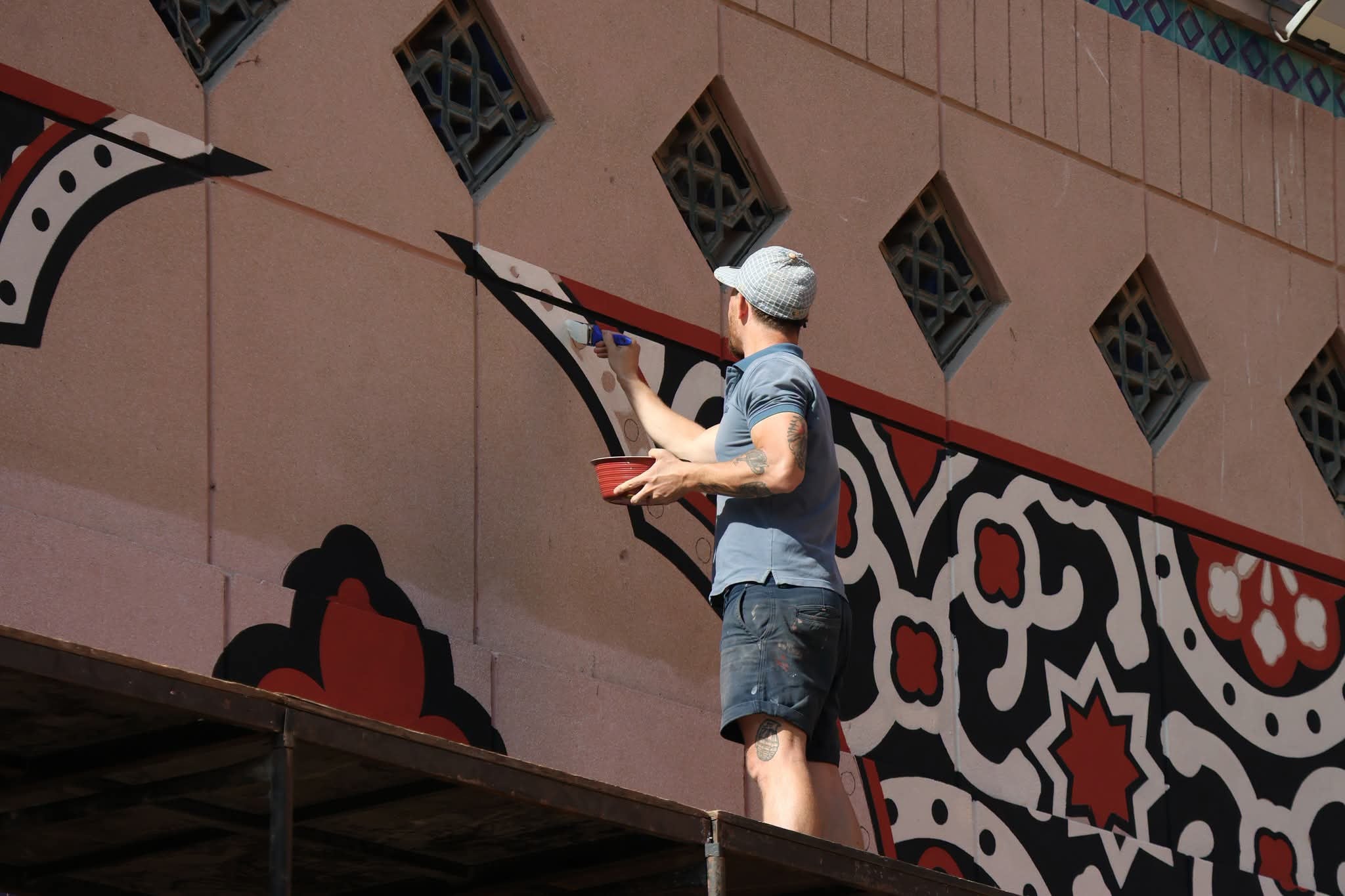
Visual arts brought international artists into public spaces through mural work, creating opportunities for audiences to encounter art outside conventional exhibition settings.
Murals can give a festival a visible presence beyond its scheduled performances. Unlike a theatre production or concert, which ends when the audience leaves, these public artworks can remain a vibrant and accessible part of the city's visual landscape long after the event with proper upkeep.
Italian mural artist Edoardo Ettore said the central theme of his work was opposition to war. His mural also addressed the environmental consequences of urbanisation, using the image of a girl creating nature and beauty in an increasingly concrete environment.
“The main theme of the mural is against the war,” he said.
The work connected two forms of destruction: armed conflict and the gradual loss of natural surroundings to expanding urban landscapes. Its central idea was to present hope and the possibility of positive change.
French mural artist Chifumi, who returned to Karachi for the festival, also spoke positively about the experience. “I feel extremely fortunate to be back in Karachi this year,” he said, thanking the organisers and the French Embassy for their support.
Swedish mural artist Domi Forest found her experience in Pakistan deeply moving.
“I have met people with incredibly big hearts in Pakistan, and sharing this experience with them has been truly special. People here have inspired me to keep working hard, follow my passion and take care of one another. I feel emotional about leaving. I will carry these memories with me. My message to Pakistanis is to take care of each other and make time every day to nurture your passions and continue growing,” she said.
Film
The film programme highlighted the educational and networking opportunities that festivals can offer filmmakers, particularly those at the beginning of their careers.
Pakistani filmmaker Faysal Quraishi said such events were not simply about screening films. They allowed filmmakers to meet, exchange ideas and understand different ways of approaching the medium.
“These festivals also inspire young people. If they want to pursue filmmaking, they get to see different pathways and understand how they can move forward and create better work,” he said.
For emerging filmmakers, exposure to different kinds of cinema can be as important as access to equipment or formal training. Watching work from other countries, speaking to practitioners and discussing creative decisions can help young artists develop their own approaches.
That exchange is particularly relevant in a country where opportunities to engage regularly with international filmmaking communities can be limited.
Dance
Dance added another dimension to the festival, bringing together performers working in different movement traditions and styles. The programme included 32 international dance entries, while organisers reported the participation of 215 Pakistani dancers.
For international performers, the experience was also an opportunity to encounter the city and its people. Norwegian-Iranian movement and dance artist Navid Rezvani said he enjoyed Karachi's atmosphere but wished he had more opportunities to engage directly with local residents.
His observation pointed to an important part of cultural exchange: performances can bring artists together, but meaningful engagement also requires opportunities to connect with the communities around them.
The dance programme brought together a colourful mix of traditional performances from different parts of the world. Russian Muslim dancers received considerable appreciation for their performances, presenting their cultural heritage through distinctive movements and styles. Dancers from the Philippines also showcased their traditional dances, adding to the diversity of the programme with vibrant costumes and energetic performances. Artists from several other countries presented dance forms reflecting their own cultural identities.
Pakistan was represented by renowned dancer Nighat Chaudhry, who performed traditional dance forms. The festival's closing programme also brought Pakistani and international dancers together, with young participants and their teachers involved in preparing choreography.
For local performers, such encounters can provide exposure to different styles and ways of working, although their longer-term value depends on whether training and collaboration continue beyond the festival.
The numbers
The festival covered five broad categories: film, theatre, music, visual arts and dance. Figures shared by the Arts Council of Pakistan Karachi listed 40 international theatre entries, 55 music entries, 30 visual arts entries and 32 dance entries. The film-related figure was listed at more than 5,000 across submissions and screenings.
The local participation figures were provided separately. They included 22 local theatre productions, 88 Pakistani fine artists, 110 musicians and bands, and 215 Pakistani dancers. Shah said more than 1,100 artists took part in the festival.
These figures suggest that the event was not solely an international showcase. Pakistani artists formed a significant part of the programme.
Culture as diplomacy
After organising three conferences in the United States, Shah said he decided to bring international artists and cultural representatives to Karachi, a city he believed many people were reluctant to visit because of perceptions of insecurity and militancy.
“I realised that our country was not being marketed. We were not on the world map in the way we should have been,” he said, adding that the festival had moved beyond initial introductions towards more active cultural engagement.
Shah said the festival's wider message was built around national identity rather than political differences.
“There was no politics or political party involved,” he said.
Describing the festival as one of the world's biggest diplomatic exercises through culture, Shah said it had enabled Pakistan to connect directly with ambassadors, artists and cultural representatives from different countries.
“Now, our ambassadors are not only the people working in embassies. The artists who return to their countries after visiting Pakistan will also become our ambassadors. They will share their experiences of Pakistan with the world,” he said.
He said the festival had helped challenge the perception of Pakistan that emerged after the war in Afghanistan, when the country was often associated with conflict and militancy. By introducing international visitors to the country's history and regional cultures, he hoped the event would present a more diverse picture of Pakistan.
The festival also aimed to build a sense of ownership of Karachi among its residents. Shah argued that the city should not be defined by language, ethnicity or political affiliation.
“At least take ownership of this city. The owner is the person who earns here and spends here,” he said.
For Shah, this sense of ownership was also connected to the way international visitors experienced Karachi. He said foreign artists and guests explored local markets, restaurants and products, including Sindhi clothing, leather goods and marble items. According to him, some shopkeepers even changed the presentation of their shops after noticing the interest shown by international visitors.
He said such visits could create business opportunities for local traders while allowing visitors to develop a personal connection with the city.
According to Shah, international partnerships had increased from four in the previous edition to 62 this year, creating avenues for cultural exchange, collaborative projects, residencies and scholarships.
“The biggest benefit will be that our young people, whether from Karachi, Gwadar, Sindh, Lahore or elsewhere, will be able to go abroad on international scholarships and perform on international platforms,” he said. “This is a long-lasting impact.”
The festival has shown that Karachi can host a large, welcoming international cultural gathering that excites local audiences and leaves international guests with lasting memories. With new partnerships taking shape and artists eager to collaborate again, those 25 days have set a promising tone for deeper cultural exchange in the years to come.