
It is 11:47 pm. Your phone buzzes. The screen says “bank officer.” A calm, polite voice says your account will be blocked in ten minutes. Ten minutes. Your heart starts racing. He already knows your name. He already knows your city. All he needs is a six-digit code that has just arrived on your phone. Your thumb hovers over the screen. Something inside you whispers, “Wait.” You do not know why. You just feel it.
That whisper is a red flag. And in the next ten seconds, whether you listen to it or silence it can decide whether you keep your savings or lose them.
Two girls hired a pick and drop driver. His car looked clean, and he was polite. Then he said, "I need the payment in advance, today." The girls offered a fair plan: use the service for a day and pay by hand the next morning. He refused. He pushed harder, showing pictures of damage on his vehicle and saying he needed the money for repairs. One of the girls stayed calm and asked, "Can we see your CNIC?" He vanished. He made an excuse and left in seconds.
The girls never found out what he planned, and they did not need to. The warning signs were clear: rushing for advance payment, refusing a fair alternative, using a sad story to create pressure, and running when asked for identity.
Likewise, red flags appear in relationships, whether they are lightly or deeply emotional. On a random Friday, a proposal knocked on the door. "Our son lives in London. He has his own business. He earns very well." The praise kept coming, one quality after another. Then came the real request: "We want the nikkah soon. Very soon." The girl's family was impressed. Within two days, the decisions were made. Ignoring the red flag of their persuasive urgency, by Monday, the nikkah was solemnised. Nobody asked for time. Nobody asked questions.
Two months later, it was over. Think about it: three days from first meeting to Nikkah. A marriage meant to last a lifetime was decided faster than most people choose a phone. The signs were all there. A sudden visit. Endless praise. More talk of money than character. And above all, the hurry.
Here is the truth most of us learn too late: red flags never give you time to think. They need you flattered, excited, and rushed, because a calm mind asks questions, and questions ruin the plan. Green flags do the opposite. They give you space. An honest family says, "Take your time. Check everything. Ask whatever you want." They welcome inquiry because they have nothing to hide.
You have probably heard the phrase "red flag" on TikTok, Instagram, or in a group chat. "He is a walking red flag." "Run, that job is full of red flags." A red flag is simply a warning sign, a small signal that says, "Be careful, something is not right here." The idea comes from real flags, which have long been used to warn people of danger, like on a beach when the water is unsafe. Gen Z made the phrase hugely popular online, and now everyone uses it. It is not a formal psychology term, but psychology helps explain why it works. Our mind and body often sense danger before we can put it into words. That uneasy feeling in your stomach is not random. It is your brain trying to protect you.
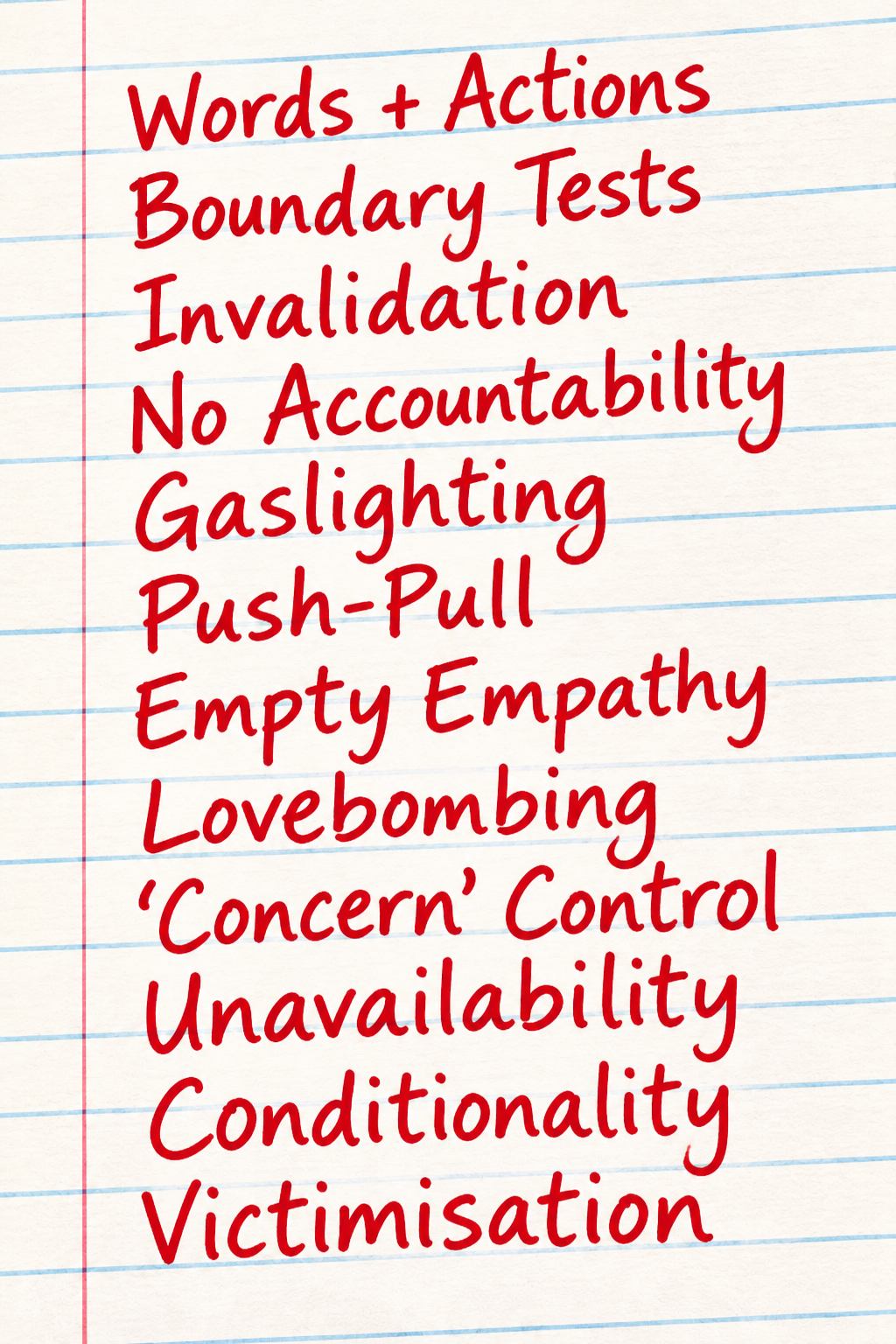
A red flag does not only mean cheating, and it does not only belong to love. It can be a lie, uncontrolled anger, disrespect, or someone who keeps crossing your limits. It can be a boss, a friend, a relative, a website, or even a damaged electric wire in your home. Anything that shows a person or situation may hurt you later is a red flag. One red flag is not a death sentence, because people make mistakes. The real danger is the sign that appears again and again and is ignored or defended. That is no longer a mistake. That is a pattern.
The deceptive signs
The tricky thing about red flags is that they rarely arrive with a warning label. In the beginning, they often look like love. Think of the person who texts you fifty times a day in the first month and calls it passion. It feels wonderful to be wanted so much. But when the same person gets angry if you take two hours to reply, the attention starts to feel less like affection and more like surveillance. Someone who says "I love you" within weeks, or tells you that you are the only person who has ever understood them, is moving too fast for you to actually know them. Real love can wait. Control cannot.
Control itself is rarely dramatic at first. It starts with a comment about what you are wearing, a request that you not meet a certain friend, a sulk when you make plans without them. Each request seems small, so you agree to keep the peace. A year later, you realise you have stopped wearing your favourite clothes, stopped calling your best friend, and stopped doing the things that made you feel alive. Nobody forced you. You were trained, one small step at a time, to avoid the storm. The same thing happens with constant criticism. You are too sensitive, too lazy, too boring. And when you finally say it hurts, you are told, "I was only joking. You cannot take a joke." That one line does two jobs at once: it dismisses your pain and makes you the problem for feeling it.
Gaslighting is the worst version of this: someone makes you doubt your own memory and feelings. They swear they never said that hurtful thing, or you raise a problem and somehow end up apologising. If you cannot trust your own version of events around one person, pay attention. That feeling is not weakness. It is information. Add to this the silent treatment as punishment, jealousy that turns into phone-checking, and the painful cycle of cruelty, apology, sweetness, and cruelty again. If it were bad all the time, nobody would stay. It is the unpredictable mix of pain and tenderness that creates such a strong pull.
At work
"In the interview, the manager spoke badly about the person who had left before me,” says Aliya Rehman, a 29-year-old marketing executive in Rawalpindi. “I noticed it, but I really needed work, so I ignored it. In the first month my salary came ten days late. He had a new excuse every time. Then came the messages at midnight, on Eid, on Sundays. When I finally said I could not work one weekend, he told me I was 'not committed.' I stayed eight months. Looking back, the red flag was in the first meeting. A company that disrespects the people who left will disrespect the people who stay." Her advice is simple: ask how long people usually stay in the job, and ask when salaries are paid. If the answer makes them uncomfortable, you have your answer.
With friends
Friendships can be just as harmful, and we are usually less prepared for it. A friend who only calls when he needs something is showing you how he sees the friendship. So is a friend who laughs at your good news in a way that feels more like jealousy than joy, or who disappears when you are struggling but returns when life is fun. "We were friends for six years,” says Ahmed Ali, a 24-year-old university student from Islamabad. “When my father was ill, he did not even send a message. When I got a scholarship, he said, 'Must be nice to be lucky.' I kept making excuses for him. Then I asked myself: if a friend told me this story, what would I tell him? The answer was 'leave.'"
Scammers
A 41-year-old shopkeeper in Hyderabad, Hassan Ali almost became a victim. "A man called and said he was from my bank. He knew my name. He said my account would be blocked in one hour unless I shared the code that would come on my phone. He sounded so worried and so helpful that my hands were shaking. Then I remembered what my son had told me: a bank never asks for a code. I hung up. Later I learned two people in my street lost their money that same week." His advice is something everyone should remember: when someone creates fear and hurry, stop. Hang up, and call the bank yourself using the number on the back of your card.
Dangerously close
It is just as important not to go to the other extreme. Some people, after learning about red flags, see danger everywhere and end good friendships over one small mistake. That is not wisdom. That is fear. Ask yourself three questions: Is it happening once, or again and again? Does the person take responsibility, or blame me? Is it harming my safety, dignity, health, or money? A friend who forgot your birthday once is not a red flag. A friend who forgets, mocks you for being upset, and does it again is a different story. People can change, but real change shows in actions over time, not in promises made in the moment.
The simple test is the "no" test, perhaps the most reliable of all. Calmly set a limit, such as “I do not like it when you speak to me like that” or "I cannot work this weekend," and watch what follows. A caring person may feel defensive for a moment, but they will listen and adjust. A harmful one will mock you, punish you, or act as if you have betrayed them.
Emotional blackmail, such as “after everything I have done for you,” is a red flag too. Seeing this does not mean you must cut anyone off or stop being respectful. It means you are allowed to understand what is happening, set sensible limits, and protect your peace while still being kind.
Protection begins with how you see yourself. People who feel deeply worthy of respect are much harder to mistreat, not because they are invincible, but because they notice mistreatment sooner and do not bargain with it. If you believe you must earn love or approval by being useful, agreeable, and endlessly forgiving, you become an easy target. So know your limits before you need them. What can you never accept? Disrespect? Lies? Unpaid work? Being cut off from your family? Decide in a calm moment, so that no one can talk you out of it in an emotional one. Go slowly, because charm is cheap and consistency is expensive. Check the facts before you sign, send money, or trust. Keep your friends, your hobbies, your savings, and your opinions, because anyone who wants to be your whole world is building something very hard to leave. And listen to your gut. You do not need a perfect argument to walk away. Feeling unsafe is reason enough.
If you recognise your own situation in these pages, be gentle with yourself first. Staying does not make you foolish or weak. Strong, intelligent people get caught in these patterns every day, because those who create them are often very good at seeming lovable when it suits them. You do not have to decide everything today. Start by telling one person you trust what is really happening, because secrets are where unhealthy situations grow, and consider speaking to a counselor. If you ever feel physically unsafe, or are afraid of what someone might do if you leave, treat that as serious and reach out to a trusted family member, a local helpline, or a professional who can help you plan safely. Leaving can be the most dangerous moment, so it deserves planning and support.
At the end of the day, life should not feel like a test you are constantly afraid of failing. Your relationships, friendships, and workplaces should be places where you can be tired, flawed, honest, and still be treated with respect. If you take one thing away from this piece, let it be this: the uneasy feeling you carry is worth listening to. You do not have to prove that it is bad enough before you are allowed to step away. Feeling consistently unhappy, anxious, or small is reason enough to ask hard questions. Share this with someone who might need to read it today. Sometimes, some straight-up honesty at the right moment, is exactly what opens a person's eyes.
Rabia Khan is a freelance writer and researcher focusing on social issues, gender rights, and current affairs
All facts and information is the sole responsibility of the writer