
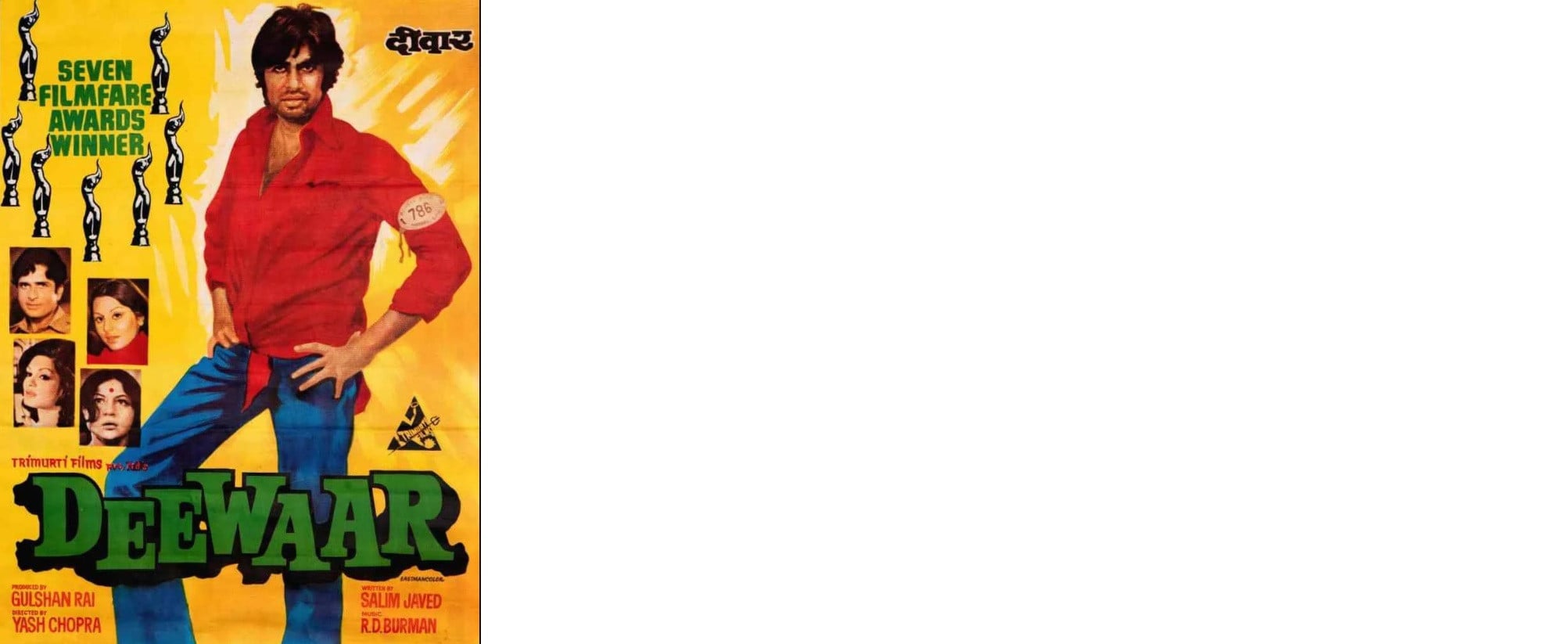
Do you remember Yash Chopra’s Deewaar that made it to screen some five decades ago? Vijay, played by Amitabh Bachchan, works as a coolie at a Bombay dock and pinned to his blue uniform is an employee badge marked 786. When his senior colleague Rahim Chacha explains that the number carries the numerical value of Bismillah — “In the Name of God” — it becomes more than an identification badge. It becomes a symbol of faith, blessing and protection.
Later, during a confrontation, a bullet strikes the badge and Vijay survives. Several times in the film’s most memorable moments, he kisses the badge and touches it to his eyes — a small gesture that says as much about faith and cultural belonging as any dialogue could.
For millions who grew up watching Bollywood, 786 was not a threat, a political marker or a shorthand for extremism. It was simply a familiar Muslim symbol — one that could sit comfortably on the chest of the film’s hero.
Deewaar helped cement 786 as a recognisable Muslim cultural symbol in popular cinema, reflecting a period when Muslim characters and symbols could be woven into mainstream Bollywood storytelling without necessarily being reduced to political stereotypes.
For decades, Bollywood gave its Muslim characters something that now feels increasingly rare: the freedom to simply be human. They could be princes and poets, lovers and loyal friends, policemen and porters, mothers and ordinary citizens. They could be flawed, funny, tragic, patriotic or rebellious. Their religion was part of who they were, but it did not always define what kind of person they were. Today that has changed and what we see is a striking shift towards, hate, bigotry, politicisation and (cheap) antagonism.
Across the decades from the 1960s to the early 2000s, Hindi cinema offered us rich Muslim characterisation so that deeply empathetic and memorable Muslim characters repeatedly appeared across three broad archetypes: royal and poetic Muslim figures, the fiercely loyal and self-sacrificing friend, and ordinary citizens navigating social hardship. These characters led lives that extended far beyond their religion.
Interestingly, the ‘billa number 786’ resurfaced again in episode 20 of Kaun Banega Crorepati season 18), in a question asked to Saif Ali Khan. “Which ones of these numbers should be on the badge?” An image of a dockyard badge was shown and 786 was one of the options. As Khan replied correctly, he raised his right arm, and host Mr Bachan explained the symbolism of the number in a cautious, and secular and befitting manner.
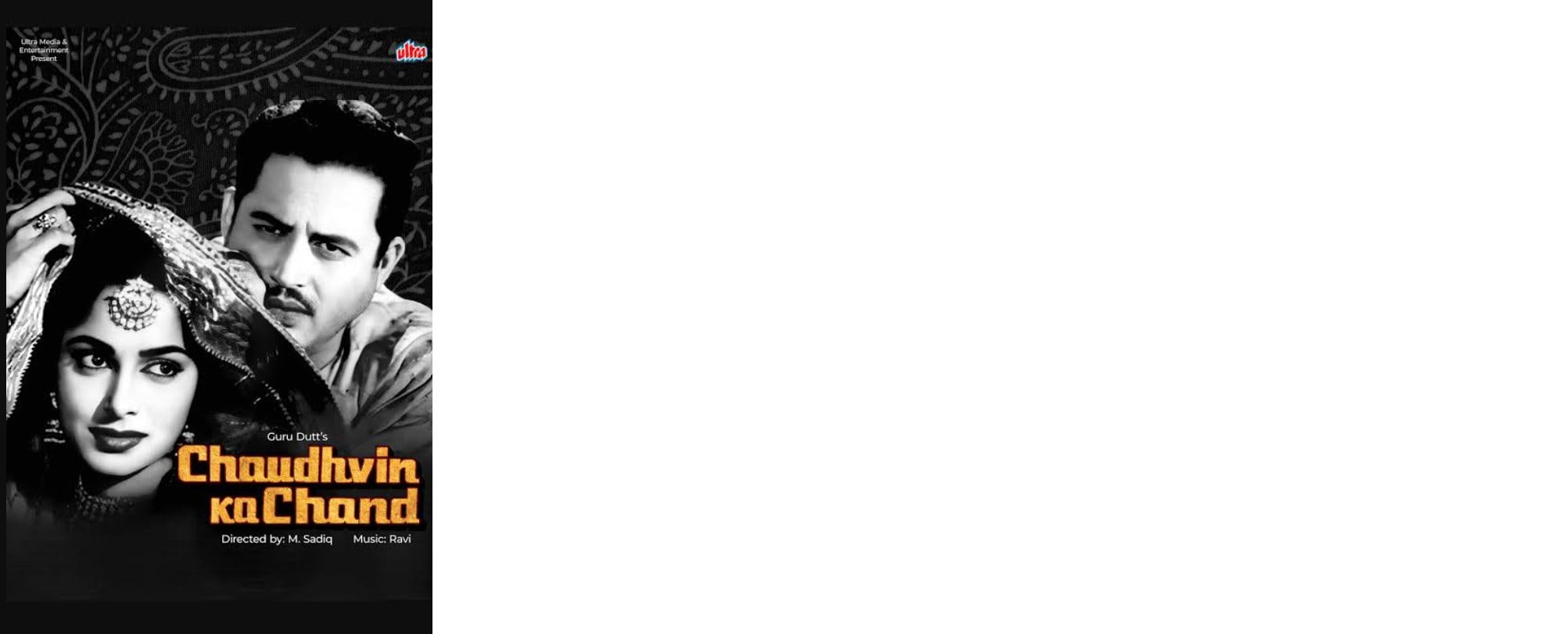
In the 1960s, when the “Muslim Social” genre flourished, Muslim characters were defined by tehzeeb, Urdu poetry, etiquette and tragic romance. In Mughal-e-Azam, Prince Salim and Anarkali became icons of pure, revolutionary love defying royal constraints. In Chaudhvin Ka Chand, Aslam (Guru Dutt) is a selfless friend willing to sacrifice his own happiness and marriage after discovering that his best friend loves the same woman. Later, in Mere Mehboob, Anwar (Rajendra Kumar) is a respectful, highly educated and poetic university student.
Through the 1970s, the blockbuster Sholay’s AK Hangal as Rahim Chacha, the village's blind imam, delivers one of Indian cinema's most poignant moments, looking up to the heavens and selflessly lamenting that he does not have more sons to sacrifice for the village's safety, after his only son is murdered by Gabbar Singh. In Garm Hava, Salim Mirza (Balraj Sahni), is a deeply honourable and resilient Muslim shoe manufacturer who refuses to leave India for Pakistan after Partition. He chooses to remain and fight for his rights as a proud Indian citizen. In Amar Akbar Anthony, Akbar Ilhabadi (Rishi Kapoor) is a young qawwali singer who represents religious harmony and fights alongside his brothers to protect his family. The important cinematic idea was that being Muslim and being Indian were not presented as competing identities. In Muqaddar Ka Sikandar, Sher Khan begins as a rival before becoming a fiercely loyal brother-figure to the protagonist, standing by him until his final breath.
The 1980s brought action, underworld stories and parallel cinema, but Muslim characters continued to occupy morally powerful spaces. In Umrao Jaan, the titular character (played by Rekha) is portrayed with dignity, intelligence and emotional depth as a poetess and courtesan surviving personal tragedy. In Coolie, Iqbal Khan (Amitabh Bachchan) is a fiercely righteous railway porter who fights exploitation, protects the poor and remains deeply devoted to his faith. Even when the character was morally compromised, cinema could allow for transformation. In Salim Langde Pe Mat Ro, Salim (Pavan Malhotra) is a small-time thief in Mumbai who undergoes a moral awakening, seeking an honest life despite institutional hardships. The Muslim character could be a criminal, but he could also change, a distinction that matters.
The 1990s brought political tension, but Bollywood continued to produce Muslim characters who embodied belonging rather than suspicion. In Mammo, Mehmooda (Farida Jalal), is a warm and deeply empathetic matriarch whose story explores the human pain created by bureaucratic citizenship laws between India and Pakistan. In Zakhm, Pooja Bhatt plays a Muslim woman who lives under a Hindu identity to protect her children while holding onto her faith with profound, silent dignity. Sarfarosh had Inspector Salim (Mukesh Rishi), an unyielding and patriotic police officer whose loyalty to India is questioned because of his religion. He delivers a powerful affirmation of his allegiance and risks his life to bust a cross-border weapons ring. The message was clear: a Muslim could be questioned about his patriotism, but the film could ultimately reaffirm his place within the nation.
The early 2000s continued that tradition. Veer-Zaara gave audiences Zaara Haayat Khan, a progressive and independent Pakistani woman who honours her family's word while dedicating her life to running a girls' school in an Indian village. The film also featured Saamiya Siddiqui, played by Rani Mukerji, an idealistic human rights lawyer fighting systemic prejudice to secure justice for an innocent Indian prisoner. Maqbool, meanwhile, gave Irrfan Khan a darker but richly layered Muslim character: an underworld lieutenant caught in a Shakespearean tragedy, consumed by guilt and psychological conflict. This was an emerging shade, the Muslim character did not have to be virtuous to be human.
As Narendra Modi’s political dominance grew, so too did a new vocabulary of Muslim representation in mainstream Hindi cinema. Gone, or increasingly pushed to the margins, were the Muslim characters who embodied tehzeeb, loyalty, sacrifice and ordinary belonging. In their place emerged a narrower set of figures: the radical militant, the terrorist, the historical Muslim antagonist, the abusive patriarch and the manipulative character associated with radicalisation or forced conversion.
The change is not simply about whether a Muslim character is “good” or “bad.” It is about what Muslimness itself has come to signify on screen. This shift has unfolded alongside a profound change in India's political climate.
At some point in the early 2000’s when Modi executive power began taking shape, the Muslim character in Bollywood morphed into the radical militant or terrorist, such as Rehan Khan in Fanaa, and cross-border antagonists in films such as Kurbaan. Here, questionably, religious identity was linked with extremist violence.
In Darlings, Vijay Varma as Hamza is a domestic abuser. Strict and unyielding Muslim fathers in films such as Secret Superstar and Gully Boy contribute to a recurring pattern identified by critics as the Muslim male figure as an oppressive husband or father. The radicalised or manipulative figure appeared in The Kerala Story, with its narrative of forced conversion and radicalisation. This became one of the most controversial examples, drawing accusations of communal divisiveness and generating intense public debate.
Last year, in periodic war drama Chhaava, where the portrayal of Mughal emperor Aurangzeb (Akshay Khanna) was thrashed by critics of being revisionist or sectarian, framing historical Muslim rulers as brutal and fanatical, historical antagonists. The abusive Muslim patriarch is also a great Bollywood favourite. While these films are not identical, and their characters, genres and political purposes differ, yet they point towards a narrower cinematic vocabulary.
Bollywood has always had Muslim villains, along with criminals, extremists and morally compromised characters from every community, but the range of Muslim characters has changed. Where are the ordinary Muslim citizens, the loyal friend, the patriotic policeman, the poet, the neighbor, the family man, the person whose Muslim identity is simply one part of a larger human story? While earlier cinema repeatedly made room for them, increasingly, the Muslim character arrives carrying a political meaning – he is the terrorist or radical or the criminal, the abusive patriarch, the historical enemy, just someone whose loyalties must be questioned. The transformation has occurred during a period in which nationalism, terrorism, religious identity and Hindu-Muslim relations have become increasingly central to India's political discourse.
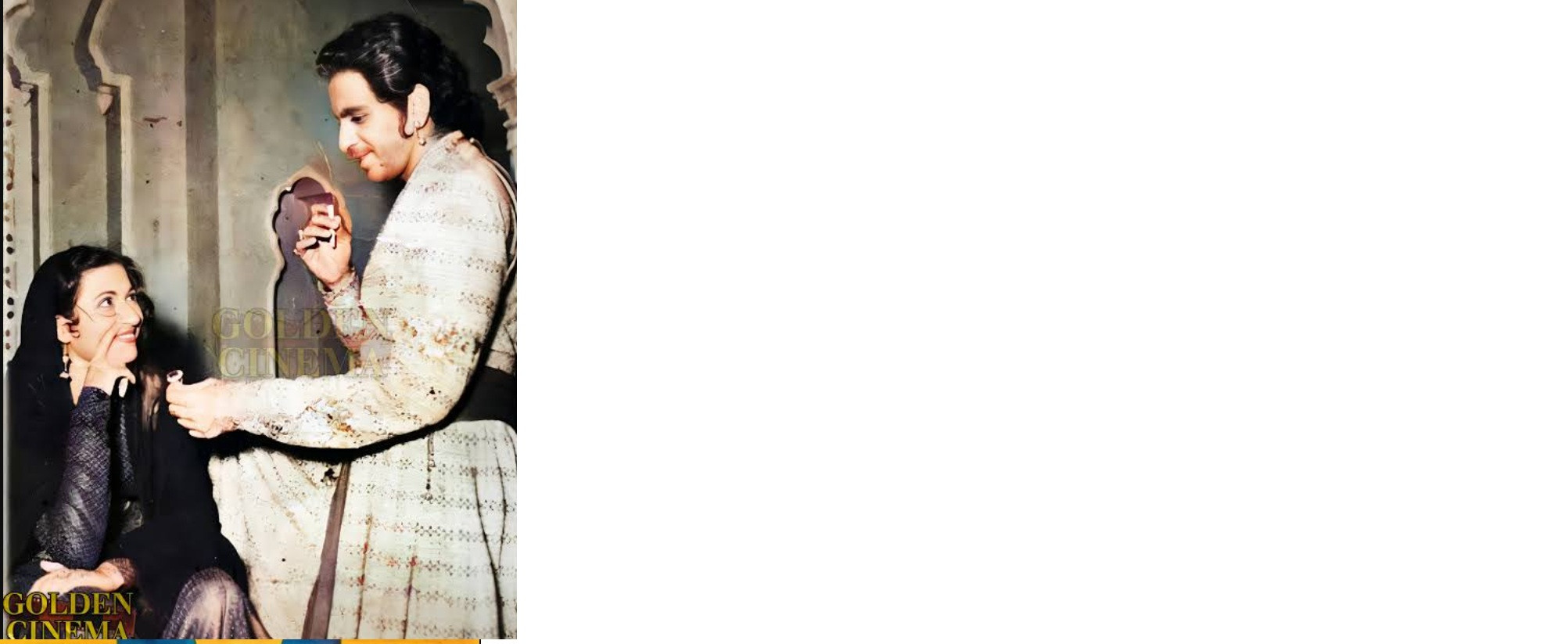 Perhaps the easiest way to understand what has been lost is to look back at what once seemed entirely natural. In a 1970 BBC interview, veteran actor Dilip Kumar was asked by host Mahendranath Kaul to end their conversation with a song. Dilip demurred, explaining that singing was not his craft. But when Kaul reminded him that his fans in both India and Pakistan would be disappointed if he refused, he relented. That small exchange belongs to a very different Bollywood — one that could accommodate Indian and Pakistani audiences within the same cultural imagination, long before the politics of the Modi era began narrowing that space.
Since cinema does not operate in a vacuum, it reflects the anxieties, conflicts and politics of the society around it. And when the political imagination changes, popular culture changes with it. Not that the political establishment directly instructed filmmakers to portray Muslims negatively. Nor does it mean every post-2014 film follows the same template, but the shift in characterisation is difficult to ignore.
For decades, Bollywood gave Muslim characters the full range of human experience. The worrying change is not that some Muslims became villains, but that being Muslim itself increasingly became a cinematic clue about who the villain might be. That is a much bigger story than any single film. And it may be the clearest indication of how India's political transformation has seeped into its popular imagination.
Interestingly, the ‘billa number 786’ resurfaced again in season 18 episode 20 of Kaun Banega Crorepati, as a question asked to Saif Ali Khan. As he replied, he raised his right arm, and host Mr Bachan explained the symbolism of the number in a cautious and secular manner.