
If you think Sony/Marvel were the first to launch a Prime Video project featuring their prized superhero in a noir world, think again. Batman predates the term "film noir," and the Caped Crusader Season 2 reminds you that it’s the Dark Knight’s territory.
Batman has been reinvented so often that simply announcing another version of the character no longer generates excitement. The question is what a new adaptation can bring to the table. Batman: Caped Crusader offers a fairly convincing answer: go back to the beginning.
The second season continues to explore Bruce Wayne's early years as Batman, as he is still finding his footing as Gotham's masked vigilante. Alfred is younger—and noticeably plumper—than in most versions of the story. Batman has very few friends in the Gotham City Police Department, and Commissioner Gordon's office remains one of the few places where he is tolerated. More importantly, Gotham itself feels like a character.
Inspired by the Batman stories of the 1940s and 1960s and heavily influenced by film noir, Caped Crusader depicts a city consumed by corruption, organised crime, and gang warfare. This Batman has not yet become the all-knowing superhero audiences expect. He is still learning, making mistakes, and, most importantly, investigating. That’s where the series finds its greatest strength.
Is it truly the successor to Batman: The Animated Series?
Nothing featuring Batman in an animated world has surpassed Batman: The Animated Series, which revived the character in the 1990s, so comparisons to the OG series are inevitable. Both series understand that Batman works best when the world around him is as compelling as the man behind the mask.
Yet the Caped Crusader isn’t simply trying to recreate the magic of the animated classic associated with Bruce Timm, who also served as showrunner for this reincarnation. Instead, it takes some of the era’s core ideas and places them in a darker, more serialised world.
The biggest difference is its storytelling approach; rather than treating each episode as an isolated adventure, Caped Crusader gradually builds a larger narrative through individual detective cases. Characters evolve, relationships shift, and Gotham's power structures begin to overlap, just like they did in the previous season. This makes the show feel more like a crime drama than a conventional animated superhero series.
Despite being the central character, Batman isn’t always the most interesting person in the room. Harley Quinn, Crime Smasher, The Riddler, Joker, Barbara Gordon, and other familiar characters get plenty of attention, especially when they’re portrayed differently from their comic book version. That willingness to play with established mythology matters because it keeps Caped Crusader from becoming a predictable retelling of Batman's origin story.
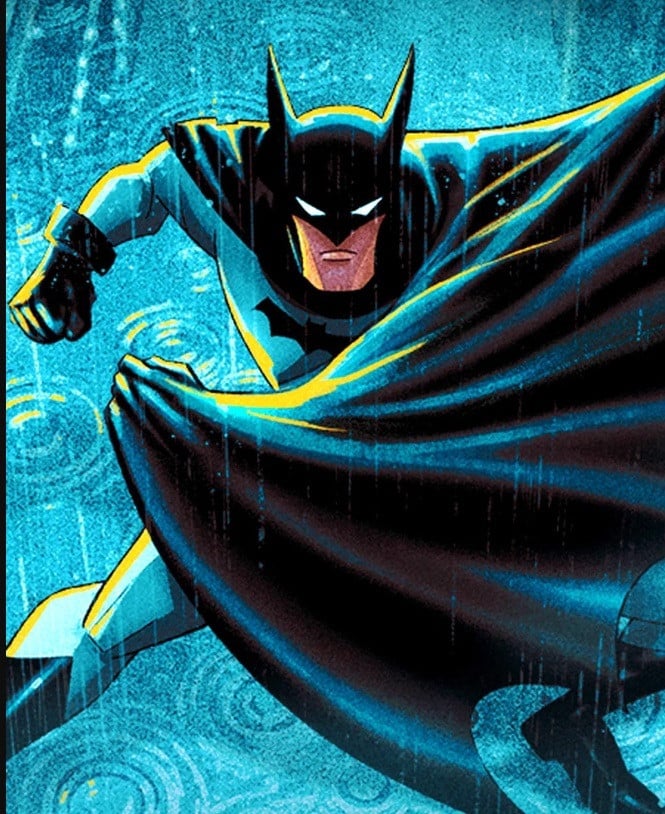
How the makers got it right
To get Batman right, you first have to get the people who understand the character. Bringing on Bruce Timm as writer, producer, developer, and showrunner was a masterstroke, since he is an authority on the Dark Knight. The series also benefits enormously from director Matt Reeves, whose The Batman embraced the character’s detective and noir elements, and from renowned filmmaker J.J. Abrams, both of whom serve as producers.
There are action sequences, of course, as well as familiar villains, confrontations, and moments of superhero theatrics. The disappearing act is still there, despite Batman being relatively new to the game, and so are the lines that remind you not only of the animated series and films but also of the many films he has been part of.
And yes, thankfully, the show understands that Batman's greatest weapon is not necessarily his technology or physical strength—it's his ability to investigate. That can be lost in modern Batman adaptations, where the character's detective skills are often overshadowed by increasingly elaborate action sequences. The Caped Crusader puts the detective back in Batman.
How does it hook viewers?
Usually, a series that isn’t well established has to first earn viewers’ trust and then bank on it; however, with this reiteration of Batman, that wasn’t the case. He was a well-established character, and the scenario was also familiar to the audience because of previous versions and, in this series’ case, the season.
What this season does exceptionally well is take recognisable Batman ingredients and place them in what feels like a parallel universe. You know the names, but you cannot always predict what these characters will do, how they will evolve, or, in some cases, whether they will survive the season. That familiarity creates an interesting balance. Viewers are given enough of the Batman mythology to feel comfortable, while the changes keep them curious.
The film noir setting also contributes to the show's distinctive atmosphere. Characters speak and behave in ways appropriate to the period-inspired setting, while the writing doesn't shy away from the darker aspects of Gotham. The media is present, but it resembles that of the 1940s and 1950s, when black-and-white TV was making inroads and radio was still the main source of news and entertainment.
Then there is the action. The series understands that a noir story cannot remain static. When Batman finally throws a punch, chases a suspect, or confronts one of Gotham's criminals, the action carries greater weight because the show has spent time establishing the circumstances that lead to it. That combination of investigation, setting, and action gives the series its rhythm.

Why should the Caped Crusader be taken seriously?
Calling the Caped Crusader ‘another Batman cartoon’ would be a huge mistake because it is anything but that. The show is attempting something specific: a hard-edged crime narrative within a framework that remains accessible to adult audiences.
It is unafraid to make Gotham ugly. The police can be corrupt, criminals can manipulate the system, and even those supposedly working for the greater good can have questionable motives. At the same time, it doesn’t lose sight of Batman's core appeal. It remains a story about a man who chooses to fight crime because he believes Gotham can be better, no matter how many monsters emerge from its dark alleys.
The narrative can occasionally feel imbalanced, especially when attention to supporting characters comes at the expense of Batman's own journey. Some relationships and developments can also feel forced rather than organically integrated into the larger story. Yet these issues do not undermine the overall achievement. The creators understand that reinvention does not necessarily mean abandoning what made Batman work in the first place. Sometimes it means returning to it.
Is film noir the new playground?
If you think Spider-Noir was the first major superhero property to adopt the language of film noir, you are mistaken. Batman predates the term "film noir," and the Caped Crusader Season 2 reminds you that it’s the Dark Knight’s territory.
He was created as a detective before becoming the near-mythological superhero modern audiences know. His city is built for shadows, where he operates without any superpowers. His villains often embody psychological and moral problems as much as physical threats.
That makes noir almost a natural playground for the Dark Knight. Batman: Caped Crusader understands this better than most recent adaptations. It does not try to make Batman the biggest superhero in the room. Instead, it repositions him as a detective. And perhaps that is exactly why the second season works.
If the series makes you interested in film noir, you can trace its roots by watching some of the best Hollywood films that helped popularise that genre. Films such as Double Indemnity, The Maltese Falcon, Strangers on a Train, The Big Heat, and Ace in the Hole helped establish noir's visual and thematic vocabulary.
If one had a detective chasing a rare bird statue because he found the client irresistible, the other predicted the evil of the media long before it dominated our lives; murdering a person to cash his insurance policy was also discussed in one of these films, whereas the idea of ‘exchanging murders’ was introduced in another flick in such a way that it looked interesting and complex at the same time.
In a world where superhero adaptations are constantly seeking the next big reinvention, Caped Crusader makes a surprisingly simple choice: it goes back to the source, changes enough to stay fresh, and trusts Batman's oldest strength—solving the mystery in the shadows. That’s why it works.
The writer is a freelance contributor who writes about film, television, and popular culture
All facts and information are the sole responsibility of the writer