
The family living on the footpath outside the Karachi Press Club has now spent a year here. They are the family of Amanullah Buzdar, a former Sindh police officer from Ghotki. Journalists who visit the Press Club every day, as well as employees working in nearby offices, have come to know them well. The family has been living here since September 2, 2025. They sleep, eat, bathe and wash their clothes on the same footpath. For the past year, it has been their temporary home.
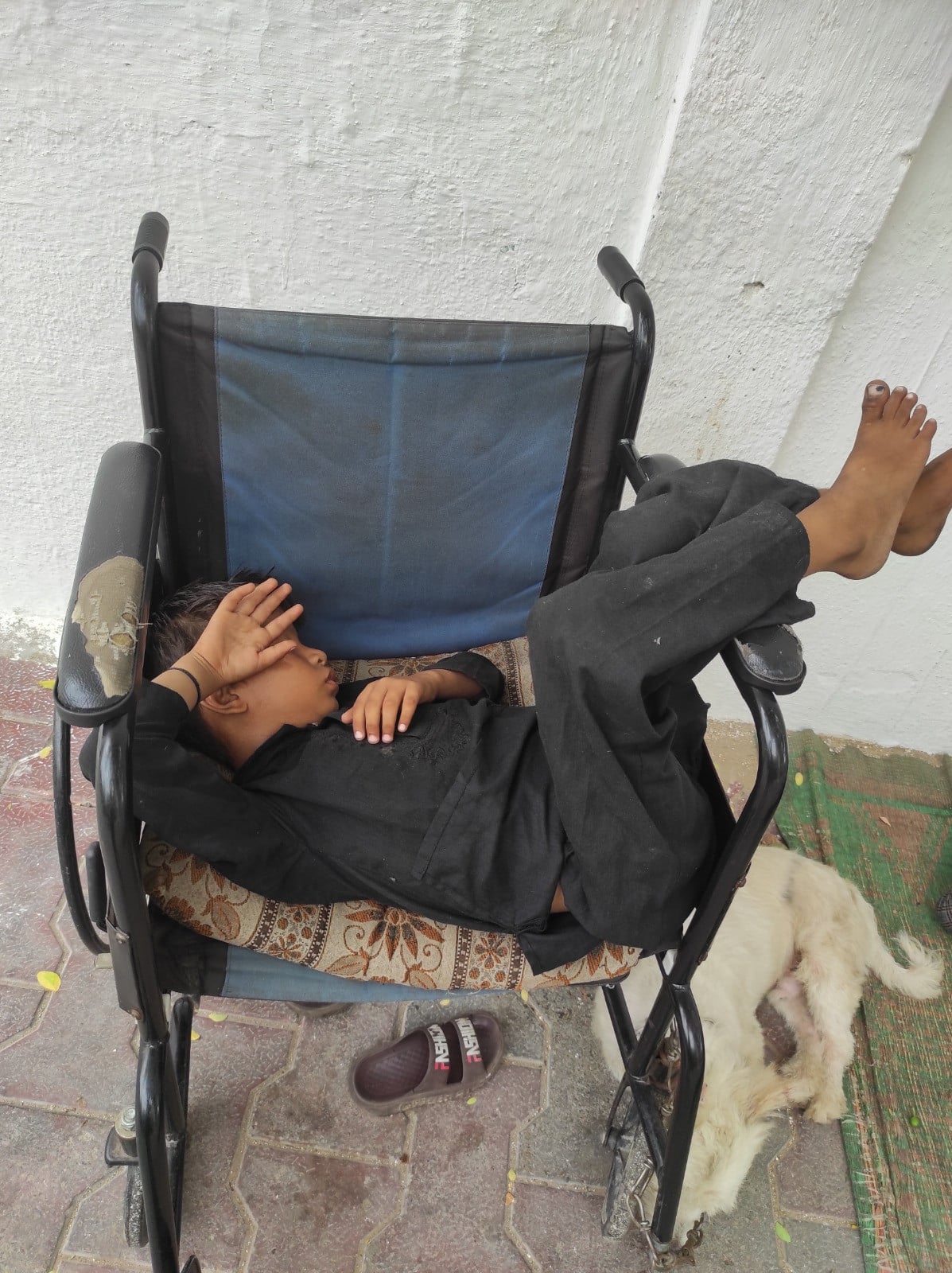
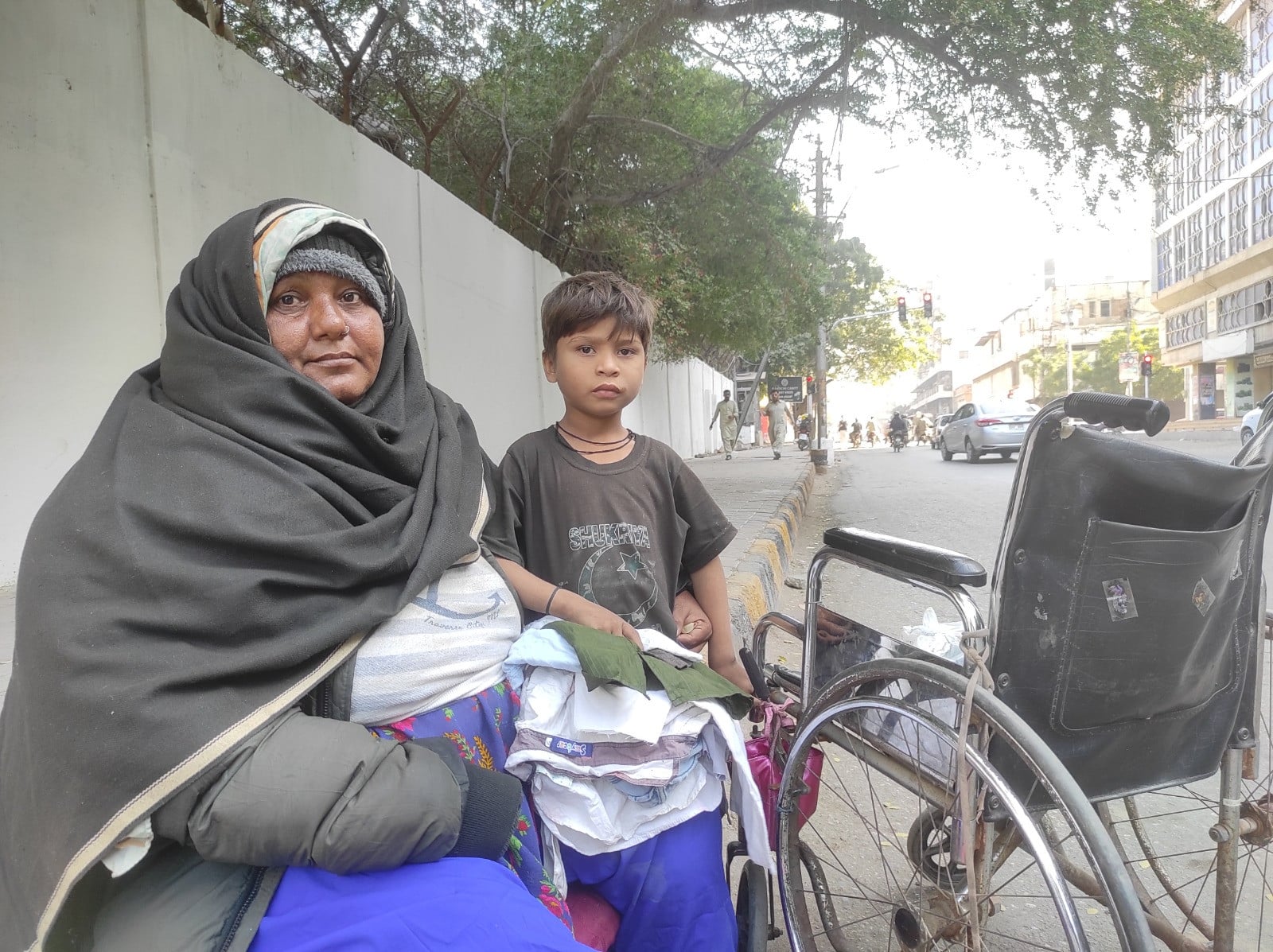
The family consists of Amanullah, his disabled wife, Mai Sanam, and their four children. The eldest daughter is around 14 years old, while the youngest of their three sons, Ali Waris, is about seven. During their stay here, a Russian-breed dog has also become part of the family. Some time ago, an acquaintance gave Amanullah the injured dog. He had it treated at the government veterinary hospital on MA Jinnah Road.
 Amanullah is from Jarwar in Ghotki district, while he was posted in Kandhkot, in Kashmore district. In 2022, his wife suffered a severe stroke. Because he had to care for her, Amanullah began missing duty and was eventually dismissed from the police force. According to Amanullah, his wife remained bedridden and semi-conscious for three months after the stroke. During this period, he had to care for her as well as look after their children.
Amanullah had two brothers, three sisters and other close relatives in his village. Yet there was no one willing to care for his wife because she did not belong to Amanullah’s community. Amanullah is from the Baloch tribe, while his wife belongs to the Soomro community of Sukkur. Amanullah had married her by choice. His relatives had opposed the marriage for two reasons. First, Amanullah had previously been engaged to a girl from his own family. The second was that Sanam belonged to another community.
 The biradari system remains quite strong in Sindh. In rural areas, people often marry within their own community. The distinction between Baloch and Samat tribes also remains significant. Baloch families generally seek matches for their sons and daughters within Baloch communities. Similarly, families belonging to Samat tribes tend to prefer marriages within their own tribal communities.
After Sanam’s illness and Amanullah’s dismissal from the police, difficult times began for the family. They first sold their goats and then had to sell the only property they owned in their village: their house. When they had nothing left there, they came to Karachi. Initially, Amanullah stayed with his family in Bhittaiabad, near the airport, where he worked as a daily-wage labourer to support his children. But with his low income, it became difficult to pay rent and meet other household expenses. Within a year, he had to leave the area. He did not have enough money to rent a house elsewhere. In these circumstances, he began efforts to have his police job reinstated.
In August 2025, he brought his family to the Karachi Police Office on Shahrah-e-Faisal and sat outside the building. He believed that staying there might help get his job restored. However, after spending a month there, the police removed him from the site. He then came and sat outside the Karachi Press Club on September 2, 2025.
In the early days, he would stand there wearing his police uniform in an attempt to attract media attention. Journalists initially raised his issue in the media, but as time passed, this coverage declined. The government also paid no attention to his case. With nowhere else suitable to live, the family eventually made the footpath outside the Press Club their temporary home.
Over the course of the year, the family also had to endure extreme weather. When winter arrived, they did not even have a single blanket for the entire family. A kind-hearted man living nearby brought them two blankets from his home. The whole family spent the winter nights sharing those two blankets. Then came the intense summer heat, followed by torrential rains. During the rain, they would seek shelter under the awnings of nearby buildings. There was no washroom outside the Press Club, so they put up a makeshift screen at one end of the footpath to attend to their basic needs.
Before coming to Karachi, Amanullah’s daughter and his two older sons were enrolled in Grade 3 at a private school in their area. When they came to Karachi, his daughter brought her books with her. She would sit on the footpath and write something or other. But her books were also destroyed in the rains. After that, she began spending her time with the Russian-breed dog. They named him Tommy.
After spending several months hoping that his job would be restored, Amanullah started working as a security guard. His two sons, aged 10 and 12, have also begun doing manual labour. Meanwhile, people have given money to his disabled wife, gradually getting her accustomed to begging. It has now become routine for her to sit near Zainab Market and beg for money every day. Her youngest son, Ali Waris, is also with her almost all the time.
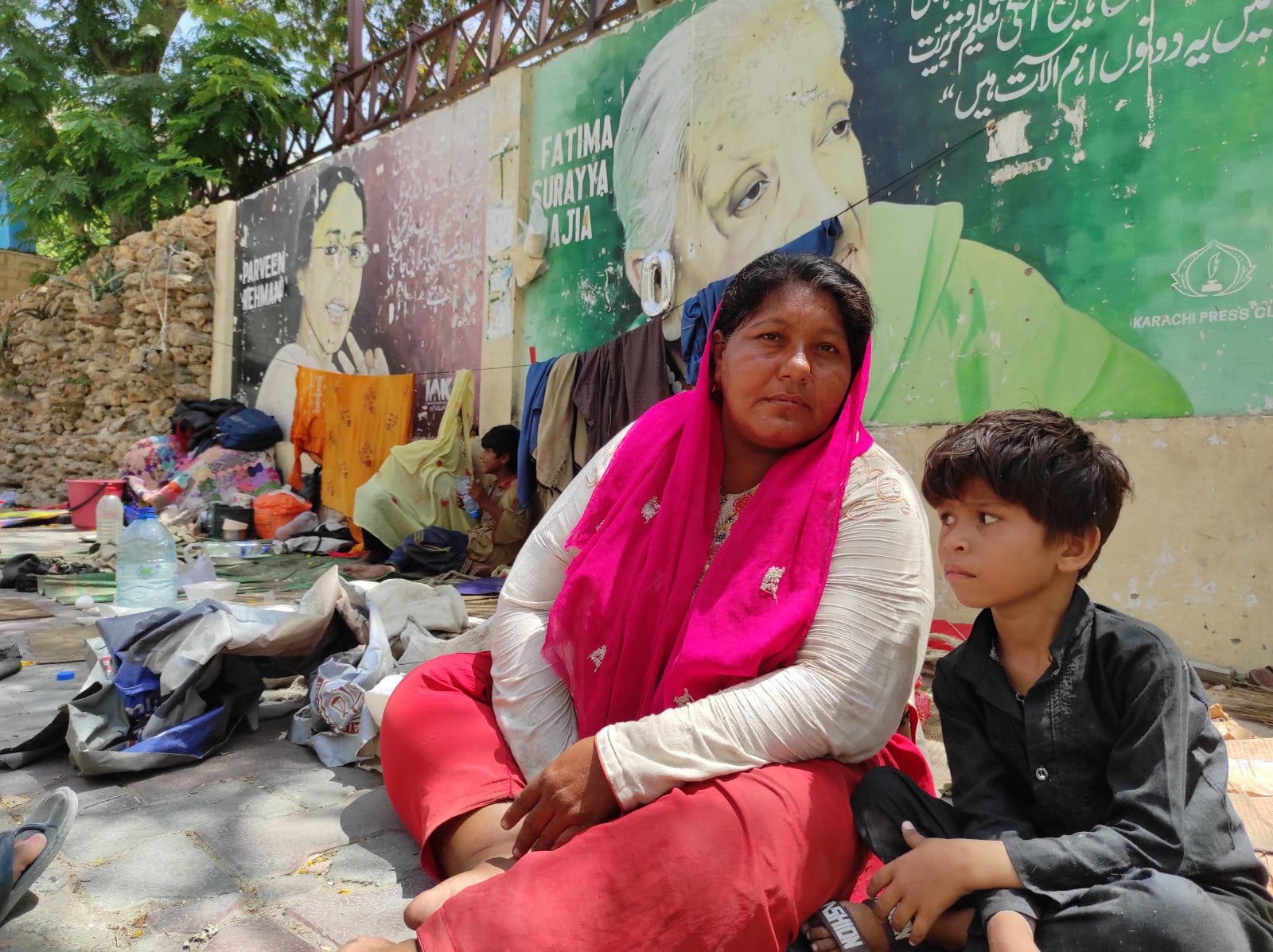
His daughter, however, no longer lives on the footpath. She spent around 10 months living there, but for the past two months, a non-governmental organisation in Lahore has enrolled her in a government boarding school it operates. She now has a safe place to live, a bed to sleep in, regular meals and books again.
But eight-year-old Ali Waris is still living on the same footpath. He has not yet started school. He too is eager to study. His disabled mother has bought him some books and pencils. Her wish is for her youngest son to go to school as well.
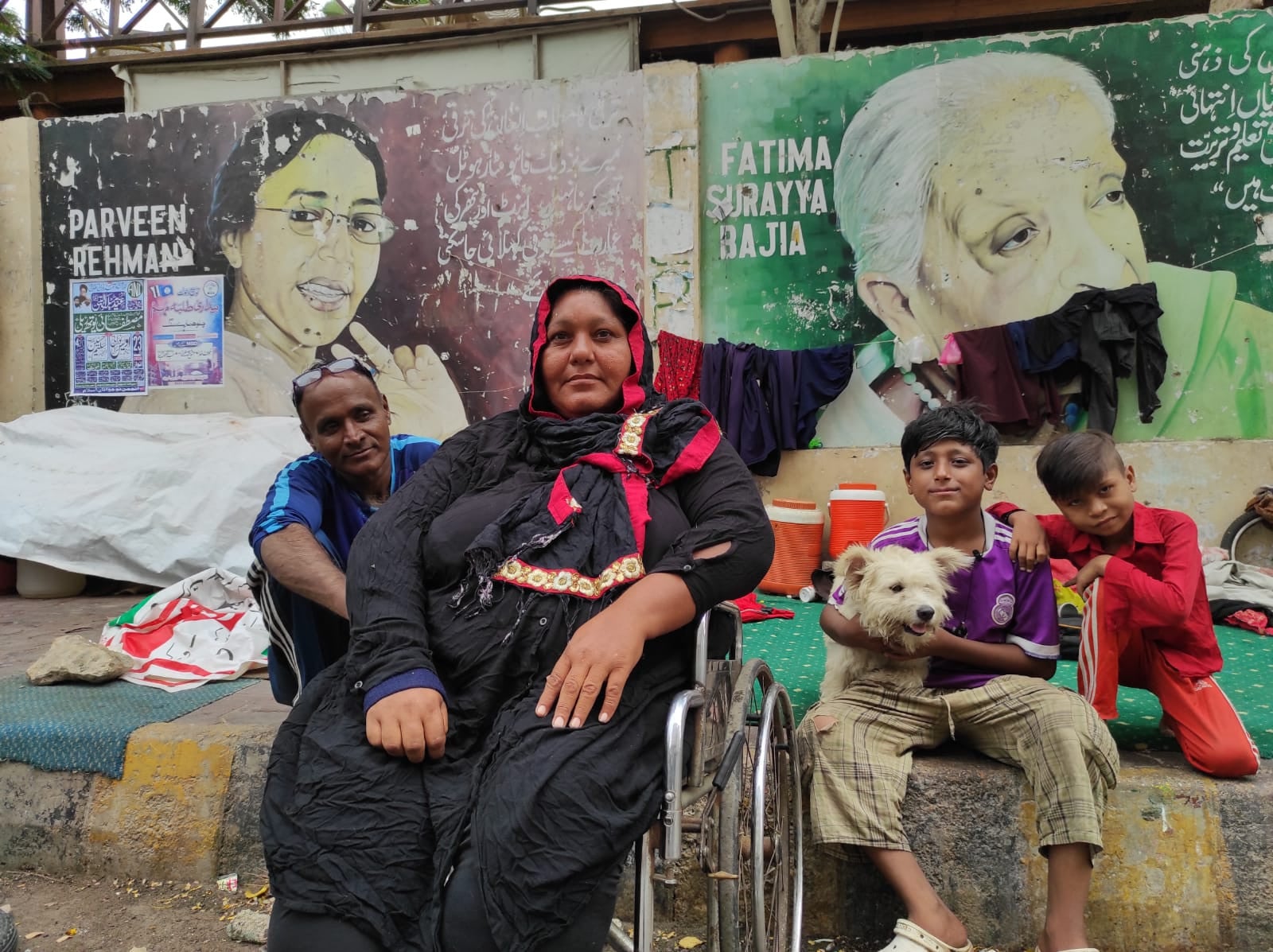
For now, the footpath remains home for Amanullah, his wife and their two sons. A year after they first arrived at the Press Club, their circumstances have changed little and the family continues to live with the uncertainty of each passing day.
For Amanullah’s family, the hope is simple: a roof over their heads, a secure future for their children and, above all, the chance for Ali Waris to go to school. For a child who has spent much of his life on a footpath, even that modest wish remains a distant one.