
Haidar Ali, 35, a resident of Mazdoor Abad locality in Takht Bhai tehsil of Khyber Pakhtunkhwa, some 15 kilometres north of Mardan city, starts his day by searching for water for drinking and household use.
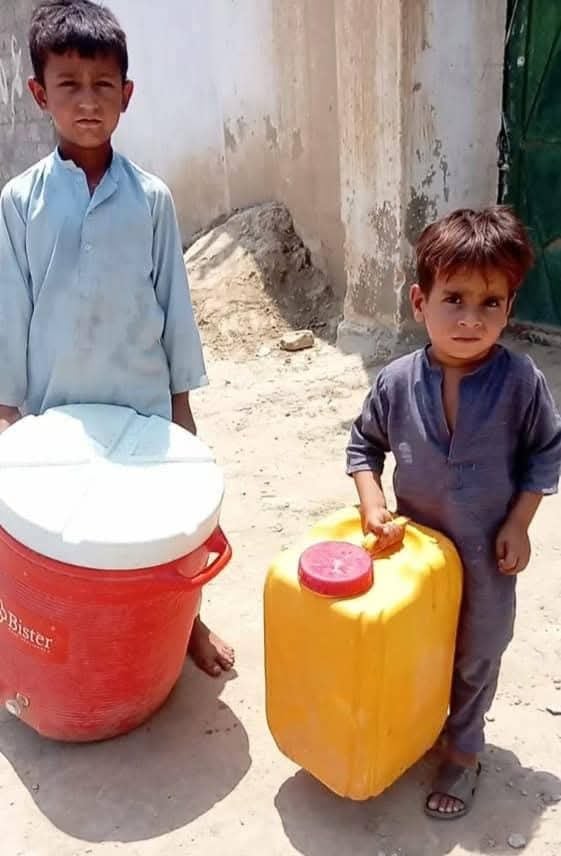
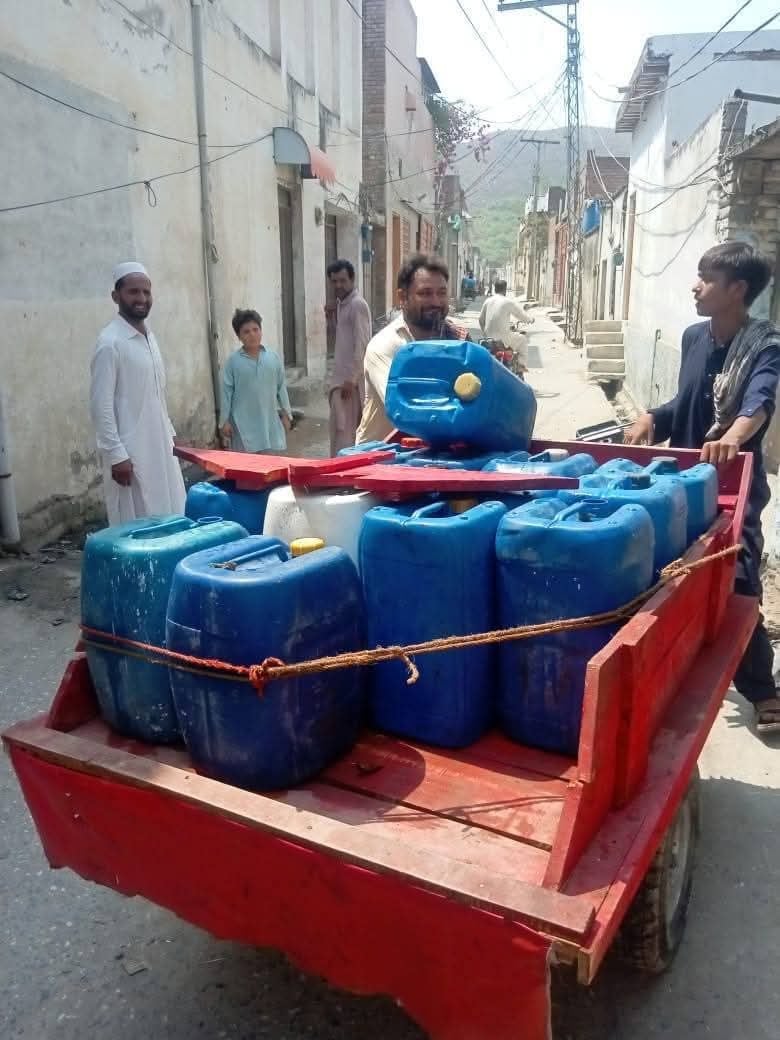
He and other locals collect water with great difficulty for their daily needs. A water tanker supplied them water on alternate days, giving one barrel per house which hardly met their requirements. If Ali and his family needed more water, he had to bring it by rickshaw at Rs 400 to 500 per trip.
This area is located beneath the mountains where the UNESCO World Heritage Site, the Takht Bhai Buddhist Monastery, is situated. According to local residents, the groundwater level has been declining here every year, for more than a decade.
Water has already depleted in Cheena Korona and Shaheen Town of the locality and the same problem is now emerging in other neighbourhoods as well.
Pointing to some already locked houses in Cheena Korona and Shaheen Town, Ali said that due to water scarcity, a number of families had migrated from the area to other villages of Takht Bhai tehsil. Likewise, he and his two brothers were also planning to sell their houses and move to an area with a higher groundwater table, as life where they were presently living had become difficult with the passage of time because of the water situation.
More than a decade ago, the groundwater table was about 65 feet below the surface, but it has now dropped to around 350 feet, says local political figure Hussain Yousafzai, adding that in past, people used water obtained through wells, and later they depended on tube wells established by the public health department.
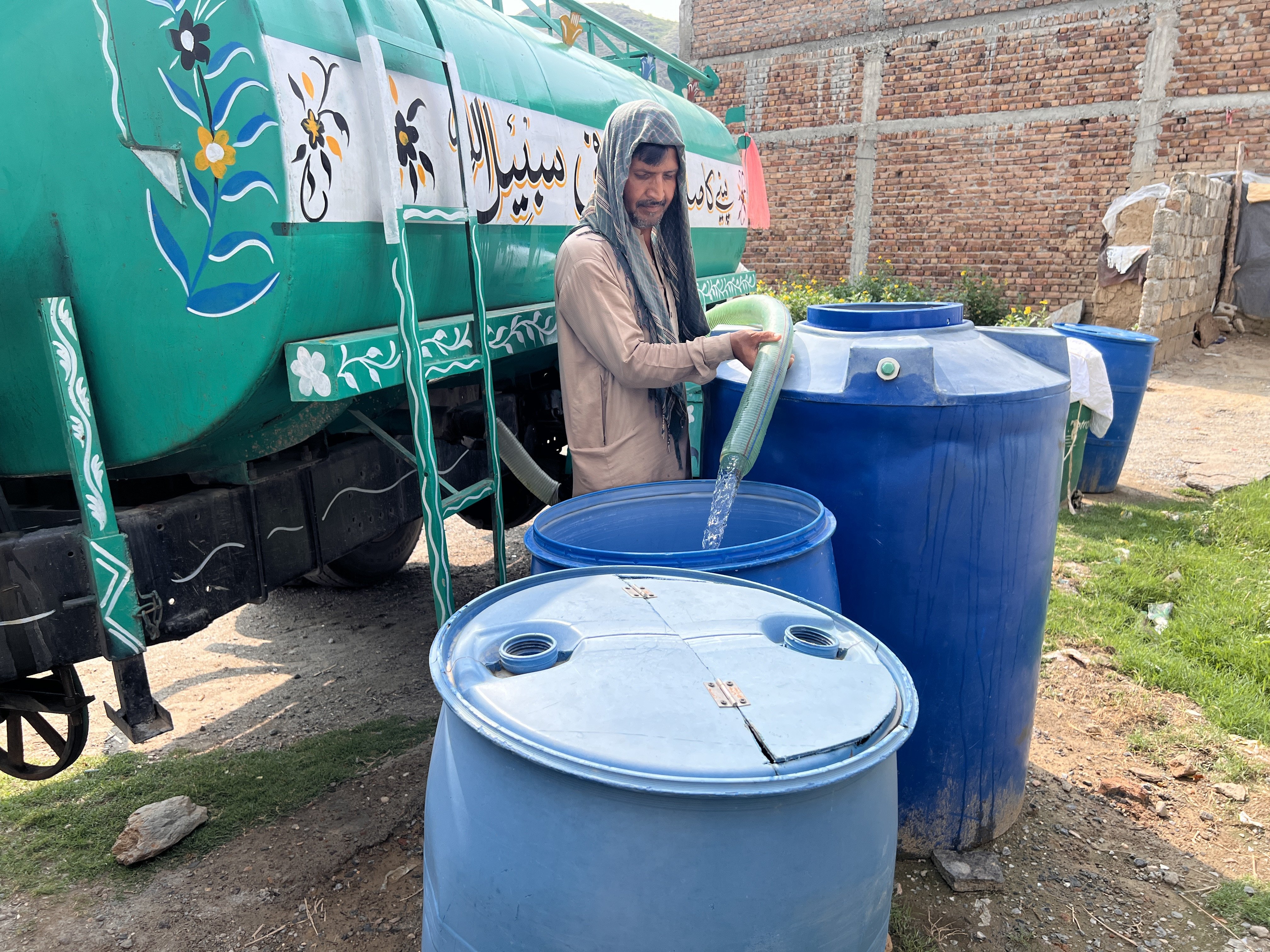
In the current worst situation a local philanthropist had donated a tractor and a water tanker to the community. “Most residents of the locality are poor, and keep water drums, and buckets outside their homes,” he explains. “The water tanker goes door to door and supplies water to each household.”
To a query, he said that out of four water supply schemes, only two were functional and hardly met the needs of a few households located at lower altitude.
Since the houses situated at a higher elevation are not able to obtain water from these schemes, the local community depended on water tankers for their water supply.
"Some people store rainwater for washing clothes and other daily household needs," he added.
Mazdoor Abad, a settlement in the Takht Bhai tehsil of Mardan district with a population of more than 20,000, is not the only locality facing water scarcity.
An electrical resistivity survey conducted by the Public Health Engineering Department, Mardan, at different points in Mazdoor Abad, to assess groundwater potential, reveals the static water level at Point-1 to be approximately 40 feet below the ground surface, with a proposed drilling depth of around 200 feet. The estimated discharge was 3,000 gallons per hour (GPH).
At Point-2, the static water level was estimated at around 20 feet, with a proposed drilling depth of approximately 200 feet and an estimated discharge of 3,000 GPH.
However, the survey concluded that neither site was feasible for tubewell construction because bedrock was encountered at a shallow depth.
Regarding the survey conducted in the area, Mohsin Iqbal, SDO, Public Health Engineering Department, told The Express Tribune that low yield tubewells serving two to three houses could be successful, where a limited quantity of water would be used. But a tubewell for the entire community in Mazdoor Abad would not be successful.
“The water supplied to the area through pipelines came from nearby villages, where the water table is relatively high and the discharge capacity is around 5,000 to 6,000 gallons per hour (GPH),” he said. “Due to changes in precipitation patterns and the amount of rainfall, the water table varies at different times. He added that the department does not have specific data on it as the groundwater table has not been measured at different time intervals.
Iqbal explained that the department did not have any tubewells in the locality. However, due to rapid population growth and the adverse impacts of climate change, the water table has declined over time.
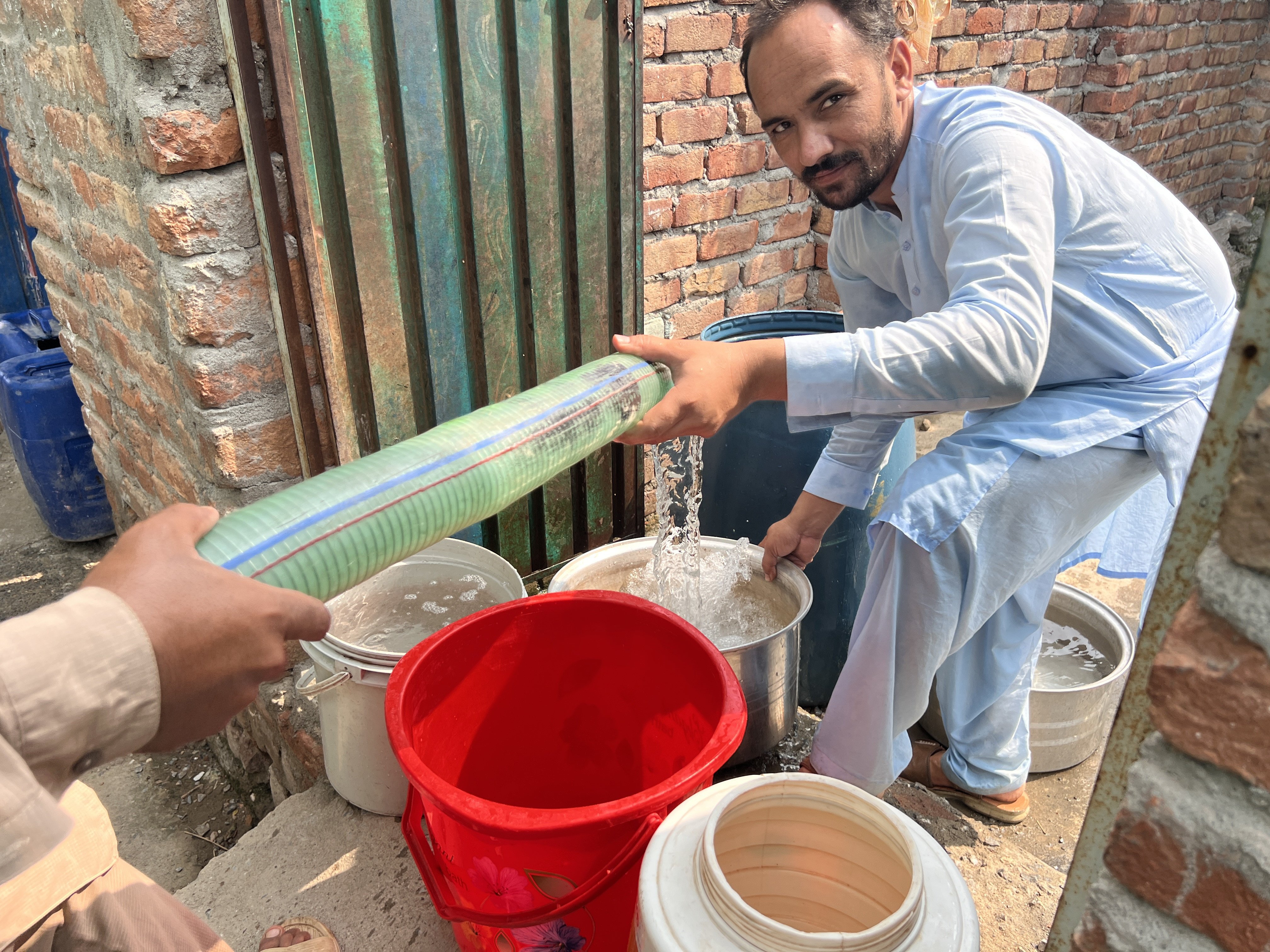
“Now the department has shifted its focus from tubewells to surface water,” he added, talking about a mega water supply scheme that has been approved for Mazdoor Abad. “We are working on its design and preparing a proposal under which surface water from the Jalala river will be pumped to a treatment plant. The treated water will be supplied to the locality. This is a shift towards surface water. Similar strategies have already been successfully implemented in Batkhela, Kohat and Karak districts of KP.”
Other parts of Mardan district are also grappling with water shortages, while the declining groundwater table is becoming a concern in Peshawar and several southern and other districts of KP as well.
Documents submitted by the Ministry of Water Resources to the Senate in 2021 revealed that groundwater levels were depleting rapidly in 28 districts of KP. In five districts, the water shortage was particularly alarming, with groundwater levels falling by between 25 and 74 feet over the previous decade.
According to the Ministry's written reply, Khyber district was the worst affected, where the groundwater level had fallen by 74 feet, followed by Haripur with a decline of 62 feet. Mohmand ranked third, with 57 feet drop, while Bajaur ranked fourth. Kurram was fifth, where the groundwater level had dropped by 26 feet.
The water scarcity issue is not only confined to several districts of KP, but the situation is becoming worse across the country.
According to a report by the Asian Development Bank, Asian Water Development Outlook 2025, Pakistan remains a severely water-stressed country and facing rising pressure on its water resources due to rapid population growth, climate change and poor water management.
The report says per capita water availability has declined from 3,500 cubic metres in 1972 to just 1,100 cubic metres in 2020, far below the minimum safe threshold of 1,700 cubic metres.
It also states that more than 80 percent of the country's population lacks access to safely managed drinking water, increasing the risk of waterborne diseases.
According to the annual 2023-24 report of Pakistan Council of Research in Water Resources (PCRWR), groundwater levels in Balochistan have been depleting at alarming rates, with declines of up to five meters annually in some regions of the province.
Media reports suggested that the Punjab province groundwater table is declining at rate of 0.5 to 1.0 meters annually. The depletion is associated with the unchecked installation of tube wells which were 4500 in 1960 and in 2024 reached 1.5 million.
Talking to The Express Tribune, Islamabad based water and climate change expert, Shahid Iqbal said that four divisions of KP including Mardan, Peshawar, Bannu and Dera Ismail Khan were facing more water scarcity.
He added that some parts of Mardan city were experiencing water shortages, and some nearby areas were suffering from waterlogging as well.
“In Mardan and Peshawar divisions, rapid population growth, increased extraction of underground freshwater has led to amplified water consumption, while the expansion of concrete infrastructure has reduced groundwater recharge during rainfall, causing the water table to gradually decline,” explains Iqbal. “In the southern region, Bannu, Karak, and Dera Ismail Khan, the situation is even worse due to the adverse impacts of climate change. It is alarming that despite the Kabul River flowing through the Peshawar and Mardan divisions, these areas are still facing water scarcity.”
Highlighting how in the past, rainfall occurred at regular intervals, allowing groundwater to recharge over time, Iqbal said, “However, climate change has transformed both the pattern and intensity of precipitation. As a result, groundwater is no longer being recharged as effectively as it was more than a decade ago. This is one of the main reasons our region is grappling with water scarcity.”
Iqbal explained that the quantity of rainfall that used to occur in 10 days now often falls in a single day with higher intensity, causing urban flooding instead of recharging the groundwater table. “In such a situation, how can rainwater be properly absorbed into the ground, especially when most of the land is covered with concrete buildings and only limited areas are available for water harvesting?”
According to an estimate, in Peshawar’s posh areas, including Hayatabad, Regi Lalma, University Town and the old walled city, the water table has been falling by three to four inches annually, which is a significant decline, he mentioned, as he recalled that in 1990, the water table in Hayatabad was about 300 feet below ground level, but it has now fallen to around 500 to 550 feet which is a huge drop in more than two three decades.
Professor Dr Muhammad Nafees, a faculty member in the Department of Environmental Sciences at the University of Peshawar revealed that in Pakistan, almost 90 percent of water was extracted from groundwater resources, while 10 percent came from surface water.
He added that the unchecked use of water for household and commercial purposes through a large number of water pumps and tube wells had contributed to water scarcity in the country.
"The main reason for groundwater depletion is that water is being extracted faster than it can be recharged. In the past, rainfall occurred at regular intervals and with balanced intensity, allowing groundwater to recharge naturally. However, due to climate change and the expansion of concrete infrastructure, the recharge process has been disrupted. As a result, less rainwater seeps into the ground, while most of it flows into canals and rivers,” says Professor Nafees, adding that in Pakistan, annual groundwater recharge was about 55 billion cubic metres, while annual extraction had reached 65 billion cubic metres, hence as a result, around 10 billion cubic metres more water was extracted.
He suggested that protecting water resources required creating public awareness about reducing water consumption and avoiding the wastage of this precious natural resource. “If water was used responsibly, the groundwater table could gradually recover, while rainwater harvesting at the household, village, and town levels through storage tanks, ponds, and small dams was also crucial for recharging and safeguarding groundwater resources.”
To reduce the hardships faced by residents of Mazdoor Abad, Haidar Ali urged the provincial government and the relevant departments to make the available tube wells functional as a short-term relief measure.
He also called on the authorities to devise a mechanism to address the issue of groundwater depletion in the locality, this way further migration from the area could be prevented.
The writer is a Peshawar-based multimedia journalist. He tweets @TheAbdurRazzaq
All facts and information are the sole responsibility of the writer