
When Sana, a 28-year-old woman from Lahore, decided to leave her husband's home after a difficult marriage, she took only a few clothes and her children's belongings away with her. But before leaving, she asked her mother-in-law for the gold jewellery her parents had given her at the time of her wedding.
Her mother-in-law refused. “This jewellery has been in our house for years. You cannot take it with you,” she was told.
Sana tried to explain that the jewellery had been given to her by her parents and belonged to her. But without the money or legal knowledge to fight for it, she eventually left without her jewellery.
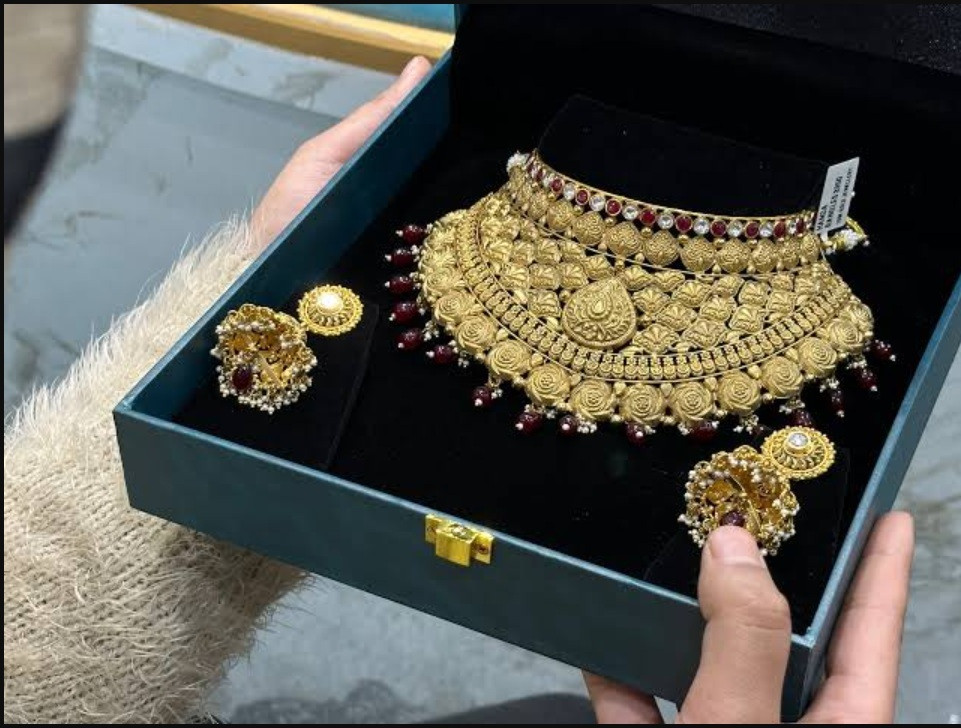
Bridal jewellery is often treated as a family's property rather than the woman's personal possession. During marital disputes or divorce, women may struggle to recover jewellery and other gifts given to them at their wedding.
For generations, a bride's jewellery has represented much more than beauty or tradition. It has symbolised love, security, and, perhaps most importantly, a woman's only personal financial asset in a society where economic independence remains elusive for many women. Yet countless women have found themselves deprived of these possessions during marital disputes, with husbands or in-laws claiming ownership over gifts that were never theirs to begin with.
The Supreme Court of Pakistan has now drawn a decisive legal line. In a landmark judgment in June this year, it ruled that a bride's jewellery and gifts cannot be retained by her husband or in-laws because they remain the exclusive property of the woman to whom they were gifted. The decision may appear to concern family property, but in reality, it speaks to something far deeper: women's constitutional rights, economic empowerment, and the limits of patriarchal control within marriage.
This ruling is not merely about gold necklaces or wedding bangles. It is about ownership, dignity, and the recognition that marriage does not erase a woman's legal identity.
Advocate Erum Faisal Khan, a family lawyer from Rawalpindi, says the issue should be viewed beyond the question of jewellery itself. In her view, the real problem is the unequal power women often face inside marriage. A woman may technically own her jewellery, but if she has no financial independence, limited knowledge of the law, and little support from her family, exercising that right can still be extremely difficult.
She points out that many women do not fight for their belongings because they fear social pressure, lengthy court proceedings, or further conflict with their families. In some cases, they may even agree to leave their jewellery behind simply to end a troubled marriage quickly. This means that having a legal right and being able to practically exercise that right are two different things.
Khan believes that society needs to change how it views a married woman's property. “A woman's jewellery should not be treated as something the family can control simply because she has entered their home,” she says. At the same time, she argues that families should stop treating gold jewellery as a measure of a successful marriage.
For her, the larger question is whether Pakistani women can exercise control over their own financial assets without fear or dependence. The solution, she argues, requires not only legal protection but also legal awareness, financial independence, proper documentation, and a change in family attitudes.
Marriage disputes in Pakistan often extend beyond emotional separation into battles over property and financial survival. While legal proceedings focus on divorce, maintenance, or child custody, another conflict quietly unfolds over jewellery, bridal gifts, and personal belongings.
In many households, the bride's jewellery is immediately placed in the custody of her husband's family, supposedly for "safekeeping." Over time, access becomes restricted. Some women must seek permission to wear their own jewellery. Others discover that it has been sold, pawned, or distributed among family members without their consent.
The problem is not merely legal; it is deeply cultural. Many families continue to believe that once a woman enters her husband's home, everything she owns automatically becomes part of the household. This assumption has survived for decades despite having little basis in law.
The Supreme Court's judgment directly challenges this mindset.
Mehwish Ahmed, a 35-year-old schoolteacher from Hyderabad, sees the issue differently. She believes that the problem is not always that families deliberately take away a woman's jewellery; often, women themselves are raised to believe that questioning such matters is disrespectful. She recalls that after her marriage, her jewellery was kept with her husband because the family considered it safer there. “I never asked who legally owned it because nobody around me talked about ownership. We were simply taught that after marriage, these things become part of the family,” she says.
For Mehwish, the real concern is what happens when family relationships change. A woman who trusts her in-laws may never think about her jewellery until a disagreement, separation, or financial crisis occurs. “When everything is fine, nobody asks these questions. The problem begins when relationships break down,” she explains.
She also believes that society places too much emotional value on gold during weddings. “Sometimes families spend more on jewellery than they can afford because they feel they have to meet social expectations,” she says. In her view, this puts pressure on both parents and brides and can turn a symbol of love into a source of conflict.
Rather than focusing only on recovering jewellery after a dispute, Mehwish believes families should discuss ownership openly from the beginning. “A gift should be a gift. If it is given to the bride, there should be no confusion about who it belongs to,” she says. For her, the larger lesson is that financial matters should not remain hidden behind family traditions, particularly when they directly affect a woman's independence.
One of the most significant aspects of the ruling is its affirmation of a simple legal principle that has often been ignored in practice: ownership belongs to the recipient of a gift.
Whether jewellery is given by parents, relatives, friends, or even the groom's family, once it is presented to the bride, it becomes her personal property. Physical possession by the husband or in-laws does not create ownership rights.
This distinction is crucial because countless women have been denied their property solely because it remained inside the marital home after separation.
To understand the broader importance of this decision, one must understand the role jewellery plays in South Asian society.
Across South Asia, women's relationship with property remains shaped by a combination of law, family traditions and social expectations. Although women have legal rights to inherit and own property in many countries, actual control over assets often remains with male members of the family.
This gap between having a legal right and being able to exercise it is particularly important in Pakistan, where questions of inheritance, dowry, bridal gifts and matrimonial property frequently intersect.
In this context, jewellery has a special significance. Unlike land or a house, gold is a portable asset that can be kept, sold or used during financial hardship. Yet its possession often becomes contested after marriage, particularly when it is kept by the husband's family.
The Supreme Court's ruling therefore raises a broader question than who owns a piece of jewellery: it asks whether a Pakistani woman can exercise meaningful control over property that is legally hers. The significance of the judgment lies precisely in this tension between formal ownership and actual control—a problem that extends beyond Pakistan to many parts of South Asian society.
For many women, especially those outside the formal workforce, jewellery functions as savings. It becomes an emergency fund during illness, unemployment, widowhood, or divorce. Gold is often the only asset over which women have personal control.
When that jewellery is withheld, women lose more than sentimental possessions; they lose economic security.
Financial dependence remains one of the strongest reasons women remain trapped in abusive marriages. Without money to rent accommodation, pursue legal action, or support children, many feel they have no choice but to return to unsafe environments.
The judgment also reflects the broader constitutional framework protecting equality and private property. Pakistan's Constitution guarantees protection of property rights without discrimination. These guarantees cannot disappear merely because a woman gets married.
Historically, however, legal rights have often collided with social customs. Patriarchal traditions have frequently overshadowed constitutional protections, particularly within domestic spaces where women have limited bargaining power.
The Supreme Court's verdict bridges this gap by reaffirming that constitutional rights extend into family relationships as well.
This ruling should not be interpreted as judicial approval of Pakistan's dowry culture.
Dowry remains a deeply rooted problem in South Asian society, including Pakistan, where families often face financial pressure to meet expensive wedding expectations. Parents may spend beyond their means on jewellery, furniture, clothing and other gifts, sometimes taking on debt in the process.
The growing extravagance of weddings also needs to be addressed, as lavish ceremonies and social competition can turn marriage into a financial burden. However, the Supreme Court's ruling on bridal jewellery should not be seen as an endorsement of dowry or excessive spending. The judgment is about ownership, not extravagance whatever is legitimately gifted to a bride belongs to her, while society must simultaneously challenge the unnecessary financial pressure surrounding weddings.
Instead, it is protecting ownership of whatever has already been voluntarily gifted to the bride. The judgment separates the issue of property rights from the harmful tradition of dowry itself.
This distinction matters because supporting women's ownership does not require supporting the customs that often accompany marriage ceremonies.
Legal victories are meaningful only when they translate into practical change.
Many women may still struggle to reclaim their jewellery because proving ownership remains difficult. Wedding gifts are rarely documented. Receipts are often unavailable. Family members may dispute who gave particular items or whether certain jewellery even existed.
Law enforcement agencies also require greater awareness of women's property rights. Domestic disputes are frequently dismissed as "private family matters," delaying or denying justice.
To make the judgment effective, several reforms deserve consideration. Firstly, documentation of bridal gifts during marriage ceremonies. Public legal awareness campaigns explaining women's property rights, faster procedures in family courts for recovering personal property and stronger police training on enforcing court orders related to matrimonial assets.
Without implementation, even the strongest judicial decisions risk becoming symbolic rather than transformative. For generations, many women have been taught to sacrifice, compromise, and avoid asserting their rights to preserve family honour. Claiming ownership over their own property has often been portrayed as selfish or disrespectful.
Changing laws is easier than changing mindsets, but legal precedents often become the first step toward broader social transformation.
Economic empowerment has long been recognised as one of the most effective tools for improving women's social status. Ownership of assets increases bargaining power within households, improves financial resilience, and contributes to broader gender equality.
When courts consistently uphold women's property rights, they strengthen confidence in the justice system and encourage more women to seek legal remedies rather than accepting injustice as inevitable.
The judgment may also influence future cases involving inheritance, maintenance, domestic violence, and financial abuse by reinforcing the principle that women's property deserves equal legal protection.
The Supreme Court's ruling is ultimately about far more than jewellery. It recognises that marriage cannot erase a woman's legal identity or transfer ownership of her personal assets to her husband or in-laws. It affirms that gifts given to a bride belong to her alone, regardless of where they are kept or who physically possesses them.
For women like Sana and for countless real women whose stories rarely make headlines, this judgment represents something precious that cannot be measured in grams of gold: the recognition that their rights do not end at the threshold of marriage.
Whether this landmark verdict becomes a turning point in Pakistan's pursuit of gender justice will depend not only on the courts but also on families, lawyers, law enforcement agencies, and society itself. Laws can establish rights, but only collective respect for those rights can turn legal principles into lived realities.
In the end, the Supreme Court has reminded the nation of a principle that should never have been forgotten: a woman's property remains her own, and justice begins by acknowledging what was always rightfully hers.
Rabia Khan is a freelance writer and researcher focusing on social issues, gender rights, and current affairs. She can be reached at rabiayousufzai26@gmail.com.
All facts and information are the sole responsibility of the writer