
By late afternoon, children had begun gathering on a dusty patch of ground inside one of Karachi’s public parks. Some chased a football across the uneven surface, while younger children waited beside swings that had seen better days. A short distance away, behind fencing and under bright floodlights, a newly developed padel court stood ready for its evening bookings.
The contrast captures the changing face of Karachi’s public parks.
Across the city, spaces once defined largely by lawns, swings, walking paths and open playgrounds are being reshaped through new sports facilities, electronic rides, cafés and other revenue-generating activities. The Karachi Metropolitan Corporation (KMC) says these changes are part of an effort to revive neglected parks, improve security, attract families and generate funds for their maintenance.
For a city where open public spaces are already scarce, investment in parks is difficult to oppose. New facilities can bring activity back to spaces that had become neglected, unsafe or underused. Yet the transformation has also raised questions among residents, planners and park users about accessibility, consultation and the priorities guiding these developments.
Are commercial facilities helping restore public parks, or are they beginning to occupy the spaces and resources meant for children, walkers and families who cannot afford to pay? And when communities try to restore neglected parks themselves, do city institutions support them or stand in their way?
Visits to public parks across Karachi reveal a city attempting to reinvent its recreational spaces, but also struggling to ensure that improvements are shared equally across the park, and across the population it is meant to serve.
A changing public space
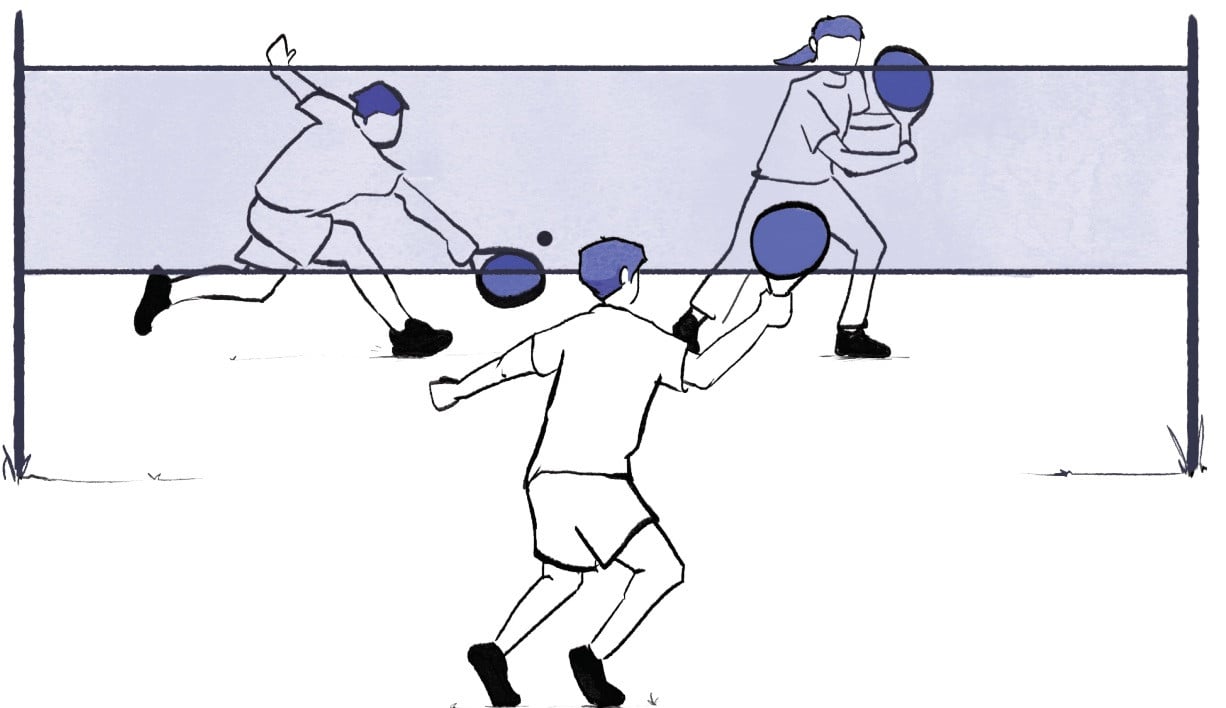
For years, Karachi’s public parks were seen as simple neighbourhood spaces where children gathered around swings, families spent evenings on benches, and residents found a rare patch of greenery amid the city’s growing concrete landscape. Today, many of those same parks are taking on a different character. Alongside jogging tracks and landscaped lawns, visitors are increasingly finding fenced padel and pickleball courts, electronic rides, cafés and other commercial activities occupying spaces that were once freely accessible to everyone.
The transformation is part of the KMC’s wider effort to revive public parks that had long suffered from neglect, encroachment and poor maintenance. According to Director General Parks Junaid Ullah Khan, the city has planted hundreds of thousands of trees, removed boundary walls to improve visibility and security, and introduced public-private partnerships to develop sports facilities that would attract more visitors while generating revenue for park maintenance. Khan said the objective behind introducing new recreational facilities was to encourage families to return to public parks, arguing that neglected spaces would continue to lose visitors unless they evolved with the city’s changing recreational needs.
Karachi's public parks are managed by two tiers of local government. KMC oversees the city's 53 major parks—generally those spread over more than two acres—while hundreds of neighbourhood parks fall under the jurisdiction of the respective Town Municipal Corporations (TMC). Although KMC occasionally assists with the restoration of local parks, their day-to-day upkeep remains the responsibility of the TMCs.
On the ground, however, the experience of many park users is more complex.
A resident of Gulshan-e-Iqbal, Ahsan Ghaffar, who regularly takes his children to public parks, said the issue is not the introduction of new sports but the gradual disappearance of the facilities that ordinary families have relied on for decades.
“The areas where children used to play are now being occupied by different commercial activities, whether it’s electronic rides given on contract or other businesses,” he said. “Public parks and playgrounds are vanishing in Karachi.”
He said many neighbourhood parks remain poorly maintained, with broken swings, little greenery and no proper jogging tracks, forcing families to travel to parks inside gated communities where facilities are better maintained. Even there, access is often restricted.
For him, the growing number of paid facilities also raises questions about accessibility.
“If these courts are being built inside public parks, they should be available for all citizens instead of catering to a specific segment,” he said, arguing that many families simply cannot afford them. “These are expensive activities, and in some public parks, access around the courts also appears restricted.”
KMC maintains that such projects are introduced only after consulting residents, particularly in neighbourhood parks where commercial sports facilities may affect nearby communities. Khan said while it is impossible to satisfy everyone, decisions are taken after meetings with residents and reflect the views of the majority. He argued that these developments have replaced spaces once associated with drug use and other illegal activities with cleaner, safer environments that attract families back to public parks.
Residents living next to some of these parks, however, dispute that process. One resident from PECHS, whose apartment directly overlooks a park where padel courts have been built, said those most affected by the development were never consulted before construction began.
“We’re now trying to live with this reality,” the resident said. “We have to bear the noise every night, with games continuing until late and cars parked outside our homes. The people living right in front of the park, the ones most affected, were never asked.”
Rather than questioning the popularity of newer sports, residents interviewed for this story repeatedly returned to a broader concern: whether the transformation of public parks is taking place in a way that preserves their original purpose as free, inclusive spaces for children, families and the wider community.
When residents become caretakers
A year ago, the first trees went into the ground.
There were no government grants or official restoration projects behind the effort. Instead, around 20 to 25 residents of Landhi began contributing between Rs10,000 and Rs15,000 every month to reclaim a neighbourhood park that many had long written off as abandoned. Together, they planted trees and grass, repaired damaged sections, arranged water for irrigation and slowly transformed the neglected space into a functioning family park.
For Ahsan Kazmi, one of the residents leading the initiative, the motivation was simple. “We weren’t trying to create something extraordinary,” he said. “We just wanted our children to have a safe place to play. A park is supposed to belong to the community, so instead of waiting for someone else, we decided to take responsibility ourselves.”
The change, he says, was gradual but visible.
Children who once had nowhere to spend their evenings now return to the park to play while parents walk along its pathways, walking tracks or sit together in the shade. Families that had stopped visiting because of safety concerns have returned, and the space has once again become part of the neighbourhood’s daily life.
“When we started, many people criticised us and doubted whether we could maintain it,” Kazmi said. “Today, even those same families bring their children here. Women, children and entire families have started coming back because they now see it as a safe and green environment.”
Ironically, the idea of community ownership closely mirrors KMC’s own vision for public parks. The DG Parks Khan said the department has established 'Baghban' committees, comprising local residents, to help preserve and maintain parks across the city. He said involving communities creates a sense of ownership, discourages illegal activities and helps protect public spaces in ways that government alone cannot.
The Landhi park restored by Kazmi and other residents falls under the jurisdiction of the relevant TMC rather than KMC. While KMC says it supports community stewardship through initiatives such as its 'Baghban' committees and may assist TMCs with restoration work, routine management of neighbourhood parks remains the responsibility of the local town administration.
Kazmi agrees with the principle but questions how consistently it is applied. While volunteers in Landhi restored the park through community donations and local effort, Kazmi alleges that they have not always received support from the local Parks Directorate. Instead of encouraging residents who were investing their own time and money into improving a public space, he says, they were at times met with indirect resistance.
“If the government wants people to take ownership of parks, then it should support those who are already doing exactly that,” he said. “Communities can look after these spaces, but only if the institutions responsible for them become partners instead of obstacles.”
The Director Parks, Landhi, could not be reached for comment.
The experience in Landhi reveals a gap between a policy articulated at the city level and its implementation within individual districts. While KMC describes community stewardship as an important part of its strategy for restoring public parks, residents behind this grassroots effort say such participation still depends heavily on whether local officials are willing to support it.
The park on paper and the park on the ground
KMC has a clear vision for what its parks should become. According to DG Parks, Khan, only around 10 to 15 per cent of a park is allocated for commercial activities such as padel and pickleball courts, while 50 per cent reserved for greenery, 20 per cent for children’s play areas and rest for walking and cycling tracks. Revenue generated through public-private partnerships, he said, is reinvested into park maintenance and development.
A visit by The Express Tribune to nine public parks across Karachi—some managed by KMC and others by the city's TMCs—found that this vision is yet to be reflected consistently on the ground.
From Shaheed Benazir Bhutto Park at Boat Basin and Bagh-e-Macca in Clifton to Hill Park, Bagh Ibn-e-Qasim, Kidney Hill, Ahmed Raza Park and Landhi Model Park in Landhi, and public parks in Shah Faisal, conditions varied widely. While some parks showed signs of recent improvement, many continued to struggle with the very issues KMC says it is working to address. Many of the parks found to be in poorer condition were neighbourhood parks managed by the TMC.
Broken swings remained a common sight. In several parks, children’s play areas had only been partially restored, while jogging tracks consisted of little more than worn sandy paths. Cycling tracks, which KMC says form part of its broader development strategy, were absent from most of the parks visited. Green spaces, where they existed, were often poorly maintained, with dry patches replacing lawns and vegetation left unattended.
Perhaps the most striking contrast was in the upkeep of commercial facilities compared to the rest of the park.
Padel and pickleball courts were generally well maintained, brightly lit and actively used, while only a few metres away children attempted to play football across uneven and dusty patches where grass had long disappeared. In some parks, overflowing bins and litter scattered across open spaces stood in contrast to the cleaner, better-managed commercial sections.
Urban planner Muhammad Toheed believes these differences reflect a broader planning challenge rather than simply a maintenance issue. “A public park is first and foremost a public commons,” he said. “It should remain a place where children can play freely, older people can walk, families can gather and communities can interact. New recreational facilities can certainly be introduced, but they should complement these functions rather than gradually replacing them.”
He argues that the debate is not about whether sports such as padel or pickleball belong in public parks. Instead, it is about ensuring that the introduction of commercial activities does not outpace the provision of the facilities that serve everyone, regardless of age or income.
For now, that balance remains a work in progress. KMC’s plans envision greener parks, better play areas and improved recreational facilities, but across much of the city, many neighbourhood parks are still waiting for that vision to become reality.
KMC says its plans for Karachi’s parks extend beyond the facilities that already exist.
According to DG Parks, Khan, the department is working on developing an urban forest on the former Aladdin Park site, where tens of thousands of trees are planned over the coming years. He also said KMC hopes to introduce more family-oriented attractions, including small zoos, cafés and barbecue areas, while continuing to expand children’s play areas, jogging tracks and cycling facilities. The aim, he said, is to encourage more people to use public parks while generating the revenue needed to maintain them.
Whether those plans translate into better neighbourhood parks, however, will ultimately depend not only on future projects but also on how consistently the city’s existing commitments are delivered.
The future of public parks
There is little disagreement that Karachi’s public parks need investment. Years of neglect, encroachment, weak maintenance and limited public funding have left many neighbourhoods without the green and recreational spaces their residents need. New sports facilities, private investment and community participation can all form part of the solution.
But a public park cannot be judged only by the number of visitors it attracts, the revenue it generates or the new facilities built within it. Its success also lies in whether a child can play without paying, whether an older resident has a safe track to walk on, whether families can find shade and greenery, and whether nearby communities have a say in how their shared spaces are transformed.
KMC’s plans suggest an ambitious future: urban forests, restored playgrounds, jogging and cycling tracks, family attractions and better-maintained parks. Community initiatives such as the one in Landhi demonstrate that residents are also willing to contribute their time, money and effort when they feel a park truly belongs to them.
The challenge is bringing those two visions together.
Commercial development does not necessarily have to come at the expense of public access, nor should community ownership replace the responsibility of government. Both can coexist, provided that development remains transparent, proportionate and rooted in the needs of the people who use these spaces every day.
For Karachi, the question is therefore not simply whether its parks should change. They inevitably will. The more important question is whether, after all the new courts, cafés, attractions and partnerships, they will still remain public in more than name.