
Over the past few years, the province of Sindh has been grappling with the severe impacts of climate change, including water scarcity, unpredictable rainfall, changes in agricultural dynamics, and coastal erosion due to sea intrusion. Owing to the increasing impact of climate change, the coastal region of Sindh, which includes the districts of Thatta, Sujawal, Badin, and Ibrahim Hyderi, has been at the receiving end, bearing the brunt of this phenomenon.
Allah Bachayo Themore, a farmer from the remote village of Qasim Themore in Taluka Jati, recalls the good old days when the coastline of Sindh, including Sujawal, was fertile and farmers earned well by harvesting crops such as red sugarcane, turmeric, red rice, onions, cotton, chilies, and paddy. He said, “Around two decades ago, the coastline was like a hen laying golden eggs for farmers and fishermen. But as time went by, things started aggravating for us, mainly due to the environmental crisis causing the advancement of seawater.” He further said that the fate of the coastal population has been hanging between floods and droughts for the past many years, as natural disasters have become a matter of routine for them.
Another villager, Wali Muhammad, belonging to the ill-fated locality, said that before the start of the 21st century, people had never imagined such devastation, but by the end of the 20th century, the signs of environmental degradation had started emerging, which further worsened as time went by. The coastal region was badly affected by the cyclone of 1999, heavy rains of 2003, and flash floods of 2010, 2015, and 2022. Besides that, the scarcity of irrigation as well as potable water has been a constant quandary. The agricultural sector which was once the mainstay of the coastline is now on the back foot, mainly due to surging temperatures, an inconsistent and inadequate supply of water, and hypersalinity. Javed Ahmed Merbahar, a local grower belonging to the Kalka Chani area of Taluka Jati, District Sujawal, claimed that bumper crops of the locality, including canola, sunflower, sugarcane, and paddy, have been giving low yields for the past many years, affecting the overall economy of the area.
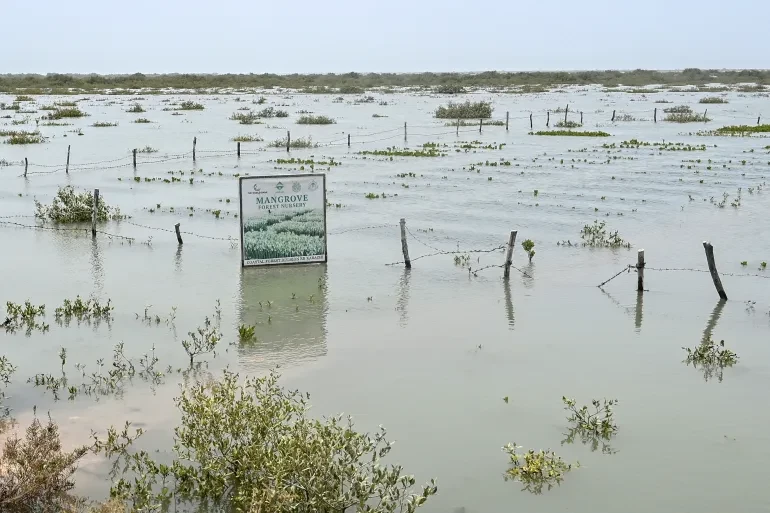
He further mentioned that hundreds of acres of agricultural land in the coastal region of the province had turned barren and fallow due to several reasons, prominent among which are the dearth of water, persistent warm weather, a paucity of resources, and sea intrusion. “Not only growers but the fisherfolk have also suffered owing to the harshness of the weather and the nightmare known as the invasion of seawater,” he said, adding that the sources of livelihood for fishermen had shrunk following the penetration of seawater into freshwater lakes, which has pushed several fish species to extinction.
“The famous natural lakes of the past — Chaubhati, Til, Chann Bhelo, Karr, Kalkaan Channi, and many others — have vanished into the sea. Today, there is no sign of their existence,” stated fisherman Mureed Malah. He further noted that the constant shortage of water had not only led to the drying up of lakes but also caused the annihilation of fish species. Palla (Tenualosa ilisha), Pallery (Gudusia chapra), Popro (Barbus sarana), and Morakhee (Cirrhinus mrigala) are among the fish species that are now on the verge of extinction due to the ongoing situation, he warned.
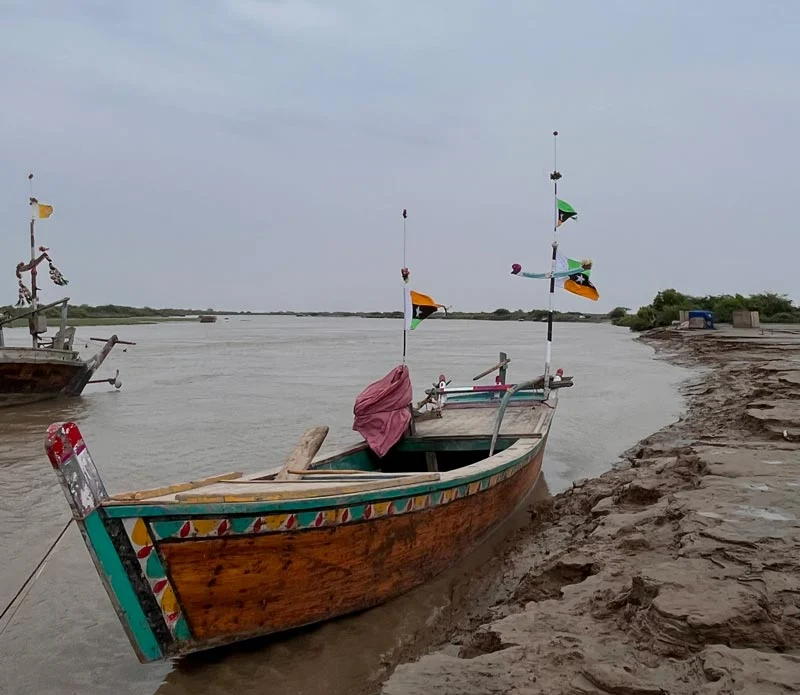
Haji Zahid Ishaque Soomro, senior journalist, researcher, and historian from Jati town believes that the seawater advancing towards residential areas along the coastline has already swallowed approximately 2.6 million acres of land in the delta region, particularly around Keti Bunder, Kharochan, Bagan, and Shahbandar in the Thatta and Sujawal districts, with around 124 dehs of both districts being adversely affected. If coastal erosion continues at the current pace, experts warn that Shahbandar could disappear by 2035, while seawater may reach Thatta city by 2050, he claimed, adding that the Indus Delta, where the freshwater of the Indus River meets the Arabian Sea, extends along roughly 250 km of coastline.
In the 1950s and 1960s, the delta was renowned for its fertile soil and prosperous agriculture. Over the decades, however, reduced river flows have destroyed vast tracts of farmland. Sea-level rise is one of the most evident impacts of climate change and global warming. It threatens a number of species, settlements, and ecosystems. The rise in sea levels usually occurs due to an increase in global temperatures, leading to the melting of ice in glaciers, which then merges with seawater.
The dilemma of sea erosion has forced hundreds of families to leave their ancestral villages and shift to safer areas. “During the last 30 years, the villagers of Qasim Themore and Ishaque Themore have migrated four times to evade the wrath of the sea,” said Haji Zahid, adding that there have been several fertile areas that were swallowed by the advancing seawater. Various historical sites and small ports went under the sea over the past two decades. “The Shrine of Hazrat Sambo Shah, the kinsman of Shah Abdul Latif Bhittai, several other shrines of local saints, the site of Marru, Allahyo Port, Khado Port, Sokhi Port, and a considerably large portion of Kharochan, a coastal town in the Sujawal district, have already been swallowed by the violent sea,” said Soomro.
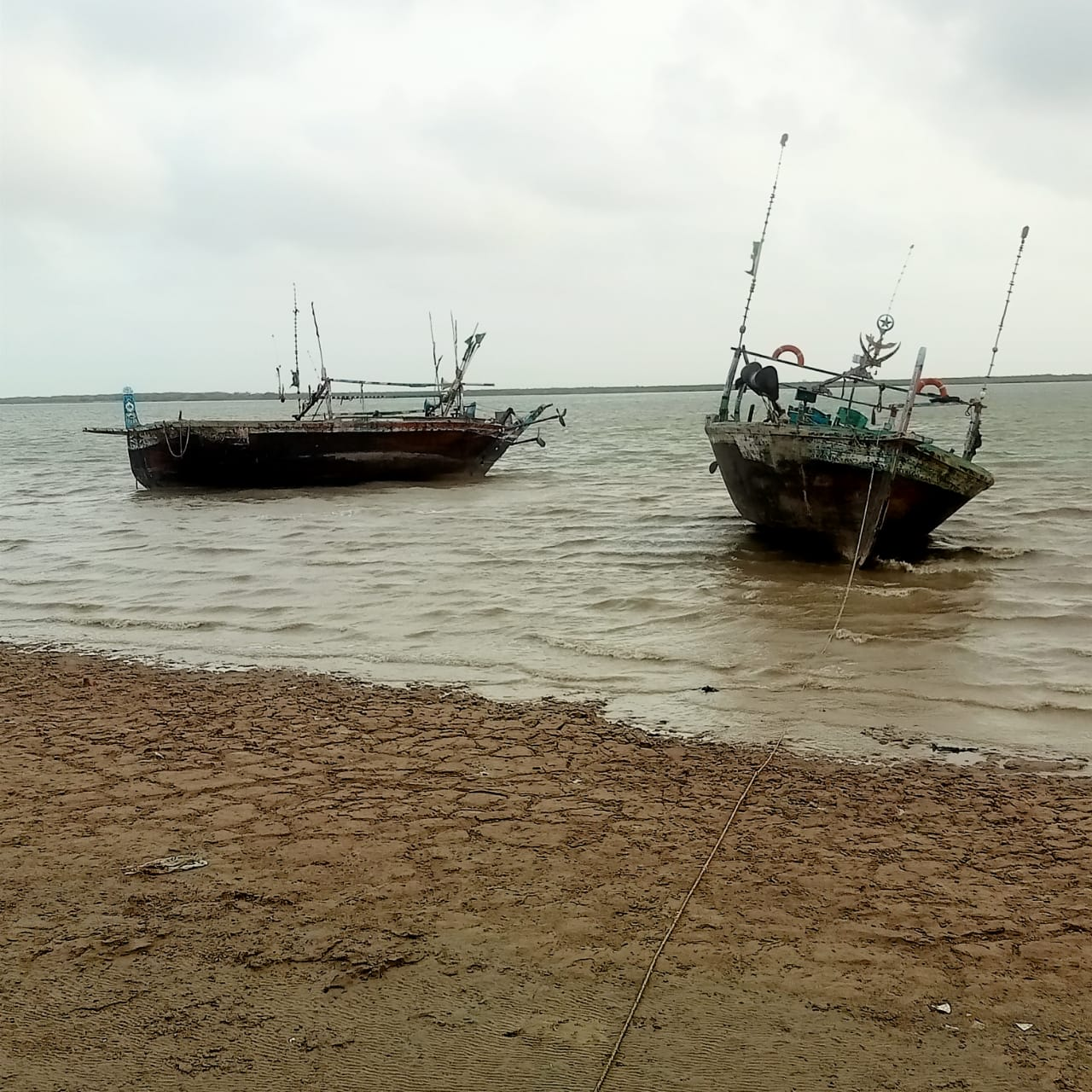
He also discussed the degradation of the Indus Delta following an insufficient flow of water in the Kotri Downstream. “For the past many years, this part of the province has not been getting the required quantum of water necessary to keep the beauty of the Indus Delta intact and keep the sea at bay,” said Soomro, adding that in the past, there were around 17 creeks where the Indus River met the mighty Arabian Sea in the deltaic region, which have now been reduced to four.
Social activist Adil Laghari said that following the shortage of water, the underground water has turned brackish, and no measures have so far been taken to do away with the scarcity of water along the coastline of Sindh. He also stated that the local communities are unaware of the growing threat and have a non-serious attitude towards this crucial issue.
Deforestation and a lack of awareness among the common folk about the importance of plantation have further aggravated the situation, said journalist Muhammad Iqbal Khowaja, adding that Thatta and Sujawal were famous for their thick forests stretching over thousands of acres of land, but owing to the negligence of the forest department, the forest area has now shrunk. Noor Muhammad Themore, a local social activist and an official of the Pakistan Fisherfolk Forum, said that fishermen have suffered the most as a result of climate change. “The sea has advanced into residential areas, forcing people to migrate,” said Themore, adding that 60 percent of the fishermen community living in the coastal region for centuries had migrated to Dadu, Nawabshah, and Jamshoro because their source of income here had shrunk after erratic environmental changes in the region.
The world is taking the issue of climate change seriously by launching multiple projects to lessen its impact, but Sindh is far from realising the gravity and aftermath of this global phenomenon. Speaking on legislation and policies related to climate change and environmental degradation, Advocate Syed Ali Imran Shah Bukhari stated that while laws exist, they lack an effective implementation framework. “The Pakistan Climate Change Act, 2017 is a comprehensive federal law enacted to fulfill Pakistan’s international climate obligations, such as those under the Paris Agreement, and to expedite policies for climate adaptation and mitigation,” he said. The invasion of the sea along the coastline is increasing alarmingly, which could plunge the future of the Thatta, Sujawal, and Badin districts into darkness. A strong political will and determination by the common folk and civil society are required to drag the coastal population of this country out of this quagmire. The government should take meaningful measures to prevent the degradation of the Indus Delta and restore its lost glory.
The writer is a lawyer and freelance journalist.
All facts and information are the sole responsibility of the writer