
Theaters filled with laughter, cheers, and applause as kids watched the fifth installment of Pixar’s Toy Story 5 which debuted to a massive $312 million worldwide, making it the largest opening weekend in Disney and Pixar's animated series history. At home in North America, it raked in $160 million, marking the biggest domestic film opening of 2026 and the second-best animated opening ever.
Through visually striking, and detailed animation blending flawless photorealistic environments with a more playful, classic cartoon aesthetic, kids watched Jessie and the toy gang trying to win back the attention of their owner Bonnie, after her parents gave her a high-tech, disruptive tablet device named Lilypad. What they didn’t realise was that quite unexpectedly, the film flags the crucial issue dominating families with children across countries and cultures – screentime – stuff that their parents and teachers are always going on about. Had they known the film would arm parents with yet another lecture on screen addiction, they might have staged a boycott. But kids are kids, and thankfully so.
Exploring deep themes that resonate strongly with adults, through its fast-paced action and familiar, lovable characters, the film asks an uncomfortable question: Have screens stolen childhood?
Instead of recycling familiar Toy Story territory—lost toys, abandoned toys or finding a new owner—the fifth installment shifts the battleground to something far more contemporary. Bonnie no longer drifts away from her toys because she has grown up. She abandons them for Lilypad, a sophisticated AI-powered learning tablet that promises entertainment, education and instant companionship in one glowing screen.
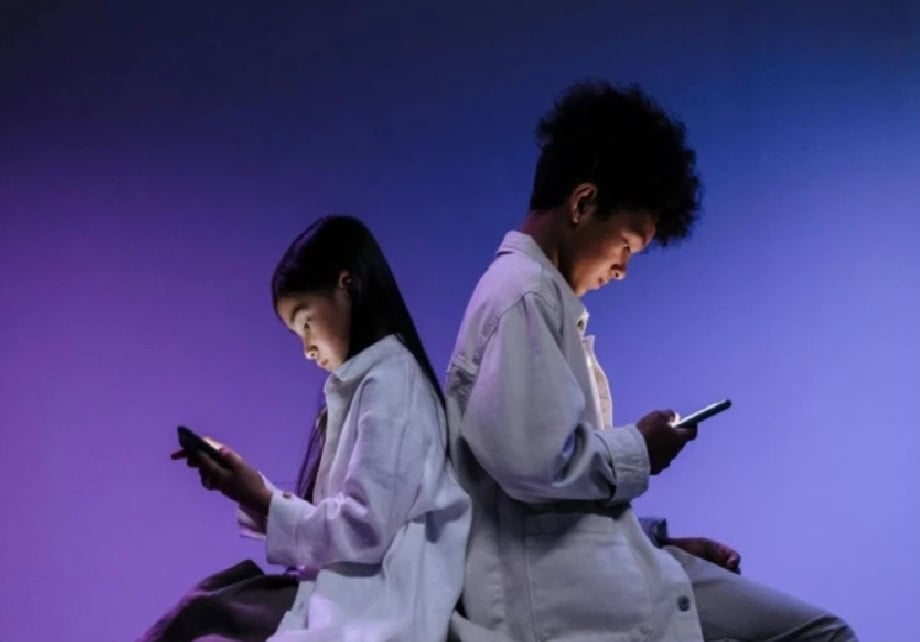
As I watched the film, Lilypad jolted my mind to the lingering memory of a family and friends’ weekend trip to Ormara, a few years ago. Three children boarded the coaster holding ipads, their eyes fixed on the screens. They didn’t look excited about the trip, didn’t smile or greet people. Zombie-like, they were glued to their devices.
Globally, children's daily screen time varies heavily by age, but averages range from 2.5 hours for toddlers to over 8.5 hours for teenagers. Exposure increases rapidly as children grow, largely driven by social media, online gaming, and short-form video content. The World Health Organisation (WHO) recommends no screen time for children under age 2 and from ages 2 to 5, a maximum of one hour per day. However, there is research available to show that co-viewing, educational content and parental involvement greatly reduce many of the risks.
Exploring the clash between traditional play and modern technology, Toy Story 5 has become Pixar's most polarising film in years, splitting parents, critics and lifelong fans into two fiercely opposed camps.
For one side, Toy Story 5 is an overdue wake-up call seen as a bittersweet reflection of a generation increasingly raised by tablets rather than imagination. Critics argue the film captures the quiet disappearance of creative play, where children once invented entire universes from cardboard boxes and action figures but now consume carefully scripted digital experiences. The toys are no longer competing with another toy—they are competing with an algorithm. Much of what happens on screen provides “impoverished” stimulation of the developing brain compared to reality, he says. Children need a diverse menu of online and offline experiences, including the chance to let their minds wander. “Boredom is the space in which creativity and imagination happen,” says Michael Rich, paediatrician, director of the Centre on Media and Child Health at Boston Children’s Hospital, and associate professor of social and behavioural sciences at the Harvard TH Chan School of Public Health.
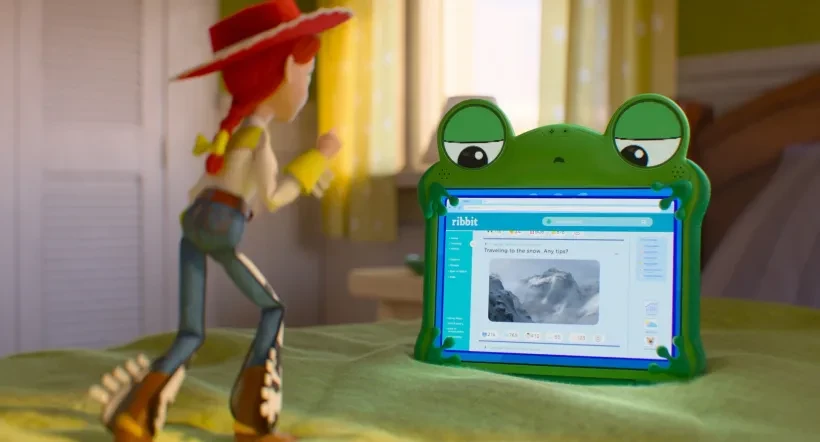
Toy Story 5 also ventures into territory rarely explored by animated blockbusters: cyberbullying, online peer pressure and the emotional minefield of children's digital lives. Bonnie's interactions through Lilypad expose the darker side of virtual socialisation, echoing the very real anxieties of parents struggling to negotiate screen limits in an age where childhood increasingly unfolds online.
According to Tom Hanks, who voices Woody, the main character and protagonist in Toy Story, the latest sequel highlights children's addiction to screens, an issue that he says strikes "terror in the heart".
Hanks revealed that the cast related to the storyline because they had all "met that disinterest" of young people who "look down at their phone, look up, look down, look up".
"This is a generational thing," he said in an interview to the BBC, "where one generation has this thing that defines them technologically in society, and they pour everything into it."
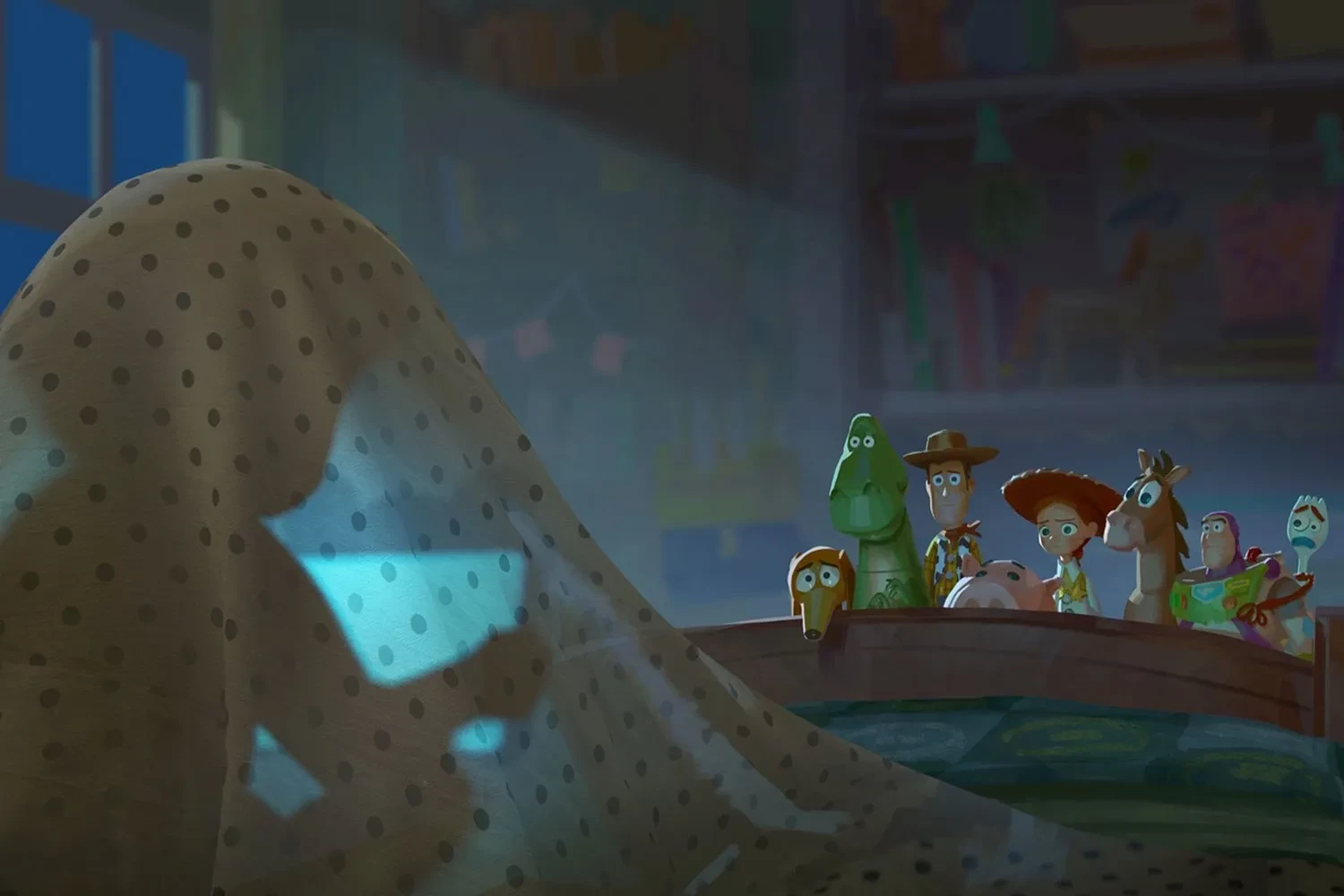
The actor highlighted "a moment in the movie where we look out on the cityscape and we see that blue glow of a phone in bedrooms and whatnot, and it does strike terror into the heart".
Importantly, the film isn't asking families to throw tablets out of the window. Its message is balance -- a healthy balance where kids learn to navigate both physical play and digital spaces. This would be the new-age hybrid kid. Proponents point out that the film doesn't completely demonise tech; rather, it promotes a healthy balance where kids learn to navigate both physical play and digital spaces.
Technology isn't the villain; replacing every moment of imagination with a screen is. The ideal child, according to the film, is one equally comfortable building castles from cushions and navigating digital worlds responsibly.
Children didn’t boycott the film nor protested against it, but the film has its fair share of critics.
To them, Toy Story 5 romanticises an era that no longer exists. The toys become stand-ins for nostalgic adults lamenting a past that today's children never had. That is why they think it feels less like thoughtful social commentary and more like two hours of adults wagging a finger at children for living in the world adults themselves created. Critics feel the film does not understand modern childhood, and is somewhat full of hypocrisy. They might not be wrong there.
After all, the anti-screen sermon comes from Disney—a company that earns billions through streaming platforms, mobile apps, digital games and tech-heavy merchandise. Fans also pointed out the irony of a corporation warning about excessive screen dependence while simultaneously selling the very digital ecosystem it appears to criticise. Adding fuel to the fire, Disney is reportedly marketing real-life Lilypad merchandise, turning the film's supposed villain into another commercial opportunity.
As if that wasn't enough, there was another controversy.
In an awkward exchange, Jessie dismissively refers to digital toddler toys as "your kind" and it didn’t sit well with audiences. Probably intended as a light-hearted joke about traditional and electronic toys, the reference quickly spiralled into accusations of a clumsy metaphor for prejudice and exclusion. Social media, unsurprisingly, had a field day.
What the makers hadn’t anticipated was that Toy Story 5 has become about far more than talking toys. It has turned into a debate on modern parenting, childhood, technology and nostalgia itself.
Whether audiences see it as an essential cautionary tale about the virtualisation of childhood or a sentimental cash grab exploiting parental anxiety probably, the tech vs toys debate that the film fuelled has social media buzzing.
In reality, discussions with many parents reveal that tech saves them from burnout. Many parents feel overextended and despite knowing the risks, they use screen time as a survival tool to cook meals, work, or simply catch their breath, and dare I say, to do a bit of scrolling themselves.
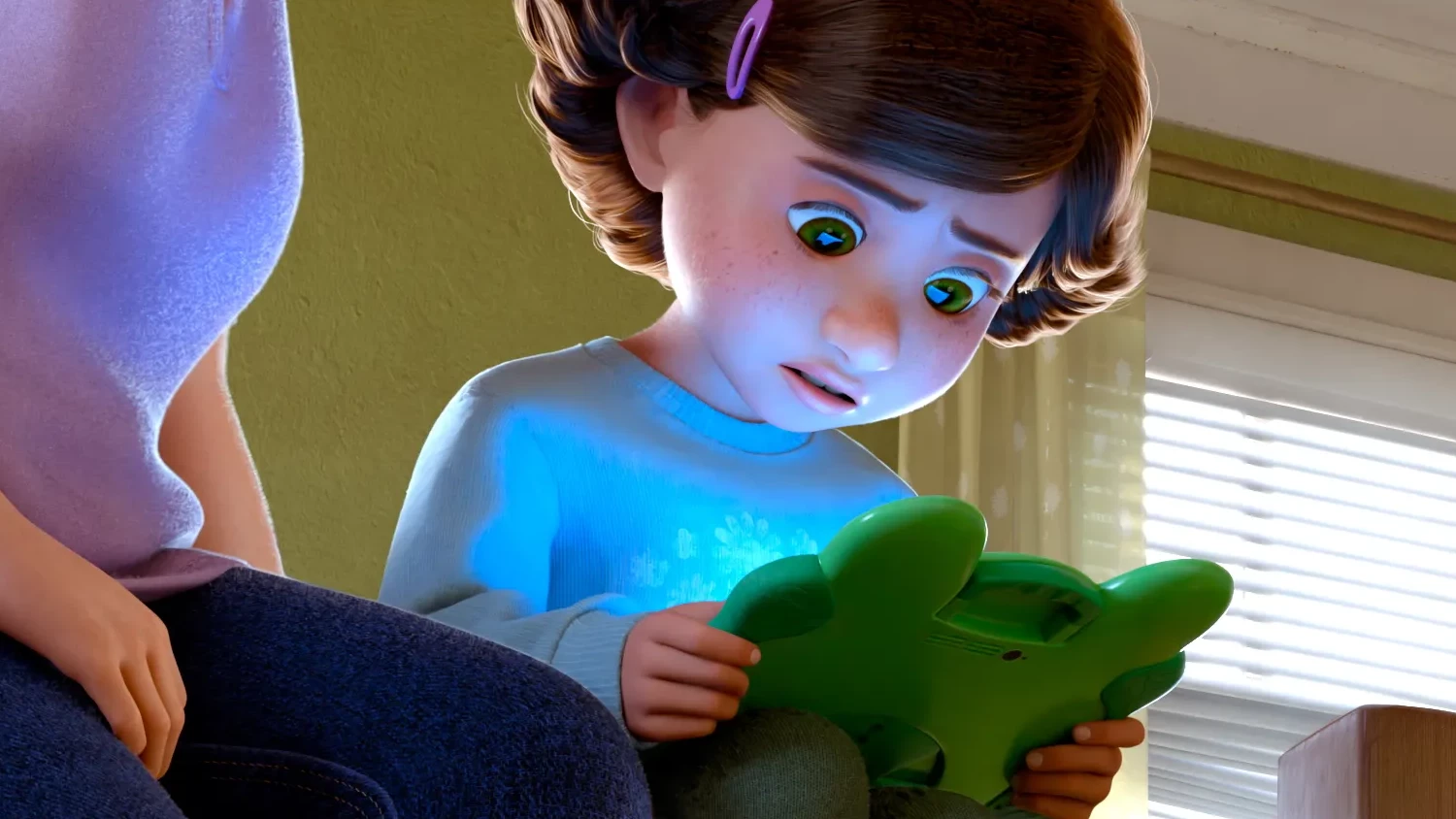 According to surveys, it is a daily battle of meltdowns and exhaustion to enforce strict rules can leave parents feeling too drained to engage in alternative activities, leading them to give in and use screens as a recovery aid.
Let’s look at it from a different perspective. Why are screens so irresistible in the first place? Perhaps the biggest weakness in the "toys versus technology" argument is that it assumes the contest is fair.
It isn't.
Buzz Lightyear, Woody and Jessie are competing against some of the smartest software engineers, behavioural psychologists and AI experts in the world. Apps and games are deliberately designed to keep children engaged through colourful visuals, endless novelty, rewards, sounds and constant feedback. Every swipe offers another surprise. Every level promises another achievement. Every video automatically leads to the next one.
Traditional toys simply cannot compete.
Unlike a doll or a cowboy action figure, a tablet evolves every minute. It remembers what a child likes, recommends more of it and constantly adapts to hold their attention. In many ways, Lilypad isn't just another toy in Bonnie's bedroom. It is a personalised entertainment system designed to become her favourite companion.
That is why experts increasingly argue that the debate should not be about blaming children for preferring screens. Adults created technology that is extraordinarily good at capturing attention. Expecting a six-year-old to consistently choose a wooden train over an endlessly entertaining digital universe may be asking too much.
The challenge, therefore, is not to eliminate technology but to teach children how to live alongside it without allowing it to consume every waking moment.
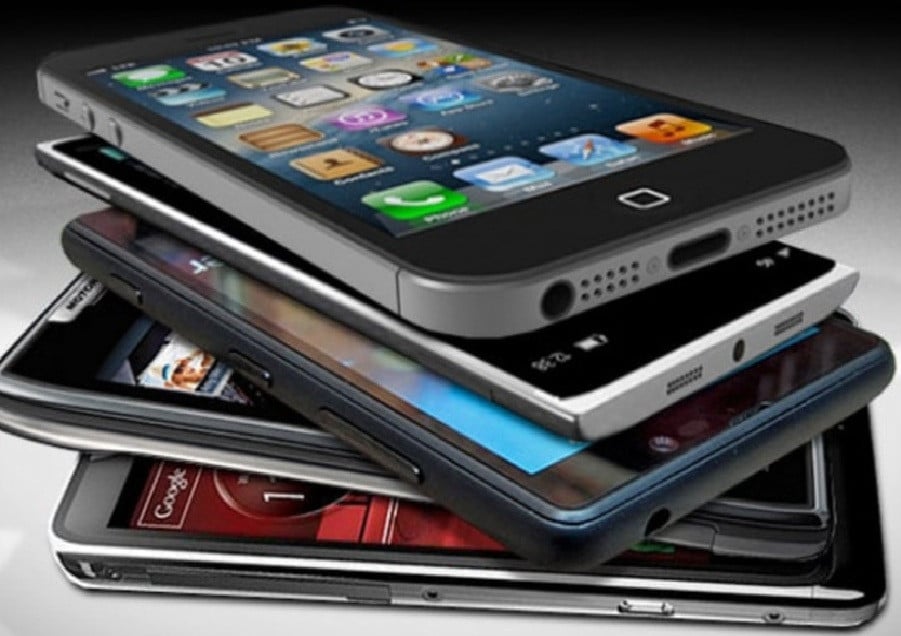
The other side of childhood
Yet children themselves would probably tell a very different story. To many of them, the tablet is not replacing childhood—it is part of childhood. “When the kids in my building come out to play, we have a lot of fun playing football, cricket and hide-and-seek,” says nine-year-old J, who doesn’t like to tell strangers his full name. He is quite aware of the dark side of Roblox and social media, and hence is hesitant to allow his photos to be put up on social media. “Although hide-and-seek is better played during power cuts as it gives us more options.”
Responding to being told how screens may be destroying his imagination, he quickly says, “Yesterday my friends sat in a parked auto rickshaw, I pretended to be the driver and my friends were my passengers. We pretended to be on a journey to Lahore!”
Previous generations collected marbles, comic books or cricket cards. Today's children build worlds in Minecraft, design houses in Roblox, collaborate with friends online, watch science experiments on YouTube and learn dance routines from TikTok. Their playground increasingly stretches far beyond the neighbourhood park.
To adults, that may look like isolation. To children, it often feels like a connection.
The challenge is recognising that digital childhood is not automatically an inferior childhood. It is simply a different one.
Toy Story 5 acknowledges this reality better than many expected. Lilypad is never portrayed as an evil machine bent on destroying children. The problem begins only when the balance disappears—when every free moment is consumed by a glowing screen and imagination is outsourced to an algorithm.
Perhaps that is why the film has resonated so widely. Every family has had the same conversation. Every parent has uttered the same sentence: "Enough screen time." Every child has rolled their eyes in response.
Pixar simply transformed that familiar household argument into a two-hour adventure.
And judging by the passionate reactions it has sparked, the discussion is far from over.