
Every diplomatic relationship has an origin story, shaped in different ways by ideology, necessity, or circumstance. Pakistan–China ties were not born out of ideology or emotion, but out of geography, timing, and a shared reading of a region still taking shape in the early years after independence.
Seventy-five years later, the partnership has outlasted conflicts, Cold War alignments, sanctions, regime changes, and shifting global power structures. It has expanded from cautious recognition in the early 1950s to a strong strategic ecosystem spanning defence cooperation, infrastructure development, trade corridors, and diplomatic coordination.
Former Pakistan Air Force officer and analyst SM Hali describes the foundation in simple terms: the durability of the relationship, he says, “rests on mutual trust and shared strategic interest.” Unlike transactional alliances, particularly those Pakistan has historically experienced with Western powers, he argues this relationship has been shaped by consistency rather than conditionality. That distinction runs through the entire arc of what is now widely seen as an indispensable alliance between Islamabad and Beijing.
Recognition in a divided world
When Pakistan emerged as an independent state in 1947, the global order was already hardening into competing blocs and the Cold War further shaped alliances, aid, and security partnerships. Pakistan aligned itself with Western-led defence structures such as SEATO and CENTO, seeking security guarantees in a volatile neighbourhood. But even as it leaned West, Pakistan moved early to recognise the People’s Republic of China in 1951. At a time when much of the world still recognised Taiwan as the “Republic of China,” Islamabad’s decision carried both diplomatic and symbolic weight.
China, newly established and largely isolated from Western institutions, saw value in Pakistan’s early recognition. Islamabad, in turn, saw a rising power to its north that could provide strategic balance in a region increasingly defined by rivalries. Hali notes that both countries, from the beginning, “recognized each other as reliable partners in a turbulent region,” describing it as a relationship that was not yet deep but was stable and, more importantly, open-ended.
Alignment under pressure
The 1960s marked the first real test and expansion of Pakistan–China ties. Regional wars, shifting alliances, and changing global dynamics exposed the limits of Islamabad’s reliance on Western security frameworks.
After the 1965 war with India, Pakistan’s expectations of external military support were not fully met. Western arms restrictions further constrained its defence capacity. At that moment, Beijing’s role began to change from diplomatic partner to strategic supplier. Hali recalls that “China stood by Pakistan during sanctions and wars,” while Pakistan simultaneously faced restrictions from traditional Western partners. At that time, China itself had limited military capacity, but it still extended whatever support it could.
The 1963 border agreement between Pakistan and China further strengthened political trust. It peacefully demarcated a sensitive frontier in the Karakoram region and signalled a willingness on both sides to resolve disputes through negotiation rather than confrontation. This period also marked the beginning of a deeper strategic logic: Pakistan needed diversification in its external partnerships; China needed regional connectivity and diplomatic allies in a largely hostile international system.
China’s recognition
One of the most significant but often understated chapters in this relationship came during the 1960s and early 1970s, when China was still excluded from major global institutions, including the United Nations.
Hali points out that much of the international system at the time still recognised Taiwan as the legitimate government of China. In that environment, Pakistan “stood firmly by Beijing’s side,” supporting its case for international recognition. He argues that this support became a defining element of trust. “China has never forgotten that loyalty,” he notes, adding that Beijing reciprocated through consistent diplomatic and strategic backing in the decades that followed.
According to Hali, that early alignment later shaped how China viewed Pakistan—not just as a regional partner, but as a reliable state that had supported its entry into the international system at a critical historical moment.
A diplomatic bridge
The early 1970s marked a turning point in global geopolitics and Pakistan played a central role. Through backchannel diplomacy, Islamabad facilitated the secret contact between the United States and China that eventually led to Henry Kissinger’s visit to Beijing in 1971 and US President Richard Nixon’s landmark visit the following year.
This episode fundamentally reshaped global alignments, ending China’s isolation and redefining Cold War dynamics. For Pakistan, the moment elevated its diplomatic significance. For China, it reinforced Islamabad’s value as a trusted intermediary capable of operating across rival blocs. By the end of that period, the relationship between Beijing and Islamabad was no longer just bilateral, it became strategically global.
Survival and continuity
Over the following decades, defence cooperation became one of the most visible pillars of the ties between Beijing and Islamabad. China emerged as a key supplier of military hardware to Pakistan, particularly during periods when sanctions limited access to Western systems. Over time, this relationship evolved from procurement to co-production and joint development. Aircraft systems, missile platforms, and training collaborations expanded steadily. The JF-17 Thunder program became one of the most visible symbols of this cooperation, reflecting a shift from dependency to joint capability development.
Hali, drawing from his own experience in the Pakistan Air Force, describes this phase as critical to Pakistan’s operational continuity. In earlier decades, when Western supplies were restricted, “China supplied us with everything that was available,” he recalls. But he also frames defence cooperation in broader terms: it ensured “security assurances” that allowed Pakistan to maintain strategic balance in a difficult regional environment.

Security to development
If defence cooperation defined the early structure of the relationship, the China–Pakistan Economic Corridor (CPEC), launched in 2015, redefined its scale. CPEC was envisioned as a transformative infrastructure and connectivity initiative linking China’s western regions to the Arabian Sea through Pakistan. It included energy projects, highways, rail links, industrial zones, and the development of Gwadar Port.
For Pakistan, CPEC was presented as a lifeline. The country faced chronic energy shortages, infrastructure gaps, and recurring balance-of-payments crises. Chinese investment offered immediate relief and long-term ambition. Hali describes CPEC as a turning point in Pakistan–China relations. It “stabilised Pakistan’s energy supply, modernised transport networks, and drew global attention to Pakistan’s geostrategic location.”
However, he also acknowledges its uneven outcomes, bureaucratic delays, implementation gaps, and limited local spillover benefits that have prevented CPEC from fully realising its transformative potential. The promise remains large, but the execution, he cautions, has been inconsistent. Still, Hali draws a clear distinction between defence and economic cooperation: “Defence ties ensure survival. Economic ties promise prosperity.” The shift from one to the other, he argues, is the real structural evolution of the relationship.
Despite its scale, CPEC, Hali notes, has also exposed structural challenges within Pakistan, with internal constraints emerging as a key limiting factor. “While China has provided infrastructure and capital, Pakistan’s ability to fully absorb and expand these gains has been uneven,” he cautions.
He points to systemic inefficiencies, political instability, and security challenges as key obstacles. Without addressing these internal issues, he argues, even large-scale external support risks underperformance. Importantly, he emphasises that Chinese cooperation has not been tied to explicit political conditions. Instead, it has been offered in what he describes as a “spirit of partnership,” leaving responsibility for outcomes largely on Pakistan’s side.
A relationship of cooperation
In recent years, Pakistan–China relations have become increasingly visible in the broader regional security architecture of South Asia. China has consistently supported Pakistan in international forums, particularly on sensitive regional disputes. This diplomatic alignment has reinforced Islamabad’s perception of Beijing as a stabilising force in a volatile neighbourhood.
Hali references recent regional tensions between Pakistan and India, arguing that China’s diplomatic support remained steady during periods of escalation. While he avoids framing China as a direct participant in conflict dynamics, he highlights its role as a consistent strategic backer.
At the same time, he cautions against overstating operational integration. Pakistan’s military actions, he argues, remain independent. Chinese-origin systems play a role in capability development, but command and execution remain domestic. The relationship, therefore, he adds, is not one of control, but of cooperation.
The next phase
As the relationship enters its eighth decade, both sides face questions about direction in a world that is changing faster and becoming more unstable than when Pakistan first recognised China. Hali argues that the next phase must move beyond steel, roads, and ports. While defence and infrastructure will remain foundational, he sees future cooperation expanding into artificial intelligence, clean energy, climate resilience, education, and health systems. “A partnership that begins with steel and concrete must now evolve into one of ideas and innovation,” he says.
This shift is not just ambitious, it reflects changing global realities. China’s economic model is evolving, while Pakistan’s development needs are increasingly shaped by technology, climate pressures, and human capital constraints.
Like any long-standing relationship, Pakistan–China ties still have gaps. Despite decades of state-level cooperation, people-to-people engagement between the two countries remains relatively limited. Hali argues that “state-to-state relations have outpaced society and exchanges,” warning that without stronger cultural diplomacy, student exchanges, language training, and media cooperation, the relationship risks remaining confined largely to official circles. Calling for deeper engagement between younger populations, he says long-term stability will depend not only on governments, but on greater understanding between societies.
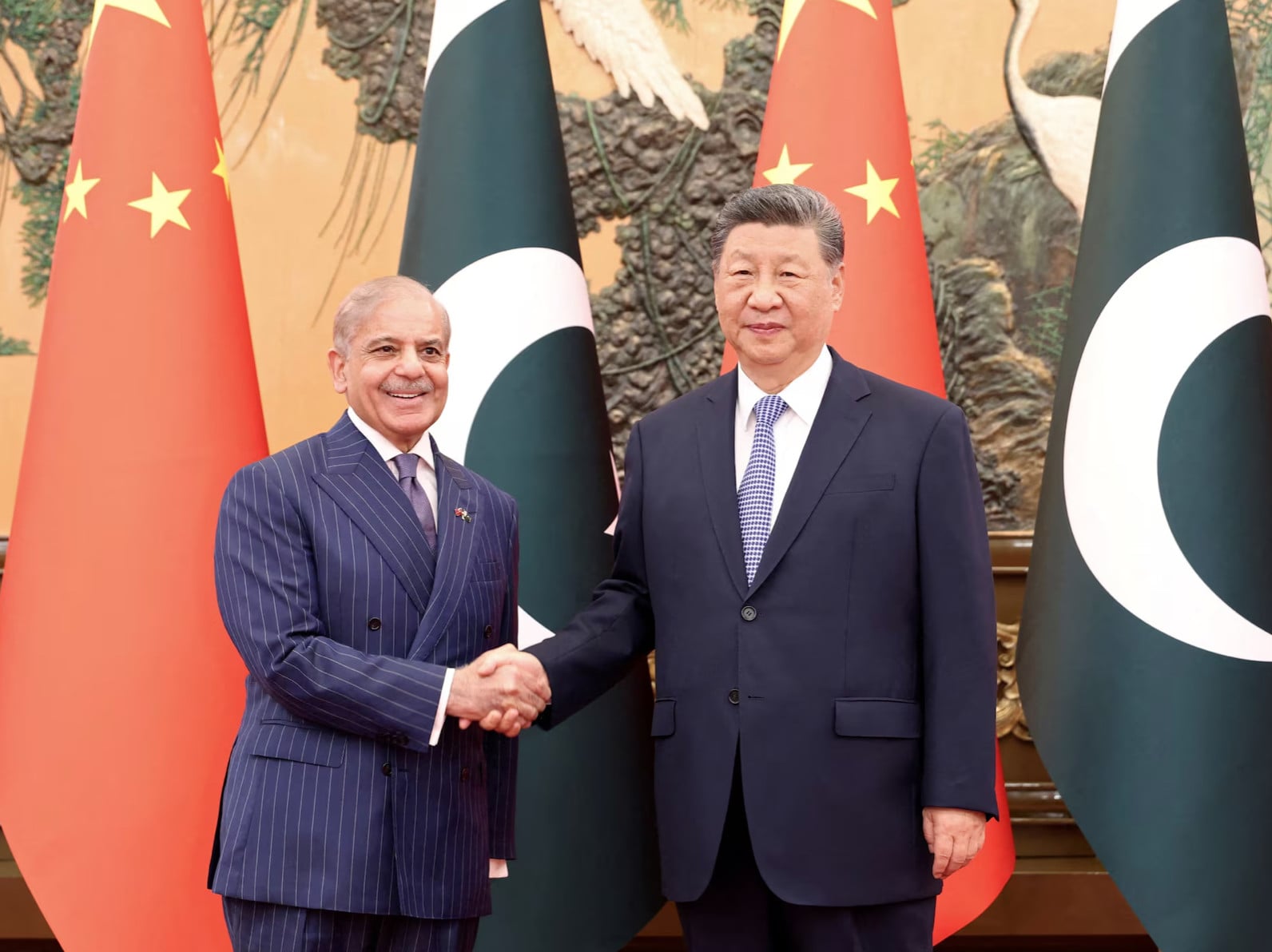
At 75 years, Pakistan–China relations have become a symbol of continuity and strategic trust. As Hali puts it, “trust and reciprocity, not transactions, have kept the friendship stable for 75 years.” That stability, he says, is not accidental, but the result of repeated strategic convergence in moments of regional pressure and global change.
Today, analysts describe the partnership as neither static nor purely symbolic. It is functional, layered, and adaptive in a changing world, shaped by limits, tensions, and inefficiencies, but still marked by depth, history, and institutional weight. In a shifting global environment, Hali argues that the relationship has held because it continues to serve clear interests on both sides. Seventy-five years on, he says, the focus is now on how it moves into its next phase.