
Reviving a legacy title is always a gamble, especially when the original—Matlock—remains etched in popular memory as a comforting courtroom procedural led by the folksy brilliance of Andy Griffith. Not only did it run for 9 seasons in the late 1980s and early 1990s, but it also inspired other producers to create a modern-day courtroom drama.
The same thing happens in CBS’s modern reimagining, fronted by Kathy Bates, which could easily have leaned on nostalgia alone. Instead, by the time Season 2 wraps, it becomes clear that this Matlock is not interested in imitation—it's carving out something far more emotionally resonant and narratively ambitious.
There are many reasons the new Matlock is doing well, the first being the brilliant backstory that helped Madeline Kingston become Matty Matlock. But is it really better than the original? That’s a debate for another day. Let’s talk about how this Matlock both revives the audience’s interest in the original and carves out a distinct identity in a world full of good, bad, and ugly courtroom dramas.
Who’s Matty Matlock?
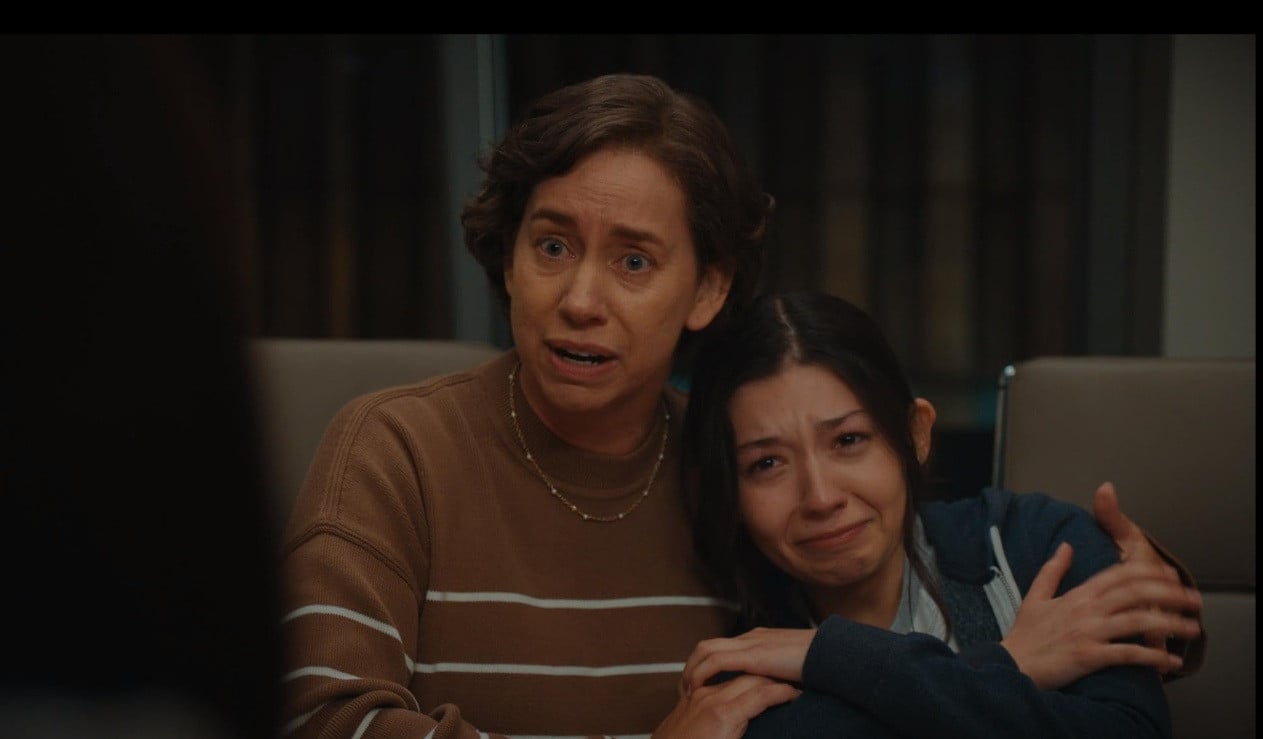
Madeline Kingston (Kathy Bates) decides to go back to practicing law, but this time as Matty Matlock, so that she can bring justice to her daughter, Ellie (Marnie Carpenter), who died of a drug overdose. The law firm where she decides to make a comeback is the same law firm that, in its own way, contributed to Ellie’s death, and bringing those responsible to justice is the only motive for Matty.
However, she forges alliances, makes friends and enemies during her stay, and by the time the second season wraps up, Matlock has won the case. Her husband Edwin (Sam Anderson), grandson Alfie (Aaron Harris), and others helped her in this quest, as did others at the law firm, but you will have to watch the series to find out more. All I can say is that Beau Bridges, Jason Ritter, Skye P. Marshall, and Leah Lewis were integral to the investigation, and whatever Matty achieved wouldn’t have been possible without them.
What’s in the name?
That’s a tough one, considering the original series is still a favourite of those who grew up in the 90s and were charmed by Andy Griffith’s performance. Using the name Matlock meant using the popular theme music as a connection to the source material, and that gave the series an edge over other courtroom drama shows.
Where the original series thrived on its episodic simplicity, the reboot embraces serial storytelling. The backstory that simmered throughout the first season reaches a satisfying conclusion here. Had it been named something else, it might not have received the kind of eyeballs it eventually did.
Switching the genre of the main protagonist also helped, even though Kathy Bates had played a fierce lawyer in Harry’s Law during 2011 and 2012. In Harry’s Law, Bates played Harriet Korn as a sharp-tongued, rebellious outsider who bulldozed her way through the system. Her Matlock persona, by contrast, is more introspective, carrying a quiet gravity shaped by grief, experience, and moral fatigue.
In Matlock, her secret weapon is her old-age charm, which not only disarms the antagonist but also has them treating her exactly like folks did Peter Falk in another classic TV show, Columbo. She clicks with the clients because of her vast experience in life, which also comes in handy when she has a case to win, and most of the time, the help comes from unexpected quarters, but just in time to save the client and save the day.

Skip season 2?
The second season of Matlock sort of tightens the noose around those characters who were behind Ellie’s death. Add Alfie’s father to the equation, Senior’s heart attack, the upcoming merger, and Sara’s treachery, and you have something to look forward to in each episode, besides the many cases that Matty Matlock and her team solve. Each case seems different from the others, where the DA seems to have the edge, but by the time the lawyers for Jacobson and Moore are through, it mostly ends in their favour.
This season also deepens the show’s central thesis: that justice is not just about winning cases but about confronting the personal costs of truth. Every character in the show has issues to deal with: while two people are going through a divorce, another is unable to come to terms with her adoption, and one of the lawyers had to leave midway to care for his wife. Even then, Jacobson and Moore keep winning cases, defending those who felt helpless against those who felt their above-the-law status would keep them safe.
Kathy Bates
Much of the show’s success rests on Academy Award-winning Kathy Bates’ towering performance. Not only does she pay tribute to Andy Griffith in her own way, but she also manages to make Matty Matlock different from Ben Matlock. The original show was sort of modelled on the classic Perry Mason—both shows had an intelligent lawyer solving cases with the help of his talented team. Unlike Perry Mason, Matlock had a human side, dealing with a housekeeper who always seemed to have an opinion, a nosy neighbour who spent more time in the neighborhood than at his home, and other things.
Kathy Bates’ Matlock also has issues, but they are secondary to the case she is following since her entry at Jacobson & Moore. Her accent and mannerisms at the firm are different than those at home, and while in the second season her secret is out to some, there are issues with Alfie’s father, who is a recovering drug addict, as well as her husband, who wants to live his own life.
It would have been impossible to pull off had some other actress been cast as Matlock. Only someone as vastly experienced and talented as Bates could have pulled it off, because the character isn’t looking to prove a point—it's seeking closure, even when that comes at a cost. Bates resists theatricality, opting instead for restraint; the silences often speak louder than her courtroom monologues.

A shiny support cast
It’s not just Kathy Bates who wows viewers with her performances; Skye P. Marshall and Jason Ritter do as well. While they are husband and wife in the first season, they are divorced in the second, and the way they carry forward their characters is nothing short of brilliant. While Skye P. Marshall’s Olympia has many scenes to show her skills as an actor, both with Kathy Bates’s Matlock and without her, Jason Ritter’s Julian has fewer scenes alone, but when he does, he makes his father, the late John Ritter, proud.
You can’t just miss the scene where Julian meets Alfie at Matty’s home and has a devastating breakdown on the stairs. It’s a scene that could have easily tipped into melodrama, but Ritter plays it with such raw vulnerability that it lands as one of the season’s emotional high points. His performance highlights the show’s greatest strength: its willingness to slow down and let characters feel fully, painfully, and without easy resolution.
A third season?
So why has Matlock earned a renewal in an increasingly ruthless television landscape? The answer lies in its balance. It satisfies the procedural itch with tightly written cases while offering the kind of long-form character development more commonly found in prestige dramas. It appeals to older audiences familiar with the original while drawing in new viewers through its modern sensibilities and serialised stakes. Most importantly, it trusts its audience—refusing to spoon-feed and instead challenging, something OTT shows excel in.
By the end of Season 2, Matlock has done something rare: it has honoured its legacy without being confined by it. It’s no longer living in the shadow of its predecessor. It stands on its own—thoughtful, emotionally layered, and anchored by a performance that reminds us why Kathy Bates remains one of television’s most formidable presences.
In a landscape crowded with reboots that struggle to justify their existence, Matlock doesn’t just make a case for itself—it wins it. It might shock fans that, while all the renewed shows ending in April - May would return in September - October, Matlock will return earlier next year, despite having been renewed. The writers have asked for more time to make the return even more triumphant, now that most of the good things that should have happened have happened.
With Ellie getting justice, the people responsible are behind bars, and Matlock has to start anew with consequences they might not have imagined. The viewers are waiting for the third season with bated breath, and why wouldn’t they? It is one of the best TV shows in recent times, giving Netflix and Amazon Prime a tough time, and has revived interest in weekly episodes and courtroom antics last seen in the 90s in another TV show featuring a different Matlock.
The writer is a freelance contributor who writes about film, television and popular culture
All facts and information are the sole responsibility of the writer