
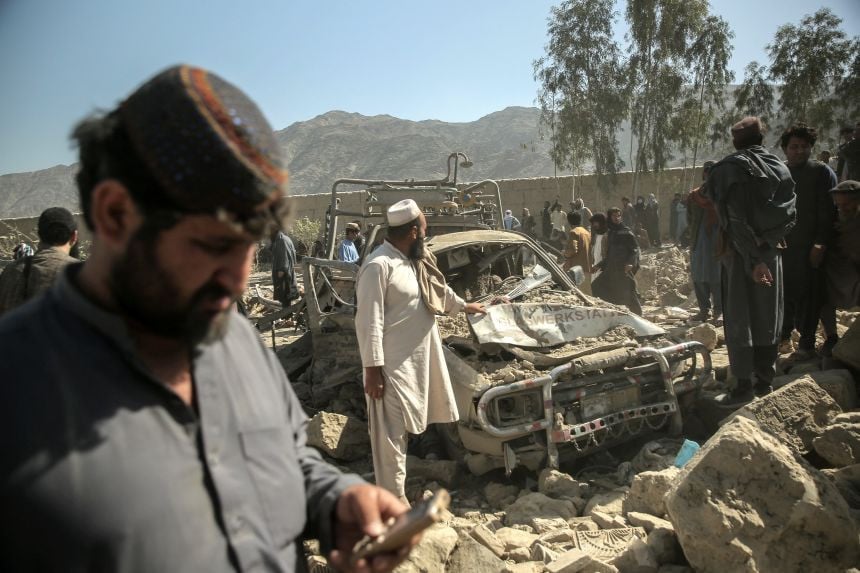
After continued Afghan attacks on multiple sectors targeting Pakistani military positions along the Pak-Afghan border since February 24, Pakistan’s retaliation through Operation Ghazab-Lil-Haq (The Righteous Fury) continues unabated. Without getting into the numbers, Pakistan has responded effectively and punishingly against the ‘master proxy’ – to use the ISPR characterisation – by capturing territory, destroying Afghan border infrastructure, inflicting men and material losses through ground operations, and escalating in the air by targeting military infrastructure across Afghanistan, shattering the myth of IEA’s Pakistan-induced sense of invincibility. Through a ‘demonstration strike’ on the famous Bagram base on March 1, 2026, Pakistan has established complete control of the ‘escalation ladder.’
The backdrop
PAF’s ‘intelligence-based selective’ airstrikes on February 22 targeting seven places in Afghanistan's Nangarhar, Paktika, and Khost provinces was in response to a series of Afghan-inspired and collaborated attacks including the February 6 bombing at a Shia mosque in Islamabad, an attack on a Frontier Constabulary (FC) Fort near Bannu, the burning of the injured person from this attack along with the ambulance during evacuation, the death a DSP in Kohat District, a suicide attack in Bhakkar and the killing of a Pakistan Army Lt Col, to list some.
On February 24, IEA responded to PAF attacks on Pakistani nationals -- the wayward TTP terrorists- - in Loya Paktia by launching crossborder ‘fire’ attacks on Pakistan’s military posts from Chaman in the south to Torkham and Tirah in the north. Afghans used small arms, rockets, artillery guns, tanks and fighting vehicles, besides their efforts to synchronise and integrate terrorist groups in the offensive. The fact that this mayhem happened in Ramazan, points to the un-Islamic and non-Pashtun credentials of IEA, especially the puritanical Qandahar. The burning of injured FC personnel in an ambulance also lays bare the TTP nihilism and Afghan support to them in violation of all agreements, written and verbal.
Consequently, any residual empathy for the impoverished Afghanistan and hapless Afghan refugees in Pakistan remains eroded. The Pashtun cause in Pakistan stands damaged. But there is more political clarity and unified thinking in Pakistan about the way forward in Afghanistan. Resultantly, Pakistan's immediate, punishing and decisive response continues till the attainment of all objectives.
Pakistan’s new doctrine
The new doctrine enunciates going for the base of terrorist attacks inside Afghanistan, in self-defence, as authorised under Article 51 of the UN Charter. This calibrated use of punishing force is likely to continue under Pakistan’s new doctrine, till Islamabad’s military, political and psychological objectives are achieved.
Military objectives
Pakistan’s military objectives, as gleaned from the conduct of operations, include effective degradation of IEA and its proxies’ combat potential, beyond redemption, through sustained and calibrated ground and air operations, along and beyond the Durand Line.
In pursuance, Pakistan continues capturing and destroying Afghan posts, significantly improving its defensive posture and curtailing IEA/TTP’s liberty of action, and degrading its infiltration and terrorist potential. Pakistan also has targeted deeper Afghan military infrastructure, including headquarters like corps, brigade and battalion HQs, training and command centres, ammunition and fuel dumps and other logistic installations, with a view to interdict supply of leftover US and other weapons, ammunition and equipment to the Afghan Army and its TTP proxy.
An implied aim could be to create ‘sanitised belts and zones’ in and along contiguous areas, where any infiltration from the Afghan side could be sighted, interdicted and neutralised, till the time the ‘Afghan swamp’ dries out. In this muscular response, involving surveillance, interdiction and pre-emption, the ‘law of diminishing returns’ would ultimately work to Pakistan’s advantage, given the military, political and psychological fatigue of the Afghan side and TTP. Sustained employment of force will also help create exploitable fissures within the Afghan rank and file, that blame TTP for their predicament.
Islamabad is likely to continue air, ground military and intelligence operations, as the IEA is not likely to budge on Pakistan’s demands of a verifiable end to TTP’s murderous forays into Pakistan. Kabul/Qandahar is on record in Istanbul recently, having conveyed their inability to do so. When Pakistan launched the February 22 strikes targeting TTP – its own nationals – in Khost, Paktika and Nangarhar, Kabul, instead of looking the other way, like in the past, IEA created unwanted noise about violation of its sovereignty, and launched military operations against Pakistan, getting itself trapped.
The trap
The suggestion to go against Pakistan militarily was ‘ostensibly’ Indian-advised and ‘reportedly’ under the UAE and Iranian intelligence influence, who sensed an opportunity in Pakistan’s noisy political scene and economic stress. There was, as per reports, a difference of opinion among Afghan Intelligence (GDI) and MoD under Mullah Yaqub, the latter not favouring military escalation with Islamabad. The Haqqanis were ‘perhaps’ ambivalent. GDI expected massive and uncontrolled uprising by the TTP franchise in Khyber Pakhtunkhwa and Balochistan, forcing Pakistan to fight on the ‘reversed front’ per se. They miscalculated Pakistan’s security response and its solidified inner front.
Pakistan in earnest wanted a casus belli for its punitive campaign that was on the table for some time. Strikes against TTP alone did not create the desired impact and always risked collateral damage and the consequent bad press. Afghanistan’s own opening of hostilities provided the needed rationale for Pakistan to respond with the desired force, besides its legal and moral justification. It was to establish a new normal with the IEA, TTP’s facilitator, aider and abettor in its murderous anti-Pakistan terrorism. International reaction remains muted, given IEA/TTP’s ‘appearance problem’, and the sustained UN reports about Afghanistan reverting to being the hotbed of regional terrorism. War in the Gulf created an exploitable time window. And the US acknowledgment of Pakistan’s right to self defence, regional weariness and non-recognition of IEA, further isolated the Afghan regime and enhanced Pakistan’s options.
Political objectives
Coming back to the political objectives of Ghazab-Lil-Haq, Pakistan, by taking the fight deeper inside Afghan territory, would want to resurrect and encourage other power contenders inimical to the IEA, like the Northern Alliance (NA), the Herat conclave, the Zadran Haqqanis, who are in competition with Ahmadzai Qandahar for power, influence and clout, and the leftover apparatus of the First Republic, established during US/NATO’s decades’ long occupation. The Haqqanis in particular, in treaty alliance with the IEA, courtesy Pakistan’s sincere advice to ensure unity among bickering and feuding Afghans, were never assimilated militarily like other groups within the IEA. They keep their distinct cultural and military identity within IEA and try to maintain good relations with Pakistan. Siraj Haqqani, the venerable Khalifa’s public posturing aside, prefers a more conciliatory standpoint in dealing with Islamabad.
Through sustained military-economic degradation, Pakistan expects an implosion within the IEA, given the rising anti-Taliban public discontent due to IEA’s restrictions on social liberties and female rights, their proclamation of Draconian penal code, their economic performance, and to many, their mishandling of Pakistan’s genuine grievances, all nearing a boiling point. Pakistan’s blockage of Afghan trade especially transit trade has resulted in steep inflation inside Afghan cities, affecting citizenry irrespective of political affiliations. The NA and sleeper cells of the erstwhile First Republic are waiting in the wings to turn the tables on IEA like in the past. Attacking Pakistan ostensibly was IEA’s miscalculated blunder to salvage some domestic political mileage and unify a feuding Afghan citizenry in crisis. However, paradoxically, there are reports of non-IEA affiliated Afghans, even Pashtuns, urging Pakistan to continue with its operations.
Saudi weariness, Qatar’s support for Qandahar and UAE’s interlocution with Haqqanis have been in the air for some time. Pakistan’s military operations also resulted in a push back against Qatar and especially the UAE, whose tangent collaboration with the IEA raises eyebrows in Islamabad. Pakistan may be economically stressed but has formidable other leverages, as a rising and ‘relevant’ middle power. For Pakistan, ‘supporting’ regime change in Afghanistan, given IEA’s recalcitrance, obduracy, its persistent anti-Pakistan and pro-Indian credentials, appears as a writing on the wall. Pakistan, therefore. should actively promote regime change as the present dispensation is never amenable to course correction, if their four-year track record is any guide.
Pakistan must take operations to the logical conclusion and desirable outcomes, even if it means targeting IEA leadership, as hinted recently. Talks, negotiations and agreements would not yield any results, as repeatedly experienced. The open-ended, open war should be pursued with all military, diplomatic, political and economic tools. Leaving the job unfinished will have grave implications. The fact that the making of the IEA from among the bickering and feuding Afghans was due to Islamabad’s historic and dogged interlocution, should make its unmaking easier.
Psychological objectives
As far as Pakistan’s psychological objectives are concerned, the Pakistani military has shattered the myth of Afghan invincibility, and dented IEA’s internal political standing, badly and irreparably. At the same time, it has enhanced Pakistan’s geo-strategic stature. For a long time, Afghanologists (myself included) treaded through Afghanistan’s historic romanticism under cliches like the ‘Graveyard of Empires’. Though propping and supporting such notions were important for morale purposes, in an Afghanistan under foreign and at times hostile foreign occupation (USSR and the US-NATO Combine), and to persuade the occupational forces about the futility of their enterprise, the historic facts speak differently. Afghans would yield to punishing force when inevitable, align with the highest bidder, and operate in ethnic and sectarian bubbles, when at peace.
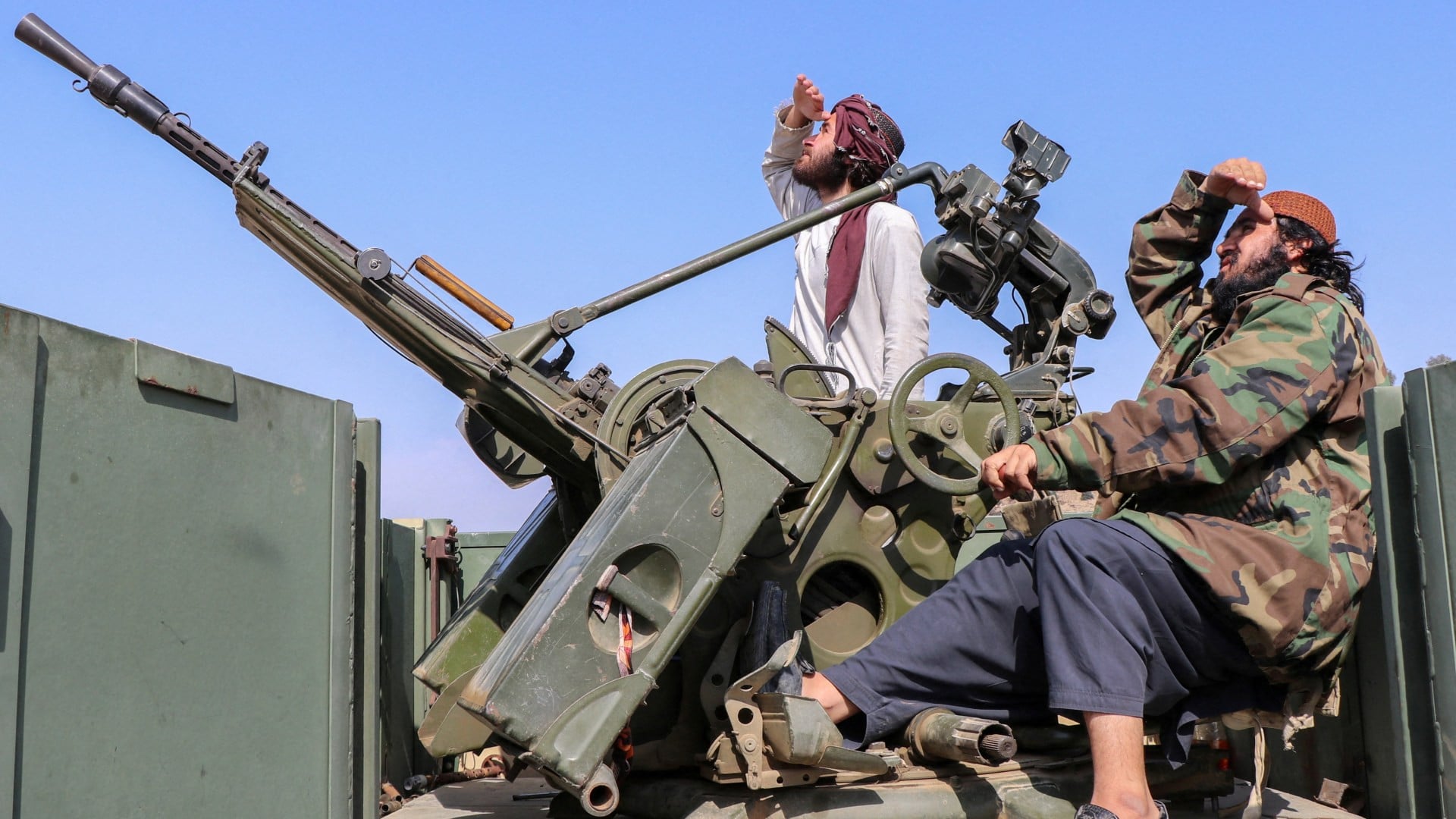
PAF’s demonstration strikes on Bagram, and flights over Parwan and Panjshir etc and Bamiyan, where social media reports of the landing of Afghan leadership, fearing Ali Khamenei's fate, have induced fear, panic and confusion among IEA rank and file. Islamabad’s reach and lethality demonstrate no safety anywhere for the refractory IEA rank and file, if they persist in error. The fact that Pakistan now means business and expects verifiable end to TTP attacks, is a reality that is likely to sink further overtime and create exploitable fissures, gravitating towards a regime change.
Regime change?
The international community and Pakistan’s options for a ‘regime change’ may be binding NA, Herat, Hazarajat, the erstwhile officials from the First Republic and Haqqanis in an alliance to replace the puritanical Qandahari clique. It may seem implausible now, but given Afghanistan’s political culture, any alliance, motivated by power grab, is possible. Such an alliance would nudge Afghanistan towards the badly needed political inclusivity, as IEA predominantly comprises the Qandahari Ahmadzai/ Muhammadzai Pashtuns aka Durrani elite, who were historically at odds with other Pashtun ethnicities, and Tajik and Uzbek minorities. Likewise, Central Hazarajat is populated by persecuted Shias under Hizb-e-Wahdat, for example.
The relative sense of security around Afghanistan masks the storm beneath, given the lack of economic opportunities for returning citizenry from Pakistan and Iran. In the absence of economic well-being, it is becoming a false sense of security. Similarly, the change of deck would augur well for women emancipation and their right to education and work; and will be in line with female aspirations all over Afghanistan. These exploitable faultlines, in future could redraw the political map and re-align stakes in Afghanistan. A sizeable, trained and experienced multi-ethnic cadre that fled Afghanistan during the IEA capture of Kabul in August 2021, is handy and available in Pakistan and abroad as a workable alternative, after Qandahar is sufficiently degraded.
Like Osama bin Laden cost Taliban 1.0 their first government, TTP will cost Taliban 2.0 their second loss of power. The difference being that last time around, they found safe havens in Pakistan to continue their war of independence, and reclaimed Kabul under Pakistan’s masterful interlocution. This time around they would find no such sanctuary. Whatever is happening in the neighboring Iran should be sobering for Qandahar and its clerical clique.
In the final analysis, Pakistan is in for a long-haul. It must hold steady and do what it has to do. Qandahar and Kabul must not be allowed, henceforth, to hunt with the hound and run with the hare!
All facts and information is the sole responsibility of the writer
Maj Gen Inam Ul Haque (Retd) writes on Global Affairs and Political Sociology. He can be reached at tayyarinam@hotmail.com and @20_Inam