
On a mild February afternoon in Mandi Bahauddin, Fahad Baig sits on a woven charpai at the edge of his wheat field, a small diary resting on his knee. In his right hand is a pen. In front of him are two pages. One carries rough notes from 2025. The other is blank, waiting for 2026.
Last year, he had written that the wheat sowing was slightly delayed because the late rains had lingered longer than expected. He had marked a few days in March when the temperature rose sharply, earlier than usual. On another page, he had noted how the rice crop struggled with uneven monsoon spells. Too much rain at once, then long dry gaps.
Now he flips between the pages, trying to estimate what this year might look like.
“Earlier, we did not have to think so much,” he says, closing the diary for a moment. “October meant wheat. June meant rice. We followed the calendar and it worked.”
For years, farming in this central Punjab district followed a rhythm that rarely required second guessing. We were doing what our ancestors told us and following the same calendar, but now things are different, they are changing every year. Wheat was sown by late October and harvested in April. Rice transplanting aligned with the monsoon. The cycle was predictable enough to plan input purchases, irrigation schedules and labour.
That rhythm has begun to shift.
Fahad says winters do not feel as long as they once did. The cool spell that helped wheat develop steadily now seems shorter. “In March, the heat comes suddenly,” he explains. “When the grain is forming, even a few hot days can affect the size. You can see the difference at harvest.”
Rice planning has also become less straightforward. He describes how rainfall now arrives in bursts. Sometimes heavy showers flood parts of the field. At other times, dry spells stretch longer than expected. The timing matters as much as the quantity.
“We cannot follow the old dates blindly anymore,” he says. He still writes them down in his diary, but he no longer trusts them the way his father did.
Across districts like Mandi Bahauddin and in the other regions of Punjab, where farmers rotate between wheat and rice, that quiet uncertainty has become part of the routine. Decisions that once depended on habit are now tied to weather forecasts, field observations and cautious adjustment.
As Zeeshan Hasib Baig, Country General Manager of Syngenta that leads operations for a global agriculture in Pakistan, observes, “Traditionally, there was an agriculture calendar. Farmers would say we have to sow on this date. Now, because of climate change, that mindset has to change.”
The shift is not dramatic in a single season. It appears in weeks gained or lost, in heat arriving earlier than expected, in rainfall that comes all at once instead of in stages. But over time, those small deviations begin to redraw the agricultural calendar itself.
Agricultural scientists say the uncertainty farmers describe is not incidental. It reflects measurable shifts in temperature patterns, rainfall behaviour and crop timing across Pakistan’s major farming zones.
The calendar shift
For Muhammad Ismail Kumbhar, a professor at Sindh Agriculture University Tandojam and an agricultural and policy expert, the change is structural rather than seasonal. “Climate change has made farming in Pakistan more unpredictable,” he says. “Temperature extremes are increasing, rainfall patterns are disturbed, floods and droughts are intensifying, and crop productivity is becoming less stable.”
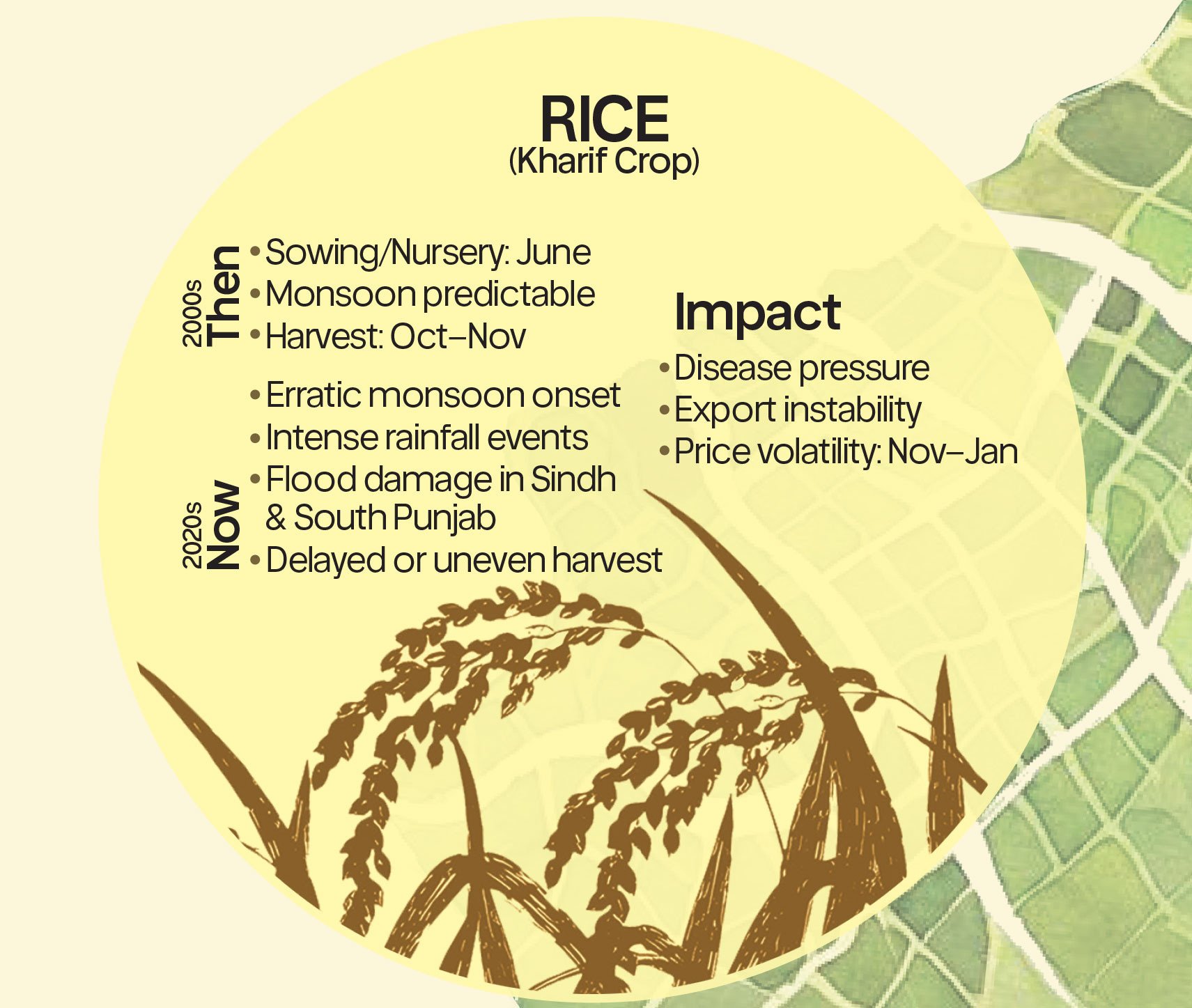
Over the past decade and a half, he explains, traditional crop calendars have shifted across multiple crops. In many parts of Punjab and Sindh, wheat sowing has moved seven to 15 days earlier. Farmers are adjusting their planting windows to avoid late-season heat stress that now arrives sooner than it once did.
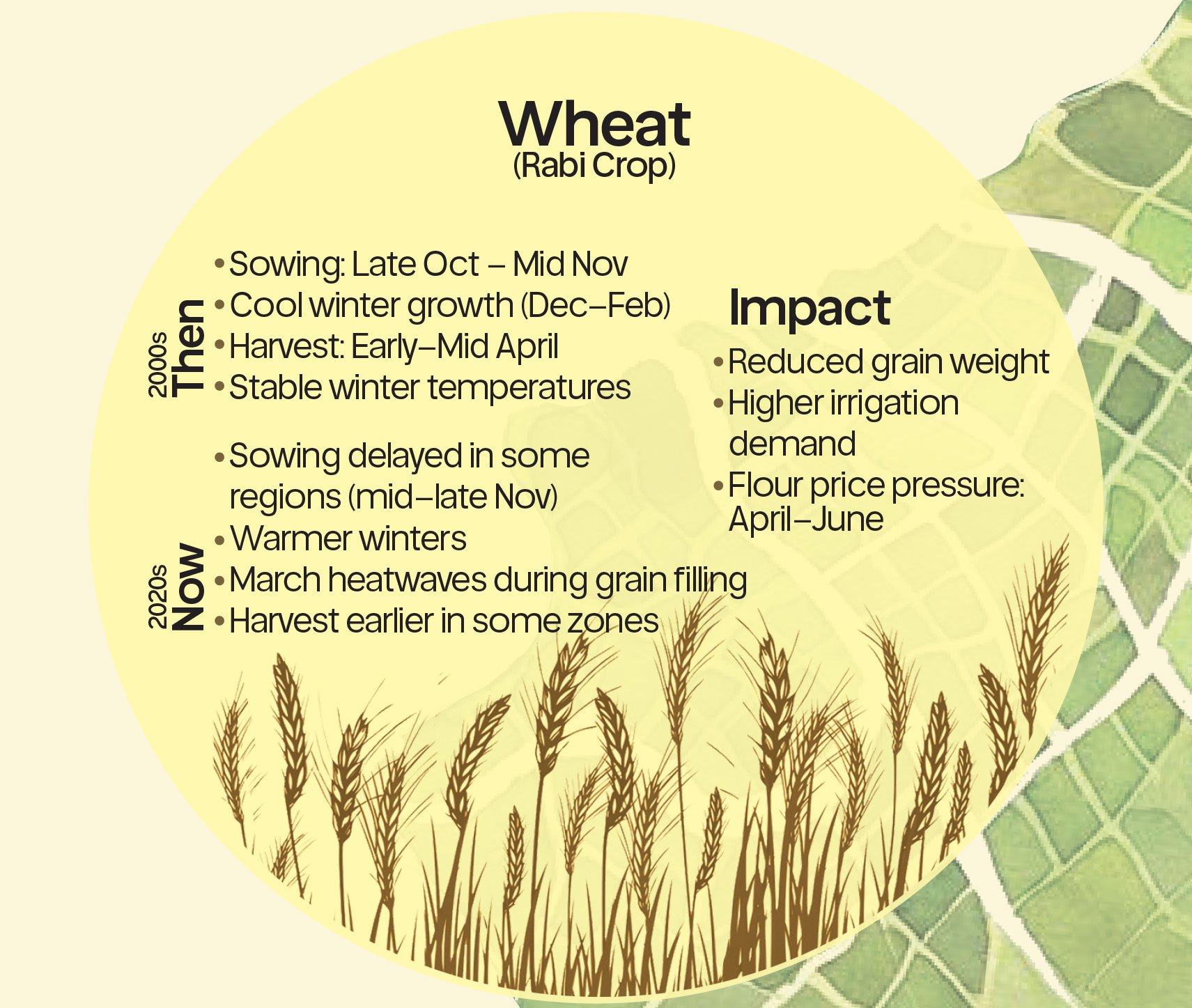
Rice, particularly Basmati varieties, tells a different story. In several districts, transplanting is delayed by 10 to 20 days because of irregular monsoon onset and canal water variability. Cotton sowing in parts of South Punjab and Sindh has shifted two to three weeks earlier in an effort to escape peak summer temperatures. Even spring maize sowing windows have narrowed due to rising February and March heat.
“These shifts vary by agro-ecological zone,” Kumbhar says, “But they are now widely documented by provincial research institutes.” The difference of one to three weeks may appear minor on paper. In practice, it alters the entire growth cycle.
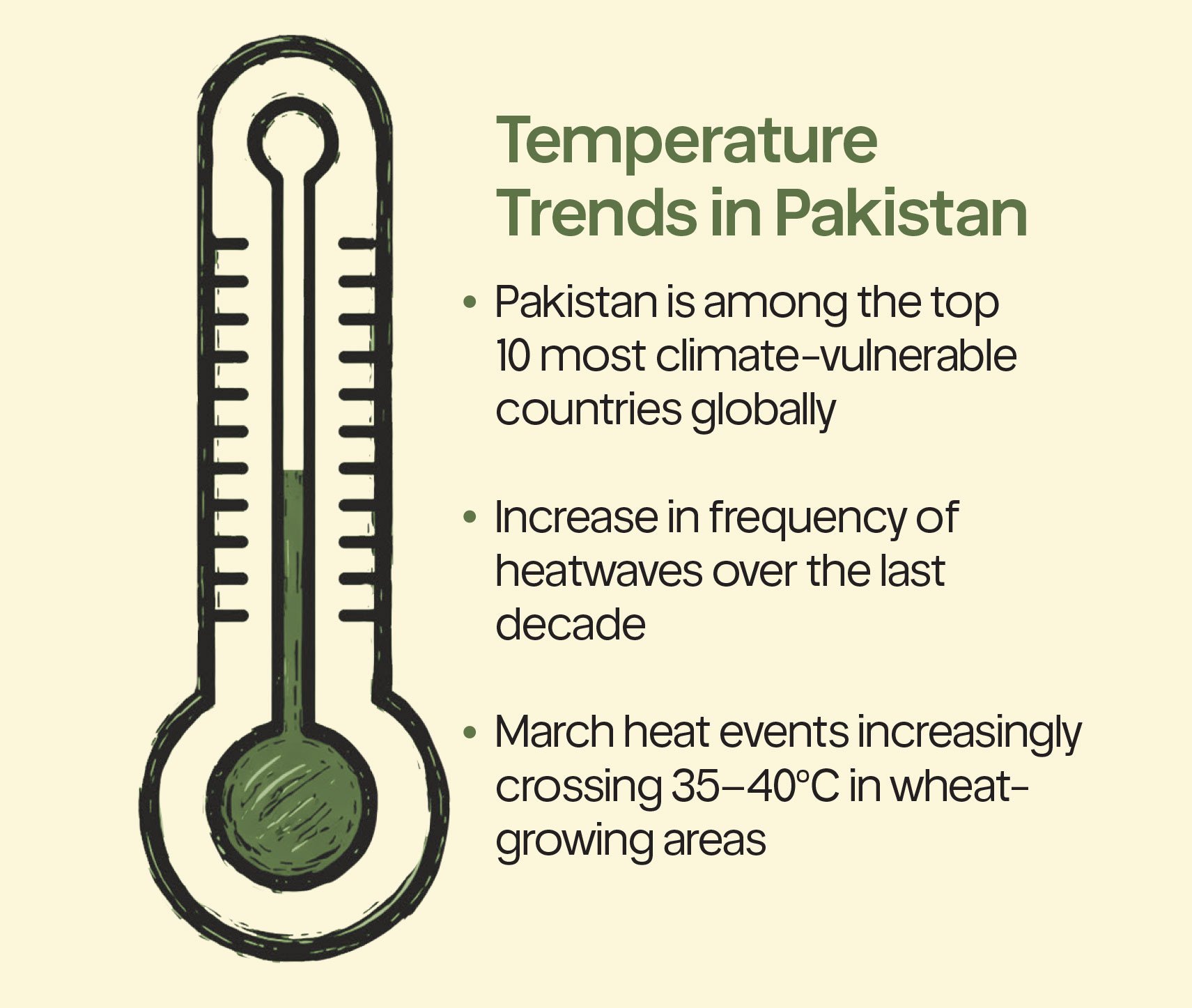
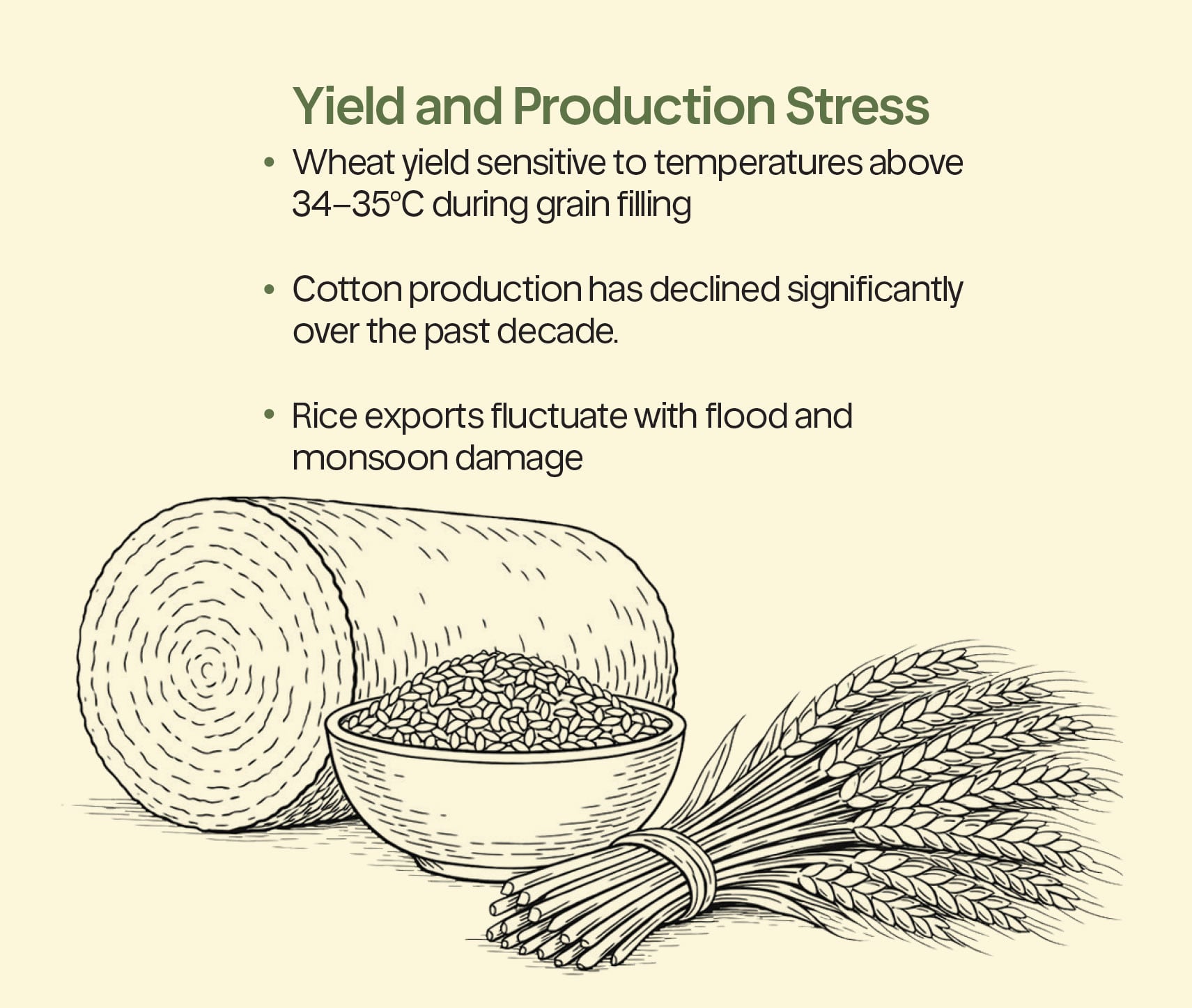
Wheat, Pakistan’s staple crop, is especially vulnerable during its grain-filling stage. When temperatures exceed 32 to 35 degrees Celsius in March or early April, grain weight declines. According to Kumbhar, studies show that each one-degree rise above the optimum during grain filling can reduce yield by five to seven percent.
Recent March heatwaves have already produced visible consequences in central Punjab and upper Sindh. Grain size shrinks, maturity accelerates, and harvesting windows become shorter.
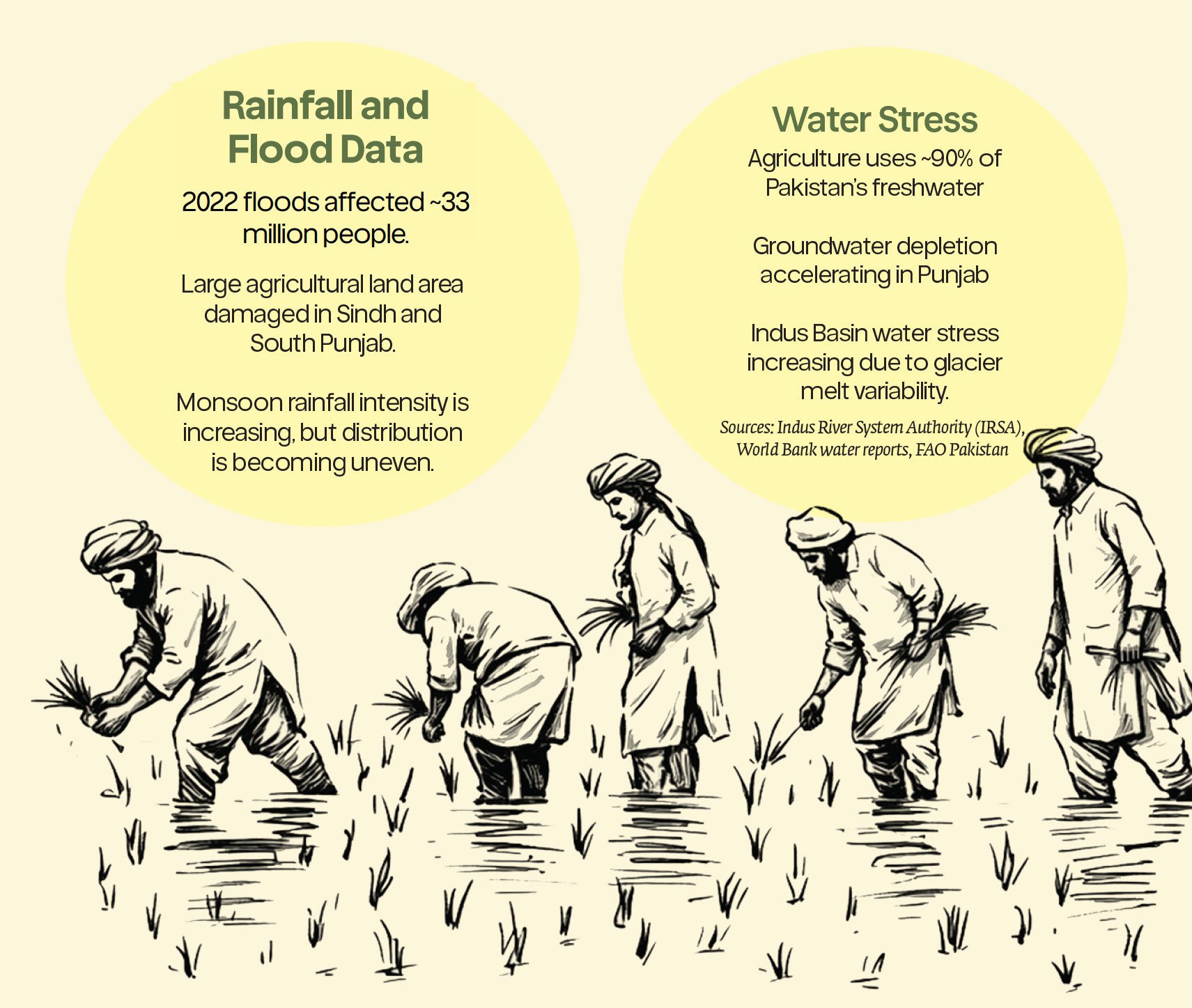
Rice faces a different form of instability. Monsoon rainfall is increasingly characterised by delayed onset, short intense bursts and longer dry spells between events. Instead of steady seasonal progression, farmers confront abrupt flooding followed by mid-season drought stress. The 2022 floods, he points out, reduced national cotton production by nearly 30 to 40 percent, demonstrating how extreme rainfall events translate into immediate agricultural loss.
Harvest cycles are also compressing. Higher temperatures accelerate crop maturity, reducing the duration available for optimal growth. Chronic water shortages in parts of Sindh have further affected rice and sugarcane productivity, particularly in tail-end canal command areas.
The result is a farming calendar that no longer follows a uniform rhythm. It must be adjusted crop by crop and district by district.
Soil, pests and structural vulnerability
If climate variability has altered the timing of crops, it has also reshaped the ecosystem in which those crops grow.
Kumbhar says the stress is not limited to temperature and rainfall. It extends to pests, disease cycles and the structural resilience of farming systems. “Pest cycles are changing,” he explains. “Warmer winters reduce natural pest mortality and increase overwintering survival of insects. Sudden humidity shifts also increase fungal disease incidence.”
In practical terms, this means that insects which previously died off during colder months now survive longer. Populations rebuild faster. Disease pressure rises when prolonged humidity follows irregular rainfall.
Cotton has been particularly exposed. Increased frequency of whitefly outbreaks and the spread of fall armyworm in maize-growing zones are examples of how climate variability intersects with biological stress.
Pesticide resistance is also rising.
“When farmers spray repeatedly under stress conditions, resistance builds faster,” Kumbhar says. “Climate-driven stress can accelerate that cycle.”
The impact is uneven. Small farmers, he notes, are especially vulnerable. They have limited access to climate advisories, constrained financial capacity to experiment with new practices and restricted water availability tied to canal schedules. “Traditional practices often feel safer than uncertain adaptation strategies,” he says. “Risk aversion and reliance on inherited knowledge remain strong.”
The agricultural extension system, which is meant to bridge research and field practice, remains inconsistent. “Effectiveness is limited and uneven,” he observes. “There is a weak research-extension-farmer linkage. Climate-specific training and digital advisory use are still not scaled sufficiently.”
The result is a system in which scientific understanding of climate stress does not always translate into field-level response. It is here that structural weaknesses begin to compound environmental shocks.
Zeeshan sees similar patterns from the private sector vantage point. “Our organic matter is below one percent, which is considered bad. If the soil is not healthy, it directly affects yield.”
Healthy soil, he explains, retains moisture and buffers crops against temperature extremes. Poor soil loses water faster, weakens root systems and reduces the ability of crops to withstand heat or irregular rainfall.
“Soil health is extremely important,” he says. “It is just like the foundation on which you want to grow something. If there is a problem in it, or if nutrition is low, then automatically your yield will be impacted.”
Repeated cropping patterns worsen the stress. “If you keep planting the same crop in the same place, pests become resistant. The medicine stops affecting them.” Crop rotation, he adds, is a widely accepted method globally, but it remains inconsistently practiced. “In many countries, farmers rotate crops to improve soil quality. In Pakistan, historically, the same crop is planted in the same area. That creates long-term problems.”
He also points to the absence of systematic soil testing. “In Pakistan, sadly, farmers do not know the condition of their soil. They use the same type of fertiliser across the entire land. It is possible that ten acres have nitrogen deficiency, and another ten acres have sulphur deficiency, but they apply a blanket input everywhere.”
Without testing, fertiliser use becomes inefficient. Some nutrients are over-applied, others remain deficient. Input costs rise, but productivity gains remain limited. “The soil needs a resting period,” he says. “In many countries, land is given time to revitalise. Here, we push it continuously.”
Adaptation is further slowed by behavioural inertia. “Only 10 to 15 percent of farmers are progressive and adapt quickly,” Zeeshan notes. “75 percent to 80 percent are still very traditional.”
That traditional base often follows inherited planting patterns, irrigation habits and input choices, even as climate variability increases. The challenge, then, is not only environmental. It is structural.
Scientific evidence shows that climate stress is intensifying. Yet the mechanisms that would enable faster adaptation, from soil diagnostics to extension reform to crop diversification, remain unevenly developed.
Kumbhar frames it as a systems issue. “Climate-resilient agriculture is not just about technology. It requires strengthening advisory services, improving soil management practices and ensuring that farmers receive timely, accurate information.”
Without those layers of resilience, a one-week heatwave or a ten-day rainfall delay becomes more than a temporary disruption. It becomes a multiplier of vulnerability.
From field to market: Why consumers feel it
For Fahad Baig, climate variability is first measured in acres, not in policy debates. When a crop underperforms, the consequences move quickly from the field to the household ledger.
“If the yield drops, everything becomes difficult,” he says. “Input costs do not decrease. Fertiliser, diesel, labour, all remain expensive. But the crop does not give the same output.”
In recent seasons, he has had to adjust irrigation schedules more frequently. At times, he has considered re-sowing small patches where early heat or uneven rainfall affected germination. Re-sowing means additional seed cost, additional labour and uncertainty about recovery.
“We spend first and hope later,” he explains. “But the weather does not behave the way it used to.”
That uncertainty ripples outward. When wheat yield declines, procurement pressures rise. When rice transplanting is delayed, harvesting shifts. When vegetables are damaged by heatwaves or excessive rainfall, supply thins rapidly.
Kumbhar says the transmission from field stress to market volatility is increasingly direct. “Yes, climate shocks contribute to food inflation,” he says. “Floods, droughts and heatwaves affect production volumes, and those production changes influence market prices.”
Some crops are more price-sensitive than others. Wheat, as the national staple, carries systemic importance. Even a modest decline in output tightens supply, influences procurement strategies and creates pressure in flour markets. The impact is often felt between April and June, when expectations around harvest volumes shape pricing behaviour.
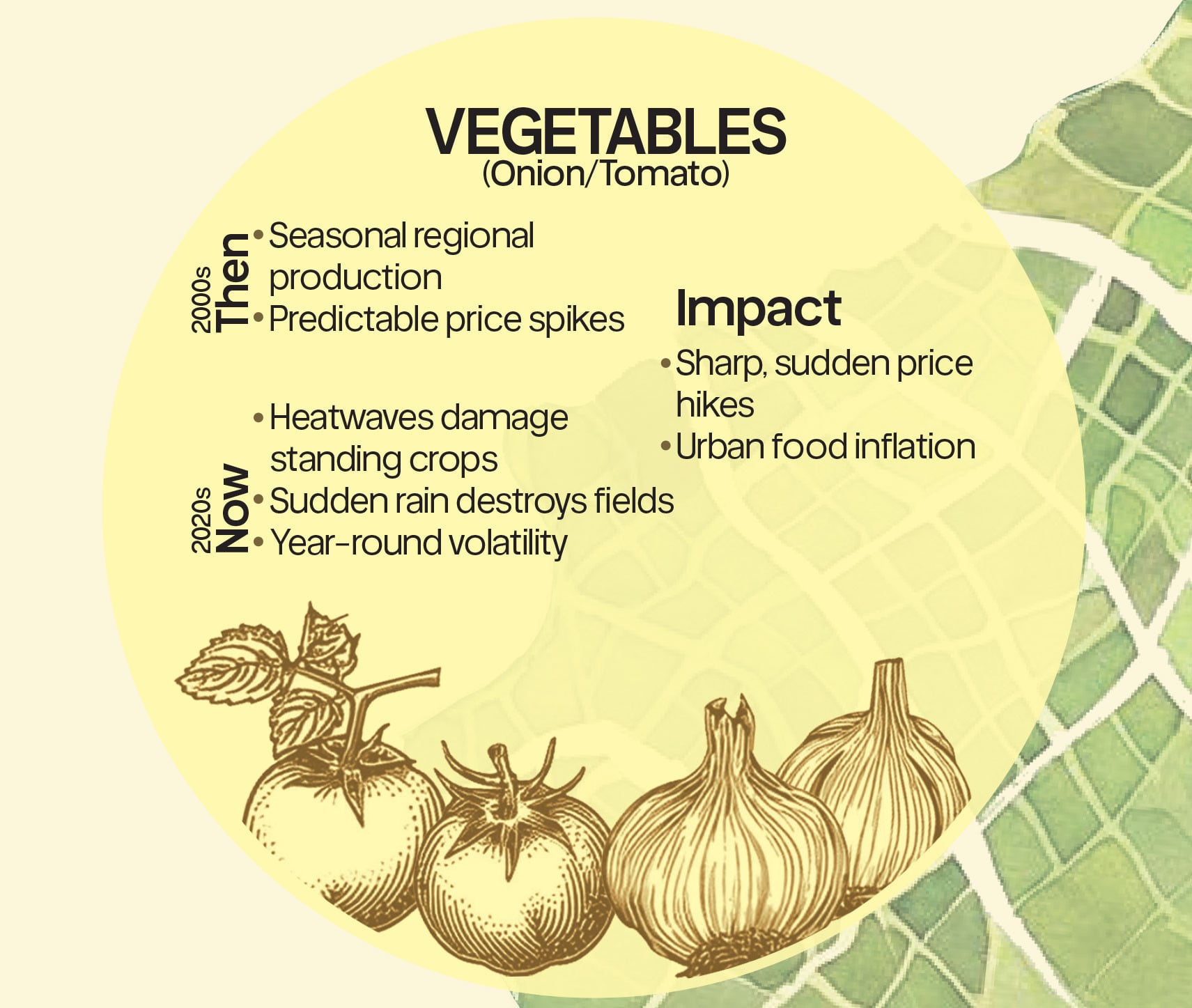
Rice operates differently. Delayed monsoons or flood damage create volatility in both export commitments and domestic supply. Price fluctuations often become visible in the months following the Kharif harvest cycle, particularly in districts dependent on canal water reliability.
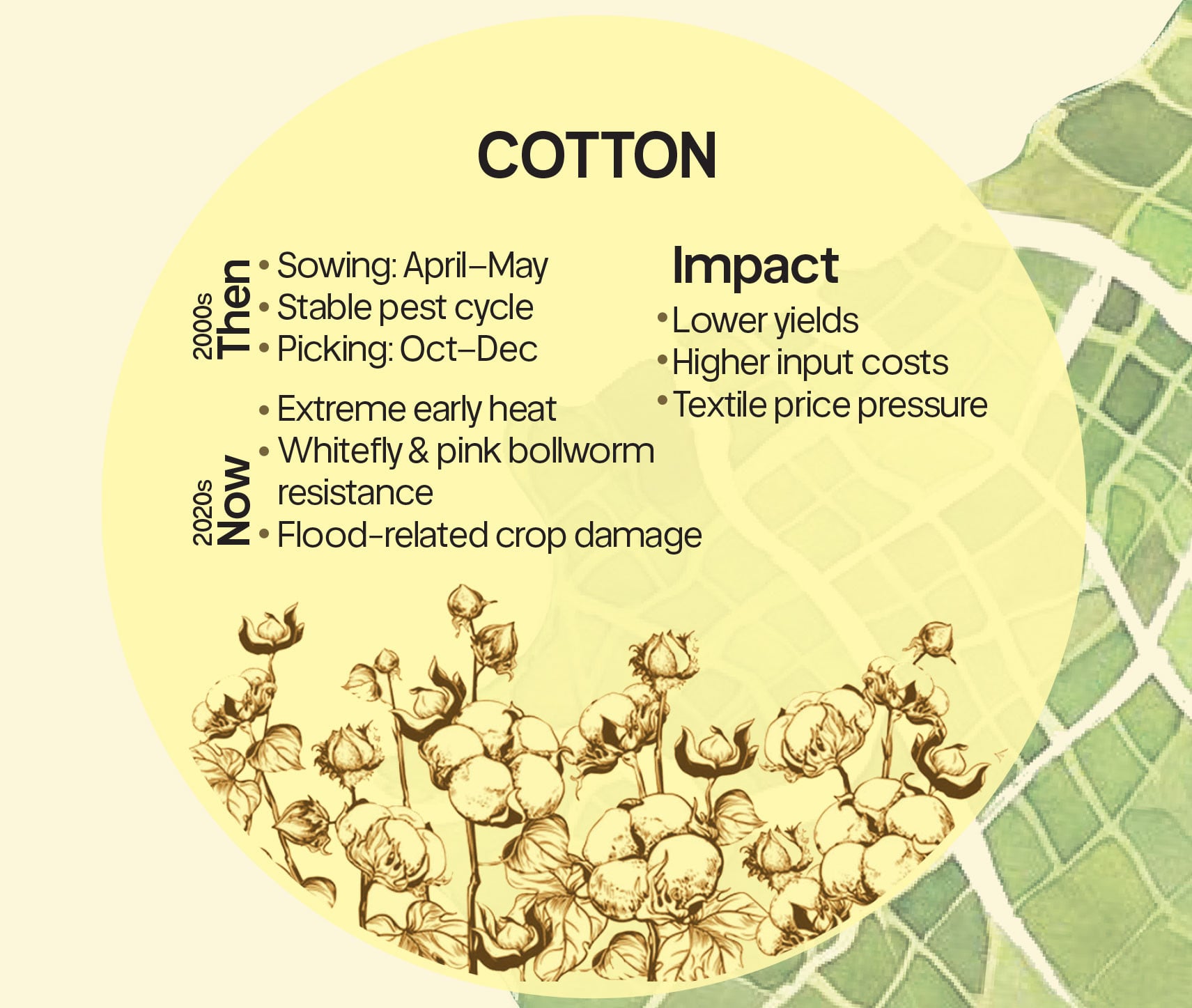
Vegetables are the most immediately responsive to climate disruption. “Tomato and onion prices react very quickly to weather shocks,” Professor Kumbhar explains. “They are highly temperature-sensitive crops.”
A single heatwave during flowering can reduce supply. A spell of excessive rainfall can damage standing crops and disrupt transportation. Unlike wheat, vegetables lack buffer stocks and procurement cushions. The price response is immediate and visible in urban markets.
The 2022 floods offered a sharp example of this transmission. Cotton production fell significantly, but vegetable supply chains were also disrupted. In several cities, perishable prices surged within weeks of heavy rainfall.
What is changing, he argues, is not merely seasonal volatility but structural instability. “In the past, inflation was often seasonal and predictable,” he says. “Now climate variability is introducing more uncertainty into the system.” The distinction matters. Seasonal volatility follows a rhythm. Structural volatility disrupts it.
When March heat reduces wheat grain size, the impact may not be immediately visible in the field. But lower grain weight across districts can aggregate into national supply stress. When monsoon rainfall becomes concentrated into short bursts, rice transplantation delays shift harvesting windows and compress market arrivals.
For consumers in cities, the link between a delayed transplant in Sindh and a price fluctuation in Lahore may not be obvious. Yet the chain is direct.
Reduced production narrows supply. Narrow supply increases vulnerability to speculation. Rising input costs amplify pricing pressure. Import decisions become reactive rather than planned.
Kumbhar cautions that climate-driven volatility is likely to intensify if adaptation mechanisms do not scale. “Wheat shortages create broader inflationary pressure because of its central role in food security,” he notes. “Vegetables create immediate consumer distress because price spikes are sudden.”
The combined effect is cumulative. A compressed wheat harvest window, followed by erratic rice transplantation, followed by heat stress in vegetable belts, creates overlapping risk rather than isolated shocks.
For farmers like Fahad, this volatility reinforces caution. For urban consumers, it translates into unpredictability at the grocery counter.
Between the field and the market lies a narrowing margin of stability.
Education, digital and technology
If climate variability has exposed structural weaknesses, it has also accelerated conversations around adaptation. For Zeeshan, the response must begin with education. “You cannot solve climate stress only with products,” he says. “You have to change the mindset.”
He estimates that agriculture-operational companies engage directly or indirectly with between 1.5 to two million farmers across Pakistan. More than 500 field staff operate on the ground, conducting training sessions and advisory visits. Much of that outreach, he says, now centres on helping farmers interpret shifting weather patterns.
“Earlier, farmers would say we must sow on a fixed date,” he explains. “Now we are encouraging them to look at temperature trends and rainfall forecasts before making that decision.”
The emphasis, he says, is on timing and preparedness. When heat arrives earlier, sowing must adjust. When rainfall is erratic, irrigation planning must change. Education, in this context, is about aligning practice with new climatic realities.
Digital tools are increasingly part of that shift. The company’s CropWise application, he notes, has crossed 1.5 million downloads. The platform offers weather forecasts, disease alerts and agronomic recommendations tailored to crop type and location. Farmers can upload images of affected crops to receive AI-assisted disease identification.
“If a farmer sees a disease in the field, he can upload a picture and get guidance,” Zeeshan says. “That reduces delay in response.”
Weather alerts are another component. Short-term forecasts can guide irrigation decisions and pesticide application timing. In regions where rainfall has become concentrated into short bursts, knowing when not to spray can be as important as knowing when to apply treatment.
The push toward digital advisory is partly generational. “A new generation of farmers is coming in,” he says. “They are more educated, more open to technology and more willing to experiment.”
That generational shift, however, remains uneven. While progressive farmers adopt mobile advisories and hybrid seeds, a large segment still relies on inherited practices. Bridging that divide requires sustained engagement.
Adaptation also extends to seed development and crop protection. Hybrid varieties, Zeeshan argues, offer greater resilience under stress conditions. Seed treatment technologies aim to strengthen early-stage plant health, improving germination and root development under fluctuating moisture levels. Biostimulants are being promoted to enhance crop tolerance to heat and drought stress.
“Resilience begins at the seed level,” he says. “If the plant is stronger in the early stage, it can handle stress better later.”
Beyond inputs and advisory, risk mitigation mechanisms are beginning to enter the conversation. Zeeshan describes pilot efforts around climate-linked insurance models designed to cushion farmers against extreme weather events. “When floods or severe heat cause damage, farmers often bear the entire loss,” he says. “Risk-sharing mechanisms can provide some protection.”
Scaling those mechanisms, however, requires policy alignment and financial infrastructure.
Kumbhar agrees that adaptation must be systemic rather than isolated. “Climate-resilient agriculture means practical adjustments,” he says. “Heat- and drought-tolerant varieties, efficient irrigation management, crop diversification and climate-informed advisories.”
He emphasises that resilience is not limited to technology adoption. It also involves improving water governance, strengthening extension services and integrating data into routine farm decisions. “Digital tools have potential,” he notes, “but scaling depends on literacy, connectivity and institutional support.”
In other words, applications alone cannot transform farming practices unless they are embedded within broader advisory ecosystems. The adaptation conversation, then, sits at the intersection of science, technology and behaviour. Farmers must adjust sowing windows. Researchers must refine crop varieties. Private companies must invest in advisory platforms. Policymakers must support infrastructure and insurance mechanisms.
The calendar may be shifting, but the response is still evolving.
Policy, regulation and the structural question
If climate stress has altered farming practice, adaptation is shaped not only by science and technology but by policy architecture.
For Zeeshan, the pace of regulatory processes directly affects how quickly farmers can respond to climate variability. “In Pakistan, approvals can take up to four years,” he says, referring to crop protection products and related innovations. “By the time something is approved, the climate challenge may already have evolved.”
He argues that innovation cycles must align with the speed of environmental change. When pest resistance builds quickly or temperature patterns shift within a few seasons, prolonged approval timelines slow field-level adaptation.
Another constraint lies in regulatory limits on product categories. Zeeshan points to restrictions that allow only limited registration within specific segments such as biostimulants, despite rising interest in stress-tolerance technologies. “If farmers need tools to deal with heat and drought stress, access should not be constrained unnecessarily,” he says.
Fertiliser governance presents another layer of complexity. Provinces operate with varying policy approaches, pricing structures and distribution mechanisms. That misalignment, he argues, creates uneven incentives and can distort input use patterns. “When policy differs province to province, it affects planning and uniform adoption,” he notes.
Infrastructure also plays a role. Reliable weather radar systems and localised forecasting capacity remain uneven across districts. Without granular data, farmers and advisory platforms rely on broader regional projections that may not capture micro-variability. “Better radar coverage and forecasting systems are essential,” Zeeshan says. “If a farmer receives accurate localised information, he can make more precise decisions.”
Risk-sharing mechanisms, including climate-linked insurance models, also require policy support. While pilot efforts exist, scaling insurance depends on regulatory clarity, financial inclusion and institutional coordination. “The idea is not to eliminate risk,” he says. “It is to distribute it more fairly.”
Yet governance challenges extend beyond product approvals and infrastructure. Professor Kumbhar believes that resilience demands alignment between research institutions, extension services and regulatory bodies. “Yes, policy alignment is necessary,” he says. “Research, regulation and extension must operate in coordination.”
He argues that soil testing should become normalised rather than optional. Without systematic diagnostics, fertiliser use remains imprecise. Extension reform, he adds, is central to translating research findings into farmer practice. “Sustainable practices cannot scale without institutional support,” he notes.
Water governance remains another structural pressure point. Canal management, groundwater extraction and inter-provincial coordination influence crop planning decisions long before sowing begins. “Climate adaptation must include efficient irrigation systems and improved water management,” Professor Kumbhar says. “Otherwise variability will intensify vulnerability.”
The contrast between environmental speed and institutional pace is increasingly visible. Heatwaves intensify within weeks. Flood cycles shift within seasons. Regulatory reform often takes years.
The question is no longer whether climate change is altering Pakistan’s farming calendar. It is whether governance structures can adapt quickly enough to support the transition.
 The tipping point
For Kumbhar, the question is no longer whether climate change is influencing agriculture, but whether the system recognises the scale of transition underway.
“We are approaching a structural shift,” he says. “Terminal heat stress, glacier retreat affecting river flows, extreme flood cycles and rising evapotranspiration indicate that business-as-usual farming is no longer sustainable.”
The pressures are layered. Heat arrives earlier. Monsoons concentrate into shorter windows. Water distribution becomes less predictable. Pest survival increases through milder winters. Each factor alone can be managed. Together, they redefine planning.
Future farming in Pakistan, he argues, will require precision in timing, water-efficient systems, climate-resilient crop varieties and data-driven decision-making. The calendar that once rested on tradition must now rest on information.
Back in Mandi Bahauddin, Fahad Baig still keeps his diary. The dates are written down, but they are written in pencil.
Zeeshan Baig frames the change more simply. “Earlier, farmers would say we must sow on 25th October, but now they first look at the weather prediction.”
What was once a habit has become a calculation. What was once seasonal certainty has become measured risk. In that transition lies the future of Pakistan’s farming system.