
There are bad films. Then there are worse films. And then some films sit beyond the worst—an unenviable category that Huma Shaikh’s Item proudly occupies. From a poster that screams cringe to a trailer that confirms it, the film ultimately blossoms into a full-fledged cringe fest. Achieving this level of discomfort is no small feat.
Item claims to be a film about female empowerment. It also claims to highlight the plight of women labelled “items” for daring to step outside their homes to earn a living. In reality, it does neither. Instead, it operates on two deeply flawed assumptions: that all men are evil and the audience is stupid.
Thankfully, neither are all men evil, nor is the audience stupid. That is why most critics endure 142 minutes of cinematic torture—so you don’t have to.
After enduring Item, I decided to do a good deed: explaining, in five simple steps, why films like Item deserve to remain in the can. Releasing them actively harms genuine filmmakers—those who know how to pull audiences toward Pakistani cinema rather than push them away. Our industry needs those filmmakers far more than these so-called “items,” which do little for anyone’s mental health.
Item should have stayed in the can
The film that doesn’t know what it is saying claims to be “a bold and full commercial mainstream feature film” with a “subtle message” exposing society’s hypocrisy—where women are idolised on screen but disrespected in real life. Let’s start with the basics: the film is neither bold nor commercial. It is not even a modern mainstream feature film and looks like something that you might catch on Filmazia while switching channels. If anything, it’s a cringe fest that opens with a mujra masquerading as an item song. At the end of that number, an actor who has been throwing money on the dancer like his colleagues says, “Kia item hai,” and kick-starts a painful journey that lasts more than two hours.
The director appears confused about what an “item” even is. When was the last time a successful model was randomly picked to perform an item number without any groundwork? Sadaf Kanwal comes to mind, but she had the personality, grace, and prior acting experience to justify her item number in Na Maloom Afraad 2. Amna Ilyas did something similar in Mehrunisa V Lub U and Chaudhry – The Martyr, but she was already a far more accomplished actress.
By contrast, the total of Mahi’s (Aliya Ali) journey is conveyed via a slide that reads: Five Years Later. That’s it, from being advised to try modelling to becoming an item girl—five words on a screen. In my book, that’s neither feminism nor empowerment. It’s lazy filmmaking dressed up as social commentary. The audience isn’t stupid, which is why they will be as bewildered as I was when an office-going girl from a lower-middle-class neighborhood magically transforms into a successful model without a hint of struggle, but with a wig that doesn’t even look well-made.
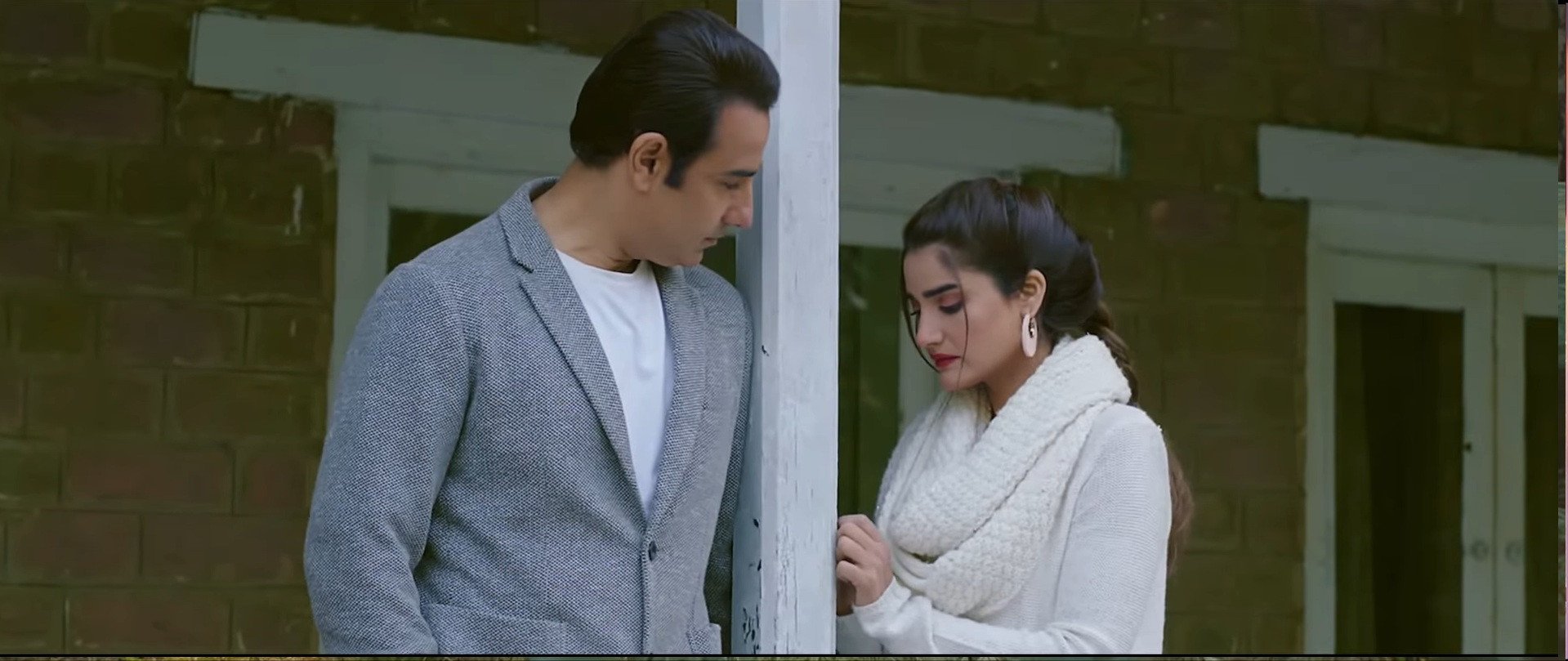
Laziness has never helped any industry
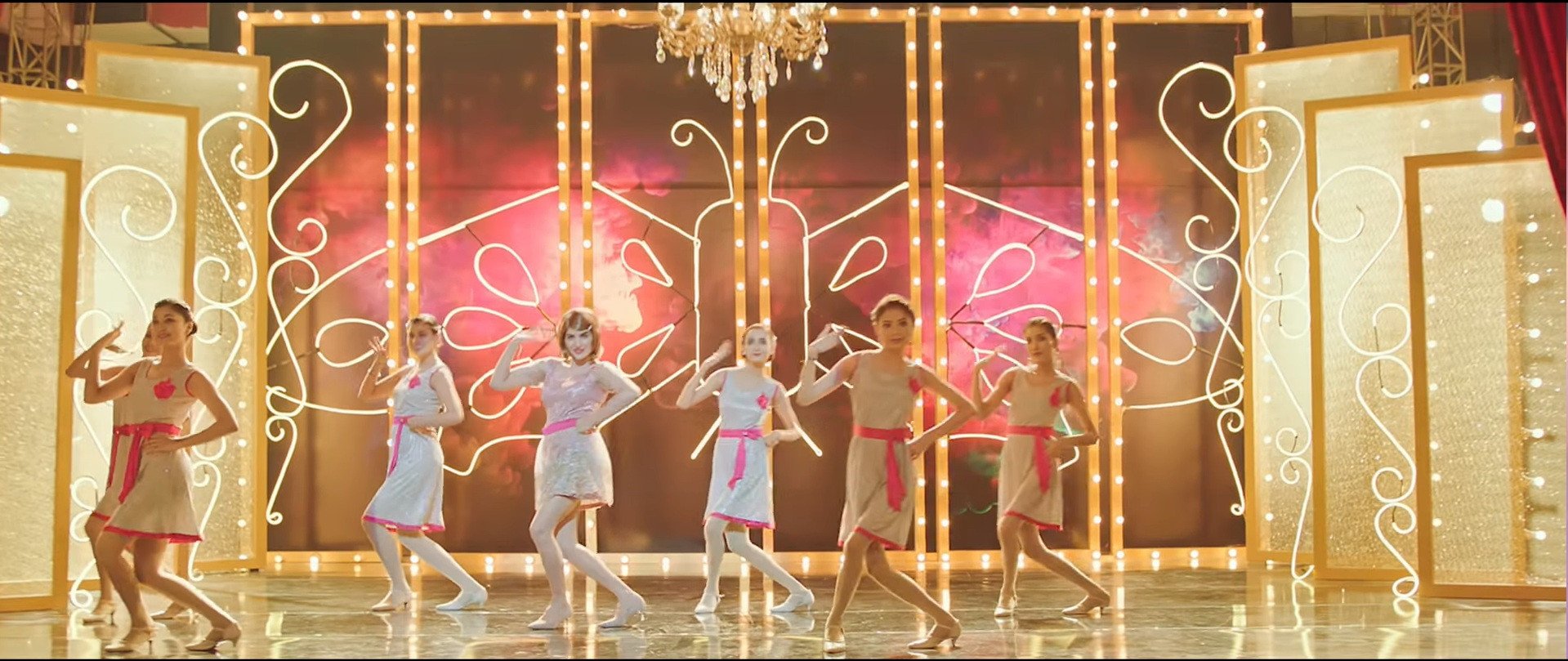
Aliya Ali may be a competent TV actress, but as popular TV and film actress Humaima Malick once put it, “a film heroine has to be someone the audience can gloat over and fantasise about.” The refreshments I consumed during the screening had more spark than the film’s item numbers, which were shot on the same stage, performed like a school tableau, and featured dances best forgotten the moment you exit the cinema. Why one of the songs randomly incorporates the James Bond theme is anyone’s guess.
In interviews, and a clip that has gone viral due to its insanity, Aliya Ali claimed that during the shooting of the bold songs, the male crew was instructed to look away. Ironically, that may be the most accurate statement made during the film’s promotions, because the songs look as if they were filmed without any supervision at all—as if the choreographer was sleeping, the cameraman was out of the room, and everyone else was, quite literally, “made to look away.” Had the film truly been bold, it would have earned a bolder rating from the censor board, which it didn’t. Worse, the lead performance throughout is so laid-back and so aggressively 1960s that even the dance numbers fail to land.
Scenes like the father dying after slapping his daughter, an aunt blaming her niece’s job for her father’s death, a young couple getting stranded in a rest house during a weather calamity, and a girl singing in the mountains with the hero as the sole onlooker should have been killed on paper, as they became irrelevant in the last millennium. Yet they are part and parcel of Item and make you want to check the calendar—only to be surprised that it’s 2025 or 2026, not a year starting with 19, belonging to the 20th century.
Pakistani-American actor Azad Khan (Hala, The Vineyard, Mumtaz Mahal) is the film’s lone saving grace, though even he feels misplaced. He would have thrived in a 1960s setup—three-piece suits, rich men falling for courtesans or women with “bad reputations,” and mama’s boys with hearts of gold. Why he chose this project remains a mystery. His unfamiliarity with contemporary Pakistani cinema may have helped the film, but it certainly didn’t help his career.
Behroze Sabzwari appears as the girl’s injured father—both physically and mentally—and is granted exactly two scenes, much like his senior co-star Sangeeta Rizvi, who continues to shout her way through roles for reasons unknown. Their banter about a young woman seeking work in a male-dominated world might have felt relevant in the 1960s. In 2025, it feels like the script was written by someone who woke up after a 50-year nap and decided to lecture us on empowerment.

There is no place for a terrible soundtrack in 2025
Pakistani cinema owes much to composer M. Arshad, whose work on Jeeva, Chor Machaye Shor, Hawayein, and Salakhain defined an era. Unfortunately, he hasn’t produced anything memorable in the last two decades—and Item makes that painfully clear.
The soundtrack sounds ripped straight from the 1990s, complete with the outdated trope of recycling the same sad song with different singers. One of them is Humera Channa, the undisputed queen of ’90s filmi music—but nostalgia alone can’t save a weak composition.
M. Arshad’s remake of Bijli Bhari Hai (originally composed by his father, M. Ashraf) feels more personal than professional. While Maan Jao Na paid tribute to the song far more effectively—only to be reprimanded by rights holders—this version collapses under bad choreography, cheap sets, and uninspired vocals. Aima Baig’s Velo Sound Station rendition from five years ago feels more contemporary than this butchered remake. Had the film been named Bijli, it might have seemed relevant, but unlike the original Bijli girl Mumtaz, this one feels like it’s running on an old generator.
Scam films like item need to be studied
Why call Item a scam film? Because films like this—and there are many—deserve academic scrutiny. How did any investor agree to fund a project that looks unviable to the trained eye? What convinced seasoned actors like Ismat Zaidi and Mariam Mirza to sign on? Why did the filmmakers ignore distributors who surely warned them that releasing the film alongside Avatar: Fire and Ash would be commercial suicide?
Every filmmaker believes they are doing something new—at least in their own head. Huma Shaikh seems inspired by Bollywood films like Fashion and Heroine, which critiqued the entertainment industry with depth and craft. What she failed to realise is that replicating that level of filmmaking here may take decades. A smaller, simpler film—a rom-com, perhaps—might have helped her test the waters. Instead, she aimed for Titanic without realising that even James Cameron had to struggle before reaching a point where he could make the award-winning classic. No struggle leads to scam films like Item.
Bashir Noman was the real “Item”
Watch the trailer closely, and you’ll notice a TV anchor—clearly inspired by Shahzeb Khanzada or Kamran Khan—interviewing Miss Mahi. Frankly, had the director made a film about this man alone, it might have been a hit. Earlier, he appears as a fashion photographer who gets slapped by a novice Mahi and vows revenge for that thapparr.
How this vengeful photographer transforms into a prime-time anchor with massive ratings is the most fascinating arc in the film—sadly unexplored. Perhaps Item 2 will be his story: a journey from nobody to somebody, hopefully told with more substance than a lonely Five Years Later slide.
In the end, the film concludes with a brain-fade moment: women should study martial arts if they want to survive in a male-dominated world. It may be one of many things they could do, but presenting it as the only solution exposes the mindset behind Item.
All facts and information are the sole responsibility of the writer
Omair Alavi is a freelance contributor who writes about film, television, and popular culture