
When we announced our plan to embark on an adventure into the dense and mysterious forest of Darolai, and more notably, that Sherin Zada would be joining us, we were met with a flurry of questions. Why are you taking a blind person on such a risky hike? Isn’t bringing Sherin along just a waste of time and effort? Don’t you know the forest is home to bears? What if ou’re attacked while travelling with someone who can’t see?
And so on, the concerns kept coming.
Brushing aside all these concerns, we finalised our hiking trip to explore the spirit of community-led conservation in the dense forest of Darolai, one of the most well-preserved and thickest forests in Swat. With the possibility of encountering black bears and other wild species (if luck favoured us), we were excited to venture into this untamed wilderness, home to a rich variety of flora and fauna, and, above all, to enjoy the inspiring company of Sherin Zada.
Sherin Zada, my friend, lost his vision in childhood, yet he senses and feels the world more deeply than most of us ever could. While others see with their eyes, Sherin sees with his spirit, and on this journey, he became not only our guide in courage but also a reminder that true vision lies beyond what is visible. For him, embarking on this wilderness hike was like summiting his personal K2.
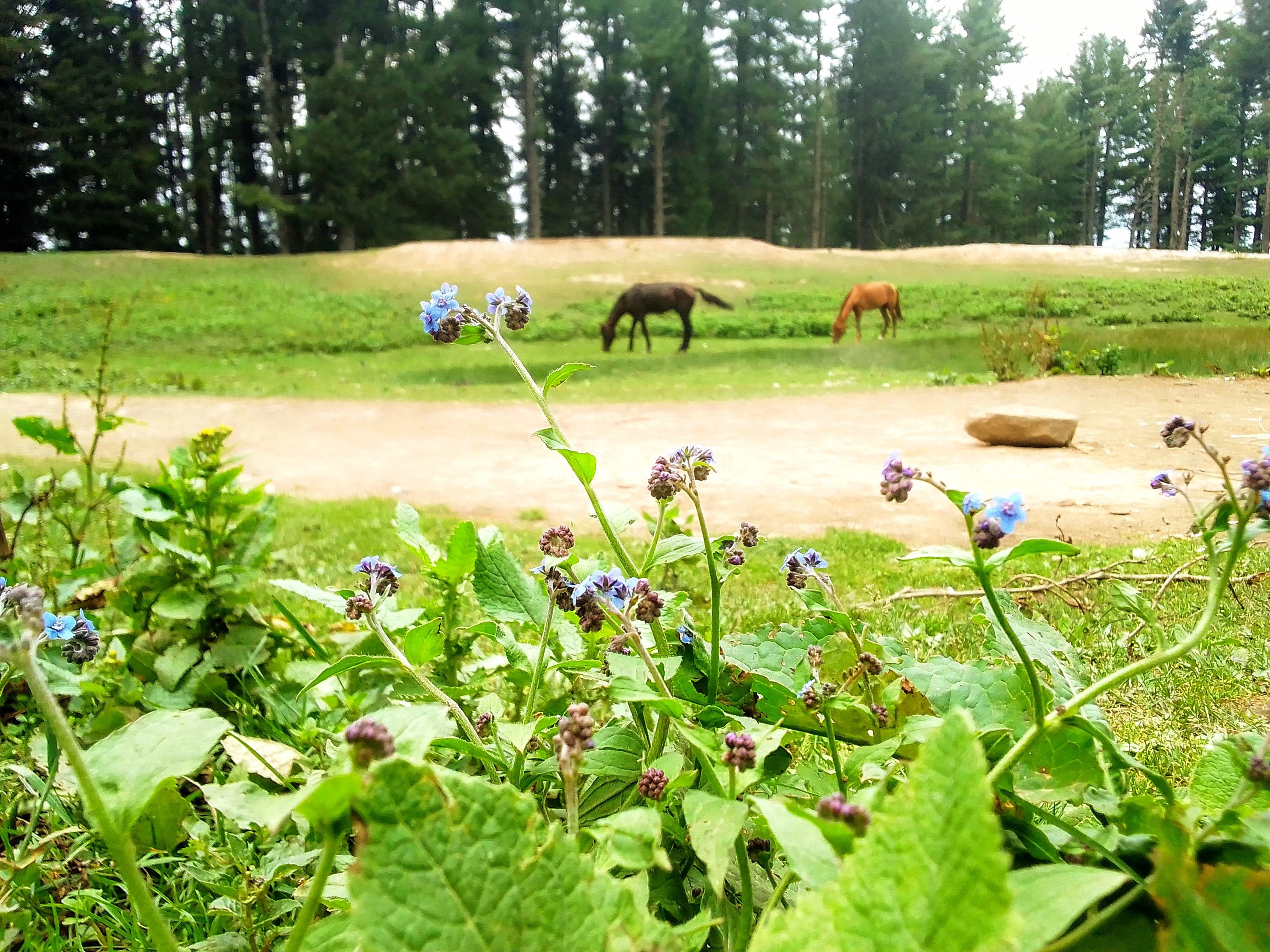
On the day of the trek, at exactly 3:35 am, my alarm woke me up. After offering the fajr prayer, I left behind the town of two rivers, Bahrain, and set out for the village of Darolai. From there, my younger brother Zakaria, Sherin Zada, our guide, and fellow adventurer Kashif, and I set off toward one of the wildest destinations we've ever dared to explore, in pursuit of our unquenchable thirst for adventure.
The enchanting forest of Darolai is exceptionally dense and remarkably well-preserved, thanks to the sustained efforts of community-led conservation. The locals have formed a committee of elders who act as guardians of the forest, strictly forbidding deforestation, hunting, and all other harmful activities. As a result of these protective measures, the forest has become a thriving sanctuary for wildlife, most notably black bears, which are commonly found in the area. In addition, a wide variety of plant species, animals, birds, and insects call this rich and untamed forest their home.
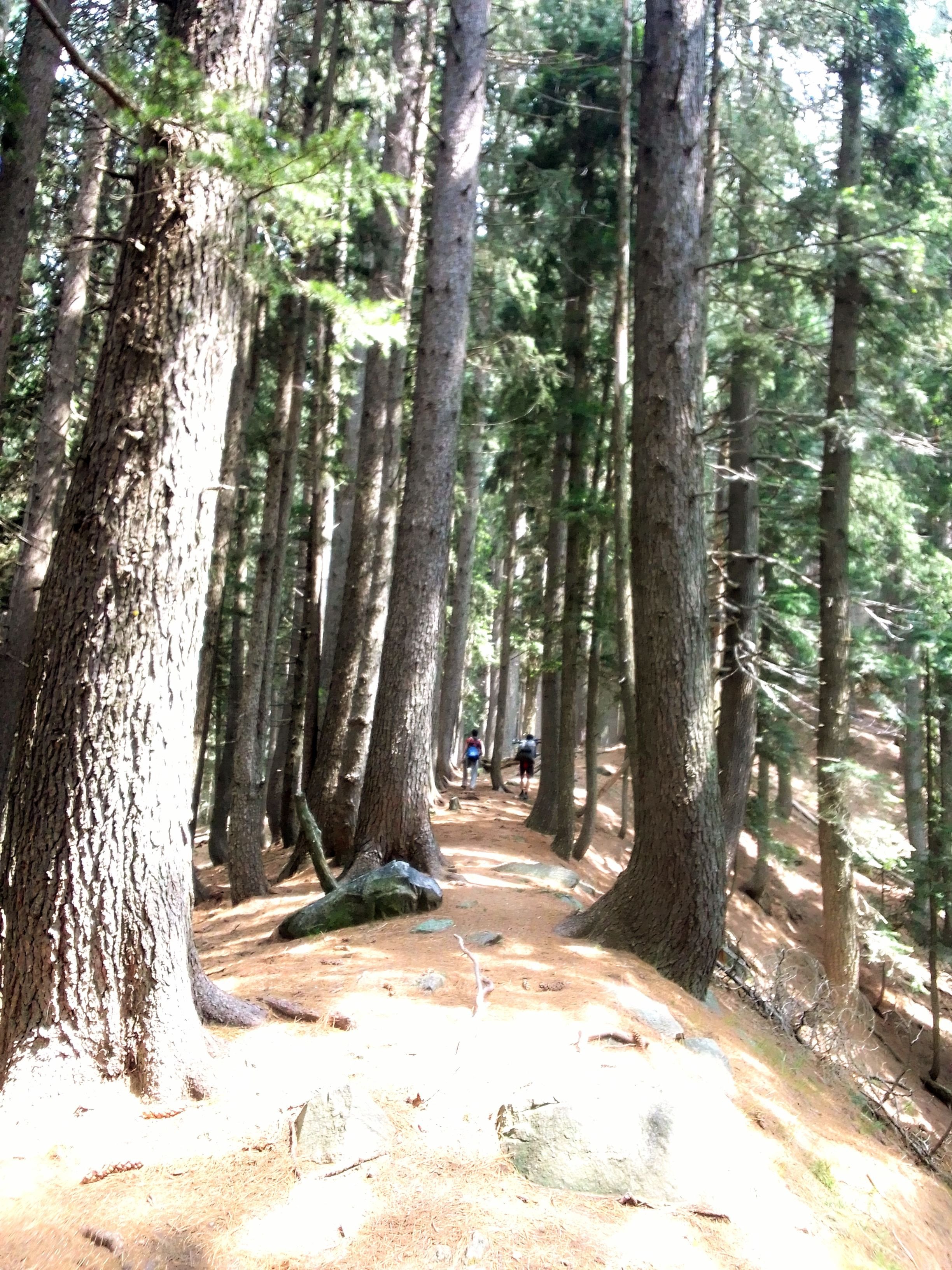
We soon found ourselves on a rugged, uneven trail strewn with rocks, surrounded by towering trees and immersed in the rich sounds and scents of nature. After a few minutes of ascent, we realised that the entire route was steep and rocky, a vertical climb that could take up to five exhausting hours to reach our first destination: Ghani Shai. It quickly became clear that this hike demanded more courage than common sense to pursue, as we pushed forward in search of a hidden natural treasure.
Since it was monsoon season, a dramatic interplay of fog, sunshine, and gentle breeze danced around us throughout the hike, a constant game of hide and seek between light and mist. Soon, we found ourselves climbing uphill, where the world below unfolded like a serene painting, breathtakingly calm and beautiful. Our path led us through cloud-kissing trees, in the quiet companionship of the mountains. Sherin Zada’s warm presence added a special charm to our wilderness adventure. The forest was so wild and untouched that only four scattered homes existed within its vastness, each one tucked far away from the other.
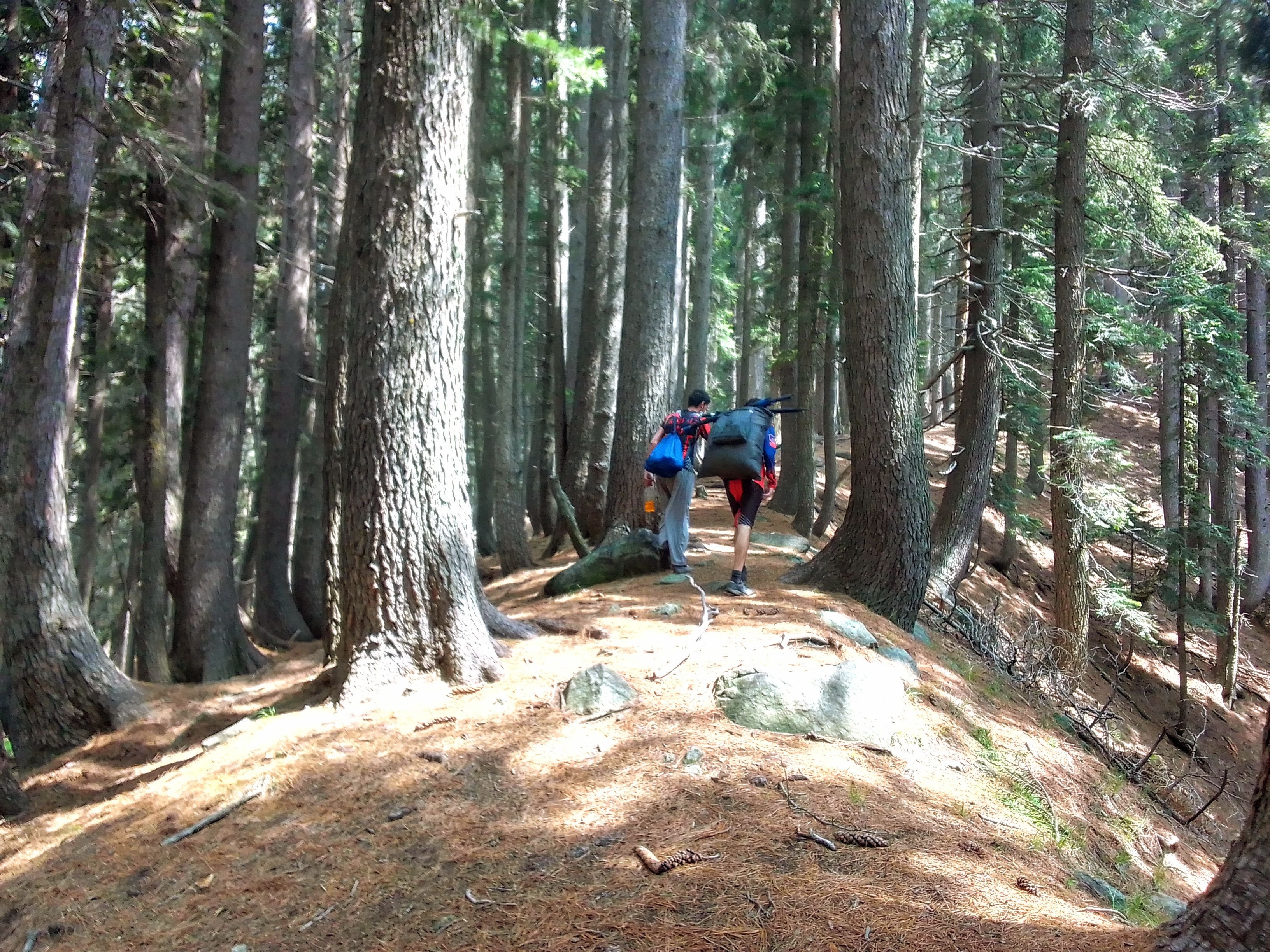
After six hours of a tough hike and intermittent rests, we finally reached Ghani Shai, a tranquil and secluded forest glade, gently cradled by towering trees on all sides. The peace and charm of this hidden haven were so surreal, so serene, that we couldn't resist pausing there for a while to rest and enjoy our lunch. Ghani Shai is also home to Ghani Kaka, a man deeply attached to this wild and untamed realm. Though he was away in the valley below due to some personal matters, we were warmly welcomed by his gracious son, Zaiwar Khan, the guardian of this wild heaven, whose presence added a touch of local warmth to our wilderness journey.
Being the sole resident of the wild dense jungle, Zaiwar Khan was chosen as its guardian by the preservation committee down in the valley. Under his devoted supervision, a rich variety of flora and fauna flourished in this untouched wilderness. Although he recently stepped down from the committee after a dispute, he continues to protect and preserve the ecosystem of this natural haven on his own. Our guide, Kashif, told us that Zaiwar Khan went as far as to stop livestock from grazing in the area to protect the grasslands. He also assisted local authorities in apprehending and punishing illegal loggers and timber smugglers.
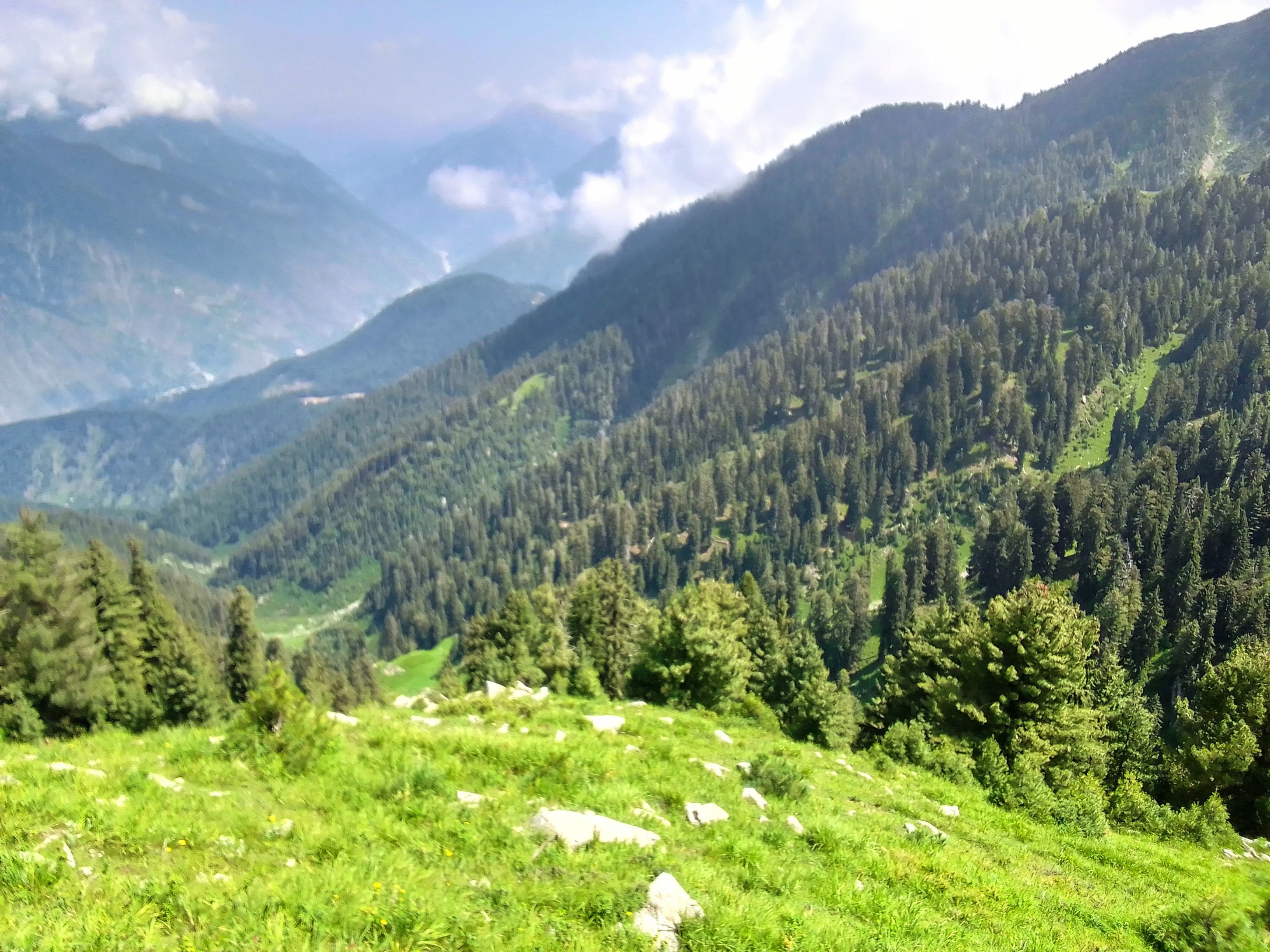
He also shared with us some of his deep and indigenous knowledge of the wild. Zaiwar Khan mentioned that the jungle is home to black bears, as well as other species such as wolves, foxes, and jackals. In recent months, leopards have also been sighted, these are being reintroduced into the jungle by the wildlife authorities. He himself has faced several bear encounters and guided us on how to stay safe if we ever come across one. His advice, though valuable, instilled a sense of fear in our hearts, about the heavyweight bears that roam freely in nearly every corner of the jungle.
After enjoying Zaiwar’s company, it was time to hit the trail again through this little-disturbed wilderness. From Ghani Shai onward, the path became less steep and slightly easier to navigate. The forest grew denser, the landscape increasingly lush with vegetation, and the mist thickened with every step. For the rest of the journey, we were wrapped in a heavy veil of smog that blended beautifully with the surreal serenity of the mountains. It all felt like a magical landscape, as if the planet had just received a new terrain update.
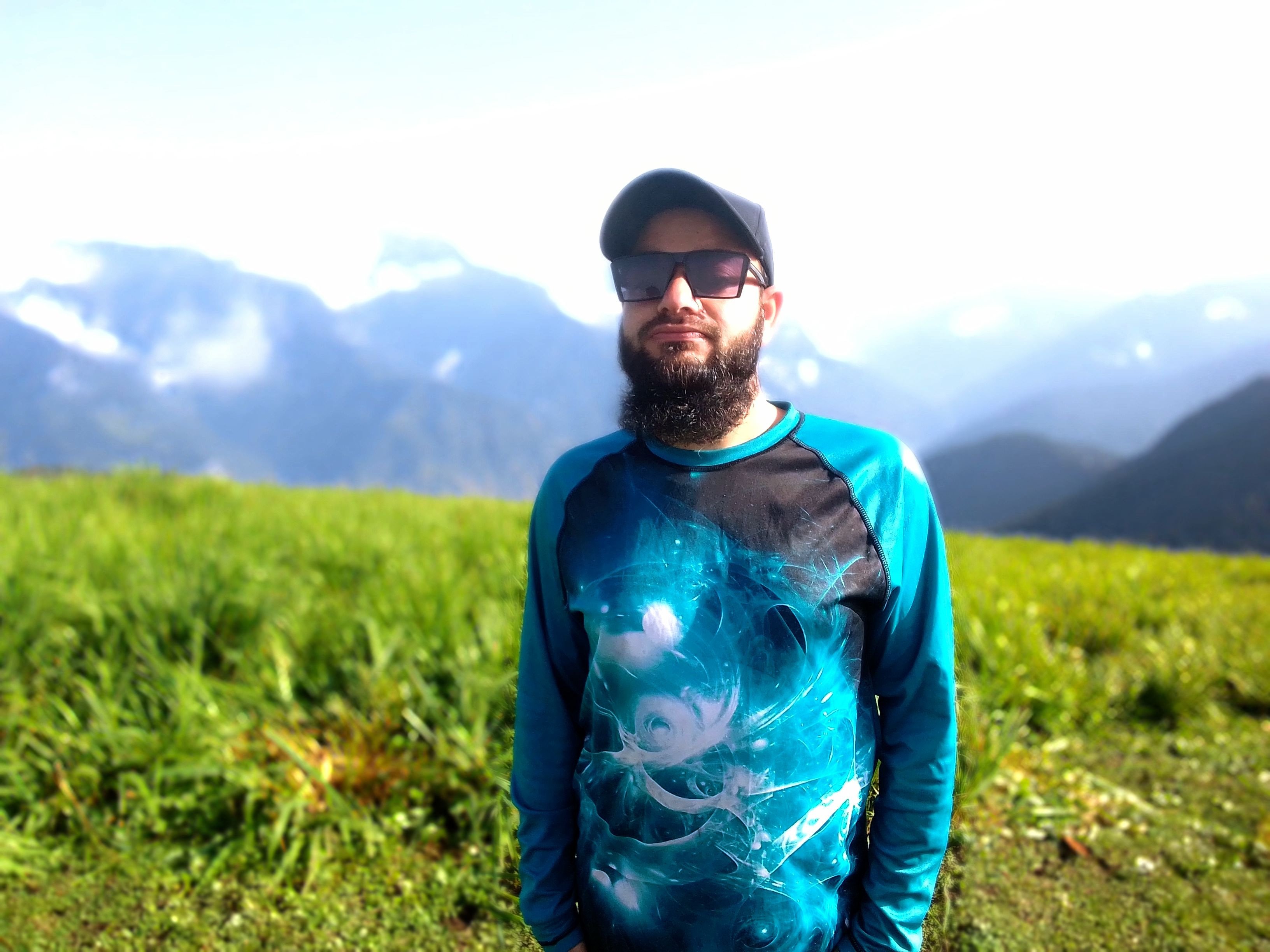
The landscapes kept shifting as we moved forward. With each change, we left behind several visible villages nestled deep in the valley, poor visibility due to thick smog and mist made them appear like faded sketches. We passed through dense forests, open plains, steep ascents, and narrow mountain passes. After another four-hour hike, we finally reached our destination for the day: Dabar Sar, a beautiful, uncharted, and untouched peak. The scenery was breathtaking, but what made it even more exhilarating was the intense fog surrounding us, limiting visibility to just two or three metres. It felt like standing at the edge of the known world.
As dusk settled in, and with the ever-unpredictable mountain weather threatening to shift in minutes, we decided it was time to pitch our tent and call it a day. But adventure had other plans. Just before setting up, we discovered that our tent was damaged beyond use. With no other choice, we turned to the wilderness for a solution. On the peak, we gathered what we could – five sturdy tree trunks, a rope, and a plastic sheet – and we built ourselves a makeshift shelter. It became our improvised home for the night, surprisingly more stable and reliable than we had expected. However, the night that followed had its own plans for us…
After setting up our primitive tent, we prepared a simple dinner and began gathering dried wood from around the peak to carry out the most important task of all: building a bonfire that would burn through the night, a necessary safeguard against bears. Only later did we discover that we were camping right in the territory of a heavyweight bear, one that could have paid us a visit at any moment. The bonfire, crackling in the cold mist, became the icing on the cake of our unforgettable adventure.
Camping here required more than just courage, it demanded a higher degree of confidence and calm. There we were: just the four of us, surrounded by thick mist, the flickering warmth of the fire, and the haunting chorus of insects echoing through the wilderness. For Sherin Zada, and honestly, for all of us, it was a first-of-its-kind experience: wild, raw, almost off the charts.
First came a strange kind of insect, tiny, relentless creatures that swarmed our tent and irritated us endlessly. Their unwelcome company continued well into the night. Then came the rain. It poured heavily and relentlessly, drumming against our makeshift shelter. Thankfully, our primitive tent held strong and kept us dry through the downpour. But above all, it was the fear of bears that haunted us.
Every small rustle, every creak of plastic, was enough to send our hearts racing. We lay in silence, wide awake, imagining the shadow of a bear looming just beyond the mist. It was, without doubt, the most nerve-wracking night of our lives. None of us managed more than a few hours of sleep. When the first pale rays of dawn finally broke through the mist, I turned to Sherin Zada and asked, “Are we alive?” He smiled and said, “Yes, we’ve made it.”
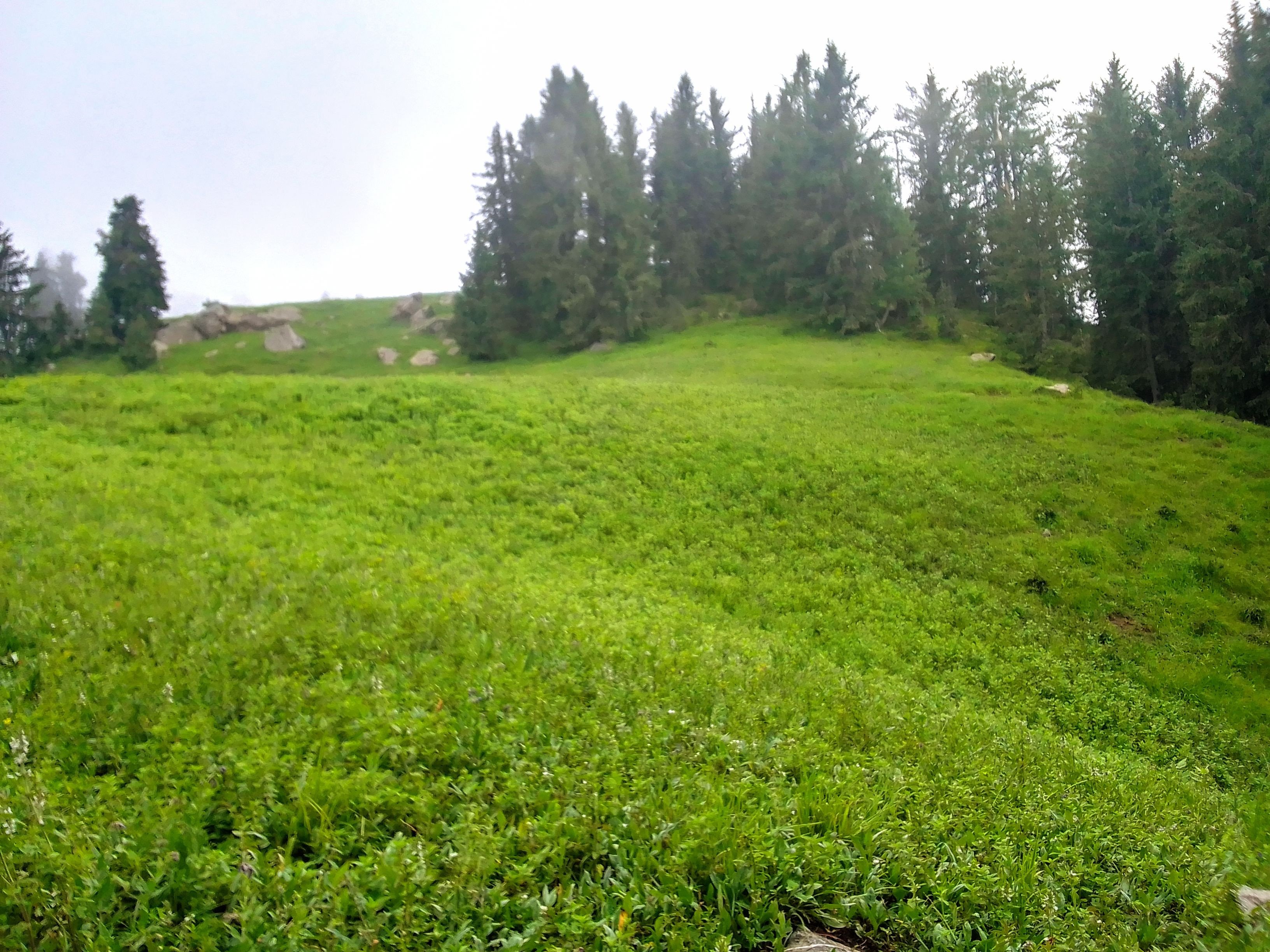
When we opened our tent in the morning, we were greeted by a breathtaking sight, a vast, green mountaintop cradled gently by towering peaks on all sides. From this vantage point, nearly the entire Upper Swat region unfolded before our eyes. To the north, we could see Mankiyal Bazaar nestled in the valley, with the majestic peaks of Kalam standing proudly beyond. To the west, the scenic Daral Valley of Bahrain stretched out in quiet grandeur.
Eastward lay the special and cherished valleys of Chail, Bishigram, and Shanko, my birthplace – each vale basking in the soft morning light. And to the south, the town of Madyan was clearly visible, with even distant glimpses of Matta city shimmering faintly on the horizon. This never-ending panorama extended as far as our eyes could see; thankfully, the mist and fog had lifted with the dawn. Above us, the sky-kissing peaks of Swat stood like silent giants, whispering age-old secrets to the drifting clouds.
After having breakfast at Dabar Sar, it didn’t take us long to head toward Yakh Kandaw. In Pashto, ‘Yakh’ means cold, and ‘Kandaw’ refers to a mountain pass or the boundary between two valleys. To the east of Yakh Kandaw stretches the Ulal River Valley, home to the beautiful Chail and Bishigram valleys, while to the west lies the expansive Bahrain Valley. Though both valleys are roughly a 20-km drive apart, they seem to converge here, separated only by this high-altitude pass.
True to its name, Yakh Kandaw was icy cold. Winds from both valleys collided at this very point, creating a dramatic and enchanting corridor of swirling air, an experience nothing short of spectacular. But our adventure was far from over. From Yakh Kandaw, we continued toward the final leg of our journey: the hidden paradise of Pathan Banda, perched high above this cold and windy mountain pass.
Pathan Banda is a lush green meadow, hidden deep within the dense forest, a secret haven of unspoiled beauty. After a grueling 13-hour hike, we were finally rewarded with the otherworldly landscape of Pathan Banda. It was so surreal, so breathtaking, that we could hardly believe our eyes.
We were exceptionally lucky to spot eagles soaring high above the meadow, adding to the magic of the moment. The forest was so remote and wild that over the course of our entire two-day journey, we encountered only four people. Two of them we met at Yakh Kandaw while returning from Pathan Banda. They were from Dabargi village on the other side of the valley. One of them shared something that sent a chill down our spines, he had seen a bear in the exact same spot where we had camped, just a day before our arrival.
It was time to head back home, but this beautiful, dense forest full of wilderness hadn’t seen the last of us just yet. As we began our descent from the mountain, I turned to the hero of our journey, Sherin Zada and asked him how he felt about the adventure, what it meant to him. He paused for a moment, catching his breath, then replied with a few simple, yet powerful words:
“I may not have seen the views, but I lived the climb, and that’s enough for me. You don’t need sight to witness beauty; you only need courage. And courage grows wings when the spirit is willing. They said I couldn’t, but now the wind, the peaks, and the silence all say I did.”