<?xml version="1.0" encoding="UTF-8"?>
<rss version="2.0"
	xmlns:content="http://purl.org/rss/1.0/modules/content/"
	xmlns:wfw="http://wellformedweb.org/CommentAPI/"
	xmlns:dc="http://purl.org/dc/elements/1.1/"
	xmlns:atom="http://www.w3.org/2005/Atom"
	xmlns:sy="http://purl.org/rss/1.0/modules/syndication/"
	xmlns:slash="http://purl.org/rss/1.0/modules/slash/"
	xmlns:media="http://search.yahoo.com/mrss/"
	>

<channel>
	<title>The Express Tribune &#187; Mobin Nasir</title>
	<atom:link href="http://tribune.com.pk/author/921/mobin-nasir/feed/" rel="self" type="application/rss+xml" />
	<link>http://tribune.com.pk</link>
	<description>Latest Breaking Pakistan News, Business, Life, Style, Cricket, Videos, Comments</description>
	<lastBuildDate>Thu, 24 May 2012 19:48:52 +0000</lastBuildDate>
	<language>en</language>
	<sy:updatePeriod>hourly</sy:updatePeriod>
	<sy:updateFrequency>1</sy:updateFrequency>
	<generator>http://wordpress.org/?v=3.2.1</generator>

		<item>
		<title>Record high: Remittances cross $1b mark in March</title>
		<link>http://tribune.com.pk/story/146492/record-high-remittances-cross-1b-mark-in-march/</link>
		<pubDate>Sun, 10 Apr 2011 05:48:01 +0000</pubDate>

		<guid isPermaLink="false">http://tribune.com.pk/?p=146492</guid>

		<description>
		<![CDATA[
			<a href="http://tribune.com.pk/story/146492/record-high-remittances-cross-1b-mark-in-march/">
				<img src="http://i1.tribune.com.pk/wp-content/uploads/2011/04/Remittance-graphic-160x120.jpg" width="160" height="120" alt="" />
			</a>
			<p><div><strong class='location'>KARACHI:&nbsp;</strong>
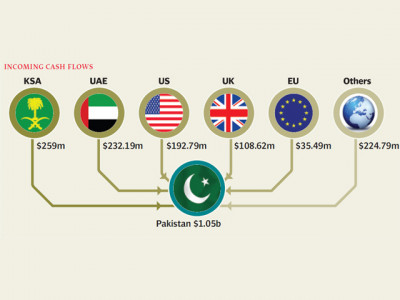
<p><strong>Overseas Pakistani workers remitted more than $1 billion to the country in the month of March. Transfers by Pakistanis living abroad touched the historic peak of $1.05 billion in March, having risen more than 38 per cent since March 2010, when remittances amounted $763.72 million.</strong></p>
</div>
<p>The previous high for a single month was recorded in August 2010, when overseas Pakistanis sent home $933.06 million.</p>
<p>Remittances to the country have been on the rise over the recent months, assisted by joint efforts of the State Bank of Pakistan (SBP) and two federal ministries, “to facilitate the flow of remittances through formal channels”, asserted SBP spokesperson Syed Wasimuddin.</p>
<p>In the first nine months of the current fiscal year, $8.02 billion have been remitted to the country by Pakistanis living abroad, up by over 22 per cent compared with $6.55 billion remitted in corresponding period of fiscal 2010.</p>
<p>In the annual plan for fiscal 2011, SBP had set a target of $9 billion for remittances. However, growth in the transfers of funds has outpaced this target, with more than $8 billion already sent to the country.</p>
<p>Monthly average remittances in the July-March period come out to $890.68 million compared with $727.87 million during the same corresponding period of the last fiscal year, registering an increase of 22.37 per cent.</p>
<p>SBP data also shows that remittances have increased from most countries, where significant transfers have been destined for Pakistan. The central bank has expressed confidence in the Pakistan Remittance Initiative (PRI) undertaken with the ministry of finance and the ministry of overseas Pakistanis, and forecasted that remittances may touch $11 billion by the end of the current fiscal year.</p>
<p><em><strong> </strong></em></p>
<p><em>Published in The Express Tribune, April 10<sup>th</sup>, 2011.</em></p>
</p>
			<br clear="all"/>
		]]>
		</description>

		<media:content width="424" height="318"
							isDefault="true" medium="image" url="http://i1.tribune.com.pk/wp-content/uploads/2011/04/Remittance-graphic-640x480.jpg">
			<media:title>Remittance graphic</media:title>
			<media:description>Over $8b sent by overseas Pakistanis in current fiscal.</media:description>
			<media:thumbnail url="http://i1.tribune.com.pk/wp-content/uploads/2011/04/Remittance-graphic-160x120.jpg" width="160" height="120" />
      </media:content>

		<wfw:commentRss></wfw:commentRss>
		<slash:comments>9</slash:comments>
	</item>
		<item>
		<title>Automated Container Clearing System: Agility agrees to independent evaluation</title>
		<link>http://tribune.com.pk/story/145899/automated-container-clearing-system-agility-agrees-to-independent-evaluation/</link>
		<pubDate>Sat, 09 Apr 2011 05:17:48 +0000</pubDate>

		<guid isPermaLink="false">http://tribune.com.pk/?p=145899</guid>

		<description>
		<![CDATA[
			<a href="http://tribune.com.pk/story/145899/automated-container-clearing-system-agility-agrees-to-independent-evaluation/">
				<img src="http://i1.tribune.com.pk/wp-content/uploads/2011/04/FBR11111111111111121211211111111111-129206-132577-135153-136489-136820-160x120.jpg" width="160" height="120" alt="" />
			</a>
			<p><div><strong class='location'>KARACHI:&nbsp;</strong>
<p><strong>Federal Board of Revenue (FBR) has invited independent experts to evaluate the worth of the Pakistan Automated Container Clearing System (PaCCS), according to company official.</strong></p>
</div>
<p>The move followed a new round of talks between developers of the software, Kuwait-based logistics firm Agility, and FBR. FBR Chairman Salman Siddiqui held talks with Agility officials in Kuwait, where the board reiterated its intention to purchase the software used to clear containerised cargo at the Karachi International Container Terminal, Pakistan International Container Terminal and Quaid-e-Azam International Container Terminal.</p>
<p>The decision appeared to have put an end to months of speculation over the software’s fate.  Recently, Agility had threatened to shut down the software by March 31 after negotiations with FBR purchase had stalled.</p>
<p>Talking to The Express Tribune, Siddiqui said they offered Agility to continue using the software in a public-private partnership with FBR; however, given the previous record of non-payment, Agility officials were unwilling to continue the relationship in that form. He added that both sides agreed FBR would buy the software from the logistics company, agreeing that the value of the software should be determined by third-party evaluators. FBR has invited PaCCS users to help determine the price of the software.</p>
<p>The initial cost of implementation for PaCCS was $210,000, of which $70,000 has already been paid to Agility. However, Agility officials contend that since 2005, the company had incurred further costs to maintain and operate PaCCS.  Earlier, the logistics company had also filed a request for arbitration over the issue of contention with a French court. A company official has confirmed that this request has not yet been withdrawn by Agility.</p>
<p><em>Published in The Express Tribune, April 9<sup>th</sup>,  2011.</em></p>
</p>
			<br clear="all"/>
		]]>
		</description>

		<media:content width="423" height="318"
							isDefault="true" medium="image" url="http://i1.tribune.com.pk/wp-content/uploads/2011/04/FBR11111111111111121211211111111111-129206-132577-135153-136489-136820-640x480.jpg">
			<media:title>FBR</media:title>
			<media:description>Software users invited to help determine price.</media:description>
			<media:thumbnail url="http://i1.tribune.com.pk/wp-content/uploads/2011/04/FBR11111111111111121211211111111111-129206-132577-135153-136489-136820-160x120.jpg" width="160" height="120" />
      </media:content>

		<wfw:commentRss></wfw:commentRss>
		<slash:comments>0</slash:comments>
	</item>
		<item>
		<title>SBP quarterly report: Rising global oil prices fuel major concerns</title>
		<link>http://tribune.com.pk/story/146159/sbp-quarterly-report-rising-global-oil-prices-fuel-major-concerns/</link>
		<pubDate>Sat, 09 Apr 2011 03:19:45 +0000</pubDate>

		<guid isPermaLink="false">http://tribune.com.pk/?p=146159</guid>

		<description>
		<![CDATA[
			<a href="http://tribune.com.pk/story/146159/sbp-quarterly-report-rising-global-oil-prices-fuel-major-concerns/">
				<img src="http://i1.tribune.com.pk/wp-content/uploads/2011/04/State-Bank-logo21111-131726-138037-146159-160x120.jpg" width="160" height="120" alt="" />
			</a>
			<p><div><strong class='location'>KARACHI:&nbsp;</strong>
<p><strong>The State Bank of Pakistan has warned that the government’s inability to bridge its fiscal deficit means that the country is likely to be more adversely affected by rising oil prices than its regional peers.</strong></p>
</div>
<p>In its second quarterly report, released on Friday, the central bank’s survey of the economy maintained a growth outlook of between 2 and 3 per cent of gross domestic product (GDP) for the fiscal year ending June 30, 2011, largely due to the negative impact of the 2010 summer floods.</p>
<p>The report warned that while high international commodity prices have boosted exports by 20 per cent – largely due to higher cotton prices affecting textile prices – Pakistan’s  status as an energy-importing nation meant that the country is exposed to the threat from higher oil prices, which can drive up inflation.</p>
<p>Rising oil prices are also expected to worsen an already chronic energy crisis, according to the central bank. The government’s inability to change prices in accordance with international shifts, coupled with the government’s lack of fiscal space to subsidise energy, means that the energy sector’s circular debt crisis may worsen.</p>
<p>The central bank’s expectations of inflation, however, were marginally lower than in the first quarter of fiscal 2011. The SBP now expects full-year inflation to end at between 14.5 and 15.5 per cent. The central bank cautioned that the prolonged incidence of high inflation was becoming a serious problem.</p>
<p>“We fear that inflationary expectations are becoming engrained,” said the report.</p>
<p>The State Bank is most optimistic about the agriculture sector. Despite the “staggering humanitarian cost of the August 2010 floods,” the SBP appears confident that agricultural output of cotton, wheat and sugarcane will likely improve because of an increase in cultivable land. Higher prices are also expected to be a boon to the rural economy.</p>
<p>Larger than expected snowfall is also expected to help the autumn harvest, since the snow will melt and result in a greater-than-usual supply of water, which should boost output. Rural consumer spending appears to be on the rise as a result of the increased prices of agricultural commodities.</p>
<p>The SBP highlighted four factors that it believes will be instrumental in the country’s growth prospects in coming months. These include the stand-by agreement with International Monetary Fund (IMF) and the resulting fiscal pressures, the lending behaviour of commercial banks, agricultural output in the rabi season and the international price of oil.</p>
<p>Record levels of remittances sent by expatriate Pakistanis residing abroad as well as increases in the country’s exports on the back of rising international prices of cotton has meant the country’s current account deficit dropping 97 per cent compared to the same period in the previous year.</p>
<p>In terms of long term problems, the single biggest concern for the State Bank is the government’s inability to raise revenues. The report asserted that “consistent cutting in development spending to meet deficit targets” is narrowing the government’s range of options.</p>
<p>“Exceptional steps to increase fiscal revenues, reforming loss-making public sector enterprises and eliminating end-user subsidies” have been cited as the few remaining alternatives to reign in the widening gap between government’s revenues and expenses.</p>
<p>The SBP has called on political parties to take bold steps to broaden the tax net and revenues adding that, “we also remain concerned that recent political support given to populist demands may further undermine the reform process.”</p>
<p><em>Published in The Express Tribune, April 9<sup>th</sup>, 2011.</em></p>
</p>
			<br clear="all"/>
		]]>
		</description>

		<media:content width="424" height="318"
							isDefault="true" medium="image" url="http://i1.tribune.com.pk/wp-content/uploads/2011/04/State-Bank-logo21111-131726-138037-146159-640x480.jpg">
			<media:title>State Bank Pakistan SBP logo</media:title>
			<media:description>Central bank maintains economic growth outlook at less than 3 per cent.</media:description>
			<media:thumbnail url="http://i1.tribune.com.pk/wp-content/uploads/2011/04/State-Bank-logo21111-131726-138037-146159-160x120.jpg" width="160" height="120" />
      </media:content>

		<wfw:commentRss></wfw:commentRss>
		<slash:comments>2</slash:comments>
	</item>
		<item>
		<title>Fiscal stress: Inflation climbs further in March</title>
		<link>http://tribune.com.pk/story/144509/fiscal-stress-inflation-climbs-further-in-march/</link>
		<pubDate>Wed, 06 Apr 2011 21:21:10 +0000</pubDate>

		<guid isPermaLink="false">http://tribune.com.pk/?p=144509</guid>

		<description>
		<![CDATA[
			<a href="http://tribune.com.pk/story/144509/fiscal-stress-inflation-climbs-further-in-march/">
				<img src="http://i1.tribune.com.pk/wp-content/uploads/2011/04/business-graph-160x120.jpg" width="160" height="120" alt="" />
			</a>
			<p><div><strong class='location'>KARACHI:&nbsp;</strong>
<p><strong>Inflation in the country went up by 13.6 per cent in March, compared with the corresponding period last year, as measured by the consumer price index (CPI).</strong></p>
</div>
<p>The Federal Bureau of Statistics (FBS) showed on Wednesday that prices have gone up by 1.48 per cent compared with February, according to the same measure.</p>
<p>The data also showed that prices paid by consumers for various products are unlikely to experience any respite, as the wholesale price index (WPI) has registered an increase of 25.41 per cent in the outgoing month against the same period last month. A monthly comparison of wholesale prices has also shown inflation of 3.34 per cent over the preceding month.</p>
<p>Despite the strict <a href="http://tribune.com.pk/story/138037/sbp-announces-monetary-policy-2/">monetary policy stance adopted by the State Bank of Pakistan</a> (SBP), inflation measured by the CPI increased in March, compared with the 12.91 per cent year-on-year tally for February. SBP has itself warned that the trend of rising prices is likely to worsen with inflation reaching 15 per cent by the end of the current fiscal year.</p>
<p>“There is no surprise here – it will be interesting to see how fuel, food and commodity prices play out, especially since international prices are rising,” said Invest and Finance Securities Director Khalid Iqbal Siddiqui. International prices of crude oil have persistently been above $100 per barrel, and analysts expect this trend to continue in presence of unrest in the Middle East. Demand for oil is also expected to be driven up by Japan’s reliance on thermal power until the country’s nuclear power plants resume energy generation.</p>
<p>“Any increases in the international prices of oil and petroleum products will have to be passed on to the final consumer by the government,” commented an analyst.</p>
<p>He explained that given the alarming levels of debt already taken on by the government, it is imperative that fuel prices are not subsidised further if international prices of crude oil continue to rally.</p>
<p>“It seems like not just Pakistan, but the entire world is in for a cycle of high inflation as international oil and commodity prices are on the rise,” commented Sayem Ali, an economist at Standard Chartered Limited. However economists highlight that given the high level of unemployment and poverty in the country, large portions of the population may face severe economic crises.</p>
<p>Businesses in the country have also felt the pinch due to constantly rising prices. “The price of paper increased by 17 per cent in February,” informed Tabish Hashmi, who handles the supply chain for a consumer goods company. “Despite that rise, they went up by another 22 per cent in the following month, and we already have suppliers talking about further price revisions,” he added.</p>
<p>Hashmi said frequent price increases hurt margins for companies, as retail prices of all products cannot be changed every month. The textile sector, the country’s largest industry, has also been hit hard by rising commodity prices. “Cotton rates have rocketed to three times the level they were at just over a year ago,” said Aifaz Textiles Director Amin Sakhia.</p>
<p>Sakhia asserted that due to persisting inflation, many medium and small textile units have had to further limit their output or shut down completely. Experts expect the trend of rising prices to persist, and highlight the importance of support programmes in order to protect the most vulnerable groups from the effects of inflation.</p>
<p><em>Published in The Express Tribune, April 7<sup>th</sup>, 2011.</em></p>
</p>
			<br clear="all"/>
		]]>
		</description>

		<media:content width="424" height="318"
							isDefault="true" medium="image" url="http://i1.tribune.com.pk/wp-content/uploads/2011/04/business-graph-640x480.jpg">
			<media:title>business graph</media:title>
			<media:description>Consumer price index recorded at 13.6% in the previous month.</media:description>
			<media:thumbnail url="http://i1.tribune.com.pk/wp-content/uploads/2011/04/business-graph-160x120.jpg" width="160" height="120" />
      </media:content>

		<wfw:commentRss></wfw:commentRss>
		<slash:comments>3</slash:comments>
	</item>
		<item>
		<title>Silver prices at record high</title>
		<link>http://tribune.com.pk/story/143894/silver-prices-at-record-high/</link>
		<pubDate>Wed, 06 Apr 2011 05:48:44 +0000</pubDate>

		<guid isPermaLink="false">http://tribune.com.pk/?p=143894</guid>

		<description>
		<![CDATA[
			<a href="http://tribune.com.pk/story/143894/silver-prices-at-record-high/">
				<img src="http://i1.tribune.com.pk/wp-content/uploads/2011/04/Aero-DESIGN-ESSA-MALIK-160x120.jpg" width="160" height="120" alt="" />
			</a>
			<p><div><strong class='location'>KARACHI:&nbsp;</strong>
<p><strong>Silver prices in the country surged to the highest recorded level of Rs1,150 per tola after rising Rs30 on Tuesday, according to market sources. All Sindh Sarafa Association Chairman Haroon Chand explained that the local market has simply mimicked the international trend. The international price of silver has reached a 31-year high at New York’s Mercantile Exchange, with price being recorded at $38.94 per ounce.</strong></p>
</div>
<p>Analysts have attributed this surge to a cocktail comprising the weakening US dollar, rising demand for energy, and liquidity shifts towards commodity markets. “We expect silver prices to continue rallying, probably more than gold in the coming days,” asserted Chand, who represents gold and silver dealers in Sindh.</p>
<p>Previously in March, gold prices in the country rocketed to Rs46,000 per tola, before stabilising. On Tuesday, 10 grams of gold were selling at Rs45,700 per tola after rising Rs100 over the previous close.</p>
<p>On the New York Mercantile Exchange, gold prices surged over $10 during Tuesday’s trade to reach $1438.69 per ounce. Many analysts expect prices of gold and silver to remain bullish as investors perceive the metals as safe havens at a time when many leading global economies are experiencing sluggish growth, and heavy monetisation of debt is likely to push up inflation.</p>
<p>In Pakistan, surging prices of precious metals may not create significant imbalances in the short term, according to senior economist Shahid Hasan Siddiqi. He explained that while the central bank holds reserves worth hundreds of millions in gold as well as silver, the net effect of receipts and withdrawals is consistent.</p>
<p>However, dealers contend that purchase of the precious metals for ornaments and jewellery is robust in the country. Analysts point out that there is a lack of well-developed markets for alternative investments, while gold and silver are relatively liquid in local markets. Consequently, prices of precious metals are likely to follow increases in international prices while responding slowly to dips.</p>
<p><em>Published in The Express Tribune, April 6<sup>th</sup>,  2011.</em></p>
</p>
			<br clear="all"/>
		]]>
		</description>

		<media:content width="424" height="318"
							isDefault="true" medium="image" url="http://i1.tribune.com.pk/wp-content/uploads/2011/04/Aero-DESIGN-ESSA-MALIK-640x480.jpg">
			<media:title>Aero-DESIGN-ESSA MALIK</media:title>
			<media:description>Safe haven seekers drive up prices of precious metals. DESIGN: ESSA MALIK</media:description>
			<media:thumbnail url="http://i1.tribune.com.pk/wp-content/uploads/2011/04/Aero-DESIGN-ESSA-MALIK-160x120.jpg" width="160" height="120" />
      </media:content>

		<wfw:commentRss></wfw:commentRss>
		<slash:comments>5</slash:comments>
	</item>
		<item>
		<title>State Bank raises T-bill, PIB auction targets to cover budget deficit</title>
		<link>http://tribune.com.pk/story/140692/state-bank-raises-t-bill-pib-auction-targets-to-cover-budget-deficit/</link>
		<pubDate>Fri, 01 Apr 2011 05:24:42 +0000</pubDate>

		<guid isPermaLink="false">http://tribune.com.pk/?p=140692</guid>

		<description>
		<![CDATA[
			<a href="http://tribune.com.pk/story/140692/state-bank-raises-t-bill-pib-auction-targets-to-cover-budget-deficit/">
				<img src="http://i1.tribune.com.pk/wp-content/uploads/2011/04/state-bank-pakistan-mustafa-amin111112212111-133620-137310-160x120.jpg" width="160" height="120" alt="" />
			</a>
			<p><div><strong class='location'>KARACHI:&nbsp;</strong>
<p><strong>The State Bank of Pakistan (SBP) has planned to increase financing through domestic secondary debt markets during the last quarter of the current fiscal year, to cover the budget deficit after encountering a shortfall in foreign financing.</strong></p>
</div>
<p>In the latest monetary policy statement issued on March 26, the central bank pointed out, “On the financing side, only Rs48 billion was received from external sources to finance the budget, against the estimate of Rs230 billion,” in the first half of the current fiscal year.</p>
<p>The central bank plans to sell Rs60 billion worth of Pakistan Investment Bonds (PIB) and Rs1,150 billion worth of treasury bills (T-bills) in the final quarter (April to June) of the current fiscal year, according to separate releases issued by SBP on Thursday. It also intends to sell three-year Ijara Sukuk, amounting to Rs45 billion, during this period. In comparison, the targets for sale of PIBs and T-bills were Rs35 billion and Rs980 billion, respectively for the quarter ended March 31.</p>
<p>Auctions for treasury bills will be held every two weeks, between April 6 and June 29, where three-month, six-month and 12-month T-bills will be sold to competitive bidders. Three auctions of PIBs will be conducted in the last quarter of the current fiscal, with targets of Rs20 billion each. The auction for Ijara Sukuk will be held on May 9.</p>
<p>“The government has already borrowed substantial amounts, Rs329 billion between July 1, 2010 and March 12, 2011, through various instruments, increasingly in the three-month treasury bills,” said the policy statement issued previously.</p>
<p>“As long as the central bank has to rely on raising additional financing to cover the budget deficit, interest rates will remain strong,” said InvestCap Head of Research Khurram Shehzad, adding, “Given the current circumstances, it is unlikely that the central bank will cut the discount rate in upcoming monetary policy reviews.”</p>
<p>The government’s increased reliance on domestic sources for budgetary financing, as well as other reasons such as commodity operations, is also creating a shortage of liquidity for the private sector. The announcement of higher targets for the sale of T-bills, PIBs and Ijara Sukuk suggest that efforts to rein in ballooning government borrowing will likely stretch beyond the current fiscal.</p>
<p><em>Published in The Express Tribune, April 01<sup>st</sup>, 2011.</em></p>
</p>
			<br clear="all"/>
		]]>
		</description>

		<media:content width="424" height="318"
							isDefault="true" medium="image" url="http://i1.tribune.com.pk/wp-content/uploads/2011/04/state-bank-pakistan-mustafa-amin111112212111-133620-137310-640x480.jpg">
			<media:title>state bank pakistan mustafa amin</media:title>
			<media:description>Reliance on domestic sources creating liquidity shortage for private sector. PHOTO: FILE/MUSTAFA AMIN</media:description>
			<media:thumbnail url="http://i1.tribune.com.pk/wp-content/uploads/2011/04/state-bank-pakistan-mustafa-amin111112212111-133620-137310-160x120.jpg" width="160" height="120" />
      </media:content>

		<wfw:commentRss></wfw:commentRss>
		<slash:comments>2</slash:comments>
	</item>
		<item>
		<title>Environmentally friendly: A mixed bag</title>
		<link>http://tribune.com.pk/story/137130/environmentally-friendly-a-mixed-bag/</link>
		<pubDate>Sun, 27 Mar 2011 11:44:47 +0000</pubDate>

		<guid isPermaLink="false">http://tribune.com.pk/?p=137130</guid>

		<description>
		<![CDATA[
			<a href="http://tribune.com.pk/story/137130/environmentally-friendly-a-mixed-bag/">
				<img src="http://i1.tribune.com.pk/wp-content/uploads/2011/03/ECO-160x120.jpg" width="160" height="120" alt="" />
			</a>
			<p><p><strong>Pakistan’s biggest companies, like fertilizer giants and multi-nationals, rake up billions of rupees in profits every year. What else do they have in common? Practically none of these companies have taken steps to make their product packaging environment friendly.</strong></p>
<p>Environmentally friendly solutions for product packaging are often thought to be too expensive and technologically complex. But this belief that eco-friendly alternatives are too costly couldn’t be further from the truth. Thanks to some enterprising efforts, the technology that will allow companies to turn plastics, the major component of most manufactured consumer goods and their packages, into biodegradable material is readily available in Pakistan.</p>
<p>One such procedure works by combining bio-degradable substances with plastic used to manufacture carrier bags during their production process. “The additive comes in the form of granules or pellets and these are used as fillers during the extrusion process,” explains Imran Rehman, Director of the K-group of Companies and self-styled champion of biodegradable plastics in Pakistan. “Inserting these pellets into the plastic can make polythene bags, plastic bottles, caps and similar materials completely biodegradable; not just in the open air and in landfills but even in water,” says Rehman. He also adds that more than 50 countries have already replaced conventional carrier bags with these “greener” alternatives.</p>
<p>For now this company is targeting big retail chains and the manufacturers of high-end products in an attempt to persuade them to become early adopters of environmentally friendly alternatives to plastic bags. “In a country of 180 million, where the average person consumes more than two kilograms of plastic bags in a year, it makes so much sense to limit the pollution caused by these bags,” says Rehman.</p>
<p>This technology was being use by businessman Omair Jaleel for some time. Jaleel owns a company that makes plastic bags, and operates its plant close to Karachi’s Port Qasim. “If a regular carrier bag costs 10 paisas to make, a biodegradable bag which will decompose within a few years will not cost more than 12 paisas,” says Jaleel. He says that by replacing less than three per cent of the contents of polythene bags with oxo-decomposable additives, “the time that these plastic bags take to completely decay can be drastically reduced whether the bags are left lying in the open air, or dumped in water”. Supporters of this technology also say that tests conducted by America’s Food and Drug Association show that the additive is safe to use with edible products and that it prevents the formation of heavy metals which can affect the land’s fertility.</p>
<p>However, despite having used this technology for some time, Jaleel has now given up the practice. “What happened was that other manufacturers also started printing words like ‘biodegradable’ on their carrier bags even though none of them were using any eco-friendly materials,” he claims. The business owner believes part of the problem is a lack of government regulation, something that could conceivably persuade producers to adopt greener practices.</p>
<p>Pakistan’s polythene scene is dominated by a handful of importers, who feed thousands of small industries that process plastic into carrier bags. “The existing lobby staunchly opposes any proposals to mandate environmentally friendly changes to their craft,” says environmental legal expert Ahmed Rafay Alam. Alam explains: “No one wants to incur higher costs by making products like carrier bags environmentally friendly unless they are forced to do so by law. However, the law is not driving manufacturers in that direction so far”. Alam highlights how, when the Lahore High Court recently took suo moto notice of pollution caused by plastic carrier bags, the government of Punjab itself stepped in to present arguments in favour of maintaining the status quo.</p>
<p>Meanwhile, the company that pioneered this low-cost solution in Pakistan insists there could still be a way to entice local manufacturers to adopt this eco-friendly alternative. “These additives can be used in the existing process of manufacturing&#8230; no one has to change the machinery or materials they use to make carrier bags to adopt it,” says Rehman. The company is now lobbying to get the government to help reduce the overall cost of manufacturing carrier bags so that the additional expense of biodegradable materials does not deter makers or buyers.</p>
<p>Still, local manufacturers remain unconvinced for the time being. Environmentalists believe that public interest is the missing link — that is, if pubic interest is aroused local businesses will be compelled to adopt more environment-friendly solutions for their products. “Actually it is the consumers that are unconcerned,” asserts Alam. “If people start taking more interest in eco-friendly packaging, their representatives in parliament will start enacting laws and regulations to mandate the use of such technologies,” he says.</p>
<p>In 2003 General Electric, one of the world’s leading electronics manufacturers, decided to shed its classic slogan “We bring good things to life” in favour of “Ecomagination”. When asked why the company chose to drop a slogan that had become world famous over a quarter of a century, GE chief executive Jeffrey Immelt replied, “Green is green”. The visionary leader of the company that was founded by Thomas Edison was referring to the colour of US dollars, to highlight that the future profitability and sustainability of businesses is in environmentally conscious production processes and products. It remains to be seen whether Pakistani producers and lawmakers will see the light soon too.</p>
<p><em>Published in The Express Tribune, Sunday Magazine, March 27<sup>th</sup>, 2011.</em></p>
</p>
			<br clear="all"/>
		]]>
		</description>

		<media:content width="424" height="318"
							isDefault="true" medium="image" url="http://i1.tribune.com.pk/wp-content/uploads/2011/03/ECO-640x480.jpg">
			<media:title>ECO</media:title>
			<media:description></media:description>
			<media:thumbnail url="http://i1.tribune.com.pk/wp-content/uploads/2011/03/ECO-160x120.jpg" width="160" height="120" />
      </media:content>

		<wfw:commentRss></wfw:commentRss>
		<slash:comments>1</slash:comments>
	</item>
		<item>
		<title>Netherlands pledge assistance in training for Balochistan   </title>
		<link>http://tribune.com.pk/story/137098/netherlands-pledge-assistance-in-training-for-balochistan/</link>
		<pubDate>Thu, 24 Mar 2011 19:56:38 +0000</pubDate>

		<guid isPermaLink="false">http://tribune.com.pk/?p=137098</guid>

		<description>
		<![CDATA[
			<a href="http://tribune.com.pk/story/137098/netherlands-pledge-assistance-in-training-for-balochistan/">
				<img src="http://i1.tribune.com.pk/wp-content/uploads/2011/03/APP-photo-160x120.jpg" width="160" height="120" alt="" />
			</a>
			<p><div><strong class='location'>KARACHI:&nbsp;</strong>
<p><strong>Professionals from Netherlands can provide vocational and professional training to workers in Balochistan, as well as other parts of the country, according to Netherlands Ambassador to Pakistan Joost Reintjes.</strong></p>
</div>
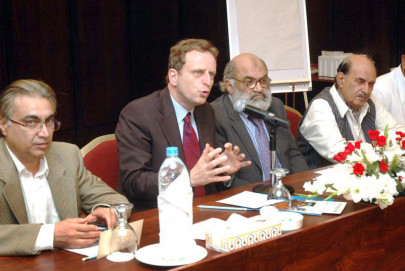
<p>Business owners, agriculturists and other imminent stakeholders from Balochistan met with the ambassador to discuss potential areas of cooperation.</p>
<p>Speaking to representatives of the Baluchistan Economic Forum (BEF) on Wednesday, Reintjes said, “Our country has great expertise in water management and the construction of dams and other water storage facilities.”</p>
<p>He urged locals to learn more about the technologies and expertise available in his country. He also said that the Netherlands’ economy depends heavily on trade, adding, “Diplomacy must be based on economics, so the wealth of the people can be increased.”</p>
<p>Reintjes also highlighted, “Our government has established programmes through which Pakistani companies can form joint ventures with companies from other countries, and receive partial funding for their enterprise.” He clarified that these joint ventures may be formed with companies from countries other than Netherlands.</p>
<p>Prince Mohiuddin Baloch urged Netherlands to focus on helping the agriculture sector of Balochistan. “It requires very little security or investments,” said Baloch, adding, “Similar cooperation from the Dutch, more than 30 years back, had yielded very promising results.”</p>
<p>“We have ample resources but our people lack skills and knowledge,” said Sardar Fahad Qayyum. He urged the dignitary to consider investing in public infrastructure for education and vocational trainings.</p>
<p>Participants also drew attention to the immense potential for economic activity and gains in the province. “Despite the current security situation, there are many companies from countries like China, Japan, United States and from European Union that are entering the province, given its strategic importance and natural reserves,” said BEF President Sardar Shoukat Popalzai.</p>
<p>Popalzai expressed hope that the cooperation extended by the Netherlands would help improve economic prospects of the people of the province and develop trade with the European Union.</p>
<p><em>Published in The Express Tribune, March 25<sup>th</sup>, 2011.</em></p>
</p>
			<br clear="all"/>
		]]>
		</description>

		<media:content width="424" height="318"
							isDefault="true" medium="image" url="http://i1.tribune.com.pk/wp-content/uploads/2011/03/APP-photo-640x480.jpg">
			<media:title>APP photo</media:title>
			<media:description>Netherlands Ambassador to Pakistan Joost Reintjes addressing representatives of the Balochistan Economic Forum. PHOTO: APP</media:description>
			<media:thumbnail url="http://i1.tribune.com.pk/wp-content/uploads/2011/03/APP-photo-160x120.jpg" width="160" height="120" />
      </media:content>

		<wfw:commentRss></wfw:commentRss>
		<slash:comments>0</slash:comments>
	</item>
		<item>
		<title>Higher tax regime: Cement and  fertiliser prices rise</title>
		<link>http://tribune.com.pk/story/136484/higher-tax-regime-cement-and-fertiliser-prices-rise/</link>
		<pubDate>Wed, 23 Mar 2011 03:48:32 +0000</pubDate>

		<guid isPermaLink="false">http://tribune.com.pk/?p=136484</guid>

		<description>
		<![CDATA[
			<a href="http://tribune.com.pk/story/136484/higher-tax-regime-cement-and-fertiliser-prices-rise/">
				<img src="http://i1.tribune.com.pk/wp-content/uploads/2011/03/inflation-160x120.jpg" width="160" height="120" alt="" />
			</a>
			<p><div><strong class='location'>KARACHI:&nbsp;</strong>
<p><strong>Fertiliser and cement prices have been raised by manufacturers following the imposition of increased sales tax, industry officials revealed on Tuesday. Urea prices shot up by Rs135 per bag to touch Rs1,155 per bag, while cement prices increased by about Rs20 per bag, taking the price to Rs370 per bag.</strong></p>
</div>
<p>After the implementation of multiple amendments in local taxes by the Federal Board of Revenue on March 15, special excise duty charged on cement has increased from one per cent to 2.5 per cent. Similarly, the rise in fertiliser prices has been attributed to the imposition of 17 per cent sales tax, which was previously not applied to these sales. “The total increase in prices of both these products has been passed on to consumers,” observed a research report published by InvestCap Securities.</p>
<p>“Cement manufacturers will continue to pass on higher input prices to consumers,” said Topline Securities analyst Furqan Punjani.</p>
<p>The analyst highlighted that part of the increase in cement prices may also be attributed to rising prices of coal and energy. He said that companies with high level of coal reserves will likely benefit from the latest price hike in terms of additional margins on their sales. Demand for both cement and fertiliser is expected to pick up in coming months.</p>
<p>“Construction usually gathers momentum in the summer, while the sowing season is underway in Punjab, with Sindh to follow suit,” analyst explained.</p>
<p><em>Published in The Express Tribune, March 23<sup>rd</sup>, 2011.</em></p>
</p>
			<br clear="all"/>
		]]>
		</description>

		<media:content width="424" height="318"
							isDefault="true" medium="image" url="http://i1.tribune.com.pk/wp-content/uploads/2011/03/inflation-640x480.jpg">
			<media:title>inflation</media:title>
			<media:description>Demand may continue to rise despite price hike.</media:description>
			<media:thumbnail url="http://i1.tribune.com.pk/wp-content/uploads/2011/03/inflation-160x120.jpg" width="160" height="120" />
      </media:content>

		<wfw:commentRss></wfw:commentRss>
		<slash:comments>1</slash:comments>
	</item>
		<item>
		<title>Russia to establish mining companies</title>
		<link>http://tribune.com.pk/story/136061/russia-to-establish-mining-companies/</link>
		<pubDate>Tue, 22 Mar 2011 05:38:23 +0000</pubDate>

		<guid isPermaLink="false">http://tribune.com.pk/?p=136061</guid>

		<description>
		<![CDATA[
			<a href="http://tribune.com.pk/story/136061/russia-to-establish-mining-companies/">
				<img src="http://i1.tribune.com.pk/wp-content/uploads/2011/03/mining-mine-160x120.jpg" width="160" height="120" alt="" />
			</a>
			<p><p><strong><strong class='location'>KARACHI:&nbsp;</strong>Russia will soon establish a coal mining company in Balochistan to take advantage of rich metal and mineral resources present in the country, according to Russia&#8217;s Ambassador to Pakistan Andrey Demidov.</strong></p>
<p>Speaking to The Express Tribune during a visit to the Karachi Stock Exchange (KSE) on Monday, Demidov also disclosed that a similar company will be established in Sindh, as his country was keen to invest in mining for metals and minerals in Pakistan.</p>
<p>“The Russian government has sent several letters to the Government of Pakistan to express interest in Pakistan Steel Mills, but has received no positive response in this regard so far,“ he asserted.</p>
<p>Elaborating on his country&#8217;s proposition, Demidov said, “We can assist in upgrading the steel mill to make its processes more efficient and state-of-the-art.“</p>
<p>A Memorandum of understanding (MoU) will be signed by the Karachi Stock Exchange and the Moscow Stock Exchange in coming days to enhance cooperation between the two bourses,“ revealed KSE Managing Director Haroon Askari.</p>
<p>He also revealed that a request has been sent to the Moscow Stock Exchange to allow a roadshow for Pakistani businesses. “We intend to conduct a roadshow where some of the most prominent listed companies of Pakistan can ac company representative of our stock exchanges t Russia,“ said Askari.</p>
<p>He added that this woul help educate prospective investors in Russia about available investment avenues and also familiarise them with relevant laws an regulations.</p>
<p>“Hopefully, this can help improve the quantum o investment from Russia as roadshows in the Unite States have sparked additional interest from there,“ he said.<br />
s Speaking to the media, of the Russian ambassador revealed that a delegation d of businessmen from his e country would visit Pakistan t soon. “The delegation will meet representatives of e the Federation of Pakistan d Chambers of Commerce and Industry to discuss avenues p for investment and enhance bilateral trade,“ said, Demidov.<br />
d Stressing the need for building trade ties between the two countries, he said that Russia was pursuing friendly relations and enhanced cooperation in trade within the region. He expressed hope that Pakistan would respond favourably to the offer for renovating the country&#8217;s steel mill.</p>
<p>Although he did not reveal specific details, Demidov also said that Russian companies were considering taking stakes in the country&#8217;s reserves of oil and natural gas for exploration and production.</p>
</p>
			<br clear="all"/>
		]]>
		</description>

		<media:content width="424" height="318"
							isDefault="true" medium="image" url="http://i1.tribune.com.pk/wp-content/uploads/2011/03/mining-mine-640x480.jpg">
			<media:title>mining mine</media:title>
			<media:description>Ambassador also expresses interest in upgrading Pakistan Steel Mills.</media:description>
			<media:thumbnail url="http://i1.tribune.com.pk/wp-content/uploads/2011/03/mining-mine-160x120.jpg" width="160" height="120" />
      </media:content>

		<wfw:commentRss></wfw:commentRss>
		<slash:comments>5</slash:comments>
	</item>
	
</channel>
</rss>
<!-- Cached page generated by Express Cache on 2012-05-25 00:58:18
     Time taken: 0.12s
-->