The Express Tribune » Express http://tribune.com.pk Latest Breaking Pakistan News, Business, Life, Style, Cricket, Videos, Comments Sun, 20 May 2012 09:33:56 +0000 en hourly 1 http://wordpress.org/?v=3.2.1 Islamic Banking for SMEs: 'A win-win situation' http://tribune.com.pk/story/375332/islamic-banking-for-smes-a-win-win-situation/ Wed, 16 May 2012 13:11:16 +0000 http://tribune.com.pk/?p=375332

State Bank of Pakistan in its Prudential Regulations has defined Small & Medium Enterprises as follow:

“Small and Medium Enterprise (SME) means an entity, ideally not a public limited company, which does not employ more than 250 persons (if it is manufacturing/service concern) and 50 persons (if it is trading concern) and also fulfills the following criteria of either ‘a’ and ‘c’ or ‘b’ and ‘c’ as relevant:

a) A trading/service concern with total assets at cost excluding land and building upto Rs50 million.

b) A manufacturing concern with total assets at cost excluding land and building upto Rs100 million.

c) Any concern (trading, service or manufacturing) with net sales not exceeding Rs300 million as per latest financial statements.

An individual, if he or she meets the above criteria, can also be categorised as an SME.”

Small and Medium Enterprises play an important role in the development of a country. SMEs support poverty alleviation endeavors through employment generation process and have become the fastest growing export sub-sectors like sports goods and surgical instruments. Above all, being less capital intensive and more labour demanding, SMEs, from a social point of view, are more efficient in resource allocation as compared to large scale industries.

SMEs in Pakistan have a significant potential to add value to the economy. However, efforts towards the sector’s growth have remained restricted as efforts have been focused on large enterprises, neglecting Small and Medium Enterprises which are the backbone of the economy.

Long-term growth of the SME sector in Pakistan remains constrained by a number of factors that include skills shortage, scarcity of capital goods, poor management, lack of data on the sector, resistance to change and marketing difficulties especially for export-oriented SMEs; however, the biggest problem facing the sector is the unavailability of adequate financing facilities.

Unavailability of financing is mainly due to the reluctance of banks towards extending credit to small and medium enterprises. It is relatively easy to lend to large corporates where the economies of scale, published financial information, collaterals and credit worthiness parameters are available. Due to lack of availability of data on the SME sector, banks are unable to determine whether the borrower possesses technical, managerial and marketing skills that will allow him to generate adequate cash flows and repay the loan on time.

Being a major tool in the development and progress of any economy, growth of SME sector is of vital importance. Islamic Banking Institutions due to the structure of their transactions are better suited to address the financing needs of the SMEs. To understand this proposition better, one needs to have clarity regarding the basics of Islamic Banking.

Islamic Banking is banking based on Islamic law (Shariah). It follows the Shariah, called fiqh muamalat (Islamic rules on transactions). The rules and practices of fiqh muamalat come from the Quran and the Sunnah, and other secondary sources of Islamic law such as opinions collectively agreed among Shariah scholars (ijma’), analogy (qiyas) and personal reasoning (ijtihad).

In simple terms, Islamic Banking can be defined as a banking operation that abides by Sharia (Islamic law), under which a key rule is the prohibition of interest or riba, because of this Islamic Banking is referred to as interest-free banking. However, besides being prohibited from earning riba, Islamic Banks cannot engage in haram activities prohibited under Sharia, additionally, these banks must also minimize gharar (ambiguity) in their contracts.

Loans are a central element of conventional banking, with banks borrowing from depositors and lending to people in need of finance. Conventional banks make money from the difference between the lower interest rate they pay on deposits and the higher interest rate they charge their customers.

Islamic banks, on the other hand, being prohibited from paying or receiving interest, do not give out loans; instead, they use other modes like “sale”, “lease” and “partnership based instruments” to make profit.

A few of the basic differences between Conventional Banking and Islamic Banking are (i) Conventional Banking is finance based while Islamic Banking is faith and finance based (ii) Conventional Banking is cash backed where as Islamic Banking is asset backed (iii) Conventional Banks have lender-borrower contract while Islamic Banks have trade based, lease based or partnership contracts (iv) Conventional Banks invests in any type of financing be it prohibited activities, Islamic Banks invest in Halal avenues only.

Islamic Banking for SMEs  “A Win Win Situation”

Entrepreneurs in SME sector are more inclined towards using Shariah-compliant products and services, they are attracted to Islamic finance because it integrates ethical and moral values. Parallels are often drawn between Islamic finance and socially responsible investing. Islamic Banking seeks to maximize both financial returns and socially responsible ethical behaviour, provided that required products are available with competitive features and pricing.

The most prominent benefit of preferring Islamic banking over conventional banking is the elimination of risk of misuse of banks funds. The mandatory purchase & sale of assets ensures vigor in economic activity. It also shuts the doors for the possibility of using fresh financing to pay off old stuck-up non-performing loans.

The underlying involvement of “asset” itself in every transaction ensures that the funds are utilized for the purpose for which they were sought, thereby eliminating the risk of their misuse for any other purpose.

SME financing is a natural fit for Islamic finance, by virtue of the fact that it deals directly with the real economy; creates employment; involves the productive use of resources, especially capital and finance and contributes directly toward the alleviation of poverty.

Published in The Express Tribune, May 8th, 2012.


]]>
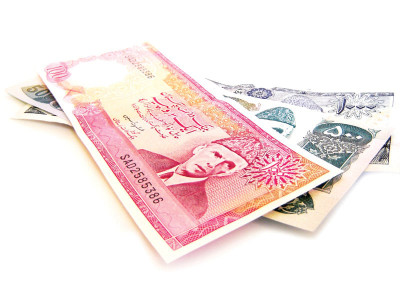
Money Islamic Banking Institutions due to the structure of their transactions are better suited to address the financing needs of the SMEs. 4
Islamic Banking is a fast growing industry http://tribune.com.pk/story/375334/islamic-banking-is-a-fast-growing-industry/ Wed, 16 May 2012 12:56:05 +0000 http://tribune.com.pk/?p=375334

1. How much the concept of Islamic Banking has penetrated in Pakistani society over the   last decade?

Islamic banking is a fast growing industry world over. Worldwide growth rate is more than 15 per cent while it is about 40 per cent in Pakistan. With every passing day, its penetration in every society is increasing, covering more and more areas. The developments during the last ten years in the field have drawn attention of the people on individual level and in business and corporate sectors. But our ratio is low. Therefore, when we show it in figures it is fewer. However, our growth rate is very high. Trends are changing and people are coming to Islamic Banking. People wish to join Islamic banking and they try and if they are satisfied, they decide to adopt it completely. We need to spread awareness. Islamic banks are doing well in this respect, however, this needs continued efforts.

2. You mentioned that the Islamic banking is spreading into more and more areas, then, are there any obstacles which the sector facing in its way?

According to the principle of economics, the expansion invites obstacles. When you introduce a new product in the market, the problems also surface because the product is in the evolutionary phase. So, new problems are emerging as the Islamic banking is expanding. For example, we face an increasing problem of HR with the opening of the new branches. The need of human resources is growing. Actually, the HR is not growing as fast as the new branches are opening. A person cannot become an Islamic banker just by studying a few books. To become an Islamic banker one needs to spend life in the field and gain experience. We do not have enough trained people, although, they are coming from traditional banking but again it is an issue of experience. The major issue faced by the Islamic banking is of insufficient human resources. We need suitable people, and it will take time to the problem to be solved.

The second problem is that with the rapid increase of our deposits and opening of new accounts, we are facing liquidity crisis. People are depositing money, but unfortunately, we have less opportunities of investment due to country situations. We are having difficulty in lending loans, as factories are being closed. Therefore, the problem of surplus liquidity is standing in front and we have fewer opportunities to utilize it. The capital market of Islamic banking has not gained the maturity and stability level that the money market of the conventional banking has gained.

Thirdly, some legal issues are also surfacing. For example, when cases are referred to courts, they dealt with under the same laws that are functional for conventional banking. If the products are Islamic then the laws should be made accordingly. So we are in desperate need of legal framework. In addition to all this, there is an issue of taxation. This does not mean that these problems will last forever. The efforts for solving these problems are started as soon as they come forth. And these efforts are producing results.

3. How many of those who opt for Islamic banking feel satisfied and how many other way round?

People in very large numbers are resorting to Islamic banking. Some of them think that the conventional banking is haram and, therefore, just want to avoid it and get rid of it. They come to Islamic banking and feel satisfied.  Some others have some reservations about the Islamic banking, they come and we satisfy their queries and they accept the system. There are still some people who will not get satisfied at any cost.

I want to say that we cannot blame customers for not getting satisfied. Our banker should be held responsible. There are bankers who simple do not know to satisfy the customers, how to reply to their queries and how to explain Islamic banking. If a banker explains properly, he should be able to satisfy almost everybody. The customers belong to all these three kinds of people; however, we have a general impression that a large number of people is coming towards this system.

4. What is difference between Islamic banking and conventional banking?


There is no basic difference in these two. Only, in Islamic banking we follow Shariah laws while conventional banking does not care for them. Actually, we have removed the element of interest from the banking. We have the same products but the agreements behind them are in compliance with the shariah laws. It is not only the interest, but we have also taken care of other conditions. These are according to the shariah. There is just this difference, rest of the things have resemblance. A good example will help to understand the nature of the difference; a couple living together after nikah is justified and according to shariah while without nikah it is not.

5. Ulema have said that mere opening of an Islamic window in the banks running on interest system is nothing more than a deception. What do you say?

This is a common notion about the “Islamic window” but this is wrong. This is not the case that the same service is being provided by opening up another window in the conventional bank. State Bank had given three options and two of them became very popular. One option was that a new Islamic Bank be set up with all its system separate. The second option was that the conventional bank establishes its separate division. That Islamic banking division will run this bank independently. This was a concept of a bank within a bank. The conventional banks started the Islamic banking under this concept.

On another note, since Islamic banks could not open up a branch everywhere, they opened their windows in the existing branches of the conventional banks but these windows have completely separate system from that of the branches. The business of the Islamic window is run under the Islamic system. This arrangement facilitates customers do business with an Islamic bank having window within the branch of a conventional bank. This is not non-shariah. Earlier these two were mixed with each other, but it is not so now. Now the law says that to do Islamic banking a conventional bank has to have a license for Islamic banking. State bank barred those banks from doing so that were doing Islamic banking without license.

6. What is difference between the concept of Islamic banking of UBL Ameen and one window concept?

In 1985, some conventional banks might have done Islamic banking under one window with permission from State bank which means that they did banking in mode of Islamic transaction, however, later that was abolished. Now a completely separate bank has been established with the title UBL Ameen. We have a separate head office. We have separate books. We have told the conventional banks that if our client visits them, our man should deal him. Therefore, this is not window of conventional bank; it is window of UBL Ameen.

7. What were the issues that were in the way of provision of Islamic banking that UBL decided that a separate and dedicated Islamic bank was necessary to be set up?

Following the instructions by the State Bank, UBL started Islamic banking, like other banks. State bank set all the parameters for Islamic banking when UBL started Islamic banking. The rules included that the Islamic bank should be separate, there should be now interference of the conventional banking and there should be no segregated fund.

8. How was the UBL Ameen experience? And what products is it providing to cater the needs of the customers? 


Our experiment was successful. And it is expanding fast. Our network is getting large and the number of our books and clients is increasing. UBL is providing the products exactly in accordance with the shariah structures permitted by the State Bank. We have to get permission from the Shariah Board for any new product before introducing it. At present we are providing all the products, for deposits and for financing, that are approved by the State Bank.

Published in The Express Tribune, May 8th, 2012.


]]>
Rupees Legal and HR issues and liquidity crisis are the emerging challenges with its growth. PHOTO: FILE 17
Sino-Pak defence cooperation: Pakistan Navy inducts first fast attack craft http://tribune.com.pk/story/369112/sino-pak-defence-cooperation-pakistan-navy-inducts-first-fast-attack-craft/ Tue, 24 Apr 2012 03:42:17 +0000 http://tribune.com.pk/?p=369112

ISLAMABAD: 

Pakistan Navy is fully prepared to counter any force challenging the country’s sovereignty or threatening the security of its territorial waters, said the naval chief on Monday.

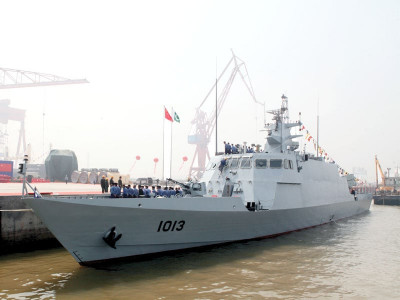
Admiral Muhammad Asif Sandila was speaking as the chief guest at the commissioning ceremony of PNS Azmat, Pakistan’s first fast attack craft (missile) at the Xingang Shipyard in Tianjin, China.

Admiral Sandila said the induction of PNS Azmat will supplement Pakistan Navy’s combat potential, according to a press release issued by the navy in Islamabad.

Terming it a milestone in defence and strategic cooperation between Pakistan and China, he said the attack craft would indeed provide synergy in defence of the country’s sea frontiers.

“Its immense firepower coupled with stealthy features makes it a real versatile platform which would not only prove vital for ensuring effective presence in our area of operations, but would bring a new dimension of operation of stealthy platform of this tonnage,” he said.

Admiral Sandila said the commissioning of PNS Azmat concluded the construction of fast attack craft (missile) in China and the construction of a second craft will be completed in Pakistan by the end of 2012.

PNS Azmat is the first of Azmat class fast attack craft (missile). Contract for construction of two fast attack craft was signed on the basis of transfer of technology (ToT). In that, the first craft was to be built in China and the second is being constructed at Karachi Shipyard & Engineering Works.

The vessel is equipped with state-of-the-art weapons and sensors, including surface-to-surface missiles and has stealth features.

(With additional input from APP in Tianjin, China)

Published in The Express Tribune, April 24th, 2012.


]]>
PNS Azmat-photo-pr PNS Azmat is the first of Azmat class fast attack craft (missile). PHOTO: PR 23
Bhoja Air B4-213 crash: Passenger list http://tribune.com.pk/story/367581/bhoja-air-b4-213-crash-passenger-list/ Fri, 20 Apr 2012 16:15:29 +0000 http://tribune.com.pk/?p=367581

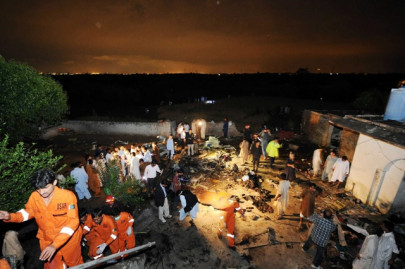
KARACHI: A passenger plane, flight B4-213 of Bhoja Air, crashed at Koral Chowk on Islamabad Express Highway in Rawalpindi on Friday.

It was carrying over 100 passengers and was headed from Karachi to Islamabad.

Seat chart:

Number of adults: 110

Children: 6

Infants: 5

Total passengers: 121

Crew members: 6

Below is a list of passengers who had checked in:

1. Abbas Ali

2. Abida Javed Malik

3. Adeel Chughtai

4. Aiman Ikram

5. Altamash Khan

6. Anisa Akbar

7. Anum Hussain

8. Asif Aftab

9. Asmaa Ahmad

10. Ataur Rehman

11. Azizur Rehman

12. Baqir Mehdi

13. Bibi Hameeda

14. Chand Baboo

15. Chd Faiq

16. Dilshad Kamaal

17. Dr Abdul Qadir

18. Dr Asadullah

19. Fahira Laiq

20. Farah Sajid

21. Fatima

22. Fehmeeda Zubair

23. Ghulam Farooq Qasmi

24. Ghulam Rehman

25. Gul

26. Gul Faraz

27. Gul Sharif Jana

28. Gul Zaman

29. Habibur Rehman

30. Hafeezur Rehman

31. Hafsa Chughtai

32. Hafsa Shahid

33. Haleema Sadia

34. Hamida Khadima Baloch

35. Haris Haris

36. Husun Nisa

37. Imran Waheed

38. Irfan Ali

39. Javed Akhtar Malik

40. Javed Iqbal

41. Kalo Abbasi

42. Khwaja Raziuddin

43. Liauqat Ali

44. Masooda Begum

45. Mishir Jan

46. Mohammad Atiq Khan

47. Mrs Mohammad Latif

48. Mohammad Latif

49. Moiz Sadiq

50. Mrs Khalida

51. Ms Yumna

52. Muhammad Abdul Hafeez

53. Muhamad Anwar Khan

54. Muhammad Ashfaq Khan

55. Muhammad Farooq

56. Muhammad Irfan

57. Muhammad Irfan

58. Muhammad Qasim

59. Muhammad Shahnawaz

60. Muhammad Sohail

61. Muhammad Younus

62. Muhammada Abdullah

63. Mujtaba Siyal

64. Mukhan Jan

65. Munawar Sultana

66. Musarrat Shaheen

67. Nadir Khan Fazaldad

68. Nasreen

69. Nazmeen

70. Nighat Mehdi

71. Nihaluddin Alvi

72. Nisar Ahmed

73. Nuzhat

74. Qamar Aftab

75. Qari Muhammad Abdul Rahman

76. Rakh Shanda

77. Rakhshanda

78. Rashida Rehman

79. Raza Ali Khan Feroz

80. Ree Han

81. SM Saud Ishaq

82. Saba Amber

83. Sadaf Baloch

84.Sadaf Tanveer

85. Saeed Khan

86. Saeeda Akhtar

87. Sania Abbas

88. Sarah Chughtai

89. Sardar Shah

90. Sarwat Mumtaz

91. Shabbir Ahmad Awan

92. Shahid Iqbal

93. Shamima Abdullah

94. Shazia Baloch

95. Sobia Ubaid

96. Suleiman Chughtai

97. Sumaiyah Chughtai

98. Syed Muhammad Amjad

99. Syed Muhammad Rizwan

100. Syed Omar Ali

101. Syed Sajjad Ali Rizvi

102. Syeda Amjad Shaheen

103. Syeda Rizwan Sufia

104. Tabbasum Sarwat

105. Tabia Rehman

106. Talat Mahmood Qureshi

107. Tanveer Jan

108. Tariq Mehmood

109. Tasadouq Mahmood

110. Tasneem Begum

111. Tuba Shewar

112. Usman Rahim

113. Usman Rasheed

114. Uzma Inam

115. Wajat Abbasi

116. Waji Ha

117. Yasmin Muhammad Sultan

118. Zaheer Shah

119. Zahida Aziz

120. Zaibun Nisa

121. Zuhra Begum

Crew members:

1. Captain Noor Afridi

2. First Officer Javed Malik

3. Head of Cabin Crew Ammad

4. Flight Purser Ghazala Malik

5. Air Hostess Princess Flavia

6. Air Hostess Sanam Fareed


]]>
Bhoja Air Crash AFP Rescue workers and local residents search the site of a plane crash in Rawalpindi on April 20, 2012. PHOTO: AFP 127
Clarification: Lord Nazir Ahmed's statement in Haripur http://tribune.com.pk/story/366378/clarification-lord-nazir-ahmeds-statement-in-haripur/ Wed, 18 Apr 2012 10:50:57 +0000 http://tribune.com.pk/?p=366378

In a story published in The Express Tribune on April 15, titled ‘Sterling bounty offered for Obama, Bush,’ it was erroneously reported that British parliamentarian of Kashmiri origin Lord Nazir Ahmed had announced a bounty for the captor of US President Barack Obama and his predecessor George W Bush. Following Lord Ahmed’s denial and a review of the footage of his comments, it has been established that Nazir had merely offered to “raise and offer £10 million so that George W Bush and Tony Blair can be brought to the International Court of Justice on war crimes charges,” while there was no mention of US President Barack Obama. The Express Tribune’s reporter, who covered the story in Haripur, also clarified that he had mistakenly written the name of Obama – and clarified that the offer by Nazir aimed to raise money to try Bush and Blair in the International Court of Justice for war crimes. The error is deeply regretted.

Published in The Express Tribune, April 18th, 2012.


]]>
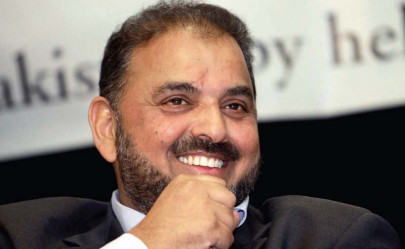
Lord Nazir-PHOTO-FILE The Express Tribune’s reporter has clarified the offer by Nazir aimed to raise money to try Bush and Blair. PHOTO: FILE 36
Best in print http://tribune.com.pk/story/363318/best-in-print/ Thu, 12 Apr 2012 07:23:26 +0000 http://tribune.com.pk/?p=363318

25.09.2011

Girl accused of blasphemy for spelling error

Muhammad Sadaqat

It was a minor error that led to blasphemy charges, expulsion and the looming threat of death. The story of Faryal, a Christian eighth-grader accused of blasphemy for erroneously writing ‘naat’ as ‘laanat’ encapsulated the madness that defined the issue of the blasphemy laws.

10.11.2011

In the name of ‘honour’: Brazen Shikarpur killings shake Hindu community

Sarfaraz Memon

A tale of a love affair that turned tragic. Three Hindu men were killed for intervening on behalf of two young men of their community who had been apprehended two weeks earlier and charged with criminally assaulting a Muslim girl. The real story, as told by area residents, was that Seema and Sandeep Kumar fell in love and were caught while they were meeting at the house of Sandeep’s friend, Nakash Kumar.

24.10.2011

Agriculture investments: The smart money is betting on the Pakistani farm

Farooq Tirmizi

The headlines may be screaming about violence and extremism but the smart money is betting, very quietly, on Pakistani agriculture, reports Farooq Tirmizi. The story explored a small but growing trend towards investing in the Pakistani agricultural sector, one of the largest in the world in terms of its production of several key commodities.

12.02.2011

Mullah Omar wants you

Rana Tanveer

The story reveals that a wide repertoire of banned Jihadi literature continues to be circulated widely in Punjab. It also highlights an interesting revelation: banned periodicals have actually become more visible during the present democratic government.

09.10.2011

Masked men enter girls’ school, thrash students

Azam Khan

The shocking story of sixty masked men entering a girls’ school in Rawalpindi and thrashing female students and teachers attracted a great deal of feedback from online readers. The article was particularly alarming because the police did not take any action against the miscreants as they manhandled the school’s occupants.

17.03.2012

Back from the Brink

Fazal Khaliq

The story focused on a topic which rarely makes headlines— the Swat telefilm industry. The article discusses that the conflict in the region had a debilitating effect on the region’s culture, arts and films, but now the entertainment industry is picking up and many artists have moved back to Swat. The in-depth piece had quotes from many associated with the industry including actors, DVD shop owners, film-makers and editors and also discussed how many artists felt let down by the government and NGOs.

Headlines

29.09.2011 No Bonn voyage for Pakistan

25.12.2011 Firdous throws in towel, takes it back, wipes tears

04.09.2011 Sentences passed: Teammates to inmates

24.09.2011 Wife proves quite ‘handi’ in kitchen for all the wrong reasons

08.03.2012 Bushra Zaidi, the woman who changed Karachi forever, by dying

20.08.2011 Cycle of violence: Mr Rehman Malik, meet Karachi’s wives and girlfriends

13.01.2012 ‘Djinns killed my children’

27.02.2012 Child sexual abuse: Paedophiles in holy garbs molest kids, betraying parents’ trust

23.06.2011 On the line: ‘Pay us Rs320 if you want your father’s body’

06.12.2011 Advanced learning: The bright-eyed future

20.03.2012 Kohistan massacre: The guardian angels who saved lives

25.02.2011 Newborn twins buried under bondage of brick kiln

30.08.2011 A death, a birth and the family mourns both

30.08.2011 Let’s get one thing straight, I’m not

Published in The Express Tribune, April 12th, 2012.


]]>
year 2 A look at some of the best stories and headlines from print. 5
Malala's story: A 13-year-old's struggle against terrorism http://tribune.com.pk/story/360669/malalas-story-a-13-year-olds-struggle-against-terrorism/ Fri, 06 Apr 2012 11:52:25 +0000 http://tribune.com.pk/?p=360669

When terrorists took over Swat in 2007, one of the major changes that took place was the ban on education for girls. That is when Malala Yousafzai, a 13 year old girl from Mingora realized how important education was for her.

Before this incident, Malala did not know why she had to go to school.

She reminisces those days as being ‘black days’ of their lives. She could not understand why they were being terrorised and especially, why no one was doing anything about it. Those were times when no one would speak up against terrorism as it was considered a very big thing.

Malala, however, chose to speak her mind to the media. She told her father that she wanted to give an interview as she wanted an opportunity to reveal to the world the injustice they were facing. She gave an interview and gradually she turned this into a routine.

She transferred her thoughts to paper like one would in a diary and started sending these entries to the British Broadcasting Corporation (BBC). Malala wrote the diary for four months and poured her heart out.

Malala’s struggle earned her not only peace in Swat and education for girls, but also an unexpected reward. She was presented with the National Peace Award by Prime Minister Yousaf Raza Gilani for her struggle against terrorism.

Malala is the first student to be presented with this award. Gilani on the occasion said, “This award will be presented every year to youngsters possessing extraordinary skills”.

To add to the honour, an award in her name was introduced on a national level which would go down in history as the Malala Peace Award.

“I wanted to be able to attend school again. I wished for peace. The only reward I wanted was peace in Swat. I didn’t want any other award, nor did I think I would get one”, said Malala.

The video above was shot by Think Twice Pakistan.


]]>
3
Environment-Friendly: Green bench set up in AJK’s apex court http://tribune.com.pk/story/356088/environment-friendly-green-bench-set-up-in-ajks-apex-court/ Wed, 28 Mar 2012 05:50:46 +0000 http://tribune.com.pk/?p=356088

MIRPUR: 

Chief Justice of Azad Jammu and Kashmir (AJK) Justice Muhammad Azam Khan has constituted a three-member green bench in the AJK apex court to exclusively hear cases pertaining to the state’s environmental issues.

The bench comprises AJK Supreme Court chief justice, Justice Muhammad Ibrahim Zia and Justice Raja Saeed Akram, said a press release issued by the apex court’s deputy registrar on Monday.

The bench has been set up in light of recommendations presented during a two-day South Asia Conference on Environmental Justice that concluded at Bhurban, Murree on March 25.

The conference was attended by judges of the Supreme Court of Pakistan, including Chief Justice Iftikhar Muhammad Chaudhry, chief justices of provincial high courts, as well as judges and chief justices of various South Asian countries.

According to sources, a similar bench is also being constituted in the AJK High Court.

Published in The Express Tribune, March 28th, 2012.


]]>
environment Bench set up in light of recommendations presented during a two-day South Asia Conference on Environmental Justice. 0
Pakistan world's third largest arms recipient, India number one http://tribune.com.pk/story/352085/pakistan-worlds-third-largest-arms-recipient-india-number-one/ Mon, 19 Mar 2012 12:14:23 +0000 http://tribune.com.pk/?p=352085

The arms race (2007-2011) is firmly centered in Asia, with India being the world’s largest recipient of arms, followed by South Korea and Pakistan and China tied at third place, revealed the Stockholm International Peace Research Institute (SIPRI) in a new study on international arms transfers.

India accounts for 10% of global arms imports; South Korea 6%; Pakistan 5%; China 5% and Singapore 4%. China was the largest recipient of arms exports from 2002-06, but it fell to fourth place in 2007-11.

According to a report by IANS, the data uncovered that Asia and Oceania account for 44% of global arms imports, followed by Europe 19%; the Middle East 17% and the Americas at 11%. Africa was the lowest with 9%.

The volume of worldwide arms transfers in 2007-11 was 24% higher than in 2002-06 and the five largest arms importers in 2007-11 were all Asian states.

Between 2002-06 and 2007-11, the volume of Chinese arms exports increased by 95 percent and now China ranks as the sixth largest supplier of arms in the world.


]]>
pakistan india bomb2 The arms race (2007-2011) is firmly centered in Asia. DESIGN: JAHANZAIB HAQUE 87
Batmobile-like Nissan DeltaWing is the future of racing http://tribune.com.pk/story/350969/batmobile-like-nissan-deltawing-is-the-future-of-racing/ Sun, 18 Mar 2012 09:50:19 +0000 http://tribune.com.pk/?p=350969

Here’s a glimpse at the future of racing. It’s called the Nissan DeltaWing and it’s part road racer, part salt-flat runner, and looks like a modern interpretation of the Keaton-era Batmobile. Not only is it lighter and more aerodynamic than the rest of the endurance racing field, it uses half the fuel, which not only makes it more environmentally friendly, but more competitive. And against all odds, it’s coming to the only race that matters: the 24 Hours of LeMans.

The DeltaWing is a joint project between former Lola design chief Ben Bowlby and Chip Ganassi Racing, and pitched as the future of IndyCar. IndyCar passed on the design, calling the DeltaWing too radical, and instead falling back on the latest interpretation of the Dallara chassis the series has been using for years. Bowlby and crew, along with American racing legend Dan Gurney and forward-thinker Don Panoz, shrugged off the rejection, scored a few important partnerships (namely Michelin) and set their sights even higher. Now Nissan has joined the team, appending its name to the project and — more importantly — supplying the engine.

If you’ve ever seen Nissan’s funky Juke crossover, you’re already vaguely familiar with what’s powering the DeltaWing. The range-topping Juke “DIG-T” (Direct Injection Gasoline — Turbocharged) in Japan comes packing a turbo’d 1.6-liter four-cylinder engine putting out a little over 180 horsepower. But when modified for racing duty, output swells to some 300 hp.

To reduce drag and optimize weight bias, the engine is mounted behind the driver and power is sent to the rear wheels. More intriguingly, with both the engine and driver mounted far back in the carbon fiber chassis, the ultra-thin front tires don’t have to move much to elicit a change in direction. If you’re thinking those miserly front meats can’t be stable at speed, check the video below of the DeltaWing testing at Buttonwillow Raceway in Southern California.

Compared to the LeMans leaders in the LMP1 class, including the recently revealed 510-hp Audi R18 Ultra, the DeltaWing is down on both power and traction, but that’s not the name of the game when it comes to endurance racing.

The DeltaWing weighs in at a svelte 1,300 pounds with a full tank of fuel and driver on board — about half what a comparable LMP1 car weighs. Couple that low tonnage with its slippery shape, good for a claimed 50 percent reduction in aerodynamic drag, and suddenly the DeltaWing is competitive.

Just as important as its aero advantage and reduced weight is the boost in fuel economy, which Nissan estimates will be about double that of an LMP1 car. Over the course of a 24-hour race, that means fewer pitstops to refuel and — with its lightened load — a reduced need for tire changes and brake swaps. That equates to more laps over less time, and that’s what wins LeMans.

Except, it can’t win. Source: wired.com

Published in The Express Tribune, March 17th, 2012.


]]>
Nissan To reduce drag and optimize weight bias, engine is mounted behind the driver and power is sent to the rear wheels. 0