<?xml version="1.0" encoding="UTF-8"?>
<rss version="2.0"
	xmlns:content="http://purl.org/rss/1.0/modules/content/"
	xmlns:wfw="http://wellformedweb.org/CommentAPI/"
	xmlns:dc="http://purl.org/dc/elements/1.1/"
	xmlns:atom="http://www.w3.org/2005/Atom"
	xmlns:sy="http://purl.org/rss/1.0/modules/syndication/"
	xmlns:slash="http://purl.org/rss/1.0/modules/slash/"
	xmlns:media="http://search.yahoo.com/mrss/"
	>

<channel>
	<title>The Express Tribune &#187; Zubair Faisal Abbasi</title>
	<atom:link href="http://tribune.com.pk/author/731/zubair-faisal-abbasi/feed/" rel="self" type="application/rss+xml" />
	<link>http://tribune.com.pk</link>
	<description>Latest Breaking Pakistan News, Business, Life, Style, Cricket, Videos, Comments</description>
	<lastBuildDate>Fri, 24 May 2013 20:36:08 +0000</lastBuildDate>
	<language></language>
	<sy:updatePeriod>hourly</sy:updatePeriod>
	<sy:updateFrequency>1</sy:updateFrequency>
	<generator>http://wordpress.org/?v=3.5.1</generator>

		<item>
		<title>Why our economic performance has suffered  </title>
		<link>http://tribune.com.pk/story/386875/why-our-economic-performance-has-suffered/</link>
		<pubDate>Thu, 31 May 2012 18:57:49 +0000</pubDate>

		<guid isPermaLink="false">http://tribune.com.pk/?p=386875</guid>

		<description>
		<![CDATA[
			<a href="http://tribune.com.pk/story/386875/why-our-economic-performance-has-suffered/">
				<img src="http://i1.tribune.com.pk/wp-content/uploads/2012/05/386875-ZubairFaisalAbbasiNew-1338482245-370-160x120.jpg" width="160" height="120" alt="" />
			</a>
			<p><p>Recently, the prime minister claimed that the government could steer the economic engine in such a way so as to <a href="http://tribune.com.pk/story/362306/no-light-at-tunnels-end-strapped-for-solutions-provinces-to-share-shortage/">obtain a growth rate of 3.4 per cent for the last two years</a>. While the crafty rebasing of the GDP is a moot point, ours is still the lowest GDP growth rate in South Asia and is even lower than the 5.5 per cent GDP of sub-Saharan Africa.</p>
<p>What has caused this dip in Pakistan’s economic performance? Reasons can be attributed to the poor way in which the economic relations amongst the country’s citizens have been governed to the breakdown of the law and order situation and the decay of institutions. The cause of this poor performance can also be credited to the unique geopolitics of the region, with the much-empowered <a href="http://tribune.com.pk/story/365138/the-political-economy-of-peace/">Deep State only adding to the complexities that Pakistan’s economy faces</a>. The low growth that our economy has faced can also be linked to the lack of availability of credit for the private sector, which is instead gobbled up by the government to meet its non-developmental expenditures. Some analysts have attributed the staggeringly low growth rate to the inability of the ruling party to plan and execute reforms in state-owned enterprises such as the PIA and the Pakistan Steel Mills.</p>
<p>At the same time, the low growth performance also shows that the Planning Commission’s growth strategy has failed to deliver anything substantial. Any crafty economist can say that the strategy was not ‘fully’ implemented. However, the fact remains that the <a href="http://tribune.com.pk/story/378878/planning-commission-body-may-stop-providing-economic-targets/">Planning Commission did not have a sound strategy to begin with</a> and relied only on rehashing old ideas based on neoliberal economics.</p>
<p>Looking at the components of whatever little growth we have achieved in the past, it seems that the agriculture sector and more specifically the livestock and fishery sub-sectors, have actually been performing well for the last many years. However, the crop sector has consistently been shrinking despite an increase in support prices which has been associated with inflationary pressure on the food basket of the urban poor.</p>
<p>A two to three per cent growth rate is termed as the ‘natural rate of growth’, which can take place without any growth-inducing interventions by the state. So any pride that the government may express over the controversial 3.4 per cent GDP growth will be more for the purpose of meeting political goals, rather than it being a statement of economic progress.</p>
<p>It was argued in a recent seminar on the budget that the Public Sector Development Programme (PSDP), which forms the core of government expenditure, has become extremely politicised. Amongst the different criteria for selection of development schemes, one criterion for <a href="http://www.brecorder.com/business-a-economy/189/1180195/">release of funds has turned out to be the location of the cities of Multan and Larkana</a>. This is a blatant disregard of the rights of people of other cities while the real growth results of the expenditures meant for Multan and Larkana are yet to be seen.</p>
<p>Dr Kaiser Bengali, a renowned economist, argues that <a href="http://tribune.com.pk/story/187215/infrastructure-sindh-plans-to-invest-and-catch-up-with-punjab/">Pakistan should spend at least 10 per cent of its GDP on infrastructure development</a> for the next 10 years. It should be spent on improving the country’s railways, ports and shipping, energy sector and the communication system. This will improve the business environment in the country. While research is needed in this area, a major reason for the higher GDP growth in Punjab compared with other provinces can be attributed to the emphasis that the Punjab government has put on spending on public infrastructure, ranging from transportation to education and health services.</p>
<p>The upcoming federal and provincial budgets and annual development plans need to spend money on physical asset-building and refurbishing of decaying infrastructure. Efforts also need to be made to facilitate the manufacturing sector, which can help eradicate poverty while creating jobs and generating positive externalities for the service sector as well.</p>
<p><em>Published in The Express Tribune, June 1<sup>st</sup>, 2012.</em></p>
</p>
			<br clear="all"/>
		]]>
		</description>

		<media:content width="424" height="318"
							isDefault="true" medium="image" url="http://i1.tribune.com.pk/wp-content/uploads/2012/05/386875-ZubairFaisalAbbasiNew-1338482245-370-640x480.jpg">
			<media:title>Zubair Faisal Abbasi New</media:title>
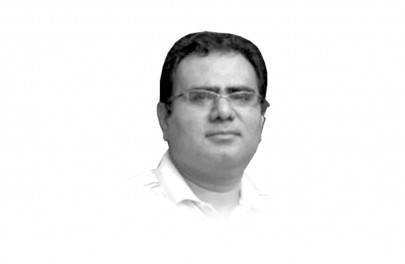
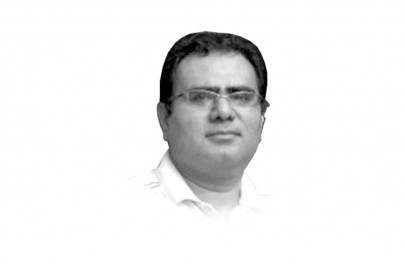
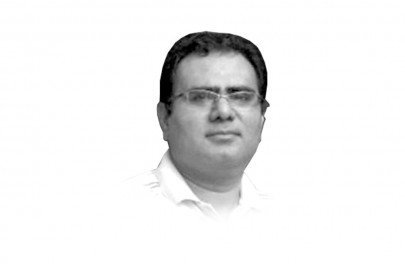
			<media:description>The writer is CEO/principal consultant at Impact Consulting in Islamabad</media:description>
			<media:thumbnail url="http://i1.tribune.com.pk/wp-content/uploads/2012/05/386875-ZubairFaisalAbbasiNew-1338482245-370-160x120.jpg" width="160" height="120" />
      </media:content>

		<wfw:commentRss></wfw:commentRss>
		<slash:comments>6</slash:comments>
	</item>
		<item>
		<title>The post-MFN scenario</title>
		<link>http://tribune.com.pk/story/289708/the-post-mfn-scenario/</link>
		<pubDate>Thu, 10 Nov 2011 17:28:51 +0000</pubDate>

		<guid isPermaLink="false">http://tribune.com.pk/?p=289708</guid>

		<description>
		<![CDATA[
			<a href="http://tribune.com.pk/story/289708/the-post-mfn-scenario/">
				<img src="http://i1.tribune.com.pk/wp-content/uploads/2011/11/289708-ZubairFaisalAbbasiNew-1320933754-787-160x120.jpg" width="160" height="120" alt="" />
			</a>
			<p><p>It does matter whether you export potato chips or computer chips — this phrase of economic wisdom seems more relevant now that traders and economists are rejoicing over the decision of the cabinet to <a href="http://tribune.com.pk/story/286925/16-years-on-pakistan-finally-reciprocates-granting-mfn-status-to-india/">grant Most Favoured Nation (MFN) status to India</a>. The optimism related to trade openness has many reasons, such as the possibility of enormous increase in bilateral trade from the existing two to three billion dollars. The other reasons sprout from possibilities of peace in the region alongside reduction in economic inefficiencies.</p>
<p>Borrowing words from CK Prahalad, both countries are possibly <a href="http://tribune.com.pk/story/277076/chaophraya-dialogue-bilateral-exchanges-with-india-lead-to-cbms/">entering into zones of opportunities</a> while departing from zones of comfort. The zones of opportunities are the locales where potentials of rapid and equitable economic development are either realised or forgotten. A major indicator of such realisation lies in <a href="http://tribune.com.pk/story/289177/trade-with-india-2/">unleashing potentials of the productive sectors of both economies</a> as well as creating more and better jobs. The story is not all about tariffs, restrictions and regulations. It is also about the organisation of production and human capital.</p>
<p>In fact, this is where economic capabilities matter and analysis must go deeper than ‘shallow integration’ models of trade flows that are based more on tariff reduction. The ‘deep integration’ models which rope in production networks and value chains help explore enormous opportunities and perhaps are more relevant to bringing peace in the South Asian region. The model helps carve out space for inter-sectoral articulation in economic activity more than just trade or business development.</p>
<p>Practical pathways run across the ideas of developing industrial clusters and facilitating technology transfers to operationalise strategic industrial and trade policies, pushing possibilities of production beyond the existing resource endowments. This is the way in which car manufacturing in Chennai and Pune can source components from Lahore and Karachi and some firms can collaborate to jointly conduct research and development in aviation machinery. This is where designers in Pakistan can source shoes from the Agra footwear cluster. Multiple sectoral articulations can make sure that value additions in textile and garments sectors are not stopped at Karachi and Lahore and enter Ludhiana as well. Perhaps the key lies in using manufacturing as the key driver for product-process innovations to make both economies diverse and complex.</p>
<p>Nothing can emphasise this point more than a recent report “<a href="http://atlas.media.mit.edu/">The Atlas of Economic Complexity — Mapping Paths to Prosperity</a>”. The report argues that at the heart of complexity and diversity in economy is knowledge: “Ultimately, what countries make reveals what they know”. This is where Pakistan and India need to focus and facilitate upgrades of manufacturing fortunes along with modernising agribusiness. An important lesson is: what makes economies grow out of potato chips to computer chips is primarily the ability to handle complex techniques of production, management and marketing.</p>
<p>At the same time, Pakistani firms need to understand the internal dynamics of Indian capitalism. <em>The Economist</em> projects in recent reports that a major part of the Indian economy still revolves around families who run major industrial houses and influence policies. A possible way of collaborations might be reactivating the ‘industrial’ components of the chambers of commerce and industry to organise joint manufacturing competitiveness councils. Within Pakistan, the state and the private sector need to improve their diagnostic and strategic governance capabilities. We must remember that shallow integration can be blocked again but deeper integration is more resilient.<em></em></p>
<p><em>Published in The Express Tribune, November 11<sup>th</sup>,  2011.</em></p>
</p>
			<br clear="all"/>
		]]>
		</description>

		<media:content width="424" height="318"
							isDefault="true" medium="image" url="http://i1.tribune.com.pk/wp-content/uploads/2011/11/289708-ZubairFaisalAbbasiNew-1320933754-787-640x480.jpg">
			<media:title>Zubair Faisal Abbasi New</media:title>
			<media:description>The writer is CEO/principal consultant at Impact Consulting in Islamabad</media:description>
			<media:thumbnail url="http://i1.tribune.com.pk/wp-content/uploads/2011/11/289708-ZubairFaisalAbbasiNew-1320933754-787-160x120.jpg" width="160" height="120" />
      </media:content>

		<wfw:commentRss></wfw:commentRss>
		<slash:comments>9</slash:comments>
	</item>
		<item>
		<title>A plan for sustained growth in Punjab</title>
		<link>http://tribune.com.pk/story/218482/a-plan-for-sustained-growth-in-punjab/</link>
		<pubDate>Wed, 27 Jul 2011 17:07:31 +0000</pubDate>

		<guid isPermaLink="false">http://tribune.com.pk/?p=218482</guid>

		<description>
		<![CDATA[
			<a href="http://tribune.com.pk/story/218482/a-plan-for-sustained-growth-in-punjab/">
				<img src="http://i1.tribune.com.pk/wp-content/uploads/2011/07/218482-ZubairFaisalAbbasiNew-1311777452-771-160x120.jpg" width="160" height="120" alt="" />
			</a>
			<p><p>The political leadership in Punjab takes pride in showing a pro-poor face to the electorate. In the short-term, it may be able to gain some political mileage but the situation may change in the longer-term. When former president Pervez Musharraf was in power, the country and the province also experienced rapid growth in the telecom sector but this did not help retain its political power. Similarly, while people praise schemes like Danish schools, Ashiana housing, <em>sasti roti</em> and <a href="http://tribune.com.pk/story/209830/job-creation-yellow-cabs-get-official-nod/">yellow cabs</a>, these alone will not be enough to bring the PML-N win the next election. Similarly, the party ruling at the centre may need additional support as well. They need a nose for growth-enhancing strategic interventions, complementing and building on projects such as the <a href="http://tribune.com.pk/story/178914/benazir-income-support-programme-over-400-attack-regional-offices-for-payment/">Benazir Income Support Programme</a>.</p>
<p>To begin with, Punjab needs to quickly revamp and consolidate its <a href="http://tribune.com.pk/story/210692/transport-infrastructure-kalma-chowk-flyover-to-open-from-25th/">infrastructure development</a> vision. The layouts of cities and zoning policies have to be changed and more space needs to be allocated for commercial and industrial activities. For labour-absorbing industrialisation, fiscal space and an incentivised environment for ‘sunrise’ industries such as agro-food, clean energy and pharmaceuticals is needed. At least six cities — Lahore, Sialkot, Gujranwala, Gujrat, Kasur and Faisalabad — can form a new growth cluster. As for southern Punjab, it has considerable potential for agribusiness, with Multan becoming the hub.</p>
<p>Reforming input markets, which include land, labour and energy, is also vital. Output markets which determine what and how much needs to be produced have already been liberalised. Through strategic interventions in input markets, Punjab can influence the chain reactions for reindustrialisation and modernisation of its economy. What would also help is a strategy that uses public sector investment for financing activity in the private sector — this can become a driver of growth and industrialisation. In all of this, it goes without saying that public spending should not be squandered and should be put to maximum efficient use.</p>
<p>For Punjab to take the lead in engendering economic growth, it needs to adopt policies that link institutions of higher learning such as universities and technical and vocational colleges with industry and commerce. Technological innovation needs inspiration and this comes about via education. The latter in turn requires both money and supportive government policies and when both are adequate a pro-growth environment is created. In this sense, government development projects should be designed to create markets for new strategic industries and innovations. This way, public sector spending can be channelled into private sector activity.</p>
<p>As for the government’s role, its bureaucracy stifles businesses, retards economic growth and thus reduces the changes of revenue generation. Hence, a transformation in the civil services is needed, and this may require some level of restructuring.</p>
<p>In fact, Punjab has the potential to become an engine of growth for Pakistan — the way Guangdong has done for China and Gujarat for India. These regions have become leaders in manufacturing activity, <a href="http://tribune.com.pk/story/217059/exports-of-sports-and-leather-goods-jump/">fuelling export growth</a> and creating employments. To make Punjab a site for economic growth and an example of industrial development, entrepreneurs who save and invest their hard-earned funds to set up factories and businesses should be facilitated. Discouraging them will result in growth retardation, fewer jobs being created, lowered standards of living and, ultimately, political upheaval. The goal for visionary leadership is to change peoples’ lives, not its own titles.</p>
<p><em>Published in The Express Tribune, July 28<sup>th</sup>, 2011.</em></p>
</p>
			<br clear="all"/>
		]]>
		</description>

		<media:content width="424" height="318"
							isDefault="true" medium="image" url="http://i1.tribune.com.pk/wp-content/uploads/2011/07/218482-ZubairFaisalAbbasiNew-1311777452-771-640x480.jpg">
			<media:title>Zubair Faisal Abbasi New</media:title>
			<media:description>The writer is CEO/principal consultant at Impact Consulting in Islamabad.</media:description>
			<media:thumbnail url="http://i1.tribune.com.pk/wp-content/uploads/2011/07/218482-ZubairFaisalAbbasiNew-1311777452-771-160x120.jpg" width="160" height="120" />
      </media:content>

		<wfw:commentRss></wfw:commentRss>
		<slash:comments>5</slash:comments>
	</item>
		<item>
		<title>Pakistan’s economy — in need of an ideology</title>
		<link>http://tribune.com.pk/story/83105/pakistans-economy--in-need-of-an-ideology/</link>
		<pubDate>Mon, 29 Nov 2010 05:16:01 +0000</pubDate>

		<guid isPermaLink="false">http://tribune.com.pk/?p=83105</guid>

		<description>
		<![CDATA[
			<a href="http://tribune.com.pk/story/83105/pakistans-economy--in-need-of-an-ideology/">
				<img src="http://i1.tribune.com.pk/wp-content/uploads/2010/11/Zubair-Faisal-Abbasi-New-160x120.jpg" width="160" height="120" alt="" />
			</a>
			<p><p>It is argued that Pakistan’s economy was on the right track till 2007 and is now paralysed, like a healthy person dying of a sudden heart attack. It is argued that public policy changes were pushing the economy towards a welfare enhancing equilibrium whereas the current government has converted Pakistan into a <a href="http://blogs.tribune.com.pk/story/1262/pakistans-begging-bowl-runs-deep/" target="_blank">beggar state</a>. Such claims need to be reassessed.</p>
<p>Alternative views argue that the economy was performing well in dimensions not relevant for a less-developed economy. In fact, it did not fulfil the requirements of a real turnaround in the economy. This view doubts the longer term growth impacts of increase in portfolio investment and highly concentrated foreign direct investments in a few sectors, such as oil and gas and telecom. Rather, it emphasises the <a href="http://blogs.tribune.com.pk/story/1888/learning-from-china/" target="_blank">importance of the role of the state</a> in governing markets and regulating investments in the direction of the development needs of society.</p>
<p>Another view argues that, for an economy to take a steady growth path, it needs to look into ‘imbalances’ which go beyond traditional macro-economic imbalances, emphasising that equalities such as income and assets must be taken into account for the robust development of the buying capacity of as many people as possible. It must be noted that imbalances in income and wealth are serious issues for longer term economic growth and development — the global financial crisis has shown this to the world.</p>
<p>Looking at the economic performance of Pakistan over the years, it seems the distribution side of the economy became weaker with a worsening tax-to-GDP ratio which caused imbalances, including a fiscal deficit, over the years. However, while the economy started faltering during 2007, the tax base was not expanded. Instead, simmering problems, such as regulatory capture by special interests, were handed over to the new regime, though the managers remained the same — neoliberals. The argument was simple: to increase the pie, downward distribution of welfare gains of economy must be put on hold. But for how long? No one knew.</p>
<p>Alternative perspectives also argue that the economy has never been triggered to catch GDP growth from increasing innovation in products and processes. At best, it has tried to utilise more land, capital, and labour as sources of increase in production of goods and services. The result is that the economy never became an enviable enterprise in international trade and industrial competitiveness, while integration in the global economy did not expand its range of products.</p>
<p>To fix the economy, as the alternative perspective says, we need to <a href="http://blogs.tribune.com.pk/story/2138/dying-for-a-share-of-our-own-resources/" target="_blank">reorganise our economy</a> which goes beyond Washington Consensus type policy prescriptions. We need to build the capacity of the state to function — it needs reforms in entitlements as well as possession of assets and skills of the bottom 40 per cent. In fact, Pakistan needs to create a new economic ideology and restructure its public finance.</p>
<p><em>Published in The Express Tribune, November 29<sup>th</sup>, 2010.</em></p>
</p>
			<br clear="all"/>
		]]>
		</description>

		<media:content width="424" height="318"
							isDefault="true" medium="image" url="http://i1.tribune.com.pk/wp-content/uploads/2010/11/Zubair-Faisal-Abbasi-New-640x480.jpg">
			<media:title>Zubair Faisal Abbasi New</media:title>
			<media:description>The writer is Executive Director of the Institute for Development Initiatives, Islamabad.
zubair.abbasi@tribune.com.pk </media:description>
			<media:thumbnail url="http://i1.tribune.com.pk/wp-content/uploads/2010/11/Zubair-Faisal-Abbasi-New-160x120.jpg" width="160" height="120" />
      </media:content>

		<wfw:commentRss></wfw:commentRss>
		<slash:comments>5</slash:comments>
	</item>
		<item>
		<title>Floods —inequality and social policy</title>
		<link>http://tribune.com.pk/story/55772/floods-inequality-and-social-policy/</link>
		<pubDate>Tue, 28 Sep 2010 18:23:48 +0000</pubDate>

		<guid isPermaLink="false">http://tribune.com.pk/?p=55772</guid>

		<description>
		<![CDATA[
			<a href="http://tribune.com.pk/story/55772/floods-inequality-and-social-policy/">
				<img src="http://i1.tribune.com.pk/wp-content/uploads/2010/09/Zubair-Faisal-Abbasi-New-160x120.jpg" width="160" height="120" alt="" />
			</a>
			<p><p>The <a href="http://tribune.com.pk/story/34354/floods-ravage-provinces/" target="_blank">devastation of floods</a> in Pakistan is enormous. It is of catastrophic proportions. Truly representative data is being collected to develop estimates but apparently more than one- fifth of Pakistan is trying to cope itself with the erosion of basic public and private infrastructure. Hundreds of kilometres of roads, tube wells, crops, electricity transmitters, cars, cattle, and carts, houses and schools have been damaged apart from the over 1,500 people dead and 20 million displaced. Moreover, around 400 <a href="http://tribune.com.pk/story/46126/the-flood%E2%80%99s-impact-on-children/" target="_blank">children are missing</a> while nearly 800,000 people remain stranded in floodwaters.</p>
<p>The estimates of the economic costs of this disaster are also enormous. Apparently, the economy will either show a zero or a paltry two per cent growth which can increase unemployment and poverty. The cost of reconstruction and rehabilitation will cause the economy to run on a higher fiscal deficit of between 6-7 per cent with inflation touching 25 per cent or more during the next couple of years. Economists call such a phenomenon in which the economy melts down and then possibly recovers a ‘V-shaped’ process. However, the point is that the bottom of the possible V-shaped recovery is something which can make or break the state-society relationship and for which the democratic setup has to be very careful.</p>
<p>Practically speaking, disasters do at least three things. First, they challenge the resilience of the social and physical infrastructure of countries. Second, they cause the destruction of both physical and social capital. And third, they provide opportunities to reconstruct the last capital stock. The current floods carry all these three elements. Leaving the engineering and forecasting side of the physical infrastructure aside, it appears that the disaster has unequivocally unearthed vulnerabilities in our social infrastructure.</p>
<p>One set of vulnerabilities has been induced with the deliberate creation of economic, political, and social inequalities. In the name of industrial development, regional, functional, and sectoral inequalities were created which were never properly removed. Such policies fleeced the agriculture and rural development sector without any enviable improvement in the high-productivity industrial sector. The second set of inequalities was dragged in when economic policy was designed on a near-religious belief in the neck-breaking structural adjustment under the Washington Consensus approach. Under the influence of such policies, economic managers of Pakistan are still prepared to scarify socially desirable outcomes of economic growth to the faulty neoliberal logic of efficiency.</p>
<p>Looking at the Gini-coefficient, which is a measure of income inequality amongst individuals, one sees that inequality in rural areas has actually increased over time despite phases of economic growth during the previous regimes. Meanwhile, inequality has also increased among the different regions of the country as well as social groups. Why certain parts of the country were inundated more than others must raise some eyebrows prompting us to think beyond the dictates of hydrology. There is a definite pattern in the political economy of flooding behind it. The current economic situation requires re-envisioning of the economic development doctrine in Pakistan.</p>
<p>In fact, the state needs to seriously rethink the distribution side growth and economic development strategy even more than singularly focusing on combating inflation. The public finance system requires a robust overhaul with emphasis on restructuring taxation and re-distribution.  There is a need to develop a strong and systematic social protection framework instead of relying on the market. The disaster affected people and the country at large needs such corrections otherwise more than a French-revolution-styled revolution, chaos and anarchy might be awaiting us.</p>
<p><em>Published in The Express Tribune, September 29<sup>th</sup>, 2010.</em></p>
</p>
			<br clear="all"/>
		]]>
		</description>

		<media:content width="424" height="318"
							isDefault="true" medium="image" url="http://i1.tribune.com.pk/wp-content/uploads/2010/09/Zubair-Faisal-Abbasi-New-640x480.jpg">
			<media:title>Zubair Faisal Abbasi New</media:title>
			<media:description>The writer is Executive Director of the Institute for Development Initiatives, Islamabad. 
zubair.abbasi@tribune.com.pk</media:description>
			<media:thumbnail url="http://i1.tribune.com.pk/wp-content/uploads/2010/09/Zubair-Faisal-Abbasi-New-160x120.jpg" width="160" height="120" />
      </media:content>

		<wfw:commentRss></wfw:commentRss>
		<slash:comments>0</slash:comments>
	</item>
		<item>
		<title>Reforming the legislators  </title>
		<link>http://tribune.com.pk/story/25653/reforming-the-legislators-2/</link>
		<pubDate>Sun, 04 Jul 2010 17:37:04 +0000</pubDate>

		<guid isPermaLink="false">http://tribune.com.pk/?p=25653</guid>

		<description>
		<![CDATA[
			<a href="http://tribune.com.pk/story/25653/reforming-the-legislators-2/">
				<img src="http://i1.tribune.com.pk/wp-content/uploads/2010/05/Letter-to-the-editor-copy1-80x45.jpg" width="160" height="120" alt="" />
			</a>
			<p><p><strong class='location'>ISLAMABAD:&nbsp;</strong>Raza Rumi’s article, “Reforming the legislators” (July 2) makes very convincing arguments. ‘Systemic failure’ resulting from the direct and indirect rule of unelected institutions has become the norm. The near religious belief in the social engineering capacity of the state’s military-bureaucratic apparatus damages the political system. And federal institutions of the state endure harm as local thugs affiliated with the establishment are incorporated in governance structures in the name of national integration. Mr Rumi gives an appropriate suggestion: instead of calling for mid-term elections, the politicians aligned with the establishment should put their house in order first.</p>
<p><em>Published in The Express Tribune, July 5<sup>th</sup>, 2010.</em></p>
</p>
			<br clear="all"/>
		]]>
		</description>

		<media:content width="424" height="239"
							isDefault="true" medium="image" url="http://i1.tribune.com.pk/wp-content/uploads/2010/05/Letter-to-the-editor-copy1-441x251.jpg">
			<media:title>Letter to the editor copy (11747) (11748) (11751) (-1273426325) (11939) (11941) (11943) (11945) (12162) (12163) (12165) (12166) (12168) (12169) (12170) (12167) (12460) (-1273595944) (12476) (12769) (13060) (13317) (13322) (13539) (13553) (13753) (13751) (13752) (13745) (13929) (13935) (13940) (14240) (14248) (14523) (14532) (14824) (14827) (15118) (15125) (15133) (15363) (15365) (15367) (15369) (15371) (15375) (15516) (15521) (15523) (15529) (-1274630313) (15869) (15871) (15879) (16113) (16121) (16381) (16387) (16393) (16700) (16706) (16980) (-1275065123) (16983) (16985) (16988) (16990) (17230) (17233) (-1275153782) (17236) (17239) (17241) (17242) (-1275154255) (17246) (17386) (17399) (17633) (17635) (17637) (17641) (17977) (17980) (17985) (18215) (18487) (18493) (18837) (18844) (18852) (19059) (19064) (19283) (19291) (19518) (19527) (19531) (19772) (19777) (20005) (20011) (20286) (20575) (20580) (20827) (20833) (21024) (21030) (21275) (21286) (21465) (21745) (21754) (21989) (21994) (22267) (22611) (22616) (22822) (23033) (-1277309648) (23513) (23511) (23729) (23731) (23738) (23969) (23975) (24144) (24150) (24381) (24588) (24808) (-1277911844) (25032) (25038) (25287) (25470) (-1278258396)</media:title>
			<media:description>     </media:description>
			<media:thumbnail url="http://i1.tribune.com.pk/wp-content/uploads/2010/05/Letter-to-the-editor-copy1-80x45.jpg" width="160" height="120" />
      </media:content>

		<wfw:commentRss></wfw:commentRss>
		<slash:comments>0</slash:comments>
	</item>
		<item>
		<title>Get lost, Muslim woman  </title>
		<link>http://tribune.com.pk/story/24383/get-lost-muslim-woman-2/</link>
		<pubDate>Mon, 28 Jun 2010 17:50:45 +0000</pubDate>

		<guid isPermaLink="false">http://tribune.com.pk/?p=24383</guid>

		<description>
		<![CDATA[
			<a href="http://tribune.com.pk/story/24383/get-lost-muslim-woman-2/">
				<img src="http://i1.tribune.com.pk/wp-content/uploads/2010/05/Letter-to-the-editor-copy1-80x45.jpg" width="160" height="120" alt="" />
			</a>
			<p><p><strong class='location'>ISLAMABAD:&nbsp;</strong>Khaled Ahmed’s piece “Get lost, Muslim woman!” (June 27) is very well-argued. According to Amartya Sen, women’s prosperity for healthy social development is not on the agenda of our legal, economic, and political systems. Very few female voices get incorporated in mainstream public policy. Our education system does not challenge the prevailing status quo with regard to women. It is imperative to keep the development of human capital in mind when making policy decisions.</p>
<p><em>Published in The Express Tribune, June 29<sup>th</sup>, 2010.</em></p>
</p>
			<br clear="all"/>
		]]>
		</description>

		<media:content width="424" height="239"
							isDefault="true" medium="image" url="http://i1.tribune.com.pk/wp-content/uploads/2010/05/Letter-to-the-editor-copy1-441x251.jpg">
			<media:title>Letter to the editor copy (11747) (11748) (11751) (-1273426325) (11939) (11941) (11943) (11945) (12162) (12163) (12165) (12166) (12168) (12169) (12170) (12167) (12460) (-1273595944) (12476) (12769) (13060) (13317) (13322) (13539) (13553) (13753) (13751) (13752) (13745) (13929) (13935) (13940) (14240) (14248) (14523) (14532) (14824) (14827) (15118) (15125) (15133) (15363) (15365) (15367) (15369) (15371) (15375) (15516) (15521) (15523) (15529) (-1274630313) (15869) (15871) (15879) (16113) (16121) (16381) (16387) (16393) (16700) (16706) (16980) (-1275065123) (16983) (16985) (16988) (16990) (17230) (17233) (-1275153782) (17236) (17239) (17241) (17242) (-1275154255) (17246) (17386) (17399) (17633) (17635) (17637) (17641) (17977) (17980) (17985) (18215) (18487) (18493) (18837) (18844) (18852) (19059) (19064) (19283) (19291) (19518) (19527) (19531) (19772) (19777) (20005) (20011) (20286) (20575) (20580) (20827) (20833) (21024) (21030) (21275) (21286) (21465) (21745) (21754) (21989) (21994) (22267) (22611) (22616) (22822) (23033) (-1277309648) (23513) (23511) (23729) (23731) (23738) (23969) (23975) (24144) (24150) (24151) (24383)</media:title>
			<media:description>     </media:description>
			<media:thumbnail url="http://i1.tribune.com.pk/wp-content/uploads/2010/05/Letter-to-the-editor-copy1-80x45.jpg" width="160" height="120" />
      </media:content>

		<wfw:commentRss></wfw:commentRss>
		<slash:comments>0</slash:comments>
	</item>
		<item>
		<title>The state and economic development</title>
		<link>http://tribune.com.pk/story/19513/the-state-and-economic-development/</link>
		<pubDate>Mon, 07 Jun 2010 19:47:48 +0000</pubDate>

		<guid isPermaLink="false">http://tribune.com.pk/?p=19513</guid>

		<description>
		<![CDATA[
			<a href="http://tribune.com.pk/story/19513/the-state-and-economic-development/">
				<img src="http://i1.tribune.com.pk/wp-content/uploads/2010/06/Zubair-Faisal-Abbasi-80x45.jpg" width="160" height="120" alt="" />
			</a>
			<p><p>US President Barack Obama in his 2009 inaugural address argued that the key question today was no longer whether a government was too big or too small, but whether it worked.  Quality of government matters in economic growth and much can be learnt from this in Pakistan. Rapid economic development is a mixture of capital accumulation and productive investment. Decisions regarding who, where, and how require an entrepreneurial vision of the state. However, resource allocations and re-allocations are not free of disputes and conflicts. An entrepreneurial state requires the capacity to resolve and manage conflicts amongst diverse interest articulations. The adviser on finance in his budget speech has argued that the importance of the budget should not be over-emphasised since managing an economy is an ever-changing phenomenon. However, it is also true that Pakistan has been consistently following the Washington Consensus approaches since the late 1980s without attaining a sustained economic growth path. Economic managers trying to impose neoliberal economic policies are never tired of ‘privatising’ to stop the ‘bleeding’ in the economy. Being trained in the art of handing over capital accumulation from the public to the private sector, they are rarely interested in executing progressive reforms in State Owned Enterprises. They argue that in a failed state like Pakistan this is not possible. But research shows that in less developed countries the private sector can perform better when the government contributes socially competent personnel.</p>
<p>When economic managers are not politically and socially embedded in society, budget-making becomes undemocratic. According to the Centre for Peace and Development Initiatives there have been few meaningful civil society engagements in decisions on social sector budget allocations. This must be a matter of concern for the democratic forces in the country. The taxation system even under the reformed GST is designed to fill the coffers of the rich. Health, education and food are exempt but while establishments such as universities are exempt, labour in these universities will have to be under diverse kind of tax deductions. How can a state which overlooks inequities in the distributive side of the economy generate equitable growth?</p>
<p>Last but not least, the current ‘post-martial law regime’ shows an interesting similarity with the previous one. Musharraf handcuffed Sharif in 1999 when external debt was at $32 billion and handed over a $42 billion debt to the new government in 2007-08; this regime has taken it to $54 billion. The change of base years to show favourable economic growth scenario is an effective tool serving both the regimes. Perhaps the magic show of creative accounting does not lie in figures but in the team of experts who must be inherited without any guilt. How figures can change the real face and character of the state also remains a moot point.</p>
<p><em>Published in the Express Tribune, June 8<sup>th</sup>, 2010.</em></p>
</p>
			<br clear="all"/>
		]]>
		</description>

		<media:content width="424" height="228"
							isDefault="true" medium="image" url="http://i1.tribune.com.pk/wp-content/uploads/2010/06/Zubair-Faisal-Abbasi-448x241.jpg">
			<media:title>Zubair Faisal Abbasi (19513)</media:title>
			<media:description>The writer is executive director of Institute for Development Initiatives, Islamabad  (zubair.abbasi@tribune.com.pk)</media:description>
			<media:thumbnail url="http://i1.tribune.com.pk/wp-content/uploads/2010/06/Zubair-Faisal-Abbasi-80x45.jpg" width="160" height="120" />
      </media:content>

		<wfw:commentRss></wfw:commentRss>
		<slash:comments>4</slash:comments>
	</item>
		<item>
		<title>A tool for helping the poor</title>
		<link>http://tribune.com.pk/story/18484/a-tool-for-helping-the-poor/</link>
		<pubDate>Thu, 03 Jun 2010 19:22:26 +0000</pubDate>

		<guid isPermaLink="false">http://tribune.com.pk/?p=18484</guid>

		<description>
		<![CDATA[
			<a href="http://tribune.com.pk/story/18484/a-tool-for-helping-the-poor/">
				<img src="http://i1.tribune.com.pk/wp-content/uploads/2010/06/Zubair-Faisal-Abbasi-80x45.jpg" width="160" height="120" alt="" />
			</a>
			<p><p>Economics has a principle, ‘there is no such thing as a free lunch’, someone has to pay for it. A component of literature on political economy tries to analyse who foots the bill and who takes away the lunch. Ideally, there must be equity in distribution and no free riders. Economic planning and annual budgets are efforts by the state and its planners to create a society in which productive assets are effectively utilised and welfare gains are distributed in a fair and equitable manner.</p>
<p>The situation that Pakistan currently finds itself in is not enviable by any stretch of the imagination and it is passing through a phase where its resources are being stretched between various competing wants, and cuts and sacrifices have to be made. Unfortunately when this happens, we often find that ordinary people have to bear the brunt. This means that those not well off have to suffer further losses in their standard of living. Furthermore, any accompanying rise in poverty and unemployment affects this segment of the population disproportionately.</p>
<p>From the government and policy-making point of view, those earning wages have to be taxed as well as those who want to expand their commodity-producing capacity — the last must be ready to pay more interest on loans and inputs or go out of business. So the measures that one can expect to see in the budget for next year (which is to be presented in parliament on June 5) would be an increase in tax for small businesses from 20 to 25 per cent, bringing 122 categories under the value added tax (VAT) net and removal of an existing subsidy on electricity of some Rs60 billion.</p>
<p>Clearly, our participation in the war on terror is a drain on the resource pie and is hampering the ability of the government to generate an environment conducive for economic growth. Persistent inflation is a problem as well and this is a symptom of the fiscal deficit, which needs to be slashed to 4.1 per cent of GDP.</p>
<p>Presently, without seriously re-aligning the system of public finance for growth that is pro-poor, all that our economic managers are doing is akin to superficial surgery and the result seems to be a reduction of the public sector development programme by at least 30 per cent. The other measure is an increase in domestic resource mobilisation which seems an ambitious target give that growth during the last fiscal year was a mere 1.2 per cent. How such measures will stimulate growth so that it rises to over four per cent – the level that the government would like it to be for the economy to stabilise – is still under question.</p>
<p>For this purpose, Pakistan needs to give industrialisation of agriculture and manufacturing sector a serious try under a well-thought out economic ideology for development.</p>
<p>So far, without having a coherent vision for economic development since the early 1980s, the structure of economic growth has increased horizontal inequalities in Pakistan. During the first decade of this century many geographical regions were able to achieve faster growth rate, in particular central Punjab, while others such as parts of Balochistan witnessed an increase in poverty levels and a marked slowdown in growth. The social and political implications of the structure of economic growth need to be addressed in a quicker way so that patterns of inclusive growth for diverse social groups are mainstreamed. The budget is a tool to plan for such transformations but the question is that when will this be done?</p>
<p>The neoliberal ideology of ‘rolling back the state’ has actually resulted in a deterioration of the institutional arrangements that carry out the economic vision of the state — and these have been rendered dysfunctional. As a result, the quality of the government has suffered. And research has shown that this in turn affects the ability of the government to enact policies that make people not only materially well-off but also happy, because they can promote entrepreneurial spirit, administer social protection, generate employment-led growth, and design resources for conflict management. Our budget may need to address this wider systemic question as well.</p>
<p><em>Published in the Express Tribune, June 4<sup>th</sup>, 2010.</em></p>
</p>
			<br clear="all"/>
		]]>
		</description>

		<media:content width="424" height="228"
							isDefault="true" medium="image" url="http://i1.tribune.com.pk/wp-content/uploads/2010/06/Zubair-Faisal-Abbasi-448x241.jpg">
			<media:title>Zubair Faisal Abbasi</media:title>
			<media:description>The writer is executive director of Institute for Development Initiatives, Islamabad  (zubair.abbasi@tribune.com.pk)</media:description>
			<media:thumbnail url="http://i1.tribune.com.pk/wp-content/uploads/2010/06/Zubair-Faisal-Abbasi-80x45.jpg" width="160" height="120" />
      </media:content>

		<wfw:commentRss></wfw:commentRss>
		<slash:comments>4</slash:comments>
	</item>
	
</channel>
</rss>
<!-- Performance optimized by W3 Total Cache. Learn more: http://www.w3-edge.com/wordpress-plugins/

Page Caching using apc
Database Caching 19/47 queries in 0.043 seconds using memcached
Object Caching 1307/1479 objects using apc

 Served from: tribune.com.pk @ 2013-05-25 01:51:11 by W3 Total Cache -->