<?xml version="1.0" encoding="UTF-8"?>
<rss version="2.0"
	xmlns:content="http://purl.org/rss/1.0/modules/content/"
	xmlns:wfw="http://wellformedweb.org/CommentAPI/"
	xmlns:dc="http://purl.org/dc/elements/1.1/"
	xmlns:atom="http://www.w3.org/2005/Atom"
	xmlns:sy="http://purl.org/rss/1.0/modules/syndication/"
	xmlns:slash="http://purl.org/rss/1.0/modules/slash/"
	xmlns:media="http://search.yahoo.com/mrss/"
	>

<channel>
	<title>The Express Tribune &#187; Haris H Seyal</title>
	<atom:link href="http://tribune.com.pk/author/3126/haris-h-seyal/feed/" rel="self" type="application/rss+xml" />
	<link>http://tribune.com.pk</link>
	<description>Latest Breaking Pakistan News, Business, Life, Style, Cricket, Videos, Comments</description>
	<lastBuildDate>Fri, 24 May 2013 18:59:09 +0000</lastBuildDate>
	<language></language>
	<sy:updatePeriod>hourly</sy:updatePeriod>
	<sy:updateFrequency>1</sy:updateFrequency>
	<generator>http://wordpress.org/?v=3.5.1</generator>

		<item>
		<title>What you don’t know about olive oil  </title>
		<link>http://tribune.com.pk/story/417893/what-you-dont-know-about-olive-oil/</link>
		<pubDate>Sun, 05 Aug 2012 16:03:42 +0000</pubDate>

		<guid isPermaLink="false">http://tribune.com.pk/?p=417893</guid>

		<description>
		<![CDATA[
			<a href="http://tribune.com.pk/story/417893/what-you-dont-know-about-olive-oil/">
				<img src="http://i1.tribune.com.pk/wp-content/uploads/2012/08/417893-oliveoil-1344242277-551-160x120.jpg" width="160" height="120" alt="" />
			</a>
			<p><div><strong class='location'>LAHORE:&nbsp;</strong>
<p><strong>On one of his many research adventures around the city, a friend (Mr R) was roaming through the aisle of cooking oils at Al Fatah. There he encountered a family member, who was deliberating which oil to buy. After an audible exchange, a gentleman who overheard them said, “<em>Koi sa bhee utha lo yaar</em> (Buy any oil, friend),” turning away with a shrug, he added, “<em>Oil toh oil hay</em>”.</strong></p>
</div>
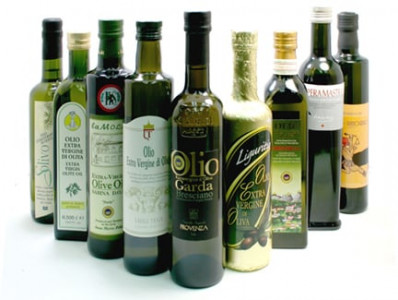
<p>While this left Mr R – a connoisseur of fine olive oils –  severely downcast, to me it reflected the prevalent oversight regarding matters of health in affluent Pakistani circles.</p>
<p>One of the more obvious examples of this outlook is the widespread use and availability of olive pomace oil, commonly found alongside olive oils in shops. Most people are not aware that in several countries in the EU, including Spain and Germany, olive pomace oil has been labelled a health hazard and its distribution has been banned altogether.</p>
<p><strong>Types of olive oil</strong></p>
<p>• <strong>Extra virgin</strong></p>
<p>This is the finest kind of olive oil, extracted through a process of ‘cold pressing’ which is chemical free and in which the olives are not heated beyond low temperatures. It retains the most aroma, flavour and nutrients of all olive oils and is also known to have anti-breast cancer properties.</p>
<p>• <strong>Virgin</strong></p>
<p>It is a slightly more inferior type of olive oil, which is also produced by cold pressing but with ripe olives which produce oil of higher acidity. Low acidity is a marker of quality, as it allows for the oil to retain a higher ‘smoke point’, which is the temperature beyond which oil will break down and turn rancid. This then adds a ‘burnt’ smell and taste in food.</p>
<p>•<strong> Pure</strong></p>
<p>This type of olive oil is produced by the ‘second pressing’ method and lacks both the colour and flavour of virgin olive oils. This type of olive oil provides an economical substitute when you don’t need the oil to contribute to the flavour of a dish.</p>
<p>Olive pomace oil is made from the leftover of olives after first and second pressing. The pulp or ‘pomace’ is then subjected to chemical solvents and progressively high levels of heat in an effort to extract any remaining oil. In an article, the <em>Olive Oil Times </em>reports that this method eventually produces a compound in the oil known as benzopyrene, which is a known carcinogen (cancer-causing substance). After having attained notoriety for conveniently being passed off as ‘olive oil’, several countries in the EU have made the aforementioned classification of pomace as illegal.</p>
<p><strong>For the connoisseur</strong></p>
<p>• Only buy olive oil that is labelled 100% extra virgin.</p>
<p>• Exposure to air, heat and light reduces the smoking point of olive oil. Purchase olive oil in a container of dark glass, steel or tin; avoid transparent containers and never use plastic. Also, store in a cool place such as a pantry.</p>
<p>• The flavour, texture and nutritional value of olive oils fall with time. Do not purchase large amounts unless you intend to use all of it at once.</p>
<p>For the more compromising though, it may suffice to know that the process by which pomace oil is extracted because of which it acquires its hazardous properties is the same process used in the production of cheap vegetable oils. However, pomace still retains the structural profile of olive oil and thus includes a high proportion of healthy Omega-9 fats or ‘oleic acid’ instead of the more harmful Omega-6 fats that vegetable oils contain, including: Sunflower, Corn and Canola. So while pomace is not exactly the best value for your money, in all fairness, it is not at the bottom end either.</p>
<p>In conclusion, next time you’re asked whether you’d like to have ‘olive oil’ poured on your sandwich at your favourite fast-food chain, remember to be careful and not simply assume, “<em>Oil toh oil hay</em>” because you could be in for a surprise!</p>
<p><em>The authors are involved in a project called Scholars By Profession which intends to pioneer introducing graduate-level research to Pakistan. Please visit their <a href="https://www.facebook.com/scholarsbyprofession">Facebook page</a> for further details.</em></p>
<p><em>Published in The Express Tribune, August 6<sup>th</sup>, 2012.</em></p>
</p>
			<br clear="all"/>
		]]>
		</description>

		<media:content width="424" height="318"
							isDefault="true" medium="image" url="http://i1.tribune.com.pk/wp-content/uploads/2012/08/417893-oliveoil-1344242277-551-640x480.jpg">
			<media:title>olive oil</media:title>
			<media:description>Thinking ‘oil toh oil hay’ is not always good enough. PHOTO: FILE</media:description>

			<media:thumbnail url="http://i1.tribune.com.pk/wp-content/uploads/2012/08/417893-oliveoil-1344242277-551-160x120.jpg" width="160" height="120" />
      </media:content>

		<wfw:commentRss></wfw:commentRss>
		<slash:comments>6</slash:comments>
	</item>
		<item>
		<title>iPod, iPad, iPhone: Dear God, when will iSleep?</title>
		<link>http://tribune.com.pk/story/411376/ipod-ipad-iphone-dear-god-when-will-isleep/</link>
		<pubDate>Sat, 21 Jul 2012 15:41:10 +0000</pubDate>

		<guid isPermaLink="false">http://tribune.com.pk/?p=411376</guid>

		<description>
		<![CDATA[
			<a href="http://tribune.com.pk/story/411376/ipod-ipad-iphone-dear-god-when-will-isleep/">
				<img src="http://i1.tribune.com.pk/wp-content/uploads/2012/07/411376-iSleep-1342883834-842-160x120.JPG" width="160" height="120" alt="" />
			</a>
			<p><div><strong class='location'>KARACHI:&nbsp;</strong>
<p><strong>Your friend’s wedding is coming up and you want to look your best but nothing can disguise those huge bags under your eyes. Haven’t been sleeping properly?</strong></p>
</div>
<p>There was a time when human beings slept at sunset and woke to a day brightened by natural light from the sun.This routine was first altered after Thomas Edison introduced the light bulb. Today, however, many people are mysteriously unable to sleep even after midnight. While recurrent, ongoing insomnia could in itself be classified as a ‘disease of civilisation’, the reason some of us are lying awake at night immersed in the wonders of the iPad, iPhone, laptops and other electronic devices, is the blue light emitted from their LED screens. The popularity and subsequent ubiquity of these machines has introduced a phenomenon in our lives known as the ‘blue light epidemic’.</p>
<p>Our bodies have something called a ‘circadian rhythm’ – a 24-hour internal clock in which the body experiences changes in temperature, cortisol (the stress hormone), melatonin and other neurochemicals. Melatonin, which functions to induce sleep, is released in response to darkness and suppressed upon exposure to light. And blue light – which mimics the blue of the sky – is the most potent suppressor of this hormone. There is substantial evidence to link being routinely exposed to blue light in the evening with a condition known as ‘Delayed Sleep Phase Syndrome’.</p>
<p><strong>What?</strong></p>
<p>Delayed Sleep Phase Syndrome is a condition in which your entire circadian rhythm is pushed forward. People suffering from this condition are usually able to fall sleep only well after midnight and are accustomed to wake up in the late morning or even afternoons.</p>
<p><strong>What you can do</strong></p>
<p>• Get sunshine in the morning. Recent research done at the Rensselaer Polytech Institute in New York has revealed that people who get adequate exposure to the sun during the day will be less sensitive to artificial light at night.</p>
<p>• Taking melatonin as a supplement. However, melatonin is extremely powerful and taking it without first familiarising yourself with the research behind optimal dosage and correct timings is not advised. Without caution, it can cause rebound insomnia or even depression.</p>
<p>• Blue light blocking goggles. Researchers at the John Carroll University have invented goggles said to block blue light. Worn shortly after sunset, these have been shown to improve sleep and advance the circadian hour.</p>
<p>• Get F.lux. It is an ingenious software that acts as a natural clock inside your personal computer which adjusts the light spectrum of your computer screen to blue-blocking in the evening and back to normal at sunrise. Reportedly, in the US, this software is already being used in many offices. Incredibly, it’s free!</p>
<p>For the more laid-back though, just dim the lights and switch off the iPad or laptop at least an hour before bedtime. Your chances with those <em>rishta</em>-aunties equipped with super vision may be better if you ‘plug out’ early and feel healthy, rested and energetic rather than spend your prime years sleep-deprived and looking like a zombie.</p>
<p>The authors are involved in a project called Scholars by Profession which intends to pioneer introducing graduate-level research to Pakistan. Please visit their <a href="https://www.facebook.com/scholarsbyprofession">facebook page</a> for further details.</p>
<p><em>Published in The Express Tribune, July 22<sup>nd</sup>, 2012.</em></p>
</p>
			<br clear="all"/>
		]]>
		</description>

		<media:content width="424" height="318"
							isDefault="true" medium="image" url="http://i1.tribune.com.pk/wp-content/uploads/2012/07/411376-iSleep-1342883834-842-640x480.JPG">
			<media:title>iSleep</media:title>
			<media:description>Blue-light ridden electronic devices are keeping us up at night even once they’ve been switched off.</media:description>
			<media:thumbnail url="http://i1.tribune.com.pk/wp-content/uploads/2012/07/411376-iSleep-1342883834-842-160x120.JPG" width="160" height="120" />
      </media:content>

		<wfw:commentRss></wfw:commentRss>
		<slash:comments>5</slash:comments>
	</item>
	
</channel>
</rss>
<!-- Performance optimized by W3 Total Cache. Learn more: http://www.w3-edge.com/wordpress-plugins/

Page Caching using apc
Database Caching 19/30 queries in 0.021 seconds using memcached
Object Caching 534/602 objects using apc

 Served from: tribune.com.pk @ 2013-05-25 00:03:45 by W3 Total Cache -->