<?xml version="1.0" encoding="UTF-8"?>
<rss version="2.0"
	xmlns:content="http://purl.org/rss/1.0/modules/content/"
	xmlns:wfw="http://wellformedweb.org/CommentAPI/"
	xmlns:dc="http://purl.org/dc/elements/1.1/"
	xmlns:atom="http://www.w3.org/2005/Atom"
	xmlns:sy="http://purl.org/rss/1.0/modules/syndication/"
	xmlns:slash="http://purl.org/rss/1.0/modules/slash/"
	xmlns:media="http://search.yahoo.com/mrss/"
	>

<channel>
	<title>The Express Tribune &#187; Zahid F. Ebrahim</title>
	<atom:link href="http://tribune.com.pk/author/2682/zahid-f-ebrahim-2/feed/" rel="self" type="application/rss+xml" />
	<link>http://tribune.com.pk</link>
	<description>Latest Breaking Pakistan News, Business, Life, Style, Cricket, Videos, Comments</description>
	<lastBuildDate>Tue, 18 Jun 2013 21:22:06 +0000</lastBuildDate>
	<language></language>
	<sy:updatePeriod>hourly</sy:updatePeriod>
	<sy:updateFrequency>1</sy:updateFrequency>
	<generator>http://wordpress.org/?v=3.5.1</generator>

		<item>
		<title>The judiciary strikes back</title>
		<link>http://tribune.com.pk/story/396279/the-judiciary-strikes-back/</link>
		<pubDate>Wed, 20 Jun 2012 04:25:19 +0000</pubDate>

		<guid isPermaLink="false">http://tribune.com.pk/?p=396279</guid>

		<description>
		<![CDATA[
			<a href="http://tribune.com.pk/story/396279/the-judiciary-strikes-back/">
				<img src="http://i1.tribune.com.pk/wp-content/uploads/2012/06/396279-Scrable-1340143399-697-160x120.jpg" width="160" height="120" alt="" />
			</a>
			<p><div>
<p><strong>Unlike 1999, a lawfully elected prime minister has been removed from office without the intervention of the infamous 111 Brigade. However, eyebrows will be raised on how the Election Commission’s role under Article 63(3) of the Constitution could have been sidelined by the Supreme Court. Yet, it is reassuring that Pakistan’s constitutional architecture has the capacity to yield change in high political office without resorting to military coup d’etat.</strong></p>
</div>
<p>The conviction for contempt and disqualification as member of Parliament had become inevitable for former Prime Minister Yousaf Raza Gilani. For more than two years, the ruling coalition resisted the order of the Supreme Court in the National Reconciliation Ordinance case. The Supreme Court’s decision in December 2009 had directed the government to “take immediate steps.” Instead of taking “immediate steps” as the Supreme Court ordered, Mr Gilani and his government dragged their feet for two years on writing to the Swiss authorities.</p>
<p>If failure to implement the verdict was not enough, Prime Minister Gilani and President Asif Ali Zardari decided to test the Supreme Court with brazen defiance and proclaimed that the present government will not write the letter to the Swiss authorities come what may.</p>
<p>Even then, the Supreme Court showed considerable leniency. Mr Gilani was given full opportunity to defend himself over the course of more than twenty hearings during the contempt case.</p>
<p>Repeatedly, Mr Gilani’s counsel, Aitzaz Ahsan, was told by the court that the contempt proceedings would be dropped if his client would relent and write the letter to the Swiss authorities even at that late stage. That was not to be.</p>
<p>In April, the Supreme Court order on contempt was criticised by many for not sending Mr Gilani to jail. However, the court was mindful that the conviction was “likely to entail some serious consequences in terms of Article 63(1)(g) of the Constitution” and was therefore treated as a mitigating factor towards the sentence of imprisonment. In other words, the effect of conviction itself was so ruinous, i.e. disqualification as member of Parliament, that the Supreme Court felt it was appropriate to show leniency in the matter of imprisonment.</p>
<p>The days of lenience finally ended. By late afternoon of June 19, the country discovered that the prime minister’s office had been lying vacant since 26 April, 2012. The perception that Mr Zardari’s government was backing real estate baron Malik Riaz and his allegations against the Chief Justice’s family did not help.</p>
<p>The plea for a larger bench was swiftly dispensed with. Aitzaz Ahsan’s magic made no impression in Court Room No.1. The Supreme Court’s notification of enhanced security measures was not without significance.</p>
<p>Critics will argue that even if the National Assembly speaker was wrong in her ruling under Article 63(2) of the Constitution, the next step in the disqualification procedure was a reference to the Election Commission of Pakistan to make the decisive ruling under Article 63(3). In other words, although disqualification was inevitable, it was required to be ordered through final determination by the Election Commission.</p>
<p>Undoubtedly, legal scholars will anxiously await the reasoning for the short order to understand how the Supreme Court determined that the Election Commission has no role to play in this controversy despite the language of Article 63(3). However, no legal wrangling can now alleviate the indignity of disqualification for the former Prime Minister Gilani.</p>
<p><em>Published In The Express Tribune, June 20<sup>th</sup>, 2012.</em></p>
</p>
			<br clear="all"/>
		]]>
		</description>

		<media:content width="424" height="318"
							isDefault="true" medium="image" url="http://i1.tribune.com.pk/wp-content/uploads/2012/06/396279-Scrable-1340143399-697-640x480.jpg">
			<media:title>Scrable</media:title>
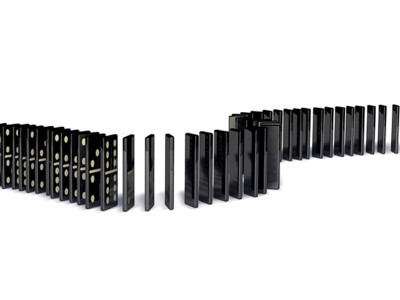
			<media:description>Pakistan’s constitution has the capacity to yield change in high political office without resorting to a coup.</media:description>
			<media:thumbnail url="http://i1.tribune.com.pk/wp-content/uploads/2012/06/396279-Scrable-1340143399-697-160x120.jpg" width="160" height="120" />
      </media:content>

		<wfw:commentRss></wfw:commentRss>
		<slash:comments>7</slash:comments>
	</item>
		<item>
		<title>Analysis: Head-on collisions can prove fatal  </title>
		<link>http://tribune.com.pk/story/319671/analysis-head-on-collisions-can-prove-fatal/</link>
		<pubDate>Wed, 11 Jan 2012 01:10:05 +0000</pubDate>

		<guid isPermaLink="false">http://tribune.com.pk/?p=319671</guid>

		<description>
		<![CDATA[
			<a href="http://tribune.com.pk/story/319671/analysis-head-on-collisions-can-prove-fatal/">
				<img src="http://i1.tribune.com.pk/wp-content/uploads/2012/01/319671-Supremecourt-1326244012-769-160x120.jpg" width="160" height="120" alt="" />
			</a>
			<p><div>
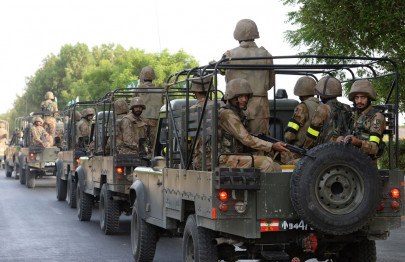
<p><strong>The Supreme Court’s patience is not unlimited, especially when it comes to wilful disobedience of its orders. </strong></p>
</div>
<p>For the last two years, the Supreme Court has gently nudged the government to honour the verdict in the NRO case and write the letter to the Swiss authorities. The government, till now, was successfully prevaricating. But <a href="http://tribune.com.pk/story/317714/zardari-allays-concerns-of-clash-of-institutions/">in a startling interview last weekend</a>, President Asif Ali Zardari threw down the gauntlet, and proclaimed that there was no question of writing to the Swiss till he was president.</p>
<p>It was not just the NRO letter to the Swiss which was at issue. The Supreme Court’s orders for initiating action against officials responsible for illegal appointments of Adnan Khawaja at OGDC and Riaz Sheikh at FIA were also shrugged off by the government. According to the Supreme Court’s order, NAB’s decision to not proceed in these matters was an attempt “to shield and protect all those in public offices who were involved in appointment/promotions of the said convicted persons.” The Supreme Court bench was at pains to record that they “have particularly noted the defiant posture and position adopted by the Chairman [NAB] and have been struck by his willful disobedience to the earlier directions issued by [the] Court he has decided to take this Court head on…”</p>
<p>Head on collisions can prove fatal. <a href="http://tribune.com.pk/story/319251/supreme-court-reserves-judgement-in-nro-implementation-case/">The six options listed in the Supreme Court’s orde</a>r actually outline three divergent survival scenarios for Prime Minister Gilani and President Zardari which will be considered by a larger bench of the Supreme Court on 16 January. In the first scenario (listed as Option 1 in the Order), both the prime minister and the president’s contumacious defiance of the Supreme Court’s verdict may cause the court to declare that they have violated their sacred oaths of office and are no longer qualified to hold such high office or even continue as member of parliament. In the court’s words: “a permanent clog on the prime minister’s qualification” for election and similar consequence for the president.</p>
<p>In the second scenario (listed as Option 2 in the order), the prime minister and his team members may face conviction for contempt of court and disqualification for at least five years. The president apparently goes unscathed in such contempt proceedings as the Supreme Court’s order makes no reference to him under this option.</p>
<p>The third scenario (listed as Option 6 in the order) is seemingly forgiving. That Prime Minister Gilani and President Zardari go on with their business unhindered by the Supreme Court. As the order states, “instead of insisting upon the executive to implement the judicial verdict and thereby running the risk of bringing down the constitutional structure itself, this court may exercise judicial restraint and leave the matter to the better judgment of the people of the country or their representatives in parliament to appropriately deal with the delinquent.”</p>
<p>The Supreme Court’s order itself notes that, “we the Judges of the Supreme Court have made an oath before Allah Almighty…it is our bounden duty to take appropriate action whenever we find that the Constitution is not being obeyed or its express commands are, wittingly or otherwise, being disregarded”. In such circumstances, it would be a hard task for the Supreme Court to exercise further restraint, especially, in the fact of open and contumacious defiance.</p>
<p>It was a letter from Benazir Bhutto in the form of a will, which provided the foundation for the PPP’s present set up. It is also a letter, this time to the Swiss authorities, which may save the PPP from a precipitous end.</p>
<p><em>The writer is an advocate of the Supreme Court and senior partner at Ebrahim Hosain.</em></p>
<p><em>Published in The Express Tribune, January 11<sup>th</sup>, 2012.</em></p>
</p>
			<br clear="all"/>
		]]>
		</description>

		<media:content width="424" height="318"
							isDefault="true" medium="image" url="http://i1.tribune.com.pk/wp-content/uploads/2012/01/319671-Supremecourt-1326244012-769-640x480.jpg">
			<media:title>Supreme court</media:title>
			<media:description>It would be a hard task for the Supreme Court to exercise further restraint, especially, in the fact of open and contumacious defiance by the executive.</media:description>
			<media:thumbnail url="http://i1.tribune.com.pk/wp-content/uploads/2012/01/319671-Supremecourt-1326244012-769-160x120.jpg" width="160" height="120" />
      </media:content>

		<wfw:commentRss></wfw:commentRss>
		<slash:comments>2</slash:comments>
	</item>
	
</channel>
</rss>
<!-- Performance optimized by W3 Total Cache. Learn more: http://www.w3-edge.com/wordpress-plugins/

Page Caching using apc
Database Caching 11/22 queries in 0.032 seconds using memcached
Object Caching 533/584 objects using apc

 Served from: tribune.com.pk @ 2013-06-19 02:24:16 by W3 Total Cache -->