The Express Tribune » Wajahat S Khan http://tribune.com.pk Latest Breaking Pakistan News, Business, Life, Style, Cricket, Videos, Comments Mon, 21 May 2012 05:33:15 +0000 en hourly 1 http://wordpress.org/?v=3.2.1 The new spymaster: Aabpara’s new top gun http://tribune.com.pk/story/348039/the-new-spymaster-aabparas-new-top-gun/ Sat, 10 Mar 2012 02:16:48 +0000 http://tribune.com.pk/?p=348039

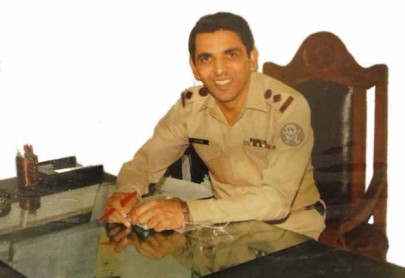
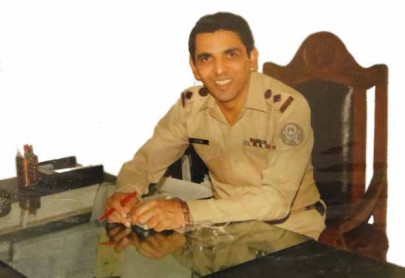
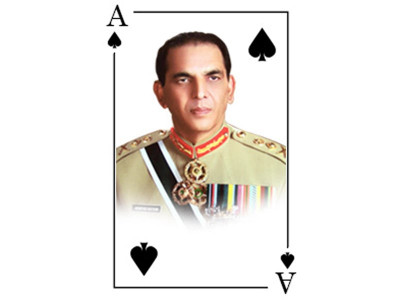
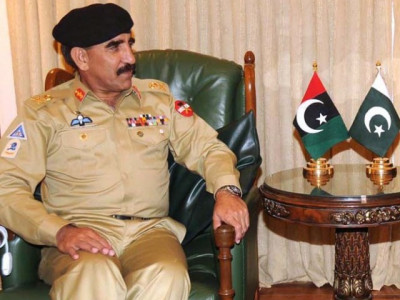
He’s the new boss of Aabpara, but he’s not the same as the old boss. Lt-Gen Zaheerul Islam, the designate DG-ISI, just like the incumbent but soon to retire Director General of Inter-Services Intelligence Lt-Gen Ahmad Shuja Pasha, is also an infantryman, but hails from different regiment: the famed Punjab (Pasha is from another celebrated wing of the infantry, the Frontier Force).

Unlike Pasha, who took over the ISI after a stint as Director General Military Operations with little high-level intelligence experience, Islam has previously served in the ISI as a two-star major general, and also commanded the very cushy V Corps in Karachi. He’s a certified paratrooper and alpine-trained, and hails from a prominent military family of war heroes who’ve worn lots of brass.

Islam’s Karachi Tenure

The V Corps stint in Karachi is a complicated job. Like the IV Corps in Lahore, it’s regarded as a choice posting which only those officers close to the Chief of Army Staff get to hold. Firstly, it features command of the 25th Mechanized Division, which watches over every spot of land from Malir to upper Sindh, making it the largest land covering formation in the Army. But Islam was not just watching over Pakistan’s eastern deserts, a likely axis of a conventional war with India if it ever comes, during his corps command. From his office on Shahra-e-Faisal, Islam’s tenure has featured overseeing Karachi during the ‘target killing’ turbulence of 2010-11, the arrests of prominent militants and terrorists (some with links to the Taliban), as well as the reorganization of the DHA. The PNS Mehran attack occurred down the street from his headquarters. The man has obviously been exposed to an eclectic brand of soldiering in Pakistan’s largest, and perhaps most complicated, city.

Islam’s Previous ISI Stint

Zaheerul Islam is not an unknown quantity within the ISI. He was reportedly DG Internal, dealing with domestic and counter-terrorism ambits as a major general under a younger and pre-extension General Ashfaq Parvez Kayani. Interestingly, Islam is among the batch of officers who have been ‘groomed’ by the Chief of Army Staff in the ‘new look’ ISI. Before 2004, those who served as top-guns at Aabpara had a very different promotion stream than those who didn’t. Generally, in a classic bifurcation that was almost traditional, Rawalpindi’s spooks were different from its soldiers. However, and perhaps in his own image, Kayani has streamlined some of Army’s best and brightest to also pass through the ISI.

What Now?

Thus, the ISI has, especially under Kayani, become a type of ‘finishing school’ for Army’s top brass. Islam, besides holding the right command, staff and operational posts, is among those ranks of ‘soldier spies’. Critically, in the context of ongoing military operations within the country, his infantry background is also going to matter, for the ISI, officially sans its ‘political wing’, is gradually reverting to what it was formed to do: provide field intelligence for war. As most of the operations and engagements in FATA, Khyber Pakhtunkhwa and Balochistan continue to be infantry-dominated, Islam’s foot-soldier background will be critical.

Also, especially after his very glasnost style stint at Karachi, where he often interacted with the press, expect him to be more media savvy, if not maintain a higher profile, than Pasha. As he is a known organizer, also expect him to recalibrate, if not redux, the ISI’s at least six known sub-directorates: Analysis, Counter, Internal, Media, Special and Technical. But don’t expect any game-changing turnarounds, for Islam is a few batches more junior to his boss, Kayani, than Pasha was, and the COAS isn’t going golfing till at least November 2013, when Islam could well be in the final three or four finalists who are gunning for the top slot at Chaklala Garrison.

Published in The Express Tribune, March 10th, 2012.


]]>
Zaheerul Islam Interestingly, Islam is among the batch of officers who have been ‘groomed’ by the Chief of Army Staff in the ‘new look’ ISI. 22
Journalism under threat: Jihad, lies and video tape http://tribune.com.pk/story/336144/journalism-under-threat-jihad-lies-and-video-tape/ Tue, 14 Feb 2012 01:11:54 +0000 http://tribune.com.pk/?p=336144

ISLAMABAD: 

Saturday afternoons in Islamabad are clinically boring. The industrial/agricultural elite of Parliament has packed off for the weekend and anybody who wears stars is off golfing or playing polo. As even the Twitter feed is slow, the news day is thus a stretch. Meanwhile, news TV viewing, even the rerun of one’s own show, is a painful but relevant exercise, especially when it is compounded by threats that promise beheading, bestiality, torture and other such comforts of wrath.

According to the records, I got the first call at 1312 hours on Saturday, a few minutes into the repeat broadcast of my new show. It needs to be stated for the record that the show was a passionate debate between that old warhorse, Lt. Gen. Hameed Gul, and myself. Though ‘Saddam Gul’, as Robert Oakley once called him, and I have faced off several times on television, this encounter was less about him and more about his new gig with the good folks of the Difa-e-Pakistan Council.

I started off fairly quickly, teasing Gul why he and his DPC buddies were so angry all the time. Gul just laughed it off. Then we got cracking about the DPC’s ‘pressure group’ tactics, and how they had nothing constructive to contribute to the critical governance issues the country is being held hostage by. Still, that toughened spy chief brushed it aside. Then came the issue of the ‘outlaw groups’, and how the Malik Ishaqs and the Hafiz Saeeds of the world are displayed and paraded around at the DPC’s rallies, and how such displays cause jitters everywhere, and how those jitters end up giving this poor, broken country a bad name.

For the first time in the interview, around 10 minutes in, Gul struggled, outright rejecting the claim that Malik Ishaq was at the Multan rally. As we tend to do in our show, evidence was promptly presented. A screen shot of The Express Tribune, with Ishaq in living colour at the Multan stage, was displayed on our monitor, and Gul struggled some more. Doing what he does best, Gul upped the ante, claiming that the Tribune’s pics were doctored. I challenged him, defending the Tribune’s reporting standards. He counter-challenged, and said it was not the paper, rather the reporter who was lying. I rebutted, and hence we moved on. Around this part of the show’s broadcast, the call came.

He didn’t say hello. He knew my name and my address. He kept it short, and told me exactly what he would do to my body parts when he was done detaching them. He then hung up. That was caller one.

But that was just the bad cop routine. The good cops, several of them, came knocking with a flurry of text messages. One of them started off by asking why I was siding with India. My reply was that I was not siding with any collective, and in fact had brought up the disturbing statistic of India’s arms expenditures with Gul, asking the former ISI chief what he and the DPC were doing besides screaming murder about matching the $100 billion dollars that the Indians plan on weapons procurement spending over the next decade. He pinged back after a few minutes, concentrating his grammar on the imaginings between my mother and some animals. The other good cops started in similar vein, one of them asking me whether I had learnt my English in America. Seeing where this could lead to, I didn’t respond. That action further lit up my afternoon, as references to pre-Islamic debauchery, disasters and disease continued to flash on my phone. No names were offered, but when my address and location was confirmed, again and again, I pressed the panic button.

The cavalry that came to help was the Aaj TV administration as well as contacts in Pakistan’s premier intelligence agencies. Within an hour, we had located the origin of the calls: All of them were from Lahore. And yes, we even had the addresses down. By now, panic had given way to anger. Evidently, this was a planned and coordinated assault, ranging between Badian, Rajababad and Model Town.

I reached out to Gen Gul, and after several hours, he finally reverted, admitting that he too had heard from “some people” who were “angry” at him about granting me this interview. He said all was well between us, and that he was sorry about what had happened. He said he didn’t know who was threatening me, but nor could he help call them off.

Meanwhile, contacts in the intelligence community had another explanation: they said that people belonging to “such organizations” are “excessively emotional”, and that the real operators “never warn” before they strike. Still, the fact that my address and numbers were so quickly available to my would-be executioners wasn’t taken as a “credible threat”. You’re a famous man, I was told. Everybody knows your information. Don’t worry. All will be well.

And that’s when it all made sense. Pakistan is Chaos Country. Nobody is in charge any more. In the battles for our soul – for freedom, for journalism, for jihad, for governance and law – all the combatants are right, and everybody else wrong. The intel officials and my television bosses thought it would be better to know more and do less, for giving the relevant groups’ actions public coverage would only serve their purpose. But when I was advised to “move for the night” and asked if I could “handle a weapon” by some very important, powerful people, I realised that in spirit, maybe the DPC’s message, if not the DPC’s (or its supporters’) tactics is right: We should do what it takes to survive.

At a primal, human level, I secretly wished that I hadn’t “made enemies” by taking on Gen Gul. At a professional level, I was pleased and even proud. Personally, I was scared and then angry. But as a Pakistani, I broke down a little this weekend. And all the king’s horses, and all the king’s men, despite their power and potential, couldn’t put my family and me together again. Truth led to lies. Lies led to video-tape. Video-tape led to jihad. And then nobody, even the jihadis themselves, could do anything more to help.

The writer is host of the show Ikhtilaf, on Aaj TV.

Published in The Express Tribune, February 14th, 2012.


]]>
Journalist journalism Tough-talking journalist is broken a little by a night of death threats. 40
From Harvard, with hate - for the narrow-minded http://tribune.com.pk/story/197415/from-harvard-with-hate/ Mon, 27 Jun 2011 19:17:59 +0000 http://tribune.com.pk/?p=197415

The narrative changes. Pakistan ranks up there with unemployment as far as Washingtonian irritants are concerned and America at large has had enough as well. Now, there is little space for green in the red, white and blue palette. No big aid package is being pipelined. No confidence-building is pending to bridge the trust deficit. In effect, there is no love. For the polity of the US, Pakistan is somewhere between the bi-poles of all-out/isolating sanctions and total/existential war. But you won’t hear that in The New York Times. Or from Admiral Mullen when he calls to say goodbye to General Kayani. Not even from Ambassador Cameron Munter at one of his formally informal soirees.

Instead, you will hear this new narrative, and more, at Harvard — the lyceum of America’s Establishment. Not the khaki-wearing, nuke-trading, push-up pumping Establishment that you’re used to. Rather, the quantifying and qualifying, cost-benefit analysing, discourse and debate driven, bottomline-is-supreme thinkers of America’s elite. For many blue-bloods here in Cambridge, Massachusetts — the mecca of puritan tradition and progressive thought — giving Pakistan a helpful transfusion is up there with sipping tea with the Tea Party: Not On. Simply, Pakistan is running out of reputational fuel and even American liberals — the Academy — want it to switch to alternative sources of energy.

Why is this important? Because Americans debate their policies: Not just in mess halls and on golf courses, but also in lecture rooms and auditoriums. And Harvard is the citadel of America’s discussion. Senators and congressmen, generals and journalists, all visit here to sell or retool their ideas. Being here is witnessing brain surgeons operate on the American political mind: Skulls of wisdom are drilled, membranes of reason are pierced, tumours of myth are extracted and new policies are stitched up. It’s a beautiful procedure and it’s called discursive democracy. Understanding the academic policy-debate mechanism is critical for understanding America, while tracking the changes in its direction: A feat Pakistanis need to accomplish, and fast.

I witnessed this new Pakistan narrative unfold over the last few months. Graham Allison, the man who — besides advising governments — dominates security discourse at the Kennedy School of Government, maintains that the problem was “always Pak-Af, not Af-Pak”. Weeks before the OBL debacle, General Ray Odierno, known in this country as the liberator of Iraq, made an even more focused assessment about our de facto/four-star head-of-state: That it took the US “a while” to realise that “General Kayani will do what’s good for him”, and thus, America will treat him “accordingly”. Days before the SEALs rappelled into Abbottabad, another US army general addressed military officers here and warned that with the “endgame heating up, the Af-Pak Theater will swing, and the Pakistanis, of all folks, won’t like it”.

That, ladies and gentlemen, is a sea change. And it started months before President Obama’s 1/5/11 speech. Meanwhile, many Pakistanis here remained in denial. An email exchange between a couple of Pakistani professors, some Pakistani students and myself (about an over-bloated issue: The design of a poster for a student-organised seminar that questioned “The Unraveling Republic of Pakistan?”) led to the following verdict by the junior (Pakistani)professor, who obviously fancied himself as a graphic designer:

“We feel it would be more interesting to juxtapose images of the army and mullahs with girl children (sic) in school and it is important to portray less violent images of Pakistan. The big picture in our view should be girl children (sic) in schools… and you can have smaller pictures of the military and the mullahs that are juxtaposed against the big picture. This would be a better rendering of Pakistan’s complex struggles.”

This constructed ‘rendering’ — a dim attempt to stonewall the rising tide of anti-Pakistanism at America’s finest school, missed the larger point: That images of girls on a poster will not salvage Pakistan in the educated American mind. Brutally honest debate and frank policy discussions will.

Thus, from Harvard, with hate… For the narrow-minded.

Published in The Express Tribune, June 28th, 2011.


]]>
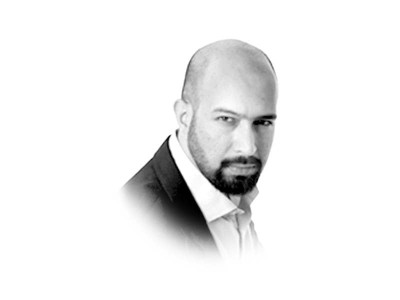
Wajahat S Khan New The writer is a Harvard Shorenstein Fellow in The Press, Politics & Public Policy at the Kennedy School of Government. He was also host of “TalkBack” on DawnNews wajahat.khan@tribune.com.pk 61
A leadership index http://tribune.com.pk/story/38645/a-leadership-index/ Thu, 12 Aug 2010 20:50:15 +0000 http://tribune.com.pk/?p=38645

Listing the Who’s Who of contemporary Pakistan isn’t difficult. Thanks to decades of systematic ‘elitist’ education, entrenched biradari politics, circular khandani business networking and ‘society-specific’ (the new-age version for class/caste) familial practices, those ‘who matter’ are dated/married/related to or have worked/served with everyone else ‘who matters’ as well.

In this modern jungle of highbrow society and below-the-belt politics, where ‘everyone knows someone’ and all the players are A-Listers, the ‘Real Elites’ need to be separated from the dispensable and irrelevant: behold, our qualified analysis of this Islamic Republic’s “Most (Un) Important Leaders” or, in jet-setter lingo, the “Politically Hot or Not”.

First up, Asif Ali Zardari: Hot. In fact, the president is too hot to handle. Even though his PR advisers are probably double agents for the PML-N (his recent trip to Europe is case in point enough — why else would he go?), AAZ is the “Lord and Master” of a party which has been constructed around the cult of lords and masters. The PPP loves “personalities” and AAZ exudes a yaaron ka yar charisma that they find irresistible. He is no ZAB or BB, but Zardari’s got game — no-holds-barred, Machiavellian game. Also, his serving time as well as being a single dad who’s raising the Bhutto scions might not rub off on everyone, but most jiyalas agree that he’s “worked hard” to get where he is. A veritable “survivor”, the prez might be a lot of things, but he is not unimportant.

Next: Yousaf Raza Gilani — Not hot. The PM of Pakistan aptly lives up to his title (isn’t it in the “PM” that we are most tired and ready to pass out?). During 2009, Gilani enjoyed brief popularity when the press lauded him as a “middle of the road” premier with “pragmatic” policies. Gilani was the Dusk Warrior — one who could negotiate between the dazzling spotlight of parliamentary politicking and the dark depths of the establishment’s ego. But what was the prime minister’s “moderation” last year is perceived today as “mediocrity”. Though Gilani is no John Doe – he couldn’t have come this far by being a nobody – one gets the feeling that Pakistani democracy won’t suffer a major brain drain if aliens were to suddenly abduct him.

General Ashfaq Parvez Kayani — Hot. Even though the “soldier’s soldier” wears four stars, he gets five stars on our hotness scale. Kayani is war general, spymaster, chief diplomat, political operator and grand-strategist all rolled into one, sombre chain-smoker. Everyone, everywhere wants to know the “golfer-in-chief”. The Gates/Mullen Pentagon is enchanted; the Clinton/Holbrooke State Department doesn’t have an option; the CIA/DIA boys are policy-less without him; Centcom wants to give him another star; the Indians are nervous as they’re now dealing with a real-life ISI man versus the semi-imaginary ones of the past; and the Chinese, well, them having the COAS visit the PRC on an official trip the week of his tenure’s extension announcement is reason enough to believe that Kayani is the hottest thing in Beijing since chopsticks were invented.

To reiterate — being “hot or not” in Pakistani politics is a game of “value addition”. Shah Mahmood Qureshi, bespoken and well-attired, runs a Foreign Office that is, unfortunately, not allowed to make a lot of foreign policy. Thus, he is not hot. Nawaz Sharif – contradictive and opportunistic, the classic example of a provincial mind operating at a global level, much thanks to patronage and fate – is very hot. That’s because he’s capable of making political hay in all sorts of circumstances — lawyers marching and rivers flooding are like sunshine for the Royal of Raiwind.
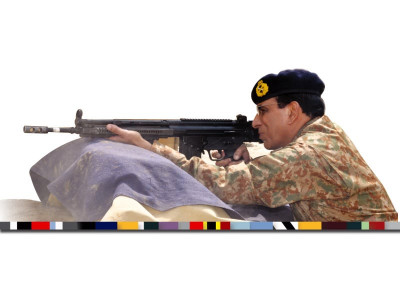
Making some “hot or not” decisions are easy: for example, the PCB’s Ijaz Butt is simply not hot (everyone feels a bit of Trotsky in them whenever our cricket czar holds a press conference). Other verdicts, like who’s the hottest in a collection of frumpy “not-hots” – our four chief ministers – are difficult to ascertain: Qaim Ali Shah’s missing backbone, Aslam Raisani’s “fake-or-real, at-least-it’s-a-degree” logic, Amir Hoti’s “War? What war?” defensiveness and Shahbaz Sharif’s “It’s still the 90s” approach to running Punjab make it all so confusing — speaking of which, I’m feeling kind of dizzy. After all, it’s always hot in the MQM’s Karachi.

Published in The Express Tribune, August 13th, 2010.


]]>
Wajaha New The writer is a freelance journalist, blogger and director at Core Consulting wajahat.khan@tribune.com.pk 22
Gangland http://tribune.com.pk/story/33721/gangland/ Mon, 02 Aug 2010 19:04:54 +0000 http://tribune.com.pk/?p=33721

It’s official — Pakistan is undergoing a midlife crisis. The bad boy of international geo-politics has outlived its best years and the decades of naughtiness are starting to show. Having lost his founder-father – henceforth, ‘Daddy’ – at an early age, Pakistan – henceforth, ‘Pak’ – drifted into a vicious cycle common in juvenile offenders: bad friends and bad habits.

As Daddy left little inheritance, chronic overspending led our protagonist to dependence on scoring hits by borrowing from whoever was around. The streets were rough then. A loud, brash white boy, Yank, was the big player on the Westside of town. He reached out to whoever could afford him by a ‘Sign On Treaty’. Pak didn’t mind a far-off stranger selling him mediocrity at high-rates, at least someone ‘had his back’.

During this formative phase, Pak developed an appetite for all types of goodies: aid and aircraft, tube-wells and tanks. Pak could smoke, shoot, sniff, snort, rip, cut, and eat whatever feel-good product the Westside churned out. Loaded with the delusions of a venerable narcotic fiend, Pak started to imagine himself as stronger than he actually was.

One day in 1965 he decided to take on his nemesis and stepbrother, Indy.  Indy and Pak had issues that went way back. The story was simple: Mother Hind had married two different wooers: Mos and N-Du. A powerful and eclectic woman, she thought such a lack of marital Puritanism was kosher as long as she kept everyone happy. But Pak’s Daddy said that because they had two different ancestors, Mos and N-Du could never live together. Thus, Pak and Indy came about. One mother, two fathers: the neighbourhood got smaller, especially for Pak.

To wrap up Pak’s midlife crisis: it was that drug-induced fight in ‘65 that led our protagonist to find a new supplier — a mysterious Eastsider who went by the initials PRC, or as Pak liked calling him, Mean Cheen. Because Yank hadn’t lived up to his Treaty and failed to bail Pak out in ‘65, Pak and Mean Cheen hit it off. But Pak missed Yank’s wares and Yank would hire Pak whenever he had an odd job and pay with the latter’s favourite: goodies.

The job that really got Pak was the Kabul Heist. Pak used too much variety, too quickly and too long. Yank’s goodies were mixed with Saud’s stash, Mean Cheen’s tech was ripped with Af-Goon’s finest white stuff, the Poppy. And the chrome — the Kalashinkov, which means ‘Bad News’ in street talk — became a fixture of Pak’s gear. While ’65 was a single exercise in delusion, followed by self-inflicted fire in ’71 that burnt up half of Pak’s crib, the perpetually high-and-happy wave that Pak started riding in the ‘80s has now become his chronic, self-induced cancer. What were once Pak’s bearded toy-soldiers are now his ghouls. Worse, Pak is surrounded. Yank and Brit have subjected his sidekick, Af-Goon, to a hostile takeover. Indy, who stayed clean those early years, is now dealing himself – slinging for whoever can afford him – and has a lot of takers. Mean Cheen, a martial-art-disciplined type Eastside boy, is loyal but sensible enough to stay clear of poor, hurting Pak.

In the global gangland – with his dependencies breaking him and his ghosts haunting him – Pak seems to be in a state that the locals call ‘lit up’. But on the Westside, Yank has come up with a preppie term that is making the rounds with the rich folks: ‘Failed State’.

Published in The Express Tribune, August 3rd, 2010.


]]>
Wajahat Khan (-1275495968) (23250) (24802) (27370) (28875) The writer is a freelance journalist and a partner at Core Consulting (wajahat.khan@tribune.com.pk) 6
Think like an Indian http://tribune.com.pk/story/28875/think-like-an-indian/ Mon, 19 Jul 2010 18:18:24 +0000 http://tribune.com.pk/?p=28875

The verdict is out: Pakistan’s latest ‘peace talks’ with India were anything but peaceful. Furthermore, insiders say that nobody really ‘talked’ either — rather, everyone ‘talked over’ each other. The ending was a bout between two immaculately dressed foreign ministers – one a verbose South Punjabi and the other an insipid South Indian – and a very cold departure from a very hot Islamabad by some very frigid Hindustanis.

But while Pakistan’s news cycle has quickly adjusted back to fake degrees and the charge of the Hillary brigade, Indian journos have refused to let go of their  ‘Agra 2’ — the new version of a similar breakdown in 2001 when then president Musharraf visited the Taj and buried Vajpayee’s charms right next to Shahjehan’s beloved Mumtaz Mahal. Thus, an insight into what our friends on the other side are thinking is key.

Questioning peace, The Himalayan mulls: “While the Indian government is keen to mend fences with Pakistan, it will not compromise on its ‘core concern’, which is the repeated use of terror…. India has grown at over eight per cent after Mumbai and it will continue to grow ‘despite Pakistan’, the clear implication being that Pakistan needs the dialogue process more than India does.”

Blaming Qureshi, the Indian Express recalls: “Qureshi was not happy with an open-ended language like [talks would resume] “at an appropriate time” and wanted India to specify a timeline. India, on its part, said it was in no position to provide a timeframe as the progress and pace are linked to the Mumbai attacks investigation…. There is also a sense of concern here at the way Qureshi conducted himself and his ‘petulance’ that left the Indian side surprised.” Analysing Pakistan’s establishment, the Hindustan Times alleges: “When the prime ministers met in Thimpu, Gilani indicated he had the full support of his military…. When the foreign ministers of the two countries met in mid-July, the men in khaki were opposed… developments, say sources in both countries, led them to change their minds. The first development was the political resurgence of President Asif Ali Zardari. The Pakistan military has sought to marginalise him…. The military’s view about the dialogue with India had shifted from support to strong doubt. One reason, say sources in Pakistan, was the establishment’s view that a successful dialogue with India would only add another feather to Zardari’s cap.”

But, batting for Pakistan, the Bangalore Mirror cautions: “It’s so easy to blame Pakistan…. But if the trust deficit between India and Pakistan has to be seriously addressed then India should be willing to accept that ‘composite dialogue’ is not a rhetorical ploy but a reflection of how all conflicts in South Asia are basically interlinked…. Like India in Kashmir, Pakistan has bled profusely in Afghanistan. It has a right to be concerned about the future of that country…. Subsequently, India has invested heavily in Kabul…. We remain the venal Karzai regime’s main backer. We have four consulates in Afghanistan and have given its government $1.2 billion in aid, a whopping sum for a country that is 99 per cent Muslim and with which we have no common border. We have also put up their new parliament building and chancery, and have helped train the Afghan army. In terms of one nation’s special interests that subvert another nation’s special interests, how is our involvement in Kabul different from that of Pakistan in Kashmir?”

Finally, sounding the doomsday alarm, the Hindustan Times declares: “‘In an unstable Pakistan the government and the army will become even more dependent upon China,’ the New Delhi-based Institute of Defence Studies and Analyses has warned… [The 156-page report] said: ‘… agencies in Pakistan will continue using terror as a tool of pressure against India an increasing unstable Pakistan may manifest in several ways — Lebanonisation (being divided into several small pockets) or even face disintegration… The army will get more aggressive as it finds itself fighting to save Pakistan: and its own identity. This could result in more sabrerattling and brandishing of the nuclear threat…. Within Pakistan, the society will get fragmented. The ethnic, linguistic and provincial fault lines may get accentuated. Insurgency in Balochistan might get worse. Sindh and NWFP will not remain unaffected. They will challenge Punjab’s dominance.” Thanks for playing ‘Think Like An Indian!’ Your prize: a different perspective. Come back soon.

Published in The Express Tribune July 20th, 2010.


]]>
Wajahat Khan (-1275495968) (23250) (24802) (27370) (28875) The writer is a freelance journalist and a partner at Core Consulting (wajahat.khan@tribune.com.pk) 36
Mastikhel and ‘general’ with a ‘j’ http://tribune.com.pk/story/27370/mastikhel-and-general-with-a-j/ Mon, 12 Jul 2010 19:49:41 +0000 http://tribune.com.pk/?p=27370

Punjab is imploding and exploding, almost simultaneously. The explosions have been at the revered Data Darbar, the ‘spiritual heart’ of Old Lahore. But now, more fireworks have been discharged – this time, inwards – and the implosion stems from the British-era quarters of Pakistan’s cultural capital not far from Data’s Nagri – Punjab’s address of reason, debate and legislation since 1935: the Provincial Assembly. Damage-controllers claim such sabotage was planned by a ‘lota’ — a South Asian sanitary device that is a hybrid between a beer mug and a teapot, communally shared for mutual comfort — with the fitting name of Masti Khel (the nomenclature translates directly as ‘Mischievous Tribal’).

The evidence presented: that MPA Sana Mastikhel, a Sharif inspired N-Leaguer, was the sole vanguard and lone spearhead of a brazen but legalised anti-press assault; Spartacus, Stalin and Zia camouflaged as one overweight politico, out to demolish Pakistan’s fifth column (“disguised” as its fourth estate). For those living under a shell (which is not recommended in a place like Pakistan as shells are not shrapnel-proof, but on the other hand, they don’t rely on electricity either), these are the facts. The Punjab Assembly met on July 9 to debate, according to the agenda, colleges for women among other ‘bla bla’ issues. Instead, the debate shifted to a non-agenda item: the ‘Fake degree scandal’ involving parliamentarians of all hues – but predominantly hailing from the Sharif brigades – using unrecognised and even counterfeit academic degrees to qualify for office. After a fiery show by most MPAs, Mr Masti Khel climaxed with a command performance. As he tabled what eventually passed as a unanimous resolution for curbing media freedoms, the honourable representative from Bhakkar shouted: “Pakistan is being held hostage by the Three Js: Journalists, Judges and Jenerals.”

Now, if you’re snickering about Mastikhel’s slip, don’t. According to the PA’s official website, M Sanaullah Khan Mastikhel is the proud recipient of two undergraduate degrees: an LL.B. and a B.A. The site lists his phone number as being one of those fancy ‘golden’ ones and also updates us about his previous portfolio, that of the parliamentary secretary of the National Assembly.

Given Mr Mastikhel’s dual degrees, his post-paid cellular connection and his important former posting, one can feign surprise about why he would spell ‘generals’ with a J. But debating his spelling techniques – exactly what the media is doing since July 9 – is like arguing about the safety of air travel in the middle of a crash landing: redundant.

As he is the face of arguably the shortest-lived anti-press coup that has ever been legislated in the Punjab, the question arises: did Mastikhel act alone, or is he a scapegoat? Not according to Babar Awan, the PPP’s legal hit-man. In response to Nawaz Sharif’s emergency conference from London (the Man of Steel claimed Mastikhel will be expelled from his party, while implying that the MPA’s questionable past – being a Q-League turncoat – makes this smell of political sabotage), caustic Law Minister Awan demanded that the “real Masti [mischief] makers should be fired”. Awan may have a point. The fact that Nawaz’s efficient number two, Punjab boss Shahbaz, was present and passive during the onslaught helps Mr Awan’s argument: that this was not a one-man show.

But it doesn’t matter. Though many parliamentarians ‘vented’ against the media over what was an otherwise lackluster beginning to the weekend – after all, only 105 people were reported killed in twin blasts in the Mohmand Agency at almost exactly the same time Punjab’s finest were ripping apart the media for “irresponsible propaganda” – the fact remains that several parliamentarian degree records up for verification at the esteemed Punjab University have disappeared over the weekend. Yet this has not inspired most mainstream media to stop gloating over their PR victory (getting Mastikhel fired) and move on to the real story: that everything in this country is organised, including corruption.

Frankly, I’m beginning to agree with the big guy from Bhakkar. I just hope he adds another ‘J’ to that list.


]]>
Wajahat Khan (-1275495968) (23250) (24802) (27370) The writer is a freelance journalist and media consultant (wajahat.khan@tribune.com.pk) 5
India talks back http://tribune.com.pk/story/24802/india-talks-back/ Wed, 30 Jun 2010 18:04:24 +0000 http://tribune.com.pk/?p=24802

The interior minister of Pakistan is a famous man. He’s famous for his flashy ties. He’s famous for being more ‘connected’ than the next minister and for having a marvellous career at the FIA. He’s also famous for not being allowed to enter the grounds of the GHQ after the unfortunate attack on that building (after all, Rehman Malik only showed up at the holiest of cantonments in Pindi to offer his condolences — but fearing an autograph riot, his popularity overwhelmed the army sentries and they turned him away).

However, in another country, in another time zone, Rehman Malik is even more famous. This is an objective claim, as India’s television viewing and newspaper reading audience are more than four times Pakistan’s entire population. Undoubtedly, Mr Malik is India’s favourite Pakistani politician for several reasons, first among them being that he has served as Pakistan’s unofficial ambassador-at-large to the Indian media since the nihilistic attacks in Mumbai on November 26, 2008.

Thus, it was no surprise when I got a call (though a monitored number, no less) last week from a New Delhi based outfit — India’s largest media group —  to cover Mr Malik as he played host to his counterpart, the tough-talking, smooth-sniping southern lawyer: P Chidambaram.

Needless to say, I was ambivalent. There were several issues at stake that emerged as existential questions. First, did I want to cover Pakistan for an Indian network? Second, was it safe for me to cover Pakistan for an Indian network? Third, was it good for my reputation — in quarters that matter — to cover Pakistan for an Indian network? Fourth, was it beneficial for my family and friends for me to cover Pakistan for an Indian network?

There was a resounding ‘no’ for all these questions that I heard from deep within the part of my brain that is tasked with logic. But there was a whimpering ‘why not’ that was being generated by the part that is in charge of all things inappropriate and unreasonable. Being a true Pakistani, I decided to go with the latter.

My reasons (or un-reasons) were simple. In the four days of Indo-Pak hoopla, also known as ‘Dialogue,’ ‘Peace Process,’ ‘Negotiations’ and ‘Bilateral Talks,’ I would not only bump into enterprising Indians, fearsome intelligence agents, powerful politicians and brilliant bureaucrats, but would also get to write about it. Moreover, covering the talks would provide me a unique chance to give a Pakistani perspective to millions of Indians and show them what we ‘really’ think. From their missiles to their masalas, from Katrina to Kolkata, my plan was to unleash the Pakistani within and dominate India every night for four days through live prime-time television.

And so it began. The days were spent doing old-school, ambush-style guerilla journalism: camped out, staked out and kicked out of various high-security buildings. But the nights were spent with India’s finest talking heads, making a stand via satellite which made me feel like it was the Battle of Chawinda or Tiger Hill all over again. But one question, in one way or the other, was pitched every night…

Q) Wajahat, Hafiz Saeed and the role he played in 26/11 is a major sticking point for India, but he is seen openly with mainstream leaders like Fazlur Rahman. How are Pakistanis taking to his increasing popularity and his release by the courts?

A) Well, I think your definition of ‘mainstream’ is questionable. Fazlur Rahman is about as mainstream in Pakistan as Kim Jong-il is in China: tolerated but irritating. Second, while 26/11 was unfortunate, evil and also the main cause of de-railing the Indo-Pak peace process, do understand that Pakistan has lost more soldiers in the last five years of fighting the same guys than it lost to Indian guns in both 1965 and 1971 combined. Third, whether you like it or not, Pakistan’s courts have an opinion, and it should be respected.

Q) But Wajahat, Pakistanis can’t hide behind that argument alone. Isn’t it true you are suffering from the same Frankenstien’s monsters you created for us?

A) Well, you see, while that may be a valid point….

Published in The Express Tribune, July 1st, 2010.


]]>
Wajahat Khan (-1275495968) (23250) (24802) The writer is a freelance journalist and media consultant (wajahat.khan@tribune.com.pk) 6
The PPP & PML-N’s top 10 PR ailments http://tribune.com.pk/story/23250/the-ppp-pml-ns-top-10-pr-ailments/ Wed, 23 Jun 2010 19:52:13 +0000 http://tribune.com.pk/?p=23250

PPP: Populist paranoia

1. Its co-chairman may be a ‘yar of yars’ – with a Thatcher-like grip over the party as well as the only head of state in our history to give up vested powers – yet he is widely detested. One doesn’t need the International Republican Institute’s sophisticated polls to foresee that as long as Mr Z plays El Presidente, the party might not get another crack at government. Holding honest town-hall style meetings with key stakeholders as well as broader audiences – an approach that made John ‘Almost Dead’ McCain the cool straight-talker in the ’08 US elections – might yet help Asif ‘Talented But Hated’ Zardari. People should get to know Zardari the Man, Single-Dad and President — not Mr 10 Per cent.

2. The BB and ZAB cards have been overplayed. Stop putting up billboards on their graves. Time to develop a new leadership brand and move on. That means less sponsoring PTV-style documentaries and more forward thinking. And no, the Benazir Times doesn’t do justice to the Daughter of the East.

3. The PM is not premier-like. At one point, his ‘middle of the road’ style was favoured, but that was a fad of spring/summer 2009. Currently, he’s running low on inspiration and empty on charisma. Gilani needs to work on his oratory and fire his speech writer (two weeks ago, he put 200 of the country’s brightest military minds to sleep in a graduation ceremony). Also, the ‘huh’ look, grandpa glasses and light socks on dark suits have to go. Seriously.

4. FM Shah Mahmood Qureshi is the best spoken man in the party. Unfortunately, SMQ makes his best speeches where nobody cares for them: abroad. He should be used in a bigger PR role at home. Seeing Fauzia Wahab and Qamar Zaman Kaira as the PPP’s public faces is like watching Inzamam in a post-match interview: painful. Perhaps the reason the party is cornered by media is simple: its specialists have low savvy and high pitches.

5. Rehman Malik is officially Pakistan’s most unwanted politician. This is evident by the fact that the Indian media has called him Pakistan’s ‘best dressed and most controversial minister’ (Indianese for ‘connected guy everybody hates’). If the Indians like the colour of your tie, something’s off about your domestic political standing. Move fast.

PML-N: Punjabi paralysis

1. There’s something wrong about men with hair implants. It doesn’t sound and look right. The modern politician should be worried about his appearance, but not at the cost of acting like a new-money uncle who’s rediscovering himself. Both the Sharifs need to revert to their old appearance.

2. The PML-N needs some women who are not professional credit-card defrauders. This will aid in diluting the macho-Punjabi image that irks most of the rest of the world about the party. Remember: the party still reminds people of Ziaul Haq, and that’s a bad thing. The Q-League has Marvi. The PPP retains Sherry. The PML-N needs to modernise, please.

3. The younger Sharif has to tackle Taseer’s distractions for that ‘iron-clad administrator’ reputation he had in the 90s — it worked then. Meanwhile, the older Sharif needs his mojo back — nobody jokes about his yearnings for nihari or payas anymore. I recommend a detour run for kunna nan on the next helicopter trip to a natural disaster area.

4. The party’s PR guy, Pervez Rashid, is mean. He doesn’t call reporters back, unless they beg him in the Punjabi-medium — but the real secret is to send him Zardari jokes via SMS.

5. Speaking of Punjab, the party will only stop being treated like the party of Lahori shop-owners when it stops hanging out with Lahori shop-owners. Visit other provinces for a change. I know of a great fish joint in Karachi, a fantastic kabab place in Quetta and the world’s best karahi in Peshawar. Just get out there and get to know the rest of Pakistan. We have opinions. You should hear them.

Published in The Express Tribune, June 24th, 2010.


]]>
Wajahat Khan (-1275495968) (23250) The writer is a freelance journalist and media consultant (wajahat.khan@tribune.com.pk) 13
World’s best mayor? http://tribune.com.pk/story/20834/worlds-best-mayor/ Sat, 12 Jun 2010 18:16:41 +0000 http://tribune.com.pk/?p=20834

KARACHI: This is with reference to Ahmad Rafay Alam’s article of June 12 titled ‘The world’s best mayor?’

Compounded by various divides (the infamous “bridge divide” that haunts us more than most of the others), this city has been fractured by Mustafa Kamal’s party (if not himself) along sub-nationalist and ethnicity-driven lines. Let’s face it; Karachi is probably the only city in the country where you can find yourself in ‘trouble’ if you don’t order your coffee in English (in one area), and can end up in another pickle if you don’t order your bread in Pashtu (in another ‘enclave’).

Yes, Karachi may be the true cosmopolis of our Republic, but it is also right up there with a place like Quetta when it comes to communal tensions.

Published in th Express Tribune, June 13th, 2010.


]]>
Letter to the editor copy (11747) (11748) (11751) (-1273426325) (11939) (11941) (11943) (11945) (12162) (12163) (12165) (12166) (12168) (12169) (12170) (12167) (12460) (-1273595944) (12476) (12769) (13060) (13317) (13322) (13539) (13553) (13753) (13751) (13752) (13745) (13929) (13935) (13940) (14240) (14248) (14523) (14532) (14824) (14827) (15118) (15125) (15133) (15363) (15365) (15367) (15369) (15371) (15375) (15516) (15521) (15523) (15529) (-1274630313) (15869) (15871) (15879) (16113) (16121) (16381) (16387) (16393) (16700) (16706) (16980) (-1275065123) (16983) (16985) (16988) (16990) (17230) (17233) (-1275153782) (17236) (17239) (17241) (17242) (-1275154255) (17246) (17386) (17399) (17633) (17635) (17637) (17641) (17977) (17980) (17985) (18215) (18487) (18493) (18837) (18844) (18852) (19059) (19064) (19283) (19291) (19518) (19527) (19531) (19772) (19777) (20005) (20011) (20286) (20575) (20580) (20827) (20834) 0