<?xml version="1.0" encoding="UTF-8"?>
<rss version="2.0"
	xmlns:content="http://purl.org/rss/1.0/modules/content/"
	xmlns:wfw="http://wellformedweb.org/CommentAPI/"
	xmlns:dc="http://purl.org/dc/elements/1.1/"
	xmlns:atom="http://www.w3.org/2005/Atom"
	xmlns:sy="http://purl.org/rss/1.0/modules/syndication/"
	xmlns:slash="http://purl.org/rss/1.0/modules/slash/"
	xmlns:media="http://search.yahoo.com/mrss/"
	>

<channel>
	<title>The Express Tribune &#187; Ibrahim Khan</title>
	<atom:link href="http://tribune.com.pk/author/2261/ibrahim-khan/feed/" rel="self" type="application/rss+xml" />
	<link>http://tribune.com.pk</link>
	<description>Latest Breaking Pakistan News, Business, Life, Style, Cricket, Videos, Comments</description>
	<lastBuildDate>Sun, 26 May 2013 07:21:19 +0000</lastBuildDate>
	<language></language>
	<sy:updatePeriod>hourly</sy:updatePeriod>
	<sy:updateFrequency>1</sy:updateFrequency>
	<generator>http://wordpress.org/?v=3.5.1</generator>

		<item>
		<title>Political maturity: the need of the hour</title>
		<link>http://tribune.com.pk/story/535848/political-maturity-the-need-of-the-hour/</link>
		<pubDate>Mon, 15 Apr 2013 18:12:50 +0000</pubDate>

		<guid isPermaLink="false">http://tribune.com.pk/?p=535848</guid>

		<description>
		<![CDATA[
			<a href="http://tribune.com.pk/story/535848/political-maturity-the-need-of-the-hour/">
				<img src="http://i1.tribune.com.pk/wp-content/uploads/2013/04/535848-IbrahimKhanNew-1366043014-826-160x120.jpg" width="160" height="120" alt="" />
			</a>
			<p><p>The long-awaited day is just around the corner; we are a few weeks away from election day. To citizens of a democracy, election day is meaningful for its ability to elicit hope in all corners of the country. In some circles, there is talk of idealistic, revolutionary change. In others, there are calls for an old guard to lead the way with renewed focus. Knowing us Pakistanis, virtually everyone is bound to have an opinion on the results of the May 11 elections. While these opinions will soon hit a fever pitch, none of them matter if we fail to exercise our most basic right: that of the vote. For all Pakistani voters, the takeaway from this reading is quite simple. Please vote.</p>
<p>But, this piece is not directed at you and I. It is not meant for the voter. Instead, it is an attempt to highlight what is bound to be the greatest challenge for our elected representatives over the next five years.</p>
<p>Yes, competence has been the most disconcerting feature of our democracy for the last five years. We have often shaken our heads in disbelief at decisions that have resulted in a suffering economy and repeated breaches of internal and external security. But, as an electorate, we are surely going to recognise that and vote accordingly when completing our ballots.</p>
<p>Of more concern is the very real prospect of a coalition government. Elections in Pakistan are never a done deal until results are announced but any astute observer will tell you that given our political system and the respective popularities of the various political parties of the country, a divided mandate is most likely.</p>
<p>Historically, coalition governments have spelled doom for progress in a country. Look at the example of Turkey, a country that rightfully features regularly in the Pakistani imagination. Before the ascent of the Justice and Development Party in the 2002 election, Turkey’s economy and social structures were tattered by divisive coalition governments that repeatedly failed to take action in the face of imminent trouble.</p>
<p>Turkey is not the only example. Repeated coalition governments landed Ireland in the mess it found itself in following the global financial crisis. The common thread is that coalition governments lead to a paralysis in decision-making at the highest level. In Pakistan, such a paralysis is the polar opposite of what the country needs.</p>
<p>Thus, if the most likely scenario — that of a coalition government — is realised following May 11, political maturity will be the need of the hour. Political parties will have to forget pre-election rhetoric and move to post-election implementation. This will require the single-largest party to work with other national and regional parties. It will require cooperation.</p>
<p>Unfortunately, such political maturity has rarely been demonstrated in mainstream Pakistani politics. Expectations are obviously low, but I am hopeful that our elected representatives will acknowledge the trust the country has placed in democracy. The stakes are high as <a href="http://tribune.com.pk/story/532402/economic-inheritance-of-the-next-government-no-prime-minister-the-economy-is-not-collapsing/" target="_blank">the economy cries for better management</a> and the country pleads for more security. None of the patchwork that lies ahead on the road to progress will be easy to implement for anybody involved. But, those we elect to complete the required patchwork will have something to look forward to. For when expectations are low, it is easiest to exceed them.</p>
<p><i>Published in The Express Tribune, April </i><i>16<sup>th</sup>, 2013.</i></p>
</p>
			<br clear="all"/>
		]]>
		</description>

		<media:content width="424" height="318"
							isDefault="true" medium="image" url="http://i1.tribune.com.pk/wp-content/uploads/2013/04/535848-IbrahimKhanNew-1366043014-826-640x480.jpg">
			<media:title>Ibrahim Khan   New</media:title>
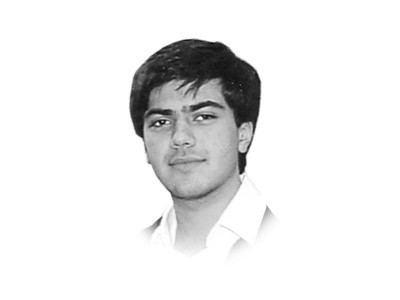
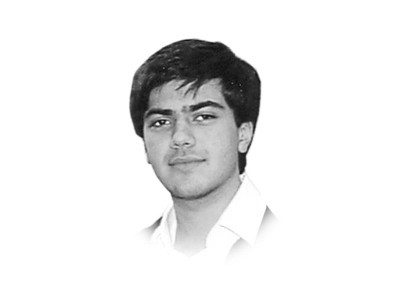
			<media:description>The writer is an undergraduate student at Harvard University. He is also Chairman Emeritus at Harvard University’s John F. Kennedy Jr. Forum. He tweets @ibrahimakhan</media:description>
			<media:thumbnail url="http://i1.tribune.com.pk/wp-content/uploads/2013/04/535848-IbrahimKhanNew-1366043014-826-160x120.jpg" width="160" height="120" />
      </media:content>

		<wfw:commentRss></wfw:commentRss>
		<slash:comments>3</slash:comments>
	</item>
		<item>
		<title>There is life in this country still</title>
		<link>http://tribune.com.pk/story/504578/there-is-life-in-this-country-still/</link>
		<pubDate>Fri, 08 Feb 2013 20:03:44 +0000</pubDate>

		<guid isPermaLink="false">http://tribune.com.pk/?p=504578</guid>

		<description>
		<![CDATA[
			<a href="http://tribune.com.pk/story/504578/there-is-life-in-this-country-still/">
				<img src="http://i1.tribune.com.pk/wp-content/uploads/2013/02/504578-IbrahimKhanNew-1360341579-660-160x120.jpg" width="160" height="120" alt="" />
			</a>
			<p><p>The thousands that lined the streets of Islamabad last month were not robots; they were not cardboard cutouts; they were real people like you and me. These Pakistanis <a href="http://tribune.com.pk/story/498037/ride-to-the-moon/">lined the streets of their capital because they cared</a>. They cared for Pakistan, for employment, education, bread, butter and the future of their children. Far too often, we hear of a silent majority, we see images of a Pakistan that simply does not care. The past month or so has torn that image to pieces.</p>
<p>Granted, bringing the capital to a standstill was not the best way to protest, considering the economic costs of a city-centre coming to a grinding halt. But look beyond the politics of these protestors. The <a href="http://tribune.com.pk/story/495580/sit-in-chilled-to-the-bone-people-brave-the-cold/">protestors in Islamabad were peaceful, they were mature</a> and they were adamant in wanting to change the fortunes of their country. Undeniably, this is a start. While there were chants calling for a revolution, these protestors ultimately dispersed following compromise, demonstrating an understanding that it is these bits and pieces that lead to a greater whole. Dreamy longing for overnight change is simply unrealistic. Pakistanis must not lose hope for change, for a better tomorrow; but this hope for tomorrow does not require disregarding our reality today.</p>
<p>This understanding of our reality — and the desire to do something about it — was demonstrated beyond Islamabad, too.</p>
<p>I am not going to pretend words can capture the pain our Hazara brethren would have felt sitting on the cold gravel of Alamdaar Road. Their sacrifice was insurmountable. But instead of turning the other way, accepting the situation as it was, Pakistanis around the country joined the dozens at Alamdaar — physically in protest and emotionally in passion. On a cold January night, from Karachi to Gilgit, Pakistanis were heard loud and clear: we have a moral compass, we fight for what is right and we do so peacefully. This is the face of my country. This is its future.</p>
<p>And yet, there is still no food on thousands of tables, no school for thousands of diligent students. There are thousands of sick Pakistanis who have no doctors, thousands of able workers who have no jobs. For every thousand peaceful protestors, there are thousands of hungry, uneducated, sick and unemployed Pakistanis. But the brave men and women of Alamdaar Road and all those who came out to support them have shown our detractors that we have the will to change. The actions of the peaceful protestors in Islamabad and the country’s reaction to these protestors have shown our detractors that <a href="http://tribune.com.pk/story/500246/wheels-in-motion/">we have the patience for change</a>. The mindset of change is one that all of Pakistan’s political parties are trying to capture. Last month showed that no matter what the political leaning, as a nation, the mindset of change — realistic and gradual — is the one we have adopted.</p>
<p>Our next big test will arrive with the upcoming parliamentary elections. We must ensure that the electoral process is representative and we must turn out to exercise our rights as citizens of this democracy.</p>
<p>Yes, we have problems. Do not let anybody tell you otherwise. But we will face them and surmount them. There is life in this country still.</p>
<p><em>Published in The Express Tribune, February 9<sup>th</sup>, 2013.</em></p>
</p>
			<br clear="all"/>
		]]>
		</description>

		<media:content width="424" height="318"
							isDefault="true" medium="image" url="http://i1.tribune.com.pk/wp-content/uploads/2013/02/504578-IbrahimKhanNew-1360341579-660-640x480.jpg">
			<media:title>Ibrahim Khan   New</media:title>
			<media:description>The writer is an undergraduate student at Harvard University. He is also Chairman Emeritus at Harvard University’s John F. Kennedy Jr. Forum. He tweets @ibrahimakhan</media:description>
			<media:thumbnail url="http://i1.tribune.com.pk/wp-content/uploads/2013/02/504578-IbrahimKhanNew-1360341579-660-160x120.jpg" width="160" height="120" />
      </media:content>

		<wfw:commentRss></wfw:commentRss>
		<slash:comments>10</slash:comments>
	</item>
		<item>
		<title>Pakistan’s Hamiltonian age</title>
		<link>http://tribune.com.pk/story/476512/pakistans-hamiltonian-age/</link>
		<pubDate>Fri, 07 Dec 2012 19:15:03 +0000</pubDate>

		<guid isPermaLink="false">http://tribune.com.pk/?p=476512</guid>

		<description>
		<![CDATA[
			<a href="http://tribune.com.pk/story/476512/pakistans-hamiltonian-age/">
				<img src="http://i1.tribune.com.pk/wp-content/uploads/2012/12/476512-IbrahimKhanNew-1354897128-160x120.jpg" width="160" height="120" alt="" />
			</a>
			<p><p>David Brooks, <em>The New York Times </em>columnist, was at Harvard’s John F Kennedy Jr Forum, recently. Brooks discussed the way forward for the United States following the <a href="http://tribune.com.pk/story/462622/obama-victory-infuriates-pakistani-drone-victims/">re-election of President Barack Obama</a> but one anecdote he mentioned struck me as instantly applicable to the present struggle Pakistan faces.</p>
<p>When <a href="http://www.google.com.pk/url?sa=t&amp;rct=j&amp;q=&amp;esrc=s&amp;source=web&amp;cd=1&amp;cad=rja&amp;ved=0CC8QFjAA&amp;url=http%3A%2F%2Fen.wikipedia.org%2Fwiki%2FAlexander_Hamilton&amp;ei=qD3CUPmVF8nPhAeepYH4CA&amp;usg=AFQjCNGSwc30kh-_Ri6dpwhMNgoRaNqS1A&amp;sig2=bQefWSfwdhZIGXDREqsrZA">Alexander Hamilton</a> was 12 years old, his mother died in the bed next to him. His father had already deserted him and the death of his mother left him orphaned. Following his mother’s death, his uncle adopted him, only to die shortly after. He was then adopted by his grandparents, who also died. At 14, a young Hamilton had nothing. Over the next decade though, his fortunes changed. By 25, Hamilton was a notable war hero and the chief of staff to George Washington. By 35, he had authored the <a href="http://www.google.com.pk/url?sa=t&amp;rct=j&amp;q=&amp;esrc=s&amp;source=web&amp;cd=4&amp;cad=rja&amp;ved=0CE0QFjAD&amp;url=http%3A%2F%2Fwww.foundingfathers.info%2Ffederalistpapers%2F&amp;ei=TD7CUIyRBIm1hAfH1IHACw&amp;usg=AFQjCNFTK33cc46SUJcnPC38BUKje4mhsQ&amp;sig2=ZDQO-rBW5csxuxEeQDt4rQ">Federalist Papers</a> and had established himself as a successful lawyer. By 40, Hamilton had retired as Treasury Secretary of the United States. His is a story of awesome social mobility. Through progressive industrial and social policies, he gave struggling boys and girls like him the chance to succeed. The system he designed became the hallmark of American progress in the nineteenth and twentieth centuries.</p>
<p>Where social mobility and the ideal of the American Dream became the bedrock of the American superpower, similar social mobility can become the avenue for Pakistan’s global eminence. The following decades should be remembered as Pakistan’s equivalent to the ‘Hamiltonian Age’ where social mobility is possible and probable. We need to become a country that provides its citizens with the tools and opportunities to survive in today’s globalised capitalist economy. A Hamiltonian Pakistan will be one in which basic necessities like food and water are no longer craved. A Hamiltonian Pakistan will provide universal education and healthcare. A Hamiltonian Pakistan will thrive on meritocracy by rewarding effort and creativity. Most importantly, a Hamiltonian Pakistan will elicit hope and not despair.</p>
<p>The ascent of a Hamiltonian Pakistan will require our focus and priority to be on <a href="http://tribune.com.pk/story/468216/pro-business-climate-crucial-to-gear-up-economy/">improving economic conditions</a>. As is the beauty of living in a democracy; the coming months will provide each of us with the opportunity to seek the economic development required for a climate of social mobility. With the recent progress in electoral transparency through the development of legitimate voter rolls, now more than ever, the political process depends largely on us, the people of Pakistan. In developing nations like ours, public leadership and governance can have a direct and tangible impact on economic development. So, as election season heats up, we must look for candidates and parties that have the ability to serve in a manner that enables the necessary focus on economic development. It is a simple criterion, but one that will not fail us.</p>
<p>Progress is a structured process. One election will not transform our lives. But one election can certainly begin the process of transformation we eagerly seek. While we need to start with economic progress, there is additional progress Pakistan craves. What we must not forget though is that this additional progress — let us loosely refer to it as social progress — will follow economic progress. Selecting the better candidate in our constituency may feel minute in the greater context of the progress our country must make, but wholesale change is achieved with bits of progress on a broad scale. Social mobility will be the basis of tomorrow’s Pakistan. To achieve that tomorrow, we must vote intelligently today.</p>
<p><em>Published in The Express Tribune, December </em><em>8<sup>th</sup>, 2012.</em></p>
<p>&nbsp;</p>
</p>
			<br clear="all"/>
		]]>
		</description>

		<media:content width="424" height="318"
							isDefault="true" medium="image" url="http://i1.tribune.com.pk/wp-content/uploads/2012/12/476512-IbrahimKhanNew-1354897128-640x480.jpg">
			<media:title>Ibrahim Khan   New</media:title>
			<media:description>The writer is an undergraduate student at Harvard University, Class of 2014. He is also the Chairman of Harvard University’s John F Kennedy Jr Forum. He tweets @ibrahimakhan</media:description>
			<media:thumbnail url="http://i1.tribune.com.pk/wp-content/uploads/2012/12/476512-IbrahimKhanNew-1354897128-160x120.jpg" width="160" height="120" />
      </media:content>

		<wfw:commentRss></wfw:commentRss>
		<slash:comments>18</slash:comments>
	</item>
		<item>
		<title>Innovation is the answer for Pakistan</title>
		<link>http://tribune.com.pk/story/439355/innovation-is-the-answer-for-pakistan/</link>
		<pubDate>Thu, 20 Sep 2012 02:39:09 +0000</pubDate>

		<guid isPermaLink="false">http://tribune.com.pk/?p=439355</guid>

		<description>
		<![CDATA[
			<a href="http://tribune.com.pk/story/439355/innovation-is-the-answer-for-pakistan/">
				<img src="http://i1.tribune.com.pk/wp-content/uploads/2012/09/439355-IbrahimKhanNew-1348084288-549-160x120.jpg" width="160" height="120" alt="" />
			</a>
			<p><p>It is now widely accepted that Pakistan is a country with a robust societal structure. In his recent book, <em><a href="http://tribune.com.pk/story/177749/pakistans-tragic-flaw/">Pakistan: A Hard Country </a></em>(Public Affairs, 2011), Anatol Lieven states that Pakistan is “in many ways surprisingly tough and resilient as a state and a society”. This resilience manifests itself in many forms; the country’s largest welfare organisation, the <a href="http://blogs.tribune.com.pk/story/12834/let%E2%80%99s-love-pakistan-a-new-resolution-iv/">Edhi Foundation</a>, is an oft-cited example. Although he started his organisation with only Rs5,000, Edhi now has more than 300 centres across the country. His foundation has saved 20,000 abandoned babies, trained 40,000 qualified nurses, housed 50,000 orphans and delivered one million babies. This is an extraordinary achievement for a private organisation that refuses to accept government aid.</p>
<p>And Edhi is not alone. There are countless other examples that demonstrate the strength of our society. The population’s ability to respond to natural disasters — like the 2005 Kashmir earthquake and the floods that submerged the country in 2010 and 2011 — is recognised globally. In 2009, Pakistanis around the country opened up their homes for Internally Displaced Persons from Swat. Pakistani society coalesces in times of peril; this is what gives us strength.</p>
<p>Supplementing this societal strength, there are several promising trends worth mentioning. <a href="http://tribune.com.pk/story/429907/consumer-patterns-retail-stores-witness-mixed-trends/">Pakistan’s retail economy is meeting the country’s burgeoning consumer demand</a>. Outside crowded urban areas, the country’s notorious underground economy is in plain sight. Despite poor research and development, bumper sugar and cotton crops are expected this season. Our banks have huge spreads at about seven-and-a-half per cent, compared with an average of three-and-a-half to four per cent in the developing world — a clear indication that there is room for additional availability of loanable funds. More than 31 million Pakistanis — approximately 17 per cent of the population — use the Internet, with the number of users tripling in the last five years. On the mobile front, 120 million people — roughly two out of every three Pakistanis — subscribe to a mobile service. About 70 per cent of Pakistan’s population is under the age of 30.</p>
<p>With booming retail and rural economies, an increasing inclination to technology and a very young population, opportunity surrounds today’s Pakistan. But, it is not enough to simply point this out. The country will progress only if we are able to harness this potential and utilise the opportunity of our times. The past has demonstrated that this task is not easy. But in the past, we have ignored a usable mechanism that will aid our progress. In the past, we have ignored innovation.</p>
<p>Now is the time to change the past. In today’s Pakistan, innovation must become a large part of the public psyche. In our schools, innovation should be stressed and at the workplace, it should be encouraged. Innovation requires risk, but it provides a substantial reward. It provides solutions to previously puzzling problems. Every mind, every Pakistani, can innovate — all of us have something to strive for. If you spearhead an NGO, embrace social entrepreneurship and follow the example of organisations like Ashoka. If you can programme, build medical software that can save lives. If you are a mobile service provider, empower young Pakistanis with the ability to learn through their phones. If you are a bank manager, utilise the space your large spread gives you to increase the availability of capital. If you grow sugar cane, rice or wheat, embrace new varieties — there is opportunity in change. Start small and build on that. A new Pakistan requires new thinking and new practices. No matter what the specific problem, innovation is the answer.</p>
<p><em>Published in The Express Tribune, September </em><em>20<sup>th</sup>, 2012.</em></p>
<p>&nbsp;</p>
</p>
			<br clear="all"/>
		]]>
		</description>

		<media:content width="424" height="318"
							isDefault="true" medium="image" url="http://i1.tribune.com.pk/wp-content/uploads/2012/09/439355-IbrahimKhanNew-1348084288-549-640x480.jpg">
			<media:title>Ibrahim Khan   New</media:title>
			<media:description>The writer is an undergraduate student at Harvard University, Class of 2014. He is also the Chairman of Harvard University’s John F Kennedy Jr Forum. He tweets @ibrahimakhan</media:description>
			<media:thumbnail url="http://i1.tribune.com.pk/wp-content/uploads/2012/09/439355-IbrahimKhanNew-1348084288-549-160x120.jpg" width="160" height="120" />
      </media:content>

		<wfw:commentRss></wfw:commentRss>
		<slash:comments>20</slash:comments>
	</item>
		<item>
		<title>The fallacy of collective wisdom</title>
		<link>http://tribune.com.pk/story/395432/the-fallacy-of-collective-wisdom/</link>
		<pubDate>Mon, 18 Jun 2012 16:04:15 +0000</pubDate>

		<guid isPermaLink="false">http://tribune.com.pk/?p=395432</guid>

		<description>
		<![CDATA[
			<a href="http://tribune.com.pk/story/395432/the-fallacy-of-collective-wisdom/">
				<img src="http://i1.tribune.com.pk/wp-content/uploads/2012/06/395432-IbrahimKhanNew-1340032072-478-160x120.jpg" width="160" height="120" alt="" />
			</a>
			<p><p>As a nation, we are prone to indulging in blind faith. Without delving too far into the past, the last decade provides a variety of examples that illustrate this tendency. When General (retd) Pervez Musharraf was still around, we believed that dispatching the dictator would instantly mend all that ailed our society. Before the judges were restored, we were adamant that their restoration would fix our crumbling justice system. Now, as America is leaving this region, we are sure that its geopolitics will sort itself out when the hegemon retreats. Similarly, many now believe that as soon as Imran Khan takes oath as prime minister, <a href="http://tribune.com.pk/story/387423/imran-khans-problem/">a series of magical events will be set in motion and change will arrive</a>. If our past record in blind faith is anything to go by, our current indulgence does not bode well for the future.</p>
<p>Our tendency to entrust blind faith is representative of the fallacy of collective wisdom. Most significantly, it represents our reluctance to take responsibility of the inherent problems our society faces. We are ostriches who follow blindly, with our heads buried in the sand while marching towards our singular goal. We hang on to bits of hope, without recognising the need to stand up to — and eventually surmount — our challenges. Unfortunately, the bitter truth is that change does not arrive by hanging on to bits of hope. Hope is an undeniable prerequisite for change, but blindly <a href="http://tribune.com.pk/story/379811/revolution-bloody-revolution/">following, hoping for the best without acting, is not the avenue through which change arrives</a>.</p>
<p>The path to progress requires an awareness of the need to struggle. Pakistan is beset with serious challenges. In order to overcome these challenges, the country will need to work towards a set of common goals. What will such an effort entail? For example, to overcome the energy crisis, we will need to find the right balance between providing residential sufficiency and industrial growth, while focusing on achieving national consensus on the <a href="http://tribune.com.pk/story/382279/politicising-kalabagh-dam-costs-rs132-billion-annually/">construction of the Kalabagh Dam</a> and the pursuit of alternative sources of energy (including wind and nuclear). Similarly, in the aftermath of the US departure from Afghanistan, it may be necessary to give Fata additional attention and resources. This will require the entire country — from Karachi to Chitral — to make sacrifices. Neither of these goals will be achieved by entrusting blind, singular faith in one event. Change is a multidimensional process.</p>
<p>With that said, it is a single event that sets change in motion. While the departure of a dictator and the restoration of judges were both praiseworthy events, what we failed to realise was that these events were merely the beginning of the process of change. Unfortunately, we began both these processes, but left them unfinished. The ascent of democracy that accompanied the departure of a dictator was meant to lead to a growing economy, better governance and less corruption. Unfortunately, it led to the opposite. Our economy is in shambles, governance is unheard of and corruption is omnipresent. Similarly, the restoration of judges has not prevented injustice from taking place in the lower courts. Neither has it improved the rule of law in our country.</p>
<p>As with all processes, unfinished change is useless. Collective blind faith towards a singular goal can be helpful for Pakistan, but only if the achievement of one goal propels us towards the next goal required in the process of change. Pakistanis are capable of bringing change, but we cannot afford to be shortsighted. We must learn to march on following our first step. We cannot forget that change is a series of steps in the right direction and not just the first such step.<em></em></p>
<p><em>Published In The Express Tribune, June 19<sup>th</sup>, 2012.</em></p>
</p>
			<br clear="all"/>
		]]>
		</description>

		<media:content width="424" height="318"
							isDefault="true" medium="image" url="http://i1.tribune.com.pk/wp-content/uploads/2012/06/395432-IbrahimKhanNew-1340032072-478-640x480.jpg">
			<media:title>Ibrahim Khan   New</media:title>
			<media:description>The writer is an undergraduate student at Harvard University, Class of 2014. He is also the Chairman of Harvard University’s John F Kennedy Jr Forum. He tweets @ibrahimakhan</media:description>
			<media:thumbnail url="http://i1.tribune.com.pk/wp-content/uploads/2012/06/395432-IbrahimKhanNew-1340032072-478-160x120.jpg" width="160" height="120" />
      </media:content>

		<wfw:commentRss></wfw:commentRss>
		<slash:comments>9</slash:comments>
	</item>
		<item>
		<title>Pakistan’s voter turnout conundrum </title>
		<link>http://tribune.com.pk/story/357032/pakistans-voter-turnout-conundrum/</link>
		<pubDate>Thu, 29 Mar 2012 18:32:19 +0000</pubDate>

		<guid isPermaLink="false">http://tribune.com.pk/?p=357032</guid>

		<description>
		<![CDATA[
			<a href="http://tribune.com.pk/story/357032/pakistans-voter-turnout-conundrum/">
				<img src="http://i1.tribune.com.pk/wp-content/uploads/2012/03/357032-IbrahimKhanNew-1333040896-205-160x120.jpg" width="160" height="120" alt="" />
			</a>
			<p><p>In a democracy, a citizen’s vote is an empowering right. It is tragic then that in 2008 general elections, voter turnout across Pakistan was a meagre 44.1 per cent. In 2008, Bangladesh had an 87.4 per cent voter turnout in its parliamentary elections. In India’s 2009 general election, voter turnout across the five phases was 59.7 per cent. To make our democracy work, voting is of paramount importance.</p>
<p>In search of an explanation for this anomaly, I analysed voter turnout in each district of Punjab through a simple linear regression model. Using data from the 1998 Census, the <em>2011 Punjab Development Statistics Report</em>, the Pakistan Social and Living Standards Measurement Survey, the <em>Lights Report of the National Oceanic and Atmospheric Administration</em> and the 2008 <em><a href="http://www.ecp.gov.pk/GE2008.aspx">General Election Report</a></em>, I found interesting and often surprising correlations.</p>
<p>Most tellingly, there is a strong positive correlation between income per capita and voter turnout. In large cities, areas with higher living standards have lower voter turnout. Across Punjab though, this is not the case; in fact, the opposite holds. In 2008, districts with higher levels of income per capita had higher voter turnout. Outside urban centres, economic development drives voter turnout. There is a simple explanation for this trend: regions with proportionally higher levels of income have more at stake during an election.</p>
<p>While income strongly correlates with turnout, literacy rates across districts do not. An area with relatively high literacy is not necessarily going to have high voter turnout. Again, this defies conventional wisdom. It is generally believed that with a higher prevalence of education there is more involvement with the political process. But, puzzlingly, the data say otherwise. There is a potential explanation for this incongruity: the literacy rate statistic is inherently flawed. An individual is considered ‘literate’ if they can read a newspaper and write a simple letter. If turnout was regressed on a statistic of educational quality, perhaps, a stronger correlation would be observable.</p>
<p>Crime per capita in a district is negatively correlated with voter turnout in that district. If a district has high crime per capita, voter turnout is bound to be low in that district. As law and order improves and crime per capita falls, turnout is higher. When voters feel secure, they have more faith in the system and have a greater incentive to turn up on election day.</p>
<p>The number of union councils per capita is positively correlated with voter turnout. If a district has more union councils per capita, that district is more likely to have a higher voter turnout. This is probably because as the number of union councils per capita increases, individual voters have greater interaction with local government officials. With greater interaction, voters are more inclined to vote during a general election.</p>
<p>Diverse sets of factors correlate with voter turnout in Pakistan’s 2008 general election. While it is important to remember the statistician’s mantra of correlation is not causation, each of these factors lends insight into our low turnout. With economic development, we can expect turnout to rise. As law and order improves, voters will be more comfortable at polling stations. As the local government improves, confidence in the political process will heighten and voters will be proud of their right to vote. We often speak about the <a href="http://tribune.com.pk/story/309305/nothing-but-democracy/">evolution of democracy</a>, but democracy cannot evolve unless we vote for the right candidates. As my research shows, we are not pushed to vote unless incomes rise, crime rates fall and local governments are strengthened. But none of this is possible if we do not utilise our vote.</p>
<p>It is most disappointing to see low turnout in urban areas where education levels are higher. If we have been privileged with an education, the least we can do is to vote, thereby fulfilling our basic responsibility as citizens of this democracy. We need to lead our country out of this vicious cycle of low turnout and into a better future. Luckily for us, it starts with ticking a box.</p>
<p><em>Published in The Express Tribune, March 30<sup>th</sup>, 2012.</em></p>
</p>
			<br clear="all"/>
		]]>
		</description>

		<media:content width="424" height="318"
							isDefault="true" medium="image" url="http://i1.tribune.com.pk/wp-content/uploads/2012/03/357032-IbrahimKhanNew-1333040896-205-640x480.jpg">
			<media:title>Ibrahim Khan   New</media:title>
			<media:description>The writer is an undergraduate student at Harvard University, Class of 2014. He is also the Chairman of Harvard University’s John F Kennedy Jr Forum. He tweets @ibrahimakhan</media:description>
			<media:thumbnail url="http://i1.tribune.com.pk/wp-content/uploads/2012/03/357032-IbrahimKhanNew-1333040896-205-160x120.jpg" width="160" height="120" />
      </media:content>

		<wfw:commentRss></wfw:commentRss>
		<slash:comments>18</slash:comments>
	</item>
		<item>
		<title>Education reform: a student’s perspective</title>
		<link>http://tribune.com.pk/story/323600/education-reform-a-students-perspective/</link>
		<pubDate>Wed, 18 Jan 2012 17:18:55 +0000</pubDate>

		<guid isPermaLink="false">http://tribune.com.pk/?p=323600</guid>

		<description>
		<![CDATA[
			<a href="http://tribune.com.pk/story/323600/education-reform-a-students-perspective/">
				<img src="http://i1.tribune.com.pk/wp-content/uploads/2012/01/323600-IbrahimKhanNew-1326902914-514-160x120.jpg" width="160" height="120" alt="" />
			</a>
			<p><p><a href="http://tribune.com.pk/story/300894/education-matters-country-making-great-strides-in-race-to-the-bottom/">Ten per cent of the world’s children who do not go to primary school live in Pakistan</a>. Twenty-six countries are poorer than Pakistan but send more of their children to school. A meager 1.5  per cent of Pakistan’s GDP is spent on schooling which is less than the subsidies given to PIA, Pepco and Pakistan Steel. The average teacher is absent once a week. Our constitution gives every child the right to an education until the age of sixteen, and yet, <a href="http://tribune.com.pk/story/213419/female-illiteracy-41-of-pakistani-girls-fail-to-complete-primary-school/">25 million Pakistani children do not have this right</a>. These facts are courtesy of the Education Emergency Pakistan movement and they illustrate the dire situation our education system is facing.</p>
<p>Currently, education in Pakistan is rooted in rote learning and absent-minded memorisation. Creativity and problem-solving are disregarded. Knowledge is thrust at students, who have devised ways to retain the knowledge temporarily, regurgitate it and move on. But this is not the essence of education. An acceptable modern education is one that gives a student the best preparation for life after school. In our working lives, we have to make decisions and solve problems that require creative solutions. And yet Pakistani students do not learn these essential skills in school.</p>
<p>To make things worse, in most secondary and post-secondary examinations, a large part of the material is left to choice. In order to pass an examination, 33 per cent of the attempted material needs to be correct. This means that a student will pass an examination by knowing less than 33 per cent of a given subject’s material. Nowhere else in the world is the education standard this low.</p>
<p>The massive inequality present in our education system needs to be eradicated through various forms of regulation. We must devise a Pakistani system of education that is recognised internationally since our current system has lost international credibility. Then there is the difference between the <a href="http://tribune.com.pk/story/295097/primary-education-in-karachis-schools-politics-finds-a-way/">Urdu-medium and English-medium systems</a>. Hence, there is an urgent need for a coherent education policy that is able to form a unified framework for all Pakistani students.</p>
<p>As Heather Wolpert-Gawron an award-winning school teacher in the US, suggests in a recent book, an education system should value certain skills. Collaboration and communication should be encouraged. Problem-solving should be practiced, decision-making learned and questioning valued. Students should be comfortable with synthesising information and listening to others. Most importantly, they should develop leadership skills which are of particular importance to Pakistan. At the tertiary level,<a href="http://tribune.com.pk/story/290325/the-disadvantages-of-studying-the-social-sciences/"> the idea of a liberal arts education is gaining traction worldwide</a>. Its core philosophy is promoting choice and creativity, something we need to adopt.</p>
<p>Apprenticeship is prevalent in Pakistan and thus cannot be ignored when discussing education reform. Many poor children, who cannot afford an education, drop out of school in order to learn specific skills. <a href="http://tribune.com.pk/story/302541/childrens-day-compassion-in-five-star-hotels-exploitation-in-the-workplace/">Often these workers are misused and denied basic labour rights</a>. These children need to remain in schools where their apprentice work is institutionalised and they are given a basic level of education. This will ensure an educated technical workforce, which is essential for any developing nation.</p>
<p>We need to act and act soon. Education reform must be emphasised, as it is today’s youth that will determine the state of tomorrow’s Pakistan.</p>
<p><em>Published in The Express Tribune, January 19<sup>th</sup>, 2012.</em></p>
<p>&nbsp;</p>
</p>
			<br clear="all"/>
		]]>
		</description>

		<media:content width="424" height="318"
							isDefault="true" medium="image" url="http://i1.tribune.com.pk/wp-content/uploads/2012/01/323600-IbrahimKhanNew-1326902914-514-640x480.jpg">
			<media:title>Ibrahim Khan   New</media:title>
			<media:description>The writer is an undergraduate student at Harvard University, Class of 2014. He is also the Chairman of Harvard University&#039;s John F. Kennedy Jr. Forum. He tweets @ibrahimakhan </media:description>
			<media:thumbnail url="http://i1.tribune.com.pk/wp-content/uploads/2012/01/323600-IbrahimKhanNew-1326902914-514-160x120.jpg" width="160" height="120" />
      </media:content>

		<wfw:commentRss></wfw:commentRss>
		<slash:comments>21</slash:comments>
	</item>
		<item>
		<title>Utilising youthful exuberance</title>
		<link>http://tribune.com.pk/story/288137/utilising-youthful-exuberance/</link>
		<pubDate>Sat, 05 Nov 2011 17:47:00 +0000</pubDate>

		<guid isPermaLink="false">http://tribune.com.pk/?p=288137</guid>

		<description>
		<![CDATA[
			<a href="http://tribune.com.pk/story/288137/utilising-youthful-exuberance/">
				<img src="http://i1.tribune.com.pk/wp-content/uploads/2011/11/288137-IbrahimKhanNew-1320505570-226-160x120.jpg" width="160" height="120" alt="" />
			</a>
			<p><p>Pakistan’s interesting demographics will play a large role in its future. Roughly 42 per cent of our population is 14 and under. Only four per cent of the population is above 65. If utilised properly, our youthful population has the ability to make Pakistan the place all of us know it can be. Given the unique demographic position we find ourselves in, the current period will play a crucial role in our history. If we want it badly enough, the next few years can alter the state of our nation.</p>
<p>Moving away from the abstract, what is required? For starters, the last week of October was a good one for Pakistan’s democracy. The <a href="http://bit.ly/tIxgaf">freedom and power of political activism is what sustains a democracy</a>. Hence, it is encouraging to see people come out in <a href="http://tribune.com.pk/story/285883/whose-rally-was-bigger-the-politics-of-crowd-counting/">droves</a> in support of the parties they believe hold the solutions to their problems. Moreover, it is highly encouraging to see <a href="http://tribune.com.pk/story/285299/pti-rally-students-exceed-isf-expectations/">young people participating</a>, considering that the youth has rarely played a key role in Pakistan’s political scene. What is most important now is to ensure that this political activism is translated into tangible change through democratic means. If there is anything that a vast majority of Pakistanis agree on today, it is that change is required.</p>
<p>But, questions linger. What kind of change is required? Who will bring this change? How will the change come about? The answers to these questions are not immediate, but they can be found. The signs from last week are encouraging, but more political action is required.</p>
<p>In 2008, according to the Inter-Parliamentary Union (IPU), more than 35 million people turned out to vote in Pakistan’s general election. At the time, that figure represented 44 per cent of the population <a href="http://tribune.com.pk/story/282798/voters-lists-ecp-unable-to-verify-1-4m-nadra-records/">eligible to vote</a>. The IPU monitors dozens of countries, and Pakistan’s voter turnout percentage was the third lowest out of all the countries they monitor. This abysmal figure represents a problem that needs to be solved going forward. Some of the 56 per cent who did not turn out to vote in 2008 are part of those craving change today. The best way for them and the rest of the population to enact change is through their vote. The greatest strength of a democracy is found in the immense power a single voter has. If the vast majority of the country fails to utilise their vote, our democracy becomes significantly weaker.</p>
<p>When change arrives in Pakistan, it will be for the better. Often when countries transform, there is an evolution across the board: the politicians mature, the state is bolstered, the society strengthens and the economy picks up. It is almost as if a change in one sector elicits change in the others.</p>
<p>The renewed sense of political activism we find ourselves witnessing today may be the catalyst for the change the nation is craving. A new sense of hope has been ignited. We may not know it yet, but we have already started the journey to a better tomorrow. Pakistan’s youth has an immense burden to carry, but at more than a hundred million-strong, that burden is one we can handle.</p>
<p><em>Published in The Express Tribune, November 6<sup>th</sup>, 2011.</em></p>
</p>
			<br clear="all"/>
		]]>
		</description>

		<media:content width="424" height="318"
							isDefault="true" medium="image" url="http://i1.tribune.com.pk/wp-content/uploads/2011/11/288137-IbrahimKhanNew-1320505570-226-640x480.jpg">
			<media:title>Ibrahim Khan   New</media:title>
			<media:description>The writer is an undergraduate student at Harvard University, Class of 2014 and tweets @ibrahimakhan</media:description>
			<media:thumbnail url="http://i1.tribune.com.pk/wp-content/uploads/2011/11/288137-IbrahimKhanNew-1320505570-226-160x120.jpg" width="160" height="120" />
      </media:content>

		<wfw:commentRss></wfw:commentRss>
		<slash:comments>16</slash:comments>
	</item>
		<item>
		<title>Much adversity, but our time is now  </title>
		<link>http://tribune.com.pk/story/261705/much-adversity-but-our-time-is-now/</link>
		<pubDate>Tue, 27 Sep 2011 17:27:41 +0000</pubDate>

		<guid isPermaLink="false">http://tribune.com.pk/?p=261705</guid>

		<description>
		<![CDATA[
			<a href="http://tribune.com.pk/story/261705/much-adversity-but-our-time-is-now/">
				<img src="http://i1.tribune.com.pk/wp-content/uploads/2011/09/261705-IbrahimKhanNew-1317138586-364-160x120.jpg" width="160" height="120" alt="" />
			</a>
			<p><p>About a year ago to the day, in the aftermath of last year’s floods, the World Food Programme announced that roughly 70 per cent of Pakistan’s population did not have adequate access to proper nutrition. The summer months of 2010 were akin to a prolonged nightmare for Pakistan and its people with millions either dead, homeless or hopeless. But natural disasters occur and you have to deal with them. The aftermath of the floods resulted in <a href="http://tribune.com.pk/story/259825/flood-survivors-lahore-chamber-donates-rs10-million/">global mobilisation of both Pakistanis and non-Pakistanis</a>. Most importantly, many Pakistanis who were spared by the devastation opened their eyes and arms for compatriots who needed their help. The tragedy of last year’s floods is not that they happened, but rather that we failed to ensure preparedness once the rains returned this summer.</p>
<p>A year later, it is sad to see the country rapidly heading to a similar state of crisis. It is almost criminal that millions are once again suffering from severe flooding, in the same areas that lived through a nightmare as recently as last year. We cannot control what the heavens drop down on us, but we can control how we cope with what is dropped.</p>
<p>While the rains are drowning lives in Sindh, mosquitoes are biting away in Punjab. Dengue fever is not foreign to Pakistan. We have faced the disease for several years and yet we are dealing with it as if <a href="http://tribune.com.pk/story/261502/dengue-in-punjab-death-toll-rises-to-106/">we are as helpless as Londoners were against the plague in the 17th century</a>. Learning from what has occurred in seasons passed, we should establish working systems not only to treat the disease but also to prevent it from happening in the future. The task is not impossible as Sri Lanka, Singapore and Malaysia have all combatted the disease. Instead of implementing precarious stopgap measures and hoping the disease does not return, we need to face the problem and solve it.</p>
<p>In demanding times, great nations rise. The Japanese did whatever they could when struck with an earth-shattering quake and accompanying tsunami. In the aftermath of the crisis at the Fukushima nuclear plants, the Japanese government asked its citizens to reduce electricity usage. As a result, recent data shows that usage has decreased by 20 per cent.</p>
<p>As citizens, we have shown in the past that we are able to serve when called upon. But <a href="http://tribune.com.pk/story/260299/doing-our-share-actor-and-social-activist-ask-for-help/">instead of simply reacting, we need to start pre-empting</a>. We have to start asking ourselves what it means to be a nation and not just a collection of people. We need to ask ourselves what is required to put Pakistan back onto the right path. Young people need to get involved. This is our country and we have to make it the place we know it can be.</p>
<p>While we cannot afford to bury our heads in the sand, there is no need to be unnecessarily pessimistic. We are in an era of struggle, but we must not forget that it is the generations that pull nations out of such holes that are etched in the memory for eternity. It is a testing time to be a Pakistani, but also one that presents immense opportunity. Let us cross the hurdles we face, learn from our mistakes and reclaim this era. This is Pakistan’s time; there should be no looking back now.</p>
<p><em>Published in The Express Tribune, September 28<sup>th</sup>, 2011.</em><em> </em></p>
</p>
			<br clear="all"/>
		]]>
		</description>

		<media:content width="424" height="318"
							isDefault="true" medium="image" url="http://i1.tribune.com.pk/wp-content/uploads/2011/09/261705-IbrahimKhanNew-1317138586-364-640x480.jpg">
			<media:title>Ibrahim Khan   New</media:title>
			<media:description>The writer is an undergraduate student at Harvard University, Class of 2014 and tweets @ibrahimakhan</media:description>
			<media:thumbnail url="http://i1.tribune.com.pk/wp-content/uploads/2011/09/261705-IbrahimKhanNew-1317138586-364-160x120.jpg" width="160" height="120" />
      </media:content>

		<wfw:commentRss></wfw:commentRss>
		<slash:comments>8</slash:comments>
	</item>
		<item>
		<title>Looking for a leader</title>
		<link>http://tribune.com.pk/story/235146/looking-for-a-leader/</link>
		<pubDate>Fri, 19 Aug 2011 16:21:30 +0000</pubDate>

		<guid isPermaLink="false">http://tribune.com.pk/?p=235146</guid>

		<description>
		<![CDATA[
			<a href="http://tribune.com.pk/story/235146/looking-for-a-leader/">
				<img src="http://i1.tribune.com.pk/wp-content/uploads/2011/08/235146-IbrahimKhanNew-1313761180-857-160x120.jpg" width="160" height="120" alt="" />
			</a>
			<p><p>In 1853, 64 years after George Washington took oath as the first president of the United States, Franklin Pierce held that position. To this day, Pierce is considered a terribly weak and divisive president in America. Four years later, Millard Fillmore began another forgettable presidency. By that time, the US was seemingly teetering on an edge, bracing itself for a gory civil war. The country was on the brink of disaster, tearing at the seams and cracking in the centre. But the electoral process continued, the people voted for new presidents in search of a leader. Then, in 1860, a lawyer from humble beginnings began campaigning for president, using his antipathy for slavery as a cornerstone for the campaign. Abraham Lincoln took a bold step in his campaign and the people responded by electing him to office and he saved their country. He became the leader the people of the United States were looking for in the mid-nineteenth century. With the successive elections of Franklin Pierce, Millard Fillmore and James Buchanan, the electoral system failed the US three times, but it helped keep the country intact the fourth time around.</p>
<p>The greatest tragedy of Pakistan is that <a href="http://tribune.com.pk/story/226883/captain-elite/">we are a country and a people without a true leader</a>. Our country has problems, but none that are unsolvable. A lack of leadership is the core problem. With able leadership, there is nothing we cannot confront. So let the democratic <a href="http://tribune.com.pk/story/204562/midterm-elections--a-very-reachable-goal/">process continue</a>, treating it like the self-correcting mechanism it is, and our leader will arrive.</p>
<p>Our leader will be strong-willed and will not be afraid to tell right from wrong. Honesty will be valued and a passion for change will be espoused. Compassion will be displayed. Inspiration will surround the country. Our leader will not be a Punjabi or a Pathan, not a Sindhi or a Baloch, but a Pakistani. Justice will be encouraged, not discouraged. Infrastructure will be built; systems will be put in place and merit will be valued. Pakistanis around the country will be put to work and investment will be facilitated. Pakistan will be pushed to its full potential. Our leader is not a figment of our imagination; our leader will be a reality.</p>
<p>This op-ed is not about the wait for a messiah, or a saviour. Before we complain about the dearth of leadership in Pakistan, we need to ensure we are doing whatever we can, to bring this leader to the fore. We have to look inward, before we look outward. Through his work, Allama Iqbal focused on the philosophy of <em>khudi</em>. He emphasised self-discovery, self-realisation and self-knowledge. Discover yourself. Realise your potential. Know that there are no boundaries to your growth. In <em>Jawaab-e-Shikwa</em>, Iqbal writes, “<em>Thay to aaba wo tumharay hi magar tum kiya ho/Hath par hath dharay muntazir-i farda ho</em>”.</p>
<p>As a society, we have faults. As individuals, none of us are perfect. But, if each one of us strives to correct our faults and if we personally champion the qualities we want our leader to have, societal leadership is inevitable. Instead of waiting, act. Become that leader. If the entire country espouses the values of the leader we claim to be searching for, there is no way that leader will not arrive. Don’t wait for the messiah, be the messiah.</p>
<p><em> </em></p>
<p><em>Published in The Express Tribune, August 20<sup>th</sup>, 2011.</em></p>
</p>
			<br clear="all"/>
		]]>
		</description>

		<media:content width="424" height="318"
							isDefault="true" medium="image" url="http://i1.tribune.com.pk/wp-content/uploads/2011/08/235146-IbrahimKhanNew-1313761180-857-640x480.jpg">
			<media:title>Ibrahim Khan   New</media:title>
			<media:description>The writer is an undergraduate student at Harvard University, Class of 2014 and tweets @ibrahimakhan </media:description>
			<media:thumbnail url="http://i1.tribune.com.pk/wp-content/uploads/2011/08/235146-IbrahimKhanNew-1313761180-857-160x120.jpg" width="160" height="120" />
      </media:content>

		<wfw:commentRss></wfw:commentRss>
		<slash:comments>32</slash:comments>
	</item>
	
</channel>
</rss>
<!-- Performance optimized by W3 Total Cache. Learn more: http://www.w3-edge.com/wordpress-plugins/

Page Caching using apc
Database Caching 19/47 queries in 0.048 seconds using memcached
Object Caching 1410/1597 objects using apc

 Served from: tribune.com.pk @ 2013-05-26 12:24:09 by W3 Total Cache -->