<?xml version="1.0" encoding="UTF-8"?>
<rss version="2.0"
	xmlns:content="http://purl.org/rss/1.0/modules/content/"
	xmlns:wfw="http://wellformedweb.org/CommentAPI/"
	xmlns:dc="http://purl.org/dc/elements/1.1/"
	xmlns:atom="http://www.w3.org/2005/Atom"
	xmlns:sy="http://purl.org/rss/1.0/modules/syndication/"
	xmlns:slash="http://purl.org/rss/1.0/modules/slash/"
	xmlns:media="http://search.yahoo.com/mrss/"
	>

<channel>
	<title>The Express Tribune &#187; Raza Rumi</title>
	<atom:link href="http://tribune.com.pk/author/226/raza-rumi/feed/" rel="self" type="application/rss+xml" />
	<link>http://tribune.com.pk</link>
	<description>Latest Breaking Pakistan News, Business, Life, Style, Cricket, Videos, Comments</description>
	<lastBuildDate>Thu, 23 May 2013 17:08:32 +0000</lastBuildDate>
	<language></language>
	<sy:updatePeriod>hourly</sy:updatePeriod>
	<sy:updateFrequency>1</sy:updateFrequency>
	<generator>http://wordpress.org/?v=3.5.1</generator>

		<item>
		<title>Challenges facing the PM-elect</title>
		<link>http://tribune.com.pk/story/550715/challenges-facing-the-pm-elect/</link>
		<pubDate>Fri, 17 May 2013 17:58:10 +0000</pubDate>

		<guid isPermaLink="false">http://tribune.com.pk/?p=550715</guid>

		<description>
		<![CDATA[
			<a href="http://tribune.com.pk/story/550715/challenges-facing-the-pm-elect/">
				<img src="http://i1.tribune.com.pk/wp-content/uploads/2013/05/550715-RazaRumi-1368810241-981-160x120.jpg" width="160" height="120" alt="" />
			</a>
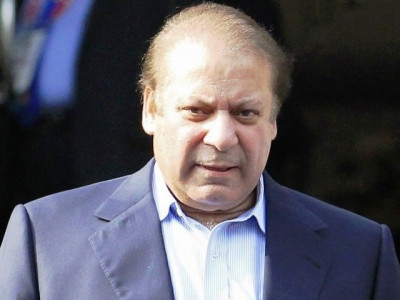
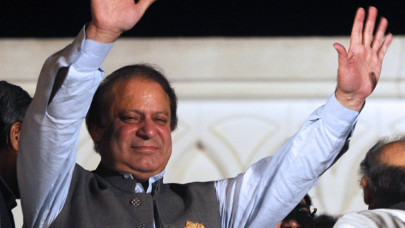
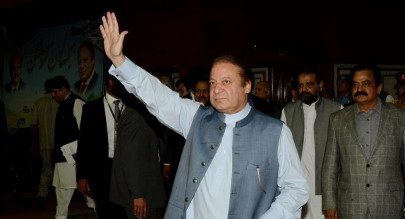
			<p><p>Nawaz Sharif’s victory in the recent elections was not unexpected. However, the fact that he has managed to secure enough seats for a stable government came as a surprise when the pundits had estimated that <a href="http://tribune.com.pk/story/545763/hung-parliament-in-the-offing/">no party would be able to secure a simple majority in the National Assembly</a>. The idea of political stability after a tumultuous coalition experiment comes as a relief. Nawaz Sharif will soon become a third time prime minister (PM), and his team has an obvious edge in terms of experience compared with other parties.</p>
<p>Sharif may know it better than others that this is not the same Pakistan that he ruled twice during the 1990s. The post-Eighteenth Amendment Pakistan ensures greater resources and powers to the subnational governments. And the existence of a fairly robust media and an activist judiciary will be the new determinants for his stint as the PM. Much to his dismay, he may soon realise that it may not be easy to make <a href="https://www.google.com/url?q=http://tribune.com.pk/story/548497/on-foreign-front-pml-n-will-revisit-foreign-policy/&amp;sa=U&amp;ei=6G2WUdyjO8uHhQfQ7IGADA&amp;ved=0CBMQFjAEOEY&amp;client=internal-uds-cse&amp;usg=AFQjCNHrhsAKf4rIpudqq194BBc7Y5PNAg">the foreign and security policy shifts he has been hinting at</a> in his pre-election statements. Finally, a country beset by chronic economic troubles, particularly the endemic energy crisis, is going to keep him quite busy for the months to come.</p>
<p>While Mian Saheb has time and again declared the economy as his priority, it would do him and his future cabinet well to recognise that two imperatives will determine the course of economic growth and stability. First, insecurity: the law and order situation in Karachi, Taliban-sponsored terrorism, and the situation in Balochistan; and second, the long-delayed economic reform that no party can achieve on its own in a provincialised Pakistan.</p>
<p>Domestic investors have been running away from the country simply because the state capacity to enforce contracts, maintain law and order, and reduce insecurity, has drastically declined since 1999, when Sharif was forcibly removed from the PM House and sent into exile. If anything, the Afghan and Pakistani factions of the Taliban, their foot soldiers in the militant sectarian organisations, and the parent al Qaeda network are now embedded in the “new Pakistan” that Mian Saheb will govern. The PML-N’s policy on the growth of extremism has, for reasons of expediency, not factored in the high priority agenda. It may have worked for keeping a coalition in Punjab intact, but it would be an impediment if the PML-N wants to deliver on all the promises and meet the high expectations of its support base, especially in Punjab. A clear and inventive policy on militancy would need to be formulated.</p>
<p>Reform has almost become an abuse-word in Pakistan. The last time <a href="http://tribune.com.pk/story/543548/bureaucracy-for-change/">civil service reform</a> was undertaken was nearly 40 years ago. Our dismal tax-to-GDP ratio is another well-known reality. The earlier attempt to restructure taxation failed mainly due to a lack of consensus. To initiate reforms, Sharif would need to work with opposition political parties, including those who control the Senate, which is no longer a debating club. It is good to know that Sharif does not use the jihad mantra that dominated our policy discourse in the 1990s. With Punjab firmly backing him, there is a historic chance of resetting our security policy.</p>
<p>The good intentions on <a href="https://www.google.com/url?q=http://tribune.com.pk/story/548627/will-invite-manmohan-singh-to-my-oath-taking-ceremony-nawaz/&amp;sa=U&amp;ei=yG6WUeXnFYWDhQeE9ICACg&amp;ved=0CBMQFjAEODw&amp;client=internal-uds-cse&amp;usg=AFQjCNE46pNhTXxeSTZYMPhXs-7617wngQ">improving relations with India</a> will not materialse unless the military is onboard. The Sharif government would face another challenge if Taliban adventurism were to begin after the Nato pullout from Afghanistan. To handle all these challenges and imminent crises, Sharif would need to work cautiously and assertively with the military. This tightrope walk should be eminently doable for a third time PM who is riding the wave of support from Pakistan’s mercantile and trading classes, its conservative lobbies, and most importantly, from the urban middle-class that wishes to live in a “New Pakistan”. This will not be an easy ride, especially when two provinces may not be governed by the PML-N and the Senate is dominated by the opposition. Here comes the real test for Mian Saheb, and let’s hope for the best.</p>
<p><i>Published in The Express Tribune, May </i><i>18<sup>th</sup>, 2013.</i></p>
</p>
			<br clear="all"/>
		]]>
		</description>

		<media:content width="424" height="318"
							isDefault="true" medium="image" url="http://i1.tribune.com.pk/wp-content/uploads/2013/05/550715-RazaRumi-1368810241-981-640x480.jpg">
			<media:title>Raza Rumi</media:title>
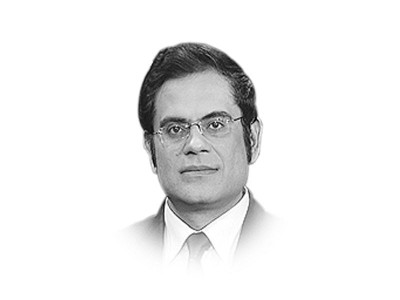
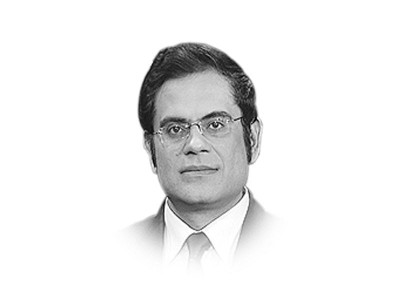
			<media:description>The writer is Director, Policy &amp; Programmes Jinnah Institute, Islamabad. The views expressed are his own</media:description>
			<media:thumbnail url="http://i1.tribune.com.pk/wp-content/uploads/2013/05/550715-RazaRumi-1368810241-981-160x120.jpg" width="160" height="120" />
      </media:content>

		<wfw:commentRss></wfw:commentRss>
		<slash:comments>5</slash:comments>
	</item>
		<item>
		<title>Analysing the election results</title>
		<link>http://tribune.com.pk/story/548718/analysing-the-election-results/</link>
		<pubDate>Mon, 13 May 2013 17:54:00 +0000</pubDate>

		<guid isPermaLink="false">http://tribune.com.pk/?p=548718</guid>

		<description>
		<![CDATA[
			<a href="http://tribune.com.pk/story/548718/analysing-the-election-results/">
				<img src="http://i1.tribune.com.pk/wp-content/uploads/2013/05/548718-RazaRumi-1368464264-426-160x120.jpg" width="160" height="120" alt="" />
			</a>
			<p><p>Pakistan’s move to another civilian government is a major victory for the evolution of democratic institutions in the country. Despite a <a href="http://tribune.com.pk/story/547314/terror-threats-taliban-plotting-major-attacks-cabinet-told/">violent campaign and the unacceptable role of non-state actors</a>, the voter turnout was encouraging. The only exception was Balochistan where a host of factors kept the turnout extremely low. The final verified numbers are still to be tabulated but voter turnout underlines people’s faith in the democratic process. Allegations of rigging on selected seats and irregularities once again demonstrate that the next parliament must ensure improvement of the election commission’s performance.</p>
<p>The results were not all that unexpected except for the <a href="http://tribune.com.pk/story/547996/nawaz-sharif-poised-to-lead-pakistan-again-after-long-wait/">majority that the PML-N garnered</a> and the near-rout of the Pakistan Peoples Party (PPP) in Punjab. In fact, the party lost its strongholds, such as southern districts, where it has traditionally enjoyed immense support. The results in southern Punjab show a rational decision of the electorate to side with the expected winner and re-negotiate matters with the power centre that exists in upper Punjab. The PPP maintained its support base in Sindh and the MQM once again has emerged as the voice of Pakistan’s largest, troubled city, Karachi. The Awami National Party (ANP) was also rejected by the voters of Khyber-Pakhtunkhwa (K-P), thereby indicating that people of the province sided with the vague promises of peace articulated by the Pakistan Tehreek-e-Insaf (PTI).</p>
<p>Other than the PML-N’s sweep, it is the PTI, which has finally arrived. Imran Khan’s mobilsiation and building of party structure has turned the PTI into the runner-up on many seats in Punjab. This is a position that the PPP enjoyed during the 1990s and later. The PTI enthusiasts were disappointed at the results but in real terms, this is the first time the PTI has performed that well in an electoral contest during the 17 years of its existence. There are a variety of ideological and sociological reasons for this phenomenon but it was essential that the PTI became part of the parliamentary process and adjusted to the imperatives of democratic governance. If it <a href="http://tribune.com.pk/story/548459/imrans-tsunami-khyber-pakhtunkhwa-lives-up-to-tradition/">forms the provincial government in K-P</a>, it would realise the constraints within which political parties have to operate.</p>
<p>The PPP needs to do a major stock-taking of its internal party structures, its relevance to the fast urbanising Punjab. There can be no alternative to leadership and engagement with its cadres. Sadly, due to multiple reasons (including court restrictions and security threats), its leadership has been away from the worker: an asset that still defines the uniqueness of this party.</p>
<p>The PML-N gets power for the third time. Nawaz Sharif has rightly earned his reward for placing faith in the democratic process and the manner in which he allowed for the continuation of the outgoing parliament. He has already indicated his bold views on civil-military relations and policy on India. Perhaps, the biggest challenge that his administration will face will concern militancy and terrorism. This is directly linked to the operations of extremist organisations within Pakistan which need to be regulated. Building state capacity and law-enforcement institutions should be the top-most priority of the incoming federal and provincial governments.</p>
<p>After the Eighteenth Amendment, Pakistan’s power centres have shifted from Islamabad to the provinces. However, a major area of focus is to strengthen inter-provincial coordination and address the pending tasks of the devolution process since 2011. Unlike the last five years, it is hoped that all political parties that will govern Pakistan will now work on setting up local government systems that they callously neglected. Despite the clear majority, to undertake structural reform, Nawaz Sharif and his team would have to build a multi-party consensus.  Thus, a return to the politics of accommodation and reconciliation would not just be desirable but a necessity for effective governance.</p>
<p><i>Published in The Express Tribune, May </i><i>14<sup>th</sup>, 2013.</i></p>
</p>
			<br clear="all"/>
		]]>
		</description>

		<media:content width="424" height="318"
							isDefault="true" medium="image" url="http://i1.tribune.com.pk/wp-content/uploads/2013/05/548718-RazaRumi-1368464264-426-640x480.jpg">
			<media:title>Raza Rumi</media:title>
			<media:description>The writer is Director, Policy &amp; Programmes Jinnah Institute, Islamabad. The views expressed are his own</media:description>
			<media:thumbnail url="http://i1.tribune.com.pk/wp-content/uploads/2013/05/548718-RazaRumi-1368464264-426-160x120.jpg" width="160" height="120" />
      </media:content>

		<wfw:commentRss></wfw:commentRss>
		<slash:comments>7</slash:comments>
	</item>
		<item>
		<title>A threatened transition</title>
		<link>http://tribune.com.pk/story/543178/a-threatened-transition/</link>
		<pubDate>Wed, 01 May 2013 19:35:16 +0000</pubDate>

		<guid isPermaLink="false">http://tribune.com.pk/?p=543178</guid>

		<description>
		<![CDATA[
			<a href="http://tribune.com.pk/story/543178/a-threatened-transition/">
				<img src="http://i1.tribune.com.pk/wp-content/uploads/2013/05/543178-RazaRumi-1367431129-930-160x120.jpg" width="160" height="120" alt="" />
			</a>
			<p><p>The democratic transition has finally met its gravest challenge. As Pakistan moves to the general elections in 10 days, it is not clear how fair and free would these elections be. In the 1990s, the establishment manipulated the results and electoral outcomes. The <a href="http://tribune.com.pk/story/454184/the-saga-ends-exposed/">decision of the Asghar Khan case</a> is on record now that shows how the establishment engineered the results in favour of a right-wing coalition of their choice. Such direct interference in political affairs culminated in the coup d etat of 1999.</p>
<p>The return of democratic rule had kindled the hope that Pakistan’s civilian institutions would be stronger and perhaps, a more rational civil-military engagement will ensue. The political parties achieved much in the shape of constitutional restructuring and ensuring that they did not compromise on an extraconstitutional solution for alleged misgovernance. A few months ago, it was hoped that neutral caretakers and a vigilant Election Commission of Pakistan (ECP) would steer the country through the elections process.</p>
<p>However, the Pakistani state and its wilful outsourcing of jihad to militant organsiations are now haunting the democratic and electoral process. The so-called Pakistani faction of the Taliban has <a href="http://tribune.com.pk/story/542543/ttp-strategy-and-our-naivete/">drawn the line between the acceptable and unacceptable electoral solution</a>. Ironically, they are mirroring the approach of their erstwhile masters by indulging in pre-poll manipulation. The instruments are violence, coercion of public opinion backed with somewhat aggressive media campaigns. The ANP, the MQM and the PPP are facing the music for being liberal and secular and for backing military operations against the Taliban.</p>
<p>Not that the performance of these three parties was exemplary, especially with respect to law enforcement, but the truth is that they did not control the security policy of the country. The security policy intertwined with our foreign policy — a friendly Afghanistan and containment of India at all costs — drives our foreign policy agenda. The provincial governments could have done much more in terms of policing and strengthening the legal framework, which remains in shambles since the defacto abolition of the Police Order of 2002. It should be remembered that the civilian law-enforcement agencies suffered heavy casualties in Khyber-Pakhtunkhwa (K-P) and Fata and continue to remain under attack.</p>
<p>In the last month, scores of political workers from the moderate political parties are dead and dozens of attacks have been carried out. The frequency, speed and planning of these attacks demonstrate that the intelligence apparatus is lagging and little coordination exists. The most worrying aspect is how Karachi or at least parts of it have turned into little havens for militants where they are holding courts.</p>
<p>The caretaker interior minister, immediately after his appointment, became controversial, as he could not resist <a href="https://www.google.com/url?q=http://tribune.com.pk/story/533533/partial-caretaker-poll-body-approaches-pm-over-ministers-gaffe/&amp;sa=U&amp;ei=C22BUcysKdSB7Qb48oGQDA&amp;ved=0CBAQFjAD&amp;client=internal-uds-cse&amp;usg=AFQjCNFfUAs6nR84nfYzeTxrSRizZAivqQ">praising one particular leader and making predictions</a> on who might win the election. The interim administration obviously did not do anything to assure the public that it might have been a case of misplaced enthusiasm. Who is in charge of security? Paramilitary forces are stationed in Fata, Balochistan and parts of K-P. They are under the control of civilian institutions but headed by the military. Similarly, the chief of the ISI is a senior military official. What is unclear is if someone is making these agencies talk to one another and coordinate to prevent the attacks on political workers.</p>
<p>How come the state does not know where the leaders and operatives of the TTP are located? Their spokesperson is quoted in Urdu columns and appears on TV as well. This kind of retreat by the state and media is mind-boggling. The paradox is that the TTP find democracy and elections un-Islamic and yet want to influence their course. More worrying is the silence and sometimes cajoling by the parties on the right of the centre. Some have even thanked the TTP for not attacking them and others have appealed them not to attack. The entire campaign has turned into a farce. In Punjab, the major contestants are promising the moon to the public without even mentioning the issue of terrorism. Is it naiveté or just short-termism that they are not focusing on these critical issues?</p>
<p>The net result could be that the voter turnout will be lower in the smaller provinces and higher in Punjab. This is neither good for the federation nor for our fragile democracy. By capitulating to the Taliban, are some political parties not ceding space to militias that impose their ideology through terror?</p>
<p><i>Published in The Express Tribune, May </i><i>2<sup>nd</sup>, 2013.</i></p>
</p>
			<br clear="all"/>
		]]>
		</description>

		<media:content width="424" height="318"
							isDefault="true" medium="image" url="http://i1.tribune.com.pk/wp-content/uploads/2013/05/543178-RazaRumi-1367431129-930-640x480.jpg">
			<media:title>Raza Rumi</media:title>
			<media:description>The writer is Director, Policy &amp; Programmes Jinnah Institute, Islamabad. The views expressed are his own
</media:description>
			<media:thumbnail url="http://i1.tribune.com.pk/wp-content/uploads/2013/05/543178-RazaRumi-1367431129-930-160x120.jpg" width="160" height="120" />
      </media:content>

		<wfw:commentRss></wfw:commentRss>
		<slash:comments>10</slash:comments>
	</item>
		<item>
		<title>Analysis: Zia’s unfinished business </title>
		<link>http://tribune.com.pk/story/530906/analysis-zias-unfinished-business/</link>
		<pubDate>Thu, 04 Apr 2013 04:38:13 +0000</pubDate>

		<guid isPermaLink="false">http://tribune.com.pk/?p=530906</guid>

		<description>
		<![CDATA[
			<a href="http://tribune.com.pk/story/530906/analysis-zias-unfinished-business/">
				<img src="http://i1.tribune.com.pk/wp-content/uploads/2013/04/530906-ZiaulHaqFILE-1365050109-756-160x120.jpg" width="160" height="120" alt="" />
			</a>
			<p><div>
<p><strong>The ghost of General Ziaul Haq and his drive to turn Pakistan into a theocracy continues to haunt us. Under immense pressure from the courts and clerics, the Election Commission of Pakistan (ECP) is seemingly undertaking a purge of politicians who may not be ‘righteous’ under Articles 62 and 63 of the Constitution.</strong></p>
<p>These articles emanated from the desire to create an Islamic legislature where only the “sagacious”, “righteous and non-profligate, honest and ameen” could hold public offices. How can we define these vague terms, which are open to interpretation and abuse?</p>
</div>
<p>Articles 62 and 63 also suggest disqualification if a candidate is deemed to be against the ‘ideology of Pakistan’. Sadly, that very term was coined under the influence of Jamaat e Islami and General Yahya Khan’s comrade Gen Sher Ali contributed to its adoption for cynical reasons. History is a witness to Gen Yahya’s own conduct and the utter disdain he had for his Bengali subjects. The genesis of this term therefore is self-serving and purely hypocritical. Soon, the same junta trumpeting the ideology of Pakistan led an army action against Pakistanis and the events of 1971 remain a blot on our collective conscience.</p>
<p>Zulfikar Ali Bhutto also caved to the pressure of the religious right, first by declaring Ahmadis as non-Muslims and later by introducing pseudo-Islamisation steps such as the banning of alcohol at the end of his tenure. But it was Gen Zia who truly wanted to undertake social re-engineering. “Ideology of Pakistan” became a plank of his policy of controlling dissent and reshaping Pakistani society.</p>
<p>Since then, the “Ideology of Pakistan” has been inserted into all key clauses of the Constitution as well as into the oaths of the high functionaries of the state and government. More and more opportunities for witch-hunts of politicians have thus opened up.</p>
<p>Perhaps the most bizarre development in recent days has been the use of Articles 62 and 63 to determine the ‘religiosity’ of candidates. Exploitation of clauses (d) and (e) is tantamount to using religion as a means to reject nomination papers. Candidates have been asked to recite verses from the Quran in order to prove eligibility. In an ironic instance, reportedly, a JI candidate could not fulfil the eligibility test. Additionally, the Returning Officers have no strict guidelines within which to exercise the clauses, leading to potential variations.</p>
<p>In the foreground, the Supreme Court backs such purges by stating time and again that implementation of Articles 62 and 63 is mandatory. Concurrently, the fake degree cases are also endangering the prospects of hundreds of candidates who reportedly earned ‘fake degrees’ to fulfil the condition of graduation imposed by Gen Musharraf during his tenure.</p>
<p>While their conduct is unbecoming, there is a wider question of if such tests have been applied on the civil-military bureaucracy and judges? Since 1950s, disqualification has been a game of the elected being fixed by the unelected. This time the media is aiding the process.</p>
<p>Some, like PTI chief Imran Khan, point to the failure of the outgoing parliament to remove these articles. This is an easy claim, as Mr Khan should know that governments operating under the pressure of the right-wing can seldom take such initiatives.</p>
<p>The real question here is who determines a person’s fitness for election. Is the decision in the hands of unelected officials or the people whom the Constitution empowers as the ultimate arbiters of the democratic system? The political parties would need to refine and improve the description of these clauses once the next Parliament takes oath. Otherwise they may invite more purges in the years to come.</p>
<p><em>Published in The Express Tribune, April 4<sup>th</sup>, 2013.</em></p>
</p>
			<br clear="all"/>
		]]>
		</description>

		<media:content width="424" height="318"
							isDefault="true" medium="image" url="http://i1.tribune.com.pk/wp-content/uploads/2013/04/530906-ZiaulHaqFILE-1365050109-756-640x480.jpg">
			<media:title>Ziaul Haq FILE 2</media:title>
			<media:description>General Ziaul Haq. PHOTO: FILE</media:description>
			<media:thumbnail url="http://i1.tribune.com.pk/wp-content/uploads/2013/04/530906-ZiaulHaqFILE-1365050109-756-160x120.jpg" width="160" height="120" />
      </media:content>

		<wfw:commentRss></wfw:commentRss>
		<slash:comments>39</slash:comments>
	</item>
		<item>
		<title>Stop the genocide</title>
		<link>http://tribune.com.pk/story/510081/stop-the-genocide/</link>
		<pubDate>Wed, 20 Feb 2013 19:17:42 +0000</pubDate>

		<guid isPermaLink="false">http://tribune.com.pk/?p=510081</guid>

		<description>
		<![CDATA[
			<a href="http://tribune.com.pk/story/510081/stop-the-genocide/">
				<img src="http://i1.tribune.com.pk/wp-content/uploads/2013/02/510081-RazaRumi-1361377541-869-160x120.jpg" width="160" height="120" alt="" />
			</a>
			<p><p>After five years of inaction, and pursuing a play-it-safe policy, it seems that the civilian government has woken up to the horrific Shia genocide taking place in the country — be it professionals in Karachi and Lahore, young children, or the beleaguered, ghettoised Hazara community of Quetta. It is a measure of the unbecoming state of governance in the country that short of invoking every conspiracy theory under the land, the politicians and the unelected institutions have been scared even to name the militant groups involved.</p>
<p>A children’s library in Islamabad boasts a violent madrassa and it is supported by various organs of the state, but when it comes to pandering to militant forces, everyone unites in their cowardice. Similarly, a water tanker meant to fill in the gap for crumbling service delivery structures, is used as a vehicle to massacre an endangered minority.</p>
<p>Discourses to obfuscate the reality are found aplenty. It is said that foreign agencies want to destabilise Pakistan, or that Iran is fighting a proxy battle. Others say that Pakistan’s joining the US in the war of terror that has landed us into an abysmal state of violence and fear. Despite such conspiracy theories, should we not ask ourselves why we have allowed groups such as the SSP, LeJ and their new avatar, the ASWJ to operate with near complete abandon? Is it not a fact that the <a href="http://tribune.com.pk/story/434986/provocative-speech-malik-ishaq-released-from-jail/" target="_blank">Supreme Court of Pakistan freed the head of the LeJ</a>? Is it not a fact that the Punjab government was providing a stipend to the family of an accused? Is it not a fact that all witnesses against Malik Ishaq have been killed with police and intelligence agencies watching, in complicit silence? Is it not a fact that we nurture proxies to pursue our regional ambitions of controlling Afghanistan and liberating Kashmir?</p>
<p>What is even more worrying is how notionally banned sectarian outfits have entered into official partnerships with Tehreek-e-Taliban Pakistan and al Qaeda. There is incontrovertible evidence to suggest that the Afghan and Pakistan Taliban are branches of the same movement, working under the broad banner of al Qaeda’s worldview. With thousands of soldiers lost in a war against the Taliban and al Qaeda, what prevents it from taking a clear policy position on these issues? How can we even become a regional power if we are not able to protect our citizens, create a secure environment for businesses to operate and ensure that basic rights of citizens are guaranteed?</p>
<p>Perhaps, there are no simple answers. The civil-military imbalance in Pakistan means that policy and strategic decision making is deeply split. There is a constitutionally legitimate government and an opposition, but they have little control over foreign and security policies. The military continues to pursue its ‘strategic’ goals, apparently with little input from society at large. If the top military leadership has identified the enemy within, then why is the all powerful intelligence apparatus not tracking down the activities, linkages and plans of the militant groups, purportedly in alliance with the “enemy”?</p>
<p>I can understand the anguish of the Hazara community in <a href="http://tribune.com.pk/story/508986/army-should-take-over-to-end-balochistan-violence-shia-cleric/" target="_blank">seeking protection from the army</a> and wanting the city of Quetta to be controlled by them. In the absence of civilian law enforcement, what else can a group of people ask for? Army rule can only be a short-term solution. Unfortunately, it has never solved anything for Pakistan, except causing dissension and every military rule has left a bigger mess for ineffectual civilians to clean up.</p>
<p>In the present scenario, the parliamentary committees must summon the intelligence agencies and question their (lack of) effectiveness in preventing Shia massacres across the country. An operation that has been announced in Quetta must be taken to its logical conclusion. It cannot be limited to Balochistan, because the bases of sectarian outfits are located in Punjab. In the larger national interest, the PML-N will have to think beyond its forthcoming electoral gains and sacrifice a number of seats to enable an effective crackdown against the militants.</p>
<p>The PPP must not be on the back foot, for it has everything to lose if it abandons Shias, minorities and its other supporters. It must enter into an immediate dialogue with the Punjab government and the PML-N to put into place a medium-term plan for tackling sectarian killings. The civilians can no longer let the mayhem continue. By acting as silent spectators of death sport, they are going to ruin their long-term prospects of legitimacy. And if the civilians think they cannot control the khakis, then it is time for some honest confessions and they should take the people into confidence about how they are not in charge.</p>
<p><i>Published in The Express Tribune, February </i><i>21<sup>st</sup>, 2013.</i></p>
</p>
			<br clear="all"/>
		]]>
		</description>

		<media:content width="424" height="318"
							isDefault="true" medium="image" url="http://i1.tribune.com.pk/wp-content/uploads/2013/02/510081-RazaRumi-1361377541-869-640x480.jpg">
			<media:title>Raza Rumi</media:title>
			<media:description>The writer is Director, Policy &amp; Programmes Jinnah Institute, Islamabad. The views expressed are his own</media:description>
			<media:thumbnail url="http://i1.tribune.com.pk/wp-content/uploads/2013/02/510081-RazaRumi-1361377541-869-160x120.jpg" width="160" height="120" />
      </media:content>

		<wfw:commentRss></wfw:commentRss>
		<slash:comments>17</slash:comments>
	</item>
		<item>
		<title>Of scripted marches</title>
		<link>http://tribune.com.pk/story/494905/of-scripted-marches/</link>
		<pubDate>Wed, 16 Jan 2013 19:12:53 +0000</pubDate>

		<guid isPermaLink="false">http://tribune.com.pk/?p=494905</guid>

		<description>
		<![CDATA[
			<a href="http://tribune.com.pk/story/494905/of-scripted-marches/">
				<img src="http://i1.tribune.com.pk/wp-content/uploads/2013/01/494905-RazaRumi-1358355672-454-160x120.jpg" width="160" height="120" alt="" />
			</a>
			<p><p>Just as we had thought that Pakistan was reaching a major watershed in its political history, the old spectre of religion misused for politics has arisen to haunt us. At the time of writing these lines, tens of thousands of spiritual disciples of a moderate mullah have assembled outside Parliament House in Islamabad, claiming to represent 180 million Pakistanis. The central character Dr Tahirul Qadri, neither elusive nor transparent, is a man with a mission. His agenda — couched in reformist language and anti-corruption jargon — is vague and rhetorical, except that it brazenly disregards a consensus that the Constitution of Pakistan drafted, restored and amended with historic struggles. Pakistan’s history is nothing but the quest for domination by unelected, post-colonial institutions trying to prevent democracy from taking root. The underlying argument for autocracy and top-down governance has been the supposed “incompetence”, “corruption”, and “ineligibility” of civilians to govern the country. I have met many a bureaucrat who is convinced that politicians at the local level are not capable enough to rule local institutions. Similarly, from Iskandar Mirza to General Musharraf, all military strongmen have made similar claims about the inability of the political class to manage national institutions. Pakistani children read <a href="http://tribune.com.pk/story/149448/our-textbooks-and-the-lies-they-teach/">textbooks that glorify autocrats and ‘saviours’ of all kinds</a>, and therefore, their acceptance for authoritarianism is pretty high by the time they enter adulthood.</p>
<p>Dr Qadri wants the electoral system to be cleansed of corrupt politicians. General Ayub’s regime enacted laws in 1959 to disqualify corrupt politicians. Before every election, such tall claims are made. General Zia raised the slogan of ‘accountability first, elections later’, Farooq Leghari promised the same in 1996, and our most recent ‘saviour’, General Musharraf, also kept on reiterating the same throughout the years of his dictatorship. Consequently, we are a country with large numbers of influential people in media, academia, bureaucracy, and other spheres, who hold that the worthless crooks, i.e. the politicians need to be ousted every time we get on to the business of implementing democracy.</p>
<p>Politicians, on the other hand, are not the best role models available. Even the most daring and visionary of them i.e. Zulfikar Ali Bhutto was nurtured by the military in the 1960s. His successors followed suit and always found engagement and deals with the military as the route to power. Quite honestly, what else can they do when the <a href="http://tribune.com.pk/story/494903/civil-military-relations-and-the-qadri-drama/">rules of the game are determined by the civil-military apparatus of yore</a>, and military-intelligence complex of today!</p>
<p>This is why Tahirul Qadri’s <em>faux </em>revolution is both suspicious and dangerous for the future of Pakistan’s democratic trajectory. We know that the military has denied any role in spurring this ‘revolution’ and, frankly, there is little evidence to counter its claim. However, the advocacy of unconstitutional solutions to Pakistan’s political problems smacks of the GHQ script used in 1958, 1969, 1977 and 1999. The same obsessions — corruption, misgovernance, incompetence and ‘<em>loot maar</em>’ — appear to be the underlying reason for this revolution. Marx and Marxists worldwide would be devastated at the abuse of the term ‘long march’, which is being used to invoke the unelected institutions i.e. the judiciary, the military and the media, to undermine and sabotage the will of the people and representative governance.</p>
<p>The other dimension of this ‘revolution’ concerns the assumed <a href="http://tribune.com.pk/story/488362/new-doctrine-army-identifies-homegrown-militancy-as-biggest-threat/">shift within Pakistan’s security doctrine</a>. There have been reports of a big strategic rethink underway, which attempts to replace jihadist Islam with a moderate face in line with the global pressure on Pakistan to do something about its Deobandi-Salafi strategic assets. Perhaps these speculations are far-fetched, and only time will tell how far the state has moved on. One reality is getting clearer: the impending transfer of power, managed and overseen by civilians through parliamentary processes, is not seen as a great idea as it might squeeze the already-shrinking space for military domination in Pakistan’s public life.</p>
<p>The forthcoming elections, now facing a question mark, are likely to return a prodigal-son-gone-rebel Nawaz Sharif or the wily chess player Zardari back into power, and that too within a few months! Such a prospect is troublesome for many within the enclaves of Pakistani state power. Therefore, the failed ‘Bangladesh model’ of neutral technocratic caretakers looms on the limited imagination of the power-wielders. Qadri could push events towards that. Or he may just succeed halfway in getting a caretaker arrangement which inspires confidence among the unelected bosses of Pakistan. Regardless of what happens next, this is the gravest challenge to Pakistan’s democratic process since 2007 when Benazir Bhutto was murdered in Rawalpindi and the country was gripped by anarchy and uncertainty.</p>
<p>This is also a time for testing the honed skills of President Zardari, who is no walkover, and the measured instincts of Nawaz Sharif, who has been through the mill over decades. Imran Khan, whose legitimacy also hangs in the balance, will need to show more foresight than he has demonstrated thus far. Above all, Pakistan’s out-of-control electronic media needs to remember that by celebrating extra-constitutional deviations, it may just be inflicting self-harm by curbing its own future freedoms.</p>
<p><em>Published in The Express Tribune, January </em><em>17<sup>th</sup>, 2013.</em></p>
</p>
			<br clear="all"/>
		]]>
		</description>

		<media:content width="424" height="318"
							isDefault="true" medium="image" url="http://i1.tribune.com.pk/wp-content/uploads/2013/01/494905-RazaRumi-1358355672-454-640x480.jpg">
			<media:title>Raza Rumi</media:title>
			<media:description>   </media:description>
			<media:thumbnail url="http://i1.tribune.com.pk/wp-content/uploads/2013/01/494905-RazaRumi-1358355672-454-160x120.jpg" width="160" height="120" />
      </media:content>

		<wfw:commentRss></wfw:commentRss>
		<slash:comments>19</slash:comments>
	</item>
		<item>
		<title>Great expose of the unelected</title>
		<link>http://tribune.com.pk/story/486997/great-expose-of-the-unelected/</link>
		<pubDate>Tue, 01 Jan 2013 05:15:22 +0000</pubDate>

		<guid isPermaLink="false">http://tribune.com.pk/?p=486997</guid>

		<description>
		<![CDATA[
			<a href="http://tribune.com.pk/story/486997/great-expose-of-the-unelected/">
				<img src="http://i1.tribune.com.pk/wp-content/uploads/2012/12/486997-politicalparties-1357017295-990-160x120.jpg" width="160" height="120" alt="" />
			</a>
			<p><p><strong>The year 2012 will be remembered for a fragile democracy that continued to consolidate itself amid regional instability and belligerence of unelected institutions trying to assert their waning powers.</strong></p>
<p>The year began with the brewing tensions on the memo affair whereby the military-intelligence complex had accused Pakistan’s former ambassador to the United States, Husain Haqqani, of seeking US intervention should there be a coup in Pakistan.</p>
<p>During late 2011, the Supreme Court was moved by the opposition leaders to take cognisance of this drummed up ‘national security’ issue. In the wake of the mounting pressure the former Prime Minister, Yousaf Raza Gilani, delivered his famous remarks where he complained of a ‘state within the state’ operating in Pakistan.</p>
<p>This tension set the course of events to follow. Unelected institutions – the military, intelligence agencies, judiciary and the media – dominated the national scene and constructed how democracy was viewed and the performance of the civilian governments at centre and provinces was assessed.  The memo affair took a new turn when media reports emerged that the then-chief of the Inter-Services Intelligence (ISI) had undertaken a tour of Muslim countries allegedly to build support for a coup d’état in Pakistan.</p>
<p>Such unverified reports exerted pressure on the military and it decided to backtrack and settle for the dismissal of the ambassador. A commission formed by the Supreme Court released its report which sadly regurgitated the petitioners’ point of view as well as the notion of ‘national security’ popularised by the state since the inception of Pakistan.</p>
<p>Matters became heated with the judiciary once again when charges were made against the sitting prime minister and, after a dramatic hearing, the Supreme Court disqualified PM Gilani. Subsequently, Gilani had to leave office paving the way for another PPP loyalist from the Punjab, Raja Pervaiz Ashraf, taking oath of the PM. The cost of this instability was great.</p>
<p>The federal government remained engaged in defending its president, PM and appointing the new PM instead of focusing on the long-term energy crisis, the economy and other policy issues which require coherent action. The media, instead of highlighting the constructed instability, focused more on the lack of performance of the ruling coalition. The term governance remained in the news but without the contextual understanding, especially that of unaccountable status of the civil-military bureaucracy and the judiciary.</p>
<p>How could governance be responsive when key pillars of the state and those who deliver vital services are beyond the accountability net?</p>
<p>The next half of 2012 was relatively more stable as the government and judges came to an understanding and avoided another conflict over sending a letter to Swiss authorities for reopening old corruption cases against the president. In the process, a letter was sent and the court implicitly accepted the constitutional immunity available to the president under the Constitution.</p>
<p>Once this was over, the petitions against the dual offices – as Pakistan Peoples Party chairperson and president – of Asif Zardari came into the courts and there was a renewed focus on this matter despite the fact that there is nothing in the Constitution that expressly bars the president from holding a party office.</p>
<p>Judicial activism continued as the Supreme Court decreed on the volatile law and order situation in Karachi, and the Balochistan situation. In the latter case, it made extraordinary remarks during the proceedings and also adjudicated that the provincial government had failed to deliver according to the constitutional mandates. Political and legal circles criticised this judgment, citing it as another case of judicial overreach. However, the court surprised everyone as it widened the scope of its accountability of the executive.</p>
<p><img src="http://pullquotesandexcerpts.files.wordpress.com/2012/12/the4.jpg?w=625" alt="The" /></p>
<p>The military and the intelligence agencies also came under severe criticism in the Balochistan case. Earlier, on the missing persons, the court had asked the paramilitary forces stationed in the troubled province to explain their acts of commission and omission.</p>
<p>The climax of judicial scrutiny of the powerful military was the decision on the Asghar Khan case where the court held that the former Army chief, Gen Mirza Aslam Beg and his colleague, then-ISI chief Lt. Gen Asad Durrani, had rigged the 1990 election. This is a major victory for civilian ascendancy as the well known truths in the unofficial domain are now legalised by a formal court order.</p>
<p>Sadly, not much has happened on the implementation, as the sitting government neither wants to annoy the military nor its chief opponent Nawaz Sharif who was a beneficiary of the army largesse in the early 1990s.</p>
<p>The court did not remain free of scrutiny itself either. A major scandal involving the son of Chief Justice Iftokhar Muhammad Chaudhry came into public domain through charges leveled by a business tycoon, Malik Riaz. Briefly, he accused the chief justice’s son, Arsalan Iftikhar, of taking favours in lieu of influencing judicial verdicts.</p>
<p>Unnerved, the chief justice held court and presented explanations citing Islamic figures such as Second Caliph Omar (RAA) and swearing on the Holy Quran that he does not know anything about his son’s misdoing. Soon, he transferred the matter to another bench and to date not much has happened in this case. The media wizards broke this story on the social media and later backtracked.</p>
<p>Things came to a collision path when the chief justice and the Army chief, Gen Ashfaq Parvez Kayani, spoke indirectly about their respective institutions, and blamed each other of overreach. The situation calmed a bit but it was clear by the end of the year that the media, army and the judges driven by their institutional interests of power and profits (in the case of media) were no longer united as they were for a good number of years under the PPP government. This has given more space to the maverick President Zardari, who seems firmly in charge.</p>
<p>In December, two events in quick succession have charged the political atmosphere. As Pakistan heads towards general elections, Dr Tahirul Qadri, a moderate cleric, held a mammoth rally in Lahore calling for military and judicial involvement in the selection of caretakers. Qadri also beat the old drums of accountability and electoral reform used by the military to derail the democratic process. Thus far, the major parties &#8211; PPP and the opposition Pakistan Muslim League-Nawaz – have shown a tacit understanding as major stakeholders of democracy. This makes it tough for the military-intelligence complex to steer the electoral outcomes. It is most likely that given the state of tension between various power centres, there will be no consensus or support that the military has enjoyed throughout our history.</p>
<p>The second key event was the formal [re]launch of PPP’s young Chairperson Bilawal Bhutto Zardari in mainstream politics. His passionate speech on December 27 reinvoked the memories of Benazir Bhutto and Zulfiqar Ali Bhutto, and energised the sagging spirits of the PPP workers. Bilawal delivered a speech in Urdu that covered all the usual themes and played on the PPP versus the establishment theme. But it was unique for its clarity on extremism and this was both reassuring and worrying.</p>
<p>Reassuring since PPP’s office holders in power have been appeasing the extremists and Bilawal made a departure; worrying, because it also makes him more vulnerable to the militants.</p>
<p>The year 2012 was also the year of the Tehreek-e-Taliban Pakistan (TTP) which continued the acts of terror against Pakistan and its civilians. Its allies, the Sunni extremist groups, added to the mayhem by targeting Shias, including the members of the Hazara community. Hundreds of deaths occurred and the most tragic incident was the murder of Bashir Ahmad Bilour in Peshawar.</p>
<p>Bilour is not the first one to die from the Awami National Party (ANP). The party has lost nearly 800 workers and leaders in the recent years. This political assassination has, if anything, shown the nature of the violent election campaign that we will be entering into. The TTP wants to unravel Pakistani state and its constitution and it does not even spare young children like Malala, who was shot for resisting their diktat on banning girls’ education. While Malala survived the attack, her exit from Pakistan along with her family was the nadir of our collective existence as we cave into the extremists’ logic.</p>
<p>Sadly, many media commentators, political parties such as Imran Khan’s Pakistan Tehreek-e-Insaf and Pakistan’s burgeoning youth are confused about the harrowing challenge of extremism. Despite their atrocities, many want the state to talk to TTP and compromise, thereby accepting their power, which in the first place was infused by the Pakistani state itself.</p>
<p>The year ahead will throw more of political instability as none of the parties is likely to emerge as a clear victor in the next elections and there will be a weak coalition sworn in by the end of the year. Despite the efforts made by the civilians, the Afghanistan policy and that of appeasing the ‘good’ Taliban is firmly in the hands of the military and Pakistanis will continue to pay a heavy price.</p>
<p>The hallmark of year 2012 was the speech made by Gen Kayani on August 14, in which he identified extremism and internal enemy as the real security threat. Sadly, in the four months that followed, we saw little or no tangible action towards the realisation of this policy shift within the military. This is why 2013 will be no different with lots of proxies and non-state actors doing their numbers. But the key difference is that Pakistan’s political parties and civilian institutions have come a long way in asserting themselves step by step. The completion of the current legislatures is but a small testament to the shifting nature of Pakistani politics.</p>
<p>Raza Rumi is Director Jinnah Institute and consulting editor <em>The Friday Times.</em> His writings are archived at <a href="http://www.razarumi.com">www.razarumi.com</a>.</p>
<p><em>Published in The Express Tribune, January </em><em>1<sup>st</sup>, 2013.</em></p>
</p>
			<br clear="all"/>
		]]>
		</description>

		<media:content width="424" height="318"
							isDefault="true" medium="image" url="http://i1.tribune.com.pk/wp-content/uploads/2012/12/486997-politicalparties-1357017295-990-640x480.jpg">
			<media:title>political parties</media:title>
			<media:description>Pakistan’s political parties and civilian institutions have come a long way in asserting themselves.</media:description>
			<media:thumbnail url="http://i1.tribune.com.pk/wp-content/uploads/2012/12/486997-politicalparties-1357017295-990-160x120.jpg" width="160" height="120" />
      </media:content>

		<wfw:commentRss></wfw:commentRss>
		<slash:comments>6</slash:comments>
	</item>
		<item>
		<title> Mohtarma’s legacy: to never give up   </title>
		<link>http://tribune.com.pk/story/484985/mohtarmas-legacy-to-never-give-up/</link>
		<pubDate>Thu, 27 Dec 2012 05:43:28 +0000</pubDate>

		<guid isPermaLink="false">http://tribune.com.pk/?p=484985</guid>

		<description>
		<![CDATA[
			<a href="http://tribune.com.pk/story/484985/mohtarmas-legacy-to-never-give-up/">
				<img src="http://i1.tribune.com.pk/wp-content/uploads/2012/12/484985-RazaRumi-1356559056-299-160x120.jpg" width="160" height="120" alt="" />
			</a>
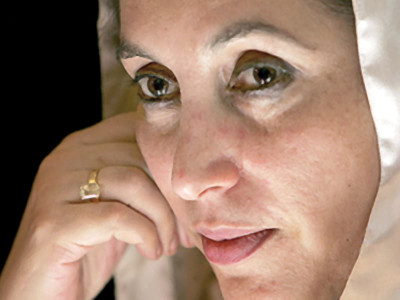
			<p><p>Five years ago, the forces that our state had nurtured for long killed the brightest of our politicians. <a href="http://tribune.com.pk/story/312532/remembering-benazir-memoirs-of-an-old-friend/">Shaheed Mohtarma Benazir Bhutto sounds heavy as a title</a> but there can be no better phrase to signify her stature and the immensity of her sacrifice. The recent judgment by the Supreme Court has vindicated BB’s stance that through the 1990s, the civil-military bureaucratic complex conspired to defeat and keep her out of politics. History has proved her right and even a Supreme Court not known for its tilt towards the PPP had no choice but to decide on facts.</p>
<p>When BB entered active politics, her detractors were far too many. From the powerful establishment to the right-wing media and her ‘uncles’ (older party stalwarts), everyone predicted that she would fail and the PPP would disintegrate. She proved everyone wrong and demonstrated in her 20s her tenacity and capability to resist Pakistan’s most insidious and brutal dictatorship. By the time she returned to Pakistan in 1986, her stature was almost iconic. However, the decade that followed pitted her against a restructured Pakistan where political engineering especially in Punjab made her play the power game to stay relevant as well to guard against the wily games of her adversaries.</p>
<p>Of course, she made mistakes as prime minister and perhaps, as a politician, too. But she never gave up on her core principles of a democratic, federal and enlightened Pakistan. Today, Pakistan’s best social sector service delivery architecture, comprising 100,000 lady health workers, was her brainchild. She launched the anti-Polio campaign and by the end of the 1990s, we had almost eradicated the virus. These are not minor achievements in a country where the people’s welfare has seldom been on the agenda. Her legacy lives on in the shape of Asia’s largest social protection programme — the Benazir Income Support Programme — which provides cash assistance to poorest seven million households in the country.</p>
<p>All political parties including that of Nawaz Sharif, who earlier labelled BB as a ‘security risk’, have espoused Benazir’s vision for a revised security doctrine. The elements of the deep state have not roadblocked the current government to open up trade with India and relax the stringent visa regime. BB reset the policy vision for Pakistan and in the process also reversed her father’s national security doctrines, which still inform the hardliners in the military establishment.</p>
<p>BB did pay a heavy price for her engagement in politics though. For decades she was relentlessly defamed. Her character was attacked and she was even ridiculed to be a mother or expect a child while in office. Later, the favourite stick of the right-wing — corruption — was used against her to tarnish her image as a politician. Add to this, stories of her sell-out to India and the United States while the military managed the foreign policy, the nuclear programme and regional adventurism. He close aide during 1993-96 tenure, Zafar Hilaly, in a series published in <em>The Friday Times</em> (December 5-11, 2008), has recounted how marginalised she was in setting the Afghanistan policy. Despite her flexibility to work with the junta, she was thrown out of power in 1996 and soon found herself in exile thereafter.</p>
<p>The years in exile, 1997-2007, comprised political isolation and opprobrium at home. But her constituents — millions of poor and the dispossessed — knew what it was all about. It was the tale that their lives were made of: the powerful versus the powerless. Her return to Pakistan in 2007 demolished years of propaganda once again when she was received by hundreds of thousands. This was a different BB: not too willing to compromise on the basics so her stance on extremism was bold and determined. The junta did not want her to be present in the country when the elections took place. So, the terrorists gave her a clear message on her return as her procession was bombed and hundreds of innocent PPP workers died in the mayhem. She did not relent and almost marched towards death.</p>
<p>The seasoned BB, marking 30 years of active politics, in 2007 had also ensured a consensus via the Charter of Democracy with Nawaz Sharif. This is perhaps the most formidable of BB’s legacy. Her party’s government is completing the term and the Opposition led by Sharifs has refused to scuttle the process by involving military unlike the 1990s.</p>
<p>Today, Pakistan is a poorer place. It has lost the clearest and most popular voice against extremism. Sadly, the protracted process of bringing her killers to justice only indicates how difficult it is to nab the powerful backers of extremists who reside in the most protected enclaves within the state itself. It will only happen with civilian ascendancy and undoing decades of unaccountable rule by a few unelected institutions.</p>
<p>BB’s sacrifice on <a href="http://tribune.com.pk/story/312518/twists-and-turns-in-the-benazir-murder-probe/">December 27, 2007</a> will live on as a tale of bravery inspiring struggles against extremism and bigotry. And, not giving up despite the odds.</p>
<p><em>Published in The Express Tribune, December </em><em>27<sup>th</sup>, 2012.</em></p>
</p>
			<br clear="all"/>
		]]>
		</description>

		<media:content width="424" height="318"
							isDefault="true" medium="image" url="http://i1.tribune.com.pk/wp-content/uploads/2012/12/484985-RazaRumi-1356559056-299-640x480.jpg">
			<media:title>Raza Rumi</media:title>
			<media:description>The writer is Director, Policy &amp; Programmes Jinnah Institute, Islamabad. The views expressed here are his own</media:description>
			<media:thumbnail url="http://i1.tribune.com.pk/wp-content/uploads/2012/12/484985-RazaRumi-1356559056-299-160x120.jpg" width="160" height="120" />
      </media:content>

		<wfw:commentRss></wfw:commentRss>
		<slash:comments>30</slash:comments>
	</item>
		<item>
		<title>Elections on time, please</title>
		<link>http://tribune.com.pk/story/483826/elections-on-time-please/</link>
		<pubDate>Mon, 24 Dec 2012 18:19:34 +0000</pubDate>

		<guid isPermaLink="false">http://tribune.com.pk/?p=483826</guid>

		<description>
		<![CDATA[
			<a href="http://tribune.com.pk/story/483826/elections-on-time-please/">
				<img src="http://i1.tribune.com.pk/wp-content/uploads/2012/12/483826-RazaRumi-1356367942-928-160x120.jpg" width="160" height="120" alt="" />
			</a>
			<p><p>Once again the pundits and rumour mills are predicting the <a href="http://tribune.com.pk/story/480726/bilawal-house-meeting-elections-will-be-held-on-time-insists-zardari/">postponement of general elections</a> due in early 2013. There is nothing surprising about this, given the anathema of Pakistan’s permanent establishment with electoral process. We could not hold a general election in the first decade of our existence and the civilians collaborated with the Army to bequeath the nation with a decade-long (1958-1969) Martial Law under General Ayub Khan. The 1970 election, fair and startling for its results was soon nullified when the army launched an operation against Pakistanis in eastern wing of the country. In 1977, the elections were held on time but were dogged by controversy and protests leading to a convenient military takeover by General Ziaul Haq.</p>
<p>Nothing is comparable to Gen Zia’s Machiavellian tricks to avoid an election until 1985. By then he had engineered an entire set of political class, which readily played ball with the junta. Zia’s death led to an election in 1988 but this was also engineered as the premier intelligence agency manipulated the outcomes through forging makeshift, quasi-ideological alliances against Benazir Bhutto’s Pakistan People’s Party. Through the 1990s we witnessed three more ‘fixed’ elections. At least one of them (1990) was recently declared as ‘<a href="http://tribune.com.pk/story/453753/asghar-khan-case-sc-reserves-verdict-to-announce-short-order-today/">stolen</a>’ by the Supreme Court. In 1999, the military ended its covert rule and took over the country once again and organized another election in 2002 which returned pliable King’s party into power.</p>
<p>It took nearly a decade to restore democratic freedoms and parliamentary form of governance through the 2008 elections. The internal turmoil and global pressure on Pakistan did not create a conducive environment for the establishment to control everything. An extralegal division of powers between the political elites and the civil-military establishment took place whereby the latter appropriated the management of foreign and security policies. Parliament and the ruling coalition made some half-hearted, botched attempts to reclaim this area of governance without much success. However, in its own domain parliament settled the <a href="https://www.google.com/url?q=http://tribune.com.pk/story/466441/nfc-award-reasonable-finance-ministry-official-counters-shaikh/&amp;sa=U&amp;ei=FJvYUOq7HYPE0QXExIHQDQ&amp;ved=0CBAQFjAD&amp;client=internal-uds-cse&amp;usg=AFQjCNEVmz8dzbpVzezEEct_XFCcyZlqnQ">federal finance sharing formula</a> as well as restructured the Constitution bringing it closer to the consensual parliamentary democracy framework.</p>
<p>It so happens that the current government is completing its five-year tenure. This by itself is a major feat given our tumultuous history. Of course, this is not enough to fix the long-term structural issues that bedevil the lives of ordinary Pakistanis but it surely promises a better future for citizen rights and their participation in governance. There is no shortcut to the phased evolution of the democratic system and electoral accountability processes. We have tried several other formulae as substitutes for representative rule and each time the country has suffered.</p>
<p>Therefore, the prospect of a delayed election is most worrying. Since the start of this government, the pundits with a visceral hatred for the PPP have been predicting the demise of the party and an early end to its rule culminating in a technocratic model where ‘clean’ and ‘competent’ magician-technocrats will fix the country. The last such experiment was conducted during 1999-2002 and almost all the reform initiated in that era has withered away. Political consensus and support on reforms are essential to their viability. How would the old wine in 2013 bottle be any different?</p>
<p>The Supreme Court order to undertake fresh delimitation in Karachi has <a href="http://tribune.com.pk/story/483729/redrawing-karachi-mqm-files-review-petitions-against-sc-verdict/">opened up a Pandora’s box</a>. A reasoned position has been articulated by Pakistan Institute of Legislative Development and Transparency which holds that if the Election Commission decides to “review the delimitation of constituencies in Karachi at this stage without the new census, there could be similar demands from many other parts of the country because it is unreasonable to believe that delimitation of constituencies in rest of the country was perfect and only the Karachi constituencies were wrongly drawn”.</p>
<p>Conspiracy theories suggest that the courts might aid a delay in the election. The simple question here is: why would the courts do that when they have said time and again that the doctrine of necessity has been buried? The Supreme Court also knows that its powers and their unfettered exercise become possible within the democratic framework. The resurgence of terror attacks in Khyber-Pakhtunkhwa and continued insurgency in parts of Balochistan have also been cited as issues that may lead to a postponement of the elections. This is also an untenable argument as the 2008 elections were also held in a relatively similar environment. The other conspiracy theory is that the military may not like to work with Nawaz Sharif or ‘bear’ another term of President Asif Ali Zardari.</p>
<p>Newspapers and TV channels editors, if at all they screen anything, must arrest the wild imagination of their staffers and ask them to cite sources that can testify to the grand plan to postpone the elections. It is suicidal for the media to air options which are extra-constitutional and which could potentially jeopardise their freedoms. We need a wide consensus that consolidating the democratic transition is the only solution to the mess we are in.  Why can’t the media focus on electoral procedures, the code of conduct, enabling the <a href="http://tribune.com.pk/story/483122/reserved-seats-for-women-3/">participation by women</a> and assisting the electorate to shape its voting preferences?</p>
<p>A free, rule-based and transparent election remains the top-remedy for improving Pakistan’s governance. The government and the opposition should agree and announce the election schedule at the earliest and drone the rumour-factories at work.</p>
<p><em>Published in The Express Tribune, December </em><em>25<sup>th</sup>, 2012.</em></p>
<p>&nbsp;</p>
</p>
			<br clear="all"/>
		]]>
		</description>

		<media:content width="424" height="318"
							isDefault="true" medium="image" url="http://i1.tribune.com.pk/wp-content/uploads/2012/12/483826-RazaRumi-1356367942-928-640x480.jpg">
			<media:title>Raza Rumi</media:title>
			<media:description>The writer is Director, Policy &amp; Programmes Jinnah Institute, Islamabad. The views expressed are his own</media:description>
			<media:thumbnail url="http://i1.tribune.com.pk/wp-content/uploads/2012/12/483826-RazaRumi-1356367942-928-160x120.jpg" width="160" height="120" />
      </media:content>

		<wfw:commentRss></wfw:commentRss>
		<slash:comments>8</slash:comments>
	</item>
		<item>
		<title>Shahbaz Sharif and his admirable running of Punjab</title>
		<link>http://tribune.com.pk/story/477771/shahbaz-sharif-and-his-admirable-running-of-punjab/</link>
		<pubDate>Mon, 10 Dec 2012 17:13:27 +0000</pubDate>

		<guid isPermaLink="false">http://tribune.com.pk/?p=477771</guid>

		<description>
		<![CDATA[
			<a href="http://tribune.com.pk/story/477771/shahbaz-sharif-and-his-admirable-running-of-punjab/">
				<img src="http://i1.tribune.com.pk/wp-content/uploads/2012/12/477771-RazaRumi-1355155370-228-160x120.jpg" width="160" height="120" alt="" />
			</a>
			<p><p>Punjab’s Chief Minister and leader of Pakistan’s second largest party, Shahbaz Sharif, is reported to have called himself an “Islamic socialist”. This self-declared adherence to socialism was cited at a reception, held recently for the visiting Chief Minister of the Indian state of Bihar, Nitish Kumar. This declaration followed the public adoption of <a href="https://www.google.com/url?q=http://tribune.com.pk/story/132163/poet-of-the-masses-jalib-as-relevant-today-as-when-he-was-alive/&amp;sa=U&amp;ei=GxTGUPneL86ShgfjrIGYDw&amp;ved=0CBkQFjAGOEY&amp;client=internal-uds-cse&amp;usg=AFQjCNEnM_P-Z9YRDxNsA3TWJZo8c2TdhQ">Habib Jalib’s radical verses</a> by the chief minister, who often sings revolutionary chants at public meetings. Mr Sharif developed a reputation of sorts during his first tenure (1997-99) as the chief minister of Pakistan’s largest province. His dedication and long working hours were legendary and he would often be seen walking himself in knee-deep water, after a monsoon rain, to get to areas inundated by the water and oversee relief work. As a small cog in the public-sector machinery, I had a chance to work with him and could not help marvel at his quest to improve the system.</p>
<p>A decade later, the chief minister was back despite the efforts of military junta to keep him and his elder brother away from politics. For various reasons, the <a href="http://tribune.com.pk/story/436058/punjabs-economic-performance/">performance in the last five years has not been comparable to the earlier tenure</a>. There have been ambitious subsidy schemes (such as cheap wheat flour, <em>tandoors</em> and so on) which were captured by local elites and political groups. Most importantly, the spread of extremism and power of militant groups seems to have grown with weakened law enforcement. There is a perception that the PML-N is soft on extremist and sectarian groups, due to reasons of electoral adjustment and perhaps, ideology as well. This is a serious omission which might haunt the party if it comes to power in the next election, as there will be no excuse of a ‘hostile’ federal government and its failures to curb terrorism.</p>
<p>It is not all that gloomy. Shahbaz Sharif, true to his reputation, has undertaken major development works across the big cities of Punjab and this contributed to a significant expansion in the province’s infrastructure, all of which seems to be a response to the needs of an articulate urban population that votes for his party.</p>
<p>During the last one year, the urban youth have also factored into provincial governance and we have witnessed several programmes to engage and mobilise this particular segment of Punjab’s population. The efficacy of <a href="http://tribune.com.pk/story/464221/youth-support-12000-pu-students-get-laptops-today/">distributing laptops to students</a> and getting them to set <a href="http://tribune.com.pk/story/454322/70000-pakistanis-set-world-record-for-singing-national-anthem-simultaneously/">some world records</a> will only show their results in the next election. Sadly, efforts in this arena have been reactive to Imran Khan’s growing popularity and do not seem to be the outcome of a considered policy that responds to the Herculean challenge of addressing the need for additional skills and jobs for the largest segment of Pakistani society. For instance, Punjab needs millions of jobs to be created every year for its growing population and the setting of Guinness world records should not count as a high priority.</p>
<p>But this is all relative. <a href="http://tribune.com.pk/story/470233/politicians-need-appreciation-too/">Sharif’s performance has to be viewed in the context of Pakistan’s failing state</a>. When compared to the other three provinces, he stands out for his responsiveness and ability to set the parameters of governance right. Punjab, for instance, cannot be blamed solely for not holding local government elections. Political parties are not prepared to devolve powers and patronage to the local level — at least not till there is sufficient demand at the local level. Having said that, <a href="http://tribune.com.pk/story/450716/delivering-services/">service delivery</a> indicators in Punjab, especially in the education sector, have been encouraging. More importantly, there seems to be an effort to innovate and encourage citizens to have a voice and give feedback.</p>
<p>The ongoing citizen feedback model, perhaps, is the best example of Punjab’s willingness to tackle service delivery failures and corruption. Using simple SMS technology, the initial Jhang model of seeking public feedback has been expanded in the last few years. Across the province now, a phone call with the voice of the chief minister greets a citizen if the services provided were satisfactory. People who get their property transferred or interface with local officials are then asked to send an SMS. Thus far, under the Punjab model, 70,000 such SMSs have been received. The service has nearly half a million users and thousands are added on a daily basis. Its managers in Lahore can refer to a disaggregated services’ status to monitor the quality of services and check corruption.</p>
<p>Corruption data is also available with the provincial government. Over a thousand calls are made every day. For instance, as I learnt recently, 73,000 citizens were contacted to check if they had to pay bribes for registering property. More than 16 per cent answered and registered complaints. Public officials behave differently if they know they are being monitored and there is scope for accountability. The chief minister and his secretariat are tracking this process and have involved the talented LUMS academic <a href="http://tribune.com.pk/author/3332/dr-umar-saif/">Umar Saif</a> in the process, who is helping the provincial government to install and improvise these systems.</p>
<p>The data on public feedback is not open to all yet and this is vital to ensure that there is transparency and that a system of accountability is in place. It is time for other provinces to learn from this model. Also, development partners need to make this essential to the investments they make in Pakistan’s social sectors. Citizens across the country are losing faith in the state due to abuse of authority by the police, by the arbitrariness of revenue authorities and the non-functioning of health and education facilities. Such data can help track the performance and also improve the state’s delivery of services. Of course, there is a lot more that needs to be done. The greatest challenge is to institutionalise innovations such as these. However, the younger Sharif knows that good governance intersects with smart politics.</p>
<p>Regardless of who wins the next election, it is important that citizen inclusion in governance through such methods is continued and expanded. In the meantime, the chief minister of Punjab should mainstream this model by linking public officials’ annual performance to how well they are responding to citizens instead of their superiors. Replicating this model vigorously in police and prosecution services might be a good step in helping tackle law and order crisis that haunts the country and its largest province.<em></em></p>
<p><em>Published in The Express Tribune, December 11<sup>th</sup>, 2012.</em></p>
</p>
			<br clear="all"/>
		]]>
		</description>

		<media:content width="424" height="318"
							isDefault="true" medium="image" url="http://i1.tribune.com.pk/wp-content/uploads/2012/12/477771-RazaRumi-1355155370-228-640x480.jpg">
			<media:title>Raza Rumi</media:title>
			<media:description>The writer is Director, Policy &amp; Programmes Jinnah Institute, Islamabad. The views expressed are his own</media:description>
			<media:thumbnail url="http://i1.tribune.com.pk/wp-content/uploads/2012/12/477771-RazaRumi-1355155370-228-160x120.jpg" width="160" height="120" />
      </media:content>

		<wfw:commentRss></wfw:commentRss>
		<slash:comments>67</slash:comments>
	</item>
	
</channel>
</rss>
<!-- Performance optimized by W3 Total Cache. Learn more: http://www.w3-edge.com/wordpress-plugins/

Page Caching using apc
Database Caching 9/36 queries in 1.587 seconds using memcached
Object Caching 1428/1580 objects using apc

 Served from: tribune.com.pk @ 2013-05-23 22:08:38 by W3 Total Cache -->