<?xml version="1.0" encoding="UTF-8"?>
<rss version="2.0"
	xmlns:content="http://purl.org/rss/1.0/modules/content/"
	xmlns:wfw="http://wellformedweb.org/CommentAPI/"
	xmlns:dc="http://purl.org/dc/elements/1.1/"
	xmlns:atom="http://www.w3.org/2005/Atom"
	xmlns:sy="http://purl.org/rss/1.0/modules/syndication/"
	xmlns:slash="http://purl.org/rss/1.0/modules/slash/"
	xmlns:media="http://search.yahoo.com/mrss/"
	>

<channel>
	<title>The Express Tribune &#187; Nadia Jafri</title>
	<atom:link href="http://tribune.com.pk/author/2235/nadia-jafri/feed/" rel="self" type="application/rss+xml" />
	<link>http://tribune.com.pk</link>
	<description>Latest Breaking Pakistan News, Business, Life, Style, Cricket, Videos, Comments</description>
	<lastBuildDate>Sat, 25 May 2013 09:23:14 +0000</lastBuildDate>
	<language></language>
	<sy:updatePeriod>hourly</sy:updatePeriod>
	<sy:updateFrequency>1</sy:updateFrequency>
	<generator>http://wordpress.org/?v=3.5.1</generator>

		<item>
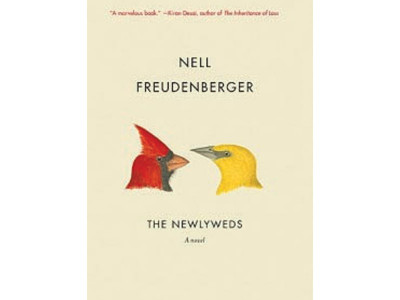
		<title>Book review: &#039;The Newlyweds&#039;</title>
		<link>http://tribune.com.pk/story/393666/book-review-the-newlyweds/</link>
		<pubDate>Thu, 21 Jun 2012 08:57:24 +0000</pubDate>

		<guid isPermaLink="false">http://tribune.com.pk/?p=393666</guid>

		<description>
		<![CDATA[
			<a href="http://tribune.com.pk/story/393666/book-review-the-newlyweds/">
				<img src="http://i1.tribune.com.pk/wp-content/uploads/2012/06/393666-nell-1339683193-283-160x120.JPG" width="160" height="120" alt="" />
			</a>
			<p><p><strong>Author Nell Freudenberger takes on the challenging task of telling a story primarily from the perspective of “the other.” The story is centered on Amina, a Bangladeshi woman, who marries a white American man named George and immigrates with him to Rochester, New York.</strong></p>
<p>This premise was both disconcerting and intriguing. After being introduced to Amina, it soon becomes apparent that her decision to meet someone the way she meets George is an intentional, practical and well-thought-out one that she arrived at together with her parents. And so, I tried, ungrudgingly and un-judgingly, to take the ride along with Amina into a marriage that seemed both unlikely and sensible at the same time.</p>
<p>Amina and her parents have spent much of their lives trying to make ends meet. As a result, Amina has managed to use her limited resources to pass college-level entrance exams with just home-study and is able to earn an income by tutoring the children of wealthy parents. Her desire to go abroad is practical, thoughtful and, perhaps, necessary for her parents’ safety and well-being. And so she does what any modern, educated woman who wants to immigrate to America would do, right? She joins an online chat room where she can meet American men.</p>
<p>Her parents are excited by the prospects and wait patiently as one materialises. Enter George, a middle-class engineer from Rochester who is looking to meet someone “different” from the American women he has unsuccessfully dated in the past. Despite their obvious differences, they both share a desire to settle down and start a family. Amina’s arrival in Rochester is accompanied with the transitional awkwardness that is expected of any such migration. George’s mother tries her level best to welcome Amina, while Cathy, George’s conservative, religious aunt provides a good dose of comical inappropriateness. However, it is the arrival of Kim, George’s cousin, and the estranged, adopted daughter of Cathy, that really shakes things up.</p>
<p>Kim has spent time living in India, working as a Bollywood film extra and then shacking up with a wealthy Indian. She tends to exaggerate or outright lie about her experiences. Back in Rochester, after her failed marriage, she spends her time in Indian tunics, teaching yoga and pursuing a friendship with Amina. The relationship seems contrived at first, but intentionally so. One wonders what Kim’s real motives are, though it’s apparent that they are not necessarily cruel or malicious. Amina’s eventual discovery of George and Kim’s past, as well as her own feelings about her migration, culminate when she returns home to Bangladesh to bring her parents to America. It is here she once again sees Nasir, the son of her father’s friend, who has been tending to her parents during her absence. He has returned from London, swayed towards Islamic conservatism during his stint there, but has since “recovered.”</p>
<p>One can’t help but see that the real love story is between Amina and Nasir. George appears more like a caricature of an “all-American” husband in contrast to Nasir, who is not only Amina’s childhood crush but also forces her to look within herself.</p>
<p>My desire to keep Amina and her parents in Bangladesh became stronger as the story drew towards its end. These were the relationships that were concrete and lasting and the one she has with George falters in the shadows.</p>
<p>As with most stories of migration, this one is also bittersweet. There are reasons for which people are sometimes left with no choice but to displace themselves and give in. But the question that always lingers is: at what cost?</p>
<p>Though I was at first critical of Freudenberger’s ability to write from Amina’s perspective with authenticity, my ill judgment was quelled upon reading the first few chapters. The writer’s descriptions of Bangladesh and Amina’s family life maintain a certain authenticity and don’t come off as clichéd fictional accounts of “exotic lands in South Asia”. The varying levels of religiosity and moral complexity of the characters are also nuanced and believable, something else I wasn’t expecting the author to be capable of.</p>
<p>As Mohsin Hamid aptly states in his review for The New York Times, “…The Newlyweds” is at heart a tale of never-ending migrations. Its world is full of mirrors, the refracted similarities conjured up by globalisation.” It leaves you with nostalgia for things lost and a hesitant openness to what may lie ahead.</p>
<p><em>Published in The Express Tribune, Sunday Magazine, June 17<sup>th</sup>, 2012.</em></p>
</p>
			<br clear="all"/>
		]]>
		</description>

		<media:content width="424" height="318"
							isDefault="true" medium="image" url="http://i1.tribune.com.pk/wp-content/uploads/2012/06/393666-nell-1339683193-283-640x480.JPG">
			<media:title>nell</media:title>
			<media:description>   </media:description>
			<media:thumbnail url="http://i1.tribune.com.pk/wp-content/uploads/2012/06/393666-nell-1339683193-283-160x120.JPG" width="160" height="120" />
      </media:content>

		<wfw:commentRss></wfw:commentRss>
		<slash:comments>0</slash:comments>
	</item>
		<item>
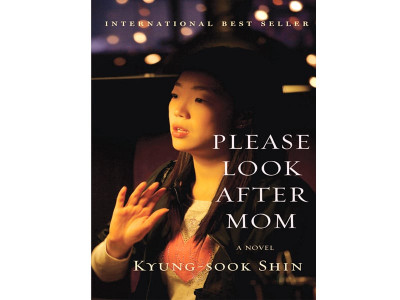
		<title>Book review: Please look after mom - have you seen my Mom?</title>
		<link>http://tribune.com.pk/story/235219/book-review-please-look-after-mom-have-you-seen-my-mom/</link>
		<pubDate>Tue, 23 Aug 2011 07:32:56 +0000</pubDate>

		<guid isPermaLink="false">http://tribune.com.pk/?p=235219</guid>

		<description>
		<![CDATA[
			<a href="http://tribune.com.pk/story/235219/book-review-please-look-after-mom-have-you-seen-my-mom/">
				<img src="http://i1.tribune.com.pk/wp-content/uploads/2011/08/235219-image-1313765838-492-160x120.jpg" width="160" height="120" alt="" />
			</a>
			<p><div>
<p><strong>Book: </strong>Please Look After Mom</p>
</div>
<p><strong> </strong></p>
<p><strong>Author: </strong>Kyung-sook Shin<strong> </strong></p>
<p><strong>Translated from the Korean by: </strong>Chi-Young Kim<strong> </strong></p>
<p><strong>Genre: </strong>Fiction<strong> </strong></p>
<p><strong>Publisher: </strong>Alfred A. Knopf (2011)</p>
<p><strong>Excerpt:</strong></p>
<p><em>“You never stopped calling her Mom. Even now, when Mom’s missing. When you call out “Mom” you want to believe that she’s healthy. That Mom is strong. That Mom isn’t fazed by anything. That Mom is the person you want to call whenever you despair about something…”</em></p>
<p>Their mother has disappeared from a train station in Seoul. Their parents were coming from the Korean countryside for a visit to their children in the city. The children put on a desperate search — they distribute flyers, seek out clues, turn to the police and to passersby, but Mom is nowhere to be found.  Kyung-sook Shin’s novel, <em>Please Look After Mom</em>, is the first of her books to be translated into English. Immensely popular in Shin’s home country of South Korea, the novel has received both acclaim and criticism in the U.S.</p>
<p>Crafted into four parts, each one reflecting a different character’s perspective, Shin has written at least half of the novel in the second person narrative — a style that lends itself well to each character’s self-reflective and at times, self-effacing inner dialogue. The first part belongs to Chi-hon, the elder daughter and a well-known novelist, who reflects on the events since Mom’s disappearance. Her pain is visceral as she treads through the time periods, conversations, and memories of her mother. Deep in her ruminations is the guilt she feels over her recurring terseness and dismissal of Mom’s concern, of Mom’s ignorance and illiteracy.  Shin has weaved together a quiet irony in Chi-hon’s relationship with her mother. Chi-hon has chosen a career as a novelist while her mother has never had the opportunity to become literate.</p>
<p>The next part focuses on Hyong-chol, Mom’s elder son and also her favourite child. Hyong-chol’s account, though not written in the second person, is just as reflective and emotionally jarring as his sister’s. At the heart of his reflection on his relationship with his mother is the feeling that he ultimately let her down by not understanding that her dreams for him were perhaps her dreams for herself.  While Hyong-chol becomes aware of this after Mom’s disappearance, we also learn that Mom held her own guilt towards Hyong-chol, which she attempted to vocalise, if only he was paying attention.</p>
<p>Similarly, their father realises his mistakes and the ways in which he took his wife for granted. His insensitivity and wrongdoing further highlight Mom’s incredible strength of character and the ways in which she remained emotionally isolated for most of her life.</p>
<p>In the final part of the novel, we hear from Mom herself, acutely providing more insight to her life. At 17 she devoted her life to her husband and eventually to her children; a story not uncommon in Eastern cultures.  Mom’s reflections are perhaps the most evocative and soulful pieces of the novel.  As the story unravels from each differing perspective, you learn the secrets and truths that define each character and the family as a whole.  At the backdrop is the history of South Korea and intertwined are themes of war, loss of innocence, and heritage.</p>
<p>Some reviews by critics in the U.S. have referred to <em>Please Look After Mom</em> as a “soap opera,” “melodrama,” and a “guilt-laden morality tale.” Self-inflicted guilt on account of one’s mother is a raw and authentic part of Eastern cultural identity (this is so in a number of other cultures as well) where mothers of prior generations may have suffered silently in many respects while dedicating their life to their children. Their ordeals and sacrifices are far more than just melodrama. The guilt is necessary perhaps to remind us of our responsibilities — to hold us accountable.</p>
<p>In the Eastern world, as is demonstrated by the popularity of the novel in South Korea and the numerous other languages in which it is set to be translated, Shin’s story is not only credible and compelling, but also an opportunity to reflect, remember, and maybe even repent. In a poignant final scene of the novel’s Epilogue, Chi-hon surrenders herself before the Pietà in the heart of the Vatican. It is here that her belated order to look after Mom becomes a plea and a prayer that stirs and resounds long after you have put this novel down.</p>
<p><em> </em></p>
<p><em>Published in The Express Tribune, August 20<sup>th</sup>, 2011.</em></p>
</p>
			<br clear="all"/>
		]]>
		</description>

		<media:content width="424" height="318"
							isDefault="true" medium="image" url="http://i1.tribune.com.pk/wp-content/uploads/2011/08/235219-image-1313765838-492-640x480.jpg">
			<media:title>6</media:title>
			<media:description>Her pain is visceral as she treads through the time periods, conversations, and memories of her mother.</media:description>
			<media:thumbnail url="http://i1.tribune.com.pk/wp-content/uploads/2011/08/235219-image-1313765838-492-160x120.jpg" width="160" height="120" />
      </media:content>

		<wfw:commentRss></wfw:commentRss>
		<slash:comments>2</slash:comments>
	</item>
		<item>
		<title>Book review: The Tiger&#039;s Wife– Our world through folklore</title>
		<link>http://tribune.com.pk/story/215324/book-review-the-tigers-wife-our-world-through-folklore/</link>
		<pubDate>Thu, 28 Jul 2011 09:52:36 +0000</pubDate>

		<guid isPermaLink="false">http://tribune.com.pk/?p=215324</guid>

		<description>
		<![CDATA[
			<a href="http://tribune.com.pk/story/215324/book-review-the-tigers-wife-our-world-through-folklore/">
				<img src="http://i1.tribune.com.pk/wp-content/uploads/2011/07/215324-image-1311360858-472-160x120.jpg" width="160" height="120" alt="" />
			</a>
			<p><div>
<p><strong>Book: </strong>The Tiger’s Wife</p>
</div>
<p><strong> </strong></p>
<p><strong>Author: </strong>Tea Obreht <strong> </strong></p>
<p><strong>Genre: </strong>Fiction<strong></strong></p>
<p><strong>Publisher: </strong>Random House (U.S.) 2011</p>
<p><strong>Excerpt:</strong></p>
<p><em>“Galina, says my grandfather’s handwriting, above and below a child’s drawing of the tiger, who is curved like the blade of a scimitar across the page. Galina, it says, and that is how I know to find him again, in Galina, in the story he hadn’t told me but perhaps wished he had.”</em></p>
<p>Tea Obreht’s much acclaimed novel, <em>The Tiger’s Wife</em>, captures the rich culture of Balkan folklore.  It is through these tales that Obreht paints the landscape of former Yugoslavia, a beautiful land riddled with violence and straddled with the consequences of multiple wars.</p>
<p>The story revolves around Natalia, a young doctor in an unnamed Balkan city, who learns about her grandfather’s death and embarks on a journey of memories, primarily his, that piece together his life against the backdrop of history. Weaved into the story are the arresting tales of the <em>“</em>tiger’s wife<em>”</em> and the <em>“</em>deathless man<em>”</em>.</p>
<p>Juxtaposed to the stories of her grandfather’s childhood and life as a surgeon are the stories of Natalia’s own childhood and teenage years and her observations on the nature of war, specifically when it tears a country into pieces.</p>
<p>The core essence of the story lies in the bloody history of former Yugoslavia. From World War II to the wars of the 90s, Balkan history reveals stories of death and disaster. At the onset of the novel, we travel with Natalia on her mission to a town across the border to inoculate orphans. She arrives with other doctors in the town of Brejevina where she observes a group of ailing people mysteriously digging holes on the property of the host family where the doctors are lodging. The diggers, Natalia learns, are hunting for the buried corpse of their relative, who died without proper rites and whom they believe is afflicting their family from the grave. They have come to the town of Brejevina to right that wrong and expunge the curse.</p>
<p>As she bears witness to how the culture of superstitions exposes an underlying despondency, a loss of control and an attempt to take it back, she recalls once more the stories told to her by her grandfather. As a child she thought these to be fairy tales, but with time and age she learned that they were as real as the wars they were all living through. Much to Natalia’s dismay (being a rational, educated doctor), the superstitions and allegories, in fact, reveal truths about her grandfather’s life and in turn, her own.</p>
<p>Through her recollections, we learn that the “tiger’s wife” is not a mythic creature of fairy tales, but a real person with a brutal history. She was the wife of a butcher’s son, Luka. They lived in the village of Galina, the birthplace of Natalia’s grandfather. The tiger who gave the “tiger’s wife” her name was real too: he made his way to Galina in 1941, after bombs fell on a Balkan city, leaving the tiger to wander. In a captivating and moving way, this woman comes to be forever named the “tiger’s wife.”</p>
<p>Natalia goes over this story and that of the “deathless man” as she performs a rite of her own and of her family’s, finding her grandfather’s belongings and returning them home so that his soul can finally rest. She unearths mysteries of her own and leaves some stories ambiguous, leaving the reader to wonder.</p>
<p>And so, entrenched in the folktales of our cultures are glimpses of our past and maybe lessons for the future. <em>The Tiger’s Wife</em> is a reminder of the strength of stories of magical realism. Interestingly, the folklore of my own country, Pakistan, consists primarily of love stories. Waris Shah, the Punjabi, Sufi poet, made famous the tale of Heer and her lover, Ranjha. Fazal Shah, also a Punjabi poet, popularised the tale of Sohni and Mahiwal, another set of star-crossed lovers. These stories not only speak of romantic love but also intertwine spiritual and mystical elements which reflect a Sufi influence. These stories with tragic endings in the name of culture and tradition are Pakistan’s own account of intolerance, a condition that continues to plague the country.  These folktales are traditionally passed from one generation to the next. In these tales perhaps, are hidden secrets too, of an understanding of the world that escapes us.</p>
<p>In contrast to the folktales in <em>The Tiger’s Wife</em>, which loom around death, Pakistan’s are tales of love, though tragic, but love nevertheless. The core story Obreht chooses to tell, one of the history of her country in the context of war, is complex and multilayered.  She manages to relay it, however, through imagery and imagination. This perhaps can only be achieved through the telling of folktales.<em></em></p>
<p><em>Published in The Express Tribune, July 23<sup>rd</sup>, 2011.</em></p>
</p>
			<br clear="all"/>
		]]>
		</description>

		<media:content width="424" height="318"
							isDefault="true" medium="image" url="http://i1.tribune.com.pk/wp-content/uploads/2011/07/215324-image-1311360858-472-640x480.jpg">
			<media:title>2</media:title>
			<media:description>Folktales often serve as mirrors to our culture, our history, our world</media:description>
			<media:thumbnail url="http://i1.tribune.com.pk/wp-content/uploads/2011/07/215324-image-1311360858-472-160x120.jpg" width="160" height="120" />
      </media:content>

		<wfw:commentRss></wfw:commentRss>
		<slash:comments>3</slash:comments>
	</item>
		<item>
		<title>Book review: Words from Pakistan </title>
		<link>http://tribune.com.pk/story/186254/book-review-words-from-pakistan/</link>
		<pubDate>Thu, 16 Jun 2011 10:45:09 +0000</pubDate>

		<guid isPermaLink="false">http://tribune.com.pk/?p=186254</guid>

		<description>
		<![CDATA[
			<a href="http://tribune.com.pk/story/186254/book-review-words-from-pakistan/">
				<img src="http://i1.tribune.com.pk/wp-content/uploads/2011/06/Modern-Poetry-160x120.jpg" width="160" height="120" alt="" />
			</a>
			<p><div>
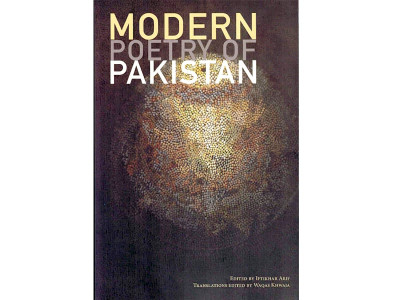
<p><strong>Book: </strong>Modern Poetry of Pakistan</p>
</div>
<p><strong> </strong></p>
<p><strong>Edited by: </strong>Iftikhar Arif<strong> </strong></p>
<p><strong>Translations edited by: </strong>Waqas Khwaja <strong> </strong></p>
<p><strong>Genre: </strong>Poetry Anthology<strong> </strong></p>
<p><strong>Publisher: </strong>Dalkhey Archive Press (2010)</p>
<p><strong>Excerpt</strong></p>
<p><em>“The subject matter of Pakistani poetry ranges from romance to resistance against tyranny of dictators and other oppressors. Some of our more traditional poetry is coached rhyme and meter, while some is free verse. The most recent Pakistani poetry is offbeat and avant-garde and exudes a new sensibility, infused with fresh metaphors and similes. As a general rule, though, the diction of our poetry is devoid of stereotypes, clichés, and other hackneyed expressions. Pakistani poetry can, I believe, easily be compared to the best poetry currently being written in any of the world’s major languages.” — Foreward by Fakhar Zaman, Chairman, Pakistan Academy of Letters, Islamabad.</em></p>
<p><em> </em></p>
<p>Creative voices from Pakistan have been an important part of the programming at the Asia Society in New York as of late. At the PEN World Voices festival in April, the Asia Society presented <em>Modern Poetry of Pakistan</em>, a collection of translated poems from seven Pakistani languages (written by 44 poets). The event titled, <em>Word from Asia: Contemporary Writing from Pakistan</em>, took place on April 30 in a sun-lit room of the Asia Society on the Upper East Side in New York. Two female, Pakistani poets arrived from Pakistan and presented their work, bringing the event to life with their dynamic, passionate, and diverse work.</p>
<p>Waqas Khwaja, poet and professor of English at Agnes Scott College in Georgia, started the event by introducing the anthology of poems, which he had edited. The anthology is part of an international literary exchange between the Pakistan Academy of Letters and the National Endowment for the Arts of the United States. He also provided context for the project: how the poems emerging from Pakistan reflect the beat of the country, specifically as Pakistan continues to remain at the forefront of the global political landscape.</p>
<p>Khwaja began with introducing the work of Hasina Gul, a Pashto poet from Khyber Pakhtunkhwa, who in addition to being a poet, works as a broadcaster at the Pakistan Broadcasting Corporation. Gul’s work often represents the adversity she faces for expressing her creativity; for being a woman with a public voice. She has survived the assassination of her younger brother who had served as her escort and protector in light of the risk associated with her work.</p>
<p>He then introduced Fahmida Riaz, one of Pakistan’s most prominent living poets, whose work is inspired by strong feminist ideals. She has led a life of social activism despite aggressive repression by the military regime under Ziaul Haq. Riaz lived in exile for seven years, working and teaching in India, after being incarcerated for “subversive acts” against the dictatorial regime.</p>
<p>Before turning the microphone over to the poets, Khwaja recited a poem by Faiz Ahmed Faiz, reminding the audience of Faiz’s place in the history of Pakistani poetry. Reminding us, through Faiz’s words, just how much he has inspired and shaped the creative voices emerging from Pakistan today.</p>
<p>Later, Riaz recited several of her poems, giving us glimpses into her life and her perspective on social constructs and different eras in Pakistan’s history. She began with her poem, <em>Aqleema</em>, based on a Quranic and Biblical story about the object of Habeel and Qabeel’s affection (Abel and Cain in the Bible). I was taken aback by the hold Riaz’s recitation took on the room. <em>Aqleema</em> is a raw poem with vivid imagery. It is short in length and deep in meaning. A complete hush came over the crowd as she recited the final few lines:</p>
<p><em>Above the slender thighs,</em></p>
<p><em>the intricate womb,</em></p>
<p><em>Aqleema has a head too.</em></p>
<p><em>Allah, speak sometimes to Aqleema too,</em></p>
<p><em>ask something!*</em></p>
<p>Riaz’s poems are a sampling of the voice of the vibrant feminist movement of Pakistan that continues to take shape and evolve with the changing currents of the country’s socio-political landscape.</p>
<p>Next was Gul’s recitation in Pashto. While I do not understand the Pashto language, the impassioned tones and the far-away look in her eyes managed to relay the ardour of her words. And just so, the translations affirmed that her words had revealed intense emotions and grave circumstances.</p>
<p>In a contrasting tone, a recitation of the translation of Ustad Daman’s sardonic and whimsical Punjabi poem, <em>‘My Country Has Two Allahs,’</em> elicited heartfelt laughter from the audience:</p>
<p><em>My country has two Allahs</em></p>
<p><em>La ila and Martial Law!</em></p>
<p><em>Our lives high above the skies,</em></p>
<p><em>The other on terra firma lies…*</em></p>
<p>Recitations were also presented in several of the other languages.</p>
<p>The anthology makes apparent the richness of Pakistan’s many cultures, languages, and traditions. It also makes apparent the striking similarities. The one pulse of the poems beats loud and clear, regardless of whether they are written in Balochi, Kashmiri, Sindhi, Punjabi, Pastho, Seraiki, or Urdu. The words transcend languages in their conveyance of emotions and perceptions that are more similar than they are different.</p>
<p>It was particularly stirring to hear female poets with strong voices — strong enough to articulate their perceptions and misgivings in a patriarchal society that continues to favour a male-dominated culture. This form of creative expression is one example and an indication of what Pakistan continues to offer on a global literary scale.</p>
<p>* <em>Aqleema</em> by Fahmida Riaz translated from Urdu by Yasmeen Hameed</p>
<p>* <em>My Country Has Two Allahs</em> translated from Punjabi by Waqas Khwaja.</p>
<p><em> </em></p>
<p><em>Published in The Express Tribune, June 11th, 2011.</em></p>
</p>
			<br clear="all"/>
		]]>
		</description>

		<media:content width="424" height="318"
							isDefault="true" medium="image" url="http://i1.tribune.com.pk/wp-content/uploads/2011/06/Modern-Poetry-640x480.jpg">
			<media:title>Modern Poetry</media:title>
			<media:description></media:description>
			<media:thumbnail url="http://i1.tribune.com.pk/wp-content/uploads/2011/06/Modern-Poetry-160x120.jpg" width="160" height="120" />
      </media:content>

		<wfw:commentRss></wfw:commentRss>
		<slash:comments>1</slash:comments>
	</item>
	
</channel>
</rss>
<!-- Performance optimized by W3 Total Cache. Learn more: http://www.w3-edge.com/wordpress-plugins/

Page Caching using apc
Database Caching 12/30 queries in 1.548 seconds using memcached
Object Caching 765/840 objects using apc

 Served from: tribune.com.pk @ 2013-05-25 14:28:17 by W3 Total Cache -->