<?xml version="1.0" encoding="UTF-8"?>
<rss version="2.0"
	xmlns:content="http://purl.org/rss/1.0/modules/content/"
	xmlns:wfw="http://wellformedweb.org/CommentAPI/"
	xmlns:dc="http://purl.org/dc/elements/1.1/"
	xmlns:atom="http://www.w3.org/2005/Atom"
	xmlns:sy="http://purl.org/rss/1.0/modules/syndication/"
	xmlns:slash="http://purl.org/rss/1.0/modules/slash/"
	xmlns:media="http://search.yahoo.com/mrss/"
	>

<channel>
	<title>The Express Tribune &#187; Ayesha Ijaz Khan</title>
	<atom:link href="http://tribune.com.pk/author/184/ayesha-ijaz-khan/feed/" rel="self" type="application/rss+xml" />
	<link>http://tribune.com.pk</link>
	<description>Latest Breaking Pakistan News, Business, Life, Style, Cricket, Videos, Comments</description>
	<lastBuildDate>Wed, 22 May 2013 14:51:10 +0000</lastBuildDate>
	<language></language>
	<sy:updatePeriod>hourly</sy:updatePeriod>
	<sy:updateFrequency>1</sy:updateFrequency>
	<generator>http://wordpress.org/?v=3.5.1</generator>

		<item>
		<title>Wake up, Pakistan!  </title>
		<link>http://tribune.com.pk/story/451828/wake-up-pakistan/</link>
		<pubDate>Mon, 15 Oct 2012 17:57:33 +0000</pubDate>

		<guid isPermaLink="false">http://tribune.com.pk/?p=451828</guid>

		<description>
		<![CDATA[
			<a href="http://tribune.com.pk/story/451828/wake-up-pakistan/">
				<img src="http://i1.tribune.com.pk/wp-content/uploads/2012/10/451828-AyeshaIjazKhanNew-1350318707-592-160x120.jpg" width="160" height="120" alt="" />
			</a>
			<p><p>The <a href="http://tribune.com.pk/malala/">brutal attack on Malala Yousafzai</a> by the TTP and the subsequent claim by its spokesman that she would be attacked again if she survived should leave no doubt in anyone’s mind as to what Pakistan’s number one problem and biggest obstacle to progress is. Any activist, politician or religious leader who dares to speak out against this barbaric and regressive ideology is immediately labelled “an agent of the West” and thus fair game to eliminate. Whether the person in question has spent time in the West, as in the case of Benazir Bhutto, or not — as in the case of Malala — is quite irrelevant. What is relevant is that these thugs want to take over the state and will use fear to do it as they do not have an ideology that could appeal to voters. They use religion as an excuse though they equally target those who understand religion far better than they do, such as the eminent Javed Ghamidi, who had to leave Pakistan due to threats for his rational and enlightened interpretations of religion.</p>
<p>It is time now to wake up. Malala does not need offers of financial assistance to pay her medical expenses from the government or opposition leaders. There are plenty of private sources who would be more than willing to do that. What the government and opposition need to do is to name, condemn and act against these monsters. There can be no more state patronage of such forces, whether by the military or the bureaucracy. There must be zero tolerance for labelling people as “slaves/agents of the West” or “anti-state or religion” in the media as this creates the environment which emboldens such people to act. And the civilian government, too, must realise that unless it delivers basic necessities to the people, it will continue to be demonised and the necessary mass required for this collective action will be difficult to gather. What we have seen thus far has been a pathetic display of warped priorities from nearly every institution of state and I would like to address these in turn.</p>
<p>Let’s begin with the military. As the most powerful institution of state, it has not only consumed the lion’s share of our resources but has also relied heavily on US aid to build itself. Of the $30 billion Pakistan has received in US aid since 1948, half has gone to the military. Pakistan had legitimate security concerns and needed a strong army. Therefore, if it used US aid to build its army, there is nothing wrong with that. But what is wrong is the misinformation spread by military mouthpieces and particularly by those politicians backed by the army. In the early 1990s, this role was played by Nawaz Sharif and today it is played by Imran Khan. The military seems to have a strategy to discredit civilian governments by labelling them as “sell-outs” and too close to America. Yet, the reality is that Pakistan has been far more closely allied with the US during military dictatorships than during civilian rule. So what is the hoopla about? The same approach is used on the drone issue. Having provided the US with bases to operate the drones from, the military is now making all the anti-drone noises through its preferred politician. For its part, the civilian government is too weak, too incompetent and perhaps, increasingly too unpopular to explain the reality to the people. As a result, confusion abounds regarding sovereignty and whether or not it is our war. When this clash occurs between two key institutions of state, the military and the civilian government, the terrorists benefit.</p>
<p>Yet, the military and the civilian government are not the only ones clashing. There is a clash equally between the judiciary and the executive. After General (retd) Pervez Musharraf deposed a sitting chief justice and a lawyers’ movement eventually led to the restoration of democracy, it was most unbecoming of President Asif Ali Zardari to go back on his word to restore the chief justice. Dilly-dallying on that issue not only alienated the PML-N that was willing to work together with the PPP after the euphoric return to democracy, but precious time was lost battling the judiciary instead of terrorism. By the time the judiciary was finally restored, President Zardari had sidelined some of the most competent members of his party in favour of those who had given him bad advice. The judiciary, too, for its part, seems to have held that delay against the president and contrary to high expectations of those of us who supported the movement for the establishment of a just and impartial Court, it appears often that we may only have gotten a petty populist one.</p>
<p>This clash between the executive and judiciary has kept the country fixated on most superfluous matters. While the Court has pursued the matter of the Swiss letter at the expense of many other more pressing concerns, the PPP government has also remained defiant and refused to cooperate such that the country can move on. While <a href="http://tribune.com.pk/story/368860/bannu-jailbreak-probe-khyber-pakhunkhtwa-govt-inquiry-panel-visits-prison/">jailbreaks releasing terrorists in Bannu</a> or Shias killed in Quetta remain low priorities for the judiciary to intervene, purging the handful of dual nationals in parliament seems to be high on the to-do list. Resources are disproportionately expended on picking easy targets which have no net positive effect on Pakistan, while more pressing concerns remain unattended. The Election Commission of Pakistan, for instance, equally zealous to disempower dual nationals, takes a cowardly line on empowering women and acquiesces to constituency politicians from areas where women are denied the right to vote.</p>
<p>Priorities are so skewed in terms of what is important and what is not. While both the judiciary and the bureaucracy remain soft on the question of terrorism, the PPP core has its bearings in the right place when it comes to terrorists. Surely, both the ANP and PPP have suffered the loss of party workers and leaders to this fight, too. But, unless people are at least given basic security, electricity and water, it is difficult to expect them to support the government. Instead, resentment grows when politicians from the ruling coalition travel in SUVs blocking roads en route to palatial homes, all the while <a href="http://tribune.com.pk/story/451477/cricketers-and-taxes/">paying a pittance in taxes</a>. Unfortunately, those in the opposition don’t offer better alternatives. If they can’t even appropriately acknowledge Pakistan’s most fundamental problem, how will they ever fix it?</p>
<p><em>Published in The Express Tribune, October </em><em>16<sup>th</sup>, 2012.</em></p>
</p>
			<br clear="all"/>
		]]>
		</description>

		<media:content width="424" height="318"
							isDefault="true" medium="image" url="http://i1.tribune.com.pk/wp-content/uploads/2012/10/451828-AyeshaIjazKhanNew-1350318707-592-640x480.jpg">
			<media:title>Ayesha Ijaz Khan   New</media:title>
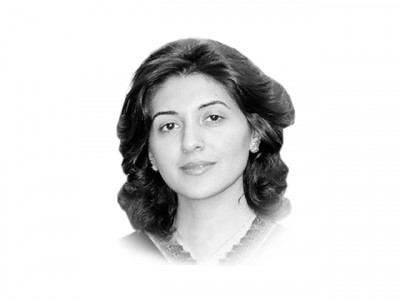
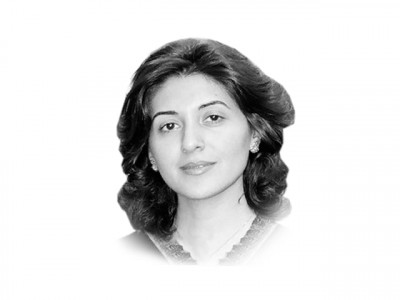
			<media:description>The writer is a London-based lawyer and tweets @ayeshaijazkhan</media:description>
			<media:thumbnail url="http://i1.tribune.com.pk/wp-content/uploads/2012/10/451828-AyeshaIjazKhanNew-1350318707-592-160x120.jpg" width="160" height="120" />
      </media:content>

		<wfw:commentRss></wfw:commentRss>
		<slash:comments>38</slash:comments>
	</item>
		<item>
		<title>Free speech or provocation?</title>
		<link>http://tribune.com.pk/story/440452/free-speech-or-provocation/</link>
		<pubDate>Fri, 21 Sep 2012 18:21:40 +0000</pubDate>

		<guid isPermaLink="false">http://tribune.com.pk/?p=440452</guid>

		<description>
		<![CDATA[
			<a href="http://tribune.com.pk/story/440452/free-speech-or-provocation/">
				<img src="http://i1.tribune.com.pk/wp-content/uploads/2012/09/440452-AyeshaIjazKhanNew-1348245678-380-160x120.jpg" width="160" height="120" alt="" />
			</a>
			<p><p>One of the tragedies of our times is that it has become impossible to discuss any issue on its merits without being attacked by either one side or the other and being presented with false equivalences as if they were real arguments. For instance, why can’t I talk about the fact that many of our laws in Pakistan discriminate against religious minorities without someone bringing up drones or some unrelated matter on Western imperialism? Similarly, why can’t I note that there is rising Islamophobia in the West and that films like the reprehensible <em>Innocence of Muslims</em> are deliberate provocations in the guise of free speech without being told from someone on the other side that Pakistani lawyers garlanded a murderer called Mumtaz Qadri? What on earth is the connection?</p>
<p>As our world becomes increasingly interconnected through large-scale immigration and the Internet, perhaps, the most important need going forward will be harmony among disparate communities and a need to understand each other. This can only be done if there is greater introspection on all sides. What I see instead is far more calls for the other side to “<a href="http://www.post-gazette.com/stories/opinion/perspectives/thomas-l-friedman-muslims-look-in-the-mirror-654068/">Look in your mirror</a>”, as Thomas Friedman advised Muslims recently, but very little inclination to do so oneself. And Western analysts alone are not guilty of this. The same thing happens with amazing consistency in Pakistan and other Muslim countries. As a result, audiences tune into what they want to hear respectively and this only leads to greater polarisation.</p>
<p>I admire liberals in general, whether they are in Pakistan speaking out against the many shortcomings of Pakistani society or in the West speaking out against discrimination towards immigrants or faulty foreign policy. <a href="https://www.google.com/url?q=http://tribune.com.pk/story/413859/in-pakistan-liberal-is-a-dirty-word/&amp;sa=U&amp;ei=i6xcULu2Far6mAXGuIBo&amp;ved=0CA8QFjADOFA&amp;client=internal-uds-cse&amp;usg=AFQjCNGNhrRwbI_NBnglrWJkEj_Zvx3i0Q">Liberals in Pakistan</a> are particularly courageous because the environment is often not conducive to speaking out on sensitive subjects and because it is easy to be dubbed a “traitor”. But what I do not understand is why some are so oblivious to the <a href="https://www.google.com/url?q=http://blogs.tribune.com.pk/story/13135/islamophobia-and-huma-abedin/&amp;sa=U&amp;ei=fq1cUKifAeT1mAWp8YCoDg&amp;ved=0CA8QFjAD&amp;client=internal-uds-cse&amp;usg=AFQjCNGCWv3E0O3QxmmQO7tr_QdmGUdhCg">rising Islamophobia in the West</a> or simply cannot stand any mention of it. Is it that they are just not aware of it or do they think it would undermine their argument if they were to acknowledge it?</p>
<p>A common theme in the aftermath of the anti-Islam film that sparked regrettable violence across the Muslim world was that this outrage was manipulated for the benefit of hard line groups that wish to promote their agendas in the guise of political Islam. I agree with this analysis. However, I must also question why it is not pointed out that those who are linked to such anti-Islam films and other provocations in the West are also manipulating public sentiments for their political agenda. That is, the agenda of the far Right, which will readily blame all rising unemployment on immigrants stealing their jobs or gladly paint Muslims as “violent savages that hate our values” so it becomes easier to bomb Iran, for example.</p>
<p>Equally importantly, it is not just foreign policy that is affected when Muslims are dehumanised. In 2007, I was in New York for the summer. I was residing in the Upper West Side, which is a nice area and I felt no discrimination by virtue of being Muslim or brown. One day, however, I walked into a salon that advertised “Eyebrow Threading”. When I told the woman inside that I had come in because of the sign outside, she told me to take a seat. From the way she held the thread, I could immediately tell she was Pakistani but before I could ask her where she was from, she asked me. Naturally I said, “Pakistan”. For the next five minutes she was frozen, statuesque, her thread stuck in her fingers, as if she had been transported to Madame Tussauds. I stared back at her wondering what her problem was. And then in a hushed voice she said to me,“<em>Mein bhi Pakistan se hoon magar mein kehti tau nahin hoon kisi ko</em>”.</p>
<p>“<em>Kyun</em>?” I asked her, completely perplexed, and she went into a detailed description of how her husband’s business had been burned right after 9/11, targeted because they were Muslims, how they had lost so much that now she worked on the Upper West Side commuting in from a not so nice part of Queens and that the only way she felt safe was by concealing her Pakistani Muslim identity.</p>
<p>Free speech is great but if it results in an environment that demonises a community and renders it unsafe for them or more conducive to hate crimes against religious minorities, <a href="http://tribune.com.pk/story/439935/freedom-of-expression-where-can-we-draw-the-line/">it must be revisited</a>. Incidentally, I would advocate the same standard for those preaching hatred against Jews, Christians, Hindus or any sect of Islam in sermons after Friday prayers, for example, that I would for those preaching hatred against Muslims or Islam in the West.</p>
<p>Much is made of the First Amendment to the US Constitution that guarantees free speech. Yet, narrow exceptions have been made to it. In the case of <a href="http://www.law.cornell.edu/supct/html/01-1107.ZS.html">Virginia vs Black</a>, for instance, cross-burning, when it is done to intimidate a group or person is not protected as free speech. Surely, there is a historical reason behind this, intricately connected to the activities of the Ku Klux Klan that had been instrumental in fomenting racial tension and hatred. But shouldn’t changing realities in the new world order also merit at least a debate on the pros and cons of unrestricted free speech?</p>
<p>In France, on the other hand, it must be pointed out that the satirical magazine, <em>Charlie Hebdo</em>, that unapologetically published the cartoons of the Holy Prophet (pbuh) not once, but twice, fired the employee responsible for drawing a cartoon of Nicolas Sarkozy’s son depicting him as having converted to Judaism to get ahead in life. It is then not completely outrageous that Muslims feel double standards are at play, as free speech is never absolute. It is always subject to a value system.</p>
<p>I must add here that the modern Western world has at least legally offered greater protection to religious minorities than the rest of the world. However, we must be equally vigilant towards the hard liners vying for political Islam and instigating crude violence in Muslim countries as we should to the far Right pursuing its agenda in the West through sophisticated provocation.</p>
<p><em>Published in The Express Tribune, September </em><em>22<sup>nd</sup>, 2012.</em></p>
</p>
			<br clear="all"/>
		]]>
		</description>

		<media:content width="424" height="318"
							isDefault="true" medium="image" url="http://i1.tribune.com.pk/wp-content/uploads/2012/09/440452-AyeshaIjazKhanNew-1348245678-380-640x480.jpg">
			<media:title>Ayesha Ijaz Khan   New</media:title>
			<media:description>The writer is a London-based lawyer and tweets
@ayeshaijazkhan </media:description>
			<media:thumbnail url="http://i1.tribune.com.pk/wp-content/uploads/2012/09/440452-AyeshaIjazKhanNew-1348245678-380-160x120.jpg" width="160" height="120" />
      </media:content>

		<wfw:commentRss></wfw:commentRss>
		<slash:comments>63</slash:comments>
	</item>
		<item>
		<title>Dual nationality and hypocrisy   </title>
		<link>http://tribune.com.pk/story/408705/dual-nationality-and-hypocrisy/</link>
		<pubDate>Sun, 15 Jul 2012 16:15:56 +0000</pubDate>

		<guid isPermaLink="false">http://tribune.com.pk/?p=408705</guid>

		<description>
		<![CDATA[
			<a href="http://tribune.com.pk/story/408705/dual-nationality-and-hypocrisy/">
				<img src="http://i1.tribune.com.pk/wp-content/uploads/2012/07/408705-AyeshaIjazKhanNew-1342365794-788-160x120.jpg" width="160" height="120" alt="" />
			</a>
			<p><p>Things are bad in Pakistan. We have an exploding population, failing infrastructure, little hope for basic amenities or employment for the bulk of our people, a terrible law and order situation and rising militancy. So who do we blame? In reality, this is the result of a series of bad decisions and incompetence on the part of the military and civilian apparatus that has governed Pakistan over the years. However, it is far easier to scapegoat a small group rather than analyse the failings of entrenched powers. <a href="http://tribune.com.pk/dualnationality/">So we have decided that if only we rid ourselves of dual national parliamentarians</a>, we will purge ourselves of those with dubious loyalty and be well on our way to progress.</p>
<p>We are nevertheless confused if applying this rule simply to parliamentarians will do the trick, or if we need to extend it to judges, bureaucrats, army officers and the like. At the same time, we also keep reminding our dual nationals abroad that their money is welcome in Pakistan and we may also give them the vote. It’s just that if they ever decide to contest for the legislature then their loyalty becomes an issue. Could there be a more hypocritical position?</p>
<p>Different countries deal with dual nationality differently. Some disallow it altogether, others discourage it and still others celebrate it. Of those that allow it, the UK and Canada come to mind as very open and comfortable with the concept, with Canada even boasting a prime minister who had dual nationality. Nevertheless, before we look to other countries, we need to recognise that few countries are as dependent on dual nationals as Pakistan. Not only in terms of much-needed remittances but also funding and expertise for all major philanthropic projects in Pakistan are inextricably linked to support from its dual nationals abroad.</p>
<p>Because this has become such an emotive subject, the media largely plays to the gallery and it is impossible to hear the other side, at least on the electronic medium. <a href="http://tribune.com.pk/story/405396/on-dual-nationality-and-allegiances/">I will attempt to dispel some of the fallacious claims that have been made regarding dual nationals in these pages</a>. First, a big deal has been made of the fact that in order to become a US citizen a person must take an oath and pledge to bear arms for the US. Of the many Pakistanis that have dual American and Pakistani citizenships has any ever borne arms against Pakistan? I can’t even think of one. However, I can unfortunately think of many single national Pakistanis who have killed Pakistanis in our bazaars and shrines, kidnapped them and looted them at gunpoint, raped women and abducted children. Curiously, however, I can also think of a dual national called<a href="http://tribune.com.pk/story/10941/the-hunt-for-faisal-shahzad/"> Faisal Shahzad</a>, who in spite of the oath, took up arms, not against Pakistan but against the US itself. This, too, is regrettable as violence in all its forms must be condemned, but the point is that a bureaucratic oath doesn’t suddenly reshape allegiances.</p>
<p>Second, much is made of the fact that remittances from the Middle East are greater than those from the West and the Middle East does not allow dual nationality. According to the Pakistan Institute for Legislative Development and Transparency (PILDAT), the remittances from the Middle East stand at 58 per cent. Thus, 42 per cent come from the West, which is nearly half. Moreover, the number of Pakistanis in the Middle East is many times that in the West so per person remittance is far higher from the West. In addition, it is incorrect to assume that everyone in the Middle East is a single national or that everyone in the West is a dual national. In fact, those with some of the best jobs in the Middle East who transfer the greatest amounts are often dual nationals of the US, the UK or Canada. Also very relevant is the fact that since the Middle East does not allow Pakistani charities to establish offices as the West does, organisations such as the Edhi Foundation, Citizen’s Foundation, Developments in Literacy and others are overwhelmingly remitting from the West. Hence, it would not be incorrect to assume that while remittances from the Middle East go largely to families, those from the West often go to philanthropic ventures.</p>
<p>Third, it is preposterous to assume that dual nationals only live abroad. Many reside in Pakistan and have done so for years. Others have moved back recently. Their contributions are even more valuable in terms of providing key expertise as lawyers, doctors, dentists, etc. Dual national doctors have served as senior bureaucrats in public hospitals in Pakistan very effectively. If we decide that it is kosher for them to do private practice in Pakistan and serve the rich but not work in public hospitals, we will only be discriminating against the poor.</p>
<p>Finally, much is made of the idea that a dual national will leave Pakistan if the country is in trouble. If this is true, then it will apply equally to those who are permanent residents of other countries, of which we have many more than simply dual nationals, who incidentally may not have taken an oath but have registered an intent to migrate to a foreign country. Moreover, these days anyone with money can easily get residency in another country whether it is Malaysia, Singapore, Canada, the US, the UK or the United Arab Emirates.</p>
<p>We need to stop demonising groups and start building Pakistan. Prominent political scientist Robert Dahl measures the effectiveness of a democracy on two dimensions — contestation and inclusiveness. While Pakistan may rank quite high on contestation since we openly condemn our leaders as “corrupt and traitorous”, we rank abysmally low on inclusiveness. It is very difficult to break down the barriers to entry in traditional Pakistani politics. Some who may have overcome this may in fact be dual nationals as they would have had to leave the country to make their money and gain enough expertise to be valued by the traditional setup. Alienating this self-made group would be counter-productive. Dual nationals who have effectively been funding all major charities in Pakistan and single nationals who have worked in the field, at times risking their lives to do so, must work together to overcome our grave problems. Let’s not doubt each other’s loyalty but deliver for the masses that have so little.</p>
<p><em>Published in The Express Tribune, July 16<sup>th</sup>, 2012.</em></p>
</p>
			<br clear="all"/>
		]]>
		</description>

		<media:content width="424" height="318"
							isDefault="true" medium="image" url="http://i1.tribune.com.pk/wp-content/uploads/2012/07/408705-AyeshaIjazKhanNew-1342365794-788-640x480.jpg">
			<media:title>Ayesha Ijaz Khan   New</media:title>
			<media:description>The writer is a London-based lawyer and tweets @ayeshaijazkhan</media:description>
			<media:thumbnail url="http://i1.tribune.com.pk/wp-content/uploads/2012/07/408705-AyeshaIjazKhanNew-1342365794-788-160x120.jpg" width="160" height="120" />
      </media:content>

		<wfw:commentRss></wfw:commentRss>
		<slash:comments>68</slash:comments>
	</item>
		<item>
		<title>The PTI’s education policy  </title>
		<link>http://tribune.com.pk/story/318470/the-ptis-education-policy/</link>
		<pubDate>Sun, 08 Jan 2012 16:36:03 +0000</pubDate>

		<guid isPermaLink="false">http://tribune.com.pk/?p=318470</guid>

		<description>
		<![CDATA[
			<a href="http://tribune.com.pk/story/318470/the-ptis-education-policy/">
				<img src="http://i1.tribune.com.pk/wp-content/uploads/2012/01/318470-AyeshaIjazKhanNew-1326035161-318-160x120.jpg" width="160" height="120" alt="" />
			</a>
			<p><p>Recently, Imran Khan’s Q&amp;A with students in Karachi was telecast in To the point on the Express channel. There were some good questions and some not-so-well-left dodges. To two questions in particular, on refusing to be critical of MQM and on articulating a succession plan for PTI, Mr Khan avoided any direct response. In the case of the latter, in fact, he digressed into the sher and geedar metaphor that he is so fond of. Mr Khan has begun to avoid assigning blame to the MQM in Karachi. He always refrained from blaming the Taliban and militant groups for the deaths of countless Pakistanis. And in spite of his <a href="http://tribune.com.pk/story/313215/imran-khans-hollow-apology-on-balochistan/">apology to the Baloch in his Karachi rally</a>, he has also shied away from questioning the role of the security agencies in violating the rights of the Baloch.</p>
<p>I find it curious that the PTI has been in existence for 15 years and consistently it has insisted that, unlike other parties, it draws on the expertise of professionals to formulate policy. Yet when pressed for policy prescriptions, Mr Khan gives only brief populist responses, followed by the refrain that think-tanks are working on it. If the full policy has not been unveiled in the last 15 years, what will change in the next year or so to make this possible?</p>
<p>Mr Khan appears sure of one thing. There is to be <a href="http://tribune.com.pk/story/266672/reforming-our-education-system/">one system of education across Pakistan</a>. But he has never clearly articulated which system this will be. Will the medium of instruction be Urdu or English? It would be unwise to do away with English and opt for Urdu as not only is professional education primarily available in English, but English is also rapidly becoming the lingua franca of our world. Even countries like Germany, that have advanced education available in their native tongue and are particularly renowned for their engineering, are now aggressively making English classes more readily available to their population. This would leave us with the conclusion that if we are to have one system, then the medium of instruction in our schools should be English.</p>
<p>There is a problem with this however. How will we ensure English-speaking teachers in rural areas far removed from the cities? Often, it is difficult to find teachers in those areas who are fluent in Urdu as Urdu is only the native tongue of a fraction of our population. Nevertheless, it is still far more possible to hire teachers who are competent in Urdu than in English. A few years ago, I visited some government schools in Sheikhupura, just an hour outside Lahore. The schools were being resuscitated by a joint collaboration between the NGOs ‘DIL’ and ‘CARE’.</p>
<p>Not only do we have an Urdu/English divide but we also have a Matric/GCSE divide. It will be next to impossible to find teachers for every district in Pakistan that could teach GCSE-level English and equally impossible to deny those who can afford this elite education for their children. Hence the divide will remain. Mr Khan would be wise therefore to talk about the uplift of the current education system but he is hoodwinking the people if he claims he can enforce one system of education in Pakistan.</p>
<p>Add to this the <a href="http://tribune.com.pk/story/317461/tribune-take-government-turning-a-blind-eye-towards-madrassas/">complication of the growing chain of madrassas</a> which have introduced yet another system and enhanced divides among our population. Will it be possible for Mr Khan to convince the proponents of the madrassa system to dispense with their curriculum and priorities and follow those of the state? What will he do if they refuse?</p>
<p>Finally, Mr Khan also stated that he will double the education budget if he comes to power. This is great news but doubling the education budget means cutting down on something else as there are only so many pieces of the pie. Given that we have one of the lowest allocations to education in the world and have one of the highest allocations to defence as a percentage of our budget, it would make sense if the shortfall came out of the defence allocation. But does he have a green light from the establishment that seems close to him to go ahead with this very welcome change? If not, what prescription does he have to double the education budget? Surely, taxes must be raised on the rich and more people added to the tax net, but the effects of that will take a few years to materialise. It would be good for PTI to think through these tough questions and understand that if they make very tall claims, it will be very difficult to follow through on them.</p>
<p><em>Published in The Express Tribune, January 9<sup>th</sup>, 2012.</em></p>
</p>
			<br clear="all"/>
		]]>
		</description>

		<media:content width="424" height="318"
							isDefault="true" medium="image" url="http://i1.tribune.com.pk/wp-content/uploads/2012/01/318470-AyeshaIjazKhanNew-1326035161-318-640x480.jpg">
			<media:title>Ayesha Ijaz Khan   New</media:title>
			<media:description>The writer is a lawyer and political commentator based in London
ayesha.khan@tribune.com.pk</media:description>
			<media:thumbnail url="http://i1.tribune.com.pk/wp-content/uploads/2012/01/318470-AyeshaIjazKhanNew-1326035161-318-160x120.jpg" width="160" height="120" />
      </media:content>

		<wfw:commentRss></wfw:commentRss>
		<slash:comments>71</slash:comments>
	</item>
		<item>
		<title>Targeting dual nationals  </title>
		<link>http://tribune.com.pk/story/311845/targeting-dual-nationals/</link>
		<pubDate>Sun, 25 Dec 2011 18:14:30 +0000</pubDate>

		<guid isPermaLink="false">http://tribune.com.pk/?p=311845</guid>

		<description>
		<![CDATA[
			<a href="http://tribune.com.pk/story/311845/targeting-dual-nationals/">
				<img src="http://i1.tribune.com.pk/wp-content/uploads/2011/12/311845-AyeshaIjazKhanNew-1324824989-253-160x120.jpg" width="160" height="120" alt="" />
			</a>
			<p><p>In light of the Election Commission of Pakistan’s (ECP) recent move to <a href="http://tribune.com.pk/story/308776/ec-declares-dual-nationality-holders-ineligible-to-contest-polls/">bar dual nationals from contesting elections</a>, one must ask whether such a decision would enhance the calibre of our parliament. The ECP has referenced Article 63 of the Constitution. However, it must be remembered that Articles 62 and 63, governing the qualifications and disqualifications for parliamentarians, were inserted into the Constitution under the auspices of a dictator called General Ziaul Haq. In addition, the wording of the articles is both vague and overbroad. For example, few would argue that a convicted felon should not be permitted to contest elections but how would one define something as vague as “good character” or being “<em>sadiq</em> and <em>amen</em>”? Perhaps it is time to <a href="http://tribune.com.pk/story/261782/pp-220-khagga-disqualified-from-by-poll/">revisit Articles 62 and 63</a> and to debate afresh whether disallowing dual nationals from contesting elections is really good for Pakistan.</p>
<p>Let’s first take a look at who dual nationals are. They comprise of a variety of different people, including, for instance, those wealthy Pakistanis who use birth tourism to ensure that their children are born with two nationalities and those affluent few who make foreign investments to ensure an opt out should conditions in Pakistan deteriorate further; but they also include those hard-working middle-class Pakistanis who go abroad in search of a livelihood and often sustain families back home. It is this latter category in fact that forms the bulk of dual nationals. When laws are made, they are not made to exclude a few people we may not like. They are made to apply to everyone equally. And thus it must be asked whether denying rights to this category of people and hence <a href="http://tribune.com.pk/story/310254/opposition-to-reforms-imran-plans-to-challenge-dual-nationals-bar/">alienating them will harm Pakistan</a> or help it?</p>
<p>Much has been said, for instance, about Husain Haqqani’s dual nationality. He has denied the rumours, insisting that he is only a Pakistani national. Irrespective, it must be pointed out that many countries appoint dual nationals as their ambassadors. An ability to speak the language of the host country well, understand its culture and promote greater understanding is what an ambassadorial role entails. This has often meant that dual nationals are better placed to carry out this function. In Pakistan, the precedent was set a long time ago when, in 1952, <a href="http://en.wikipedia.org/wiki/Muhammad_Asad">Muhammad Asad</a> (born Leopold Weiss), an Austrian Jewish convert to Islam, took on Pakistani citizenship in addition to his Austrian one, and was appointed Pakistan’s minister plenipotentiary to the United Nations in New York.</p>
<p>Nor are dual nationals limited to ambassadorial positions in today’s global village. In fact, Rafik Hariri, former prime minister of Lebanon, widely credited for rebuilding the country after its civil war, held both Saudi and Lebanese nationalities. Former Canadian prime minister, John Turner, holds both British and Canadian nationalities. In addition, both the current Estonian president, Toomas Hendrik Ives, and the former Lithuanian president, Valdas Adamkus, had been naturalised US citizens. Ives served as Estonia’s ambassador to Canada and Mexico as a dual national but gave up his US citizenship before becoming ambassador to US and eventually the president. He was instrumental in facilitating Estonia’s membership in the European Union and growing its economy. Moreover, Arnold Schwarzenegger retained his Austrian citizenship during his tenure as governor of California. Dual nationals are sitting members of parliament in several countries. In the UK, dual nationals are defined as those who have two or more nationalities. They have the same political rights as others and thus can vote and run for office in the UK national elections as well as the European parliament elections.</p>
<p>Pakistan’s dual nationals have served the country extensively. If the argument against them becoming government functionaries is that they have also taken an oath to a foreign country and hence cannot be trusted, then why do we trust them to serve as heads of department in public hospitals or as vice-chancellors of universities? If we can trust them to teach our students and to treat our sick, why can’t we trust them to formulate policy or represent the country abroad? Indeed, building state-of-the-art hospitals, universities and large infrastructure projects relies on foreign expertise and hence Pakistan’s dual nationals can be an asset to facilitate development.</p>
<p>It is also important to note that Pakistan’s dual nationals are generously funding charitable endeavours in Pakistan and denying them the same rights as others could impede these efforts. For example, whether it is the <a href="http://www.lrbt.org.pk/">Layton-Rehmatullah Benevolent Trust</a> or the Shaukat Khanum Memorial Trust, dual nationals sit on the board of directors and provide key funding. A very large chunk of the Edhi Foundation’s funding and close to half of The Citizen’s Foundation’s funding comes from overseas. Other charities like Developments in Literacy and UK Association for Medical Aid to Pakistan are the exclusive brainchildren of dual nationals.</p>
<p>Perhaps only a select few of these well-meaning dual nationals may have political aspirations. But denying them the ability to pursue their aspirations is almost sure to dampen their zeal to transfer money and expertise to Pakistan. We have already <a href="http://tribune.com.pk/story/228680/non-muslims-ought-to-be-eligible-to-become-president-pm-kamran-michael/">alienated our non-Muslim populations by barring them from certain high political offices</a>, doing the same with dual nationals is likely to make us more insular as a country. Instead of targeting dual nationals to assuage our collective anger over how rotten things have become in Pakistan, why not join hands with them to make things better?</p>
<p>Surely, barring dual nationals will not put an end to bonded labour in Pakistan or prevent nepotism or corruption. Instead, perhaps we can call for greater transparency and access to information about those contesting elections. And thus, if a dual national is contesting elections, this fact should not be concealed but presented before the public. If the electorate decides they would rather not vote for a dual national, then that is fine but it is not in Pakistan’s interest to comprehensively disbar dual nationals from participating in Pakistan’s politics.</p>
<p><em>Published in The Express Tribune, December 26<sup>th</sup>, 2011.</em></p>
</p>
			<br clear="all"/>
		]]>
		</description>

		<media:content width="424" height="318"
							isDefault="true" medium="image" url="http://i1.tribune.com.pk/wp-content/uploads/2011/12/311845-AyeshaIjazKhanNew-1324824989-253-640x480.jpg">
			<media:title>Ayesha Ijaz Khan   New</media:title>
			<media:description>The writer is a lawyer and political commentator based 
in London 
ayesha.khan@tribune.com.pk</media:description>
			<media:thumbnail url="http://i1.tribune.com.pk/wp-content/uploads/2011/12/311845-AyeshaIjazKhanNew-1324824989-253-160x120.jpg" width="160" height="120" />
      </media:content>

		<wfw:commentRss></wfw:commentRss>
		<slash:comments>50</slash:comments>
	</item>
		<item>
		<title>The information war   </title>
		<link>http://tribune.com.pk/story/304704/the-information-war/</link>
		<pubDate>Sat, 10 Dec 2011 18:25:32 +0000</pubDate>

		<guid isPermaLink="false">http://tribune.com.pk/?p=304704</guid>

		<description>
		<![CDATA[
			<a href="http://tribune.com.pk/story/304704/the-information-war/">
				<img src="http://i1.tribune.com.pk/wp-content/uploads/2011/12/304704-AyeshaIjazKhanNew-1323532770-503-160x120.jpg" width="160" height="120" alt="" />
			</a>
			<p><p>There was an interesting discussion on <a href="http://www.youtube.com/watch?v=y4soiLl4k8I">PTV’s “Sochta Pakistan</a>” (December 3, 2011) regarding the decision by Pakistani cable operators to take BBC World News off the air in response to a documentary, entitled “Secret Pakistan”, broadcast by the channel. While Farrukh Pitafi and Adil Najam argued against the decision, Ahmad Quraishi approved the move. As a viewer, it was interesting for me to note that though Mr Quraishi’s views are generally critical of US policy, his methodology of dealing with alternative information is surprisingly similar to the American approach.</p>
<p>When Al Jazeera English first tried to broadcast in the US, the Wall Street Journal ran an editorial dubbing it “English Terror TV”. By creating this imaginary fear factor, the American right wing succeeded in permeating mainstream thought such that, cable television in America is limited to domestic news channels or sufficiently unthreatening international ones, such as BBC America. As a result, while cable television viewers in Britain are able to get their information from a variety of sources, including Al Jazeera, Iran’s Press TV, France 24, Russia Today, Chinese CCTV, Indian NDTV and others, American viewers are comparatively unaware and have been prevented from enhancing their understanding of world events.</p>
<p>Notably, by creating obstacles in the free flow of information, American cable operators have not harmed the likes of Al Jazeera — as even <a href="http://www.guardian.co.uk/commentisfree/cifamerica/2011/mar/10/al-jazeera-us-television">Hillary Clinton had to acknowledge its reporting during the Arab Spring</a> — but have severely impeded the ability of American citizens to keep pace with a globally changing environment. America may be a superpower today, but as we move towards a multipolar world, the test of its strength will be in how well it adapts to the emergence of rivals and alternative power centres. In that sense, both the US and the likes of Mr Quraishi in Pakistan would do well to learn from the British model. Britain, having lost its colonial empire, adapted skilfully to its declining power and hence, managed to remain a key world player. One of Britain’s strengths is its ability to tolerate alternative viewpoints, which encourages a stable society relatively free of extreme reactions and a wiser general population.</p>
<p>Mr Quraishi insisted that by being taken off the air, BBC has learned its lesson and will, in future, take cognisance of the Pakistani point of view in its documentaries. This is highly unlikely. The only sure method of ensuring a Pakistani perspective on the world stage is by initiating a Pakistani channel in English, as all the guests on the show concluded and as I had written in an <a href="http://www.thenews.com.pk/TodaysPrintDetail.aspx?ID=151599&amp;Cat=9&amp;dt=12/13/2008">opinion piece for <em>The News </em></a>(December 13, 2008), shortly after the Mumbai incident.</p>
<p>Ironically, Pakistan’s third attempt at an <a href="http://tribune.com.pk/story/299263/express-247-bows-out-amidst-revenue-drop/">English channel has recently folded due to revenue issues</a>. But this is hardly surprising given the nearly exclusive domestic focus of the channel. Why should I watch Sheikh Rashid or Veena Malik struggling with their English when I can get the same news a lot more comprehensively by switching to an Urdu channel? In order to be successful, a Pakistani channel in English cannot just rely on the fringe non-Urdu speaking diplomats in Islamabad. Instead, it would need to find its primary audience outside of Pakistan, and, in addition to domestic news, focus on international news from a Pakistani perspective and cater to/involve the large diaspora including second and third generation Pakistanis who care about Pakistan but are not fluent in Urdu.</p>
<p>With a plethora of channels to choose from, I must confess I do not watch BBC and CNN as much as I used to. <a href="http://www.france24.com/en/">France 24</a>, for instance, offers excellent coverage on the Arab Spring, perhaps even better than Al Jazeera’s and has an intellectual depth to its talk shows which is difficult for other channels to rival. <a href="http://rt.com/">Russia Today</a> has interesting alternative perspectives — for example, on Afghanistan and Syria — and underscores the fact that while Russia may be down, it is not out in a newly emerging multipolar world. And while Iran’s Press TV is more of a propaganda channel, much like the American Fox News, it is still an interesting watch every now and then. Pakistan has good journalists with English speaking skills, a competent diaspora willing to engage and respect for the free press. The only thing stopping us from launching an English channel, at least as good as India’s NDTV is, our myopia and obsession with Pakistan’s domestic issues, with little or no attention to international affairs.</p>
<p><em>Published in The Express Tribune, December 11<sup>th</sup>, 2011. </em></p>
</p>
			<br clear="all"/>
		]]>
		</description>

		<media:content width="424" height="318"
							isDefault="true" medium="image" url="http://i1.tribune.com.pk/wp-content/uploads/2011/12/304704-AyeshaIjazKhanNew-1323532770-503-640x480.jpg">
			<media:title>Ayesha Ijaz Khan   New</media:title>
			<media:description>The writer is a lawyer and political commentator based in London 
ayesha.khan@tribune.com.pk</media:description>
			<media:thumbnail url="http://i1.tribune.com.pk/wp-content/uploads/2011/12/304704-AyeshaIjazKhanNew-1323532770-503-160x120.jpg" width="160" height="120" />
      </media:content>

		<wfw:commentRss></wfw:commentRss>
		<slash:comments>22</slash:comments>
	</item>
		<item>
		<title>Telling Pakistanis the truth</title>
		<link>http://tribune.com.pk/story/302577/telling-pakistanis-the-truth/</link>
		<pubDate>Mon, 05 Dec 2011 17:46:40 +0000</pubDate>

		<guid isPermaLink="false">http://tribune.com.pk/?p=302577</guid>

		<description>
		<![CDATA[
			<a href="http://tribune.com.pk/story/302577/telling-pakistanis-the-truth/">
				<img src="http://i1.tribune.com.pk/wp-content/uploads/2011/12/302577-AyeshaIjazKhanNew-1323096248-272-160x120.jpg" width="160" height="120" alt="" />
			</a>
			<p><p>One of the worst things successive governments in Pakistan have done is to deny their people the truth. Although this has been more common during dictatorships, democratic dispensations have not been far behind in deceiving the public. The recent brutal and <a href="http://tribune.com.pk/story/298121/tribune-take-miscommunication-led-to-the-nato-attack/">seemingly senseless attack by Nato force at Salala</a>, once again raises several questions about the US-Pakistan relationship. In retaliation, among other things, Pakistan has asked the <a href="http://tribune.com.pk/story/302087/us-begins-vacating-shamsi-airbase/">US to vacate the Shamsi airbase</a>. It has also been brought to our attention that the airbase was leased to the UAE back in 1992, under the watch of a PML-N government. <a href="http://tribune.com.pk/story/202213/the-curious-case-of-the-shamsi-airbase/">What were the terms of this lease?</a> Did the lease allow the UAE to sublet the airbase to a third party without the consent of the host country? Is it appropriate to lease an airbase to a foreign country regardless of whether it is being used to fly drones or hunt birds? Did the elected parliament ever debate such questions? Or was the base leased in a secret deal?</p>
<p>A lack of transparency plagued the war on terror during Musharraf’s time. Instead of taking people into confidence on the nature of the threat from both the Taliban and the Americans, the Musharraf government played a double game. As a result, neither the Americans, nor the Taliban, nor the Pakistani people were satisfied. When the PPP government took over in 2008, it was a rough position for them to be in, but while one hoped that a democratic government would work towards building that much needed public consensus, Zardari instead reneged on promises to restore the judges wrongly deposed off by Musharraf. As a result, he alienated both the PML-N, a large opposition party that could have helped build the required public opinion, as well as large sections of the intelligentsia and civil society. The crucial time lost by dilly-dallying on the judges’ issue strengthened extremist forces and Pakistan lost valuable time in correcting the wrongs of a dictator.</p>
<p>With the public in the dark, a lack of consolidated opinion and extremist forces on the advantage, the Zardari coalition government hobbled along lopsided. Somewhere along the line, however, the Americans decided that they were being deceived and that it was payback time. Americans do, after all, have a vindictive streak. A number of incidents followed in which the primary American objective was to humiliate Pakistan. <a href="http://www.google.com/url?q=http://tribune.com.pk/story/119334/raymond-davis-case-bitter-truths/&amp;sa=U&amp;ei=YgHdTu3yIMbrmAXIuoDRCw&amp;ved=0CAYQFjAB&amp;client=internal-uds-cse&amp;usg=AFQjCNGOawZbkqd1sDwyiQXb2e4ya5-IIg">Raymond Davis</a>, the <a href="http://www.google.com/url?q=http://tribune.com.pk/story/160514/osama-bin-laden-killed-live-updates/&amp;sa=U&amp;ei=aQHdTvnbK7DymAWrvNWtBA&amp;ved=0CAQQFjAA&amp;client=internal-uds-cse&amp;usg=AFQjCNGX72vgrca-TPZkEk_HuiIivJfaOg">May 2 OBL raid</a>, <a href="http://tribune.com.pk/memogate/">memogate</a> (planting Mansoor Ijaz to create further divisions between Pakistan’s civilian and military apparatus could be a potential American ploy) and now <a href="http://tribune.com.pk/story/297979/nato-jets-attack-checkpost-on-pak-afghan-border/">Salala</a>. Barring Salala, in all three of the other three cases, our establishment, assisted by sections of the media and opposition, played right into the hands of the Americans.</p>
<p>In the meantime, middle-class urban Pakistanis, accustomed to being deceived and hence prone to thinking the worst of their own government, take the humiliation personally. With rising anti-Americanism, the arena is open to demagogues looking to exploit that sentiment. Enter Imran Khan. <a href="http://tribune.com.pk/story/298167/imran-khans-i-have-a-dream-speech/">He offers easy solutions that appeal to a people</a> on the edge and humiliated by a supposed ally. Ironically, however, if his policies are ever implemented, the very middle class that supports Imran would be the hardest hit economically. Iran stood up to America, goes the argument and it does not dare attack Iran. But is that really true?</p>
<p>Twice in November, Iranian nuclear facilities were targeted. The Iranian government’s response has been worse than that of the Pakistani government. Fearing humiliation among its people, Iran denied that the Isfahan attack took place, but satellite imagery confirmed that a blast rocked Isfahan’s uranium enrichment facility. A few weeks ago, in Tehran, <a href="http://tribune.com.pk/story/290983/top-commander-among-17-killed-in-iranian-base-ammunition-explosion/">a blast killed 30 members of Iran’s Revolutionary Guard</a>, including General Hassan Moghadam, the head of the Iranian missile defence programme. Iran claimed that the explosion occurred as a result of testing new weapons, but Israeli sources say otherwise. To top it off, already reeling under economic sanctions, a new set of measures targeting Iran’s oil industry have been taken by the US and the European Union, banning foreign firms from doing business with the Iranian central bank. Perusing a large sampling of the WikiLeaks cables, it was instructive that 75 per cent of them revolved around how the US could make Iran economically unviable.</p>
<p><em>Published in The Express Tribune, December 6<sup>th</sup>, 2011.</em></p>
</p>
			<br clear="all"/>
		]]>
		</description>

		<media:content width="424" height="318"
							isDefault="true" medium="image" url="http://i1.tribune.com.pk/wp-content/uploads/2011/12/302577-AyeshaIjazKhanNew-1323096248-272-640x480.jpg">
			<media:title>Ayesha Ijaz Khan   New</media:title>
			<media:description>The writer is a lawyer and political commentator based in London 
ayesha.khan@tribune.com.pk</media:description>
			<media:thumbnail url="http://i1.tribune.com.pk/wp-content/uploads/2011/12/302577-AyeshaIjazKhanNew-1323096248-272-160x120.jpg" width="160" height="120" />
      </media:content>

		<wfw:commentRss></wfw:commentRss>
		<slash:comments>53</slash:comments>
	</item>
		<item>
		<title>PTI and the media</title>
		<link>http://tribune.com.pk/story/292734/pti-and-the-media/</link>
		<pubDate>Wed, 16 Nov 2011 16:45:34 +0000</pubDate>

		<guid isPermaLink="false">http://tribune.com.pk/?p=292734</guid>

		<description>
		<![CDATA[
			<a href="http://tribune.com.pk/story/292734/pti-and-the-media/">
				<img src="http://i1.tribune.com.pk/wp-content/uploads/2011/11/292734-AyeshaIjazKhanNew-1321451598-947-160x120.jpg" width="160" height="120" alt="" />
			</a>
			<p><p>The electronic media has undoubtedly played a large part in introducing <a href="http://tribune.com.pk/story/288493/can-imran-khan-change-pakistan/" target="_blank">Imran Khan as a political option</a>. On some talk shows, Imran is a regular, appearing at least a couple of times every month.  However, the frequent appearances notwithstanding, the PTI still remains an enigma in the minds of many viewers. With a few exceptions, notably an excellent “Hard Talk”- style interview conducted by Iftikhar Ahmad on “Jawab Deyh” (October 2, 2011), most talk show hosts end up chit-chatting drawing room style with Imran, allowing him to talk big on generalisations but omitting to grill him on any specific plans.</p>
<p>In this context, let’s begin with Imran’s view on Pakistan-US relations. As Najam Sethi rightly pointed out in his show, how is Imran’s <em>“hum dosti chahte hain, ghulami nahin”</em> different from Ayub Khan’s ‘friends not masters’ theory?  In other words, four decades on, the same grandiose rhetoric may appeal but be just as difficult to achieve. Could the fact that Pakistan was never non-aligned but squarely in the American camp have something to do with this difficulty? How possible is it for us to extricate ourselves from this historic alignment and yet avoid economic ramifications? Is it not true that when the Americans invaded Afghanistan in October 2001, they simply asked us ‘are you with us or against us’ and no third option was given? Is it also not true that Americans, high on hubris, threatened ‘to bomb Pakistan into the Stone Age’ were we to decide we were not with them? These are some of the questions I would like to see Imran answer specifically on television instead of lecturing on how well he knows western psyche.</p>
<p>Shortly after his <a href="http://tribune.com.pk/story/285632/tribune-take-pti-winds-of-change/" target="_blank">successful Lahore rally</a>, Imran appeared on Nasim Zehra’s “Policy Matters” (November 5, 2011).  To the anchor’s credit, she had researched Imran’s declaration of assets, but when she questioned him on the discrepancy between the present market value of Imran’s assets and the far lower purchase value disclosed on the return, he dismissed her question altogether, choosing to lecture us instead on accounting principles, Imran-style. As the conversation progressed to his China trip, the fluffiness of Imran’s responses became even more apparent. When he spoke of China pulling millions out of poverty, Ms Zehra agreed, as would most of us, that this is an enormous accomplishment. But there were no follow-up questions when Imran claimed that Pakistan could use the Chinese model. How, I wondered, would Pakistan apply the Chinese model? China has certainly made giant economic strides but would these have been possible without its strict one-child policy? Hasn’t China also severely curbed religious practice and democracy? Are these measures possible, or even advisable, in Pakistan?</p>
<p>Reading the blogs written primarily by the 20-something crowd taken in by Imran, I understand the yearning for change and appreciate our youth’s desire to be a part of the political process in order to make Pakistan a more just and prosperous place, but what disappoints me is the lack of research and historical perspective in trying to achieve this noble objective. Most blogs focused on the feel-good factor of <a href="http://tribune.com.pk/story/285410/statement-of-intent-imran-khan-summons-pti-tsunami/" target="_blank">Imran’s rally</a>. Nationalistic pride, a street party with rock bands and a political rally where families can participate are all well and good but does the rhetoric match up to actions?</p>
<p>Several lines were written on Imran’s acknowledgement of women and minority rights. But why is it then that Imran refused to support the <a href="http://tribune.com.pk/story/292165/prevention-of-anti-women-practices-bill-unanimously-approved-by-na/" target="_blank">Women Protection Bill</a> when it was presented in parliament in 2006? Isn’t a politician’s voting record a more accurate indicator of his leanings than mere rhetoric? The Women Protection Bill sought to provide relief to those women who had been raped but languished in jails for years as the Hudood Ordinance promulgated under General Zia ulHaq failed to distinguish between rape and adultery. And if Imran is in fact concerned about minorities, why would he congregate <a href="http://tribune.com.pk/story/155105/nato-supplies-halted-ahead-of-pti-protest/" target="_blank">his dharna in April of this year at the controversial Akora Khattak madrassa</a>, a madrassa that has been known to propagate anti-Shia hate literature?</p>
<p>PTI members say that in both these cases, i.e., refusal to support the Women Protection Bill and insistence on congregating at the Akora Khattak madrassa, there was opposition from within the party, but it was overruled by Imran. This then brings me to the question of the PTI’s internal structure. Isn’t one of the main problems with our existing democratic parties the fact that they are too tightly run by the bosses? If the PTI is indeed a party of change then why can’t it exhibit that change internally before it vows to do so countrywide?</p>
<p>On the contrary, PTI’s chief strategy appears to be one of glorifying Imran’s personality.  ‘Join Imran’, not ‘join PTI’ is what I hear from many of his supporters. When asked to name 10-odd people who would help him reform Pakistan, Imran is at pains to even name one. Is Imran’s strategy simply to await bigwig turncoats rather than lure competent people who may steal some of his thunder? After all, an opportunistic politician may switch sides and grovel provided his/her personal interests are better served but those who wish to make a difference will join the PTI only if they are given a say in running its affairs.</p>
<p>When the present lot of PTI representatives appear on talk shows, I must say with regret that they often seem less impressive and learned than their counterparts in the more established parties. A post-rally “Capital Talk” (October 31, 2011) that featured, among others, Mian Mehmood Rashid of the PTI, left me thinking that though Mr Rashid started off well, his arguments, particularly on terrorism, were no match for the PPP’s Faisal Raza Abidi. Similarly, watching “Kal Tak” ( October 26, 2011), it was telling that neither Nabeel Gabol (PPP) nor Shireen Mazari (PTI) understood the concept of food security and only Ahsan Iqbal (PML-N) talked about it intelligently. As a viewer, therefore, I would like to regularly see PTI members, other than Imran Khan, debating politicians of other parties on television so that there is a tangible basis of comparison. Imran Khan, too, should debate all other party leaders so that voters are able to compare party manifestos, specific plans and leadership acumen.</p>
<p><em>Published in The Express Tribune, November 17<sup>th</sup>,  2011.</em></p>
</p>
			<br clear="all"/>
		]]>
		</description>

		<media:content width="424" height="318"
							isDefault="true" medium="image" url="http://i1.tribune.com.pk/wp-content/uploads/2011/11/292734-AyeshaIjazKhanNew-1321451598-947-640x480.jpg">
			<media:title>Ayesha Ijaz Khan   New</media:title>
			<media:description>The writer is a lawyer and political commentator based in London 
ayesha.khan@tribune.com.pk</media:description>
			<media:thumbnail url="http://i1.tribune.com.pk/wp-content/uploads/2011/11/292734-AyeshaIjazKhanNew-1321451598-947-160x120.jpg" width="160" height="120" />
      </media:content>

		<wfw:commentRss></wfw:commentRss>
		<slash:comments>171</slash:comments>
	</item>
		<item>
		<title>Warning bells for the PML-N and the PPP   </title>
		<link>http://tribune.com.pk/story/287650/warning-bells-for-the-pml-n-and-the-ppp/</link>
		<pubDate>Fri, 04 Nov 2011 16:57:19 +0000</pubDate>

		<guid isPermaLink="false">http://tribune.com.pk/?p=287650</guid>

		<description>
		<![CDATA[
			<a href="http://tribune.com.pk/story/287650/warning-bells-for-the-pml-n-and-the-ppp/">
				<img src="http://i1.tribune.com.pk/wp-content/uploads/2011/11/287650-AyeshaIjazKhanNew-1320418596-184-160x120.jpg" width="160" height="120" alt="" />
			</a>
			<p><p>While the <a href="http://tribune.com.pk/story/234026/call-for-change-nawaz-ups-the-ante-demands-snap-polls/">PML-N is eager to call general elections</a> before the scheduled March Senate elections, the PTI has been waiting for years for the type of turnout it had in Lahore on Sunday. If one is fair, then it must be acknowledged that the <a href="http://tribune.com.pk/story/285410/statement-of-intent-imran-khan-summons-pti-tsunami/">Lahore PTI rally</a> did not just surpass expectations but also appeared larger and better organised than the PML-N rally. While neither Imran Khan nor Shahbaz Sharif have any concrete ideas on how to better the lives of ordinary Pakistanis, Shahbaz Sharif’s Taliban-style threats of “hanging President Zardari upside-down” were not only undemocratic and in poor taste, but divisive, <a href="http://tribune.com.pk/story/286405/seeking-answers-pml-n-submits-motion-in-na-to-debate-attacks-on-offices/">as the reaction in Sindh manifested</a>. Both seem to be relying overwhelmingly on the corruption theme. While this may make some sense for the untried and untested Imran, it makes little sense for the PML-N, stories of whose corruption often circulated in the past.</p>
<p>The PML-N, however, currently has an edge over other parties as it appears to be the only large party in Pakistan that is willing to take on the establishment on foreign policy, and hence, the defence budget. These issues are as crucial to Pakistan’s development as the corruption conundrum. In fact, many political minds believe that the sudden rise of <a href="http://tribune.com.pk/story/286041/pti-holds-rallies-on-directions-of-establishment-sanaullah/">PTI is being clandestinely orchestrated by the establishment</a>, which would not want to see the PML-N in power at any cost. What better way to do this than to prop up another right-wing politician with support in urban areas, and particularly in Punjab, which represents the Sharifs’ traditional constituency?</p>
<p>When Imran Khan asks politicians to declare their assets but conspicuously leaves out generals and bureaucrats, suspicions strengthen. Also worth asking is <a href="http://tribune.com.pk/multimedia/videos/285425/">who is arranging Imran’s trip to China?</a> And yet, Shahbaz Sharif remained fixated on Zardari and corruption, copying Imran Khan instead of poking holes in his foreign policy arguments. The PML-N must inform Punjab’s voters that drone attacks are America’s reaction to our military’s support of groups that target American forces in Afghanistan and thus, cannot be stopped unless we rethink our policy towards Afghanistan and India. Nawaz Sharif hinted at this at the All Parties Conference, but unless the PML-N is able to communicate this important factor to the electorate, it may be relegated to the shadows of the PTI’s urban ‘tsunami’.</p>
<p>Instead, the <a href="http://tribune.com.pk/story/285565/pti-will-consider-reconciliation-with-pml-n-if-nawaz-declares-assets/">PML-N’s appeals for rough ‘justice’ have made the PPP look dignified</a>. While too many analysts tend to dismiss the establishment’s propensity towards technocrats in the government, one must acknowledge that placing qualified people at key jobs to improve healthcare, education, information technology, railways, etc. is crucial to development. All political parties in Pakistan tend to overlook this critical aspect of governance and hence the military, through its decades of rule, has developed somewhat of a constituency in urban areas where many people feel that such sectors were better managed during, for example, Musharraf’s rule than during the current PPP tenure.</p>
<p>The PPP and the PML-N must take note of this very significant factor. The PTI, micromanaged by, and much like the other parties, built around Imran’s personality rather than progressive ideology, has not managed to attract any bright technocratic minds that could develop these essential sectors. The fact that the PTI is untested, however, and its constant rhetoric promising to value technocratic qualifications has <a href="http://tribune.com.pk/story/285299/pti-rally-students-exceed-isf-expectations/">led many urban youths to its camp</a>. There is in reality only one way to democratically solve this governance crisis. And that is to further democratise the political parties so that they become meritocracies and not personal fiefdoms. Established political parties like the PPP and the PML-N need to recruit capable professionals in large numbers, as is done in functioning democracies elsewhere, and traditional politicians who may understand provincial and local nuances better, must begin to share power with them. Otherwise, they will neither be able to convince an increasingly urban and frustrated population of the value of democracy, nor sustain their political stature indefinitely.</p>
<p><em>Published in The Express Tribune, November 5<sup>th</sup>,  2011.</em></p>
</p>
			<br clear="all"/>
		]]>
		</description>

		<media:content width="424" height="318"
							isDefault="true" medium="image" url="http://i1.tribune.com.pk/wp-content/uploads/2011/11/287650-AyeshaIjazKhanNew-1320418596-184-640x480.jpg">
			<media:title>Ayesha Ijaz Khan   New</media:title>
			<media:description>The writer is a lawyer and political commentator based in London 
ayesha.khan@tribune.com.pk</media:description>
			<media:thumbnail url="http://i1.tribune.com.pk/wp-content/uploads/2011/11/287650-AyeshaIjazKhanNew-1320418596-184-160x120.jpg" width="160" height="120" />
      </media:content>

		<wfw:commentRss></wfw:commentRss>
		<slash:comments>23</slash:comments>
	</item>
		<item>
		<title>Giving peace a chance</title>
		<link>http://tribune.com.pk/story/275872/giving-peace-a-chance/</link>
		<pubDate>Mon, 17 Oct 2011 17:34:12 +0000</pubDate>

		<guid isPermaLink="false">http://tribune.com.pk/?p=275872</guid>

		<description>
		<![CDATA[
			<a href="http://tribune.com.pk/story/275872/giving-peace-a-chance/">
				<img src="http://i1.tribune.com.pk/wp-content/uploads/2011/10/275872-AyeshaIjazKhanNew-1318861239-920-160x120.jpg" width="160" height="120" alt="" />
			</a>
			<p><p>Recently, an All Parties Conference (APC) resolved to “<a href="http://tribune.com.pk/story/263095/all-parties-conference-begins-in-islamabad/">give peace a chance</a>”. As with nearly every other matter of concern to the Pakistani public, the resolution is an attempt by the powers that be, to dodge the real issue and hope it goes away. Surely no country wants to be at war with its own people. Yet, instead of addressing the circumstances that have led us to a situation whereby the government cannot establish its writ in large parts of its territory; an <a href="http://tribune.com.pk/story/274681/let-the-taliban-rule-karachi/">ostrich-like approach</a> was adopted resulting in an absolutely futile exercise and a meaningless resolution.</p>
<p>Perhaps the point was not to address the issues that face the Pakistani public at all. For if that were the case, then other matters too would have been on the agenda, namely; the acute electricity shortage, the floods in Sindh, uncontrollable spread of the dengue virus in Lahore, as well as the worrying law and order situation. More likely, the idea of the APC, which included some one-man parties that have not come in through the ballot but <a href="http://tribune.com.pk/story/263937/their-masters-voice/">reflect establishment thinking</a>, was to send America a message.</p>
<p>The likes of Hamid Gul, simultaneously, appeared on television to reiterate the line that the Pakistani public must unify in the face of recent American accusations against Pakistan and<a href="http://tribune.com.pk/story/266457/whimper-or-roar-parliamentary-panel-warns-us-against-adventurism/"> forewarn this wayward superpower by a show of strength</a>. Clearly, General Gul, hasn’t a clue about public priorities. When countries in the developed world undergo recessions, most people protest domestic issues like high unemployment and could not care less about foreign policy, which is generally the domain of a select few. What the public in Pakistan has had to face is far worse than any recession. Then why should average people care about foreign policy?</p>
<p>A state can only expect to rely on its people for a show of strength when it strengthens its people. When the bulk of the people in the state are weakened such that they have neither health care nor education nor electricity then the state as a whole will be weak and bullied by other powers, no matter what type of chest-thumping politician or general is at the helm of affairs. The political government, for its part, is too busy in its “politics of reconciliation”. What this really means is a politics devoid of all ideology. When masked boys can <a href="http://tribune.com.pk/story/272930/attack-on-girls-school-fear-still-grips-students-teachers/">enter a government school in Rawalpindi, beat up students and teachers</a> alike and order the school closed, assured that there will be no action against them need anyone say more about giving peace a chance?</p>
<p>Giving peace a chance is political speak for living in fear. Many law-abiding citizens in Khyber-Pakhtunkhwa were subjected to similar incidents before any kind of military action was contemplated. Inevitably, when armed groups operate with impunity in one part of the country, it becomes difficult to contain their ambitions to do so in other parts. Enabling law enforcement to cope with this serious issue is the crux of the matter if any type of peace is to prevail. Far more urgent than sending America a unified message then is sending these groups a unified message. But that would entail taking stands on ideological grounds, irrespective of cheap populism and building consensus on societal reform.</p>
<p>Pakistanis often tell the world that Islamic parties do not get voted into power in Pakistan. Yet an agenda more draconian than theirs is consistently imposed on society and is met with appeasing silence. How ironic that when Salmaan Taseer undemocratically imposed governor rule in Punjab, he had the backing of his political allies, but when he took a principled stand for a poor Christian woman, he became a political pariah! On the other hand, a former judge unabashedly and vociferously lends his services to Taseer’s self-confessed killer. Lack of courage and an unwillingness to take bold stands to counter an ideology that promotes fear can threaten peace for generations in Pakistan.<em></em></p>
<p><em>Published in The Express Tribune, October 18<sup>th</sup>, 2011.</em></p>
</p>
			<br clear="all"/>
		]]>
		</description>

		<media:content width="424" height="318"
							isDefault="true" medium="image" url="http://i1.tribune.com.pk/wp-content/uploads/2011/10/275872-AyeshaIjazKhanNew-1318861239-920-640x480.jpg">
			<media:title>Ayesha Ijaz Khan   New</media:title>
			<media:description>The writer is a lawyer and political commentator based in London 
ayesha.khan@tribune.com.pk</media:description>
			<media:thumbnail url="http://i1.tribune.com.pk/wp-content/uploads/2011/10/275872-AyeshaIjazKhanNew-1318861239-920-160x120.jpg" width="160" height="120" />
      </media:content>

		<wfw:commentRss></wfw:commentRss>
		<slash:comments>16</slash:comments>
	</item>
	
</channel>
</rss>
<!-- Performance optimized by W3 Total Cache. Learn more: http://www.w3-edge.com/wordpress-plugins/

Page Caching using apc
Database Caching 12/42 queries in 1.572 seconds using memcached
Object Caching 1427/1586 objects using apc

 Served from: tribune.com.pk @ 2013-05-22 19:53:47 by W3 Total Cache -->