<?xml version="1.0" encoding="UTF-8"?>
<rss version="2.0"
	xmlns:content="http://purl.org/rss/1.0/modules/content/"
	xmlns:wfw="http://wellformedweb.org/CommentAPI/"
	xmlns:dc="http://purl.org/dc/elements/1.1/"
	xmlns:atom="http://www.w3.org/2005/Atom"
	xmlns:sy="http://purl.org/rss/1.0/modules/syndication/"
	xmlns:slash="http://purl.org/rss/1.0/modules/slash/"
	xmlns:media="http://search.yahoo.com/mrss/"
	>

<channel>
	<title>The Express Tribune &#187; Maria Amir</title>
	<atom:link href="http://tribune.com.pk/author/116/maria-amir/feed/" rel="self" type="application/rss+xml" />
	<link>http://tribune.com.pk</link>
	<description>Latest Breaking Pakistan News, Business, Life, Style, Cricket, Videos, Comments</description>
	<lastBuildDate>Thu, 24 May 2012 08:10:25 +0000</lastBuildDate>
	<language>en</language>
	<sy:updatePeriod>hourly</sy:updatePeriod>
	<sy:updateFrequency>1</sy:updateFrequency>
	<generator>http://wordpress.org/?v=3.2.1</generator>

		<item>
		<title>I spy with my private-eye</title>
		<link>http://tribune.com.pk/story/203776/i-spy-with-my-private-eye/</link>
		<pubDate>Sun, 10 Jul 2011 09:49:28 +0000</pubDate>

		<guid isPermaLink="false">http://tribune.com.pk/?p=203776</guid>

		<description>
		<![CDATA[
			<a href="http://tribune.com.pk/story/203776/i-spy-with-my-private-eye/">
				<img src="http://i1.tribune.com.pk/wp-content/uploads/2011/07/203776-Security-1309966840-999-160x120.JPG" width="160" height="120" alt="" />
			</a>
			<p><p><strong>Fancy finding out what an ex-boyfriend is doing these days? Want to know whether your co-worker has really been stealing your ideas, or is just spookily telepathic? You may want to hire a <a href="http://tribune.com.pk/story/203777/make-way-for-the-super-sleuth/">private detective</a>.</strong></p>
<p>In real life private detectives and their sleuthing skills, while perpetually the subject of TV sitcoms and spy thrillers, go far beyond the glamour of Hollywood glitz. The business is a 24-hour a day, seven-days-a-week and 365 days a year run-a-round for detectives, but Pakistan’s first private detective company Fact Finders is determined to provide its services to discerning clients despite the cost.</p>
<p>Fact Finders is a detective company which aims to provide individualised services coupled with full confidentiality to all of its clients. These services purport to go far beyond digging up dirt on people and the company boasts a highly skilled team of professionals who tackle cases ranging from property theft to prospective and, of course, cheating spouses.</p>
<p>The company’s activities do not usually overlap with police operations and are mostly autonomous. “Fact Finders is not an agency working parallel to the police or any other law enforcement agency. We do not infringe upon their domain but we do assist them where required,” says Fact Finders executive Masood. He says that criminal cases are not really part and parcel of the company’s portfolio but that they were often available to gather evidence for a client in order to prove his or her case in court or before the authorities. “Our activities do assist in solidifying our client’s testimony. People come to us when they do not have enough material to resolve an issue before the police or when they want to settle the matter privately,” he says.</p>
<p>When people think of a ‘private security firm,’ the first thing that will come to mind is the extensive use of hi-tech gadgets — ear pieces, pens with micro phones, cameras concealed in buttonholes — the stuff of popular TV shows like “Alias”, or “24”. But these methods are rarely employed by detective agencies like Fact Finders, although the organisation does use generic snooping aids like cell phone cameras. “We use conventional methods,” says Masood. “Our area of work does not require much use of modern technology or devices for collection of information or evidence. It is mostly a paper trail.”</p>
<p>Perhaps this is also because Fact Finders staff say they are careful not to infringe on the legal and constitutional rights of the people who are subject to their investigation. “The information we gather is for our client’s eyes only,” Masood specifies.</p>
<p>But there are very few laws that directly relate to the right to privacy and penalties for infringement of such rights in Pakistan anyway. Perhaps the most relevant legislation is the Pakistan draft law on Data Protection framed on March 11, 2005, which is still being tweaked before it can be officially passed into law. This draft provides a framework to secure digital identity and relates to issues like identity theft. The only other similar legislation includes the Electronic Data Protection Act of 2005 and certain Pakistan Electronic Media Regulatory Authority (Pemra) laws. None of these, however, deal specifically with the violation of individual privacy.</p>
<p>Even in an international context, the sleuthing business has often been placed at the fringes of what is deemed ‘legal’ in technical terms. Private detectives are known to often work ‘around’ the authorities in order to get what the client needs. Fact finders, however, claims to generally operate within strictly defined guidelines. “I do not think there is any conflict with the private investigation business and privacy laws. We do not disturb or interrupt the privacy of any person; however, we keep our client informed, point out the wrongdoer’s actions and collect the facts,” says Masood. “We try our best to keep our proceedings absolutely confidential and the required information is provided only to the client. We are also registered with the Government of Pakistan under the required laws.”</p>
<p>Some of Lahore’s police officials seem to have a slightly different take on this business. “It is all well and good to claim that no privacy laws are being broken here, but the fact that someone is conducting surveillance and monitoring a person’s activities for financial gain is in itself a breach of privacy. Investigating on behalf of a ‘client’ is automatically a biased investigation because it assumes that the target is in the wrong. This isn’t like a police investigation where everyone is a fair target until proven guilty. Here the goal is to prove someone guilty,” says SP Cantt Police Naveed Ashraf.</p>
<p>On the other hand, sociologist Sadia Hayat says: “I don’t think there is anything wrong with [private investigations]. I mean, it’s not like the police conduct unbiased investigations, and as long as the record remains sealed I see no conflict of interest. Frankly, I know scores of women who actually would use this service to monitor the activities of their spouses if they weren’t scared of word getting out.”</p>
<p>Fact Finders looks for prospective private investigators through advertisements posted on its website, and the website: http://www.factfinders.com.pk details the company’s vast range of services. “Mostly, we look for people who have worked in the armed forces and police. They are disciplined and well groomed and already know how to collect information and gather evidence,” says Masood, adding: “We also have a clinical psychologist on board who provides counselling sessions to many of our clients during investigations.”</p>
<p>Fact Finders mostly deals with domestic cases including divorce investigations, child location, infidelity cases and pre-marital background checks. “Some of the other cases we tackle involve property disputes and vehicle recovery from banks. Most of our clients are wealthy or come from abroad,” Masood says.</p>
<p>At the end of the day, Fact Finders is a revolutionary idea for Pakistan. The company is unique and the service it offers, even more so. “It is a titillating idea, isn’t it? That you could pay to find out whatever you wanted to know about whomever you wish,” says prospective client Raheela Athar. Athar adds that she might just be giving Fact Finders a call this week in order to ‘dig up some dirt’ on her sister-in-law.</p>
<p>The only problem is her sister-in-law might well be entertaining the exact same thought.</p>
<p><em>Published in The Express Tribune, Sunday Magazine, July 10<sup>th</sup>, 2011.</em></p>
</p>
			<br clear="all"/>
		]]>
		</description>

		<media:content width="424" height="318"
							isDefault="true" medium="image" url="http://i1.tribune.com.pk/wp-content/uploads/2011/07/203776-Security-1309966840-999-640x480.JPG">
			<media:title>Security 03</media:title>
			<media:description>Pakistan’s first sleuthing house, Fact Finders, aims to satisfy your curiosity at all costs.</media:description>
			<media:thumbnail url="http://i1.tribune.com.pk/wp-content/uploads/2011/07/203776-Security-1309966840-999-160x120.JPG" width="160" height="120" />
      </media:content>

		<wfw:commentRss></wfw:commentRss>
		<slash:comments>4</slash:comments>
	</item>
		<item>
		<title>In US-Pakistan relations stability means obedience: Chomsky </title>
		<link>http://tribune.com.pk/story/176057/in-us-pakistan-relations-stability-means-obedience-chomsky/</link>
		<pubDate>Thu, 26 May 2011 04:48:01 +0000</pubDate>

		<guid isPermaLink="false">http://tribune.com.pk/?p=176057</guid>

		<description>
		<![CDATA[
			<a href="http://tribune.com.pk/story/176057/in-us-pakistan-relations-stability-means-obedience-chomsky/">
				<img src="http://i1.tribune.com.pk/wp-content/uploads/2011/05/noam-chomsky-afp-160x120.jpg" width="160" height="120" alt="" />
			</a>
			<p><div><strong class='location'>LAHORE:&nbsp;</strong>
<p><strong>“Stability to the <a href="http://tribune.com.pk/story/152219/the-unflattering-perspective-part-i-the-us-does-not-care-about-pakistan/">US means obedience</a>. As long as Pakistan is obedient it will be considered a stable ally,” said MIT professor emeritus Noam Chomsky on Wednesday.</strong></p>
</div>
<p>Chomsky said the moment Pakistan stopped cowing down to the US, the talks of nuclear threat and jihadi movements would start making headlines in the US media. He said while the threats existed, but they would merit action only when they threatened US interests.</p>
<p>“We’ve all heard the term ‘to stabilise the region’ from the US government. Whenever the term is used it actually means that the US will destabilise the region but ‘stabilise’ any threat to its interests,” he said.</p>
<p>He was speaking at the Café Bol in Gulberg’s Main Market on Wednesday. The lecture marked the season opening of the annual lecture series at the cafe. The first lecture included a tribute to Eqbal Ahmad, one of the most proactive political thinkers of the past few decades. Chomsky, a friend of Ahmad, himself enjoys what can only be described as cult status in a discipline that seldom endorses such interest among young and old alike.</p>
<p>Chomsky spoke to a packed audience of over 80 people in an empty room above Café Bol via skype from his academic offices at MIT in the US. He spoke on several subjects during the one-and-a-half hour lecture. These included a brief history of the World War II, US imperialism and involvement in Latin America over the past three decades and the consequences as well as a more recent take on Pakistan.</p>
<p>He also spoke fondly of his late friend Ahmed and the man’s involvement in improving Indo-Pak relations, his work with the National Liberation Front in Algeria and Ahmed’s politics. “He was an incredibly astute analyst. Discussion on every subject he touched upon was improved because of his involvement. He best predicted the future of both American and Pakistani political policy in the coming years,” Chomsky said.</p>
<p>One of the most interesting subjects Chomsky elaborated upon was the situation in the Middle East and the parallels that one could, and could not, draw from it for Pakistan. “The US and its imperial allies will always prevent a functional democracy in the Middle East because that places the region beyond its control. They like democracy on paper but the fear of ‘real’ democracy in other parts of the world is cemented in the US psyche. It would mean a severe lapse of control where they are involved,” he said.</p>
<p>With regard to Pakistan, Chomsky elaborated on his late friend’s view that the country’s leaders severely lacked commitment to the land and to its people. “Eqbal always said that there can be no revolution or change without a genuine commitment to the cause and that is lacking in Pakistan. Many don’t care if the country goes down the drain as long as they can profit from the fall out,” he added.</p>
<p>During the question and answer session that followed, the MIT professor was asked to address the recent allegations against him and others such as Tariq Ali for being ‘Taliban Sympathisers’. “I don’t like to answer such questions because it tends to give them weight,” he said. “It’s like saying I’m in favour of child abuse. It’s so insipid and without basis that it doesn’t merit a response,” he said.</p>
<p>With regards to the US-Pak relations post Osama bin Laden, he opened with a ‘Freudian slip’. “US-Pak relations post Obama or Osama? The fact is that not much will change from the present or at least it wont change quickly. Whether or not the US likes it, Pakistan is all it has got to keep control in the region. The country may not be it’s favourite ally but it is certainly one of the most important ones, if not the most. Aid will continue and support will continue. There is simply no other alternative.”</p>
<p>Prof Chomsky also addressed the Israel-Palestine situation during the lecture. “The US knows that it is losing friends and fast. Over a 100 countries now recognise Palestine in some variety or the other and that exceeds more than half the world’s population. We know we are all moving towards a two-state solution and even this US government is beginning to recognise that,” he said.</p>
<p><em>Published in The Express Tribune, May 26<sup>th</sup>, 2011.</em></p>
</p>
			<br clear="all"/>
		]]>
		</description>

		<media:content width="424" height="318"
							isDefault="true" medium="image" url="http://i1.tribune.com.pk/wp-content/uploads/2011/05/noam-chomsky-afp-640x480.jpg">
			<media:title>noam chomsky afp</media:title>
			<media:description>Renowned author Noam Chomsky believes Americans only serve themselves.</media:description>
			<media:thumbnail url="http://i1.tribune.com.pk/wp-content/uploads/2011/05/noam-chomsky-afp-160x120.jpg" width="160" height="120" />
      </media:content>

		<wfw:commentRss></wfw:commentRss>
		<slash:comments>38</slash:comments>
	</item>
		<item>
		<title>World Street Children Day: Generation ‘why’? </title>
		<link>http://tribune.com.pk/story/148543/world-street-children-day-generation-why/</link>
		<pubDate>Wed, 13 Apr 2011 05:40:47 +0000</pubDate>

		<guid isPermaLink="false">http://tribune.com.pk/?p=148543</guid>

		<description>
		<![CDATA[
			<a href="http://tribune.com.pk/story/148543/world-street-children-day-generation-why/">
				<img src="http://i1.tribune.com.pk/wp-content/uploads/2011/04/Street-children-01-PHOTOS-ISRARUL-HAQ-160x120.jpg" width="160" height="120" alt="" />
			</a>
			<p><div><strong class='location'>GUJRANWALA / MULTAN:&nbsp;</strong>
<p><strong>The number of <a href="http://blogs.tribune.com.pk/story/866/bringing-street-children-into-the-fold/" target="_blank">street children in Pakistan</a> has been increasing every year despite the Child Protection Bureau’s (CPB) attempts to control the situation.</strong></p>
</div>
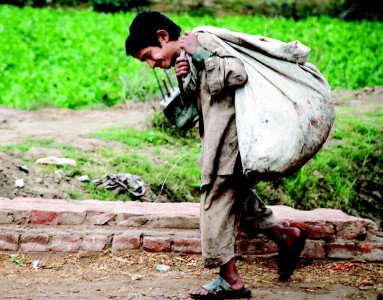
<p>“I have been gathering trash for two years now. I used to go to school but I dropped out because my parents had no money and needed my help,” says 12-year-old Saleem from Mianwali.  “I don’t really think about what my life is like or that it can be better. This is what I have to do to help my family. My father drops me off at the main chowk every morning and picks me up in the evening. Sometimes I make money picking trash on other days I beg,” he said.</p>
<p>The Pakistan Child Protection Bureau (CPB) has been charged with the duty to take care of street children. The CPB reserves the right to take the children into their custody whenever they are brought to the offices attention.  Under the Punjab Destitute and Neglected Children Bill 2004, the CPB reserves the right to take any street child into its custody and the designated CPB centres across the province are equipped to house, clothe, educate and feed the children until they can be sent to public school or returned to their parents.</p>
<p>“We have all the facilities and we reserve the right to return the child to his or her parents. If the parents are engaged in the beggary mafia we can choose not to return the child, in other cases we give the parents vocational training to ensure they can provide for the child,” said Lahore Child Protection Bureau in-charge Ulfat Abbas. Abbas said that the bureau was operating on a shoe string budget even though it had elaborate facilities that had been set up by the previous government. “We have the facilities to take care of many children but not enough of a day to day operating budget. Rescue 1122 has dozens of ambulances in each city we have only one for Lahore. We can’t do much with that but we do what we can,” he said.</p>
<p>The number of street children in Punjab are hard to tabulate but CPB officials have said that the only way to ensure that enough children are picked off the streets and rehabilitated is to involve the public. “We have a help line at 1121 that allows people to call in and report street children. Then we send in a team to recover them,” said a call centre operative Maria Sultan.</p>
<p>“I spend my days picking garbage here. At the end of the day my friends and I leave with full bags and get Rs35 for our efforts,” said nine-year-old Rehana. “We can’t always blame the parents for what is happening. Most of them are desperately poor but there are cases where children are engaged with the beggary mafia at a very young age,” said a Multan CPB officer Nadeem. He said that the centre picked up more and more children every month but the numbers kept rising.</p>
<p>“We pick up an average of 20 kids a month but the task is a mammoth one. We need people to call in and tell us where to start because this isn’t something that will go away in a day or a week or even a year,” he added.</p>
<p>Sahil NGO unit coordinator Iftikhar Mubarak said “These children are often found in such<a href="http://tribune.com.pk/story/116024/activist-wants-children-sleeping-on-the-roads-arrested-for-their-own-good/" target="_blank"> terrible condition </a>it is extremely distressing. They are unwashed and they often have contracted infections. Just giving them a bath and a decent meal makes a world of difference in their lives. If we could take more off the street and put them in school, we would be making their future.”</p>
<p><em>With additional reporting by our correspondent from Multan</em></p>
<p><em>Published in The Express Tribune, April 13<sup>th</sup>, 2011.</em></p>
<p>&nbsp;</p>
</p>
			<br clear="all"/>
		]]>
		</description>

		<media:content width="424" height="318"
							isDefault="true" medium="image" url="http://i1.tribune.com.pk/wp-content/uploads/2011/04/Street-children-01-PHOTOS-ISRARUL-HAQ-640x480.jpg">
			<media:title>Street children 01- PHOTOS- ISRARUL HAQ</media:title>
			<media:description>Street children from all over Punjab spend their days begging or gathering trash. PHOTOS: ISRARUL HAQ</media:description>
			<media:thumbnail url="http://i1.tribune.com.pk/wp-content/uploads/2011/04/Street-children-01-PHOTOS-ISRARUL-HAQ-160x120.jpg" width="160" height="120" />
      </media:content>

		<wfw:commentRss></wfw:commentRss>
		<slash:comments>4</slash:comments>
	</item>
		<item>
		<title>Begging for salvation</title>
		<link>http://tribune.com.pk/story/134500/begging-for-salvation/</link>
		<pubDate>Tue, 22 Mar 2011 15:12:32 +0000</pubDate>

		<guid isPermaLink="false">http://tribune.com.pk/?p=134500</guid>

		<description>
		<![CDATA[
			<a href="http://tribune.com.pk/story/134500/begging-for-salvation/">
				<img src="http://i1.tribune.com.pk/wp-content/uploads/2011/03/women3-160x120.jpg" width="160" height="120" alt="" />
			</a>
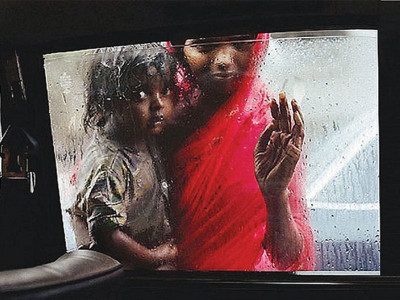
			<p><p><strong>Hasn’t it become impossible to keep track of the number of times you brush away a child standing at your car window <a href="http://blogs.tribune.com.pk/story/4860/beggars-dont-want-your-change/">begging for money</a> in exchange for ‘duas’? We also lose count of the number of times we have all placated ourselves by either giving the child loose change or by telling ourselves that not giving them cash has helped us prevent the vicious and predatory cycle of begging from repeating itself.</strong></p>
<p>For you and I, this is quite literally a win-win situation. Paying the child off lets us feel benevolent, and not paying them makes us ‘socially responsible’.</p>
<p>The reality is that we really don’t care — which is unfortunate, especially since there is now a legal framework in place to deal with street children, at least in the Punjab.</p>
<p>If there was ever a time to take ‘the law into our own hands’, this is it. The Punjab Destitute and Neglected Children Bill 2004 gives the provincial government the exclusive right to rescue begging children from the streets, assume custody of them under the Child Protection Court and then rehabilitate them in special centres, providing them with food, clothing, counselling and schooling. The child’s parents are then brought in for questioning and the Child Protection Bureau (CPB) has the final say on whether or not they qualify for financial assistance, micro-finance, skills training or a stint in prison.</p>
<p><strong>All one has to do is dial 1121.</strong></p>
<p>When I called 1121 to report my daily sighting of three street children near Hussain Chowk on Monday, I was told the centre would “try and pick them up as soon as possible”. I called in the next day and a very courteous representative told me that the centre only manages around two or three rescue missions a month because they simply don’t have the resources to manage more. Lahore Child Protection Bureau assistant district head Ulfat Abbas said: “Well, we don’t have the resources that Rescue 1122 has. We only have one van but we do what we can. If more people called in then we would do more.”</p>
<p>This begs the question: why don’t more people call in? Is it because we’re so apathetic that we don’t feel sympathy for a five-year-old begging on the streets? Is it because we don’t really think the government will ever do anything about the problem? Or is it simply because we don’t even know that a programme to rehabilitate street children exists? For most of the people I talked to, it was a combination of all three factors. “I frankly never knew there was a place to call. But if I’m being honest I don’t know if it would make any difference if I did,” says Madiha Haroon, a Beaconhouse National University student.</p>
<p>Granted, public participation does not guarantee that the government will be able to eliminate the menace of child begging but it does give us — the public — the right to complain. Personally, I am inclined to adhere to the ‘if you don’t try to make it better you’re only making it worse’ logic. It therefore becomes my duty to call in every time I see a begging, starving child, before I can complain that the government is shirking its responsibility and allowing an entire generation to be squandered on the streets rather than succeed in school.</p>
<p>“A lot of this is political. When the programme was started in 2005 there was a lot of publicity but ever since the new provincial government has taken the helm they have tried to debunk it,” says founder of the programme and former CPB chairperson Faiza Asgher. Politics inevitably has a role to play in every public scheme instituted in our country but then again so does public participation. The latter is presently just as ineffective as the government.</p>
<p>“There is simply no sense of civic duty in our people. We all perpetuate it. Let us just consider this: if we call 1121 the next time we see a child on the street and the authorities actually pick him or her up, that child’s life will change,” says child psychiatrist Amna Wahab, adding, “The child will be washed, fed, clothed and schooled and is less likely to end up on the streets. What we need to do is put enough pressure on the government to act on this law and the mechanism in place to implement it.”</p>
<p>Ulfat Abbas tells me that the average beggar has three or four of his kids in ‘the business’. “This man will probably earn Rs1,600 a day from his children, why would he bother working then? Also the younger the child the more likely they are to make money. That’s why we keep seeing younger and younger kids taking to the trade,” he said.</p>
<p>The Child Protection Bureau (CPB) has five offices in other Punjab districts and yet the response rate is underwhelming. One would think that our government, having the right to pick children off the streets would exercise this privilege more often, especially given that thousands of children are seen <a href="http://blogs.tribune.com.pk/tag/poverty/">begging on streets</a> all over the country. This is not being done and one of the major gaps in the strategy seems to be virtually no media attention given to the issue.</p>
<p>That said, this organisation’s efforts, and its purpose, are commendable. The CPB has three squads for all of Lahore and these are charged to deal with domestic violence, lost children and beggars. One doesn’t need to be a genius to see that their budget as well as human resources have been stretched far too thin. Public participation would shed light on the issue and also place pressure on the government to pursue the matter more effectively.</p>
<p>“One thing no one wants to admit is that the issue isn’t being promoted because we don’t really know how to take it up if it were. This is a mammoth task and if we were serious then it would require more resources devoted to the cause. It would need to be 24 hours a day,” says NGO worker Shireen Tariq. Calling a number isn’t enough but it is definitely a start if we are serious about eliminating child labour and beggary in this country.</p>
<p>I recently took up a challenge meted out by a 1121 operator. She said that if enough people called in then there would be more pressure on the government to take the programme seriously. So I have stopped giving alms to begging children because I realise I am doing them no favours by furthering their suffering on our streets. Instead I have taken to carrying a packet of Cadbury’s éclairs to be handed out and every time I see a street child I make a call. It has been three days and 23 calls. The centre now knows my name and I think I am getting on their nerves.</p>
<p>Which is kind of the point.</p>
<p><em>Published in The Express Tribune, Sunday Magazine, March 20<sup>th</sup>, 2011.</em></p>
</p>
			<br clear="all"/>
		]]>
		</description>

		<media:content width="424" height="318"
							isDefault="true" medium="image" url="http://i1.tribune.com.pk/wp-content/uploads/2011/03/women3-640x480.jpg">
			<media:title>women</media:title>
			<media:description>Can you save a child from the begging mafia simply by dialling a number?</media:description>
			<media:thumbnail url="http://i1.tribune.com.pk/wp-content/uploads/2011/03/women3-160x120.jpg" width="160" height="120" />
      </media:content>

		<wfw:commentRss></wfw:commentRss>
		<slash:comments>6</slash:comments>
	</item>
		<item>
		<title>‘Compassion is the solution’</title>
		<link>http://tribune.com.pk/story/113881/compassion-is-the-solution/</link>
		<pubDate>Fri, 04 Feb 2011 05:12:40 +0000</pubDate>

		<guid isPermaLink="false">http://tribune.com.pk/?p=113881</guid>

		<description>
		<![CDATA[
			<a href="http://tribune.com.pk/story/113881/compassion-is-the-solution/">
				<img src="http://i1.tribune.com.pk/wp-content/uploads/2011/02/lahore2321122243211214314221452616822134134133235115431211622113115431212111315112234231221414111412112122232151412341554223411551276813184543615112525121125512612435546811461171664813-160x120.jpg" width="160" height="120" alt="" />
			</a>
			<p><p><strong><strong class='location'>LAHORE:&nbsp;</strong>“The poison of bigotry and violence is as hard to root out from our lives as substance addiction is for addicts,” said <a href="http://tribune.com.pk/story/112781/compassion-the-only-viable-option/">renowned religious historian Karen Armstrong</a> at a talk organised by the Oxford University Press (OUP) at the Pearl Continental hotel on Thursday.</strong></p>
<p>Armstrong’s talk was titled ‘The Charter for Compassion’ and referred to a document of the same name, now being circulated by the OUP among charitable organisations, schools and colleges throughout Pakistan.</p>
<p>Armstrong’s latest book Twelve Steps To A Compassionate Life’ deals with the subject of kindness and compassion towards those around us, including our enemies, in the guise of a 12-step programme commonly used to treat substance abuse and alcoholism.</p>
<p>Armstrong opened her talk by elaborating on step seven in her book that deals with ‘How little we know’.  “Rage, dogmatism and violence are all rooted in the assertion that we are somehow right and the ‘other’ is wrong.” she said.</p>
<p>Armstrong elaborated upon the importance of employing the ‘Socratic Method’ of open inquiry and doubt in our daily lives.</p>
<p>“We need to stop projecting ‘certainties’ because there are none and this is the only way we will be compassionate towards the views and will of others,” she said.</p>
<p>Amin Hashmi, one of the organisers of the event, said that the new charter for compassion was being widely distributed with the help of the Higher Education Commission and some non-profit organisations.</p>
<p>Hashmi said that the OUP was collaborating with the Rafi Peer theatre group to develop a Sesame Street character that epitomised compassion and kindness.</p>
<p>“The HEC is on board to draft and introduce a compulsory course that deals with these values and depending on its success it is even willing to make it compulsory,” he said.</p>
<p>Several NGOs and individuals including Abdus Sattar Edhi have taken it upon themselves to promote the new ‘Charter for Compassion’. “We have 14,000 commitments to put up the document in public places. The community website (www.charterforcompassion.org.pk) and YouTube carry videos and information of what we are hoping will become a movement for change,” Hashmi said.</p>
<p>In the question and answer session that followed the talk, a participant dubbed Armstrong ‘Maulana Karen Armstrong’ and said “I wish we had more ulema here talking about peace than violence. If this were a Friday sermon I would want everyone to have heard it.”</p>
<p>In response to a question about blasphemy laws and the recent assassination of Punjab Governor Salmaan Taseer, Arsmstrong said “These are complex issues and I am not in a position to preach about it but personally we must try and conduct ourselves with compassion in this regard especially. We need to be very careful about how we speak about people in the other camp.”</p>
<p>Armstrong recalled a previous conversation with Islamic scholar Tariq Ramadan and said “When the Danish cartoon’s fiasco happened he told me ‘We fall for it every time’. He said that the agenda of perpetrators of hate crimes was to show that Muslims were violent, raving lunatics and when they responded to such bait they proved them right. We need to set an example of not falling in the trap, he told me and I couldn’t agree more”.</p>
<p>The audience appreciated the sentiment and one participant even expressed their surprise at how long it had been since anyone had suggested ‘compassion’ as a solution to any problem.</p>
<p>“We seem to have forgotten it existed. Looking for genuine kindness seems to be like looking for a unicorn. It’s becoming a myth,” said Sahar Shams.</p>
<p><em>Published in The Express Tribune, February 4<sup>th</sup>, 2011.</em></p>
</p>
			<br clear="all"/>
		]]>
		</description>

		<media:content width="424" height="318"
							isDefault="true" medium="image" url="http://i1.tribune.com.pk/wp-content/uploads/2011/02/lahore2321122243211214314221452616822134134133235115431211622113115431212111315112234231221414111412112122232151412341554223411551276813184543615112525121125512612435546811461171664813-640x480.jpg">
			<media:title>lahore</media:title>
			<media:description>Armstrong 
prescribes 12-step programme for 
getting rid of bigotry 
</media:description>
			<media:thumbnail url="http://i1.tribune.com.pk/wp-content/uploads/2011/02/lahore2321122243211214314221452616822134134133235115431211622113115431212111315112234231221414111412112122232151412341554223411551276813184543615112525121125512612435546811461171664813-160x120.jpg" width="160" height="120" />
      </media:content>

		<wfw:commentRss></wfw:commentRss>
		<slash:comments>1</slash:comments>
	</item>
		<item>
		<title>Seminar on Pakistan’s media: A cautionary tale</title>
		<link>http://tribune.com.pk/story/100983/seminar-on-pakistans-media-a-cautionary-tale/</link>
		<pubDate>Sun, 09 Jan 2011 08:25:28 +0000</pubDate>

		<guid isPermaLink="false">http://tribune.com.pk/?p=100983</guid>

		<description>
		<![CDATA[
			<a href="http://tribune.com.pk/story/100983/seminar-on-pakistans-media-a-cautionary-tale/">
				<img src="http://i1.tribune.com.pk/wp-content/uploads/2011/01/Kamran-Shahid-New-160x120.jpg" width="160" height="120" alt="" />
			</a>
			<p><p><strong><strong class='location'>LAHORE:&nbsp;</strong>“Last year I interviewed an astrologer and she told me that 2011 would open with celebration and that things would be a lot better for Pakistan. It just goes to show that you shouldn’t believe everything you see on TV,” says morning show host Huma Amir Shah.</strong></p>
<p>The final day of Carma showcased an engaging seminar with guests Huma Amir Shah and Kamran Shahid. Former news caster and morning show host for Express 24/7 Huma Shah and author and Express TV show ‘Frontline’ host Kamran Shahid drew heavily from their personal experience.</p>
<p>“We must remember that the industry isn’t all about glitz and glamour.</p>
<p>The news business is a 24-hour run-a-round and it is a tough business,” Shah, who incorporates news and politics into her morning show, told the audience. “Now there are so many opportunities because students actually have media training,” she said, adding “but that also means that students now face a lot of competition.”</p>
<p>Huma Shah told the students that she had started out her media career with PTV but eventually felt that the immense restrictions and self censorship were not letting her grow as a journalist. “Private television has opened a lot of avenues for the truth and I managed to do shows on taboo subjects such as ‘homosexuality in Pakistan’,” she said adding, “ We had to do the entire show without mentioning the word ‘homosexual’ once but people understood what we were talking about. It taught me that our audience is astute and needs to be respected.”</p>
<p>Kamran Shahid spoke about the lack of attention paid to media ethics in Pakistan. “We need to realise that we bear a great responsibility of telling the people the truth but this is not happening.</p>
<p>The people are often lied to by all television channels in a race to boost ratings,” he said. Shahid said that there was an extremely thin line between a lie and a truth and that the Pakistani media had largely blurred this line by pandering to politicians.</p>
<p>He warned that any aspiring journalists should be cautious to avoid the traps and webs of lies spun by various groups and focus on telling people the truth.</p>
<p><em>Published in The Express Tribune, January 9<sup>th</sup>, 2011.</em></p>
</p>
			<br clear="all"/>
		]]>
		</description>

		<media:content width="424" height="318"
							isDefault="true" medium="image" url="http://i1.tribune.com.pk/wp-content/uploads/2011/01/Kamran-Shahid-New-640x480.jpg">
			<media:title>Kamran Shahid  New</media:title>
			<media:description>The writer is author of Gandhi and the Partition of India (Ferozesons, 2005) and also hosts “Frontline” on Express News
</media:description>
			<media:thumbnail url="http://i1.tribune.com.pk/wp-content/uploads/2011/01/Kamran-Shahid-New-160x120.jpg" width="160" height="120" />
      </media:content>

		<wfw:commentRss></wfw:commentRss>
		<slash:comments>0</slash:comments>
	</item>
		<item>
		<title>Is plastic perfection beautiful?</title>
		<link>http://tribune.com.pk/story/91698/is-plastic-perfection-beautiful/</link>
		<pubDate>Sun, 19 Dec 2010 08:10:45 +0000</pubDate>

		<guid isPermaLink="false">http://tribune.com.pk/?p=91698</guid>

		<description>
		<![CDATA[
			<a href="http://tribune.com.pk/story/91698/is-plastic-perfection-beautiful/">
				<img src="http://i1.tribune.com.pk/wp-content/uploads/2010/12/woman-face-160x120.jpg" width="160" height="120" alt="" />
			</a>
			<p><p><strong><strong class='location'>LAHORE:&nbsp;</strong>Plastic surgery has become increasingly common in Pakistan. Scores of ‘image clinics’ have popped up all over Lahore, offering nose jobs and hair transplants and other procedures to make you look younger and more attractive.</strong></p>
<p>“Cosmetic surgery, especially hair transplants, liposuction and Botox injections, have become incredibly popular over the past few years,” said plastic surgeon Dr Shahzad Rauf.</p>
<p>“Many Pakistani doctors who have trained in the US are now returning home.The clientele for cosmetic surgery has risen dramatically over the past five years.”</p>
<p>Another doctor said that few cosmetic procedures were done 20 years ago. “Back when we started it wasn’t really popular and we essentially dealt with burn victims and repair work,” said Dr Jamal Fareed, one of 60 members of the Pakistan Association of Plastic Surgeons (PAPS), which was established in 1993. “But now that the beauty industry itself has expanded people are much more conscious about their appearance and the industry is booming.”</p>
<p>In the west, the rise of cosmetic surgery was accompanied by a debate on the status and importance of beauty and image in society. As cosmetic surgery has taken off in Pakistan, so has this debate.</p>
<p>On one side is the argument that cosmetic surgery is shallow and a waste of money. “I don’t think it’s such a good thing for us to adopt the western woman’s obsession with her appearance,” said Naila Ather, a human rights worker.</p>
<p>“There is already enough of a divide between the average Pakistani woman and the elite socialite. Adding surgery to the mix will only mean a waste of millions of rupees that could be spent helping others.”</p>
<p>But others argue that cosmetic surgery is just another method that men and women use to make themselves appear more attractive. “I think that people who oppose plastic surgery are extremely narrow minded and sanctimonious,” said Nabeela, a designer.</p>
<p>“The same people don’t mind paying for a diamond but somehow only surgery is considered shallow. If someone has a complex about their appearance and wants to look good and can afford to make that happen, I say go for it.”</p>
<p>Plastic surgeons reject the charge that cosmetic surgery encourages appearance complexes and plays upon people’s insecurities. “People who are dissatisfied with their appearance can suffer severe psychological complexes and find it hard to adjust socially. All we offer is a solution,” said Dr Rauf.</p>
<p>But psychologist Rehana Salman said that the beauty industry encouraged people to have unrealistic ideas about what they should look like.</p>
<p>“The obsession started with the media and the beauty industry, which told us that growing old is a crime,” said Salman. “People are expected to always look like they are 30 and in the prime of their life. We are all working to attain the unnatural body type we see on screen. The cosmetic industry is just an offshoot that feeds on our obsession with our appearance,” she said.</p>
<p>She also questioned “bizarre” new procedures, such as injecting silicon and bee venom into one’s lips to make them plumper.</p>
<p>One of the most common cosmetic procedures is hair transplants, usually on male clients.</p>
<p>“It’s all about feeling good and whether or not people admit it, that often involves looking good. I spent thousands of rupees a month on gym memberships but what I was actually troubled by was my baldness. Eventually I decided to opt for a hair transplant and frankly, it was the best decision I ever made,” said banker Usman Khan.</p>
<p>Schoolteacher Irum Niaz felt that it was up to each individual to decide if cosmetic surgery was right for them. It is no one’s right to really judge who should or should not get plastic surgery and why.</p>
<p>If one’s weight or some particular feature is a cause for perpetual insecurity and is interfering with their lifestyle then they should opt to correct it if they can afford to do so,” she said.</p>
<p>“But the constant obsession with wrinkles and stabbing ones face with Botox injections until no one can even decipher a person’s facial expressions is taking it a bit too far. I think people need to work to strike a balance.”</p>
<p>Sarah, a trainee nurse at a plastic surgery clinic on MM Alam Road, said people often labeled people who underwent plastic surgery as shallow. “This is not the case at all. This is merely a choice and regardless of which one we make it is always good to know we have one,” she said.</p>
<p><em>Published in The Express Tribune, December 19<sup>th</sup>, 2010.</em></p>
</p>
			<br clear="all"/>
		]]>
		</description>

		<media:content width="424" height="318"
							isDefault="true" medium="image" url="http://i1.tribune.com.pk/wp-content/uploads/2010/12/woman-face-640x480.jpg">
			<media:title>woman face</media:title>
			<media:description>Cosmetic surgery is taking off in 
a big way.</media:description>
			<media:thumbnail url="http://i1.tribune.com.pk/wp-content/uploads/2010/12/woman-face-160x120.jpg" width="160" height="120" />
      </media:content>

		<wfw:commentRss></wfw:commentRss>
		<slash:comments>2</slash:comments>
	</item>
		<item>
		<title>Security situation: Somebody’s watching you...  </title>
		<link>http://tribune.com.pk/story/84610/security-situation-somebodys-watching-you/</link>
		<pubDate>Thu, 02 Dec 2010 07:01:41 +0000</pubDate>

		<guid isPermaLink="false">http://tribune.com.pk/?p=84610</guid>

		<description>
		<![CDATA[
			<a href="http://tribune.com.pk/story/84610/security-situation-somebodys-watching-you/">
				<img src="http://i1.tribune.com.pk/wp-content/uploads/2010/12/police-convoys-LHR-ONLINE1-160x120.jpg" width="160" height="120" alt="" />
			</a>
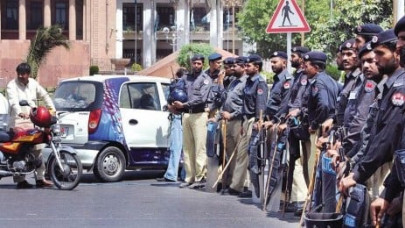
			<p><p><strong><strong class='location'>LAHORE:&nbsp;</strong>Over the past couple of years, the most visible change in this city has been the dozens of security check posts cropping up. The guards posted in front of every landmark on The Mall and the maze of barricades and traffic cones near every bridge are the most tangible form of how our day-to-day lives have been affected by terrorism.</strong></p>
<p>So do they make people feel safer? Well, yes and no. According to both ordinary citizens and security guards, the barriers are not meant to catch terrorists so much as provide reassurance.</p>
<p>“These posts only provide an illusion of safety. It’s not like they have prevented any attacks or caught any terrorists. But they provide the consolation that there is someone on guard at all times,” said Cantonment resident Sohail Bajwa.</p>
<p>The irony is that many Lahoris now try to avoid major security check posts to save on time. “Unless you live in an area where you have to cross a check post daily, it is best to change routes, especially if you are a twenty-something male like me. I get stopped almost daily near the Cantt check post. Two of the guards know me by name,” said Saad Warraich, a LUMS student.</p>
<p>“It is harder work than one realises,” says Cantonment security guard Asad. “We let hundreds of cars pass by every day and we stop at least a quarter. We need to maintain a ratio but deciding who to let pass and who to check is mostly just pure instinct.”</p>
<p>Security guard Jameel, at the check post near Sherpao Bridge, says there is a certain profile that the guards are looking out for. “We tend to stop and question young men, especially college students, and pretty much all men in turbans.”</p>
<p>All the guards state that they have strict directions not to stop women who are driving alone. “We occasionally stop families at the check point but that is rare. Mostly it ends up being students or Jamaatis,” he adds.</p>
<p>The guards say that profiling is an exhausting enterprise. “It is like looking at every single person through a lens of suspicion. While it is our jobs to stop people for having tinted windows or for driving rashly, it is new to start looking at everyone as a potential suicide bomber,” says Abdullah, an army guard posted near the Polo Ground in Cantt.</p>
<p>“Suddenly over the past two years, everyone has become a suspect and everyone is capable of wreaking havoc,” he says. “I have been doing this for years and it was mostly ceremonial. I met people who would come into the park for jogging and, I hate to admit it, but four years ago my gun wasn’t even loaded. We were so complacent.” The guards feel the basic purpose of their job is to make people feel safer, even if it is just an illusion. “We don’t really ever expect to catch a terrorist, but the job needs to be done and we stand here all day doing it,” Asad says. “Most people are very good about it. They realise that it is now part of their lives and that it is a necessity. Mostly I think they are just thankful that someone out there is keeping any eye out.”</p>
<p><em>Published in The Express Tribune, December 2<sup>nd</sup>, 2010.</em></p>
</p>
			<br clear="all"/>
		]]>
		</description>

		<media:content width="424" height="318"
							isDefault="true" medium="image" url="http://i1.tribune.com.pk/wp-content/uploads/2010/12/police-convoys-LHR-ONLINE1-640x480.jpg">
			<media:title>police convoys LHR ONLINE</media:title>
			<media:description>Security check posts have been installed throughout the city, but does anyone feel safer?</media:description>
			<media:thumbnail url="http://i1.tribune.com.pk/wp-content/uploads/2010/12/police-convoys-LHR-ONLINE1-160x120.jpg" width="160" height="120" />
      </media:content>

		<wfw:commentRss></wfw:commentRss>
		<slash:comments>0</slash:comments>
	</item>
		<item>
		<title>Building The Reluctant Fundamentalist </title>
		<link>http://tribune.com.pk/story/82409/building-the-reluctant-fundamentalist/</link>
		<pubDate>Sat, 27 Nov 2010 04:58:42 +0000</pubDate>

		<guid isPermaLink="false">http://tribune.com.pk/?p=82409</guid>

		<description>
		<![CDATA[
			<a href="http://tribune.com.pk/story/82409/building-the-reluctant-fundamentalist/">
				<img src="http://i1.tribune.com.pk/wp-content/uploads/2010/11/Building-160x120.jpg" width="160" height="120" alt="" />
			</a>
			<p><p><strong><strong class='location'>LAHORE:&nbsp;</strong>Mohsin Hamid’s talk about The Reluctant Fundamentalist, which took the form of a dramatic monologue, was “both the inspiration and the premise of how I constructed my novel”.</strong></p>
<p>While there have been varied and contradicting readings of the book, almost every one agrees that the primary tone of the book was one of control, something Hamid told the Lahore University of management Sciences’ (Lums) students, he worked hard to achieve.</p>
<p>Hamid, now based in Lahore, wrote The Reluctant Fundamentalist during his stay in New York in 2001. He said that the location greatly informed his writing. Following the phenomenal success of his first novel Moth Smoke set in Lahore, his second work was about a Pakistani youth, Changez, working in corporate America who becomes disillusioned and feels he is somehow serving the US corporate agenda and ought to return to his roots in Pakistan.</p>
<p>“I was experiencing all those emotions myself and it spurred me to explore it further in the novel,” he said, adding that he had  finished the book before September 11.</p>
<p>“I was in the middle of edits when the attacks on the twin towers happened. Suddenly, I was a Pakistani Muslim living in New York after September 11,” he said, adding “There was no way the novel or I could dodge that.” Hamid said that after the attacks his introspective book suddenly became part of a much larger narrative that was being pulled apart from all sides.</p>
<p>“I knew that I couldn’t avoid it. I knew no matter what I did, it would be set against the time in which it was released so I began to rework it,” he said.</p>
<p>During his talk, Hamid elaborated on the process of writing a novel for the author. He focused on the architecture, construction and design of The Reluctant Fundamentalist rather than on the content and interpretation.</p>
<p>“As a novelist, I think of both my books as ‘buildings of the mind’. It is not my job to design a journey that has set junctions. The reader should be able to go wherever they want; whenever they want within the premise I have created. I like that fluidity,” he said.</p>
<p>Hamid said that one of the reasons why he did not want to define the themes he explored in the book was because the “fanatic’s politics” is not black and white.</p>
<p>“We tend to think that the discourse behind terrorism and all this ‘stuff’ is cut and dried when it is anything but. It isn’t as simple as ‘they are evil’, especially not when one goes into the background,” he said. “I did want the title to grab the reader to a book, which is more about fear than anything else.”</p>
<p>“I wanted to explore fear rather than terrorism.” he said.  The dialogue between the American marine and the Pakistani over a cup of tea encompasses all this. It lasts nearly 10 hours.</p>
<p>“There are lots of gaps for the reader to fill in, which is the way I like it. People talking about politics and drawing political themes into my book is often more a project of their own politics than that of the book. The way they read the book is the way they think,” Hamid said.</p>
<p>Perhaps one of the defining features of the novel is its precision. It has 12 chapters which are 12 pages each. “I knew I wanted to keep it short, it is extremely structured,” Hamid said, adding “I wanted people who were intrigued by the title and those that were turned off by it to both pick it up and discover that it wasn’t about what the title trumpeted.” Hamid said he originally wrote over 1,000 pages of manuscript that ended up as a 180-page novel.</p>
<p>Recent reports that director Mira Nair wants to direct a movie based on the book seem to wash over Hamid, who says that while he would be honoured, he didn’t really concern himself with how his work was interpreted in other media. “That is something inspired by something I did, not what I did. I like to keep those two places separate.”</p>
<p><em>Published in The Express Tribune, November 27<sup>th</sup>, 2010.</em></p>
</p>
			<br clear="all"/>
		]]>
		</description>

		<media:content width="424" height="318"
							isDefault="true" medium="image" url="http://i1.tribune.com.pk/wp-content/uploads/2010/11/Building-640x480.jpg">
			<media:title>Building</media:title>
			<media:description>Mohsin Hamid speaks to students about the process of writing a novel 
</media:description>
			<media:thumbnail url="http://i1.tribune.com.pk/wp-content/uploads/2010/11/Building-160x120.jpg" width="160" height="120" />
      </media:content>

		<wfw:commentRss></wfw:commentRss>
		<slash:comments>0</slash:comments>
	</item>
		<item>
		<title>The last hoorah</title>
		<link>http://tribune.com.pk/story/78315/the-last-hoorah/</link>
		<pubDate>Wed, 17 Nov 2010 08:50:10 +0000</pubDate>

		<guid isPermaLink="false">http://tribune.com.pk/?p=78315</guid>

		<description>
		<![CDATA[
			<a href="http://tribune.com.pk/story/78315/the-last-hoorah/">
				<img src="http://i1.tribune.com.pk/wp-content/uploads/2010/11/The-Last-160x120.jpg" width="160" height="120" alt="" />
			</a>
			<p><p><strong><strong class='location'>LAHORE:&nbsp;</strong>“I’ve always had to live my life according to someone’s wishes. First it was my parents, then it was my husband and after that it was my children. This is the only time I’ve gotten to live it for myself,” says 78-year-old Huma Noorani.</strong></p>
<p>Noorani is part of a group of wealthy Lahore widows who have formed a sorority of sorts to enjoy their final years without husbands, commitments or family obligations. The group consists of 11-13 women who come together one evening every week to play bridge at the Gymkhana, organise charity events or sing at each other’s houses.</p>

<p>“Ours isn’t really a culture that thrives on pleasure, especially when it comes to women. My generation was raised being told how to be ‘respectable’ and we lived by that, by everyone else’s version of what it meant to be respectable in this society,” says Begum Naz.</p>
<p>She organises the sing-along sessions, where this unique group of over-70-somethings have kaava and tea and sing to DVDs of old Indian songs. They exchange stories of their romances when they were young, and rank Indian actors from the black and white era for their ‘handsomeness’.</p>
<p>It is a privilege to watch this group of women finally living. “Of course we don’t let just anyone into the group because at our age, laughing and having fun is considered somehow disrespectful,” scoffs Aziza, a grandmother of 11.</p>
<p>All the women tell me that they wish for their names to be altered simply because they don’t want their children or grandchildren to feel embarrassed. “Even at our age, we have to take care of not offending others. That is all our lives have been about, an exercise in not causing offence,” she says.</p>
<p>The group also organises trips around the world and have so far travelled to Spain, Malaysia, Sri Lanka, China and Nepal together. “All of us pool in the money and one of us takes care of all the arrangements, from visas and bookings to the hotel and tour guide,” says Naz. The person organising the trip generally manages to go for free on commission. The women tell me that ‘saving for a rainy day’ isn’t high on their priority list.</p>
<p>“Most people our age believe in putting aside all their life savings for a rainy day,” says Huma.</p>
<p>“But as far as we’re concerned the rainy days are already here. We are all in our 70s and we know that we don’t have long. Seeing as we’ve never really had charge of our own lives this is our last chance to enjoy ourselves.”</p>
<p>“It is the first time in our lives when we make the rules and no one dares stop us. There may be people who find our loud laughter at the Gymkhana and our colourful clothes and trips to the theatre or galleries rather ‘shameful’ but we are no longer bothered with them,” Aziza says.</p>
<p>The women say that each of them gained their ‘independence’ when they became widows. “It sounds heartless but it was the first time in our lives we were free from responsibilities. Though most people in our country choose to continue walking the straight and narrow, we all decided we had had enough,” Huma says.</p>
<p>These women are rebelling against societal norms that old people ought to dress in varying hues of beige, concern themselves only with their households and essentially fade away.</p>
<p>So what prompted this extraordinary group to throw parties, jet set across the globe and wear scarlet at their age? “I once read this story in the Reader’s Digest about an 80-year-old woman who started wearing purple and red at her age and finally felt free. I wanted to be her. She titled the article The last hoorah!” Naz says, laughing.</p>
<p><em>Published in The Express Tribune, November 17<sup>th</sup>, 2010.</em></p>
</p>
			<br clear="all"/>
		]]>
		</description>

		<media:content width="424" height="318"
							isDefault="true" medium="image" url="http://i1.tribune.com.pk/wp-content/uploads/2010/11/The-Last-640x480.jpg">
			<media:title>The Last</media:title>
			<media:description>Elderly widows say that with husbands, kids gone, they can start their own lives</media:description>
			<media:thumbnail url="http://i1.tribune.com.pk/wp-content/uploads/2010/11/The-Last-160x120.jpg" width="160" height="120" />
      </media:content>

		<wfw:commentRss></wfw:commentRss>
		<slash:comments>0</slash:comments>
	</item>
	
</channel>
</rss>
<!-- Cached page generated by Express Cache on 2012-05-24 13:36:15
     Time taken: 0.12s
-->